Book Reviews From 2016

BookshelfHere are the books I read and reviewed in 2016. Click a title to read the review…

#struggles

Alive

An Angel’s Story

Answering Jihad

Archeological Study Bible

Chase The Lion

Churchill’s Trial

Culture

Hope … The Best Of All Things

How To Read A Book

I Stand At The Door And Knock

Jesus Always

Letters To A Birmingham Jail

Light & Truth—Acts & The Larger Epistles

Light & Truth—Revelation

Light & Truth—The Lesser Epistles

More Than A Carpenter

Of Antichrist And His Ruin

On This Day

One Of The Few

Our Iceberg Is Melting

Shaken

So, Anyway…

Streams In The Desert

The American Patriot’s Almanac

The Bad Habits Of Jesus

The Beauty Of Intolerance

The Blessing Of Humility

The Dawn Of Indestructible Joy

The Duty Of Pastors

The Gospels Side-By-Side

The Mathematical Proof For Christianity

The Philosophy Of Sin

The Place Of Help

The Porn Circuit

The Psychology Of Redemption

The Seven Laws Of Love

The Shadow Of An Agony

The Tabernacle Of Israel

Think On These Things

Today’s Moment Of Truth

Useful Maxims

Your Sorrow Will Turn To Joy

Here are my book reviews for 2011.

Here are my book reviews for 2012.

Here are my book reviews for 2013.

Here are my book reviews for 2014.

Here are my book reviews for 2015.

The Qur’an And The Bible

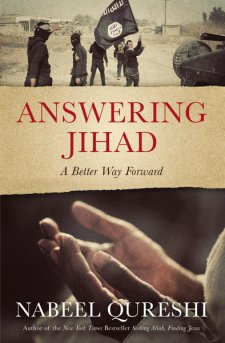
Answering JihadIn his outstanding book Answering Jihad, Nabeel Qureshi gives us an understanding of the beliefs which support the Islamic faith. One thing that is key for Muslims is their reliance on multiple sources for definitive answers to their faith. Nabeel explains it this way…

“The Qur’an that was the first Arabic book ever put into writing, and the Arabic script of the seventh century remained too deficient to capture the richness and complexities of its text. … Muslim biographers begin to write about Muhammad’s life around 770 A.D.” 

“By the middle of the ninth century, there were more than 500,000 traditions of Muhammad’s life in written and oral circulation, and Muslim scholars decided to undertake the effort of sifting through them and distilling the most authentic accounts.” 

“Since there are thousands of verses in the Qur’an and hundreds of thousands of hadith, it is expected that only trained Muslim jurists can engage in determining what sharia teachers. The jurist must give primacy to the Qur’an, then consider the actions (sunnah) and sayings (hadith) of Muhammad, followed by reviewing the consensus of Islamic scholars, or ijma, before using his own reasoning (qiyas). By following these four steps, a Muslim jurist can make a decision, or fatwa, about what sharia teaches on a given matter. The ultimate goal is to apply the teachings of sharia to Muslim life, and that is called fiqh.” 

“As is probably clear by now, at no point was the average Muslim expected to read the Qur’an to decide upon correct Islamic practices by himself or herself. Not only is Islam not a faith that upholds the sufficiency of scripture alone, the complexity of its foundations virtually necessitates a reliance on jurists and scholars for proper practice.” 

I prefer to pattern my life after the Bible, a book which I am free to read on my own. It’s authenticity has been well-established, and it doesn’t require me to find an “expert” in the texts and traditions to explain to me how to live my life.

I would highly recommend you read two books by Nabeel Qureshi: Seeking Allah, Finding Jesus and Answering Jihad. If you are curious about the claims of the Bible, you can check out God-Breathed and Questions Christians Hope No One Will Ask. And if you want to dig any deeper, search this website for the quotes I have posted from all four of these books.

9 More Quotes From “Today’s Moment Of Truth”

Today's Moment Of TruthToday’s Moment Of Truth by Lee Strobel and Mark Mittelberg is so chockfull of helpful truths that I couldn’t possibly have shared all of the passages I highlighted. Here are a few more quotes I wanted to share with you:

“Jesus said, ‘Do not believe Me unless I do the works of My father. But if I do them, even though you do not believe Me, believe the works, that you may know and understand that the Father is in Me, and I in the Father’ (John 10:37-38). And Jesus did the miraculous works He referred to. Even the Pharisee Nicodemus conceded, ‘Rabbi, we know that You are a teacher who has come from God. For no one could perform the signs You are doing if God were not with Him’ (John 3:2).

“We can see such confirmation repeatedly in the lives of Jesus and the biblical prophets. But it never happened in the life of Mohammad, the founder of Islam. Mohammad believed Jesus was a prophet who performed miracles, including raising the dead. Muslims also believe Moses and Elijah performed miracles.

“However, according to the Qur’an, when unbelievers challenged Mohammad to perform a miracle, he refused. He merely said they should read a chapter in the Qur’an (Surah 2:118; 3:181-184; 4:153; 6:8, nine, 37).

“So, unlike Jesus, Mohammad never did miracles. It wasn’t until approximately 150 to 200 years after Mohammad’s death that some of his followers begin to come up with stories of miracles and ascribe them to him.” —Lee Strobel & Mark Mittelberg 

“There are two major competing worldviews to Christian theism—atheism and pantheism…. The problem with atheism is that, with its denial of God’s existence, there’s a loss of any ultimate moral basis by which to declare something good or evil. So atheists are left without any objective standard by which to judge something as being right or wrong. Instead, they’re left with mere preferences. I have mine. You have yours. Rape and murder may not be my cup of tea, but they maybe somebody else’s. And who are we to say that what others choose to do is wrong? [We are] not saying an atheist cannot live a moral life; we are saying that an atheist cannot define what morality is. ….

“If everything is part of god [as in pantheism], then what we call evil is actually part of that god as well. … This is the very god, or ultimate reality, that Eastern philosophy says we’re supposed to strive to become more like and eventually to become one with. This presents a tremendous problem: we’re supposed to join with the very entity that contains evil within itself!” —Lee Strobel & Mark Mittelberg

“Revering Christ as Lord and being prepared to defend our faith are ongoing processes in the Christian life. … It’s interesting that in the original Greek, the word Peter used for answer is apologia [1 Peter 3:15], from which we get our word apologetics. It literally means we are to be ready to give a speech of defense—a well-thought-out account of why our faith in Christ makes sense. … With God’s help we can present information that will remove intellectual barriers, helping people move one step closer to faith in Christ.” —Lee Strobel & Mark Mittelberg

“In 2 Chronicles 7, God says if Israel’s sin reaches a certain level, He’ll destroy the temple, exile the people, and leave them in a state of judgment. Sure enough, this comes to pass. The prophet Daniel prays in Daniel 9 that God would have mercy. God gives him a revelation about the temple being rebuilt. Before this new temple is destroyed, Daniel is told, several things are going to take place, including the bringing of everlasting atonement—the final dealing with sin.

“The prophet Haggai says the glory of the second temple will be greater than the glory of the first temple. God will fill the second temple with His glory. Then the prophet Malachi says the Lord will come to His temple. He uses a Hebrew term that always refers to God Himself: the Lord—He will come to that temple.

“Keep in mind the second temple was destroyed in AD 70. Atonement for sin had to be made and the divine visitation had to take place before the second temple was destroyed.

“So … if it’s not Yeshua, the Jewish name for Jesus, then throw out the Bible, because nobody except Him accomplished what needed to be done prior to AD 70. What divine visitation did take place if not for Yeshua? When else did God visit the second temple in a personal way? How else was the glory of the second temple greater than the first?

“Either the Messiah came two thousand years ago, or the prophets were wrong and we can discard the Bible. But they weren’t wrong. Yeshua is the Messiah—or nobody is.” —Michael Brown, a messianic Jew

“Even nonreligious people live in the trust that their nonreligious beliefs are accurate and that they won’t someday face a thoroughly religious Maker who actually did issue a list of guidelines and requirements that they failed to pay attention to.” —Mark Mittelberg 

“There can be no doubt that archaeology has confirmed the substantial historicity of Old Testament tradition.” —William F. Albright

“The noted Roman historian Collin J. Hemer, in The Book Of Acts In The Setting Of Hellenistic History, shows how archaeology has confirmed not dozens, but hundreds and hundreds of details from the biblical account of the early church. Even small details have been corroborated, like which way the wind blows, how deep the water is a certain distance from the shore, what kind of disease a particular island had, the names of local officials, and so forth.

“Now, Acts was authored by the historian Luke. Hemer gives more than a dozen reasons why Acts had to have been written before AD 62, or about thirty years after Jesus’ crucifixion. Even earlier, Luke wrote the Gospel of Luke, which is substantially the same as the other biblical accounts of Jesus’ life.

“So here you have an impeccable historian, who has been proven right in hundreds of details and never proven wrong, and it’s written within one generation while eyewitnesses were still alive and could have disputed it if it were exaggerated or false.” —Norman Geisler 

“No Book of Mormon cities have ever been located, no Book of Mormon person, place, nation, or name has ever been found, no Book of Mormon artifacts, no Book of Mormon scriptures, no Book of Mormon inscriptions,…nothing which demonstrates the Book of Mormon is anything other than myth or invention has ever been found.” —John Ankernerg and John Weldon

“Jesus did exist, whether we like it or not.” —Bart Ehrman, an agnostic

If you would like to read the first set or quotes from this book, please click here.

You can check out my review of Today’s Moment Of Truth here.

And to read some of the other quotes I’ll be sharing from this book, be sure to follow me on Tumblr and Twitter.

10 More Quotes From “Answering Jihad”

Answering JihadNabeel Qureshi has given us a very timely book in Answering Jihad. He cuts through the confusion and misinformation to give us an informed, clear look at the teachings of Islam in regard to jihad.

I already shared one set of quotes from this book (which you can read here). Here is the next set of quotes I found eye-opening.

“At the risk of over-generalizing, this common understanding of Islam boils down to this: True obedience to Allah will result in Muslim dominance.”

“I have heard many people, frustrated by the increasing frequency and scale of Islamist terrorism, suggest that Islam needs a reformation. What they may not realize is that radical Islam is the Islamic reformation. This might sound shocking, but consider: Just as the Protestant Reformation was an attempt to raze centuries of Catholic tradition and return to the canonical texts, so radical Islam is an attempt to raze centuries of traditions of various schools of Islamic thought and return to the canonical texts of the Quran and Muhammad’s life.”

“Violent expressions of Islam adhere more consistently and more literally to the foundational texts of the Islamic faith, the Quran and the hadith. Peaceful versions of Islam must reinvent traditions from Muhammad’s life in order to be internally consistent, or they must ignore them outright.”

“Instead of fearing Muslim immigrants, we should embrace them and be the element of change we wish to see. … I suggest friendship rather than fear has a better way forward.”

“Christians believe Jesus is God, but the Quran is so opposed to this belief that it condemns Jesus worshipers to hell (5:72).”

“According to Jesus, God is our Father, yet the Quran very specifically denies that God is a father (112:1-4).”

“Islam roundly condemns worship of the Trinity (5:73), establishing in contrast its own core principle of Tawhid, the absolute oneness of God. Tawhid emphatically denies the Trinity, so much so that it is safe to say the doctrine of God in Islam is antithetical to the doctrine of God and Christianity. … The Trinity teaches that God is not a person, but three Persons: Father, Son, and Spirit. To assert that the God of Islam is the same person as the God of Christianity becomes almost nonsensical at this point, as the Christian God is tripersonal, two persons of Islam specifically denies in the Quran.”

“One can both love Muslims and insist that the God they worship is not the same as the Christian God.”

“In the Christian worldview, the exemplar for followers of God is no mere man but God Himself. Since God cares for those who are His enemies, even blessing them with rain, Christians ought to love their enemies and pray for those who persecute them, so that they can follow God’s example. This contrasts with the teaching of the Quran, where Allah tells Muslims, ‘O you who believe! Do not take my enemies or your enemies as allies, offering them your friendship when they do not believe’ (60:1). Of course, that is not to condemn the Quran, as it is counterintuitive to love one’s enemy. The Christian command may make little earthly sense, but it is the explicit teaching of Jesus.” 

“Even though Muslims are often raised with the teaching that ‘Islam is the religion of peace,’ when they study the texts for themselves, they are faced with the reality that Muhammad in the Quran calls for jihad. They will stand at the crossroads for only so long before they choose what path they will take—apostasy, apathy, or radicalization. As Muslims make that choice, it would benefit the whole world if they did not make it alone, or worse, with radical recruiters. We need to show compassion for Muslims and befriend them.”

Be sure to check out my review of Answering Jihad, and then pick up a copy for yourself.

11 Quotes From “Answering Jihad”

Answering JihadAnswering Jihad by Nabeel Qureshi is an excellent resource to get clarity on all of the terms floating around about Islam, Muslims, and the use of jihad. You can read my full book review by clicking here.

Below are the first set of quotes from this book that I’d like to share with you. Unless otherwise noted, all the quotes are from Nabeel Qureshi.

“There is a great deal of violence in Islam, even in the very foundations of the faith, and it is not all defensive. Quite to the contrary, if the traditions about the prophet of Islam are in any way reliable, then Islam glorifies violent jihad arguably more than any other action a Muslim can take.”

“As Islam is practiced in a way that calls Muslims to return to its foundations, violence will follow.”

“Islam is not Muslims, and Muslims are not Islam. Though Muslims are adherents of Islam, and Islam is the worldview of Muslims, the two are not the same, as many uncritically believe. … Islam is not Muslims, and one can criticize Islam while affirming and loving Muslims.” 

“Islam was first called ‘the religion of peace’ as late as 1930, and the title of a book published In India. … The phrase was slow to take off, but by the 1970s it was appearing more and more frequently in the writings of Muslims for western audiences.” —Mark Durie, a research scholar of linguistics and Islam at Melbourne School of Theology, in an article for the Independent Journal

“The Quran never says, ‘Islam is the religion of peace,’ nor do the traditions of Muhammad.”

“To contend that the word Islam signifies peace in the absence of violence is incorrect. Islam signifies a peace after violence, or under the threat of it. According to Islamic tradition, that is how Muhammad himself used the word. His warning to neighboring tribes is famous: Aslim taslam, ‘If you surrender, you will have peace.’ It was a play on words, as aslim also connotes becoming Muslim: ‘If you convert, you will have safety through surrender.’”

“The vast majority of Muslims inherit their understanding of Islam and have not investigated the foundations of Islam for themselves. If they were raised in the West and taught that Islam is the religion of peace, as I was, then their first foray into the foundations might be somewhat of a shock, and they will probably soon find themselves either in a defensive position or grappling with significant cognitive dissonance.”

“Since there are thousands of verses in the Quran and hundreds of thousands of hadith, it is expected that only trained Muslim jurists can engage in determining what sharia teachers. The jurist must give primacy to the Quran, then consider the actions (sunnah) and sayings (hadith) of Muhammad, followed by reviewing the consensus of Islamic scholars, or ijma, before using his own reasoning (qiyas). By following these four steps, a Muslim jurist can make a decision, or fatwa, about what sharia teaches on a given matter. The ultimate goal is to apply the teachings of sharia to Muslim life, and that is called fiqh.”

“As is probably clear by now, at no point was the average Muslim expected to read the Quran to decide upon correct Islamic practices by himself or herself. Not only is Islam not a faith that upholds the sufficiency of scripture alone, the complexity of its foundations virtually necessitates a reliance on jurists and scholars for proper practice.”

“Islam was not in fact ‘spread by the sword’—conversion was not forced on the occupants of conquered territories—but the conquests created the necessary preconditions for the spread of Islam. With only a few exceptions… Islam has become the majority faith only in territories that were conquered by force. Thus, the conquests and the doctrine that motivated these conquests—jihad—were crucial to the development of Islam.” —David Cook

“I ask your pardon, but I really do feel that the Christian teaching of loving one’s enemies, even in the face of death, might perhaps be the most powerful answer to jihad at our disposal today. Not only does it allow us to counter jihad, it also enables us to treat Muslims with the utmost dignity: as image bearers of God.” 

Stay tuned for more quotes from Answering Jihad

Answering Jihad (book review)

Answering JihadMilitant Islam … Jihad … Religion of peace … ISIS … Islamic terrorism. These phrases dominate the news stories and the water-cooler conversations, but do we really know what they mean? Nabeel Qureshi does. He was born to devout Muslim parents, trained in the Quran, and ready to follow in his parents’ footsteps. But along the way, Nabeel became a Christian. Knowing both the Muslim and Christian angles of these topics, Dr. Qureshi can capably help us Westerners in Answering Jihad.

(By the way, if you haven’t read Nabeel’s account of how he became a Christian, you really should read Seeking Allah, Finding Jesus.)

Answering Jihad is presented to us in the form of answers to 18 of the most-asked questions about how jihad is really perceived in the Muslim community. As he did in his biography, Nabeel presents this information in a way Western minds can grasp. He introduces key points of history that surround Muhammed, explains Islamic terms, and quotes relevant passages from the Quran and other Muslim scholars. I think you will find, as I did, so much more clarity than the sound bytes thrown around on news sources and on social media.

Nabeel concludes his book by telling us that there is a better way forward than the “either-or” extremes that are usually proposed. He explains it this way—

“If we avoid the truth about jihad, we leave the door open for innocent people to be killed in attacks like Paris and San Bernardino. If we lack compassion, we close the door to innocent people who need refuge from places like Syria and Somalia. … Even though Muslims are often raised with the teaching that ‘Islam is the religion of peace,’ when they study the texts for themselves, they are faced with the reality that Mohammed and the Quran call for jihad. They will stand at the crossroads for only so long before they choose what path they will take—apostasy, apathy, or radicalization. As Muslims make that choice, it would benefit the whole world if they did not make it alone, or worse, with radical recruiters. We need to show compassion for Muslims and befriend them.”

Well said! And with the information in Answering Jihad, you can be ready to befriend your Muslim neighbors on their journey.

I am a Zondervan book reviewer.

Book Reviews From 2015

Links & Quotes

link quote

“That which astonishes, astonishes once; but whatever is admirable become more and more admired.” —Joseph Joubert

“Adoption is an act of God’s free grace, whereby we are received into the number, and have a right to all the privileges of the sons of God.” —Westminster Confession

“Adversity is the first path to trust.” —Lord Byron

“Adversity makes men, and prosperity makes monsters.” —Victor Hugo

“God’s corrections are our instructions; His lashes our lessons, and His scourges our schoolmasters.” —John H. Aughey

“Am I getting nobler, better, more helpful, more humble, as I get older? Am I exhibiting the life that men take knowledge of as having been with Jesus, or am I getting more self-assertive, more deliberately determined to have my own way? It is a great thing to tell yourself the truth.” —Oswald Chambers

“Press into God’s promises. When fears surface, respond with this thought: But God said … And when doubts arise, but God said… And when guilt overwhelms you, but God said…  Search the Scriptures like a miner digging for gold and trust the promises you find.” —Max Lucado

John Hendryx points out several similarities between Islamic and secular fundamentalism.

Josh McDowell reminds us that just teaching someone biblical truth is not enough.

If you would like to check out some devotional readings for Advent, click here.

The importance of belief in God for Issac Newton’s scientific discoveries.

[VIDEO] One of the most beautiful arrangements of Amazing Grace I’ve heard—

Links & Quotes

link quote

“O Lord, keep me strong in the sense of Thy call.” —Thomas Boston, Scottish Presbyterian pastor

“You have remained true to God under the great tests, now be alert over the least things.” —Oswald Chambers

“Mighty events turn on a straw.” —Thomas Carlyle

“God is love, but God is also just, as severely just as if He had no love, and yet as intensely loving as if He had no justice. To gain a just view of the character of God you must perceive all His attributes as infinitely developed; justice must have its infinity acknowledged as much as mercy.” —Charles Spurgeon

“Pleasures demean, disappoint, and destroy us when they are merely fleeting, fleshly, and foolish. The pleasure we ultimately seek, and for which we were created, can only be found in one place, in fellowship and communion with the Lord of heaven and earth.” —T.M. Moore

John Piper has some very insightful words in the wake of the tragedy in Paris—France: A Fabric Torn.

Jim Cymbala reminds us, “There are no trendy shortcuts, no hocus-pocus mantras that can defeat satan.” Read more in No Hocus-Pocus.

Parents, teachers, and anyone who works with youth will appreciate this counsel from Tim Elmore: 5 ways to cure the “cool kid” curse.

[VIDEO] What does the Quran teach about Jesus?—

[VIDEO] Pastor Dave Barringer is in Israel, and this real-time observation is quite eye-opening—

Links & Quotes

link quote

“So great is God’s love, and so powerful is His transforming glory, that He actually fills us beyond ourselves into a greater measure of Himself, as we partake of His Word and Spirit and meet Him in the increasing experience of His glory and love.” —T.M. Moore

“Almost all men are infected with the disease of desiring to obtain useless knowledge.” —John Calvin

“Prayer is God’s way of bringing our priorities into line with His.” —John Piper

“Christians are Christ’s body, the organism through which He works. Every addition to that body enables Him to do more. If you want to help those outside you must add your own little cell to the body of Christ who alone can help them.” —C.S. Lewis

“As Christians, we are often called to attempt something small. We are called to simply buckle down and work hard at the mundane tasks God has set before us. The world calls us to be famous; Jesus calls us to be faithful.” —Murray Vassar

GREAT NEWS—Planned Parenthood announced “our Federation has decided … that any Planned Parenthood health center that is involved in donating tissue after an abortion for medical research” will accept “no reimbursements for its reasonable expenses.” This is a good start, but John Stonestreet says we still need to keep the heat on them, and I agree!

Live Action notes a common misconception that the pro-life movement is a religious movement. Here are 4 non-religious reasons to be pro-life.

MORE GREAT NEWSHyatt Hotels are also removing pornography pay-per-view!

[VIDEO] Alan Shlemon gives us insight on how to talk to Muslims about the crucifixion of Jesus.