From His abundance we have all received one gracious blessing after another. (John 1:16 NLT)
“God’s grace is so amazing—it keeps coming in like waves on a shore. God’s grace is unearned by our efforts, undeserved despite our sins, and unending for all of eternity!” —Craig T. Owens
Listen to the podcast of this post by clicking on the player below, and you can also subscribe on Apple, Spotify, or Audible. Check out the video content in this post by clicking here.
Peter is giving us an important progression of virtues that supercharge our Christian testimony in the world and our ability to encourage fellow saints. We’ve looked at the first four (faith, goodness, knowledge, self-control) and now I see a place for a warning.
A saint that is growing in their faith, in their goodness that shows itself as a Christian gentleman or gentlewomen, increasing in their knowledge of the things of God, and staying within the guardrails of self-control is probably starting to get noticed. They are seeing their own growth in maturity, and their old friends are also seeing it. This is a place to be on guard!
I think this is what Jesus described in Mark 4:3-7, 14-19.
A little knowledge can make us proud of what we’ve accomplished and tempt us to run too far ahead before we’re ready. This is the people with shallow roots.
The worries of life can be giving too much attention to what others say or think about us, or how they begin to treat us. We become unfruitful when we pay attention to those things.
Look at our progression in 2 Peter 1:2-6. The Holy Spirit inspired Peter to list perseverance in the perfect place in this progression!
This is called patient endurance in the NLT and steadfastness in the AMPC, but I like to call it stick-to-it-iveness. The Greek word is interesting: hypomone = by (hypo-) + abiding (-meno).
This word for remain or abide appears 11x in John 15:4-11!
Scripture teaches us, but hypomone turns truth into hope (Romans 15:4)
Hypomone keeps me living obediently to God’s Word (Hebrews 10:36; Revelation 14:12)
Hypomone turns the seed of God’s Word into a bountiful harvest (Mark 4:8, 20)
Hypomone keeps me peaceful—and therefore focused on God—during trials (Luke 21:19 AMPC)
When Peter and John stood before the Sanhedrin, those leaders could tell they had been with Jesus (Acts 4:13b), so too with Stephen (6:15). The virtue that follows perseverance is godliness. Peter has already used this word to describe Jesus (2 Peter 1:3) and so does the Septuagint in Isaiah 11:2.
The Greek word literally means “good worship” because godliness is a lifestyle—a lifestyle of worshipping God and magnifying the immeasurable worth of our Savior!
To fully describe this word, godliness in the NT is typically linked with another attribute:
Remember that make every effort is not my ability to supply myself, but my choice to ask, receive, and apply.
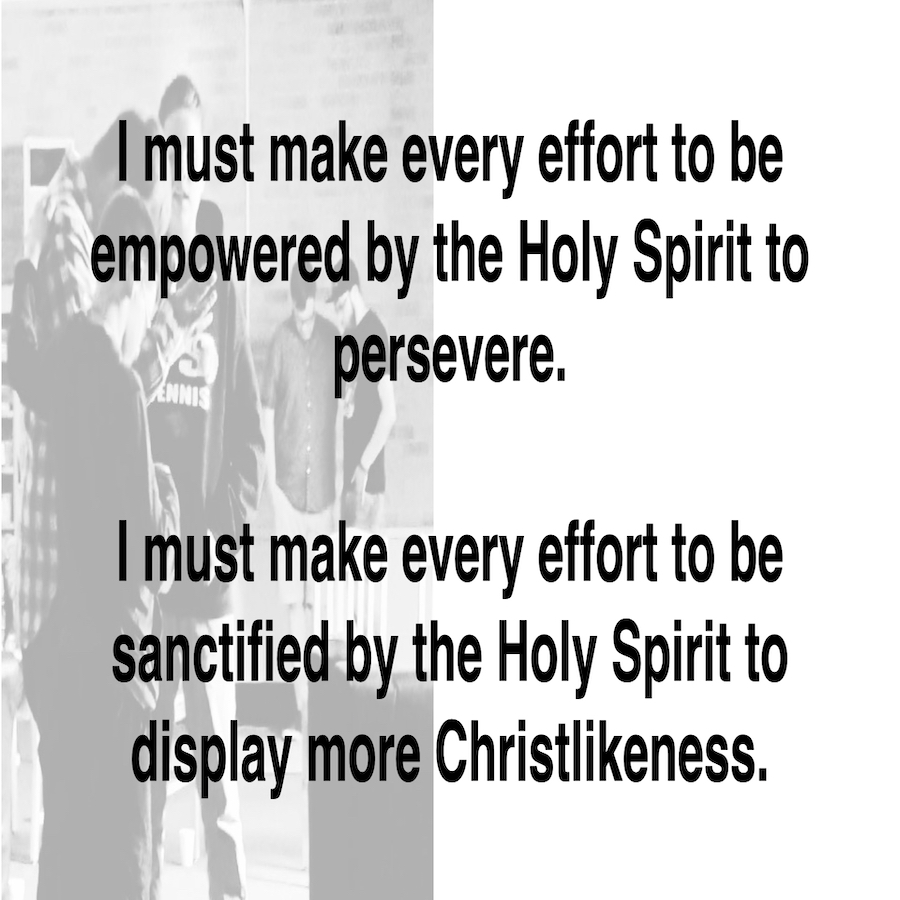
I must make every effort to be empowered by the Holy Spirit to persevere. I must make every effort to be sanctified by the Holy Spirit to display more Christlikeness.
As I add goodness to my faith, and add knowledge to my goodness, and add self-control to my knowledge, and add perseverance to my self-control, and add godliness to my perseverance, people should see in me what John the Baptists desired: He must increase, but I must decrease.
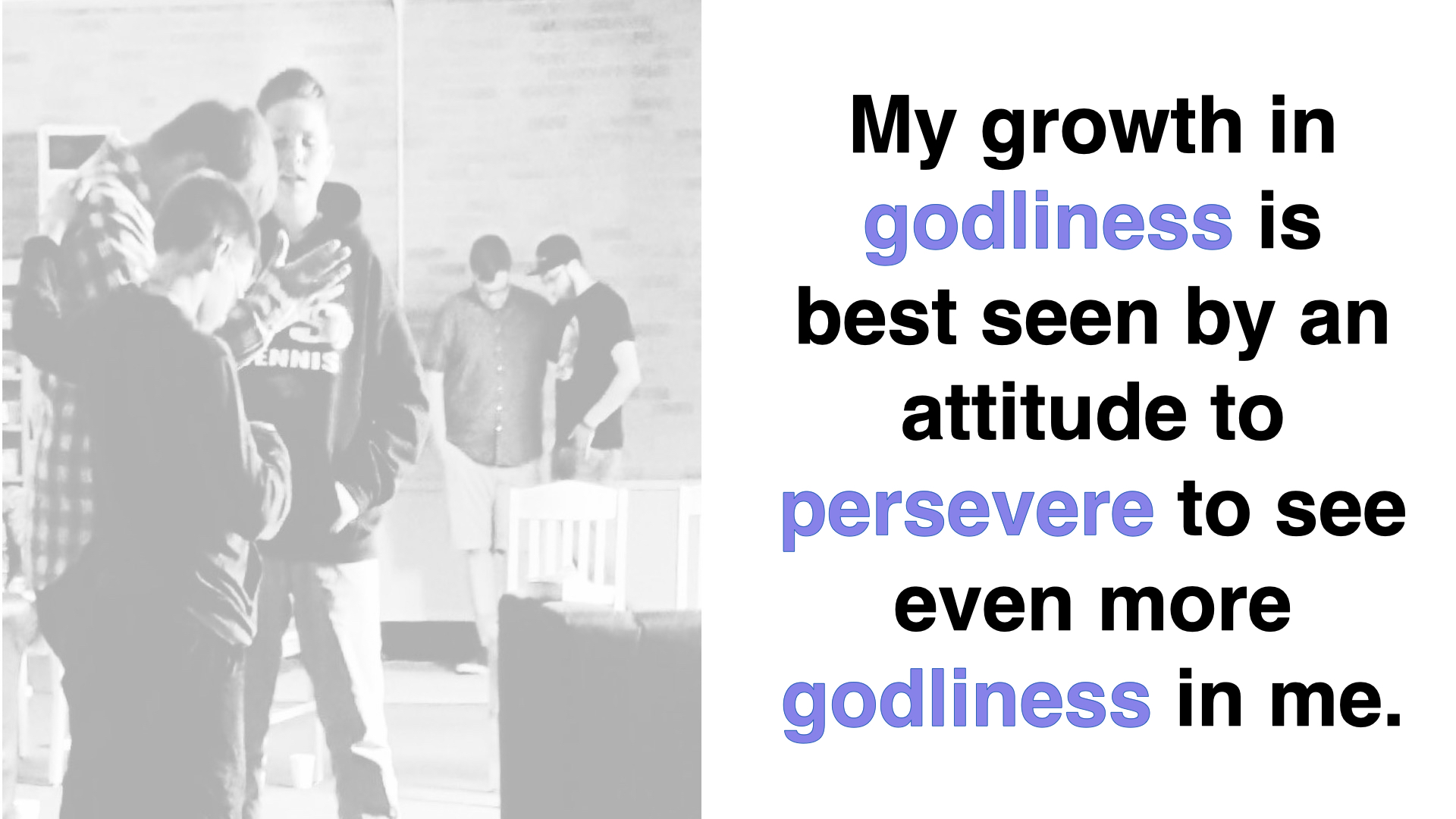
My growth in godliness is best seen by an attitude to persevere to see even more godliness in me.
Check out all of the other messages in this series from 2 Peter called Friends of the Faith.
Fight The New Drug shares, “Young people don’t have to go looking for harmful content online anymore—it can find them through social media, gaming platforms, algorithms, or even someone they trust. And sometimes, what begins as an ordinary online interaction can escalate into something much more serious.”
“God has not been trying an experiment on my faith or love in order to find out their quality. He knew it already. It was I who didn’t. In this trial He makes us occupy the dock, the witness box, and the bench all at once. He always knew that my temple was a house of cards. His only way of making me realize the fact was to knock it down.” —C.S. Lewis, in A Grief Observed
“Temptation feeds on curiosity. It tells me what I don’t have and what I should have by giving me comparisons. … Sin is so shortsighted. It only lives in the moment. It never bothers to ask if it’s worth it. Sin doesn’t think that far ahead. It makes you think only as far as forgiveness. Sin says, ‘Go ahead, God will forgive you,’ but it leaves out some very important facts: You can be forgiven and still pay the consequences of breaking trust, losing your marriage, and even devastating your children. You can be forgiven of sin, but not free of the consequences.” —Tim Dilena, in Chapter by Chapter on 2 Samuel 11
Wow, is this a powerful and important message for anyone struggling with temptation. Succinctly put: we never sin alone. In this post, T.M. Moore writes, “The first step along the way of escape is to remember that we never sin alone. We might think we can ‘get away’ with some little secret sin, but we are part of a community of the faithful; we are members of the Body of Christ. If I introduce infection to one of my fingers, or poison to my tongue, sooner or later my whole body is going to feel the consequences. It’s the same thing with sin. Any time we rebel against the Lord we plant a seed of disobedience and corruption in our own souls. Like dandelions, the seeds of rebellion can waft through all our thoughts, feelings, priorities, words, and deeds and take root in ways we cannot predict, and may not be able to control. Sooner or later, someone will feel the impact of our sinfulness, whether by some sin of commission or omission on our part.”
“The nearer your communion with Christ is, the more will you be permitted to know of Him. Our perceptions of Christ, if they are true, will be spiritual; and in proportion as our spiritual life is in a right condition, shall we be able to know more and more of Him.” —Charles Spurgeon
John Piper writes, “All of you have been wronged at one time or another. Most of you, probably, have been wronged seriously by someone who has never apologized or done anything sufficient to make it right.” Then he shares the encouraging truth in this posts: Justice will be done.
Listen to the podcast of this post by clicking on the player below, and you can also subscribe on Apple, Spotify, or Audible. Check out the video content in this post by clicking here.
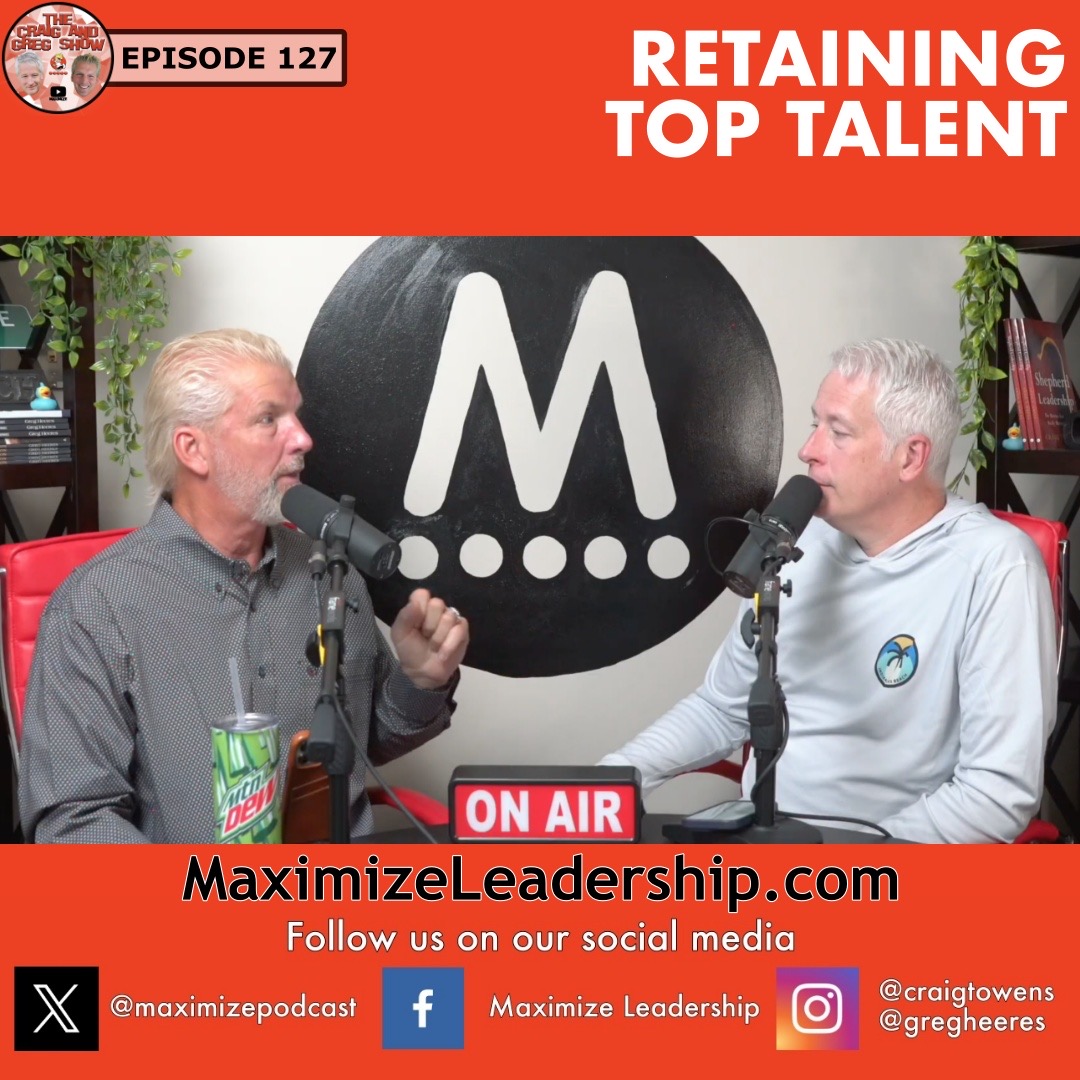
Greg and I were discussing how to keep your top talent from leaving your organization to find “greener pastures.” Here’s one strategy that can help you keep your superstars from leaving.
Speaking of the “boxes” on the corporate flowchart, Greg and I have a series of books calls Business by the Book. Check those out here.
If you would like to watch the full episode about retaining your top talent, you can find that here.
Listen to the podcast of this post by clicking on the player below, and you can also subscribe on Apple, Spotify, or Audible.
But Stephen, full of the Holy Spirit, looked up to heaven and saw the glory of God, and Jesus standing at the right hand of God. “Look,” he said, “I see heaven open and the Son of Man standing at the right hand of God.” (Acts 7:55-56)
Stephen saw the majestic glory of God and Jesus standing at His Father’s right hand.
Four times the writer of Hebrews says that Jesus completed all of His work and “sat down“ (Hebrews 1:3, 8:1, 10:12, 12:2). Jesus Himself affirms that sitting at His Father’s right hand was the designated place of the Victorious One (Revelation 3:21).
Yet, Stephen sees Him standing at the right hand of the throne.
The Majesty of Heaven stood!
Perhaps the words of Stephen sounded so much like His own, that Jesus stood to listen to him (v. 60; Luke 23:34).
Perhaps the death of this saint was so precious that Jesus stood to welcome himhome (Psalm 116:15).
Perhaps Stephen lived and died so victoriously that Jesus stood so He could give him a place on His throne—
To the one who is victorious, I will give the right to sit with Me on My throne, just as I was victorious and sat down with My Father on His throne. (Revelation 3:21)
Jesus has prepared a place for me where He is in heavenly realms (John 14:3; Ephesians 1:20, 2:6). He longs to welcome me into His happiness forever and ever (Matthew 25:21, 23).
I want to live every moment with my mind and heart on Jesus—with my thoughts and my eyes on Him. I want to run my race so well (Colossians 3:1; Hebrews 12:2), that even if my “finish line” is as gruesome as Stephen’s or Paul’s or Jesus’ that I will cross that line into the waiting arms of my Savior’s royal welcome!
How about you? It is possible to live and run and die in a way that you, too, will receive your royal welcome.
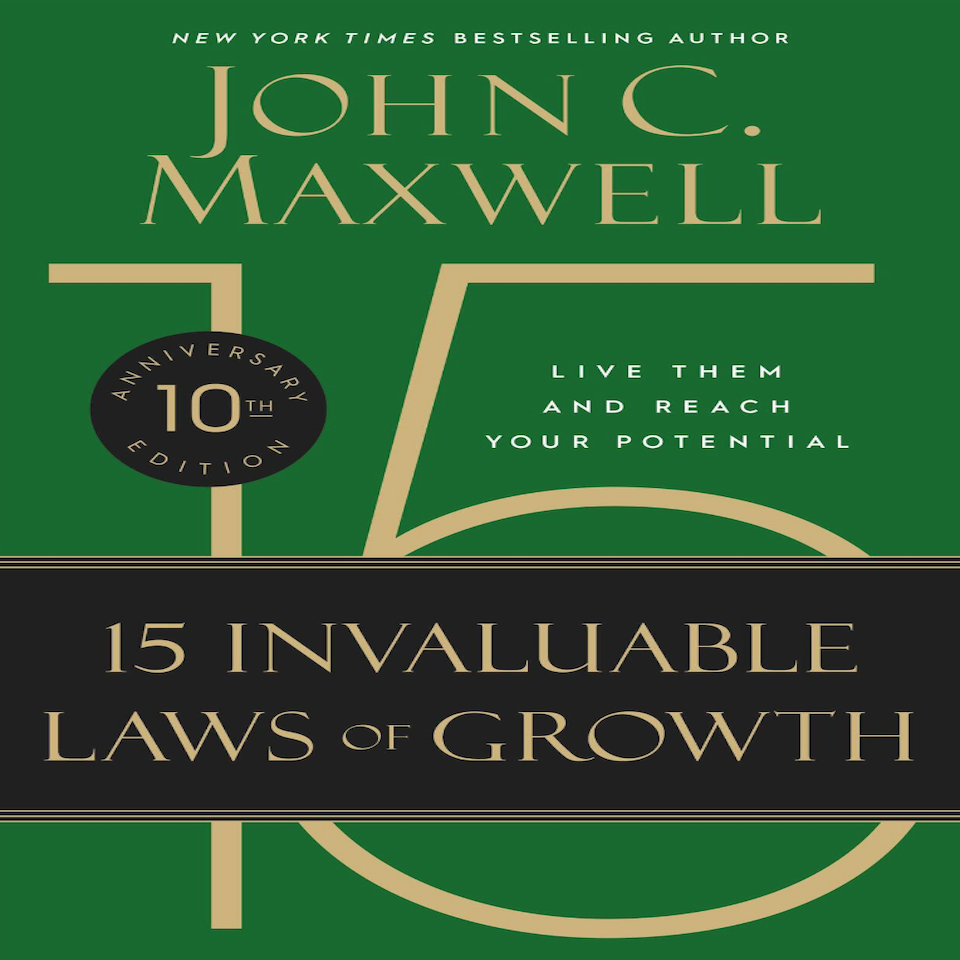
Not too long ago, a friend noted, “You seem to read a lot of John Maxwell’s books.” I smiled and said, “As long as he continues writing content that I can apply to my life, I’ll keep on reading.” And that’s just what I got from The 15 Invaluable Laws of Growth.
John writes in the introduction of this book, “To reach your potential you must grow. And to grow, you must be highly intentional about it.” These 15 laws are indeed designed for those who want to intentionally grow, as none of them will come to fruition automatically or easily. The application of all of these laws will take time and intentional effort.
But what I appreciate about John Maxwell’s insights is their realism. He doesn’t write fluffy platitudes that sound nice yet really don’t change anything, but neither does he share thoughts that are unobtainable. Each of these 15 laws required me to confront myself, consider the potential for growth, and then make an intentional and specific plan to implement the principles he shared.
If you have read other John Maxwell books, you will discover many places where these laws overlap and are supported by principles from those books. But if haven’t read anything from this prolific author yet, 15 Laws is an excellent starting place to begin a new phase of leadership growth in your life.
Listen to the podcast of this post by clicking on the player below, and you can also subscribe on Apple, Spotify, or Audible. Check out the video content in this post by clicking here.
Years ago, I read a book by Tim Elmore called Artificial Maturity. The premise of his book is that youth have access to so much information that they can sound informed and educated, but because they don’t know what to do with all that knowledge, they remain unprepared to handle the situations they face each day.
If we’re not careful, we Christians can be described as artificially mature. We know what the Bible says, we can quote a lot of passages, but if we don’t know how to actually apply that knowledge in our everyday lives, we are immature.
So we have to do something. One of the things we have to do is use our brain. God wants us to be fully engaged so that we can love Him with all our heart, soul, mind, and strength. So there needs to be a recognition of what we don’t know so that we can know how to apply what we know.
We don’t know what we don’t know until we know someone who knows something we don’t know (Romans 7:7).
But once we know that we don’t know, we have a choice: (1) Seek knowledge so we can know what we don’t know, or (2) Seek someone who can help us both know what we don’t know and know how to apply what we’ve learned. The Holy Spirit is that Someone (John 16:14-15).
We’ve already looked at one word for know in 2 Peter 1:2—epignosis is how to apply what we know. Remember the progression (vv. 2-5). The word for knowledge in v. 5 is gnosis: this is moral wisdom. So gnosis is having the knowledge; epignosis is how to apply that knowledge.
When we perceive the goodness—the gentlemanliness—of Jesus and we see ourselves in comparison, it makes us want to: (1) throw in the towel, (2) try to improve ourselves (which will ultimately make us want to throw in the towel), or (3) submit to the Spirit’s sanctification process.
God loves to help those who admit that cannot help themselves. In 1 Peter 5:5, Peter quotes Solomon, “God opposes the proud but gives grace to the humble.” God stands back from those who say, “I know how to do this myself,” but He rushes in to help those who say, “I know I need to change, but I don’t know how” of “I need wisdom to apply what I know.”
“There are two kinds of people: those who say to God, ‘Thy will be done,’ and those to whom God says, ‘All right, then, have it your way.’” —C.S. Lewis
So we make every effort to add goodness to our faith, we make every effort to add knowledge to our goodness, and we make every effort to add self-control to our knowledge.
Self-control literally means “with strength.” Knowledge without strong self-control can be dangerous—just like a curvy road without guardrails.
In Titus 2:12, Paul ties together a sound mind with sober behavior. So it appears that self-control starts in the mind that is taking in new knowledge. Remember that knowledge is Spirit-breathed, so the strength of self-control must also be His strength. My strength fails, but God’s strength sustain me (Isaiah 40:29-31; 41:10, 13). I can know that…
God’s strength is my assurance in spiritual battles—Ephesians 6:10
His strength gives me longsuffering patience and joy—Colossians 1:11
The same strength Jesus used is given to us—Hebrews 2:14, 18
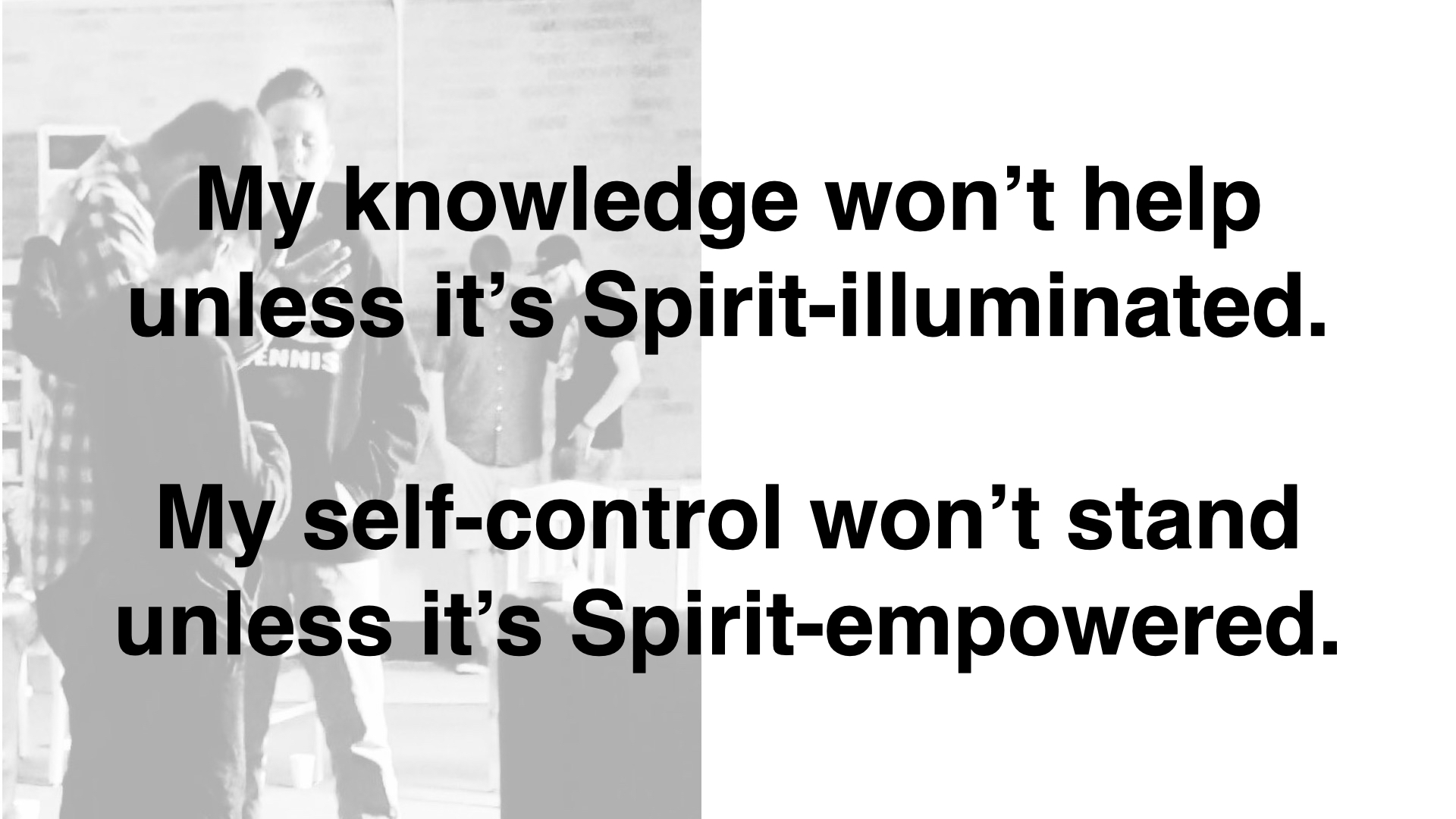
My knowledge won’t help unless it’s Spirit-illuminated. My self-control won’t stand unless it’s Spirit-empowered.
Our “make every effort” is to ask, receive, and apply. And then do that again, and again, and again with the Holy Spirit’s illumination and empowerment.
Check out all of the other messages in this series by clicking here.
T.M. Moore wrote, “The apostle Paul promised that, whenever we are faced with temptation, God will provide a way of escape, so that we can bear up and grow through temptation into greater maturity in the Lord (1 Corinthians 10:13). We are practicing self-control when we search for that way of escape and direct our steps toward it: ‘I thought about my ways, and turned my feet to Your testimonies. I made haste, I did not delay to keep Your commandments’ (Psalm 119:59, 60).” Read more about the necessity of self-control in this post.
“Character doesn’t make you a leader; it protects you as a leader.” —John Maxwell
“Hard words are an evidence of the weakness of the cause which they are used to support. Hard arguments softly put, are the really effective weapons, but it takes some of us a long time to learn this; and generally, in our younger days, we wear away our own strength by the violence with which we use it.” —Charles Spurgeon
One of the leaders in my school shared this: “Numerous researchers have studied the use of wait time by teachers. Pausing for just 3-5 seconds after a question has been shown to produce higher-level thinking and answering. This is true both of classroom questioning and individual conversation. Slow down during conversation today and see what happens!” Previously, I shared an important lesson I learned about slowing down.
Listen to the podcast of this post by clicking on the player below, and you can also subscribe on Apple, Spotify, or Audible. Check out the video content in this post by clicking here.
Over the past several years Greg and I have given you innumerable pieces of advice on how to grow and develop your team. If you’ve been diligently working at mentoring, chances are you’ve got a handful of superstars on your team. So now the question becomes: how do you get them to stay? In today’s episode, we give you strategies to entice your high performers to remain on the team.
[1:45] As your teammates develop and mature, how do you keep your best talent from leaving your organization?
[3:16] It’s more profitable to keep your in-house talent than to hunt for new talent.
[4:20] Existing teammates know your culture better than new hires would.
[5:43] The best employees have other metrics which motivate them. You need to discover what those are.
[6:32] Including your top talent in your succession planning is a huge motivator for the longevity of their tenure.
[10:12] Micromanagement discourages top talent from sticking around.
[11:15] Here’s an idea of how to develop an organic plan for your next generation leaders.
[12:51] Leaders need to do more than focus on the bottom line if they want to see emerging leaders develop.
[15:18] If leaders are lifelong learners, mentoring the leaders around them to go to the next level will become quite natural.
[18:37] Let your top talent begin writing their own job descriptions.
[21:32] Show that you believe in your teammates by giving them bigger opportunities.
[24:24] A business coach can help you spot opportunities for leadership development that you may be missing.
Greg and I have co-authored a series of books called Business by the Book—what the Bible says about each department in a typical corporation. Check them out here.
Listen to the podcast of this post by clicking on the player below, and you can also subscribe on Apple, Spotify, or Audible.
Whoever claims to live in Him must live as Jesus did. (1 John 2:6)
If I claim…
…I have fellowship with Jesus
…I know the truth
…I am done with sinning
…I live in the light
Then I must think, speak, and act like Jesus.
To prove my claims I must show that…
…I know the Truth and live in it
…I quickly confess and repent of sin
…I know His commands and obey them
…I know His love and I love others
There is no better proof for my claims than Christlikeness!
As Charles Spurgeon said,
“When we try to be, in every respect, what God’s Word tells us we ought to be, then may we know that we are in God; but if we walk carelessly, if we take no account of our actions, but do, after a random fashion, whatever comes into our foolish hearts, then have we no evidence at all that we are in God.”
The proof of our claims is self-evident. John uses the phrase “this is how we know” 8 times in this letter, and he uses the word “know” another 35 times!
It’s not enough for me to verbally make the claims, but people should hear the words of Jesus in my mouth, see His compassion in my actions, and know His love fills my heart and informs my mind.
I’ll say it again: There is no better proof for my claims than Christlikeness. I know it, everyone who sees or hears me knows it, and, most importantly, Jesus knows it.
Dear children, let’s not merely say that we love each other; let us show the truth by our actions. Our actions will show that we belong to the truth, so we will be confident when we stand before God. (1 John 3:18-19 NLT)