Listen to the podcast of this post by clicking on the player below, and you can also subscribe on Apple, Spotify, or Audible.
But Stephen, full of the Holy Spirit, looked up to heaven and saw the glory of God, and Jesus standing at the right hand of God. “Look,” he said, “I see heaven open and the Son of Man standing at the right hand of God.” (Acts 7:55-56)
Stephen saw the majestic glory of God and Jesus standing at His Father’s right hand.
Four times the writer of Hebrews says that Jesus completed all of His work and “sat down“ (Hebrews 1:3, 8:1, 10:12, 12:2). Jesus Himself affirms that sitting at His Father’s right hand was the designated place of the Victorious One (Revelation 3:21).
Yet, Stephen sees Him standing at the right hand of the throne.
The Majesty of Heaven stood!
Perhaps the words of Stephen sounded so much like His own, that Jesus stood to listen to him (v. 60; Luke 23:34).
Perhaps the death of this saint was so precious that Jesus stood to welcome himhome (Psalm 116:15).
Perhaps Stephen lived and died so victoriously that Jesus stood so He could give him a place on His throne—
To the one who is victorious, I will give the right to sit with Me on My throne, just as I was victorious and sat down with My Father on His throne. (Revelation 3:21)
Jesus has prepared a place for me where He is in heavenly realms (John 14:3; Ephesians 1:20, 2:6). He longs to welcome me into His happiness forever and ever (Matthew 25:21, 23).
I want to live every moment with my mind and heart on Jesus—with my thoughts and my eyes on Him. I want to run my race so well (Colossians 3:1; Hebrews 12:2), that even if my “finish line” is as gruesome as Stephen’s or Paul’s or Jesus’ that I will cross that line into the waiting arms of my Savior’s royal welcome!
How about you? It is possible to live and run and die in a way that you, too, will receive your royal welcome.
Listen to the podcast of this post by clicking on the player below, and you can also subscribe on Apple, Spotify, or Audible. Check out the video content in this post by clicking here.
Years ago, I read a book by Tim Elmore called Artificial Maturity. The premise of his book is that youth have access to so much information that they can sound informed and educated, but because they don’t know what to do with all that knowledge, they remain unprepared to handle the situations they face each day.
If we’re not careful, we Christians can be described as artificially mature. We know what the Bible says, we can quote a lot of passages, but if we don’t know how to actually apply that knowledge in our everyday lives, we are immature.
So we have to do something. One of the things we have to do is use our brain. God wants us to be fully engaged so that we can love Him with all our heart, soul, mind, and strength. So there needs to be a recognition of what we don’t know so that we can know how to apply what we know.
We don’t know what we don’t know until we know someone who knows something we don’t know (Romans 7:7).
But once we know that we don’t know, we have a choice: (1) Seek knowledge so we can know what we don’t know, or (2) Seek someone who can help us both know what we don’t know and know how to apply what we’ve learned. The Holy Spirit is that Someone (John 16:14-15).
We’ve already looked at one word for know in 2 Peter 1:2—epignosis is how to apply what we know. Remember the progression (vv. 2-5). The word for knowledge in v. 5 is gnosis: this is moral wisdom. So gnosis is having the knowledge; epignosis is how to apply that knowledge.
When we perceive the goodness—the gentlemanliness—of Jesus and we see ourselves in comparison, it makes us want to: (1) throw in the towel, (2) try to improve ourselves (which will ultimately make us want to throw in the towel), or (3) submit to the Spirit’s sanctification process.
God loves to help those who admit that cannot help themselves. In 1 Peter 5:5, Peter quotes Solomon, “God opposes the proud but gives grace to the humble.” God stands back from those who say, “I know how to do this myself,” but He rushes in to help those who say, “I know I need to change, but I don’t know how” of “I need wisdom to apply what I know.”
“There are two kinds of people: those who say to God, ‘Thy will be done,’ and those to whom God says, ‘All right, then, have it your way.’” —C.S. Lewis
So we make every effort to add goodness to our faith, we make every effort to add knowledge to our goodness, and we make every effort to add self-control to our knowledge.
Self-control literally means “with strength.” Knowledge without strong self-control can be dangerous—just like a curvy road without guardrails.
In Titus 2:12, Paul ties together a sound mind with sober behavior. So it appears that self-control starts in the mind that is taking in new knowledge. Remember that knowledge is Spirit-breathed, so the strength of self-control must also be His strength. My strength fails, but God’s strength sustain me (Isaiah 40:29-31; 41:10, 13). I can know that…
God’s strength is my assurance in spiritual battles—Ephesians 6:10
His strength gives me longsuffering patience and joy—Colossians 1:11
The same strength Jesus used is given to us—Hebrews 2:14, 18
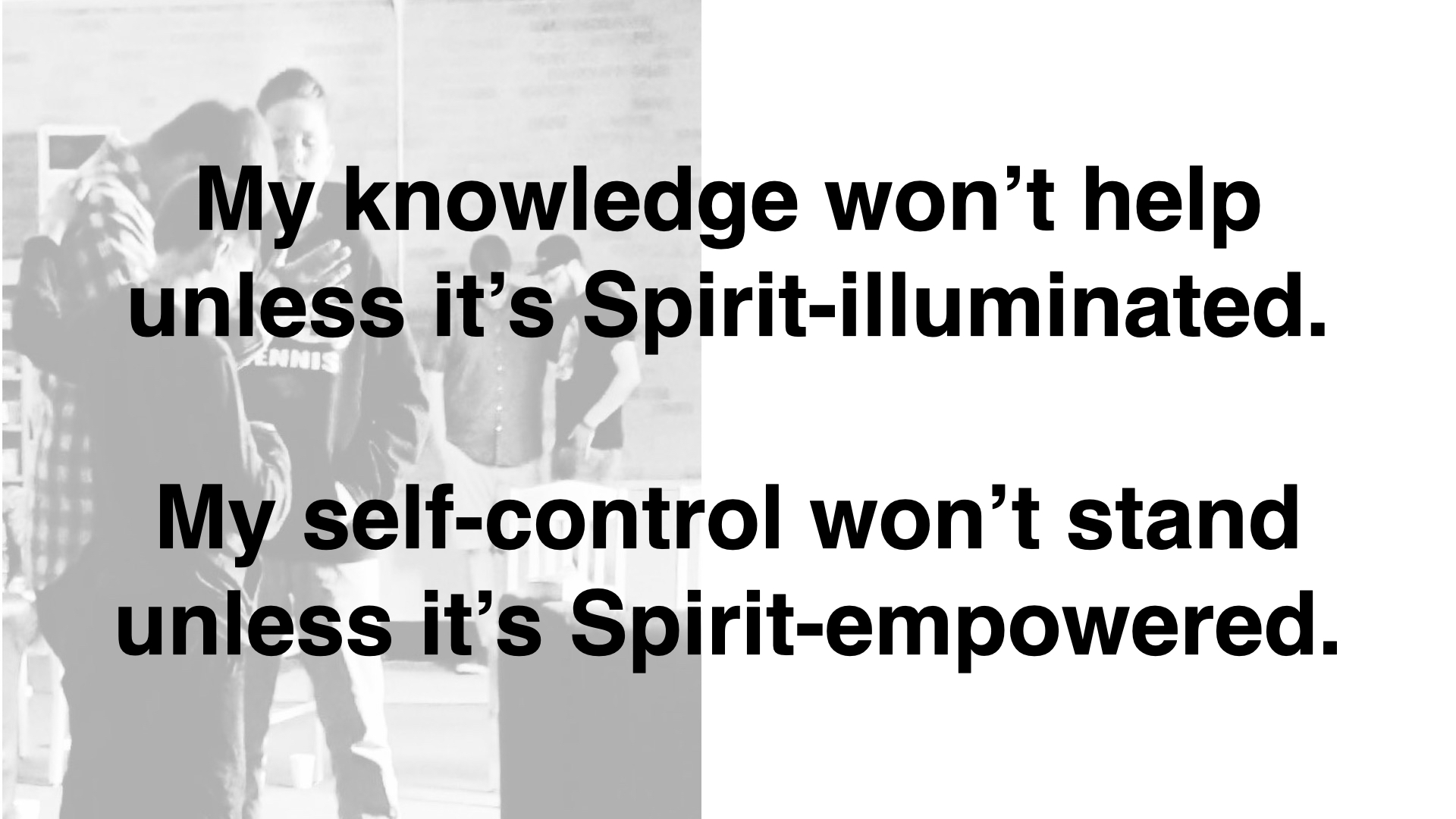
My knowledge won’t help unless it’s Spirit-illuminated. My self-control won’t stand unless it’s Spirit-empowered.
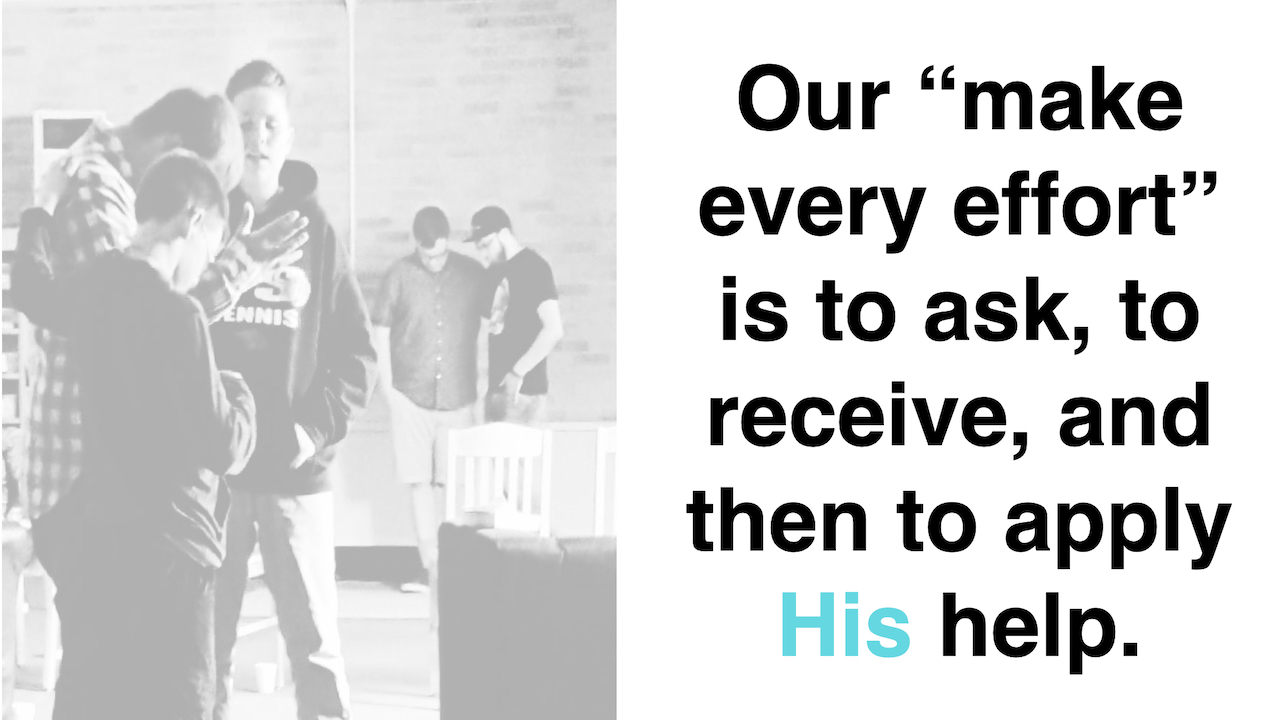
Our “make every effort” is to ask, receive, and apply. And then do that again, and again, and again with the Holy Spirit’s illumination and empowerment.
Check out all of the other messages in this series by clicking here.
Do not spread slanderous gossip among your people.Do not stand idly by when your neighbor’s life is threatened. I am the LORD. (Leviticus 19:16 NLT)
Slander is defined as: “The utterance of false charges or misrepresentations which defame and damage another’s reputation.” (Merriman-Webster dictionary)
I will not tolerate people who slander their neighbors. I will not endure conceit and pride. (Psalm 101:5 NLT)
Hiding hatred makes you a liar; slandering others makes you a fool. Too much talk leads to sin. Be sensible and keep your mouth shut. (Proverbs 10:18-19 NLT)
And I tell you this, you must give an account on judgment day for every idle word you speak. (Matthew 12:36)
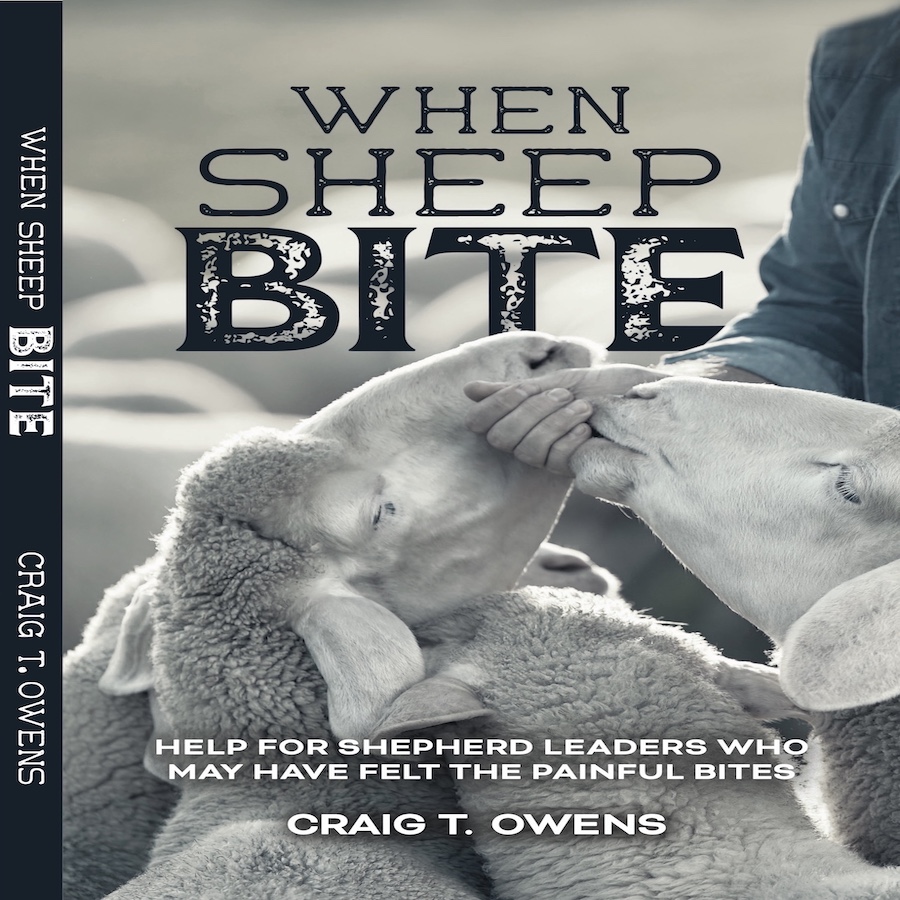
In my book When Sheep Bite, I have a whole chapter about dealing with slanderers. In that chapter I wrote—
You might be thinking, “But I have to respond to these lies, right? I can’t just let them continue to fly around unchecked because people may start believing these falsehoods.” I think this is a very natural response, but I want to again call us to strive for a supernatural response—something we can only do if we are completely yielded to God. Just as we saw what Peter wrote about the way Jesus didn’t verbally lash out at His slanderers (1 Peter 2:23), we need to respond in the same way as our Chief Shepherd did. …
Don’t treat those who criticize and slander you as an enemy. Instead, grieve for their hardened hearts and pray for God’s mercy on them. Intercede for them to be able to acknowledge their sinful words, so they may ask God for forgiveness before His judgment inevitably falls on them. Remember that these sheep—though they are angry and attacking—are still ones for whom Jesus shed His blood. The natural response may be a desire to see our slanderers eternally punished, but the supernatural response is to desire for their soul to be eternally in God’s presence. (Excerpt from When Sheep Bite)
God-fearing people are not to listen to slander nor to slander another. Every human is created in the image of God—to slander another is to slander his or her Creator.
Many people claiming to be a savior of the Jewish people had come on the scene earlier.
We see the Jewish leadership asking John the Baptizer if he was “the one” they had been expecting (John 1:19-23). In the Book of Acts, Gamaliel reminds the Sanhedrin of all of the previous men who had claimed to be the deliverer and had utterly failed in their attempts (see Acts 5:34-37).
Undoubtedly, the shepherds had heard many stories as they sat around their campfires at night. So notice that the angel clarifies that this is not just another story, but the fulfillment of the promises of the advent of THE Messiah. Jesus wasn’t just another so-called savior, but He was “THE Messiah, THE Lord.”
Jesus Himself would say of Himself, “I am THE way, THEtruth, and THE life” (John 14:6).
He is THE ONE AND ONLY!
Only Jesus is the Alpha and Omega (Revelation 1:8).
Only Jesus holds the keys of death and Hell (Revelation 1:18).
Only Jesus fulfills every prophetic promise (Hebrews 1:1-2; 2 Peter 1:19-20).
All confusion is removed when we look to Jesus.
All doubts are satisfied in Him.
All uncertainty is made certain by Who He is, what He did, what He is still doing, and what He will soon complete!
Listen to the podcast of this post by clicking on the player below, and you can also subscribe on Apple, Spotify, or Audible. Check out the video content in this post by clicking here.
Looking at King David, we can see an imperfect picture of our perfect King Jesus.
Let’s be honest: Coming into the king’s presence can be a fearful activity. Does he know something about you that you don’t know? Is he in a good mood? For the law-abiding citizen of Israel, coming before King David was without fear or punishment, but with a healthy respect of who he was. But with King David, we see a healthy, loving attitude that the people had.
David and all Israel celebrated when the ark of the covenant of the Lord came to Jerusalem (2 Samuel 6:5).
And the way David blessed all the people following this would have raised the level of esteem they had for him.
God was pleased with David too: The Lord gave David victory wherever he went (8:6).
David continued to do the right thing (8:15).
At the end of David’s life the eyes of all Israel were on David to see who he would select to sit on his throne after him.
Psalm 99 appears to be one that was written during the reign of King David. This royal psalm looks at the limited reign of David to see a better picture of the throne room of King Jesus.
The opening words tell us “the LORD reigns” (v. 1a). The word tremble can have two definitions. The first is to be perturbed or disquieted. This is addressed to the nations who don’t bow their knee to Yahweh, as a result they shake in fear. Second, this word tremble can also mean to be excited about coming before the King.
King Jesus is called “great, exalted over all the nations” (not just Israel), and He is said to have a “great and awesome name.”
“He IS holy,” which means He is the undisputed standard of all that is right and wrong, and no one can question His ruling. The nations that don’t know the King as their King tremble and shake, but those who do know Him as their King praise His awesome name (Revelation 5:13).
In many translations the word King is capitalized in v. 4, but we don’t know if this is referring to God or David. Since v. 2 refers to the “LORD in Zion,” that would appear to be a capital “K” King. But v. 4 mentions Jacob (not Zion), so I believe this is a lower case “k” referring to David. Let me restate verse 4 this way: “David is mighty, David loves justice—David has established equity; in Jacob David has done what is just and right.”
David’s own prayers also bear out this interpretation (see Psalm 20:6-9; 21:1-7). This is what the royal psalms do: Point us to David to show us a better picture in Jesus.
This is the end of stanza 1 which ends with this call to worship (v. 5).
Verses 6-7 give us another example (prior to the era of the kings) of Moses, Aaron, and Samuel. These priests could call on God’s name and expect to receive an answer from Him. They lived obediently to all God spoke to them (v. 7b). Then v. 8 reminds us that God still speaks and forgives, but He is also the final Judge who will punish “misdeeds.” These verses clearly speak to Jesus who is both King and Priest before God’s throne.
This is the end of stanza 2, which has a similar call to worship as stanza 1 (v. 9).
I want you to also notice some places of worship:
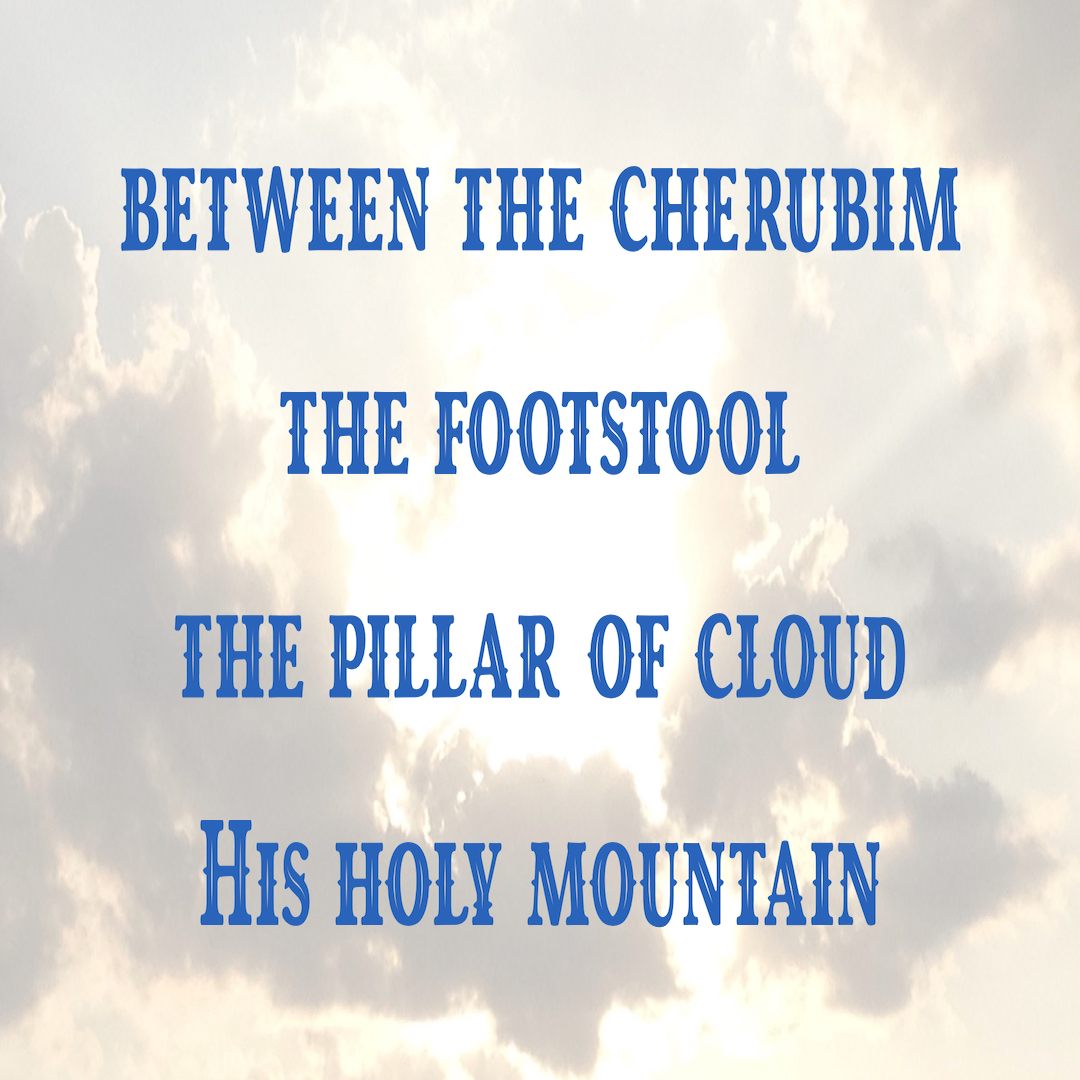
between the cherubim (v. 1)—God’s mercyseat. This is where sin was atoned every year under the old system of David’s era, but where Jesus has has presented the once-for-all atonement for all who will believe on Him.
His footstool (v. 5)—another name for the ark of the covenant of the LORD (1 Chronicles 28:2).
the pillar of cloud (v. 7)—the covering of God’s presence and the reminder of His protection.
His holy mountain (v. 9)—see Hebrews 12:18-29.
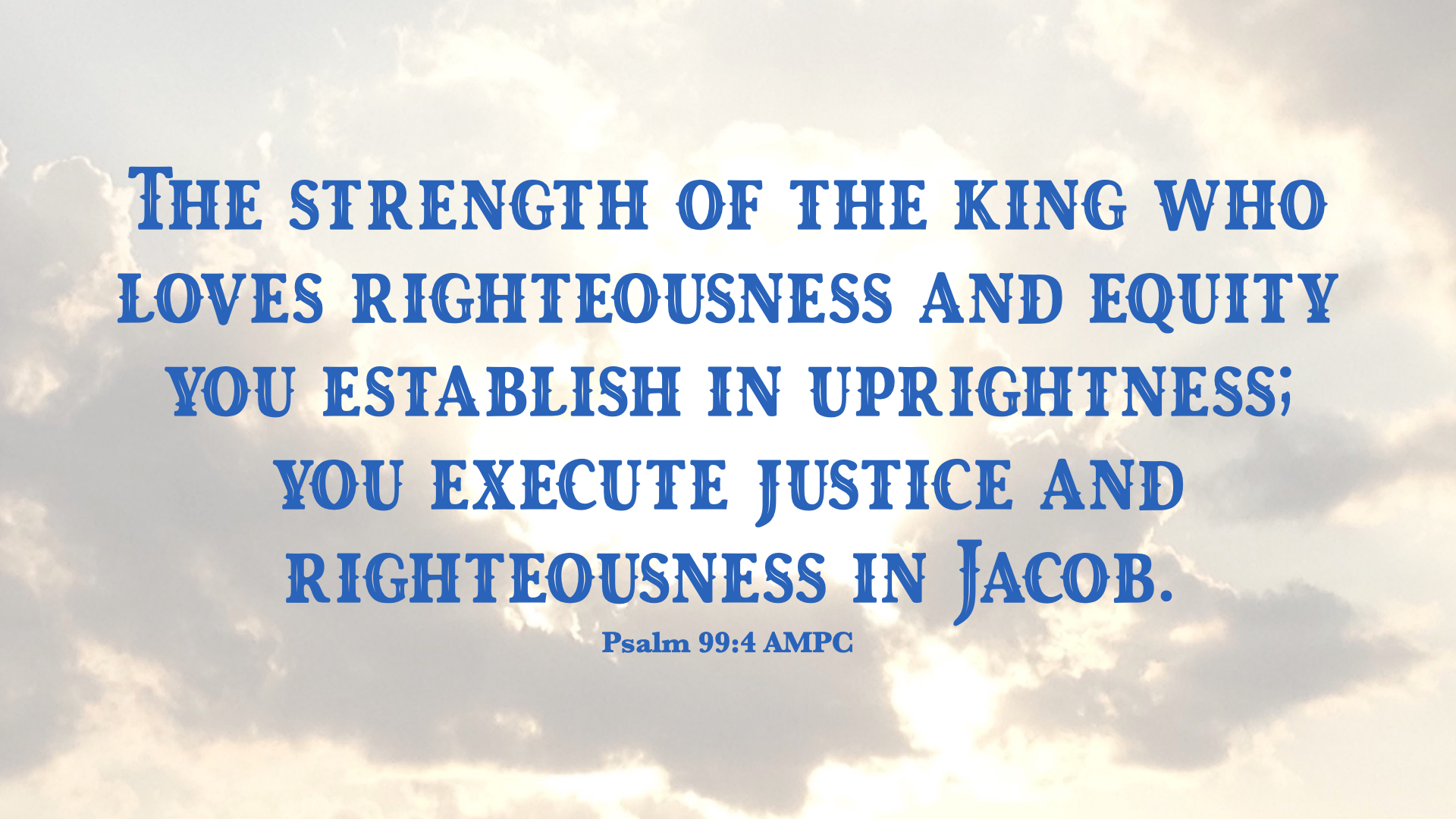
Remember Psalm 99:4 in the AMPC—The strength of the king who loves righteousness and equity You establish in uprightness; You execute justice and righteousness in Jacob (Israel).
King Jesus is the perfect King of justice and righteousness (Isaiah 9:7; Revelation 5:12).
One day every knee will bow at the footstool of God’s holy mountain. They will either bow in despair and shaking because they did not put their faith in Jesus, or they will bow in humble adoration for the atonement that King Jesus made for them.
For those who don’t know Jesus—Away from Me, all you evildoers! There will be weeping there, and gnashing of teeth, when you see Abraham, Isaac and Jacob and all the prophets in the kingdom of God, but you yourselves thrown out. (Luke 13:27-28)
For those who know King Jesus, there is no fear (Luke 12:4-5; 1 Corinthians 15:55-57)!
Christians must live every day exalting and worship God, bowing gratefully at His footstool. This lifestyle of adoration of the great and awesome King is our testimony to a skeptical and searching world.
Listen to the podcast of this post by clicking on the player below, and you can also subscribe on Apple, Spotify, or Audible.
…When He was reviled, did not revile (1 Peter 2:23 NKJV).
In the Greek language, this phrase is loidoreo antiloidoreo ou antiloidoreo.
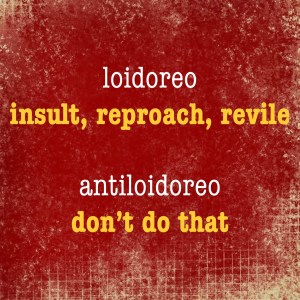
Loidoreo means to insult, reproach, and revile.
Antiloidoreo means not to do those things.
Reviling others—especially those who have already reviled us—is a natural response. But not reviling or responding to revilers with reviling of our own is a supernatural response.
Anyone can speak or act unkindly, and it’s sort of expected when someone else has reviled you first. But to bless someone that has revealed first or to remain silent as Jesus did, requires Spirit-empowered self-control (see 1 Corinthians 4:12 and 1 Peter 3:9).
Our silence in these situations speaks volumes!
Was Jesus really silent? Peter says Jesus “entrusted Himself to Him who judges justly.” I think Jesus had an internal dialogue with His Father, something like, “Father, You hear the hurtful reviling they are heaping on Me. I trust You to handle this so that I don’t have to.”
The only words Jesus spoke aloud to those who were reviling Him were still words spoken to His Father: “Father, forgive them” (Luke 23:34).
Jesus responded with supernaturalantiloidoreo, which spoke louder than their naturalloidoreo!
So this has me thinking: When loidoreo is hurled at me, will I respond naturally with more loidoreo? Or will I allow the Holy Spirit to help me respond supernaturally with antiloidoreo?
My book When Sheep Bite is all about seeking to respond supernaturally when we have been treated unfairly and unkindly. This book is especially for pastors, but I also shared several posts and videos for all Christians in a series called When Sheep Bite Sheep.
You may also want to check out these related blog posts:
I spent a year with G.K. Chesterton, reading through excerpts of his writings each day for the whole year. It was educational, eye-opening, and quite enjoyable. Please check out my book review of A Year With G.K. Chesterton.
There’s no way I could pick my top Chesterton quotes, so here are just a handful from the top of the list. My Patreon supporters have dozens of more quotes. You can get access to those as well by clicking here.
“A stiff apology is a second insult. The injured party does not want to be compensated because he has been wronged; he wants to be healed because he has been hurt.”
“An adventure is only an inconvenience rightly considered. An inconvenience is an adventure wrongly considered.”
“Fallacies do not cease to be fallacies because they become fashions.”
“People generally quarrel because they cannot argue.”
“Job was comfortless before the speech of Jehovah and is comforted after it. He has been told nothing, but he feels the terrible and tingling atmosphere of something which is too good to be told. The refusal of God to explain His design is itself a burning hint of His design. The riddles of God are more satisfying than the solutions of man.”
“Idolatry is committed, not merely by setting up false gods, but also by setting up false devils; by making men afraid of war or alcohol, or economic law, when they should be afraid of spiritual corruption and cowardice.”
“The man of the true religious tradition understands two things: liberty and obedience. The first means knowing what you really want. The second means knowing what you really trust.”
“There are many ways to fall down, but there’s only one way to stand up straight.”
“This is, indeed, the supreme absurdity of the modern world, that it imagines that it can introduce anarchy into the intellect without introducing anarchy into the commonwealth. It imagines that it can make its thoughts go crooked and its motor-cars will still go straight.”
“Jesus promised His disciples three things: they would be completely fearless, absurdly happy, and in constant trouble.”
“Pornography is not a thing to be argued about with one’s intellect, but to be stamped on with one’s heel.”
Listen to the podcast of this post by clicking on the player below, and you can also subscribe on Apple, Spotify, or Audible. Check out the video content in this post by clicking here.
There’s a scene in The Princess Bride that rings true for us. As the grandfather is reading the story to his sick grandson, he has just revealed that the hero in the story has died. The grandson stops his grandfather, “Wait, grandpa, you’re reading that wrong.” This young man wants what all of us want: For the good guys to be vindicated and for the bad guys to get what’s coming to them.
The next Royal Psalm assures us that our Judge will perfectly balance His scales of justice. King David (sort of) gives us a picture of this.
King David’s son Absalom had usurped the throne, and David is fleeing the city with his trusted inner circle. Along the way he is confronted by a man named Shimei, who was from the same family as King Saul (2 Samuel 16:5-12). David gives us a good foretaste of King Jesus in the way he initially responds to this attack (19:18b-23). Sadly, David apparently hung on to these slights and asked his son Solomon to keep an eye on Shimei (1 Kings 2:8-9). So I’m going to guess that our Royal Psalm was written between these two incidents.
Psalm 98 is a call to sing our praise to our King and Judge. First, we are to sing to Him and about Him because of what Hehas already done:
He has done marvelous things (v. 1)
He has provided salvation (v. 1)
He has made His salvation known (v. 2)
He has revealed His righteousness (v. 2)
He has remembered His love for us (v. 3)
He has remembered His faithfulness toward us (v. 3)
the earth has seen His salvation (v. 3)
Then we are called to keep on singing in anticipation of what He is going to do: we shout for joy and burst into jubilant song (v. 4), make music (vv. 5-6a), shout for joy (v. 6b), and see creation praising all around us (vv. 7-9a).
All of this singing because He comes to judge? Does that sound right?
It sounds right when judgment is in the hand of the Perfect Judge. The Bible describes judges who are looking for bribes, or who are swayed by personal feelings (like King David), or Jesus even identified a judge who didn’t fear God or care about people.
But God on His throne isn’t any of these things! Isaiah prophesies Christ’s first Advent as one of peace (Isaiah 42:1-4). Even when Jesus was maligned and mistreated even more hatefully—and without having done anything wrong—than David, He still didn’t retaliate (1 Peter 2:21-23).
Jesus entrusted Himself to Him Who judges justly, which is what Psalm 98 calls us to do.
He comes to judge [vindicate] the earth [creation], which has been groaning for this (Romans 8:21-22).
He will judge [acquit or declare guilty] the world and its peoples (Matthew 25:31-32; Revelation 20:12).
His judgement will be with righteousness and equity—
righteousness = the perfect standard
equity = the perfect consequence (see also Isaiah 42:10-13)
In light of the perfect judgment from the perfect King that is coming, how should we live today?
He will handle retribution then—so don’t retaliate today (Isaiah 11:1-5).
He will handle vindication then—so forgive today (1 Peter 2:23; Luke 23:34).
He will call you to give an account then—so change your words and actions today (Matthew 12:36).
He will forgive blood-washed saints then—so forgive today (Matthew 6:14-15).
He will judge perfectly then—so don’t be judgmental today (James 5:9; Romans 2:1-3).
He will reward perfectly then—so don’t look for applause from the world today (2 Timothy 4:7-8; Matthew 25:34).
Our King has won our salvation, and He is going to balance the scales perfectly when He returns, so we should be singing His praise every day until His return!
Listen to the podcast of this post by clicking on the player below, and you can also subscribe on Apple, Spotify, or Audible. Check out the video content in this post by clicking here.
There is a confidence and joy in knowing how things will turn out, in having “the inside scoop” that others don’t have.
In my book Shepherd Leadership, I tell the story of the time when I was working as the executive director of a camp and conference center. I was breaking down boxes at the recycle dumpster when a guest approached me, not knowing I was the director. I was able to help her because I knew who to talk to, where the supplies were, and how things worked around the facilities. I knew what I knew, but our guest was a little surprised that I knew what I knew.
We see this in the life of David as he became king of Israel and as his leadership expanded.
David was first anointed king over merely the tribe of Judah, but his influence began to expand (2 Samuel 3:1). It wasn’t just fear of his military power, but people genuinely liked him and saw that he had the best in mind for them (3:36), until eventually all of the tribes of Israel saw David as their king (5:1-3). His reign as king saw him continuing to grow in his strength, wisdom, and influence (14:18-20).
David was unquestionably established as the king—the leader God had chosen. Seeing David reigning as king brings us to the next Royal Psalm (Psalm 97).
The statement that “the LORD reigns” (v. 1) is widely accepted. For instance, the foundational document of the United States of America opens with the words, “The unanimous Declaration of the thirteen united States of America … We hold these truths to be self-evident, that all men are created equal, that they are endowed by their Creator with certain unalienable Rights.”
The fact that we exist presupposes a starting point. It would appear that the starting point is something or someone with unimaginable power. Even atheists call the beginning of our universe “a singularity” with unimaginable power to bring all of this into being. The fact that our universe is so well ordered makes the case for an Intelligence behind the unimaginable power. This intelligent, awesome power is described in Psalm 97:2-6.
Jesus is the One the biblical writers identify as this intelligent, awesome power (John 1:1-4; Colossians 1:15-17). Jesus even identifies Himself as being this One (Revelation 1:8, 18). Because Jesus holds the keys, He has the final word on our eternal existence. His desire is that all would come to know Him as their King and Savior (John 3:16-17).
When our sins are forgiven, we have no fear of God’s punishment (Psalm 97:7-12).
Those who oppose this worldview can be quite intimidating at times. Peter tells us, “Do not fear their threats; do not be frightened” (1 Peter 3:14).
For now, in America, we don’t face bodily threats of violence (although that day may come). The threats Christians face today are being mocked for outdated or out-of-touch beliefs, being canceled because our stance is bigoted and hateful, or simply being pressured to compromise just a little bit on what we believe.
To emphasize his point, Peter quotes words from King David in Psalm 34. David’s words in this psalm sound a lot like the tone of Psalm 97. Notice especially Psalm 34:1-2, 15-22 where David assures us that King Jesus gets the final word, the decisive word, and the best word!
Someday every knee will bow to Him and every tongue will confess that He is God (Revelation 20:11-15). Knowing this should give Christians an incredible sense of security, especially in the presence of those who doubt, deny, or mock.
So when atheists, agnostics, and skeptics want to attack your belief in an all-loving, all-powerful God Who says the only way to avoid His final judgment is to place our faith in the work Jesus did on the Cross, let’s be careful in our response. We don’t have to fight them—we should instead respond with love. Peter went on to say that our response to their attacks would be our testimony (1 Peter 3:14-17).
Like David, let us extol the LORD at all times (even when under attack). Like the Royal Psalm, let us rejoice in the LORD and praise His holy name. Let us never forget Who gets the final word, the decisive word, and the best word!
If you’ve missed any of the other messages about the Royal Psalms, check out our series All Hail King Jesusby clicking here.
For this is how God loved the world: He gave His one and only Son, so that everyone who believes in Him will not perish but have eternal life. (John 3:16 NLT)
God’s Son became flesh and blood so that we could have the ultimate Gift of life forever in His presence.
Because God’s children are human beings—made of flesh and blood—the Son also became flesh and blood. For only as a human being could He die, and only by dying could He break the power of the devil, who had the power of death. (Hebrews 2:14 NLT)
Being freed from sin, God calls us His children!
See how very much our Father loves us, for He calls us His children, and that is what we are! (1 John 3:1 NLT)
As our Father, He knows all that His children need before we even ask Him in prayer.
Don’t be like them, for your Father knows exactly what you need even before you ask Him! Pray like this: Our Father in heaven, may Your name be kept holy. (Matthew 6:8-9 NLT)
“Let this be the one thing our heart desires—that in everything the will of God be done in us and by us, as it is done in heaven.” —Andrew Murray
Our Father’s good gifts provide all that we need to do His will.
Now may the God of peace—who brought up from the dead our Lord Jesus, the great Shepherd of the sheep, and ratified an eternal covenant with His blood—may He equip you with all you need for doing His will. May He produce in you, through the power of Jesus Christ, every good thing that is pleasing to Him. All glory to Him forever and ever! Amen. (Hebrews 13:20-21 NLT)



 But Stephen, full of the Holy Spirit, looked up to heaven and saw the glory of God, and Jesus standing at the right hand of God. “Look,” he said, “I see heaven open and the Son of Man standing at the right hand of God.” (Acts 7:55-56)