7 Quotes From “The Inner Life”

Andrew Murray wrote The Inner Life, which has become a timeless classic. There is so much richness of thought and so much for Christians to ponder about their own walk with Jesus. 

“Many people are so occupied with how much or how little they have to say in their prayers that the voice of One speaking is never heard, because it is not expected or waited for. … The greatest blessing in prayer will be our ceasing to pray and to let God speak. … Prayer and the Word are inseparably linked together: power in the use of either depends upon the presence of the other. … It is clear why this is so. Prayer and the Word have one common center—God. Prayer seeks God; the Word reveals God. In prayer, man asks God; in the Word, God answers man. In prayer, man rises to heaven to dwell with God; in the Word, God comes to dwell with man. In prayer, man gives himself to God; in the Word, God gives Himself to man.” 

“Heaven is filled with the life and power and blessing that earth needs, and the prayer of earth is the power to bring that blessing down. … God is looking for people through whom He can bless the world. Say definitely: Here am I; I will give my life to this calling. Cultivate your faith in the simple truth: God hears prayer; God will do what I ask. Give yourself to others as completely as you give yourself to God. Open your eyes to sense the needs of a perishing world. Take up your position in Christ and in the power which His name and life and Spirit give you. And go on practicing definite prayer and intercession.” 

“We can be so full of God’s holy presence that, when men see us or think of us, this name will come to mind—the man of God. … Let your life be devoted to one thing—to bring men to God, and God to men.” 

“The Word of God is true because God Himself will make it true in us. We have much to learn about what hinders that power, much to overcome to be freed from these hindrances in order to receive that power. But all will be right if we study our Bibles with the determination to believe that God’s Word has omnipotent power in our hearts to accomplish every blessing of which it speaks.” 

“Our one aim must be perfect harmony between conscience and conduct. Every conviction must be carried out into action. Christ’s commands were meant to be obeyed. If this is not done, the accumulation of scriptural knowledge only hardens us and makes us unable to learn from the Spirit.” [see 1 John 3:21-24] 

“The two trees in the garden are God’s revelation of the same truth. If Adam had eaten of the tree of life, he would have received and known all the good God had for him in living power as an experience. And he would have known evil only by being absolutely free from it. Eve was led astray by the desire for knowledge—‘…a tree to be desired to make one wise…’ (Genesis 3:6). In this way, man got a knowledge of good without possessing it. He had a knowledge of good only from the evil that was its opposite. And since that day, man has searched for truth more in knowledge than in life.” 

“The true aim of education, study, and reading is not what is brought into us, but what is brought out of ourselves when we actually put into practice what we have learned. This is as true of the study of the Bible as of any other study.” 

My Patreon supporters have access to another two dozen quotes from this book. Join them and get exclusive content not shared anywhere else and early access to content that will be shared publicly in the future. 

Links & Quotes

Greg and I both have a confession to make. But these confessions also show that all of us should be continually evaluating and growing. Don’t stop short! 

I have a lot of new video content on my YouTube channel every week. Please check it out and subscribe so you don’t miss anything.

T.M. Moore wrote, “I’m persuaded that one reason the work of personal evangelism has fallen on hard times in our day is that the people of God are simply fearful of the task. We find no joy in bearing witness to Jesus. Instead, we’re afraid that others won’t receive us kindly, that they’ll lash out or, worse, talk about us to others. We fear we might mess up the Gospel presentation and permanently offend someone. We fear the questions and challenges others might pose, that we might not be able to answer them. We’re afraid of being laughed at, yelled at, or dismissed as foolish or deceived or mad.”

“Do not be satisfied, dear brethren and sisters in Christ, with the grace that you already have. Be thankful for it, but ask for the divine multiplication of it; regard the grace which you have already received as being like the boy’s loaves and fishes, and expect that Christ will continue to multiply it for you and for thousands of others round about you: ‘Grace unto you, and peace, be multiplied.’” —Charles Spurgeon, commenting on 1 Peter 1:2 

“Come to Me with a teachable spirit, eager to be changed. A close walk with Me is a life of continual newness. Do not cling to old ways as you step into a new year. Instead, seek My face with an open mind, knowing that your journey with me involves being transformed by the renewing of your mind.  … Give yourself fully to this adventure of increasing attentiveness to My presence.” —Sarah Young, in Jesus Calling [she formed this quote from Romans 12:2; Jeremiah 29:11]

“Until you value yourself, you won’t value your time. Until you value your time, you will not do anything with it.” —M. Scott Peck 

Clinton Manley gives us two bad excuses that people give for either not reading their Bible or not applying what they did read. He says, “God woos us to His word with unblushing promises of reward; take hold of them.”

“The simple step of a courageous individual is not to take part in the lie.  One word of truth outweighs the world.” —Alexander Solzhenitsyn

Geneticists have found a single-cell pond ciliate that uses its RNA to send unexpected signals to the cell. “Surface-level study may make cells seem like simple chemistry, but deeper study reveals coded instructions, used by molecular tools and monitored by timing controls. Those tools operate as part of a larger biological network. This detailed process reflects sound engineering principles.” Even this tiny creature shows the flawless design of our Creator.

Andrew Murray On Psalm 119

Listen to the podcast of this post by clicking on the player below, and you can also subscribe on AppleSpotify, or Audible.  

At 176 verses, Psalm 119 is the longest chapter in the Bible. It is a chapter that extols the immeasurable and eternal value found in God’s Word. With the exception of four verses, every other verse specifically names God’s Word—using words like statutes, commands, precepts, and laws. 

Andrew Murray wrote in The Inner Life, “Anyone who really wants to know how to study his Bible according to God’s will should make a careful study of this psalm.” To that end, he gives the following six suggestions, to which I am adding my own thoughts.

(1) Take note of all the different names which refer to God’s Word. For example, “the law of the Lord” (v. 1), “His statutes” (v. 2), and “His ways” (v. 3). 

(2) Take note of all the different verbs expressing how we should feel and what we should do in regard to the Word. Like: “that I may see wonderful things in Your law” (v. 18), “my soul is consumed with longing” (v. 20), and “remove from me their scorn and contempt” (v. 22). 

(3) Count how many times verb tenses appear in the past, present, and future. “You have laid down” (past tense in v. 4), “obeying Your decrees” (present tense in v. 5), and “would not be put to shame” (future tense in v. 6). “Put all these together and see how more than a hundred times he presents himself before God as one who honors and keeps His law.” 

(4) Study the prayers themselves and note the different requests he makes with regard to the Word—“cause me to understand” (v. 27) and “strengthen me according to Your word” (v. 28). 

(5) Count the verses in which there is any reference to affection from his own sinful condition, from his enemies, from the sins of the wicked, or God delaying to help him. Phrases like, “my soul is weary with sorrow” (v. 28) and “take away the disgrace I dread” (v. 39). 

(6) Notice how often the little pronouns You, His/Him, and Your occur. “Then you will see how the whole psalm is a prayer spoken to God.” 

The Hebrew alphabet has 22 letters, and this psalm is divided into twenty-two 8-verse sections. The verses in each section all begin with the Hebrew letter of that section, and they form a mini-theme within themselves. 

I took time with my congregation to look at each 8-verse section individually, and then see how those sections amplified the entire 119th Psalm. You may want to use this series as a means of helping you study this amazing chapter. 

“Let us seek, by the grace of the Holy Spirit, to have the kind of devotional life which this psalm reveals,” wrote Andrew Murray. And to that sentiment I add, “Amen!” 

After you have studied Psalm 119, check out some other Bible studies here. 

►► Would you please prayerfully consider supporting this ministry? My Patreon supporters get behind-the-scenes access to exclusive materials. ◀︎◀︎

Links & Quotes

There should be a heavenly aroma and a winsomeness about us as Christians that attracts others to Jesus the Savior and King.

I have a lot of new video content on my YouTube channel every week. Please check it out and subscribe so you don’t miss anything.

“Oh! to be solid gold through and through. If so, you need not mind the trials of today, since they will only prepare you for the glories eternal at the appearing of Jesus Christ.” —Charles Spurgeon, commenting on 1 Peter 1:6-7 

“The clearer and more compelling our vision, the more earnest, specific and devoted we will be in taking up the disciplines necessary to realize our vision.” —T.M. Moore 

Dan Reiland writes that leaders under sustained pressure may “eventually face a breaking point where caving in no longer looks like a weakness and starts looking like the only option to survive.” He then shares some solid leadership practices to help us stand firm during these pressure-packed situations. 

Marshall Segal references a survey that says “only 31 percent of churchgoers read the Bible daily.” Ouch! Marshall then uncovers the reasons why Christians aren’t in the Word more consistently.

“The sign that the Holy Spirit is in us is that we realize, not that we are full, but that we are empty. There is a sense of absolute need. We come across people who try us, circumstances that are difficult, conditions that are perplexing, and all these things awaken a dumb sense of need, which is a sign that the Holy Spirit is there. If we are ever free from the sense of need, it is not because the Holy Spirit has satisfied us, but because we have been satisfied with as much as we have.” —Oswald Chambers, in If You Will Ask 

How cool is this: “Another fascinating clue has been found pointing to Neanderthals belonging to the human population. In a Russian cave, researchers discovered what they believe to be a 60,000-year-old Neanderthal molar tooth with a hole in it. A LiveScience article has dubbed the discovery ‘the oldest evidence of intentional dentistry to date.’” Of course, this human isn’t 60,000 years old, but more like 4000 years old, and shows the intelligence that the Creator endowed in all humans. 

Andrew Murray On The Goal Of Bible Study

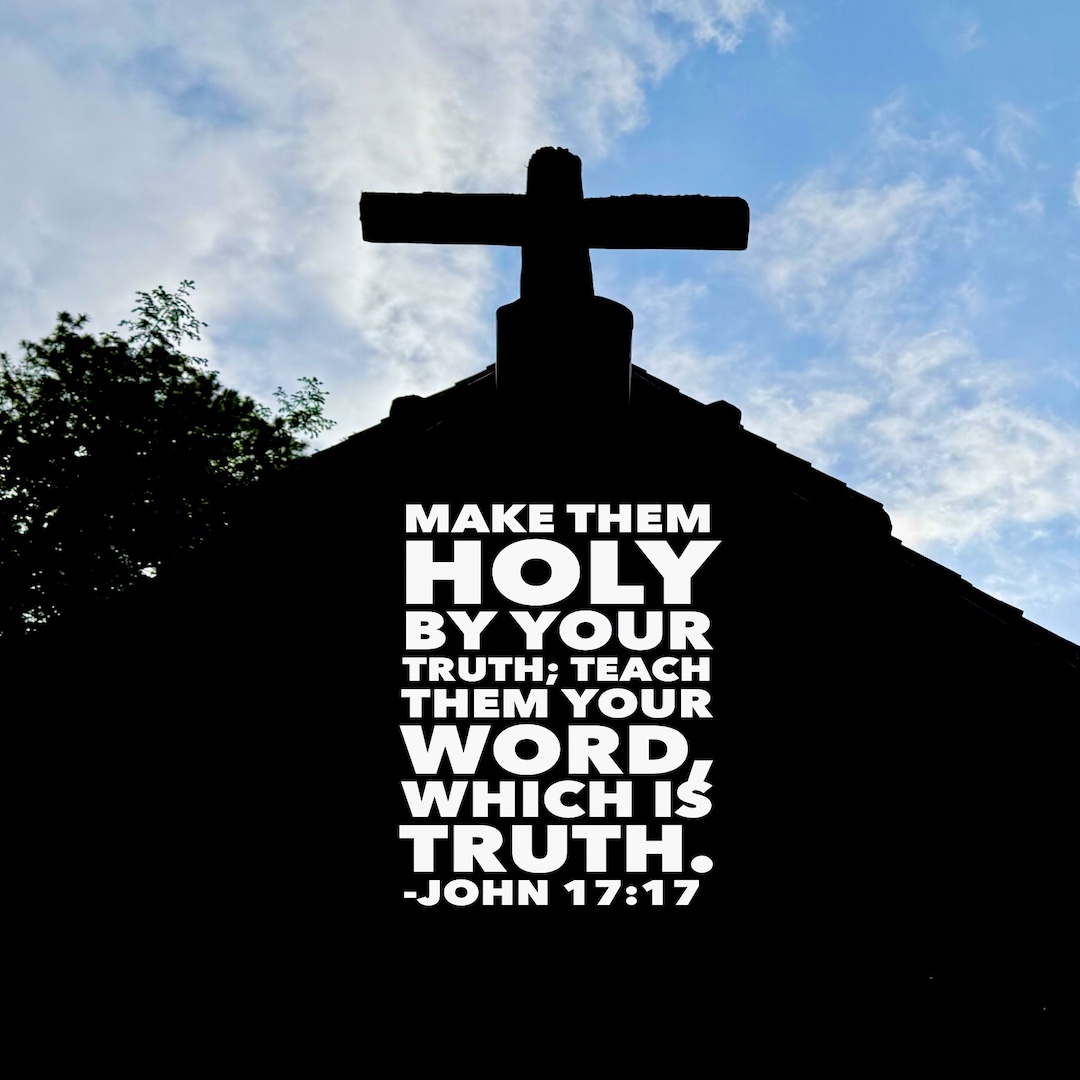
‘Sanctify them through Thy truth: Thy word is truth’ [John 17:17]. The great objective of God’s Word is to make us holy. No diligence or success in Bible study will really profit us unless it makes us more humble and holy. In our use of Holy Scripture, this must be our main objective. The reason there is often so much Bible reading with so little real result in a Christlike character is that ‘…salvation through sanctification of the Spirit and belief of the truth’ (2 Thessalonians 2:13) is not truly desired. … 

“It is God Himself who alone can make us holy by His Word. The Word, separate from God and His direct operation, cannot accomplish anything in us. The Word is an instrument: God Himself must use it. God is the only holy One. He alone can make holy. The unspeakable value of God’s Word is that it is God’s means of holiness. 

“The terrible mistake of many people is that they forget that God alone can use it and make it effective. It is not enough that I have access to the office of a physician. I need for him to prescribe a cure. Without him, my use of his medicines could be fatal. This was true of the scribes and Pharisees of Jesus’ day. They made their boast in God’s law. They delighted in their study of Scripture and yet remained unsanctified. The Word did not sanctify them, because they did not seek for this in the Word and did not yield to God to do it for them [John 5:39-40]. … 

“‘There is none holy as the Lord…’ (1 Samuel 2:2). All holiness is His, and He makes things holy by His holy presence. The tabernacle and temple were not holy in virtue of cleansing, separation, or an indwelling God. His taking possession made them holy. God makes us holy through His Word, bringing Christ and the Holy Spirit into us. The Father can only do this as we wait before Him and in deep dependence and full surrender give ourselves up to Him. When we pray by faith, ‘Sanctify [me] through Thy truth; Thy word is truth,’ our knowledge of God’s Word will truly make us holy.” —Andrew Murray 

Check out all of the Scriptures he mentions by clicking here. 

Here are some resources that may help you in your Bible study time:

Leadership Success

Be strong and courageous, for you are the one who will lead these people to possess all the land I swore to their ancestors I would give them. (Joshua 1:6 NLT) 

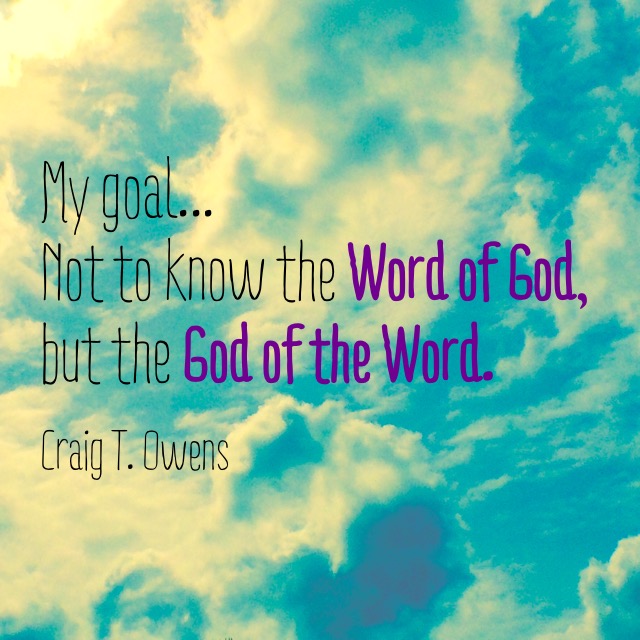
There is a direct correlation between knowing the God of the Word, as revealed in the Word of God, and leading in bold obedience. 

Be strong and very courageous. Be careful to obey all the instructions Moses gave you. Do not deviate from them…. Then you will be successful in everything you do. (Joshua 1:7 NLT) 

Study this Book of Instruction continually. Meditate on it day and night so you will be sure to obey everything written in it. Only then will you prosper and succeed in all you do. (Joshua 1:8 NLT) 

Study. Meditate. Obey. “Only then” will you be successful! 

If God has called you to lead, lead in His strength—not in your own strength. 

Check out my godly leadership series, with 80+ posts (and growing!). 

Links & Quotes

When Queen Esther went into the king’s throne room, she was unsure if the king’s favor would be extended toward her. But because of what Jesus did for us on the Cross, we can be assured that God’s favor is extended toward us before we even approach His throne. 

I have a lot of new video content on my YouTube channel every week. Please check it out and subscribe so you don’t miss anything.

“Christian, there is a terrible danger to which you stand exposed in your inner chamber of prayer. You are in danger of substituting prayer and Bible study for living fellowship with God. … Your Bible study may so interest you that the very Word of God may become a substitute for God Himself. The greatest hindrance to fellowship is anything that keeps the soul occupied instead of leading it to God Himself. … Separation from others, in solitude with God—this is the sure, the only way to live in harmony with people in the power of God’s blessing.” —Andrew Murray 

John Stonestreet writes, “In light of the 250th anniversary of the Declaration of Independence, much ink is being spilled over the document’s significance…[and] one way to understand the Declaration is through the lens of science.”

“If we are slandered and evil spoken of, let us not be quick to reply, or to grow angry. Let us be slow—very slow—to wrath; it will be our wisdom, for no good comes of human wrath.” —Charles Spurgeon 

“A Christian society is not going to arrive until most of us really want it: and we are not going to want it until we become fully Christian. I may repeat ‘Do as you would be done by’ till I am black in the face, but I cannot really carry it out till I love my neighbor as myself: and I cannot learn to love my neighbor as myself till I learn to love God: and I cannot learn to love God except by learning to obey Him.” —C.S. Lewis, in Mere Christianity 

In looking at 1 Corinthians 7:2–5, Tilly Dillehay writes, “Paul does not deal here with sex as procreation—though we know from the whole testimony of Scripture that sex and procreation are blessedly intertwined. Instead, this passage highlights other purposes of sex.” Here are three biblical ways to view marital sexual activity.

J. Warner Wallace notes, “Yes, Matthew emphasizes things Luke doesn’t. John includes moments Mark skips. But that’s exactly what you’d expect if independent witnesses were describing the most significant events in human history. If the Gospel writers had colluded to fabricate a story, the accounts would have matched perfectly—and then I’d be suspicious. But they didn’t.”

T.M. Moore writes, “The power of God’s Kingdom is His Holy Spirit. The Spirit Who brooded over the entire creation. The Spirit Who roams and pervades the world. The Spirit Who inspired the prophets, raised Jesus from the dead, birthed the Church on the first Christian Pentecost, gave words to the apostles, and has given us a new heart and resides within our soul, that Spirit, that Light and Power, is at work within us, that we should be willing and able to do that which leads to the pleasure of God (Philippians 2:12-13).” Check out his post Plug Into the Power. 

The Importance Of “Therefore”

Listen to the podcast of this post by clicking on the player below, and you can also subscribe on AppleSpotify, or Audible. Check out the video content in this post by clicking here. 

I want to give you a life-changing Bible study tip in just one word: Therefore. 

Check out these “therefores” in Hebrews—1:9, 2:1, 3:1, 4:1, 6:1, 12:1, 13:5. 

Takeaway: Whenever I am studying the Bible, I need to see how each Scripture interconnects, elaborate, clarifies, and strengthens the rest of Scripture. From the Old Testament to the New Testament, and inside each book of the Bible, there is airtight, irrefutable, and life-changing truth that connects with everything else in the Bible. 

►► Would you please prayerfully consider supporting this ministry? My Patreon supporters get behind-the-scenes access to exclusive materials. ◀︎◀︎

Holding On To Help Others Hold On

Listen to the podcast of this post by clicking on the player below, and you can also subscribe on AppleSpotify, or Audible.  

“Therefore, holy brothers and sisters, who share in the heavenly calling, fix your thoughts on Jesus…” (Hebrews 3:1). 

The phrase “fix your thoughts” is one Greek word (katanoeo) which means a deep, attentive studying.

This isn’t merely a quick glance, but a sustained and deep study. Jesus used this word with the examples He gave of His Father’s provision for us—

Consider [katanoeo] the ravens: They do not sow or reap, they have no storeroom or barn; yet God feeds them. And how much more valuable you are than birds! … Consider [katanoeo] how the wild flowers grow. They do not labor or spin. Yet I tell you, not even Solomon in all his splendor was dressed like one of these. (Luke 12:24, 27). 

The writer of Hebrews says we need this deep studying for two reasons.

First, this deep and sustained look into the glory and supremacy of Jesus is the essential part of our hope and confidence in Him. “And we are His house if indeed we hold firmly to our confidence and the hope in which we glory” (Hebrews 3:6). I want you to remember that phrase “hold firmly” (Greek: katecho) because we will come back to it in just a minute. 

It is very hard to hold firmly to anything if we only have a surface understanding of it. But when we gaze deeply at Jesus and live in awe of His majesty and strength and love, we cannot help but cling evermore firmly to Him! 

The second reason we need to fix our thoughts (katanoeo) on Jesus is to be able to help our fellow saints—our “holy brothers and sisters.” I asked you to remember that phrase “hold firmly” (katecho). Notice how it is linked together with “consider” (katanoeo) in these verses—

Let us hold unswervingly (katecho) to the hope we profess, for He who promised is faithful. And let us consider (katanoeo) how we may spur one another on toward love and good deeds. (Hebrews 10:23-24) 

So the writer of Hebrews is telling us that when we are gazing intently at the majesty of Jesus, we discover more reasons to not only hold firmly to Him ourselves, but we also discover more reasons to encourage others to gaze at Him and hold Him firmly themselves. 

In his letter to the church, James uses katanoeo in the negative sense. In James 1:23-24, he says that those who only casually listen to and meditate on God’s Word—never looking into it deeply—will walk away unchanged.

I want to be changed every time I encounter the glory of God as revealed in the Word of God! 

Deep, sustained gazing stimulates more attentive meditating, which turns into more reasons to hold firmly. The more firmly I hold onto Jesus, the more the life of Jesus changes me. Then my ability to spur on other saints to their own gazing, abiding, and holding is increased exponentially. 

I am holding on to Jesus to help others hold on to Jesus too! 

►► Would you please prayerfully consider supporting this ministry? My Patreon supporters get behind-the-scenes access to exclusive materials. ◀︎◀︎

Is That In The Bible?

A meme that makes me chuckle every time I see it is a “quote” attributed to Abraham Lincoln in which he says, “The problem with quotes found on the internet is that they are often not true.”

(Not to spoil the joke for you, but unless Lincoln knew how to time travel to the future, I don’t think he knew about the modern internet! 😂)

I love this meme because it captures something that so many people fall into: a quick acceptance of a statement without verifying its source or thinking through the implications of the statement’s truthfulness.

Some insightful comments sound Shakespearean, but William never wrote them.

Some pieces of wisdom sound Socratic, but Socrates never taught them.

Some religious maxims sound godly, but the Bible never recorded them.

I would like to invite you to join me as we relaunch this series called Is That In The Bible? I think you may be surprised to discover just how many phrases we call biblical aren’t, and how many phrases there are that we never realized are actually in the Bible.

By the way, if you have a phrase that you would like to have us explore in this series, please leave it in a comment below. You may want to check out the questions we have already addressed:

In this installment of this series, we asked: Is this in the Bible…