Listen to the podcast of this post by clicking on the player below, and you can also subscribe on Apple, Spotify, or Audible. Check out the video content in this post by clicking here.
When it comes to leaders being hurt by those under their care, it is not a matter of if but when. How leaders respond to these attacks reveal three key attributes that must be addressed.
On the Ailbe Podcast, T.M. Moore and Rusty Rabon asked me what attributes pastors needed to develop to respond to sheep bites in a God-honoring way. I believe the three most important attributes are:
Humility
Vulnerability
Accountability
Humility is the ability of a leader to be open to the possibility that the sheep bite may have been in reaction to something the shepherd did or failed to do. To go a little deeper on this point, check out Pay Attention to the Bites.
Vulnerability is used in the context of bearing our souls to a true friend. T.M. Moore has written extensively about “soul friends,” and we discussed that in more detail in a previous appearance on the Ailbe Podcast which you can check out here. [soul friends]
Accountability is really a direct result of our humility with ourselves and our vulnerability with a soul friend. As the Bible tells us over and over again, we need to remain in relationship with fellow saints that can encourage us, empower us, and sometimes correct us. Check out the blog post and video Accountability to Saints.
If you desire to grow as a godly shepherd leader, please check out my book Shepherd Leadership.
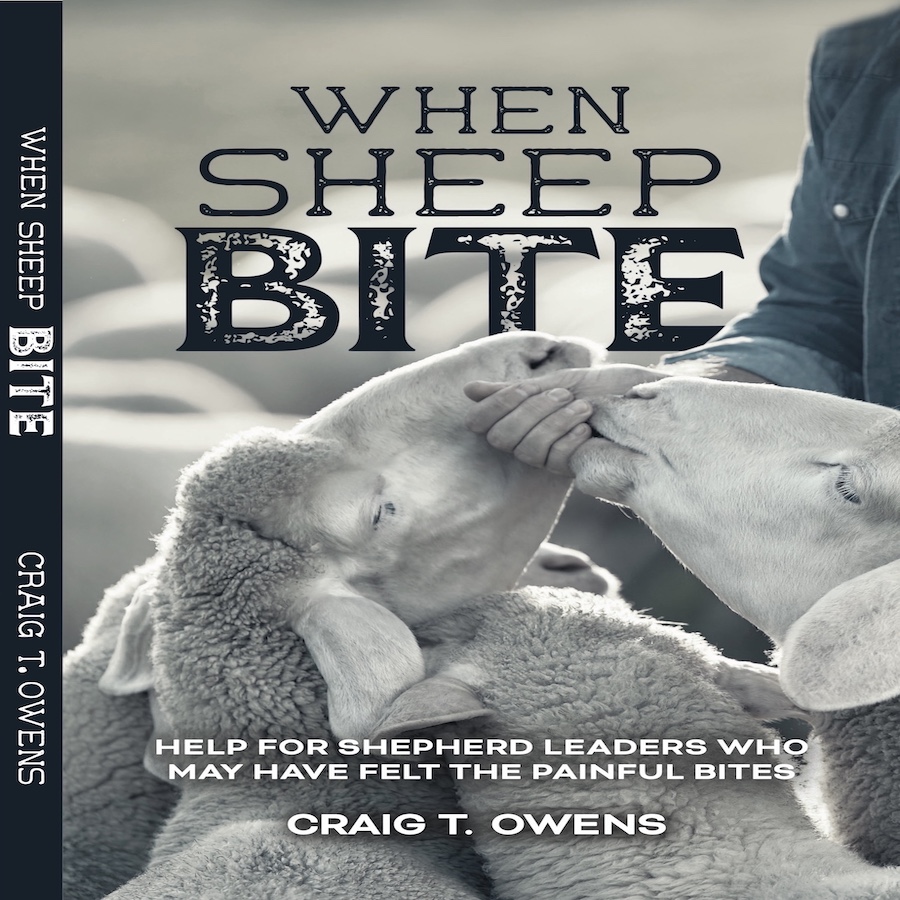
If you want to learn more about how to recover from sheep bites and how to handle future attacks in a biblical, Christ-like way, please pick up a copy of When Sheep Bite.
Listen to the podcast of this post by clicking on the player below, and you can also subscribe on Apple, Spotify, or Audible. Check out the video content in this post by clicking here.
Even Charles Spurgeon—a man called “the prince of preachers”—recognized the heavy responsibility of God’s call on someone to serve as a pastor.
Here are the two Spurgeon quotes I shared in the video—
“Oh, what a solemn thing it is to be a preacher of the everlasting gospel! It is an office so high that an angel might covet it, but one that is so responsible that even an angel might tremble to undertake it.”
“Pray for us who preach, not merely to a few, but to many of our fellow-creatures, that we may be the means, in the hand of God, of blessing to our hearers.”
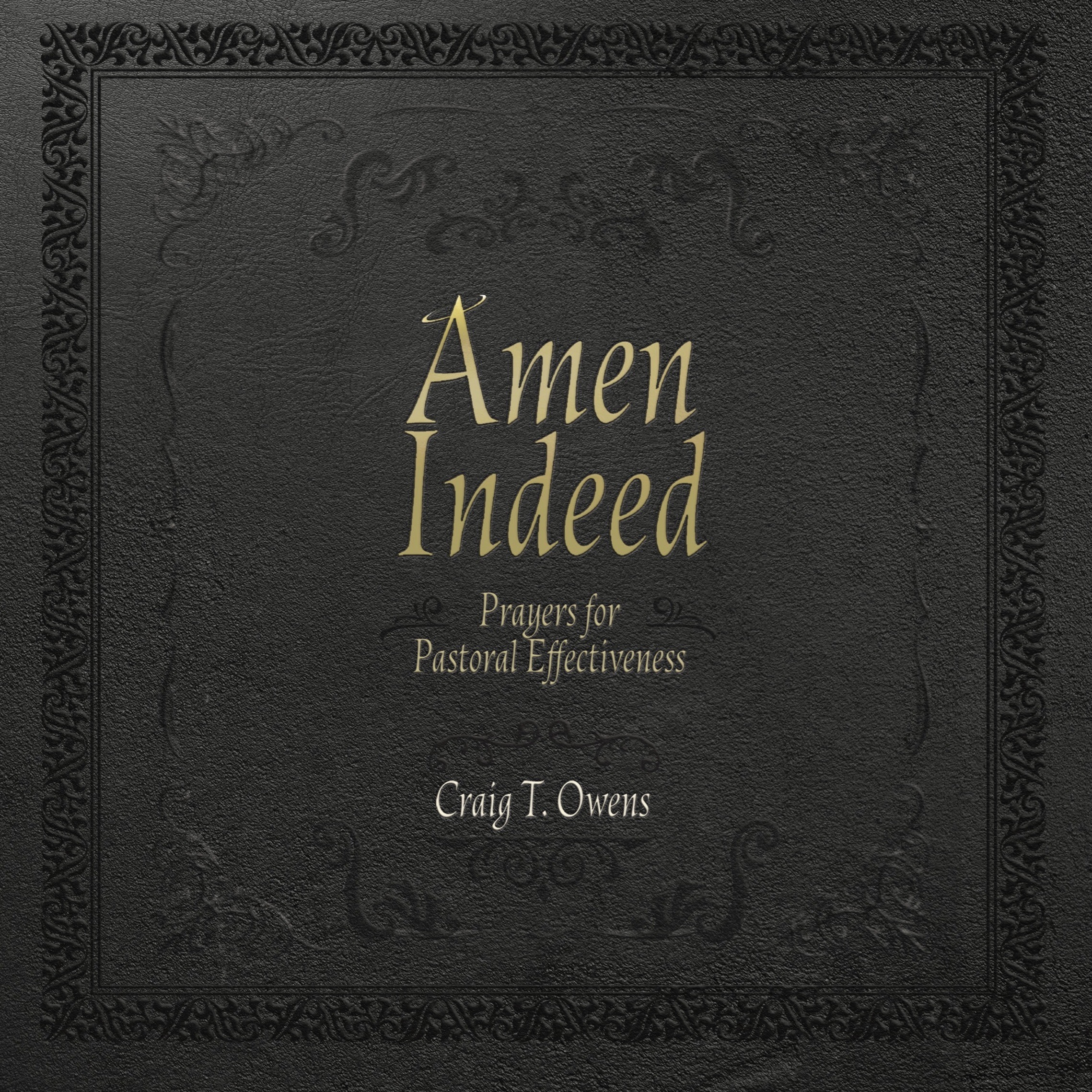
The best resource a pastor can tap into is prayer, and I would suggest that the first person a pastor should pray for is himself. This is where my book Amen Indeed can be a huge blessing. This is a book that helps pastors turn the Scriptures into prayer.
Here’s a quote from John Piper that got me thinking: “God loves His people. He loves for them to get good food, rich food. He knows how to put His shepherds in the vice of affliction and squeeze out of us authentic, prayer-soaked, desperation-flavored insight—the unsearchable riches of Christ for the joy of His people.” Pastor, God wants to use you to shepherd the flock He’s placed under your care. So trust Him to give you what you need. And check out my book When Sheep Bite to help you along through this journey.
“Do more than go to church; be the church. Find a place to serve in the promises of your pastor and fight for that vision like it was your own. Do more than give what’s left; give what’s right. Do more than show up as a consumer; show up as a partner, knowing the day will come when you will need partnership to see your dream come to pass. If your promise is concerning business, then be the best employee of the people for whom you work. If your promise will need generous people involved to make it happen, then be generous in the promises of others. If your promise is about your family, be a blessing to the families of those who are around you. Make their dreams come to pass and you will plant the seeds that will, in time, become the fruit of your God-given why.” —Jim Wiegand, in Why is Greater Than What
“You have noticed, I expect, that Christ Himself sometimes describes the Christian way as very hard, sometimes as very easy. He says, ‘Take up your Cross’—in other words, it is like going to be beaten to death in a concentration camp. Next minute he says, ‘My yoke is easy and my burden light.’ He means both.” —C.S. Lewis, in Mere Christianity
T.M. Moore is beginning a new series of posts on the importance of the spiritual life for the Christian. He writes, “We may thus define the spiritual life in terms of Christ exalted as our focus, Christ indwelling as our sustaining power, Christ at work in and through us as the outcome of our discipleship, and Christ returning as the hope which sustains us through the tests we encounter every day. True spiritual life, in other words, is all about Jesus Christ.”
“The truths of eternity have an infinite power. They are often powerless because we do not give them time to reveal themselves. Taking time to be alone with God is the only remedy. … The Word that we get from the mouth of God brings the power to know it and to do it. Let us learn this lesson: personal fellowship with God alone in secret can make the Word alive and powerful.” —Andrew Murray
Dr. Thaddeus Williams unpacks what Charles Darwin meant when he wrote to a friend, “The horrid doubt always arises whether the convictions of man’s mind, which has been developed from the mind of the lower animals, are of any value or at all trustworthy.” Check out Dr. Williams’ post, which he opens with, “If our minds came from a capital “M” Mind—God—gifted to us as truth-knowing mechanisms, we have a reason to reason. But if our minds came from a non-mind, a literally dumb process of random mutations and natural selection, then our minds are not fundamentally truth-knowing mechanisms, but mere survival mechanisms.”
“Our first birth brought us into sin and sorrow, but our second birth brings us into purity and joy. We were born to die; now are we born never to die, ‘begotten again’ unto a life that shall remain in us for evermore, a life which shall even penetrate these mortal bodies, and make them immortal, ‘by the resurrection of Jesus Christ from the dead.’” —Charles Spurgeon, commenting on 1 Peter 1:3-4
As I was studying the Book of Jude, I came across this phrase, “Though you already know all this, I want to remind you.” This prompted these three quick thoughts that I want to share with my fellow pastors.
Using the words from Isaiah 40:10-11, Sarah Young has Jesus speaking these words to us: “Adverse circumstances become growth opportunities when you affirm your trust in Me no matter what.”
Ken Blanchard has long used a challenge for leaders to catch their teammates doing something right. That phrase has now become the title of a biography about Ken. He says, “Great leaders who want to encourage and motivate their people set up a positive cycle:
A great leader catches someone doing something right and praises them.
The leader’s praise helps the person feel good about themselves.
People who feel good about themselves produce good results.
A great leader notices when people produce good results.
See #1.”
This is a very encouraging read for men! Scott Hubbard writes, “You may not have ability for preaching and teaching, as Timothy did. But the Holy Spirit does not leave any Christian giftless. … You may have a small vision for your life; God does not.”
An amazing series from T.M. Moore on the law in a Kingdom economy. T.M. writes, “Christians don’t keep the Law to be saved; we keep it because we are saved, because it is the path that Jesus walked (1 John 2:1-6); and we recognize its value for helping us realize more of the life of holy, righteous, and good works for which we have been redeemed (Romans 7:12; Ephesians 2:8-10).”
Geologists have discovered what Creationists already proposed about plate tectonics related to the Flood described in the Bible. “Flood geologists have predicted that plate motion slowed at the end of the Flood year, and now conventional scientists are finding it to be true.”
The Assemblies of God has always responded to popular religious trends with solid biblical exegesis. The “latter day rain” movement in the 1940s is a good example.
“Mature leaders swallow their egos and recognize God as their power source. They walk confidently in His authority, but never assume credit for it. Faith enables them to stretch, while humility enables them to stoop.” —John Maxwell
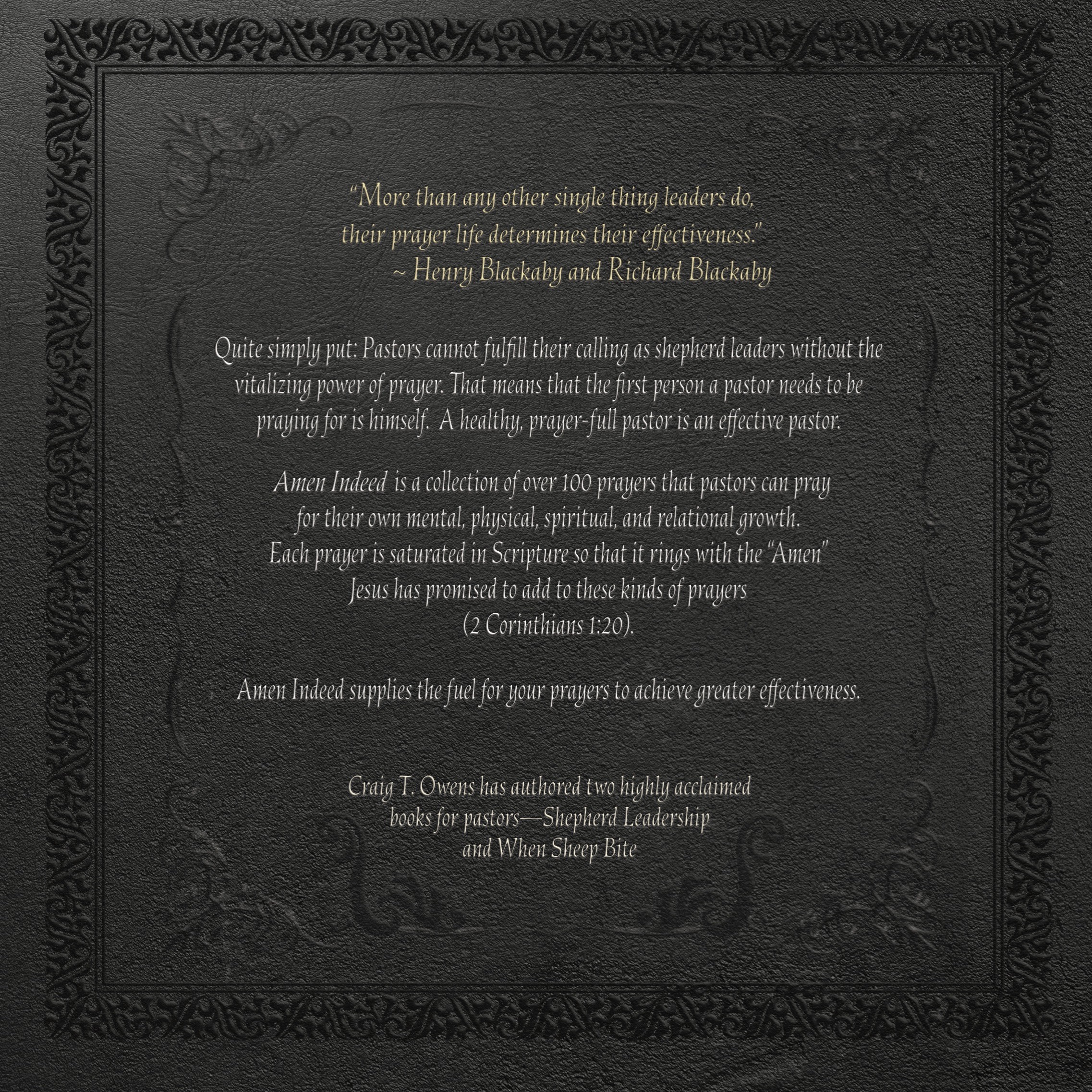
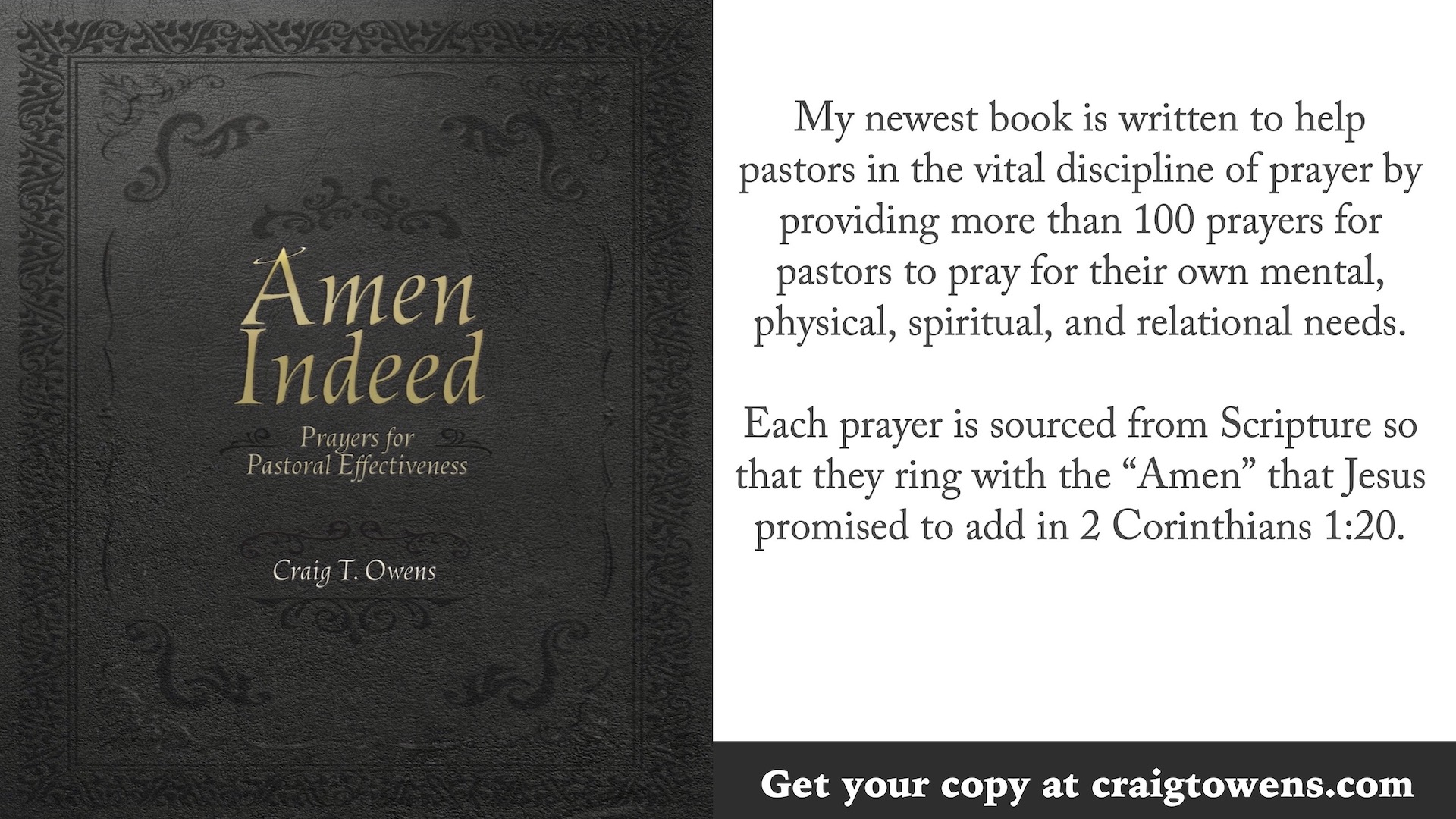
Pastors can only fulfill their calling as shepherd leaders with the vitalizing power of prayer, and must pray for themselves first. A healthy, prayer-full pastor is an effective pastor. My newest book is to help pastors in this vital discipline of prayer.
Amen Indeed fuels growth by providing more than 100 prayers for pastors to pray for their own mental, physical, spiritual, and relational growth. Each is sourced from Scripture and rings with the “Amen” that Jesus promised to add (2 Corinthians 1:20).
“There is one assured way for our prayers to be answered: It is to pray the will of God.
“There is one assured way to pray the will of God: It is to pray Scripture.
“As ministers of the Gospel we would be wise then to primarily pray Scripture, for ‘the word of our God stands forever’ (Isaiah 40:8).” —Dick Brogden, Founder of the Live Dead Movement
“When it comes to prayer, we need some help. And in Amen Indeed, help is at hand. Whatever is keeping us from prayer, Craig Owens can help us push through to a more consistent and more consistently joyful and fruitful life of prayer.” —T.M. Moore, Principal of The Fellowship of Ailbe
Listen to the podcast of this post by clicking on the player below, and you can also subscribe on Apple, Spotify, or Audible.
Imagine you just preached a sermon that was so Holy Spirit-anointed that crowds of people turned to Jesus. This kind of activity made a big stir in town, and some supposedly religious people became quite jealous of the fruit of your ministry. In their jealousy, they begin slandering you to others in town, causing a huge backlash against your ministry.
How would you respond? Would you give those jealous slanderers a piece of your mind? Would you give them some of their own medicine? Would you leave town?
The scenario I described isn’t make believe; it actually happened to Paul and Barnabas in the city of Iconium (Acts 14:1-2). In the very next verse, Luke describes Paul and Barnabas’ response: some biblical translations use the word “so” and some use the word “therefore” to indicate the natural connection—
“So Paul and Barnabas stayed on there for a long time, speaking freely and fearlessly and boldly in the Lord” (v. 3).
They didn’t fight their slanderers nor did they flee from Iconium; they remained faithful to the task to which God had called them!
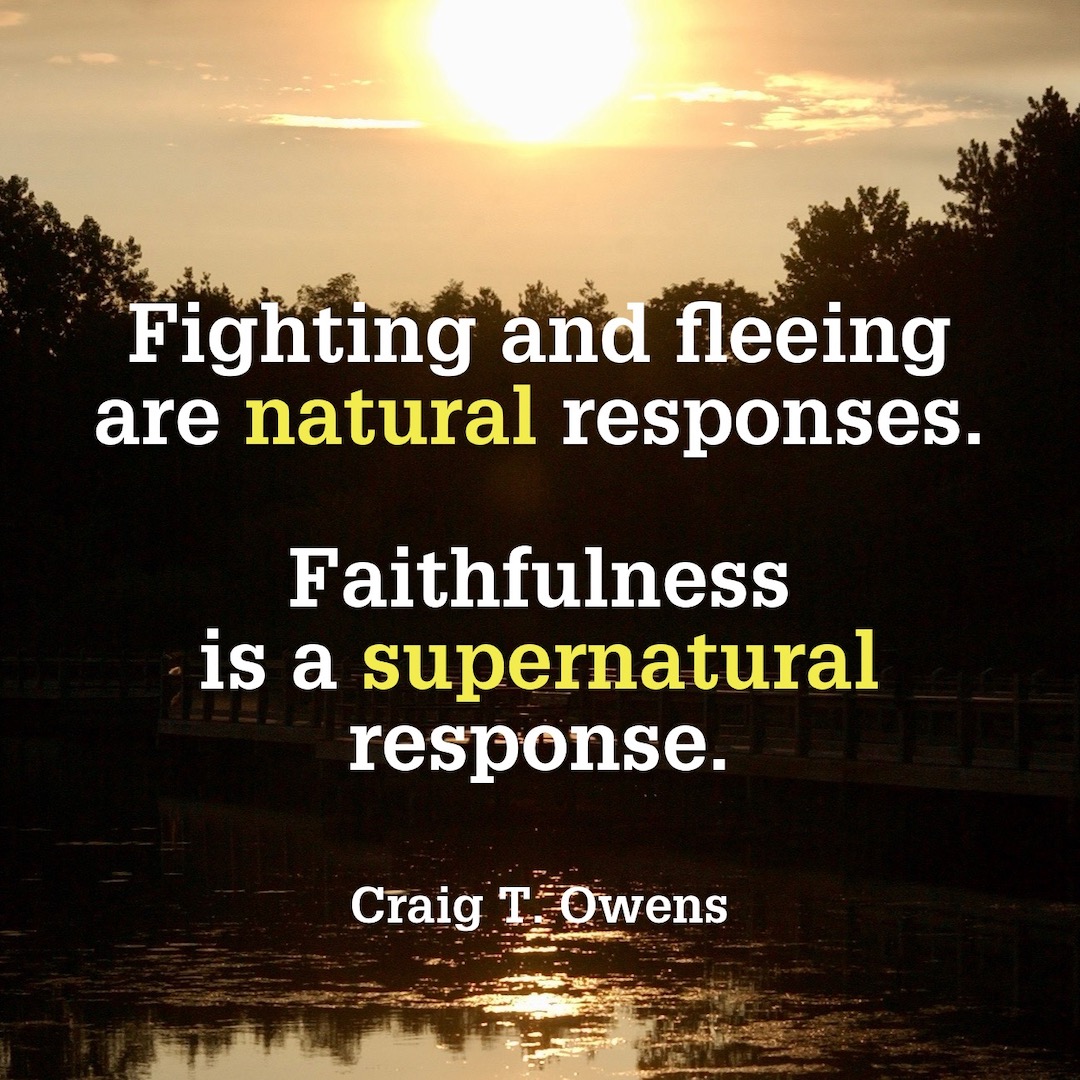
Fighting and fleeing are natural responses.
Faithfulness, however, is a supernatural response.
God honored the faithfulness of Paul and Barnabas by demonstrating His own supernatural power through them: “[God] continued to bear testimony to the Word of His grace, granting signs and wonders to be performed by their hands” (v. 3b).
The scenario I described isn’t just something from long ago history, but it was a scene from my personal history too. In the Introduction of my book When Sheep Bite I wrote—
I cannot pinpoint exactly what triggered their outburst or when their attacks started, but it seemed like almost overnight their teeth were bared. I was completely taken aback! I had assumed that seeing the new life and vitality in this pasture would be celebrated. When the exact opposite happened, I must admit that my knee-jerk reactions probably weren’t very Christlike. …
This was something I never imagined. I never saw anything like this in my home, nor had I experienced anything like this in my associate pastor’s role. In fact, even in the business world I had never seen people behave this egregiously.
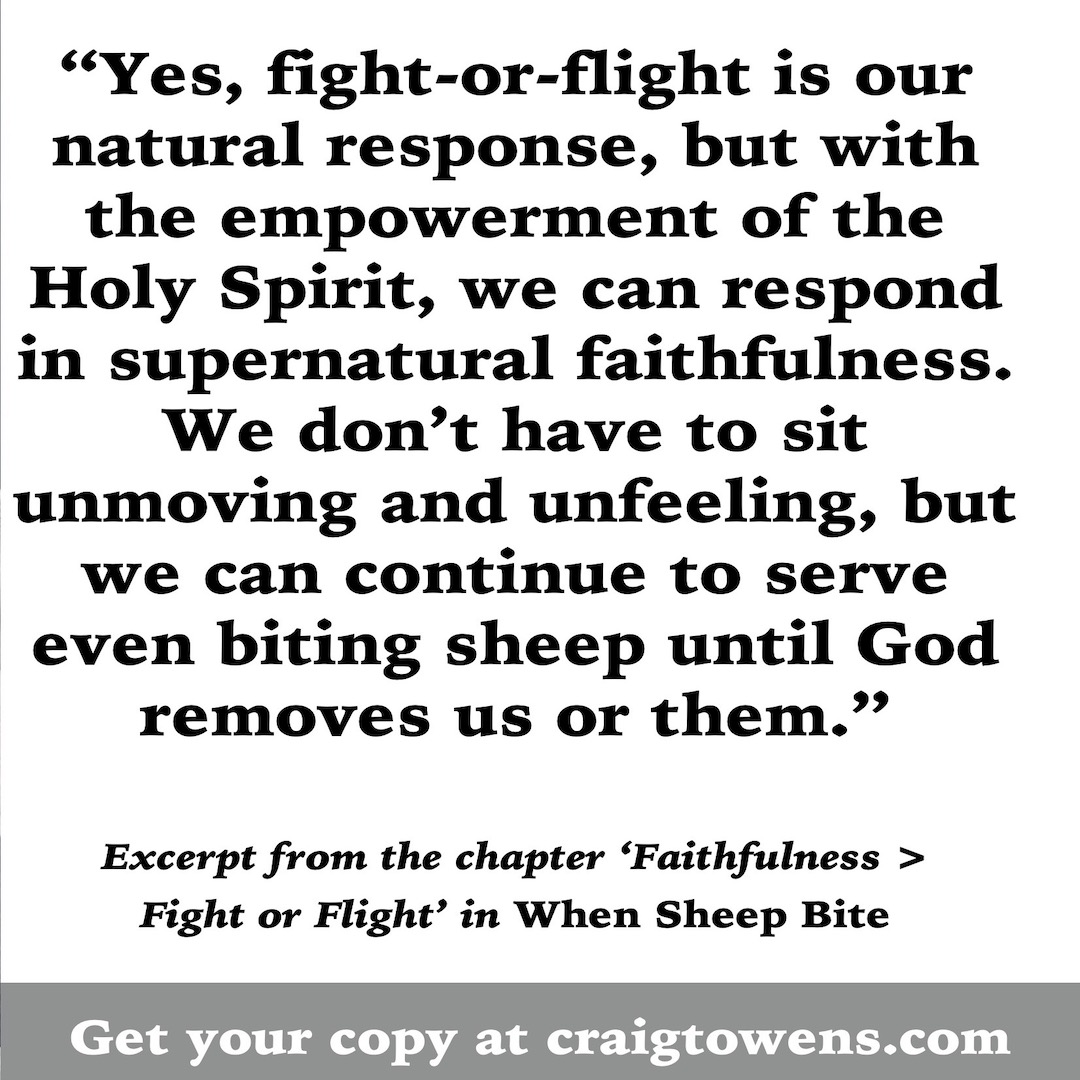
In the final chapter of my book I shared this thought, “Yes, fight-or-flight is our natural response, but with the empowerment of the Holy Spirit, we can respond in supernatural faithfulness. We don’t have to sit unmoving and unfeeling, but we can continue to serve even biting sheep until God removes us or them.”
This whole idea of supernatural faithfulness to God’s calling versus giving in to the natural reactions of fight-or-flight is why I wrote this book. Once again, let me take you back to an excerpt from the Introduction—
Would I ever want to relive this experience? No way! But there were lessons I learned during this walk through hell that I could have learned in no other way. It is those lessons that I hope to be able to unpack for you, my shepherding friends, in this book. … I would say to you something that C.S. Lewis wrote, “Think of me as a fellow-patient in the same hospital who, having been admitted a little earlier, could give some advice.”
When you are under attack, I know it seems like you are alone, but you are not. Don’t give in to fight-or-flight, but ask God to supernaturally empower you to remain faithful. I believe When Sheep Bite can be a huge assistance to you as well. Please pick up a copy and reach out to me if I can be of assistance to you.
The closing chapter of my book When Sheep Bite is entitled ‘Faithfulness > Fight or Flight.’ In that chapter I wrote—
Remember that we are all striving to not succumb to the natural fight-or-flight response, but to attain the supernatural response of faithfulness. In this, we have a perfect example in our Good Shepherd.
In the Book of Revelation, Jesus is called the One who is “Faithful” (Revelation 19:11), and Paul says that the Faithful One who has called us will empower us to remain steadfast: “He who calls you is faithful, who also will do it” (1 Thessalonians 5:24 NKJV).…
Yes, fight-or-flight is our natural response, but with the empowerment of the Holy Spirit, we can respond in supernatural faithfulness. We don’t have to sit unmoving and unfeeling, but we can continue to serve even biting sheep until God removes us or them.
We glorify God by faithfully serving the sheep He has placed under our care, giving our very best, even if our words and actions are unappreciated or ignored by those we are serving.
If you are in a difficult place in your leadership assignment, I encourage you to check out When Sheep Bite.
Why do Christians lift their hands to God? This is a clip from one of the sermons in our series looking at the worship songs that Israelite pilgrims sang as they ascended to Jerusalem to celebrate the feasts.
“Civil governments are established by God [Romans 13:1] to restrain the criminal elements of human society—even though these officers are often filled and run by evil people. We must divorce our feelings about the people that hold these offices from the authority of the office itself.” —Dr. Henry Halley
“Outstanding leaders go out of their way to boost the self-esteem of their personnel. If people believe in themselves, it’s amazing what they can accomplish.” —Sam Walton
This article opens with this thought: “Scientists will probably never fully understand photosynthesis as additional research uncovers even more fascinating mysteries.” It then goes on to outline how plants use quantum mechanics nearly perfectly to manage the flow of energy during photosynthesis. Truly this is more evidence of an All-Wise Creator.
In sharing a mini-biography of Henry Martyn, this article outlines how God prepares missionaries for the field to which He has called them. “God used [Martyn’s] classical education at Cambridge alongside his spiritual maturity formed by intentional mentorship to get him ready for his unique task of engaging Muslims and translating the Bible.”
T.M. Moore has an outstanding series for pastoral leaders. In a recent post, Moore wrote, “Paul’s vision was too vast, too all-encompassing, too transformative, too urgent, and too other-worldly to stop with, say, a vision that focused on more members, better facilities, larger budgets, additional staff, or regular ‘growth.’ None of these, nor any of a thousand other ways church leaders might express their hopes for their churches, is a proper vision for church leaders.” I was grateful for T.M.’s endorsement of my book Shepherd Leadership where I talk about the biblical metrics for church leaders.
“One of the dangers of having a lot of money is that you may be quite satisfied with the kinds of happiness money can give, and so fail to realize your need for God. If everything seems to come simply by signing checks, you may forget that you are at every moment totally dependent on God.” —C.S. Lewis
Listen to the podcast of this post by clicking on the player below, and you can also subscribe on Apple, Spotify, or Audible.
If you’re a shepherd leader, what do you do when the sheep under your care go, “Grrrr!”?
To make sure that you haven’t done anything that caused the murmuring, you should humbly pray, “Search me, O God” (Psalm 139:23-24). And then, if you see you have done something wrong, repent and make things right. You may want to check out my blog post A Leader’s Sincere Apology.
After this, Moses has given us in Exodus 16:8-9 two actions to take with murmuring sheep:
If it wasn’t anything that you did, you need to remind yourself that the people are murmuring against God.
If it wasn’t anything that you did, you need to remind the sheep that they are murmuring against God.
Listen to the podcast of this post by clicking on the player below, and you can also subscribe on Apple, Spotify, or Audible.
As Paul is on his way to Jerusalem, he makes time to meet with the leaders of the Church in Ephesus. An important reminder Paul gives them comes from the example he lived out while he was in Ephesus: “For I have not hesitated to proclaim to you the whole will of God” (Acts 20:27).
Some translations say “the whole counsel of God,” but I like the simple, straightforward wording in the KJV: “all the counsel of God.” In other words, Paul’s textbook was everything in the Scriptures.
One of Paul’s traveling companions was Luke, who made frequent use of the Greek word boulē, which is translated “counsel.” He is the only Gospel writer to use this word, and then he uses it seven more times in the Book of Acts. Putting together Luke’s usage of boulē with the three other appearances in the New Testament, we can come up with a good overview of what Paul meant by “the whole will of God.”
Keep watch over yourselves and all the flock of which the Holy Spirit has made you overseers. Be shepherds of the church of God, which He bought with His own blood. I know that after I leave, savage wolves will come in among you and will not spare the flock. Even from your own number men will arise and distort the truth in order to draw away disciples after them. So be on your guard!… (Acts 20:28-31, emphasis added)
In my book When Sheep Bite I have a chapter called’ Driving Away the Wolves.’ In that chapter I point out—
There is a phrase that is often associated with the behavior of wolves: a lone wolf. Normally, wolves travel and live in packs. The phrase “lone wolf” is associated with those who leave in order to find a mate, carve out their own territory, and then form their own pack.
Jesus said that His sheep hear His voice and follow Him. Lone wolves hear the shepherd’s voice but ignore it to follow their own pursuit of forming their own pack. Remember that these lone wolves don’t want to stay alone: they want to build their own following.
Jesus said we could spot imposters—wolves in sheep’s clothing—by their fruits (Matthew 7:15-20). Two evident fruits are:
Mutating the immutable counsel of God’s Word to suit their own needs
Ignoring or criticizing the whole counsel of God’s Word that godly shepherd leaders faithfully teach and preach
For shepherd leaders and their flocks, the whole counsel of God’s Word is the best wolf deterrent you can find! Another passage from my book says—
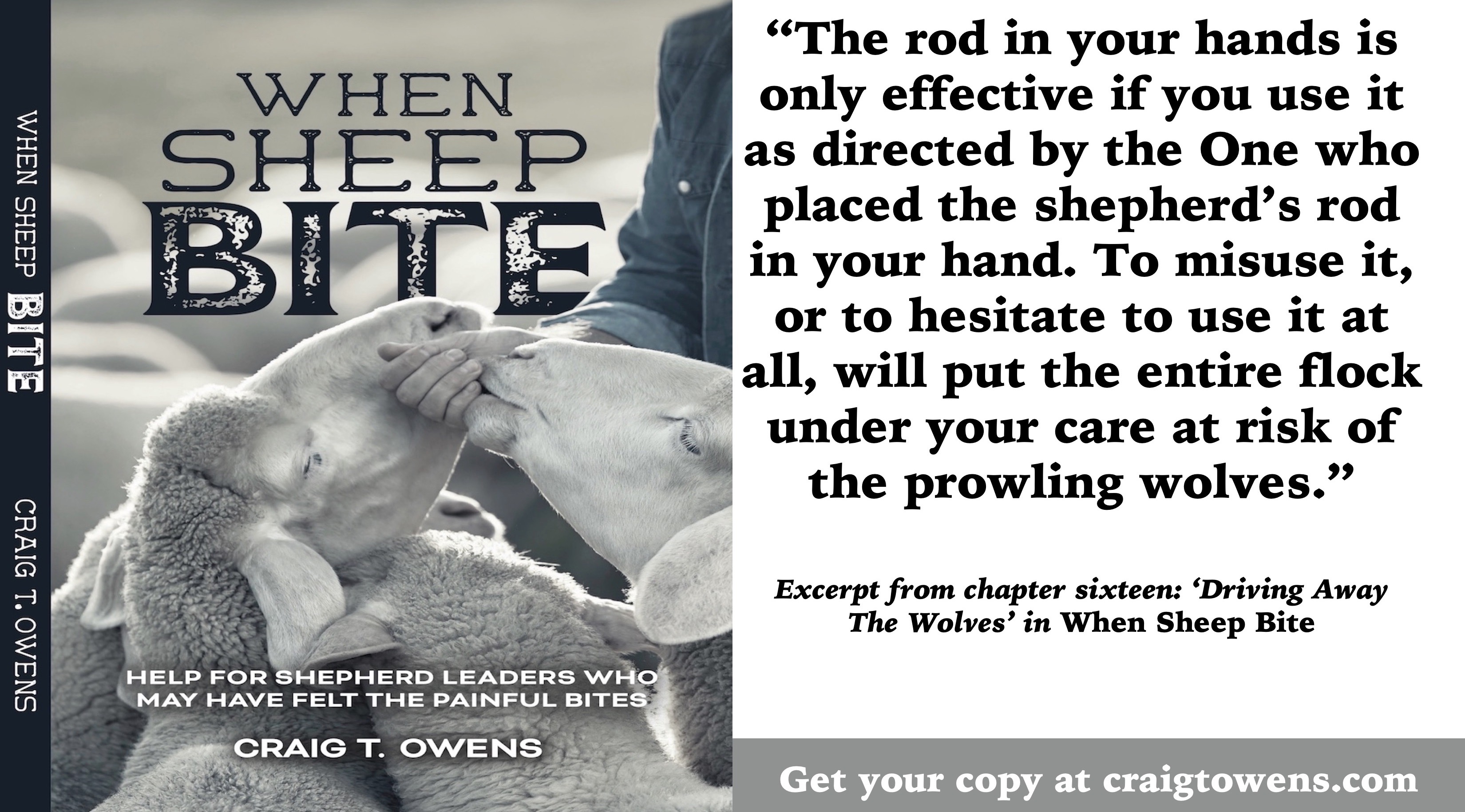
David’s beautiful description of the Good Shepherd in Psalm 23 has a phrase that sounds unusual to my ears. He writes, “Your rod and Your staff, they comfort me.” How can such wooden instruments bring comfort to sheep? When the sheep know their shepherd has the rod of God’s Word in his hand and is skilled at using it, the sheep are far more relaxed around the shepherd. This is because a shepherd’s rod is not used against the sheep, but only against the enemies of the sheep.
Throughout the Old Testament, the rods in the hands of leaders were the symbol of their God-appointed authority (think of the staffs of Moses and Aaron). Those rods were symbolic of the words God had spoken to these shepherds to empower them to lead His sheep. In the New Testament setting, the Bible is described in similar terms. Shepherds are directed to correctly handle the rod of God’s Word, knowing that His Word is the only thing that can reliably care for the sheep by teaching, rebuking, correcting, and training (2 Timothy 2:15, 3:16). The sheep will welcome this; the wolves will fight against this.
Pastors, immerse yourself in the whole counsel of God’s Word. Not just the parts that are comfortable for you or pleasant to preach about, but all of God’s Word! This will strengthen the rod of leadership God has given you, it will bring health and comfort to the sheep in your flock, and it will be a strong deterrent against the wolves that would seek to infiltrate your pasture.
I would also humbly recommend that you pick up a copy of my book When Sheep Bite to help resource you to heal from old or ongoing injuries, and to fortify you to remain faithful to the call God has on your ministry.



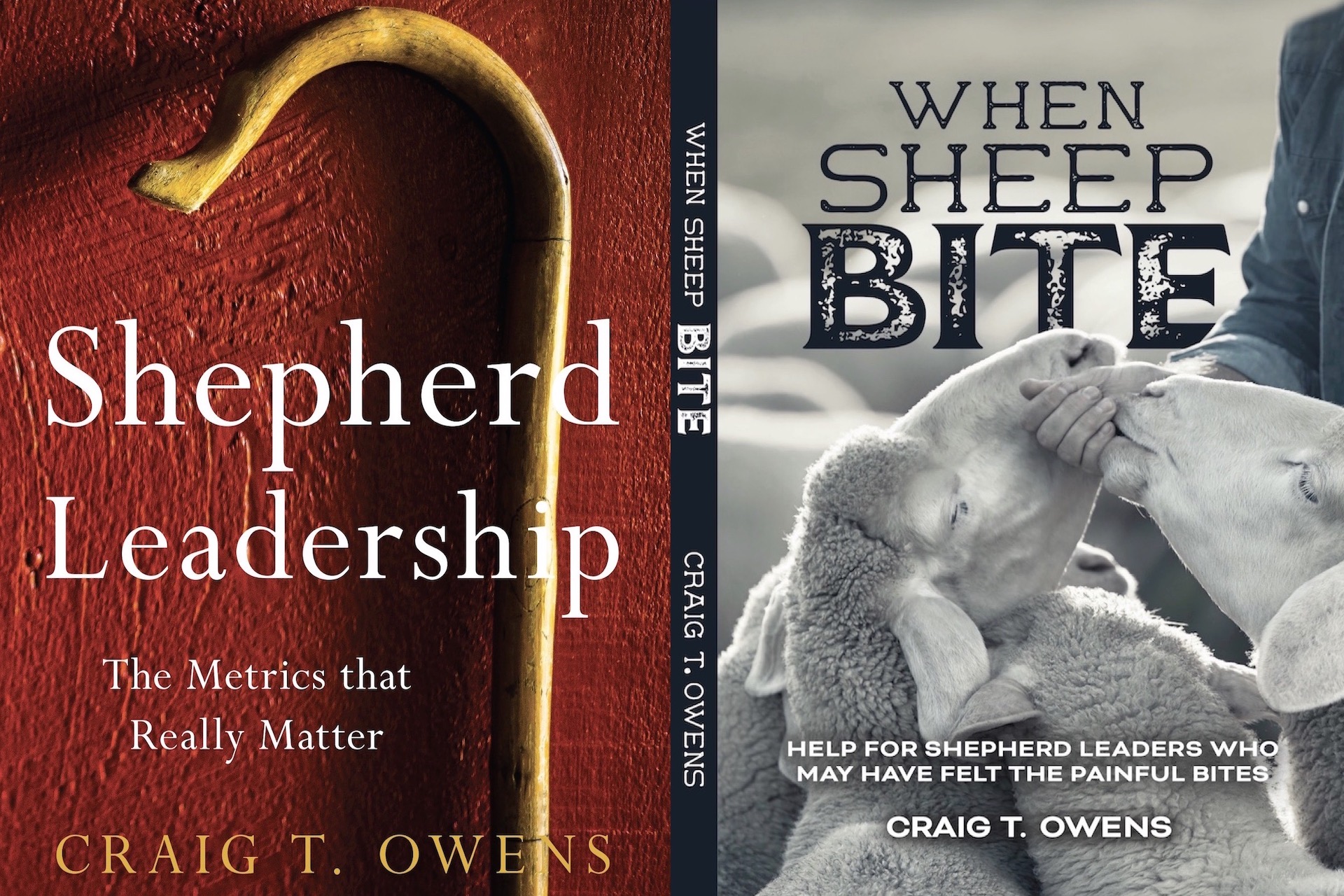 If you desire to grow as a godly shepherd leader, please check out my book Shepherd Leadership.