10 Quotes + 1 Infographic From “Cold-Case Christianity”

Cold-Case Christianity by J. Warner Wallace is educational in a number of ways. Not only will you learn more about police investigations and courtroom deliberations, but Christians and skeptics alike will learn about the reliability of the biblical account concerning Jesus. You can check out my full book review by clicking here. 

“The Christian tradition is actually intellectually robust and satisfying, even if we believers are occasionally unable to respond to your challenges. The answers are available; you don’t have to turn off your brain to be a believer. Yes, it is possible to become a Christian because of the evidence rather than in spite of the evidence.” 

“Faith is actually the opposite of unbelief, not reason. … The biblical definition of faith is a well-placed and reasonable inference based on evidence.” 

“What about cases that have no direct evidence connecting the suspect to the crime scene? Can the truth be proved beyond a reasonable doubt when all the evidence we have is circumstantial? Absolutely. 

“Jurors are instructed to make no qualitative distinction between direct and circumstantial evidence in a case. Judges tell jurors, ‘Both direct and circumstantial evidence are acceptable types of evidence to prove or disprove the elements of a charge, including intent and mental state and acts necessary to a conviction, and neither is necessarily more reliable than the other. Neither is entitled to any greater weight than the other.’” 

“William Dembski (the well-known mathematician, statistician, theologian, and intelligent-design advocate) has argued that specified complexity (and, therefore, the intervention of an intelligent agent) can be identified by using an ‘explanatory filter.’ If an object or event (1) cannot be explained by some natural law that necessitates its appearance, (2) exists in spite of the high improbability that it could occur as the result of chance, and (3) conforms to an independently existing and recognizable pattern, the most reasonable inference is that it is the product of an intelligent designer.” 

“The early church fathers and leaders recognized that the Gospels were the eyewitness testimony of the apostles, and they set the Gospels apart for this reason. The ancient Christian author Tertullian wrote in AD 212: ‘The same authority of the apostolic churches will afford evidence to the other Gospels also, which we possess equally through their means, and according to their usage—I mean the Gospels of John and Matthew—whilst that which Mark published may be affirmed to be Peter’s whose interpreter Mark was’ (Against Marcion). 

“Skeptics cannot reject the reasonable inferences from the evidence we do have, simply because there may possibly be some evidence we don’t have; skeptics also need to defend their doubt evidentially.” 

“The reasonable inference from the circumstantial evidence is that the Gospels were written very early in history, at a time when the original eyewitnesses and gospel writers were still alive and could testify to what they had seen.” 

“Some have argued that the Gospels are late because none of the authors specifically identifies himself in the accounts. … BUT … The Gospels are not the only ancient documents that fail to identify the author within the text of the manuscripts. Tacitus (the Roman senator and historian who lived from AD 56 to AD 117) wrote a history of the Roman Empire from the reign of Augustus Caesar to Nero entitled Annals. Tacitus was, in fact, present during much of this period of time, but failed to include himself in any of his descriptions or identify himself as the author.” 

“While it is possible that the Gospels were not written by the traditional first-century authors and were given these attributions only much later in history, it is not evidentially reasonable. If skeptics were willing to give the Gospels the same ‘benefit of the doubt’ they are willing to give other ancient documents, the Gospels would easily pass the test of authorship.” 
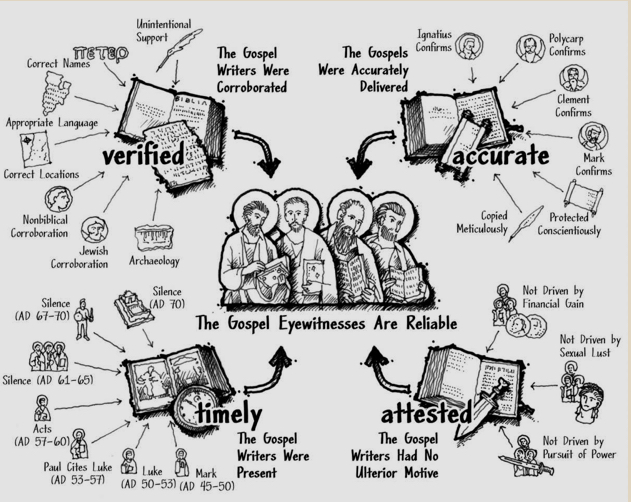
“The most reasonable inference is that the gospel writers were present, corroborated, accurate, and unbiased. If this is the case, we can conclude with confidence that their testimony is reliable.” 
A.L.I.V.E.—The “E” Is For Engagement Of Christ’s Followers

Let’s get some insight into the Greco-Roman and Jewish mindsets of the first century AD. Specifically, the mindset of men. 

There is a well-known letter written June 17, 1 BC, from a man named Hilarion, who was gone off to Alexandria, to his wife Alis, whom he has left at home. He writes to her: “If—good luck to you—you bear a child, if it is a boy, let it live; if it is a girl, throw it out.” This letter captures the male-dominated mindset in the Roman world concerning women and children. In a word: inferior or even disposable. 

This mindset wasn’t limited to the world the Jews called “pagan,” but it was prevalent in Judaism too. Every day Jewish men began their morning prayer time with, “God, I thank You that You did not make me a Gentile, a slave, or a woman.” 

With this background, it makes it startling that a Jewish man (who prayed that prayer thousands of times) writing to people in Rome (who undoubtedly had the same mindset as Hilarion), begins his list of thank you notes with gratitude to two women! Paul goes on to list no less than 8 women, even giving preferential treatment to a wife (Priscilla) over her husband (Aquila) when he mentions her name first! (see Romans 16:1-4, 6, 12).

William Barclay wrote, “Anyone who asks the question: ‘What has Christianity done for the world?’ has delivered himself into a Christian debater’s hands. There is nothing in history so unanswerably demonstrable as the transforming power of Christianity and of Christ on the individual life and on the life of society.”

Indeed Christians changed the lives of at least four groups:

  1. Women (especially in the role of marriage)—divorce was so common that it was neither unusual nor particularly blameworthy for a woman to have a new husband every year. Yet Christians taught men to esteem their wives and for marriage to be honored by everyone (Ephesians 5:28; Hebrews 13:4). 
  2. Children—who weren’t even considered a part of the family until they had grown up and proven their worth to the father. Yet Christians taught fathers to nurture their children (Ephesians 6:4).
  3. Senior citizens—the pragmatic Romans had little to do with those they considered less valuable. But the first blind asylum was founded by Thalasius, a Christian monk; the first free medical dispensary was founded by Apollonius, a Christian merchant; the first hospital of which there is any record was founded by Fabiola, a Christian lady.
  4. The weak and sick—when a plague hit Rome, all the young, healthy people left the sick and elderly behind. They ran away, but the Christians stayed to help. The Christians taught that everyone (regardless of age, sex, or wealth) was valuable (1 Timothy 5:1-2). 

That was just the start of Christianity. Men like William Wilberforce and Abraham Lincoln were Christians who opposed slavery; Clara Barton was nicknamed “the angel of the battlefield” and founded the Red Cross; Paul Brand was a doctor who ran to leprosy patients when everyone else shunned them; Mother Teresa loved those poor, dying souls whom others ignored. 

So what’s your conclusion? Throughout history Christians have been martyred for their faith, but not only are they willing to die for their belief that Jesus is alive, but they continue to do good to those who persecute them. Would people do this to perpetuate a hoax? Or does this sound more like the real deal?

Please check out the other evidence I have presented for the resurrection of Jesus:

4 Quotes From “To Know Him”

In T.M. Moore’s book of poetic verse entitled To Know Him, he provides some insightful notes at the back of the book. These are a few quotes from those notes. You can check out my review of this book by clicking here.

“The historical data bearing witness to the reality of Jesus, and the events of His life, death, and resurrection, is unassailable. Thousands of documents, from both within the Christian movement and beyond it, as well as numerous archaeological artifacts testify to the existence of Jesus. The consistent witness of countless multitudes of believers through the ages also adds to the certainty that a historical personage of considerable enduring influence, Jesus from Nazareth, lived at a certain time, and talked and lived in ways which anyone with an open mind can investigate for himself. Only the most willingly blind deny that Jesus existed, and only the most foolhardy refuse to explore the evidence that bears witness to Him.”

“No one can claim to know Jesus as He intends without this twofold sense and experience of His immanence (God with us) and His transcendence (God exalted in glory). The better we acquaint ourselves with Jesus in both these dimensions, the more our outlook on and approach to life will reflect His. We will see our lives as He does, as enormously significant, and we will desire for our lives what He does, so that our relationship with Him bears fruit in daily life, and our fellowship with Him grows daily stronger.”

“We know Jesus by the work He does in and through us, especially the freedom from sin’s power which the power of Jesus unleashes in us.”

“As full and enjoyable as this life of knowing Jesus can be, it is but a foretaste of a richer, fuller, and more joyous relationship yet to come. Now, in anticipation of that greater glory, we seek it earnestly by faith, and thus know it increasingly as our daily experience—living the there and then in the here and now.”

Book Reviews From 2017

I love reading, and I love sharing my love of good books with others! Here is a list of the books I read and reviewed in 2017. Click on a title to be taken to that review.

#Truth

10 Commitments For Dads

50 Core American Documents

A New Kind Of Apologist

Absolute Surrender

As Kingfishers Catch Fire

Born After Midnight

Brady vs. Manning

Cherish

Everything You Always Wanted To Know About God

Evidence That Demands A Verdict

How Great Is Our God

If

Interpretation Of The Scriptures

Islam Booklets

Joy To Your World

Know Who You Are

Leadership Promises For Every Day

Live Dead Journey

Live Dead Life

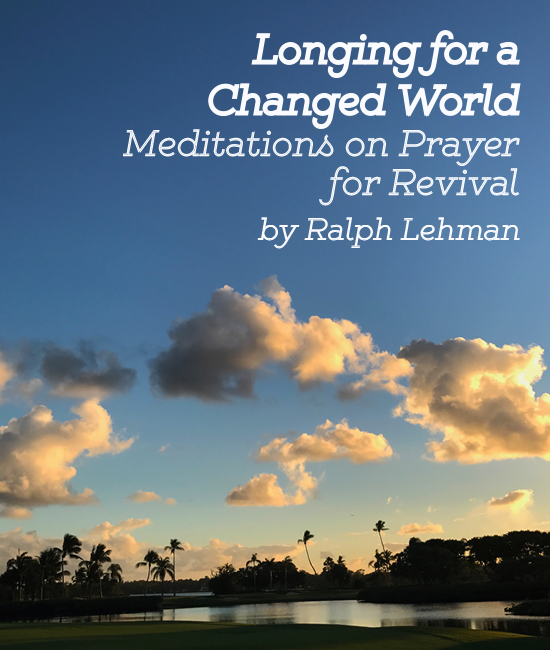
Longing For A Changed World

Man—The Dwelling Place Of God

Marching Off The Map

No Limits

On Calvary’s Hill

Ordering Your Private World

Paths To Power

Peace In The Face Of Cancer

Prevailing Prayer

Run Today’s Race

Seeing Jesus

Shade Of His Hand

Take Your Life Back

The Broken Way

The Christian Book Of Mystical Verse

The Christian In Complete Armour

The Christmas Candle

The Dawn Of Christianity

The Servant As His Lord

The World’s Last Night

Transforming Grace

When A Nation Forgets God

Your Next 24 Hours

Here are my book reviews for 2011.

Here are my book reviews for 2012.

Here are my book reviews for 2013.

Here are my book reviews for 2014.

Here are my book reviews for 2015.

Here are my book reviews for 2016.

13 Introspective Questions From “Longing For A Changed World”

As Ralph Lehman made his case for Christian to (re)establish a prayer focus for revival in his book Longing For A Changed World, he asked several penetrating questions. Here are a few of them for you to consider.

“[Josiah’s revival] was one revival that began with the leaders of government. Are we praying for our leaders?”

“Our government has entered many areas that were once considered to be the Church’s sphere of ministry. How can we lead our churches back into these areas?”

“Have you considered that you are grieving the Spirit when you deprive Him of conversing with God by choosing not to pray?”

“As men of prayer, should we not strive to be like the great prayer warriors of the Bible?”

“Tertullian, a church father who lived in the Roman Empire around 200 A.D., stated that the Roman emperor and his armies benefited greatly from the prayers of the Christians who interceded on their behalf. Can we present the same argument to our political leaders today?”

“What would we be willing to leave or to set aside for the sake of more time in prayer, seeking the Kingdom and righteousness of God?”

“Do we seek the Lord of revival, or merely desire His blessings?”

“If we do not enjoy God’s presence, through His Word and prayer, we are missing the true blessing God intends for us—the blessing of Himself. If we will not seek the presence of God day by day, how can we expect Him to go with us in our daily lives?”

“If God was willing to take the Israelites into the Promised Land without His presence [Exodus 33:3-4], what does this say to the proponents of the ‘health and wealth’ gospel?”

“Even though we have been blessed immeasurably by living here in the United States, do our hearts long for God’s rule to be acknowledged in our land? Do we yearn to abide in His presence? Or are we idle in our contentment with the milk and honey?”

“Sometimes, our areas of giftedness become spheres where we fail to ask God for strength. Have you considered your strengths may be the very areas that satan exploits?”

“Are we praying for revival, are we also praying that we would conduct ourselves in such a way that the world would take notice, even if this meant for us to suffer?”

“Is the God of today’s church big enough to surprise us?”

You can check out some other quotes from Longing For A Changed World by clicking here, and my full book review is available here.

10 Quotes From “Longing For A Changed World”

Longing For A Changed World will help you (re)establish a prayer focus that could be the beginning of the next great revival! You can check out my full book review here, and then enjoy some of the quotes that especially caught my attention.

“Our age, severed from its Biblical moorings, is neglecting history’s lessons.”

“Another characteristic of today’s Church is a lack of prayer. Instead of communing and listening to God, lifting our needs and concerns to the Lord, we rely on our own abilities and in technology to compensate for any inadequacy we may have. Thus armed, we are confident in taking on the challenges of our day, even those spiritual in nature.”

“True revival impacts all aspects of life, even to the concerns of the last, the least, and the lost. A people who uphold justice and righteousness and seeks to alleviate the plight of the poor and needy, are a people truly gripped with revival. For when we are consumed with God’s holiness and how blessed we are by His grace, we are compelled to take this Gospel to all aspects of our culture.”

“Our propensity is to focus on being doers—to be on the battlefield, sword in hand, fighting for the Kingdom and for righteousness. But as in the battle with the Amalekites, battles are won by God’s people lifting up their arms to the Lord.”

“I have been more focused on what I wanted to say in my prayer than on Whom I am approaching in prayer. This often leads to prayer that amounts to a tallying-up of my wants, without proper regard for the One into Whose presence I have come.”

“Our prayers as a whole, and prayers for revival, should reflect our poverty and powerlessness before a God who is forgiving and gracious.”

“Pray for boldness in the church—boldness to proclaim God’s Word and to firmly stand on it. Pray for boldness to confront sin yet boldness accompanied with humility as the church is aware (painfully aware) of its own sinfulness. And pray for boldness to present Christ as the Way and the Truth.”

“Praying expectantly requires us to pray to God in line with His Word and His promises. Thus a decline in biblical literacy has resulted in our prayer life wavering as well.”

“Our pleas for revival will go unheeded until we stand up for God’s Word, forsake the idols of our age, shake off the trappings of our secular and materialistic age, and embrace God’s truth.”

“As we pray for revival—for changed lives, renewed churches, and a transformed culture—our tendency might be to enlist the charismatic, the eloquent, and those who project confidence and success, traits that so readily appeal to us. But God’s manner of bringing revival has often been through ordinary people who endure affliction, hardship, and suffering, much as he did with Paul and Timothy and the Apostles.”

I’ll be sharing more resourced and thoughts from this book soon, so stay tuned!

Longing For A Changed World (book review)

I grew up with this axiom ringing in my ears: “The Church moves forward on its knees.” Lately, however, it seems that the Church is attempting to move forward in every way she can think of, and only turning to prayer as a last resort. Ralph Lehman has given the Church a clarion call to return to its only reliable posture for success: Constant, unwavering prayer. Longing For A Changed World will challenge you to return to this dependable supply of prayer once again.

This book is written as a series of short challenges for us to (re)consider how indispensable prayer is for both the individual Christian and the collective Church. Ralph recalls both biblical and historical revivals in which prayer played the vital role of bringing people back to their knees in humble prayer to God for His help.

The subtitle of this book is Meditations on prayer for revival. At the close of each chapter, Ralph has included questions on which you can reflect. I found these introspective questions to be quite confronting as I compared my prayer life to those revival-starting prayers of the past.

Ralph mentions that women have an almost innate desire and propensity to turn to God in prayer, while men typically try to “fix” things themselves before asking for prayer. So Longing For A Changed World is really targeted at the men in our churches, although anyone who desires to see the Church revived will benefit greatly from reading this book.

Please don’t put off prayer any longer! This book will help rekindle your passion for prayer!

I am a Waxed Tablet Publications book reviewer.

3 Apologetics For Your Christian Hope

There was a story circulating that a physicist once claimed that the bumblebee was defying the laws of physics and aerodynamics in its flight. Apparently, he calculated that the ratio of the bumblebee’s wing size in comparison to his body size just didn’t make the math work.

But entomologists and physicists quickly jumped in to say, “Hey, look, the bumblebee is flying, so clearly it works!” And then they went to work to try to explain it. They figured out that the bumblebee flaps its wings more back-and-forth than up-and-down, creating tiny hurricanes the propel them through the air. But then that created a whole new set of problems, like how does the bumblebee control a hurricane so precisely as it turns, stops, dives, and climbs. So then they had to create a new explanation, which they named dynamic stall.

All the while, the bumblebee is flapping its too-small wings 230 times per second(!), and going about its daily activities without being able to explain tiny hurricanes, the laws of physics or aerodynamics, or even knowing what dynamic stall is. It simply flies!

The ultimate argument for anything is doing something that critics say is impossible.

Peter tells Christians to be prepared to answer anyone for the reason for the hope that they have (1 Peter 3:15-16). The Greek word for “give an answer” is apologia, from which we get our word apologetic. Here are three apologetics for Christians to use for the hope that they have.

It really comes down to this: My hope is based on the resurrection from the dead of Jesus Christ, which I believe because of the Bible AND because of the change in my life.

  1. The Bible’s authenticity

“No other work in all literature has been so carefully and accurately copied as the Old Testament. The particular discipline and art of the Jewish scribes came out of a class of Jewish scholars between the fifth and third centuries BC. They were called the Sopherim, from a Hebrew word meaning ‘scribes.’ The sopherim, who initiated a stringent standard of meticulous discipline, were subsequently eclipsed by the Talmudic scribes, who guarded, interpreted, and commented on the sacred texts from AD 100 to AD 500. In turn, the Talmudic scribes were followed by the better-known and even more meticulous Masoretic scribes (AD 500-900).” —Josh McDowell, God-Breathed

“No other ancient text is substantiated by such a wealth of ancient textual witnesses as is the New Testament. Roughly 5,500 separate manuscripts are available, variously containing anything from the entire New Testament corpus to a slight fragment of a single verse. … This textual support is far superior to that available for any other ancient documents, such as the classical texts from Greek and Roman writers (e.g., Plato, Aristotle, and Cicero). Only partial manuscripts have survived for many works of antiquity, and it is not unusual to find that the only complete manuscript for some ancient writing is a copy dating from 1,000 years after its composition.” —Archaeological Study Bible, “The New Testaments Texts” (page 1859)

“The biblical Dead Sea Scrolls are up to 1,250 years older than the traditional Hebrew Bible, the Masoretic text. We have been using a one-thousand-year-old manuscript to make our Bibles. We’ve now got scrolls going back to 250 BC. … Our conclusion is simply this—the scrolls confirm the accuracy of the biblical text by 99 percent.” —Dr. Peter Flint

I have shared other apologetic evidence for the authenticity of Scripture here and here.

  1. Christ’s resurrection 

In 1 Corinthians 15:1-8 Paul lists all of the eyewitnesses to Christ’s resurrection, giving critics ample opportunity to challenge these witnesses in person. If these witnesses would have been perpetrating a hoax, skeptics of their day would have been able to uncover the inconsistencies in their story. If the account of Christ’s resurrection was made-up, it’s doubtful the early Christian martyrs would have “stuck to their story” as they were being tortured, but none recanted.

Josh McDowell notes, “By AD 100, the apostles had died, but the Christian Church was still in its infancy, with fewer than twenty-five thousand proclaimed followers of Christ. But within the next two hundred years, the fledgling church experienced explosive multiplication of growth, to include as many as twenty million people. This means the church of Jesus Christ quadrupled every generation for five consecutive generations!

  1. My personal experience

“I am a changed person. I am not who I was before I met Jesus” and “My life tends to go better when I live by biblical principles” are both excellent apologetics!

Let others argue that God doesn’t exist, or that you shouldn’t have hope, and then you—like the bumblebee—just keep flying with Jesus! (see 2 Timothy 3:14)

If you’ve missed any messages in this series, you may find the complete list by clicking here.

How Great Is Our God (book review)

Mark Gilroy has given both Christian believers and skeptics a unique overview of profound Christian thinkers throughout the entire “AD” calendar. How Great Is Our God is a year-long journey with those historians, eye-witnesses, preachers, and martyrs who have truly captured the sentiment how great is our God!

From the book’s introduction—

How Great Is Our God is compiled to take you on a journey through every century and every tradition of the Christian faith. We want you to experience the heart and thoughts of Christians from the birth of the church until today. …

You will find daily readings that have been selected because they are considered great and enduring thoughts that have contributed to the spiritual growth of Christians in every age, but also because some of the readings represent seminal moments in the history of Christian thought and Western civilization.”

You can read this book by the date on the calendar, or you can read the various writings in the chronological order in which they were written. Although some doctrinal statements may vary from author to author, truly the underlying theme through every age and every author is the greatness and praiseworthiness of our God.

Reading this book I discovered…

  • …how influential people addressed cultural issues in their time through a biblical worldview
  • …an increased appreciation for the historicity of the Christian faith
  • …new insights into Christian theology
  • …authors I may have overlooked
  • …an invigorated passion to “contend for the faith that was once for all entrusted to the saints” (Jude 1:3)

From church history buffs, to pastors, to theologians … all should be pleased with the content they will find in How Great Is Our God.

A Leader’s Most Powerful Resource

…Sanballat…mocked the Jews… (Nehemiah 4:1).

Sanballat mocked. How did Nehemiah respond to the mocking? He told Sanballat, “                .” Absolutely nothing!

At least he said nothing to Sanballat. But to God Nehemiah prayed, “Hear, O our God, for we are despised; turn their reproach on their own heads” (v. 4).

Once again the bad guys “conspired together to come and attack Jerusalem and create confusion” (v. 8). And once again Nehemiah said nothing to the conspirators; “nevertheless we made our prayer to our God” (v. 9).

When the gossip and rumors about the conspirators begin to discourage the Israelites, Nehemiah redirected them back to God: “Do not be afraid of them. Remember the Lord, great and awesome” (v. 14).

Even when the opposition was internal—with those who were looking out for themselves only and taking advantage of their brothers—Nehemiah again called them to look to God: “Should you not walk in the fear of our God?” (5:9).

Indeed, because of Nehemiah’s own example of the fear of the Lord, he had the moral authority to call them out, and to ask God for His blessing (vv. 14-19).

Whatever criticism or opposition Nehemiah faced, his first response was to turn to God.

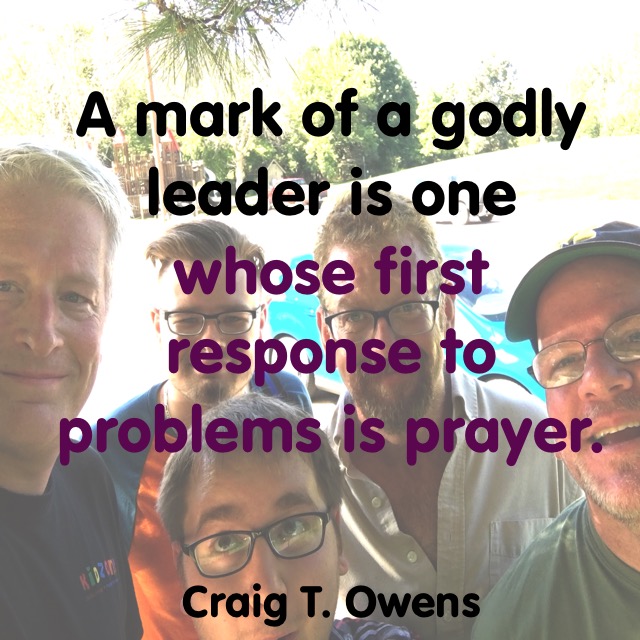
A mark of a godly leader is one whose first response to problems is prayer.

This is Part 6 in my series on godly leadership. To read my other posts, please click here.