3 Apologetics For Your Christian Hope

There was a story circulating that a physicist once claimed that the bumblebee was defying the laws of physics and aerodynamics in its flight. Apparently, he calculated that the ratio of the bumblebee’s wing size in comparison to his body size just didn’t make the math work.

But entomologists and physicists quickly jumped in to say, “Hey, look, the bumblebee is flying, so clearly it works!” And then they went to work to try to explain it. They figured out that the bumblebee flaps its wings more back-and-forth than up-and-down, creating tiny hurricanes the propel them through the air. But then that created a whole new set of problems, like how does the bumblebee control a hurricane so precisely as it turns, stops, dives, and climbs. So then they had to create a new explanation, which they named dynamic stall.

All the while, the bumblebee is flapping its too-small wings 230 times per second(!), and going about its daily activities without being able to explain tiny hurricanes, the laws of physics or aerodynamics, or even knowing what dynamic stall is. It simply flies!

The ultimate argument for anything is doing something that critics say is impossible.

Peter tells Christians to be prepared to answer anyone for the reason for the hope that they have (1 Peter 3:15-16). The Greek word for “give an answer” is apologia, from which we get our word apologetic. Here are three apologetics for Christians to use for the hope that they have.

It really comes down to this: My hope is based on the resurrection from the dead of Jesus Christ, which I believe because of the Bible AND because of the change in my life.

  1. The Bible’s authenticity

“No other work in all literature has been so carefully and accurately copied as the Old Testament. The particular discipline and art of the Jewish scribes came out of a class of Jewish scholars between the fifth and third centuries BC. They were called the Sopherim, from a Hebrew word meaning ‘scribes.’ The sopherim, who initiated a stringent standard of meticulous discipline, were subsequently eclipsed by the Talmudic scribes, who guarded, interpreted, and commented on the sacred texts from AD 100 to AD 500. In turn, the Talmudic scribes were followed by the better-known and even more meticulous Masoretic scribes (AD 500-900).” —Josh McDowell, God-Breathed

“No other ancient text is substantiated by such a wealth of ancient textual witnesses as is the New Testament. Roughly 5,500 separate manuscripts are available, variously containing anything from the entire New Testament corpus to a slight fragment of a single verse. … This textual support is far superior to that available for any other ancient documents, such as the classical texts from Greek and Roman writers (e.g., Plato, Aristotle, and Cicero). Only partial manuscripts have survived for many works of antiquity, and it is not unusual to find that the only complete manuscript for some ancient writing is a copy dating from 1,000 years after its composition.” —Archaeological Study Bible, “The New Testaments Texts” (page 1859)

“The biblical Dead Sea Scrolls are up to 1,250 years older than the traditional Hebrew Bible, the Masoretic text. We have been using a one-thousand-year-old manuscript to make our Bibles. We’ve now got scrolls going back to 250 BC. … Our conclusion is simply this—the scrolls confirm the accuracy of the biblical text by 99 percent.” —Dr. Peter Flint

I have shared other apologetic evidence for the authenticity of Scripture here and here.

  1. Christ’s resurrection 

In 1 Corinthians 15:1-8 Paul lists all of the eyewitnesses to Christ’s resurrection, giving critics ample opportunity to challenge these witnesses in person. If these witnesses would have been perpetrating a hoax, skeptics of their day would have been able to uncover the inconsistencies in their story. If the account of Christ’s resurrection was made-up, it’s doubtful the early Christian martyrs would have “stuck to their story” as they were being tortured, but none recanted.

Josh McDowell notes, “By AD 100, the apostles had died, but the Christian Church was still in its infancy, with fewer than twenty-five thousand proclaimed followers of Christ. But within the next two hundred years, the fledgling church experienced explosive multiplication of growth, to include as many as twenty million people. This means the church of Jesus Christ quadrupled every generation for five consecutive generations!

  1. My personal experience

“I am a changed person. I am not who I was before I met Jesus” and “My life tends to go better when I live by biblical principles” are both excellent apologetics!

Let others argue that God doesn’t exist, or that you shouldn’t have hope, and then you—like the bumblebee—just keep flying with Jesus! (see 2 Timothy 3:14)

If you’ve missed any messages in this series, you may find the complete list by clicking here.

How Great Is Our God (book review)

Mark Gilroy has given both Christian believers and skeptics a unique overview of profound Christian thinkers throughout the entire “AD” calendar. How Great Is Our God is a year-long journey with those historians, eye-witnesses, preachers, and martyrs who have truly captured the sentiment how great is our God!

From the book’s introduction—

How Great Is Our God is compiled to take you on a journey through every century and every tradition of the Christian faith. We want you to experience the heart and thoughts of Christians from the birth of the church until today. …

You will find daily readings that have been selected because they are considered great and enduring thoughts that have contributed to the spiritual growth of Christians in every age, but also because some of the readings represent seminal moments in the history of Christian thought and Western civilization.”

You can read this book by the date on the calendar, or you can read the various writings in the chronological order in which they were written. Although some doctrinal statements may vary from author to author, truly the underlying theme through every age and every author is the greatness and praiseworthiness of our God.

Reading this book I discovered…

  • …how influential people addressed cultural issues in their time through a biblical worldview
  • …an increased appreciation for the historicity of the Christian faith
  • …new insights into Christian theology
  • …authors I may have overlooked
  • …an invigorated passion to “contend for the faith that was once for all entrusted to the saints” (Jude 1:3)

From church history buffs, to pastors, to theologians … all should be pleased with the content they will find in How Great Is Our God.

A Leader’s Most Powerful Resource

…Sanballat…mocked the Jews… (Nehemiah 4:1).

Sanballat mocked. How did Nehemiah respond to the mocking? He told Sanballat, “                .” Absolutely nothing!

At least he said nothing to Sanballat. But to God Nehemiah prayed, “Hear, O our God, for we are despised; turn their reproach on their own heads” (v. 4).

Once again the bad guys “conspired together to come and attack Jerusalem and create confusion” (v. 8). And once again Nehemiah said nothing to the conspirators; “nevertheless we made our prayer to our God” (v. 9).

When the gossip and rumors about the conspirators begin to discourage the Israelites, Nehemiah redirected them back to God: “Do not be afraid of them. Remember the Lord, great and awesome” (v. 14).

Even when the opposition was internal—with those who were looking out for themselves only and taking advantage of their brothers—Nehemiah again called them to look to God: “Should you not walk in the fear of our God?” (5:9).

Indeed, because of Nehemiah’s own example of the fear of the Lord, he had the moral authority to call them out, and to ask God for His blessing (vv. 14-19).

Whatever criticism or opposition Nehemiah faced, his first response was to turn to God.

A mark of a godly leader is one whose first response to problems is prayer.

This is Part 6 in my series on godly leadership. To read my other posts, please click here.

The Q Series—The Bible

Our annual Q Series is where folks send their questions to me on a variety of subjects and we do our best to answer them. This week many of the questions were about the Bible. Questions like:

  • What books should be included in the Bible?
  • What about Bible translations?
  • Is it okay for the Bible to have pictures in it?

Here’s what we discussed, along with the time this discussion appears on the video:

  • How was it decided what books would be included in the New Testament? [5:38] **Be sure to check out this post: How We Got The Bible on Biblegateway.
  • J. Warner Wallace’s list of criteria for New Testament books [9:45]
  • Did contemporary sources support or refute the New Testament authors? [11:45]
  • How did the final 27 books of the New Testament make the list? [15:02]
  • How was it decided what books would be included in the Old Testament? [18:22]
  • Evidence presented by the Apostle Paul [20:31]
  • How do we know the Scriptures were accurately transcribed? [22:50] **Be sure to check out this post: Why Trust The Bible? on Biblegateway.
  • The history surrounding the complete Latin Bible and the Dead Sea Scrolls [23:45]
  • What are Bible translations and paraphrases (with references to the Wycliffe Bible and the discovery of the Rosetta Stone)? [25:45]
  • Some cautions about Bible paraphrases [33:23]
  • Is it okay for a Bible to have pictures in it? [35:16]
  • Are icons of the Cross acceptable or a blasphemy? [37:42]
  • How can someone better understand the Bible when they read it for themselves? [41:32]
  • Why ask questions? [48:39]

We’ll be discussing more questions this upcoming Sunday, so be sure to send them my way. For all of the ways you can send questions, please click here.

The Cure For Spiritual Fanaticism

“Some time after Pentecost a group of believers met to pray for strength and power to meet the emergency then facing them, and to enlist the help of God on their behalf. ‘And when they had prayed, the place was shaken where they were assembled together; and they were all filled with the Holy Ghost, and they spake the Word of God with boldness’ (Acts 4:31). Some of these were of the original number filled at Pentecost. It is hardly conceivable that God acted contrary to His own will in filling them again after Pentecost. Still other outpourings are recorded in Acts 8, Acts 10 and Acts 19. All these occurred some years after the original act.

“In brief, the teaching of the New Testament is that the outpouring at Pentecost was the historic beginning of an era which was to be characterized by a continuous outpouring of the Holy Spirit. …

“This anti-emotionalism, though it is sponsored by some good people and travels in pretty orthodox company, is nevertheless an unwarranted inference, not a scriptural doctrine, and is in violent opposition to psychology and common sense. Where in the Bible are feeling and faith said to be at odds? The fact is that faith engenders feeling as certainly as life engenders motion. We can have feeling without faith, it is true, we can never have faith without feeling. Faith as a cold, unemotional light is wholly unknown in the Scriptures. …

“The Holy Spirit is the cure for fanaticism. Not the cause of it.”

—A.W. Tozer, in Paths To Power

4 BIG Lessons From Esther

One of my favorite stories in the Bible shows God’s role in world events, and how the obedience of His people fits into God’s plan. Yet this story doesn’t even mention God by name!

It’s an important reminder that we don’t have to say, “God’s at work here” for God to be at work here. We don’t have to say, “I’m a Christian” to live in a Christlike way.

Have you ever read the story of Queen Esther and her cousin Mordecai? Let me tell you, this is a real page-turner of a story! If you already know the story, skip to the four lessons below. Here’s a quick recap (but you really should read this for yourself)…

  • King Xerxes is the ruler of the most powerful nation on earth
  • Queen Vashti (Xerxes’ wife) defies him and is deposed
  • When the king is looking for a new queen, a young lady named Hadassah catches his eye
  • Hadassah went by her Persian name of Esther, so the king didn’t know he married a Jewess
  • Mordecai was Esther’s cousin, her legal guardian, and a palace worker
  • Mordecai uncovered a plot to assassinate Xerxes, which he shared with Queen Esther, who told the king, who investigated and had the plotters killed
  • King Xerxes had a prime minister named Haman, who was really full of himself
  • Mordecai wouldn’t bow down to Haman because Haman thought of himself as a deity
  • Haman wanted to show Mordecai, and all the other Jews like him, who was boss so he deceived King Xerxes into signing a law that would allow for all the Jews to be killed on a set date
  • Mordecai again told Queen Esther about the plot, but the queen was scared to go before the king unsummoned (where the penalty for doing so could be death)
  • Esther finally had the courage to approach Xerxes and invite him and Haman to dinner
  • At dinner, the king asked Esther why she really invited him to dinner, and Esther said, “Come back to dinner tomorrow night and I’ll tell you then”
  • King Xerxes couldn’t sleep that night so he asked for the royal chronicles to be read to him
  • The king discovered that Mordecai had never been rewarded for uncovering the assassination attempt
  • Xerxes asked Haman what he should do for a man he wanted to honor; Haman thought the king was talking about him, so he gave an elaborate plan of recognition, to which the king replied, “Excellent! Go do all that for Mordecai!”
  • Haman was so ticked off that he built a 75-foot tall gallows on which to hang Mordecai
  • At the second dinner, Esther asked for her life to be spared; the king wanted to know who would presume to attack her and the Jews, and she called out Haman
  • The king stormed from the room while Haman stayed to beg for his life
  • As the king returned, Haman was pawing at the queen in desperation, so the king’s bodyguards grabbed him
  • The king found out about the gallows built for Mordecai and gave orders for Haman to be hanged on those very same gallows
  • Mordecai became prime minister and wrote another law to help save the Jews from annihilation

4 BIG Lessons From Esther for Christians living in a pagan culture today

  1. All of History is His Story. God’s timing to bring all of the key players on the scene at just the right moment is obvious. Even giving the king insomnia at just the right time was a part of God’s plan!
  2. God gives us favor and we win favor by obeying God. The word “favor” is all throughout this story. God-fearing people are given God’s favor which leads to man’s favor as well.
  3. God-following people do make a positive impact on their culture. Esther becoming queen pleased the people, as did Mordecai’s just laws.  
  4. Pride humiliates and destroys; humility elevates the person and glorifies God. Just look at the contrast between Haman and Mordecai!

Do you have any other takeaways from this story? If so, please share them in the comments below.

Now More Than Ever Christians Must Exalt The Cross

“Think for a moment what the power of the gospel accomplished in the early centuries. With no political base in the Roman government, without any majority in the culture, the gospel changed the spiritual and moral climate of the Roman Empire. Christianity competed with paganism and, for the most part, won the hearts and minds of the populace. Christians were radicals in the best sense of the word—radically committed to community in worship, radically committed to serving their pagan neighbors, and radically committed to living out the implications of their redemption.

“Without freedom of religion, without a media presence, and without the ability to redress the wrongs against them, the Christians discovered that the gospel had the power to change individuals, families, and the culture.” —Dr. Erwin Lutzer, in When A Nation Forgets God (emphasis added)

Please check out my review of When A Nation Forgets God by clicking here, and then get a copy for yourself. You can also read other quotes I have shared from this book by clicking here and here.

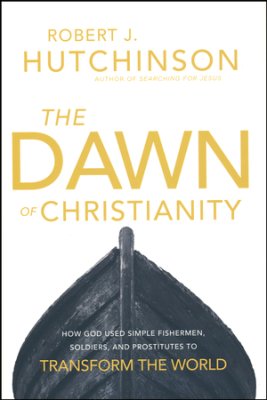
6 Quotes From “The Dawn Of Christianity”

Robert J. Hutchinson makes the history around the birth, life, death, and resurrection of Jesus, as well as the history of Christ’s followers after His resurrection, come to life in The Dawn Of Christianity. Check out my full review by clicking here.

“Skeptics make much of the fact that historians have no independent corroboration from outside sources of most of the events described in the Gospels, but this is common with ancient history and hardly unique to Christianity. For example, virtually everything historians know about the Three Hundred, the Spartan warriors who held off a Persian invasion at the mountain pass of Thermopylae in 480 BC, comes from the writings of a single Greek author, Herodotus. What’s more, the earliest copy historians have of Herodotus’s chronicle of this event, The Histories, dates to the tenth century AD—or more than 1,350 years after it was written! In comparison, historians have a cornucopia of historical sources and archaeological evidence about Jesus of Nazareth and the early Christian community. For example, more than fifty papyrus manuscripts of New Testament texts exist that date before AD 300. The earliest of these manuscripts, a papyrus fragment from the Gospel of John known as P52, dates to around AD 125 or just thirty years after the original was likely written.”

“Around 20 BC, the half-Jewish King Herod the Great set himself the task of renovating and expanding the temple and surrounding area. There had been a small natural plateau there before, fixed atop the ridge in the northeastern corner of Jerusalem; but Herod wanted something far more spectacular. He therefore enclosed this natural plateau on all sides with four immense retaining walls, some more than one hundred feet high, made up of massive rectangular ashlars, or cut stones, that weighed as much as 415 tons each. These stones are so large that even modern cranes and bulldozers would have some difficulty moving them. Herod then filled in this entire quadrangle with stones and dirt, creating an artificial hilltop plaza—roughly 1,500 feet long by 1,000 feet wide—of more than thirty-five acres. In modern terms, Herod’s Temple Mount is so large that about twenty-six American football fields could fit in the space available. This massive engineering marvel has endured for two thousand years and still stands today, almost wholly intact.”

“Simon the Rock continued to loudly protest that he was willing to die, if need be, but would never deny Jesus. The other disciples said the same. This is one of those incidents that even many skeptics believe must be historical under the ‘criterion of embarrassment,’ which means that the Christian community was unlikely to invent a story that cast such a bad light on its leaders; therefore, it must have actually happened.” 

“Recent archaeological discoveries are showing that the New Testament in general, and the Gospels in particular, are far more reliable historical sources than previous generations of New Testament experts realized.”

“All four Gospels report that this board, what the Romans called the titulus, held the inscription ‘The King of the Jews.’ John’s Gospel alone reports that Jesus’ name was also on the titulus, ‘Jesus of Nazareth, the King of the Jews,’ and that it was written in Hebrew, Latin, and Greek (19:19-20). In Latin the charge read Iesus Nazarenus Rex Iudaeorum, which is why, to this day, the letters INRI appear at the top of crucifixes.”

“In 1968, archaeologists uncovered a first-century tomb at Giv’at ha-Mivtar, northeast of Jerusalem. Inside the tomb they found in ossuary containing the skeleton of a crucified man—the first and only relic of a crucified man found in Israel. Inscribed on the ossuary was his name in Hebrew: Yehochanan. On top of the bone of his right heel was a wooden board, and through the board, and his heel, was a 4.5-inch iron nail.”

The Dawn Of Christianity (book review)

Sometimes when people are reading the Gospels and the Book of Acts in the New Testament of the Bible they forget what an accurate history is presented at a pivotal time in world events. In The Dawn Of Christianity, Robert J. Hutchinson makes the history behind, surrounding, and after the biblical accounts come to life in a fresh way.

The Dawn Of Christianity tells the history surrounding Jesus of Nazareth and His followers almost in a novel-like format. Hutchinson masterfully puts together the four Gospel accounts and Luke’s history of the early church in chronological order, and then brings in archaeological, geographic, and anthropological resources like a supporting cast to the biblical account. Along the way, we are introduced to extra-biblical characters, places, and customs that add a new depth of understanding to the history presented in Scripture.

Hutchinson notes, “Recent archaeological discoveries are showing that the New Testament in general, and the Gospels in particular, are far more reliable historical sources than previous generations of New Testament experts realized.” Indeed, he makes good use of as many pertinent finds as possible to enhance his storytelling.

The Dawn Of Christianity spans the time from just before the birth of Jesus Christ of Nazareth and then tracks the spread of Christianity for about 20 years following Christ’s ascension into heaven. It’s a fascinating and enlightening story for both Bible aficionados and skeptics alike.

I am a Thomas Nelson book reviewer.

Five Women; One Amazing Story!

For some of you, it’s hard to put the word “happy” in front of Mother’s Day.

One definition of happy is “favored by fortune; lucky.” In other words, we’re happy IF things happen to be going our way. But we don’t know how things are going to turn out?

In the last Super Bowl, the New England Patriots were down by 25 points early in the 3rd quarter. It didn’t appear that things were going the Patriots’ way … except they won!

So don’t judge “happy” or “not happy” by how things are going in the middle of the story! 

To God, all of History is His Story. He knows every move, every hurt, every fumble, every betrayal, every noble deed, every evil deed … nothing escapes His notice. And it all fits into His Story—We are assured and know that God being a partner in their labor ALL THINGS work together and are fitting into a plan for good… (Romans 8:28).

Check out the stories of these five women—

Tamar had to pretend to be a prostitute in order to get her father-in-law to followthrough on his commitment. As a result, she became pregnant by him and was almost burned at the stake.

Rahab didn’t pretend to be a prostitute; she was a prostitute. She lived in an important city that was about to be defeated by the Israelites. Instead of trying to make things easier on herself, she trusted God and put herself in a very dangerous position.

Ruth was a non-Israelite married to an Israelite man. But when her husband, her brother-in-law, and her father-in-law all died, she took a huge risk in staying with her mother-in-law. She could have moved in with her family in a country she knew, but she went where she was an alien, a widow, and dirt poor.

Bathsheba was married to Uriah, who was a member of the king’s inner circle. But the king took advantage of her when Uriah was away at war, impregnated her, killed her husband, and then married her. Their son from that union died shortly after being born, but Bathsheba trusted God to make something good of her tragedy.

Mary was engaged to be married when she was found to be pregnant. Society could have shunned her, her fiancé could have had her killed for her unfaithfulness, but she trusted God to keep His word.

These five mothers are the ONLY women mentioned in the genealogy of Jesus (Matthew 1:1-6, 16)

God used all of these women. Despite the way they were treated or mistreated; despite their own mistakes; despite the injustices committed against them. God used all of them as irreplaceable parts of His Story.

To God, all of History is His Story! He’s doing things through your life that you can’t possibly imagine. Trust Him—if you do, your name will also be recorded in the best “His Story” ever recorded! 

Whenever you don’t know what’s going on, lean into Him, cry out to Him. But then say with Mary, “I am the Lord’s servant. May it be to me as you have said.” And what does God say? “I am working ALL THINGS together to tell My Story through your life!”