Assyrian Kings Involved With Israel

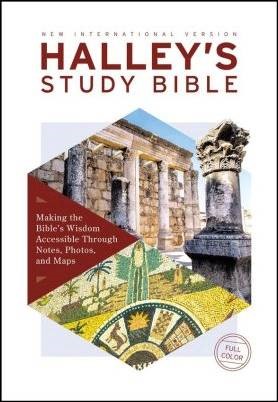
A helpful Bible study tool—

Assyrian Kings Involved With Israel

  • Shalmaneser III (858-824 BC)—2 Kings 17:3-4
  • Adad-Nirari III (810-782 BC)—took tribute from Israel; king during Jonah’s visit (Jonah 3) 
  • Tiglath-Pileser III (745-727 BC)—deported most of the northern part of Israel 
  • Shalmaneser V (727-722 BC)—besieged Samaria (2 Kings 18:9) 
  • Sargon II (721-705 BC)—deported the rest of Israel (Isaiah 20) 
  • Sennacherib (704-681 BC)—invaded Judah (Isaiah 36) 
  • Esar-Haddon (681-669 BC)—very powerful king 
  • Ashurbanipal (668-626 BC)—most powerful and brutal Assyrian king 

Two weak kings followed (626-607 BC), and Assyria fell in 605 BC. 

Source: Halley’s Study Bible 

You may also want to check out my chart of the kings and prophets of the divided kingdom of Judah and Israel.

History Matters

The minor prophets cover a span of about 300 years, from 760-450 BC, and Jonah appears right in the middle of that. Jonah overlaps Amos and Hosea in northern Israel, and he finishes his ministry just before Isaiah’s ministry begins in southern Judah. 

Jonah is the only narrative in the minor prophets. He was a prophet during the reign of Jeroboam II when Israel was temporarily growing in strength. He is the first of Israel’s prophets to be sent to a non-Jewish population. 

Critics have raised questions about this book. Questions like: Did Jonah write this book himself or is it just a story about him? Is this book historical or allegorical? 

The five biggest objections that are raised to Jonah’s historicity are: 

  1. The hyper-nationalistic feel is more like when Ezra and Nehemiah led people back to Jerusalem after their captivity in Babylon, and not during the time of Jeroboam II. 
  2. Parts of Jonah appear copied from the prophet Joel. 
  3. There are no (or incorrect) details about the major city of Nineveh that Jonah visited. 
  4. There are no extra-biblical historical records of a revival in Nineveh. 
  5. Jonah was swallowed by a fish?! 

I think there are very good reasons to believe that Jonah was both autobiographical and historically accurate. 

First, there was a revival of sorts (although not religiously) in Israel during the time of Jeroboam II. This was a time that Israel felt like it could flex its muscles again, so Jonah would not be acting out of character to be so pro-Israel. 

Second, Jonah 3:9 and Joel 2:14 sound similar, but scholars cannot tell which was written first. Couldn’t God amplify a message? Consider how many parts of the Gospel of Mark are used in the Gospels of Matthew and Luke. And it’s a regular practice for authors even today to directly quote other sources. 

Third, regarding the lack of details about Nineveh, the biblical writers give very few details of any places outside of Israel or Judah. The only “incorrect” detail skeptics point to is Jonah 3:3 stating that the city was so big that it would take three days to walk around it. Nineveh was a city of about 120,000 inhabitants, so it could easily take three days of walking and preaching in order to get the message to everyone. 

Fourth, the revival in Nineveh was clearly short-lived. Jonah was probably in Nineveh around 760 BC. Assyria was rising politically and militarily during that time and defeated Israel just 40 years after Jonah’s preaching. Assyria itself was then defeated in 605 BC. 

Finally, Jonah was swallowed by a fish?! The root word for fish in Hebrew means something that has grown to such an enormous size that it overshadows everything else. But notice that what caused the sailors to be in awe of God was not the whale/fish swallowing Jonah, but the immediate calming of the ocean when Jonah was thrown overboard (Jonah 1:15-16). Miracles appear throughout this book. And throughout the entire Bible! 

Why should the appearance of miracles surprise us? Some people have a bias against the supernatural, where they wrongly believe that we can know everything through naturalistic means. C.S. Lewis pointed out, “I use the word Miracle to mean an interference with Nature by supernatural power. … Nature as a whole is herself one huge result of the Supernatural: God created her.” 

I don’t think this story is a parable or an allegory because nowhere else in the Bible are such details given in the form of a parable. 

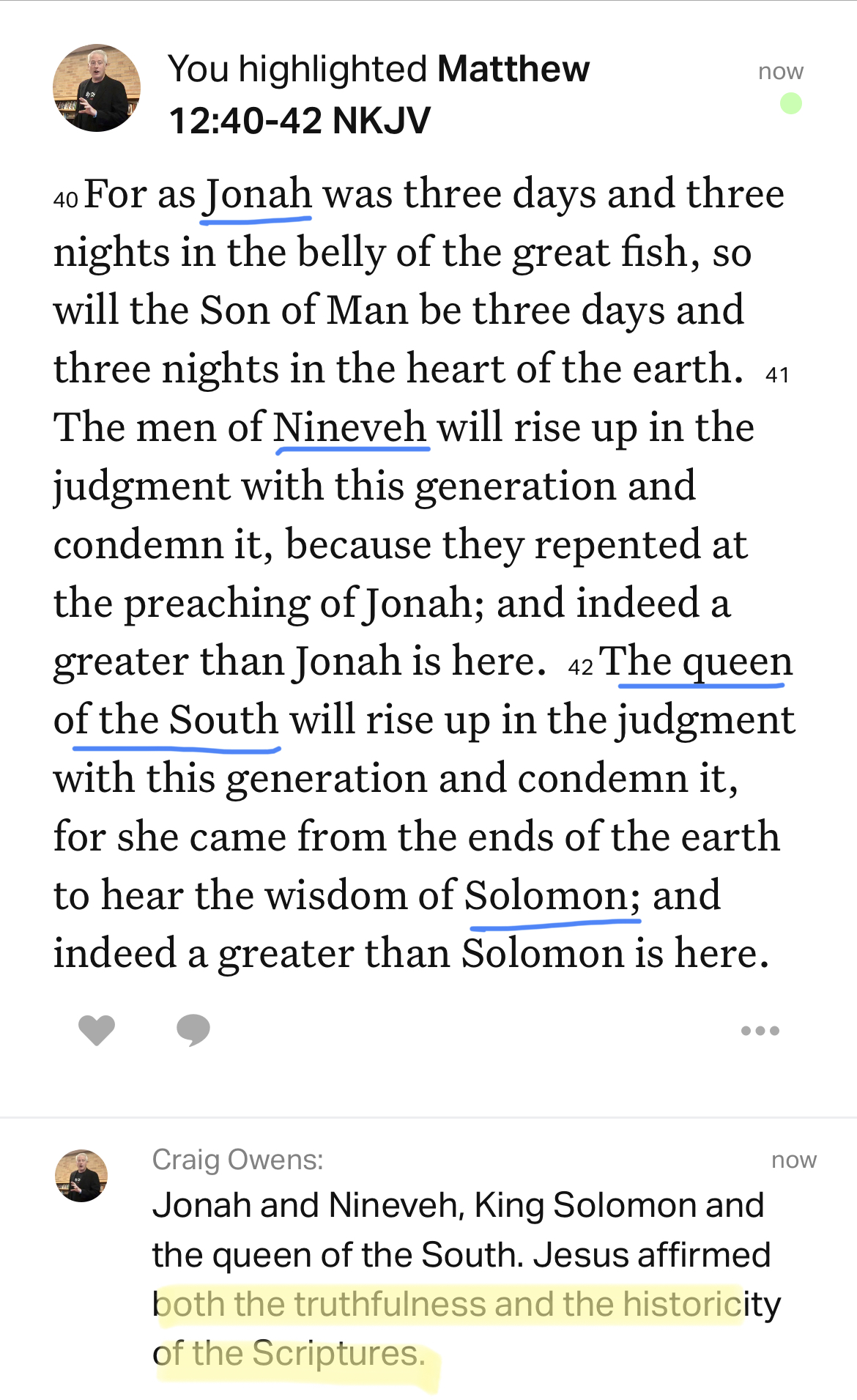
I believe this story is historical because Jesus talked about the historicity of Jonah in the same breath as He talked about other historical people: the Queen of the South and Solomon (Matthew 12:38-42). Jesus clearly viewed Jonah as historically reliable and accurate. To call Jonah into question is to call into question the truthfulness of Jesus Himself! 

History matters because all of History is God’s story! 

Our belief in the message of the Bible is not based upon “once upon a time” or “a long time ago in a galaxy far, far away.” It’s based upon real people in real places, especially the historicity of Jesus (notice all of the historical details Luke lists in the birth account of Jesus). 

Jonah was clearly one of those historical people, in an historic place, and at a precise moment in world history that tells the story of Jesus and our redemption which He purchased! 

If you want to check out all of the messages in our series on the major lessons from the minor prophets, you can find that list by clicking here.

Major Lessons From Minor Prophets (continued)

Sometimes the naming of things gives us an inaccurate picture of the thing being named. For instance, many people think the “old” in Old Testament means outdated or perhaps updated by the “new” in the New Testament. When in fact, both Testaments are needed to give us the full picture of God’s love and glory. 

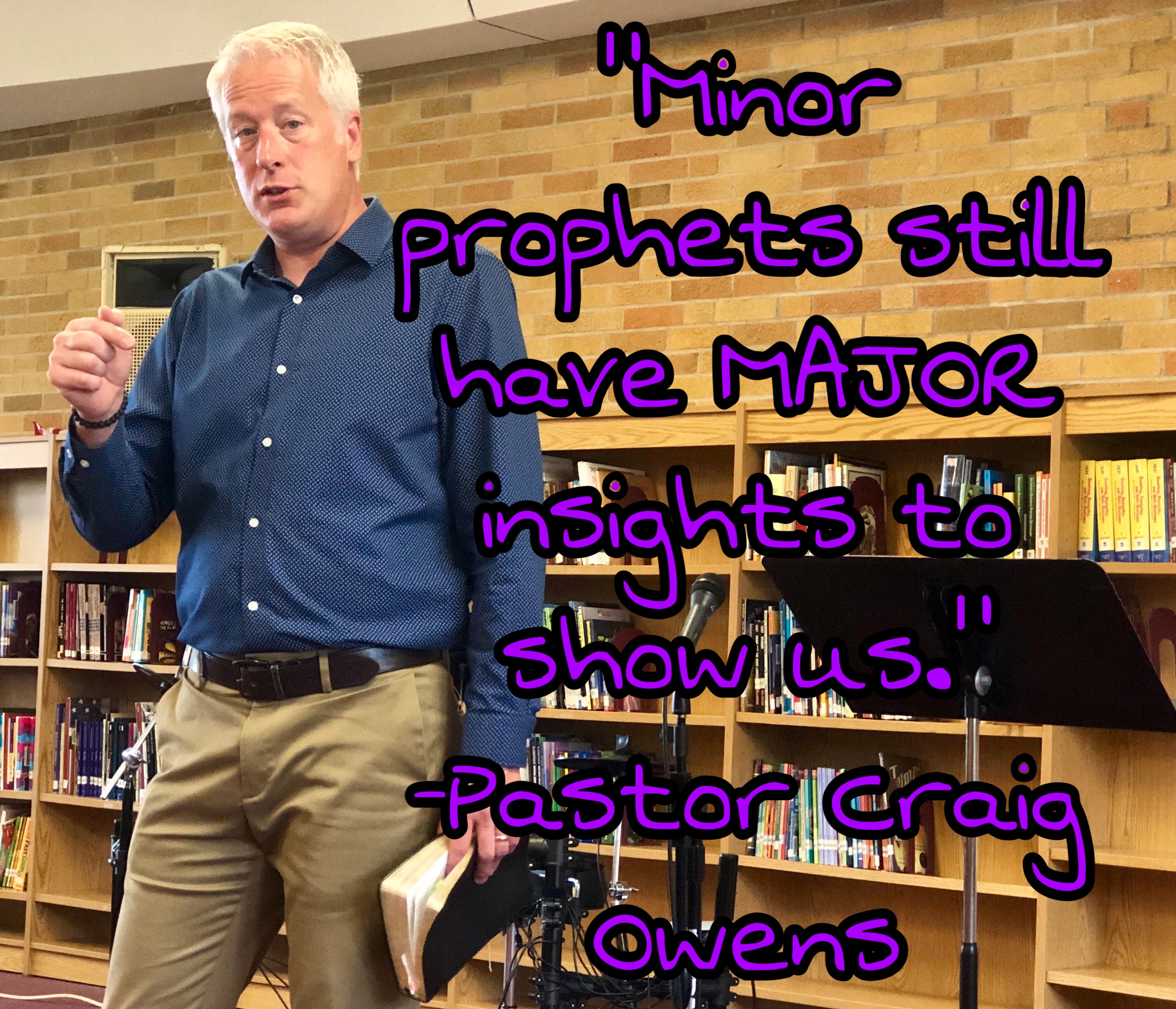
A similar thing happens with the headings “major prophets” and “minor prophets.” It makes it sound like the major prophets have something major to say to us, while we could take or leave the minor messages of the minor prophets. 

In reality, they were given these headings simply because of the volume of writing—the five major prophets consist of 182 chapters, whereas the 12 minor prophets only have 67 chapters. The volume of their writing may be minor, but their content carries major messages of meteoric power! 

Join me this Sunday as we rejoin this highly informative series. You can check out the topics we covered last year by clicking here.

If you have missed any of the messages in this current session, check them out here:

Halley’s Study Bible (book review)

I believe Halley’s Bible Handbook may have been the first Bible study resource I got my hands on when I was a pre-teen. It was a slender book but packed with insights that even this third-generation Pentecostal boy hadn’t heard before. So I was quite intrigued when I heard about Halley’s Study Bible. 

Let me get something out of the way right upfront. I’m a blogger for the BibleGateway Blogger Grid (sometimes called #bgbg2 on Twitter), so I’m occasionally offered a free book in exchange for my honest book review. However, there are more books that I pass on than books I agree to review. Since I am already working my way through the Faithlife Illustrated Study Bible, I wasn’t too eager to dive into another study Bible just yet. But I’m so glad I did! 

Reading Henry Halley’s concise overview of each book of the Bible was nostalgic for me, reminding me of what initially intrigued about his handbook: taking voluminous information and giving such a clear, concise overview. 

The study notes on each page offer fascinating insights, and the unique perspective Halley offers of the people, places, and practices chronicled in the pages of Scripture are unparalleled. And what I especially appreciate is Halley’s whole-Bible approach. By that, I mean his ability to show you a theme that originates in the Old Testament and finds its fulfillment in the New Testament, showing how all of the Bible is interconnected. 

If you are looking for a new way to study your Bible, I highly recommend Halley’s Study Bible to you. 

I am a HarperCollins book reviewer. 

Remember … Reorient … Rejoice … Repeat …

…remember… (Deuteronomy 16).

As Moses called the Israelites to keep three main feasts each year—Passover, Weeks (or Pentecost), and Tabernacles—he said the purpose was to remember.

Closely linked to all three of these feasts was another important word: celebrate (vv. 10, 13, 15). 

This remembering and rejoicing on a regular schedule was to keep God’s people aligned with God’s intimate and ongoing involvement in their lives. As a result, an attitude and an action should become just as ongoing in the lives of God’s people—

  • The attitude: joyful gratitude (vv. 11, 14)
  • The action: joyful giving (vv. 10, 15, 17)

These three set times were to be a time of reorientation. They were not supposed to be the only three times God’s people remembered what God had done, celebrated His goodness, let joy overflow their hearts, and let giving overflow to others. These reorientation times should excite us to live like this every single day! 

That’s why Paul wrote, “Rejoice in the Lord always. I will say it again: Rejoice!” (Philippians 4:4). 

What celebrations can you build into your life that will help you 

Remember … Reorient … Rejoice … Repeat …

All Of HIStory Is His Story

There were the kings who reigned in Edom before any Israelite king reigned (Genesis 36:31). 

When Rebecca was pregnant with twins, they jostled each other in her womb. God said this was an indication of what was to come of the two nations that would arise from her sons. God also said that the older son would serve the younger son (25:23).

The nation of Edom was a fierce but unstable people. Just take a look at the succession of their kings to see the power struggles at every transition. But eventually, King Saul would war against Edom, and King David would subjugate them—making the prophecy true that the older son served the younger son.

What went into the fulfillment of this prophecy?

  • Esau (also known as Edom) short-sightedly sold his birthright
  • Jacob and Rebecca conspired to get Isaac to bless Jacob instead of Esau
  • Esau married Canaanite wives, which disappointed his parents and strained relations with them
  • God blessed both Esau and Jacob so that Esau had to move to the region that would eventually bear his name: Edom

Along the way, Esau had a son with his Canaanite wife named Eliphaz. Eliphaz had a child with a concubine named Timna—a son that grew into one of Israel’s most deadly foes: the Amalekites!

Yet all of this was foreseen by God and fulfilled His pre-ordained plan. Once again: All of History is His story. There is never any need for us to worry about turmoil—political or otherwise—because God is in sovereign control… always! 

(By the way, this is not an isolated incident. There are countless examples in the Bible of how God’s sovereign plan is fulfilled, despite man’s best efforts to derail it. Check out another example here.) 

Book Reviews From 2019

What Is The Church Supposed To Look Like?

If someone asked you what a church is supposed to look like, do you describe steeples and crosses, stained glass windows and big wooden pulpits?

Guess what? The first Church in Jerusalem had none of those things!

Luke the historian describes the church this way: “They studied and prayed together, they ate with each other, they fed the hungry, and they took care of the poor. God performed miracles through them, everyone thought well of them, and people were getting saved every single day” (see Acts 2:42-47). Other historians of the day noted that Christians started the first orphanages, the first feeding programs, the first homes/schools for the blind, and the first medical dispensaries. They described how the Christians changed the cultural understanding of marriage and family, and how they gave dignity to women, children, the elderly, and the sick. 

They did this by putting their faith into action, just as Jesus described (see Matthew 25:31-40). James reminds us that this required a deeply personal faith and a roll-up-your-sleeves attitude. In fact, James went so far as to say that faith in Jesus wasn’t enough. 

Faith without works is dead. Works without faith is useless. We must believe it and live it. We need both faith and works.

Everyone can do this… 

  • if a young kid is hungry, get involved with feeding them
  • if an elderly lady in your neighborhood needs a friend, stop by for coffee
  • if a neighbor is sick and can’t cover their usual tasks, mow their lawn 
  • if a high school student can’t go to homecoming because she can’t afford the dress, take her shopping and buy the dress for her
  • if someone has an extended hospital stay, collect their mail and water their plants
  • if no one is visiting them in the hospital, go sit with them for a while

Jesus said, “When you do this for others, you are really doing it for Me.” 

Luke didn’t say, “Every day the Christians were preaching.” He says, “Every day the Christians were serving. And then every day God was adding to their number people who were being saved.” 

Your faith in action speaks a sermon louder and more convincingly than any sermon ever could. 

How will you show your neighbors the love of Jesus this week?

A Minor Introduction

The minor prophets in the Bible are pretty cool! But we have to be careful with man-made titles. For example, the “old” in Old Testament doesn’t mean outdated; nor does the “new” in New Testament mean something updated to modern times. 

In the same way, the minor prophets are only called “minor” because of the volume of their writing, not the quality of their message. In fact, their messages are actually quite major! 

The minor prophets cover a span of about 300 years, from 760 BC (Amos) to 450 BC (Malachi). You can check out this side-by-side chart to see where these prophets fit in the history of Judah and Israel. 

Here are some interesting tidbits about the minor prophets:

  • In the Hebrew Bible, these books are referred to simply as “The Twelve.” 
  • All of these prophets identify themselves in the first verse of their writing except Jonah, but he is identified in 2 Kings 14:23-25. 
  • The only others of the Twelve that are mentioned elsewhere in the Old Testament are Micah, Zephaniah, Haggai, and Zechariah (see Jeremiah 26:16-19; 2 Kings 25:18-21; Ezra 5:1). 
  • The prophets consistently give us some historical context in their writings to help us place when, where, and to whom their ministry took place. 

The Twelve also show up quite liberally in the New Testament. Every one of them has either direct quotations or has their writings implicitly referred to throughout the New Testament. Here’s just a small sampling… 

  • Micah 5:2 tells us where Jesus would be born (Matthew 2:6)
  • Hosea 11:1 says Jesus would spend time in Egypt (Matthew 2:15)
  • Malachi 4:5 says an “Elijah” would precede Jesus (Matthew 17:10-11)
  • Zechariah 9:9 foretells Christ’s triumphal entry into Jerusalem (Mark 11:1-10)
  • Jonah 1:17 was used by Jesus to predict His own resurrection (Matthew 12:39-42)
  • Joel 2:28-32 was quoted by Peter on the Day of Pentecost (Acts 2:16-21)
  • Amos 9:11-12 foretold all peoples coming to Jesus (Acts 15:16-17)
  • Hosea 13:14 was quoted by Paul to show how death was defeated (1 Corinthians 15:53-57)
  • Habakkuk 2:4 was also quoted by Paul to tell how righteous people live (Galatians 3:11)
  • Haggai 2:6 foretells the end times (Hebrews 12:26-29)

I look forward to diving deep into the major lessons in the minor prophets over the next several weeks, but in preparation for that let me give you 3 overarching lessons for all Bible studies:

  1. Christianity is rooted in history. The Bible is a historical record of real people, saying and doing real things in real places in the world. It’s not a collection of fables, myths, or legends. 
  2. We need to study the whole counsel of God’s Word. All of Scripture is interdependent on all the other parts of Scripture, and every part reinforces and amplifies every other part. Don’t limit your Bible reading to just one or two parts.
  3. Looking back in wonder and gratitude builds faith for today and hope for tomorrow. When we see what God has done in the past, and we realize that He is still the same God today, it builds our faith for today. And when our faith today is strengthened, it gives us a bright hope for tomorrow. 

I look forward to having you join me on this journey of discovery through the minor prophets! 

Not How But Who

This is part 3 in our series looking at phrases that sound biblical and then asking, “Is that in the Bible?

Statement #3—This is how you should take Communion.… Is that in the Bible? Quite simply: No, it’s not. 

Every church seems to celebrate Communion with its own unique style, typically following an age-old tradition. There’s nothing wrong with traditions per se. The only thing we have to watch out for is when traditions become the focal point, instead of the thing the tradition is pointing us to. Almost as if we are celebrating the celebration (see Isaiah 1:11-14; Mark 7:1-8). 

In 1054 AD the Great Schism occurred between the Roman church (in West) and the Byzantine church (in East). One issue that led to this schism was Communion. The West used unleavened bread, saying that sin was removed. The East said that sounded like they were adopting Judaism, so they used leavened bread, saying that the “rising” symbolized new life. 

Even today there are differences and disagreements—only administered by a priest … only certain church officials can “bless” the elements … a common cup … individual cups … unfermented juice … fermented wine … unleavened wafers … pieces torn off a full loaf of bread. The Bible never says about Communion, “Do it this way.” All of these are man’s traditions. 

Passover was first instituted in Exodus 13. This is before the Law is given through Moses (Exodus 20) and before the instructions for the tabernacle are given (Exodus 25). In the first version, the sacrifice of the lamb was in individual homes, the lamb’s blood was shed on the doorposts of that home, and the family ate the lamb, unleavened bread, and bitter herbs together at home. 

After the tabernacle was operational, there was a change (Deuteronomy 16). Now the sacrifice of the lamb was in the tabernacle, the lamb’s blood was sprinkled on the altar, but the family still ate the lamb, unleavened bread, and bitter herbs together at home. 

By the time of Jesus, there were newer traditions which weren’t prescribed in the Bible that involved as many as five cups of wine, a very specific order that the meal was presented, and the singing of Psalm 113-118 (sometimes people sang all the way through Psalm 138). 

In the last supper Jesus shares with His disciples, we see some of these later elements. We read about the different cups of wine, the unleavened bread, the supper of lamb, and the singing of a hymn (Luke 22:14-20; Matthew 26:26-30; Mark 14:22-26; 1 Corinthians 11:23-26). 

I want to specifically focus on the second cup of wine Jesus used in this supper. Paul calls this cup the cup of thanksgiving and the cup of the Lord (1 Corinthians 10:16, 21). Why? Because Jesus switched cups with us! 

The Bible tells us that we have all sinned, and therefore we are supposed to drink the cup of God’s wrath—For in the hand of the Lord there is a cup of His wrath, and the wine foams and is red, well mixed; and He pours out from it, and all the wicked of the earth must drain it and drink its dregs (Psalm 75:8 AMP). 

But Jesus switched cups with us. He took the full wrath of God upon Himself, and then gave us God’s new covenant of forgiveness—“The days are coming,” declares the Lord, “when I will make a new covenant with the people of Israel and with the people of Judah. It will not be like the covenant I made with their ancestors when I took them by the hand to lead them out of Egypt, because they broke My covenant…. This is the covenant I will make with the people of Israel after that time,” declares the Lord. “I will put My law in their minds and write it on their hearts. I will be their God, and they will be My people. … For I will forgive their wickedness and will remember their sins no more.” (Jeremiah 33:31-34). 

Jesus said, “When you drink this, do this in remembrance of Me.” THIS is what we’re called remember and celebrate! 

It’s not HOW we celebrate Communion but WHO we remember when we do celebrate. 

Let’s not celebrate the celebration, but let’s celebrate the Savior who paid the price so that we could celebrate the forgiveness of our sins under God’s new covenant!