This is a weekly series with things I’m reading and pondering from Oswald Chambers. You can read the original seed thought here, or type “Thursdays With Oswald” in the search box to read more entries.
Christ’s Incarnation Means Our Freedom
Other religions deal with sins; the Bible alone deals with sin. The first thing Jesus Christ faced in man was this heredity of sin, and it is because we have ignored it in our presentation of the Gospel that the message of the Gospel has lost its sting, its blasting power; we have driveled it into insurance tickets for heaven, and made it deal only with the wastrel element of mankind. …
The revelation is not that Jesus Christ was punished for our sins, but that He was made to be sin. “Him who knew no sin” was made to be sin, that by His identification with it and removal of it, we might become what He was. … Jesus Christ went straight through identification with sin that every man and woman on earth might be freed from sin by His atonement. He went through the depths of damnation and came out more than conqueror; consequently everyone of us who is willing to be identified with Him is freed from the disposition of sin, freed from the connection with the body of sin, and can come out more than a conqueror too because of what Jesus Christ has done. …
The Holy Spirit will take my spirit, soul and body and bring them back into communion with God, and lead me into identification with the death of Jesus Christ, until I know experimentally that my old disposition, my right to myself, is crucified with Him, and my human nature is now free to obey the commands of God.
From The Shadow Of An Agony
As we approach the time of year we celebrate the Incarnation of Jesus, it’s amazing to think that He didn’t come just to identify with our sin, but to be made sin! Without Jesus Christ’s death on a Cross in our place, there is no hope for us.
As we celebrate the First Advent, it’s a good idea to keep in the front our our minds what Christ’s Incarnation means for us. It means we can be freed from sin—free to obey God, and free to look forward to Christ’s Second Advent, where He will take away His saints to be with Him forever!
“Are you expecting the Lord? Are you living in this expectation? Is it a deep-seated, abiding, cherished hope? Is it a hope that tells upon your character, your life, your daily actings in public or private, your opinions, your whole man? Does it quicken you? Does it purify you? Does it keep you separate from the world? Does it keep you calm in the midst of earth’s most exciting events, or most untoward changes? Does it give you a new view of history as well as prophecy? …
“Let your expectation of the Lord’s coming be a calm and healthy one; not one that excites, but one that tranquilizes; not one that unfits for duty, but one that nerves you more firmly for it; not one that paralyzes exertion, but one that invigorates you for it; not one that makes you indifferent to present duty, but one that makes you doubly in earnest about everything that your hand findeth to do; not one that stops liberality, and prayer, and work, but one that increases all these a hundred fold; not one that dwells exclusively on the future’s dark side—the judgments that are at hand—but one that realizes the glory and the joy of Messiah’s approaching victory and triumphant reign.” —Horatius Bonar
“It’s easy to label what we consider ‘good things’ in our lives as gifts from God and to welcome them with gratitude. But when difficult things happen, we don’t look at them as part of God’s good plan for us. Mary’s example [Luke 1:38] shows us we can also welcome those things we would not necessarily label ‘good,’ confident that God’s gifts sometimes come in perplexing and even painful packages. When we belong to God, we know He will use whatever He allows into our lives for good. Somehow, in God’s hands, these things also become gifts of His grace toward us.” —Nancy Guthrie
“Unless we intend completely to forfeit our holy seasons, and to allow them to be taken captive for the purposes of crass commercialism and narrow-minded narcissism, we need to make the best use of these times as God intends….” —T.M. Moore
“No one who is lost has lost one ounce of value to God. Even if you don’t have a relationship with Him, you have immense value to God. Lostness implies value. Whatever someone is willing to spend to recover something that’s lost shows how valuable that item is. In the most famous verse in the Bible, Jesus clearly explains our value: ‘God loved the world so much that He gave His one and only Son so that whoever believes in Him may not be lost, but have eternal life’ (John 3:16).” —Rick Warren
If you have trouble knowing whether to use their, there, or they’re, this may help.
“By giving to You what You do not need, and what I might enjoy, I am saying more earnestly and more authentically, ‘You are my treasure, not these things.’” —John Piper on fasting
I was going through an Advent reading plan on YouVersion, and I came across this quote: “Each Christmas is practice for the moment of Christ’s second coming, when every knee will bend, either in worship or terror.”
In this video, Brett Kunkle explains from Scripture and from personal observation how we know humans are born into sin.
“Many Christians today…choose to listen only to soft, flesh-assuring preaching. Where there is no convicting word, there can be no godly sorrow over sin. Where there is no godly sorrow for sin, there can be no repentance. And where there is no repentance, there is only hardness of heart.” —David Wilkerson
“We are tempted in our day to be ashamed of the gospel. It is thought to be bare, unintellectual, almost childish by many. Hence, they would overlay it with argument and eloquence, to make it more respectable and more attractive. Every such attempt to add to it is being ashamed of it [Romans 1:16].” —Horatius Bonar
Check out some absolutely stunning pictures from the Hubble Space Telescope!
Imagine that I invited you to my house for a Christmas party. When you arrived, I greeted you at the door with a cheerful hello and warmly welcomed you into my home. But as you hung out with the other guests, you might begin to wonder if we were truly celebrating Christmas. After all, when you looked around my house, you saw no Christmas tree, no ornaments, no wrapped gifts, no mistletoe, no Christmas stockings, no manger scene. You might be tempted to say that you were invited to a non-Christmas Christmas party! (By the way: my house IS fully decorated for the season!)
One of our 300-year-old Christmas carols sounds remarkably like my make-believe party. Joy To The World has no mention of angels, no wisemen, no manger, no nativity scene, no virgin birth, no star in the east. It seems like a non-Christmas Christmas carol!
That’s because at this time of year, Christians aren’t celebrating Christmas, but we’re celebrating Advent. Actually we’re celebrating both Advents.
Jesus was born in a Bethlehem manger (His First Advent), but He is also coming again to bring all of earth’s history to a close (His Second Advent). So we celebrate the First Advent, and then look with hopeful anticipation to the Second Advent. That’s exactly what Joy To The World does!
Each of the stanzas of this well-known hymn looks forward with joy to Christ’s ultimate fulfillment of all the prophesies of the Bible. The final joy comes when He reigns as King of Kings and Lord of Lords. But we can still live with joy right now!
The third stanza of this hymn says that Christ has come to make His blessings known far as the curse is found. The Apostle Paul says the same thing—sin used to reign, but the grace of God far exceeds the thorns of sin (see Romans 5:19-21; 6:8-12).
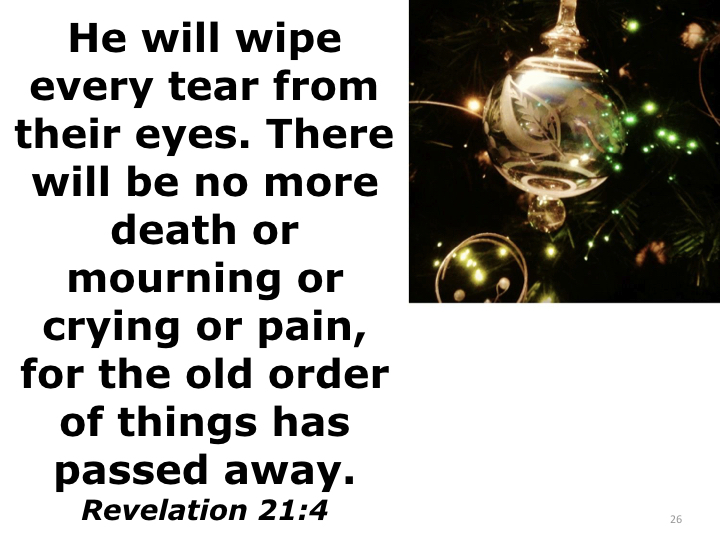
Our ultimate joy comes at the Second Advent of Christ when “He will wipe away every tear from their eyes. There will be no more death or mourning or crying or pain, for the old order of things has passed away” (Revelation 21:4).
So the next time you hear the non-Christmas Christmas carol Joy To The World, be reminded that it’s not Christmas we are celebrating, but Christ’s First Advent. And it’s not some shapeless, indefinable future that awaits us, but we can live in the joy of anticipating Christ’s Second Advent.
Check this out—
If you have missed any of the messages in our series The Carols Of Christmas, you can find the full list by clicking here.
“To fulfill God’s destiny for your life, you likely don’t have to do more; you have to do less. … Enjoy the Christmas season. Wrap the presents. Prepare your home in a festive way. Make memories with your family. But don’t let this Christmas pass without spending some time at Jesus’ feet. Long after everything else fades from this Christmas, worshiping Jesus is all that will truly last.” —Rick Warren
“Holidays in America have come to be regarded as entitlements. They’re all about us, seasons of diversion, distraction, self-indulgence, and time off work. Even the great religious celebrations of the national calendar—Thanksgiving, Christmas, and Easter—are regarded by most Americans as opportunities to get some good bargains and enjoy a little time for relaxation, not for spiritual reflection and renewal, but just for doing whatever we want. Sort of like the way most Christians observe the Lord’s Day.” —T.M. Moore
As we are celebrating the First Advent, J. Warner Wallace asks a great question: Why didn’t the Apostle Paul mention the virgin conception?
“I am convinced many Christians today are troubled for the same reason Asa was [2 Chronicles 16:1-9]. They have war in their souls because they have traded faith for self-reliance. But the fact is, there is no way a follower of Jesus can have faith in any other source and not be troubled.” —David Wilkerson
“People who are exercised and preoccupied with such things as how the star worked and how the Red Sea split and how the manna fell and how Jonah survived the fish and how the moon turns to blood are generally people who have what I call a mentality for the marginal. You do not see in them a deep cherishing of the great central things of the gospel—the holiness of God, the ugliness of sin, the helplessness of man, the death of Christ, justification by faith alone, the sanctifying work of the Spirit, the glory of Christ’s return and the final judgment. They always seem to be taking you down a sidetrack with a new article or book. There is little centered rejoicing.” —John Piper
“Whether one makes the observation light-heartedly or in all seriousness, one must observe that, when the male body unites for procreation with the female, the pleasure that goes along with it is understood to be in accordance with nature, but that when male joins with male, or female with female, it is outside the bounds of nature. This outrage was first done by people whose desire for pleasure was without self-control.” —Plato. This agrees with what the Bible says in Romans 1:26-27.
Lenny Esposito has some good advice for students to defend their Christian faith in the classroom.
Seth Godin has some insight on whining—“Before starting, a question: Will it help? Like holding a grudge, or like panicking, whining rarely helps. If anything, any of the three make it far less likely that you’ll make progress solving the problem that has presented itself. And, like knuckle cracking, it’s best enjoyed alone.”
[VIDEO] Bobby Conway asks Lenny Esposito how to handle the claim “The Bible has contradictions in it”—
Angels play a fairly visible role in the First Advent story. As a result, we can begin to piece together some facts about angels from the biblical accounts. In my series on The Carols Of Christmas, I was looking at Angels From The Realms Of Glory, and there is information about the angels in this carol that is well-support from the Scripture.
One of the biggest lessons we need to learn from this Christmas carol, and the corresponding verses about angels, is that we aren’t just celebrating the First Advent. We are anticipating and looking forward to the Second Advent as well!
Next Sunday we will be continuing our look at the rich messages in the familiar Christmas carols. Please join me!
In the video below, we had some slight technical difficulties. But it clears up about the 5-minute mark, so hang in there!
If you have missed any of the messages in our series The Carols Of Christmas, you can find the full list by clicking here.
How many “old familiar carols” have you heard Christmas after Christmas, until the words have almost lost their meaning? If we’re not careful, any song repeated too often can lose the richness of its original intent.
There are some amazing messages in many of our old familiar Christmas carols, because many of those messages are saturated with the old familiar story of Redemption that the Bible tells over and over again.
Please join me this Sunday as we once again take a new look at the old familiar messages in our Christmas carols. These messages will bring a new appreciation of God’s love that was sung at Christ’s First Advent, and reawaken the sweetness of meaning for this Christmas Day.
If you would like to check out some of the carols we have already looked at, check out these posts:
“You may claim to love Jesus but your life proves you are still walking in darkness—confused, befuddled and foggy! When you are truly in love with Jesus, conversing with Him, He turns up the light. There is no darkness at all in His presence. The worst possible darkness to mankind is not in the hearts of God-hating Communist leaders or Christ-hating atheists. It is, rather, the horrible darkness that blinds so-called Christians who refuse to walk in the light.” —David Wilkerson
“It is not your business to succeed (no one can be sure of that) but to do right: when you have done so, the rest lies with God.” ―C.S. Lewis
“O how quickly we are given to defending God, or sometimes the truth, from words that are only for the wind. If we had discernment, we could tell the difference between the words with roots and the words blowing in the wind. There are words with roots in deep error and deep evil. But not all grey words get their color from a black heart. Some are colored mainly by the pain, the despair. What you hear is not the deepest thing within. There is something real within where they come from. But it is temporary—like a passing infection—real, painful, but not the true person. Let us learn to discern whether the words spoken against us or against God or against the truth are merely for the wind—spoken not from the soul, but from the sore. If they are for the wind, let us wait in silence and not reprove. Restoring the soul, not reproving the sore, is the aim of our love.” —John Piper
“What must you do so that you may know that your sins are taken away by the blood of Christ, and that, when He comes, He will shield you from the wrath of God and bring me into eternal life? The answer is this: trust Christ in a way that makes you eager for Him to come.” —John Piper
John Stonestreet has a great take on worldviews in Radical Islam, Secularism & Christianity.
“O beloved, what a defense is God to His church! Ah, the devil cannot cross this broad river of God. Between me and you, O fiend of hell, is my God. Do remember this, Christian; between you and your arch-enemy is your God; satan has to stand on the other side, and how he wishes he could dry up that stream, but God is omnipotent.” —Charles Spurgeon
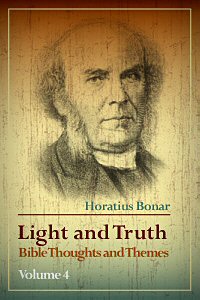
6 Quotes From “Light & Truth—The Lesser Epistles”
July 13, 2016 — Craig T. Owens“It is a busy, lighthearted, laughing, pleasure-seeking world. But sin is here, and pain is here, and broken hearts are here, and weeping is here, and death is here, and the grave is here. Oh! in spite of all its laughter and vanity, it is an evil world. And the great proof of its evil is, that it cost the death of the Son of God to deliver you from it. … Give yourselves to Him Who came to deliver you from it, and Who stretches out His hands to you all day long, asking you to allow Him to deliver you. He yearns over you; and with sincere earnestness proffers to you His love, His friendship, His great salvation. Consent, O man, consent! His desire is to bless, and not to curse; to save, and not to destroy.” [Galatians 1:4]
“There never have been two gospels. There is not an Old Testament gospel and a New Testament Gospel. There is not one gospel for the Jew, and another for the Gentile, one gospel for the first century, and another for the nineteenth. It is but one gospel, as there is but one Cross and one Savior. Many ages, but one gospel; many sinners, but one gospel; many prophets and apostles, but one gospel. As our earth has had but one sun, so it has had but one gospel. Nor does it need more; that one is sufficient.” [Galatians 1:6-9]
“As the earth without rain or sunshine turns to barrenness, so is it with the Church or soul without the Spirit. … The age thinks it can do without the Spirit. Let the Church watch against this blasphemy. Let her keep hold of the Lord’s promise, the promise of the Father. Let her prize the gift; long for more of it. Let every saint seek more of it. Let our cry be continually: More of the Holy Spirit; more of His fullness; more of His gifts and graces!”
“Strength for the race is needed, hourly strength, superhuman strength; for it is no earthly race, but something lofty, supernatural, divine. Forgetting the supernatural source of strength, we betake ourselves to the internal or the simply external. And so we weary. For only God can supply the power which keeps us running. By Him only shall we run, and not be weary.” [Galatians 5:7]
“‘To Him who is able’—He is the Mighty One, the mighty God, the Lord God Almighty. Hear how this word ‘able’ is used. ‘He is able to subdue all things unto Himself’ (Philippians 3:21). ‘He is able to help them that are tempted’ (Hebrews 2:18). ‘He is able to save to the uttermost’ (Hebrews 7: 25). ‘He is able to keep us from falling’ (Jude 24). It is with the mighty God that we have to do; mightier than ourselves or our foes; mightier than earth or hell; omnipotent.” [Ephesians 3:20]
“Are you expecting the Lord? Are you living in this expectation? Is it a deep-seated, abiding, cherished hope? Is it a hope that tells upon your character, your life, your daily actings in public or private, your opinions, your whole man? Does it quicken you? Does it purify you? Does it keep you separate from the world? Does it keep you calm in the midst of earth’s most exciting events, or most untoward changes? Does it give you a new view of history as well as prophecy? … Let your expectation of the Lord’s coming be a calm and healthy one; not one that excites, but one that tranquilizes; not one that unfits for duty, but one that nerves you more firmly for it; not one that paralyzes exertion, but one that invigorates you for it; not one that makes you indifferent to present duty, but one that makes you doubly in earnest about everything that your hand findeth to do; not one that stops liberality, and prayer, and work, but one that increases all these a hundred fold; not one that dwells exclusively on the future’s dark side—the judgments that are at hand—but one that realizes the glory and the joy of Messiah’s approaching victory and triumphant reign.” [Philippians 3:20]
Share this: