The King’s Currency

Listen to the podcast of this post by clicking on the player below, and you can also subscribe on AppleSpotify, or Audible.  

Because you know that the testing of your faith produces perseverance (James 1:3). 

Dr. Henry Halley noted, “Perseverance here transcends the idea of bearing affliction; it includes the idea of standing fast under pressure, with a staying power that turns adversities into opportunities.” The opportunity is to allow my life to be valuable currency for my King to use for His pleasure and purpose. 

The Greek word for “testing” has several aspects to it, but all of them point to this truth: God desires purity, and He is the final Judge on the value of my purity. It has been said that the only faith that can be trusted is a faith that has been tested—and passed the test! 

James in this verse, and Peter in 1 Peter 1:7, are the only New Testament writers to use the Greek word dokimion, which means testing for purity and genuineness. 

These trials will show that your faith is genuine. It is being tested as fire tests and purifies gold—though your faith is far more precious than mere gold. So when your faith remains strong through many trials, it will bring you much praise and glory and honor on the day when Jesus Christ is revealed to the whole world. (1 Peter 1:7 NLT) 

These verses insist that God has a loving and specific purpose in His refining process. The Septuagint uses dokimion when David declares the absolute purity—and the standard of all purity—that is found in God’s Word: The words of the Lord are flawless, like silver purified in a crucible, like gold refined seven times (Psalm 12:6). 

James says this purifying process “produces perseverance.” Paul takes this a step further in saying that perseverance produces character (Romans 5:4). This word for character is the word from which dokimion comes: dokime. This is defined as a proven character, or having received the the stamp of approval from God. Paul uses this word again…

Another reason I wrote you was to see if you would stand the test and be obedient in everything. (2 Corinthians 2:9) 

But you know [Timothy’s] proven character, that as a son with his father he served with me in the gospel. (Philippians 2:22) 

All of this testing and refining and proving is to make me valuable for God’s use, and to be one who points others to Him. 

Dokime comes from dokimos, which James uses this way: “Having stood the test” (James 1:12). Other translations of this phrase read: 

  • When he has been approved (NKJV) 
  • The man who doesn’t give in (TLB) 
  • Proven to be genuine (NET) 

Dokime means beings pleasing, acceptable, and valuable to God and men. It is money of undiminished value—currency of the highest purity. Just as monarchs would have their image stamped into the metal of the official coinage of their realm, the stamp of approval on my life comes from God but is seen by men and valued by men—

Because anyone who serves Christ in this way is pleasing to God and receives human approval (Romans 14:18). 

Greet Apelles, whose fidelity to Christ has stood the test (Romans 16:10). 

For it is not the one who commends himself who is approved, but the one whom the Lord commends (2 Corinthians 10:18). 

Do your best to present yourself to God as one approved, a worker who does not need to be ashamed and who correctly handles the word of truth (2 Timothy 2:15). 

This is why I must “consider it pure joy” (James 1:2) when God puts me through His purifying process. He sees value in me that is not yet currency that can be placed into circulation. He wants my life to be spendable for His glory, so He loving removes anything that would diminish His image being seen in the currency of my life. 

As the Christmas hymn captures: “Adam’s likeness now efface; stamp Thine image in its place”! 

Make me valuable and useful for You, my King. Purify me and put me into circulation for Your glory. 

►► Would you please prayerfully consider supporting this ministry? My Patreon supporters get behind-the-scenes access to exclusive materials. ◀︎◀︎

Don’t Fall For This Lose-Lose Gamble

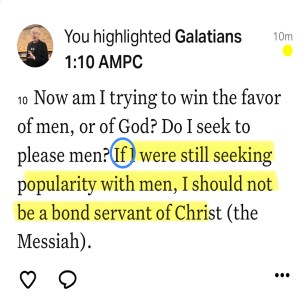
Now am I trying to win the favor of men, or of God? Do I seek to please men? If I were still seeking popularity with men, I should not be a bond servant of Christ (the Messiah). —Galatians 1:10 AMPC

Trying to please men ultimately becomes a lose-lose attempt. 

First, people are fickle and I cannot please all of them all of the time. Second, in attempting to please some people I would have to compromise the truth of the Bible. 

The only favor I should seek is the One who saved me and sent me. It is Christ’s voice alone that I long to hear say, “Well done, good and faithful servant.” 

Related blog post: Impressing People

Integrity And Godly Sincerity

Listen to the podcast of this post by clicking on the player below, and you can also subscribe on AppleSpotify, or Audible. 

The apostle Paul had spent 18 months living and teaching in Corinth, he had likely visited them at least a couple of times, he had written two letters to them, and his associates had visited Corinth on his behalf. Bottom line: The Corinthians knew Paul well. 

With that in mind, Paul boldly states, “Now this is our boast: Our conscience testifies that we have conducted ourselves in the world, and especially in our relations with you, with integrity and godly sincerity” (2 Corinthians 1:12). 

Integrity means “the virtue of one who is free from pretense and hypocrisy.” Some biblical translations use the word holiness here. Indeed, for Christians integrity and holiness should be synonymous. The conclusion of this verse goes on to state that Paul could live this way “not according to worldly wisdom but according to God’s grace.” Paul knew that even more than the Corinthians, God knew Paul’s holy integrity. 

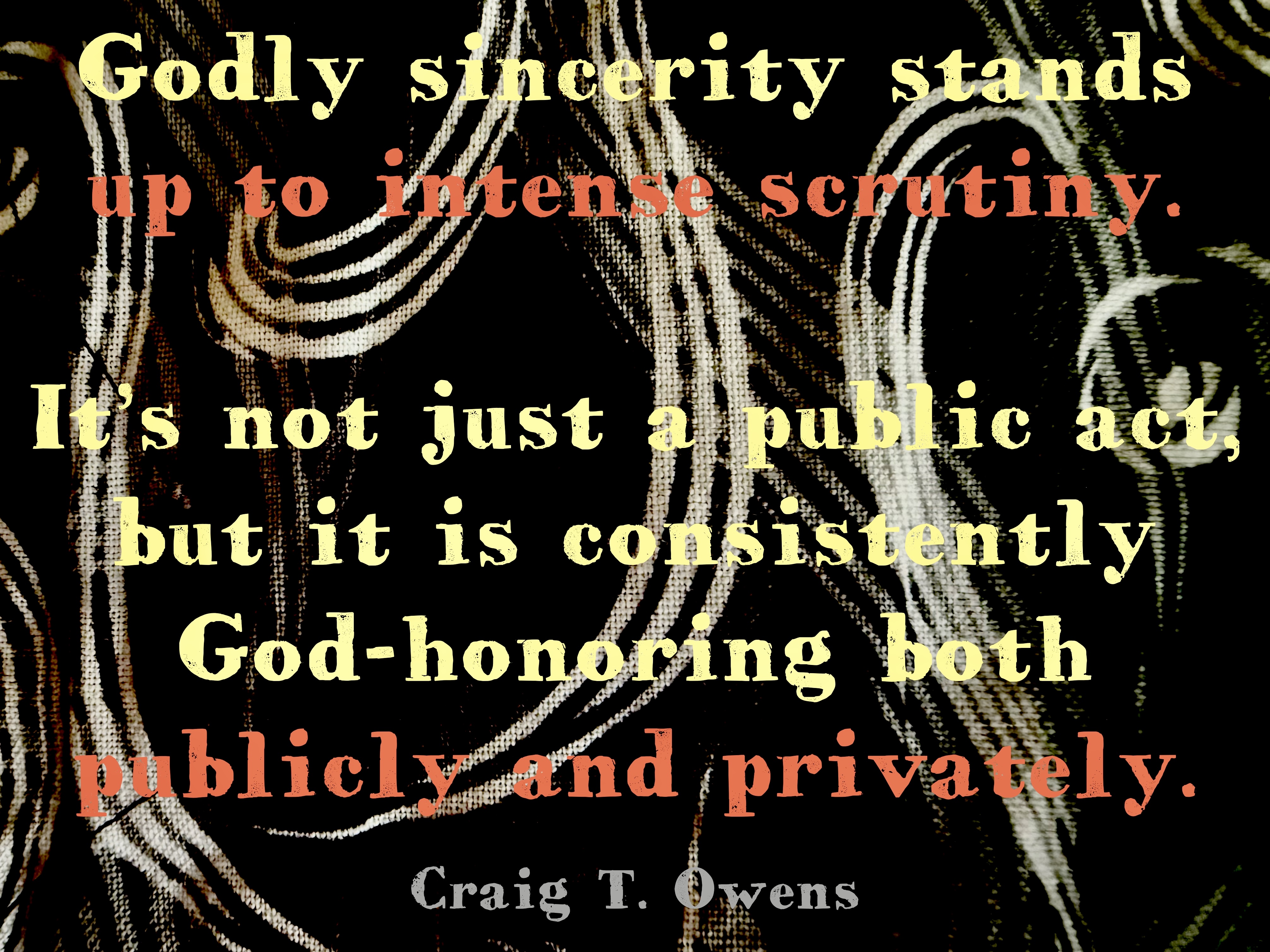
Paul also says that his conduct was with godly sincerity. You might think that the idea of sincerity or mental honesty is implied in the word integrity, but godly sincerity is a pureness that stands up to intense scrutiny. It’s not just a public act, but it is a consistently God-honoring way of living both publicly and privately. 

These two qualities give a godly leader moral authority like nothing else can. It’s authority that is felt as well as seen—it’s the “It Factor” that marks the Holy Spirit’s anointing on a leader. 

Paul is aware that his lifestyle could cause people to think well or to think poorly of the Gospel of Jesus. Just a few verses later, Paul uses the phrase “yes and no” twice (vv. 18-19). 

First, Paul reminds the Corinthians that he doesn’t “in the same breath say both ‘Yes, yes’ and ‘No, no.’” This means he doesn’t want his lifestyle to negate his preaching. 

Second, Paul wants to assure them that all of the promises of God are “‘Yes’ in Christ” (v. 20). He knows that a preacher who lives contrary to his preaching—whose walk doesn’t align with his talk—is not only a hypocrite before God, but a stumbling block to all who have put their faith in Jesus as a result of that preacher’s message. 

Integrity and godly sincerity are absolutely essential for those who proclaim the Gospel. 

Godly leaders must be vigilant. They must be ruthless with themselves so there isn’t even the slightest lapse of integrity. Any infractions in a leader’s integrity and godly sincerity could cause others to doubt that Christ’s “Yes” is truly a trustworthy “Yes.” 

May we all live in such a way that we, like Paul, can stand before those who know us best and assuredly say, “I have lived with all integrity and godly sincerity before both God and you!” 

►► Would you please prayerfully consider supporting this ministry? My Patreon supporters get behind-the-scenes access to exclusive materials. ◀︎◀︎

The Craig And Greg Show: From The Inside Out

Listen to the podcast of this post by clicking on the player below, and you can also subscribe on AppleSpotify, or Audible. 

Watermelon is a great summer treat. However, sometimes a nice green exterior can hide rotten fruit on the inside. When this happens we don’t say, “Well, at least the outside was nice,” but we throw the whole thing out! We can fall into a similar trap in our leadership, focusing on creating a great exterior while we let our vital interior development rot away. In this episode, Greg and I encourage you to focus first on your internal development, and through that your external image will improve as well.

  • [0:59] A lot of leaders are more interested in what’s on the outside than what’s on the inside.
  • [1:39] Why do leaders naturally gravitate to making the outside look better than the inside?
  • [4:10] Greg wonders if perhaps we enhance our exterior because we’re afraid to be vulnerable.
  • [5:25] If you have to tell people you’re a leader you’re probably not
  • [6:40] Greg and I discuss a list of things we usually recognize, alongside the things we should equally recognize
    • [6:48] 1. Talents and gifts alongside integrity and character.
    • [12:19] 2. Superb product alongside quality process.
    • [15:30] 3. Excellence performance alongside excellent discipline.
  • [19:35] If we ignore the inside stuff what’s the inevitable result?
  • [20:51] Greg likes to ask the question, “What’s new?” as a simple way to assess growth in others.
  • [21:50] I share a discovery from my Bible reading in Romans.
  • [23:03] Greg tells a cautionary tale about a former coworker who didn’t know how to engage in deeper conversation with his team.
  • [24:24] “The best mirror is in a good friend’s eye.” Greg and I would love to be this good friend for you. Reach out to us at here if you’re interested in personalized coaching.

Check out this episode and subscribe on YouTube so you can watch all of the upcoming episodes. You can also listen to our podcast on Spotify and Apple.

What’s Inside?

Listen to the podcast of this post by clicking on the player below, and you can also subscribe on AppleSpotify, or Audible. 

Far too many leaders spend more time making sure things look good on the outside than they do addressing whether things are good on the inside. Of course, I’m talking about issues like character, and humility, and servant-mindedness. 

Greg and I addresses this on a recent episode of our leadership podcast The Craig and Greg Show. 

Check out the full conversation Greg and I had on this episode called Healthy Leaders. 

And I dive a lot deeper into the issue of true leadership coming from the inside out in my book Shepherd Leadership. 

►► Would you please prayerfully consider supporting this ministry? My Patreon supporters get behind-the-scenes access to exclusive materials. ◀︎◀︎

The Craig And Greg Show: Thinking About The End

Listen to the audio-only version of this podcast by clicking on the player below, or scroll down to watch the video.

Have you thought about what you’d like said at your funeral? Stick with me here, this isn’t an episode about contemplating your death. In this episode, Greg and I want to encourage you to begin with the end in mind, and live as the type of leader that you picture yourself being remembered as.

  • [0:15] Hang with us on this one: We’d like you to take a moment to think about your funeral. 
  • [3:15] We could think of our own epitaph like we’re building a house.
  • [4:14] Greg asks me what I would like on my epitaph.
  • [6:00] We aren’t talking about planning our funeral, but about doing lasting and beneficial things with “the dash” between our birth date and our death date.
  • [9:20] There is a leadership caution when we’re thinking about this topic.
  • [10:21] Greg has been thinking about one word that could sum up his life.
  • [13:31] Here’s what we need to live for today.
  • [15:41] I give an example of someone whose character and reputation didn’t align.
  • [18:09] I brag on something special Greg does for others.
  • [20:54] How do leaders get beyond themselves?
  • [24:05] We need to be living our leadership story every single day.

Check out this episode and subscribe on YouTube so you can watch all of the upcoming episodes. You can also listen to our podcast on Spotify and Apple.

The Standard Of The Leader

Listen to the podcast of this post by clicking on the player below, and you can also subscribe on AppleSpotify, or Audible.

Good leaders hold themselves—at a minimum—to the same standard for the rest of their team. But the best leaders hold themselves to an even higher standard.

Check out this humorous story that makes this point so clear.

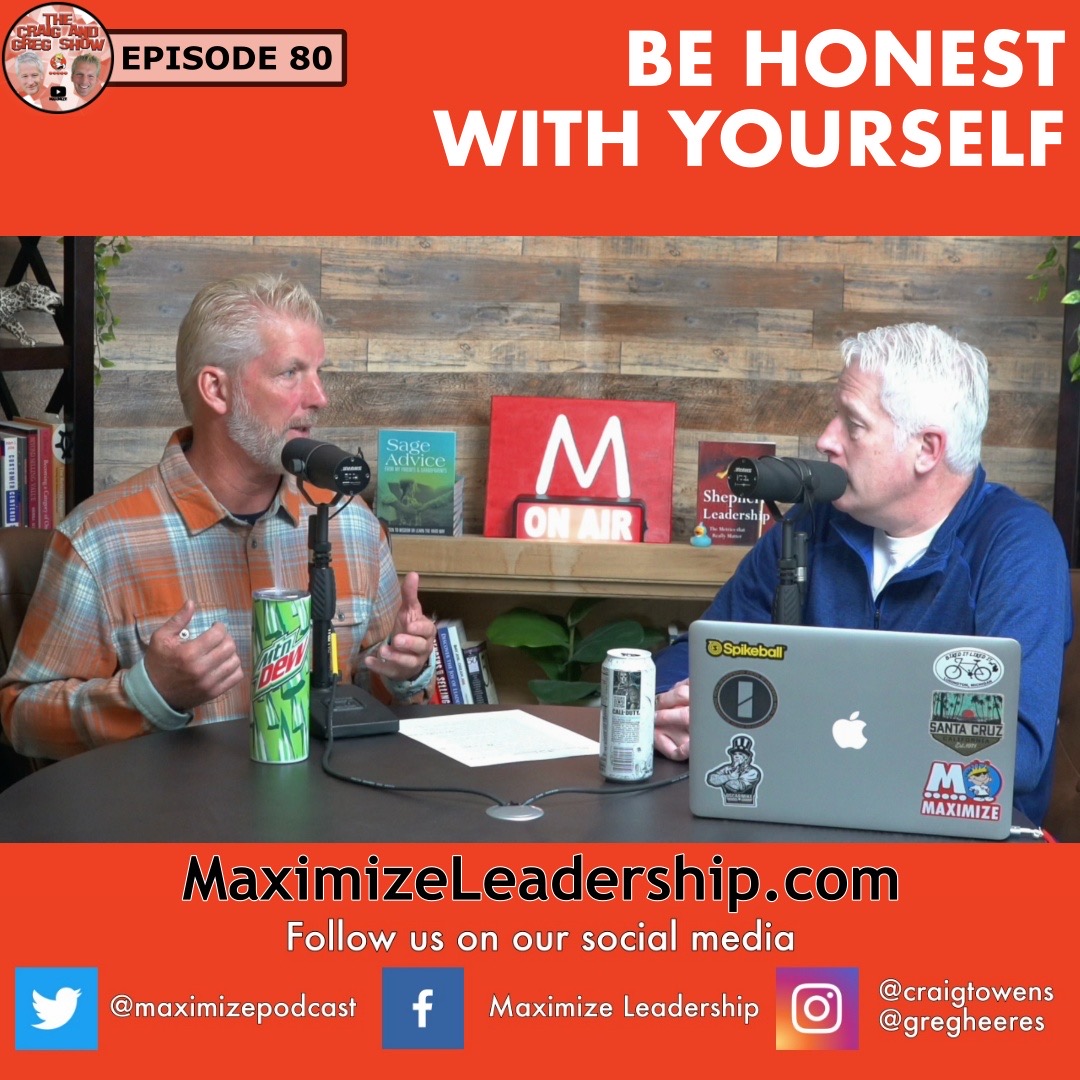
Check out this full conversation Greg and I had on an episode of The Craig and Greg Show called “Be honest with yourself.” 

In Proverbs 19, wise King Solomon shares a whole list of blessings for those who live with integrity. And on the flip side, you may want to check out my post Don’t putrefy your leadership.

►► Would you please prayerfully consider supporting this ministry? My Patreon supporters get behind-the-scenes access to exclusive materials. ◀︎◀︎

The Craig And Greg Show: Be Honest With Yourself

Listen to the audio-only version of this podcast by clicking on the player below, or scroll down to watch the video.

Honesty is a vital part of a successful organization, something that every good leader is well aware of. However, when was the last time you asked the question, “Am I being honest with myself?” In this episode, Greg and I unpack how honest self-reflection is a powerful tool to help improve your leadership.

  • [0:14] A challenging quote to kick off this episode. 
  • [1:14] My breakthrough moment regarding my own self-assessment.
  • [3:37] What’s the difference between who I think I am and who I really am?
  • [6:00] We all operate with certain assumptions about ourselves.
  • [7:37] We share some good and bad experiences with interactions we have observed from other leaders.
  • [10:27] Leaders need to hold themselves to the same standards as the rest of their team.
  • [13:47] Why do leaders hesitate to self-evaluate?
  • [15:19] How do leaders create a safe environment to self-evaluate?
  • [18:45] Greg sends us down a rabbit trail!
  • [19:53] What does leadership integrity look like?
  • [22:17] Leaders need to know what their tendencies are.

Check out this episode and subscribe on YouTube so you can watch all of the upcoming episodes. You can also listen to our podcast on Spotify and Apple.

Links & Quotes

Romans 8:28 tells us that God uses ALL things to accomplish His purpose for our lives. Too many times I tried to rush through things without getting anything out of it. I have lots of new content every week, which you can check out on my YouTube channel.

He is 98 years old and he’s still busy serving other people! I pray we can all be as selfless and vibrant in ministering to others until the day God calls us home.

“When with an eye of faith we behold Christ crucified we ought to weep, not for Him, but for ourselves. We must not be affected with the death of Christ as with the death of a common person whose calamity we pity, or of a common friend whom we are likely to part with. The death of Christ was a thing peculiar; it was His victory and triumph over His enemies; it was our deliverance, and the purchase of eternal life for us. And therefore let us weep, not for Him, but for our own sins, and the sins of our children, that were the cause of His death; and weep for fear (such were the tears here prescribed) of the miseries we shall bring upon ourselves, if we slight His love, and reject His grace, as the Jewish nation did, which brought upon them the ruin here foretold.” —Matthew Henry, on Jesus’ word, “Do not weep for Me” in Luke 23:28

J. Warner Wallace shares three responses Christians can give to those who make the claim that Jesus didn’t think He was God. In this video, Detective Wallace talks about a section of his website that gives further evidence. You can find that section here.

The Institute for Creation Research is a group of scientists explaining how science points to a Creator. What does Creation have to do with Easter? “Any view of Christianity that incorporates long ages of death and suffering before Adam makes a sham of the Cross. This Easter season, as we remember our salvation made possible by the death of our Lord Jesus Christ on the Cross and His triumphant resurrection from the grave, let us understand it within the ‘big picture’ of a ‘very good’ creation that was ruined by our rebellion but restored by the willing sacrifice of our great Creator-Savior.”

“One measure of the greatness of a man is not only that he practices what he preaches, but also that he doesn’t consider himself above the ordinary means of grace that all Christians need.” —John Piper

“Beware of idleness—satan sows most of his seed in fallow ground.” —Thomas Watson

He prayeth best who loveth best
All things both great and small;
For the dear God who loveth us,
Hath made and loveth all. —Samuel T. Coleridge

A Leader’s Example

Listen to the podcast of this post by clicking on the player below, and you can also subscribe on AppleSpotify, or Audible. 

When you read through the history of the kings of Israel and Judah, there are two consistently recurring themes for these leaders—

  • He turned to God and the people put away their idols <or>
  • He turned from God and the people turned to their idols 

It’s true: As goes the leader, so go the people. 

In my life, I’ve experienced that the good things that I do over-the-top are only moderately emulated by those around me. But the unhealthy things that I even slightly indulge in are adopted quickly by everyone else. 

Godly leaders must be so aware of how their example impacts everyone around them, and they must fight to maintain biblical standards. When we miss the mark, we must be quick to admit our shortcoming, repent, and get back on track. 

In Hosea 4:9, God warns that the people will follow the ungodly example of their leaders, which is why God’s punishment is often more severe for those leaders. 

On the positive side, in Leviticus 9, Moses and Aaron demonstrate the leadership example of spending time in God’s presence and fully obeying everything God had revealed to them there. Then verse 23 it says that after they came out of His presence, God’s glory appeared to all the people. The positive example of the leaders led to huge blessings for all the people! 

A mark of a godly leader is one who increasingly aware of the power of his example. 

Leaders, let’s be first to go first in…

  • …being in God’s presence 
  • …obeying God’s commands 
  • …repenting when we fall short 
  • …asking forgiveness of those who have seen our poor example
  • …asking God to bless His people because of our good example

This is part 77 in my series on godly leadership. You can check out all of my posts in this series by clicking here.

►► Would you please prayerfully consider supporting this ministry? My Patreon supporters get behind-the-scenes access to exclusive materials. ◀︎◀︎