The Everlasting Hope In Our Everlasting Lord

It was for our benefit that God came to Earth in His First Advent, not in thunder, and lightning, and all the brilliance of His heavenly glory, but as a Baby. Otherwise, He would have been unapproachable by sinful man. 

But make no mistake about it—although born as a human baby, Jesus was still “Christ by highest heaven adored; Christ the everlasting Lord”! 

The thought of God being everlasting permeates the Scriptures:

  • He is everlasting Lord
  • He fulfills an everlasting covenant
  • so He is worthy of everlasting praise
  • His everlasting arms support us
  • and give us His everlasting love and everlasting kindness
  • His everlasting salvation gives us everlasting life, or rejecting it leads to our everlasting punishment
  • and in His presence is everlasting joy  

Charles Wesley captures this fully-God-fully-Man essence in his song Hark! The Herald Angels Sing by calling Jesus the everlasting Lord and then listing His humanness at His First Advent with phrases like offspring of a virgin’s womb, veiled in flesh, incarnate Deity, pleased as Man with men to appear, and Immanuel. 

Jesus came to earth as Man not because He was forced to, but because it fulfilled the everlasting covenant that God had planned. The writer of Hebrews explains beautifully how He became like us in all of our humanness so that He could be a merciful help to us (see Hebrews 2:10-18). 

When Matthew tells the birth story of Jesus, he includes a line pregnant with meaning: “All this took place to fulfill…” (Matthew 1:22). 

What “all this”? Just take a look at Christ’s genealogy in the opening verses of Matthew 1. You see Abraham who tried to “help” God fulfill the covenant by fathering a child with another woman; Jacob who swindled his birthright from Esau; Judah who fathered Perez through his widowed daughter-in-law, whom he thought was a prostitute; Rahab was a prostitute; Ruth was a non-Jewish foreigner; David committed adultery with Bathsheba and then had her husband killed, and from their relationship came Solomon; Solomon’s son split the kingdom in two; from Abijah to Jeconiah the kings became progressively more and more evil; from Jeconiah forward the kings were without a kingdom; and then Joseph was a prince without a throne or even the glimmer of a hope of a throne. 

Yet ALL THIS took place to fulfill God’s plan. All of history is His story! Every deed and misdeed was used by God to fulfill His everlasting plan of redemption. Jesus had a very human family tree so that none of us could be outside His merciful reach.

What’s your genealogy like? More good than bad? What about your own history? More mess ups than positives? Nothing in your genealogy—past or present—can ever stop our everlasting Lord from fulfilling His everlasting covenant with YOU (Romans 8:28)! 

Christ’s genealogy is proof that your genealogy is no hindrance to His everlasting plan! 

It may appear He is late in time, but behold Him come at just the right time. Accept Him as your everlasting Lord, lean on His everlasting arms, and bask in His everlasting joy. 

Jesus—our Immanuel here—came so you could have all of God’s everlastingness! 

To take a look at the other stanzas of this Christmas carol, please click here.

A Leader’s Intercession

As for me, far be it from me that I should sin against the Lord by failing to pray for you (1 Samuel 12:23).

Leaders teach, and encourage, and train, and correct, and sometimes even warn. But despite all of this effort sometimes people still do wrong—and even sinful—things. And sometimes there are consequences for these poor choices that even a leader cannot deflect away from them. 

  • Position-conscious leaders say, “It’s not my fault, and I hope this doesn’t reflect poorly on me!” 
  • Selfish leaders say, “I’m glad I’m not in trouble!” 
  • Vindictive leaders say, “It serves you right!” 

Godly leaders say, “How can I serve you?” 

The Israelites grumbled against God, and God was angry. It would have been understandable if Moses would have said, “You complained so you’re going to have to bear the consequences.” But instead, Moses interceded before God on their behalf (Numbers 11:1-2). 

The people rejected God as their King and chose instead a man named Saul to lead them. Samuel could have said, “You’re in big trouble now!” But instead, he said, “Far be it from me that I should sin against the Lord by failing to pray for you” (1 Samuel 12:23). 

What about you? Have you ever grumbled against God or chosen a path that wasn’t best for you? Jesus could say, “Well, you should have known better!” But instead, we read that He intercedes before God’s throne on our behalf (Job 9:33-34; Hebrews 4:15-16; 7:25). 

The mark of a godly leader is one who intercedes for his people.

If you are a Christ-follower and you are a leader of people, then follow Christ’s example. Yes, continue to teach, encourage, train, correct, and warn. But if people mess up, don’t write them off; instead, intercede before God on their behalf! 

This is part 32 in my series on godly leadership. You can check out all of my posts in this series by clicking here.

Overcoming Unbelief Before It’s Too Late

Unbelief can shut down the “Shalom Cycle” that God intends for our lives. Even worse, unbelief can put us on a slippery slope that could be disastrous for our future! So it is vital that we understand what unbelief is, how we can recognize it in our own lives, and the steps we can take to recover from unbelief. 

First of all, let me remind you of what the Shalom Cycle looks like—

Quite simply, when we are grateful for what God has already done for us it fuels our trust in God’s future grace to meet our needs. 

But when we forget to be grateful and gratitude turns to grumbling, unbelief displaces trust.

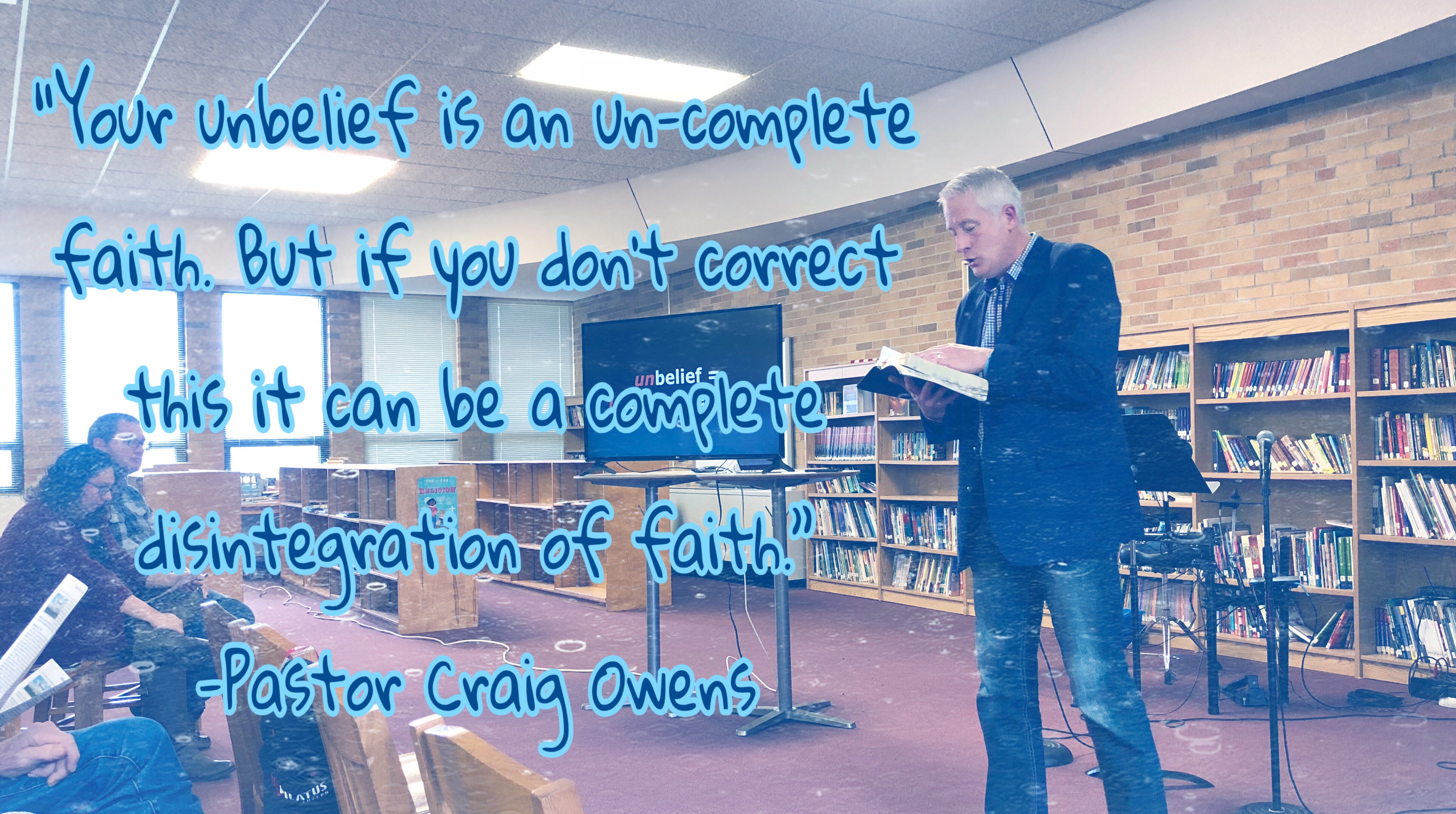
A good way to remember how unbelief works is thinking of it as an un-complete faith. An un-complete faith is lacking power to trust God because of one of two reasons:

  • Either we don’t know there is a promise available to us,
  • Or we know of a promise but don’t think it applies to our circumstance. 

J.C. Ryle pointed out that, “Unbelief has a power to rob man of highest blessings.” 

Hebrews 3 shows us that left unchecked and uncorrected, unbelief can turn into disbelief. You can remember this word by defining it as a complete disintegration of faith. Notice in Hebrews 3 how quickly the word unbelieving becomes turns away from God, and how closely associated are the words unbelief and disobeyed (Hebrews 3:12, 19-20). 

We need to correct and reverse unbelief as quickly as possible. We do this through capturing our thoughts—or thinking about what we’re thinking about—and identifying three warning signs: 

  1. Worrying all the time—God wants you to enter His rest, not wallow in worry (Hebrews 3:11) 
  2. Making contingency plans—the Israelites forgot to be grateful and they grumbled instead. The next step (since they didn’t trust that God’s future grace would take them into the Promised Land) was to disobey by concocting a Plan B: “Let’s go back to Egypt.” 
  3. An inward focus on self-preservation—we no longer encourage others but think only of ourselves (Hebrews 3:13). 

If you detect any of these warning signs, quickly repent (Revelation 3:2-3) and then run to Jesus for help. One of the most honest prayers you can pray—and one of the prayers Jesus answers the quickest—is “Lord, I believe; help me overcome my unbelief!” (Mark 9:22-24). 

“Lord, I believe; help me overcome my unbelief!” 

Take control of grumbling by gratitude
Take control of unbelief by repentance and running to Jesus for help
Then help others take control of their unbelief by encouraging one another daily

Join me next Sunday for the final message in our 4-part series on God’s Shalom. 

7 More Prayers From “Praying The Promises”

In his book Praying The Promises, Max Lucado shows us how simply we can turn passages of Scripture into intimate and powerful prayers. Here are a few more prayers (the references in brackets are passages that formed the prayer).

Lord, in the midst of my storms, I may doubt Your presence. I may wonder if You are there and if You care. Don’t let me lose hope or lose heart. Deepen my belief in You, even during the storms. Don’t allow doubt to take over. Help me release control of my circumstances and surrender them to You. Jesus is interceding on my behalf, and I am so comforted by this truth. [Luke 22:32; Hebrews 7:25; Matthew 14:23-24]

God, teach me how to live free from condemnation. Teach me how to trust and believe in this promise: in Christ, I am no longer a slave to sin. Free me from guilt and shame. [Romans 3:23-25; Romans 6:6-7; Romans 8:1] 

Lord, thank You for the promise of a temporary tomb. Your power has no limits. You have conquered death. You have promised to make all things new. You are the God of restoration and redemption and regeneration. You are the God of resurrection. In my day-to-day life it can be difficult for me to maintain an eternal perspective. Sometimes I may get bogged down in the worries of today and forget that the best is yet to come. Restore in me the joy of my salvation, God. Renew my mind and my heart so that I will have an eternal perspective of all the worries of my day. They are nothing compared to spending eternity with You. And because of Your promise of resurrection, I do not have to fear death. I will live in faith, knowing that in Jesus, death has been swallowed up in victory. Amen. [Matthew 28:5-6; 2 Corinthians 4:16-18] 

Guide me today, Holy Spirit. Show me where You want me to go, whom You want me to talk to, what decision You want me to make. Help me discern Your voice over my own and others’. Walk closely with me and whisper truth to me. Forgive me when I listen to my own desires and ignore what You are telling me. [John 16:13-15; Galatians 5:25] 

You know all of my needs before I can even ask for them. Sometimes it’s tempting for me to believe I can rely on myself for what I need. Instead of trusting You to provide, I think I can look out for myself. I fear not having enough. And when I do have enough, it never feels like it. But You have promised to meet my needs out of Your glorious riches. Remind me of Your kind and generous provision. Thank You for taking care of me and meeting all of my needs. [Psalm 34:10; Matthew 6:8; Matthew 10:29-31]

Help me to keep eternity in mind, making the most of my days and showing others Your renewing love. [2 Corinthians 4:16-18; 2 Peter 3:13] 

Dear God, You are my unshakable hope. Your promises are unbreakable. You never waiver. You are faithful to the end. My hope cannot be anchored to anything less than Your promises. … Forgive me for those times when I don’t put my hope in You. May I rest in Your promises once again. May any fear, anxiety, or confusion I feel subside in light of You as my anchor. [Isaiah 40:31; Romans 15:13] 

You can check out my review of Praying The Promises by clicking here. I also shared some other prayers here and some quotes from this book here. 

Unlearning Limiting Fears

Did you know that you were only born with two fears: the fear of falling and the fear of loud noises? Yet the DSM-5 has a whole section to help mental health professionals diagnosis the specific phobia that may be limiting someone’s life. That might be because some places list upwards of 500 recognized phobias that constrict people’s lives! 

Since only two of our fears are innate fears, that means the rest of the fears that trouble us are learned fears. Since God repeatedly says “Fear not!” throughout Scripture, that must mean He also tells us how to overcome our fears. 

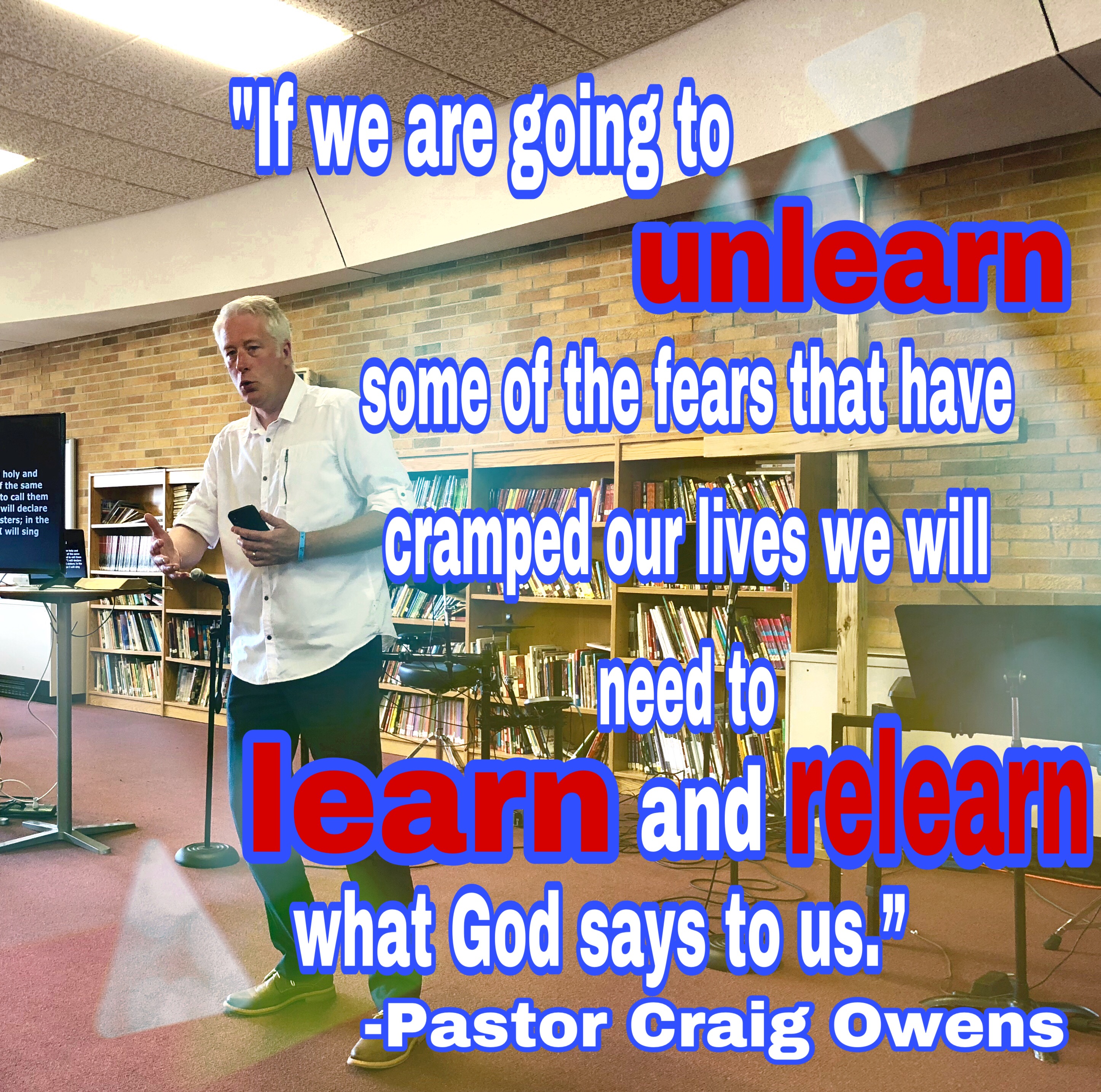
Christians—as aliens and strangers on this Earth—should have an alien response to earthly fears. So if we are going to unlearn some of the fears that have cramped our lives we will need to learn and relearn what God says to us.

Peter asks what might seem like a rhetorical question, “Who is going to harm you if are eager to do good?” Think about it: who wants to punish someone for doing the right thing? Apparently some people do because Peter goes on to add, “But even if you should suffer for what is right, you are blessed. Do not fear what they fear; do not be frightened” (1 Peter 3:13-14). 

So even if people insult Christians for doing things God’s right way, God’s blessing is on them. Sadly, people without God’s blessing on their lives often give in to the FOMO (fear of missing out) and they end up lashing out at those being blessed. That lashing out is directly rooted in their fears. 

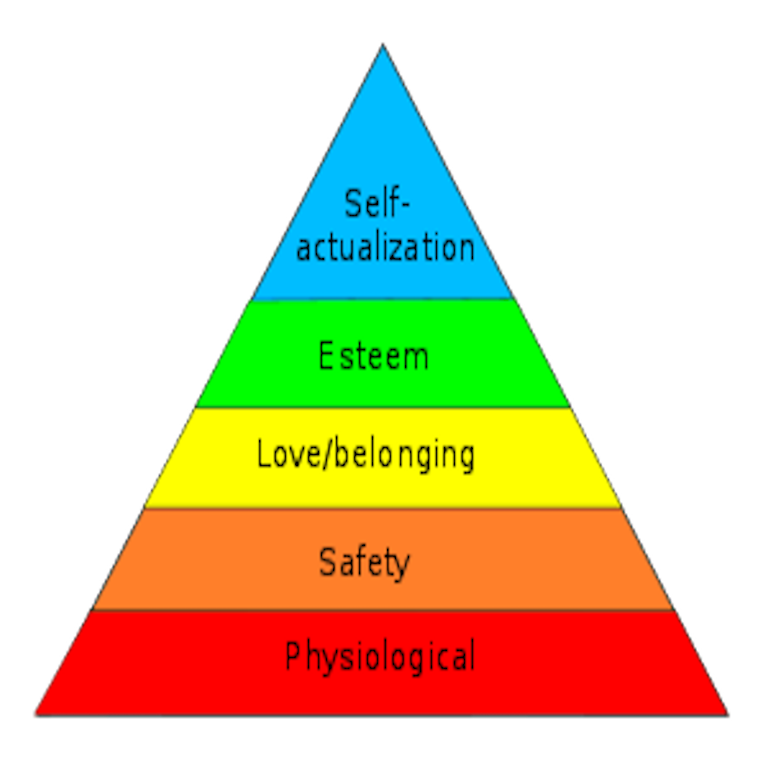
Abraham Maslow proposed a hierarchy of needs that humans have, and obviously, there would be fears associated with any of those needs not being met. At least, that would be the Earthling response. Christians need to unlearn those fears by learning and relearning why God tells them to “Fear not!” 

  1. Fear of not having physiological needs met—Jesus tells us why we shouldn’t worry (Matthew 6:25-34). 
  2. Fear of not being kept safe—the psalmist tells us that God is our shield (Psalm 84:11).
  3. Fear of not fitting in with a certain social group—Jesus proudly call His followers His brothers and sisters (Hebrews 2:11-12).
  4. Fear of not being rewarded or recognized—Jesus says there are blessings for those that hang in with Him through persecution, including being called a co-heir alongside Him (Matthew 5:10-12; Romans 8:17).
  5. Fear of our life not having purpose—the apostle Paul reminds us that God chose us on purpose to be His example to the world (1 Corinthians 1:25-27). 

Since Jesus overcame all the things that could cause us fear, Peter counsels us to “arm yourselves with this same attitude” (1 Peter 4:1). The Greek word for arm yourselves only appears here, and it means for us to repeatedly remind ourselves of God’s truth. The Greek word for attitude is only here and in Hebrews 4:12, where we are reminded that the Word of God helps our minds unlearn, learn, and relearn God’s truth. 

Have the borders of your life been squeezed by your fears? Do you feel like you’re missing out on the “abundant life” that Jesus said you could have? The Word of God can help you unlearn those fears, and fellow Christians would love to come alongside you to help you continue to relearn that truth over and over again until your fears are banished from your life! 

Don’t let fear keep you from being all that God has planned for you to be! 

Please join me on Sunday as we continue our study of how Christians are to live as aliens and strangers while on Earth. If you’ve missed any messages in this series, you may find the complete list by clicking here. 

Fight Like Jesus

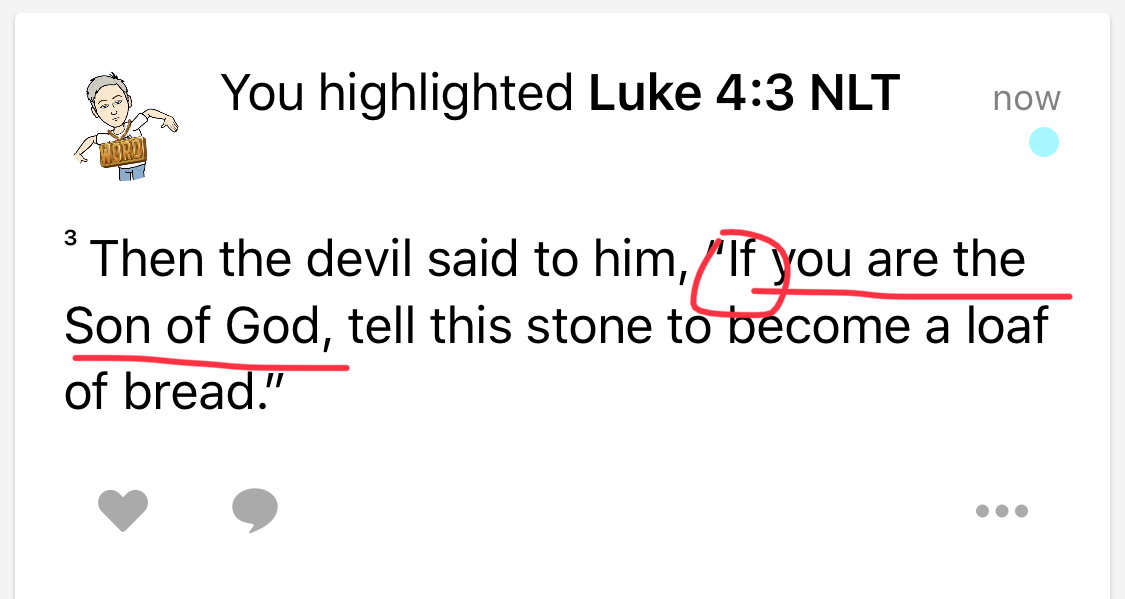
God announces to the world that Jesus is His Son, but as soon as the devil has an opportunity to tempt Jesus he begins with, “IF You are the Son of God….”

“This is the bedrock of EVERY temptation. If satan can cause us to reject, doubt, or forget our original identity as beloved sons and daughters of the King, he can get us to fall for any number of tricks and non-satisfying pleasures.” —Honoring Christ In Human Rights (a YouVersion reading plan)

The devil has always been a slanderer and a prosecutor—always leveling charges against God’s children, trying to get them to feel unworthy of God’s love. He still does this today. 

Don’t let him. It’s time to fight back!

How?

We read in Revelation: “For the accuser of our brothers and sisters, who accuses them before our God day and night, has been hurled down. They triumphed over him by the blood of the Lamb and by the word of their testimony” (Revelation 12:10-11).

Jesus—the Lamb of God—shed His blood for you. You have been purchased with an amount that is incalculable. You have so much worth to your Heavenly Father! You did nothing to earn this payment of blood, you just receive it by faith. 

But we also need “the Word.” Notice that every time the devil attacked Jesus, He responded by saying, “It is written,” and then He quoted the Word (see Luke 4:1-12). We must do the same. 

When the devil says you’re unworthy of God’s love, you say, “It is written, ‘There is no condemnation for me because I am covered by the blood of Jesus’” (Romans 8:1).

When the devil says God can’t or won’t help you, you say, “It is written, ‘If God did not spare His own Son, but gave Him up for me—how will He not also graciously give me everything I need?’” (Romans 8:32). 

When the devil says you can’t resist his temptations for very much longer, you say, “It is written, ‘Greater is He that is in me than anything you’ve got. I have submitted myself to God and I will not give in to you, so you must flee from me!’” (1 John 4:4; James 4:7).

When the devil says you’re all alone in this world, you say, “It is written, ‘God said He would never leave me, and His Spirit is inside me right now and forever’” (Hebrews 13:5; John 14:16-18).

Dear friend, the blood of the Lamb covers you. Now use His Word to refute every single charge the devil tries to use to slander you. 

9 Prayers From “Praying The Promises”

In Praying The Promises, Max Lucado gives us valuable instruction on how to turn Scriptural promises into powerful prayers. Here are a few of those prayers (the biblical reference in brackets is the passage that helped form the prayer). 

Thank you for being a God who wants me to know You.… Your wisdom surpasses all wisdom on this earth. Your ways are so much higher than mine. I could study You and Your Word for the rest of my life and still only scratched the surface of the depths of who You are. You are at once knowable and unknowable.… Deepen my knowledge of You, God. [Psalm 19:1-2; Isaiah 55:8-9; Romans 1:19-20]

Help me rely on Your promise of grace because I have been found righteous through Jesus. When trouble comes, use those troubles to increase my faith and draw me nearer to You. [Hebrews 7:25]

Father, sometimes I convince myself that I need to earn Your salvation. I feel like I should do more, be more, and achieve more. But You simply want my faith. Help me let go of my striving and this need to perform for You and for others. [Romans 4:5; Philippians 3:4-7] 

Guide me during the difficult times. Give me hope as I pray and wait. Remind me of Your power and authority so that I will trust Your ways, even when I can’t see where the path before me is going. [Genesis 50:20-21; Ephesians 1:11-12; Romans 5:3] 

Forgive me when I look for guidance outside of Your Word. When I ask friends what to do before I open my Bible. When I am resistant to reading Your Word because I want to guide myself rather than be guided by You. Renew my desire and passion for reading the Bible. … May I learn something new about You and Your character each time I read it. [Psalm 32:8; 2 Timothy 3:16-17] 

When a worry arises, remind me of Your presence so I will turn to You and not fear. [Psalm 23:1, 4]

Gracious Father, nobody is beyond Your redemption. Because of Your love and mercy, You provided a Redeemer for us in Christ, who graciously stopped us while we were on the path of sin, gave us refuge, and pointed us toward the road of redemption. [Galatians 4:4-5]

Forgive me when I try to fight my own battles. … If I try to fight for myself, I end up feeling exhausted and defeated by my own efforts. You have said You are fighting for me. Help me believe that truth even when I am so tempted to fight for myself. Go before me this week as I face temptation. Go before me as I face anxiety, fear, and uncertainty. Protect me in every spiritual battle. Fight for me and help me surrender each battle to You. [Exodus 14:14; Deuteronomy 1:30; Psalm 20:7-8]

As concerns and questions come up, remind me to turn each of them over to You in prayer. I lift up my family to You. I lift up my work to You. I lift up my to-do list to You. Cover each worry with Your peace. Prioritize my day so that it aligns with Your will and not mine. [1 John 5:14]

You can check out my review of Praying The Promises by clicking here, and you can read some other quotes from this book by clicking here.

A.L.I.V.E.—The “E” Is For Engagement Of Christ’s Followers

Let’s get some insight into the Greco-Roman and Jewish mindsets of the first century AD. Specifically, the mindset of men. 

There is a well-known letter written June 17, 1 BC, from a man named Hilarion, who was gone off to Alexandria, to his wife Alis, whom he has left at home. He writes to her: “If—good luck to you—you bear a child, if it is a boy, let it live; if it is a girl, throw it out.” This letter captures the male-dominated mindset in the Roman world concerning women and children. In a word: inferior or even disposable. 

This mindset wasn’t limited to the world the Jews called “pagan,” but it was prevalent in Judaism too. Every day Jewish men began their morning prayer time with, “God, I thank You that You did not make me a Gentile, a slave, or a woman.” 

With this background, it makes it startling that a Jewish man (who prayed that prayer thousands of times) writing to people in Rome (who undoubtedly had the same mindset as Hilarion), begins his list of thank you notes with gratitude to two women! Paul goes on to list no less than 8 women, even giving preferential treatment to a wife (Priscilla) over her husband (Aquila) when he mentions her name first! (see Romans 16:1-4, 6, 12).

William Barclay wrote, “Anyone who asks the question: ‘What has Christianity done for the world?’ has delivered himself into a Christian debater’s hands. There is nothing in history so unanswerably demonstrable as the transforming power of Christianity and of Christ on the individual life and on the life of society.”

Indeed Christians changed the lives of at least four groups:

  1. Women (especially in the role of marriage)—divorce was so common that it was neither unusual nor particularly blameworthy for a woman to have a new husband every year. Yet Christians taught men to esteem their wives and for marriage to be honored by everyone (Ephesians 5:28; Hebrews 13:4). 
  2. Children—who weren’t even considered a part of the family until they had grown up and proven their worth to the father. Yet Christians taught fathers to nurture their children (Ephesians 6:4).
  3. Senior citizens—the pragmatic Romans had little to do with those they considered less valuable. But the first blind asylum was founded by Thalasius, a Christian monk; the first free medical dispensary was founded by Apollonius, a Christian merchant; the first hospital of which there is any record was founded by Fabiola, a Christian lady.
  4. The weak and sick—when a plague hit Rome, all the young, healthy people left the sick and elderly behind. They ran away, but the Christians stayed to help. The Christians taught that everyone (regardless of age, sex, or wealth) was valuable (1 Timothy 5:1-2). 

That was just the start of Christianity. Men like William Wilberforce and Abraham Lincoln were Christians who opposed slavery; Clara Barton was nicknamed “the angel of the battlefield” and founded the Red Cross; Paul Brand was a doctor who ran to leprosy patients when everyone else shunned them; Mother Teresa loved those poor, dying souls whom others ignored. 

So what’s your conclusion? Throughout history Christians have been martyred for their faith, but not only are they willing to die for their belief that Jesus is alive, but they continue to do good to those who persecute them. Would people do this to perpetuate a hoax? Or does this sound more like the real deal?

Please check out the other evidence I have presented for the resurrection of Jesus:

A.L.I.V.E.—The “I” Is For It Is Finished

Throughout history, lots of martyrs have died for what they believe. But only One had been resurrected from the dead to prove that what He believed and taught was true.

Jesus, however, is not a martyr. His life and His work weren’t cut short. Calvary didn’t happen to Jesus, but He came specifically to die on a Cross. He knew what was going to happen to Him. Check this out…

So we can know Jesus is alive by His “It is finished” declaration from the Cross—

Later, knowing that everything had now been finished, and so that Scripture would be fulfilled, Jesus said, “I am thirsty.” … When He had received the drink, Jesus said, “It is finished.”

Actually His “It is finished” wasn’t just a statement, it was a yell that reverberated throughout the countryside. The Greek words Mark uses are megas phōnē, which sounds a lot like our word megaphone. Jesus wanted to make sure everyone heard Him, and then look at the result:

Then Jesus uttered another loud cry and breathed His last. And the curtain in the sanctuary of the Temple was torn in two, from top to bottom.

The curtain that separated God’s presence from mankind was torn in two. The writer of Hebrews notes, “Our High Priest offered Himself to God as a single sacrifice for sins, good for all time. Then He sat down in the place of honor at God’s right hand.”

What do you conclude from all this? C.S. Lewis offered this challenge:

“A man who was merely a man and said the sort of things Jesus said would not be a great man or a moral teacher. He would either be a lunatic—on the level with the man who says he is a poached egg—or else he would be the devil of hell. You must take your choice. Either this was, and is, the Son of God; or else a madman or something worse. You can shut Him up for a fool… or you can fall at His feet and call Him Lord and God. But let us not come with any patronizing nonsense about His being a great human teacher. He has not left that open to us.”

Jesus told us that He would die, how He would die, when He would die, why He would die, and that He would be resurrected. If you heard all of these claims before His crucifixion, you might think He was a lunatic or a braggart. But after His It Is Finished! declaration, we have only one logical conclusion: Jesus is exactly who He said He was. It was out of love for you that Jesus laid down His life and picked it up again. Will you put your faith in Him today?

We are working our way through 5-parts of this series: “I can know Jesus is A.L.I.V.E. because of….” We’ve already covered:

Thursdays With Oswald—Dealing With Spiritually Stupid People

Oswald ChambersThis is a weekly series with things I’m reading and pondering from Oswald Chambers. You can read the original seed thought here, or type “Thursdays With Oswald” in the search box to read more entries.

Dealing With Spiritually Stupid People

     I would like you to notice what the word “stupid” means. It does not mean ignorant, but anything formed or done without reason or judgment. Ignorance is being without knowledge “and the times of this ignorance God winked at [‘overlooked’]” (Acts 17:30). Do distinguish between ignorance and stupidity! … 

     [Passages to consider—1 Samuel 26:21 [I have acted like a fool]; Titus 3:3 [at one time we too were foolish, disobedient, deceived and enslaved]; 2 Timothy 3:6-7 [silly and weak-natured and spiritually dwarfed women, loaded down with the burden of their sins and easily swayed and led away by various evil desires and seductive impulses]; and Hebrews 5:12 [you actually need someone to teach you over again the very first principles of God’s Word]]

     What are we to do when we come across stupid souls? Ignorant souls we can deal with, they need knowledge; the stupid soul does not need knowledge; the stupid soul needs to have the Word of God until it is worried by it. … 

     Never water down the Word of God to the understanding of your people. … “The words that I speak unto you, they are spirit, and they are life.” The Word of God is “a lamp” and “a light,” but when people get off on the “stupid” lines, it is all instincts, impressions, vague ideas—“ever learning, and never able to come to the knowledge of the truth.”

From Workmen Of God

I know the word “stupid” seems like an inflammatory word, but don’t get distracted from Chambers’ pertinent point on account of this word. The Bible makes it clear that we will come across people who are stupid in regard to the things of God. Our course of action is not argument or persuasion, but—as Chambers says—“the Word of God, the Word of God, the Word of God, first second and last; no sympathy, no help, only the Word of God.”