Listen to the podcast of this post by clicking on the player below, and you can also subscribe on Apple, Spotify, or Audible.
Whoever claims to live in Him must live as Jesus did. (1 John 2:6)
If I claim…
…I have fellowship with Jesus
…I know the truth
…I am done with sinning
…I live in the light
Then I must think, speak, and act like Jesus.
To prove my claims I must show that…
…I know the Truth and live in it
…I quickly confess and repent of sin
…I know His commands and obey them
…I know His love and I love others
There is no better proof for my claims than Christlikeness!
As Charles Spurgeon said,
“When we try to be, in every respect, what God’s Word tells us we ought to be, then may we know that we are in God; but if we walk carelessly, if we take no account of our actions, but do, after a random fashion, whatever comes into our foolish hearts, then have we no evidence at all that we are in God.”
The proof of our claims is self-evident. John uses the phrase “this is how we know” 8 times in this letter, and he uses the word “know” another 35 times!
It’s not enough for me to verbally make the claims, but people should hear the words of Jesus in my mouth, see His compassion in my actions, and know His love fills my heart and informs my mind.
I’ll say it again: There is no better proof for my claims than Christlikeness. I know it, everyone who sees or hears me knows it, and, most importantly, Jesus knows it.
Dear children, let’s not merely say that we love each other; let us show the truth by our actions. Our actions will show that we belong to the truth, so we will be confident when we stand before God. (1 John 3:18-19 NLT)
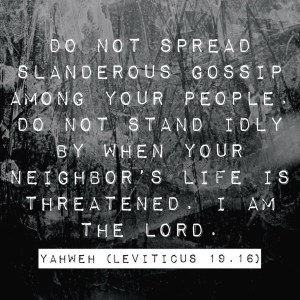
Do not spread slanderous gossip among your people.Do not stand idly by when your neighbor’s life is threatened. I am the LORD. (Leviticus 19:16 NLT)
Slander is defined as: “The utterance of false charges or misrepresentations which defame and damage another’s reputation.” (Merriman-Webster dictionary)
I will not tolerate people who slander their neighbors. I will not endure conceit and pride. (Psalm 101:5 NLT)
Hiding hatred makes you a liar; slandering others makes you a fool. Too much talk leads to sin. Be sensible and keep your mouth shut. (Proverbs 10:18-19 NLT)
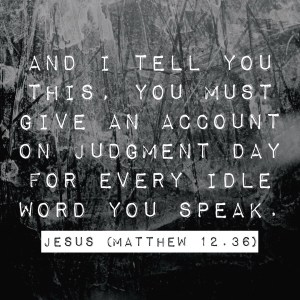
And I tell you this, you must give an account on judgment day for every idle word you speak. (Matthew 12:36)
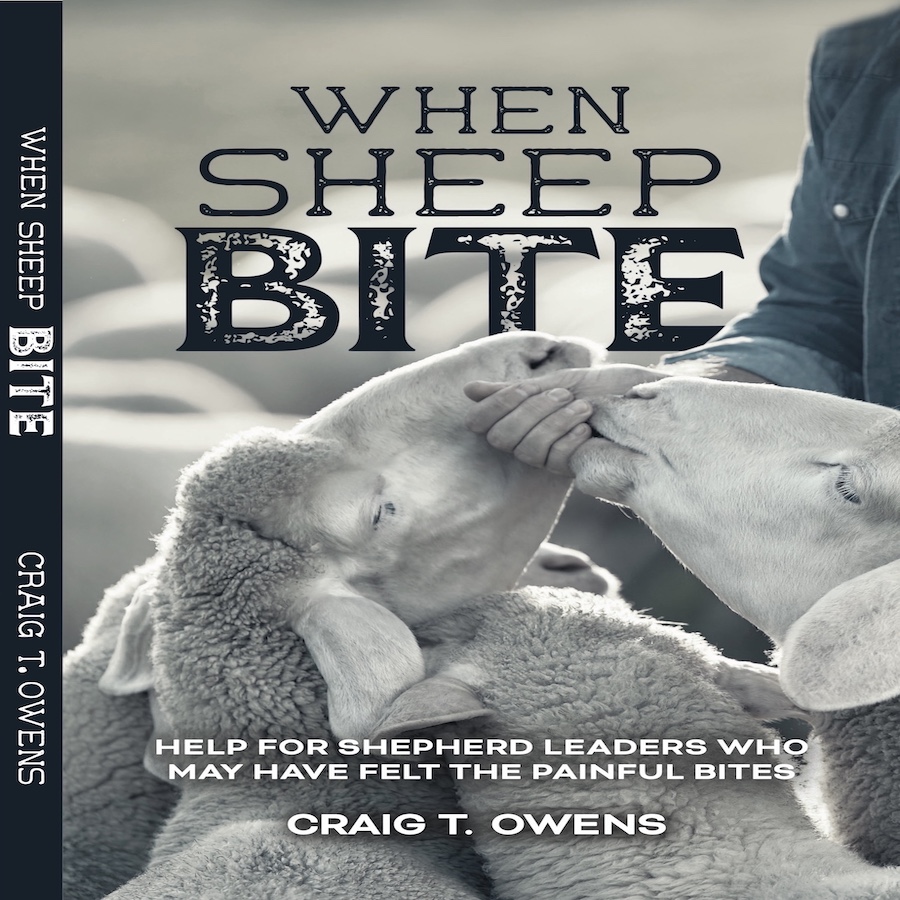
In my book When Sheep Bite, I have a whole chapter about dealing with slanderers. In that chapter I wrote—
You might be thinking, “But I have to respond to these lies, right? I can’t just let them continue to fly around unchecked because people may start believing these falsehoods.” I think this is a very natural response, but I want to again call us to strive for a supernatural response—something we can only do if we are completely yielded to God. Just as we saw what Peter wrote about the way Jesus didn’t verbally lash out at His slanderers (1 Peter 2:23), we need to respond in the same way as our Chief Shepherd did. …
Don’t treat those who criticize and slander you as an enemy. Instead, grieve for their hardened hearts and pray for God’s mercy on them. Intercede for them to be able to acknowledge their sinful words, so they may ask God for forgiveness before His judgment inevitably falls on them. Remember that these sheep—though they are angry and attacking—are still ones for whom Jesus shed His blood. The natural response may be a desire to see our slanderers eternally punished, but the supernatural response is to desire for their soul to be eternally in God’s presence. (Excerpt from When Sheep Bite)
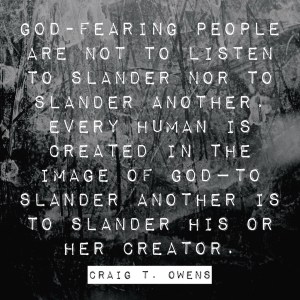
God-fearing people are not to listen to slander nor to slander another. Every human is created in the image of God—to slander another is to slander his or her Creator.
Listen to the podcast of this post by clicking on the player below, and you can also subscribe on Apple, Spotify, or Audible. Check out the video content in this post by clicking here.
My wife was a cheerleader in high school, so she taught me to appreciate some of the finer points of the integrated movements and stunts that the sideline cheerleaders performed at each game. But it wasn’t until our daughter moved from her first sideline cheer season to her first competitive cheer season that I really took notice. Competitive cheer is cheerleading on a whole different level—the stunts and tumbling runs, the coordinated movements, the precise way the words of the cheer are punctuated by the claps, stomps, and jumps of the cheerleaders is quite impressive!
In many ways, the relationship of the three Persons of the Godhead are much like a coordinated dance. Which part of the Trinity you may see at any one moment is based on your viewpoint, as you can quickly see the other Persons of the Trinity at the exact same moment. The Father revealing Himself in the Son; the Son sending the Holy Spirit to be in us; the Spirit drawing people to the Father through the Son. Each Person of the Godhead revealing and promoting and glorifying each Other!
It’s absolutely awesome! And yet what is even more astounding to me is that we are invited to participate in this Spiritual Dance (see John 7:33, 14:16-17, 16:14-15, 17:20-21).
Peter says we are a part of this dance; actually he calls it more of a chorus. The word “add” in 2 Peter 1:5 is the Greek word epichorego. The root word (chorego) sounds like “chorus.” But it really means to be a chorus leader who supplies everything for the dance/chorus. As v. 3 tells us, “His diving power has given us everything we need” to participate in this Spiritual Dance.
As we have already seen, Jesus has provided everything we need except for our effort—our diligence to learn this dance and become more proficient in it. The idea of adding is really implied throughout these next verses. We could read vv. 5-7 like this—
“Make every effort to add to your faith goodness; and [add] to [your] goodness, knowledge; and [add] to [your] knowledge, self-control; and [add] to [your] self-control, perseverance; and [add] to [your] perseverance, godliness; and [add] to [your] godliness, mutual affection; and [add] to [your] mutual affection, love.”
The supply of these virtues is not ours, but the “every effort” to ask, receive, and apply is ours. I cannot supply myself. But faith from God allows me to access the One full of grace (remember what we saw in John 1:16).
Our Father already knows what we have need of (Matthew 6:8), so we could ask something like, “Where is my goodness lacking?” And when the Holy Spirit reveals that to us, we can then ask our Savior—Who is full and overflowing with goodness—to impart to us what we need.
So my “every effort” is not supplying what I lack but asking to be supplied what I lack. The only thing keeping me less than full of any of these virtues is my lack of effort to ask and then apply what I am supplied.
The Holy Spirit imparts faith to us to believe for salvation. Then there is a faith we must “make every effort” to strengthen. This is the faith on full display in Hebrews 11.
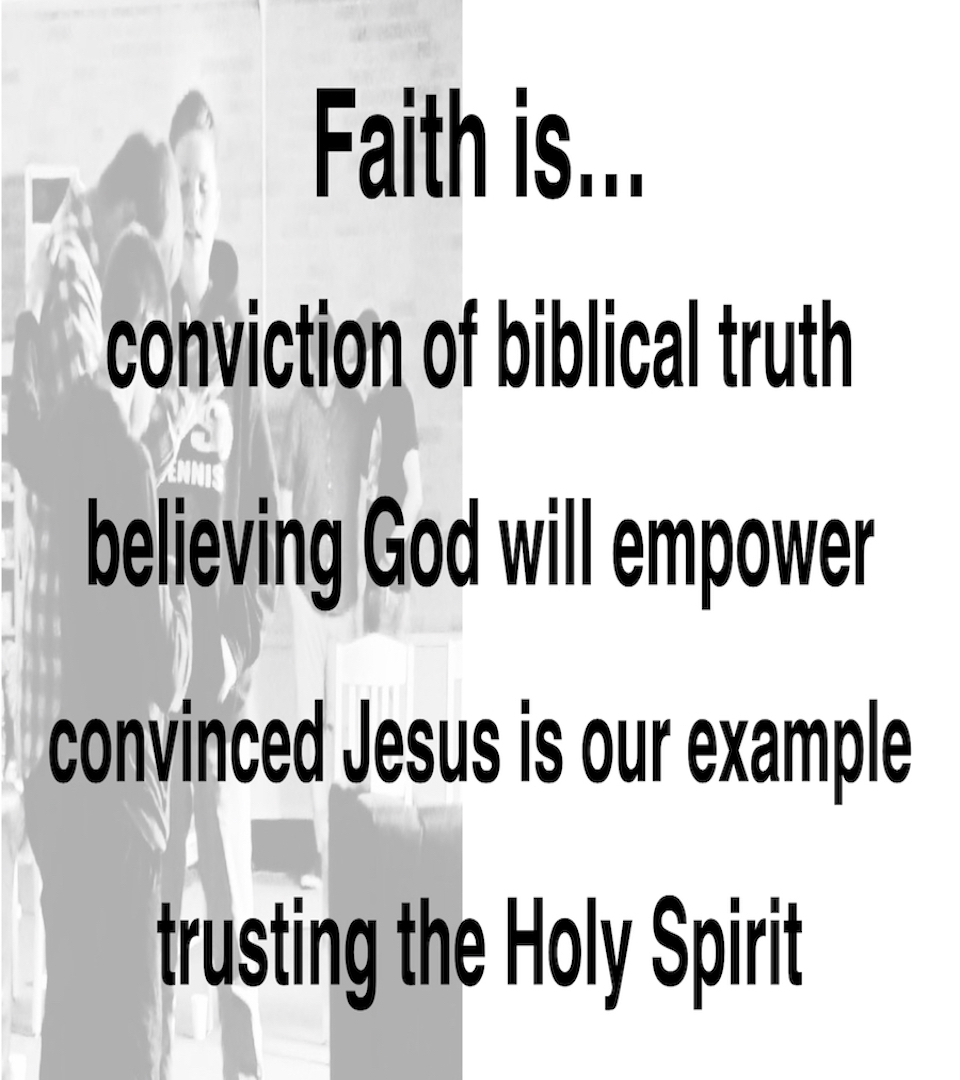
Faith is:
conviction of the truth revealed in the Bible
believing that what God calls us to do, He will also empower us to do
being convinced that Jesus is our Example
trusting the Holy Spirit to conform us to this image of Jesus—to reveal Christlikeness in us
The first virtue Peter lists—the first virtue that our faith believes God to form in us—is goodness. This is moral excellence (NLT), good character (MSG), and virtue—excellence, resolution, Christian energy (AMPC).
Since Peter uses the same word to describe Jesus in v. 3 (His own glory and goodness), people around us should see our growth as Christian gentlemen or gentlewomen.
Remember that 2 Peter is written to saints about their interaction with other saints. Being around other faith-filled gentlemen and gentlewomen is an excellent training ground for all of us. It matters how we speak to each other. It matters that we treat each other chivalrously and with good manners. It matters that we are kind and polite to each other.
Because when we take this gentlemanly or gentlewomanly behavior into the world, it gets noticed. So make every effort to develop the goodness of Jesus in your life. Let this community of saints be the place where your training takes place.
Check out all of the other sermons in this series from 2 Peter by clicking here.
Psalm 99 lists four different ways saints come to worship before God’s throne. The Old English spelling is “worthship” because God is worth all of the praise we can lift to Him—especially when we think about the sins He has forgiven 🙌🏻
“True love hates that which is unlovely. It is inevitable that a man, who is full of love, should feel intense indignation against that which is contrary to love. Hence the apostle says, ‘If a man say, I love God, and hateth his brother, he is a liar.’” —Charles Spurgeon, commenting on 1 John 4:18-20
Christians aren’t supposed to be “lone rangers” but in community with other saints. T.M. Moore wrote, “Our Christian friends can be a very helpful resource for improving our conversational skills, if we will take the time to talk about spiritual things. As iron sharpens iron, we may expect that, by engaging often in conversations with other believers, over matters of the highest moment, our conversational skills will improve steadily over time. We might even have some fun.”
The social conditions that led up to the Prayer Revival of 1857, in many ways, mirror those in America today.Check out a short history lesson about spiritual revivals.
“And, in yet another sense, handing everything over to Christ does not, of course, mean that you stop trying. To trust Him means, of course, trying to do all that He says. There would be no sense in saying you trusted a person if you would not take his advice. Thus if you have really handed yourself over to Him, it must follow that you are trying to obey Him. But trying in a new way, a less worried way. Not doing these things in order to be saved, but because He has begun to save you already. Not hoping to get to Heaven as a reward for your actions, but inevitably wanting to act in a certain way because a first faint gleam of Heaven is already inside you.” —C.S. Lewis, in Mere Christianity
A young man in the middle school where I serve asked to read a copy of my book When Sheep Bite. Nearly every day on his lunch break, Nick would come into talk with me about what he read, and share some insights he had gleaned. He wrote the most sincere and straightforward endorsement that I have ever received.
Listen to the podcast of this post by clicking on the player below, and you can also subscribe on Apple, Spotify, or Audible. Check out the video content in this post by clicking here.
On a recent episode of The Craig and Greg Show, we talked about the underutilized leadership practice of journaling. Here is one idea I was able to capture and implement because of my commitment to keeping a journal.
Listen to the podcast of this post by clicking on the player below, and you can also subscribe on Apple, Spotify, or Audible.
…the Lord has a charge to bring against you… (Hosea 4:1)
Sadly, the charges that God brings against ancient Israel sound eerily similar to charges He could make against us today:
Faithlessness
Lovelessness
No acknowledgment of God
Cursing
Lying
Murdering
Stealing
Adultery
Deserting God
Rampant sexual immorality
Idolatry
I believe idolatry is at the root of all these other sins. And this idolatry stems from a lack of knowledge of God’s supremacy (v. 14). But the lack of knowledge of God among the people is due to a rejection of deeper knowledge of God by the religious leaders. God specifically identifies the priests and prophets as those who are stumbling in their sin.
God says, “You stumble day and night, and the prophets stumble with you. … Because you have rejected knowledge, I also reject you as My priests; because you have ignored the law of your God, I also will ignore your children” (Hosea 4:5-6).
God’s leaders set the tone. As the leader goes, so go the people.
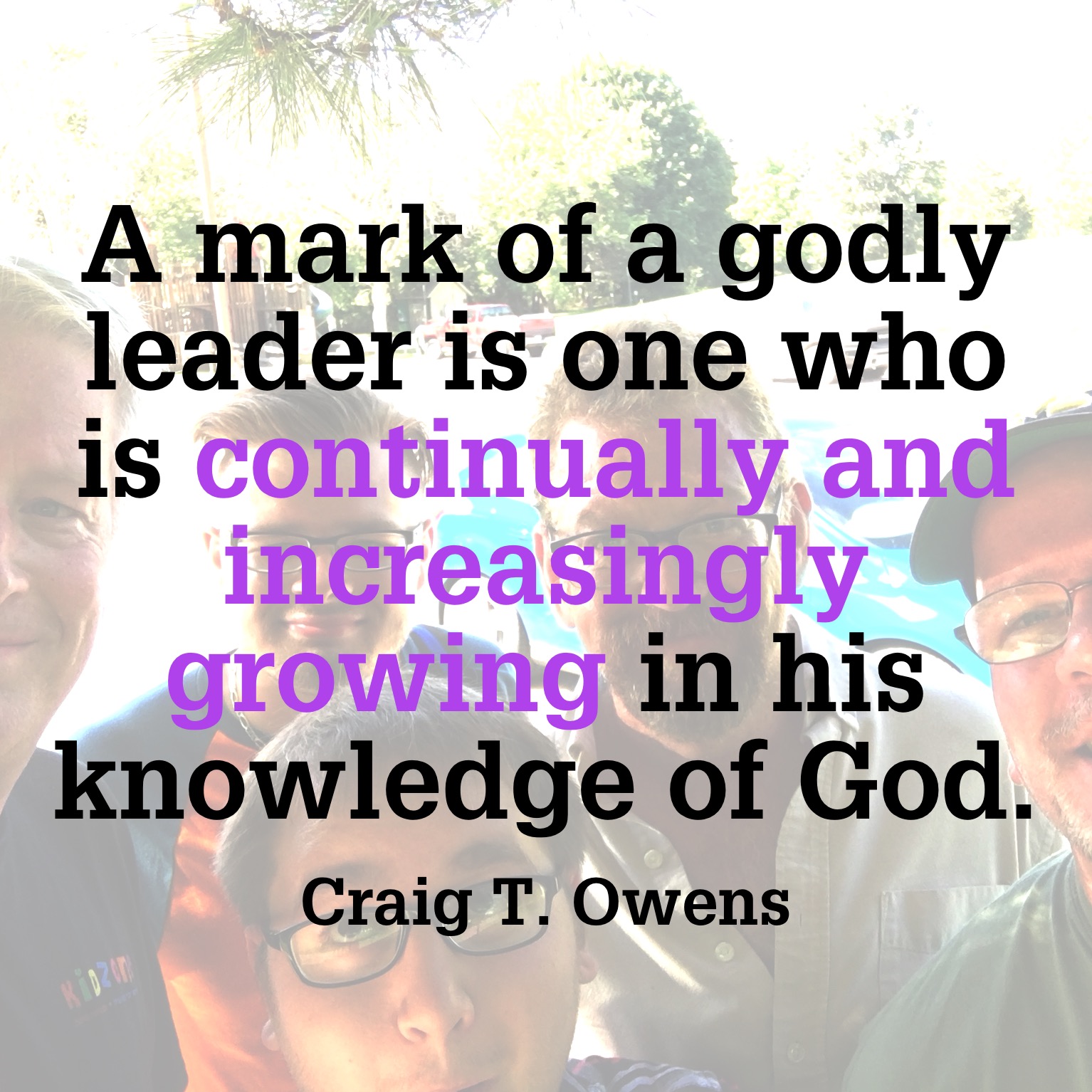
A mark of a godly leader is one who is continually and increasingly growing in his knowledge of God.
Leaders must be learners in order to defend those under their care. C.S. Lewis wrote in The Weight of Glory, “To be ignorant and simple now—not to be able to meet the enemies on their own ground—would be to throw down our weapons, and to betray our uneducated brethren who have, under God, no defense but us against the intellectual attacks of the heathen.”
Leaders, I implore you: learn more of God. Abide intimately with Him. Get to know His heart and mind. Then impart this knowledge to those around you. Lead them into the all-satisfying presence of God, so that they may also know God more intimately. This intimate knowledge will fortify them against the pull if idolatry and the whole list of other charges God has against those who remain willfully ignorant of Him.
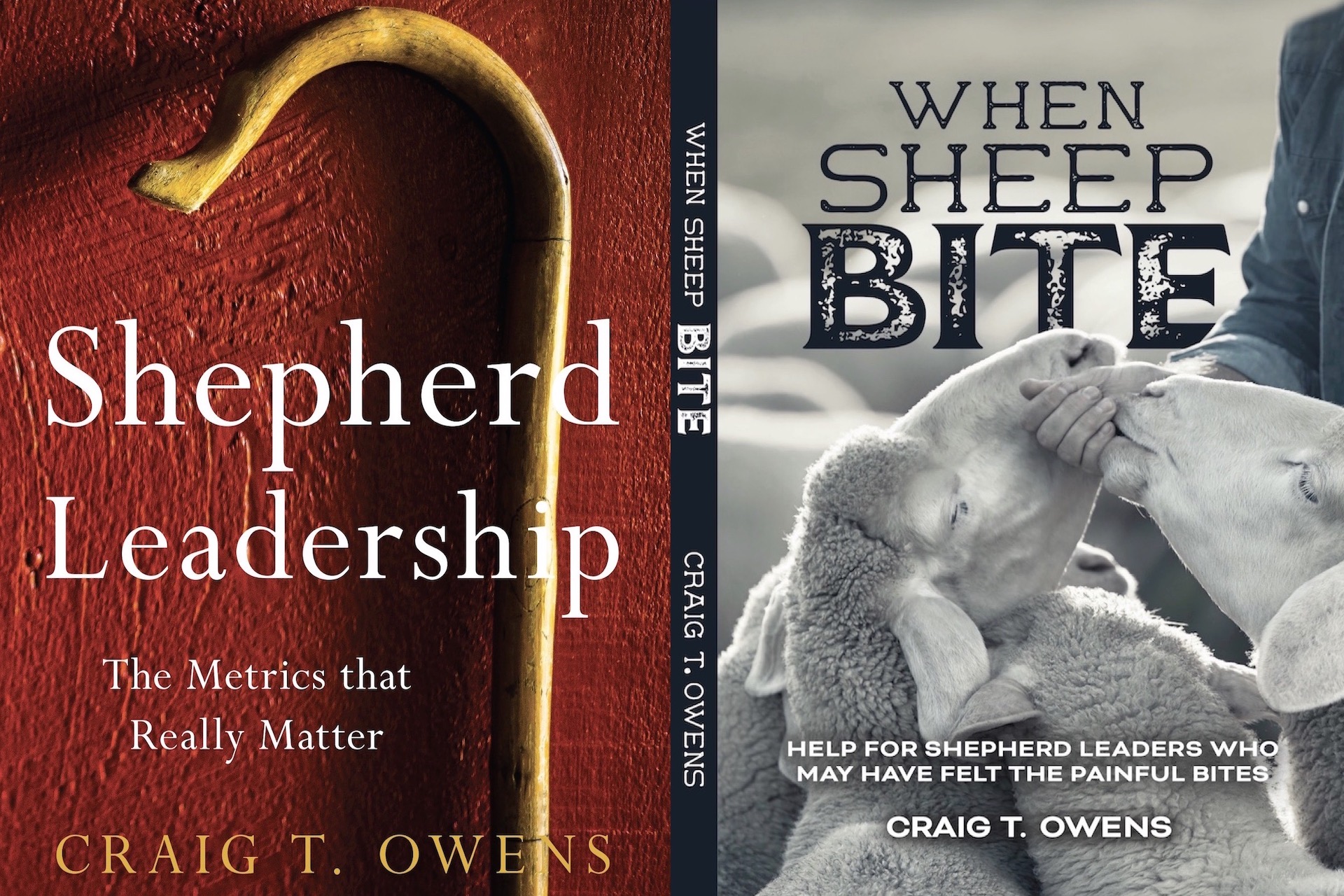
This is part 89 in my series on godly leadership. You can check out all of my posts in this series by clicking here. And you may also want to check out my books for church leaders—Shepherd Leadership and When Sheep Bite.
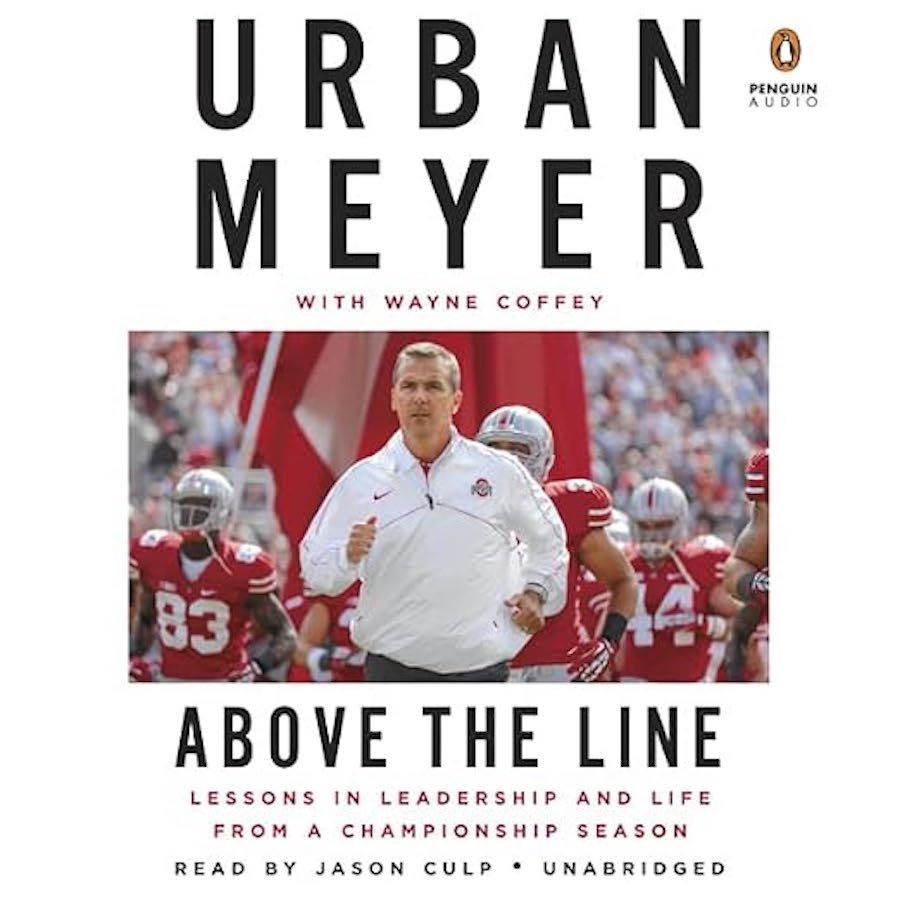
Even a Wolverine fan can acknowledge the quality leadership lessons that Urban Meyer (the coach of that football team to the south of us) provides in his book Above the Line.You can check out my book review by clicking here.
Below are a few quotes that caught my attention. My Patreon supporters have access to all of the quotes from this book.
“We teach our players, in response to any situation they face, to press pause and ask: What does this situation require of me? Pressing pause gives you time to think. It gets you off autopilot and helps you gain clarity about the outcome you are pursuing, the situation you are experiencing, and the Above the Line action you need to take to achieve the outcome.”
“Under pressure, we do not rise to the occasion. We rise or fall to the level of our training. When contact is made, it is too late to train and build skill.”
“Every team faces some kind of adversity. Mediocre teams are destroyed by it. Good teams survive it. Great teams get better because of it.”
“Resilience is one of life’s most important attributes. Because nobody wants hardship or adversity, but everybody gets it. It’s inevitable. No one escapes pain, fear, or difficulty. In fact, a productive and successful life involves some amount of necessary pain. When it happens, don’t run from it. Learn from it.”
“Performance cannot be declared. It must be led. Great results are initiated and sustained by great leadership. Not just leaders at the top, but leaders at every level.”
“Culture is what leads when no one is watching.”
My Patreon supporters have all of my notes from Above the Line, including the six “R” factors Urban Meyer unpacks in his formula E + R = O.
Listen to the podcast of this post by clicking on the player below, and you can also subscribe on Apple, Spotify, or Audible. Check out the video content in this post by clicking here.
Having worked in and consulted with various businesses, I know there are a variety of configurations of businesses that people will choose for different reasons—there are S-corps and LLCs, and there are several types of partnerships.
The two most basic partnership arrangements are a general partnership and a limited partnership. In a general partnership, all of the partners share equally in the risk and the reward, and all partners have a say in how the business is run. Typically, partners with more shares of stock have more “voting power” in making decisions, and they will usually benefit more if the company is successful.
In a limited partnership, one general partner manages all the decisions, with the limited partners being merely passive investors. The limited partners can invest as much or as little as they feel comfortable doing, but they don’t have a say on how the business is run. If the general partner is a savvy operator, everyone will be rewarded handsomely; if the general partner isn’t quite as successful as others had hoped, the limited partners’ losses are limited to only as much as they invested.
Although these types of business relationships didn’t have these names in the time Peter was writing, he used language that would be very familiar with today’s business attorneys when he wrote that we “may participate in the divine nature.”Participate literally means partnership—it’s the same word Peter knew for his partners in his fishing business (Luke 5:9-10).
I believe Peter would call our partnership with Jesus a spiritual limited partnership, with Jesus as the General Partner. He is the One who makes the decisions and calls the shots.
But what about us as “limited partners”? What investment can we make to this partnership? Only what Jesus has already given us. We saw this last week—HIS divine power has GIVEN US everything we need for life and godliness (see 2 Peter 1:3-4).
This is unheard of in today’s partnerships! The General Partner is giving the limited partners everything they need to invest in the partnership, and then He is allowing the limited partners to reap all of the rewards of His work (see Matthew 19:29)!
Last week we said Jesus did the work so that we could do the work. We could modify this to say, Jesus gave us everything we need to reap the rewards of this partnership.
The amazing benefit of this partnership is stated in the next verse: He has given us His very great and precious promises, so that through them you may participate in the divine nature (v. 4).
Look at some blessings…
recipients of the Holy Spirit—Galatians 3:14; Ephesians 1:13
heirs of His Kingdom—Galatians 3:29
eternal life—Titus 1:2; 1 John 2:25
a perfect Mediator—Hebrews 9:15 AMPC
power to access every single promise in His Word—2 Corinthians 1:20
Peter says we are participating in His divine nature. Literally, Theios physis. The NLT says, “the promises that enable you to participate in the divine nature.”
In his first letter, Peter quoted Leviticus, when God said, “Be holy, because I am holy” (see Leviticus 11:44-45; 1 Peter 1:15-16). Investing in this divine partnership releases to us the promises that empower us to participate—to be a partner in—God’s perfect holiness!
Our participation in this divine partnership allows us to “escape the corruption in the world caused by evil desires” (v. 4b).The word participate or partnership can be used negatively (1 Corinthians 10:18-21). But Peter uses it positively. Prior to salvation our desires aligned with demonic desires, but now a new and infinitely superior power is at work in us. This power changes our desires from temporal things to eternal things (Galatians 5:17 NLT).
Jesus told a story of a master who gave money to his to invest. The ones called wise were also welcomed into the master’s presence forever. They realized that their best investment was to use what their master had given them in partnership with their master, so they went all in. They invested everything their master had given them.
Peter tells us essentially the same thing: Be all in with the investment Jesus has given you! Don’t hold anything back—make every effort. Don’t let Jesus be merely your Savior, but let Him be your Lord. Trust Him as the General Partner to do what is best. Give Him complete control of all the great and precious promises He has given you, and then allow the Holy Spirit to make you holy inside and out!
Check out all of the other messages in our series based on 2 Peter called Friends of the Faith.
You are the most effective evangelist in the areas where you already operate everyday. You can tell the story of Jesus better to your family members, coworkers, and friends than an outside can. Keep shining brightly for Jesus!
“They think that if you ask them to forgive someone who has cheated or bullied them you are trying to make out that there was really no cheating or no bullying. But if that were so, there would be nothing to forgive. They keep on replying, ‘But I tell you the man broke a most solemn promise.’ Exactly: that is precisely what you have to forgive. (This doesn’t mean that you must necessarily believe his next promise. It does mean that you must make every effort to kill every taste of resentment in your own heart—every wish to humiliate or hurt him or to pay him out.) The difference between this situation and the one in which you are asking God’s forgiveness is this. In our own case we accept excuses too easily; in other people’s we do not accept them easily enough.” —C.S. Lewis, in The Weight of Glory
T.M. Moore tells us, “Conversations can build relationships; thus, Christians should be actively involved in seeking to start and maintain conversations with many people, especially those we encounter each week…. But the Christian conversationalist does not engage others merely for the sake of conversation, as though conversation were an end in itself.”
“Information never fights fear. Revelation does.” —Tim Dilena
“Saints find themselves at home in the next life, not in this one.” —J. Stephen Lang
“Do not imagine that there is any love to your souls in the heart of the preacher who preaches smooth things, and who flatters you with his ‘Peace, peace,’ when there is no peace. No, the highest, deepest, most heaven-inspired love is that which searches and tries the heart that there should be any deception there.” —Charles Spurgeon
Listen to the podcast of this post by clicking on the player below, and you can also subscribe on Apple, Spotify, or Audible. Check out the video content in this post by clicking here.
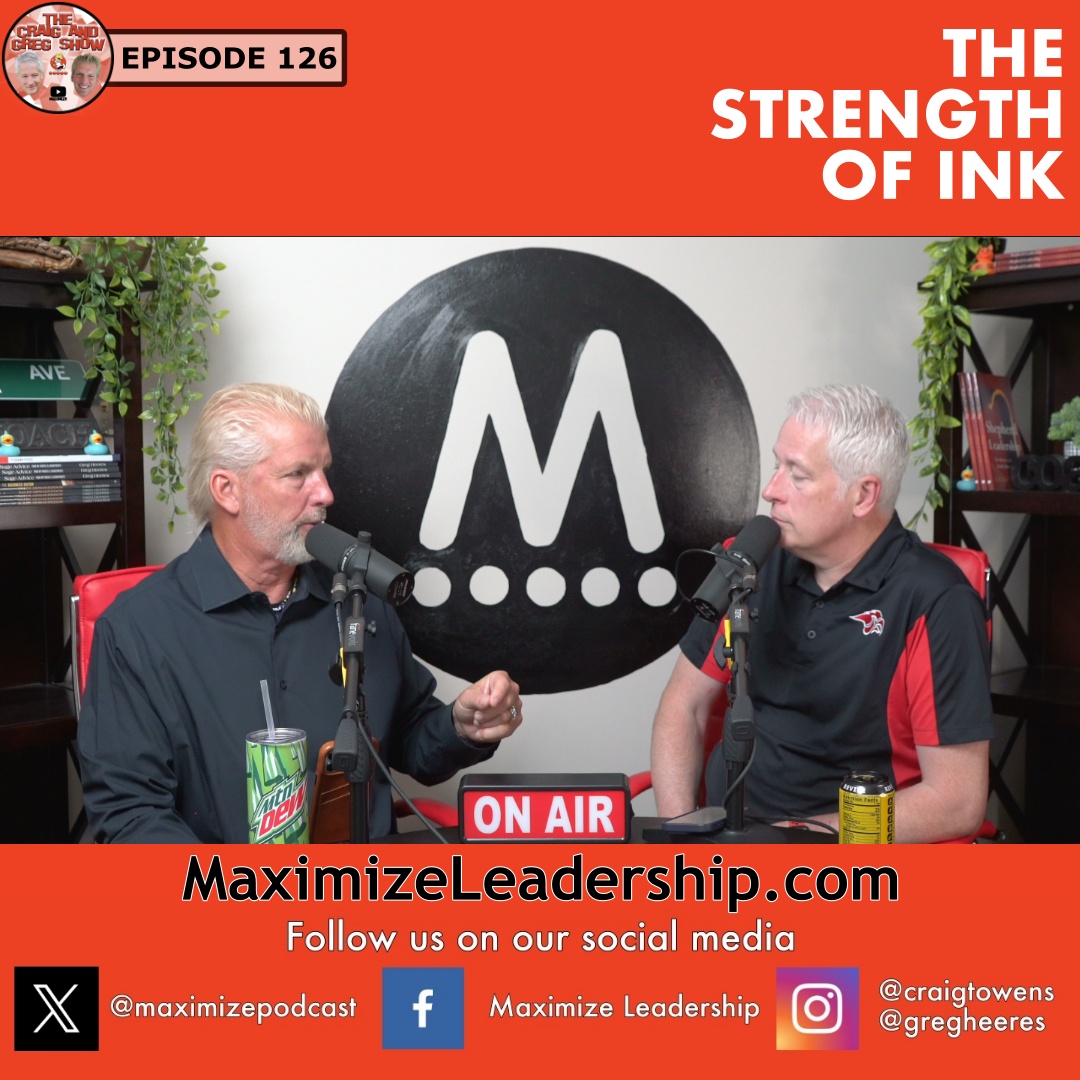
Journaling is more than just something for women in rom-coms, it’s a practice that has been utilized by many important people throughout history. In our country the journals of the Founding Fathers are full of writings that became the basis of the government we still have today. While your journals might not be the beginnings of a new country, they are still a valuable tool that can help enhance your leadership. Join Greg and me as we discuss the leadership-enhancing power of journaling.
[0:00] Introduction
[2:13] Greg highlights some values in journaling.
[3:48] When did I start journaling?
[6:07] Let’s clarify what journaling isn’t.
[7:58] How we can use our journals to leverage our ideas.
[10:16] Writing and thinking are powerfully linked.
[13:07] Greg has an interesting way he discovered to generate thinking points for his journal.
[14:58] History often repeats itself so journals can help us rediscover successful strategies.
[16:22] Journals can help us do new things better.
[18:47] Journaling can help us not get stuck on the busyness treadmill.
[21:27] I share a quote from Tim Tebow.
[23:03] Make journaling work for you.
[24:39] How I turned journal entries into an impactful book.
[25:47] Greg shares a quote about how he journals.



 Whoever claims to live in Him must live as Jesus did. (1 John 2:6)
  The proof of our claims is self-evident. John uses the phrase “this is how we know” 8 times in this letter, and he uses the word “know” another 35 times!