Poetry Saturday—The Praise Of God

FullSizeRenderSpeak, lips of mine! 
And tell abroad 
The praises of my God. 
Speak, stammering tongue! 
In gladdest tone, 
Make His high praises known. 
Speak, sea and earth! 
Heaven’s utmost star, 
Speak from your realms afar! 
Take up the note, 
And send it round 
Creation’s farthest bound. 
Speak, heaven of heavens! 
Wherein our God 
Has made His bright abode. 
Speak, angels, speak! 
In songs proclaim 
His everlasting name. 
Speak, son of dust! 
Thy flesh He took 
And heaven for thee forsook. 
Speak, child of death! 
Thy death He died, 
Bless thou the Crucified. —Horatius Bonar

Book Reviews From 2016

An Angel’s Story (book review)

an-angels-storyReader’s of my blog will know that I seldom read fiction books, but Max Lucado tricked me into reading this one! I read the introduction to An Angel’s Story and thought, “Wow, this is going to be an interesting take on the Christmas story,” and I began reading. But before I realized I was reading a fictional account, I was hooked and had to keep on reading.

I’m so glad I did! 

We often think of the night of Christ’s birth being—as the Christmas carols tell us—a silent night of wonder, a holy night of rejoicing, a festive night of an angel choir singing in the skies above Bethlehem. Indeed this is the picture we get in the Gospels of Matthew and Luke.

However, the book of Revelation tells a different story.

In Revelation, we see the lengths to which the devil and his hoard went to prevent the Advent of Jesus. And we also read about the angels who remain loyal to God battling against the dark forces in the heavens. Max Lucado imagines what this might of have looked like in the unseen spiritual world around Mary, Joseph, and Jesus.

If you’ve ever read anything from Max Lucado, you know that he is a first-class storyteller, and An Angel’s Story is no exception. Believe me: this book will grab your attention, keep you riveted until the very end, and give you a perspective of the night of Christ’s birth like you’ve probably never seen before. 

I highly recommend this book to you!

Poetry Saturday—Everywhere, Everywhere Christmas Tonight

christmas-stockings-and-treeEverywhere, everywhere, Christmas tonight!
Christmas in lands of the fir tree and pine,
Christmas in lands of the palm tree and vine;
Christmas where snow-peaks stand solemn and white,
Christmas where corn-fields lie sunny and bright;
Everywhere, everywhere, Christmas tonight.

Christmas where children are hopeful and gay,
Christmas where old men are patient and gray,
Christmas where peace, like a dove in its flight,
Broods o’er brave men in the thick of the fight;
Everywhere, everywhere, Christmas tonight.

For the Christ-child who comes is the Master of all,
No place too great and no cottage too small;
The Angels who welcome Him sing from the height,
“In the city of David, a King in His might.” 
 Everywhere, everywhere, Christmas tonight.

Then let every heart keep its Christmas within
Christ’s pity for sorrow, Christ’s hatred for sin.
Christ’s care for the weakest, Christ’s courage for right,
Christ’s dread of the darkness, Christ’s love of the light.
Everywhere, everywhere, Christmas tonight.

So the stars of the midnight which compass us round
Shall see a strange glory, and hear a sweet sound,
And cry, “Look! the earth is aflame with delight,
O sons of the morning, rejoice at the sight.” 
Everywhere, everywhere, Christmas tonight. —Phillips Brooks 

Week Of Prayer—Thursday

WOP_2016_Slide_ThuOur week of prayer continues today with this prayer focus for Thursday—

Pray that with absolute trust in God you will say yes in obedience to His direction in your life.

We have been praying the Scriptures all week. For today’s prayer focus, perhaps you could pray something like this:

God, I trust You. Completely. Although at times I have questions, I still trust You. How long, Lord? Will You forget me forever? How long will You hide Your face from me? How long must I wrestle with my thoughts and day after day have sorrow in my heart? How long will my enemies triumph over me? Look on me and answer, O Lord my God. Give light to my eyes, or I will sleep in death, and my enemy will say, “I have overcome him,” and my foes will rejoice when I fall. But I trust in Your unfailing love; my heart rejoices in Your salvation. So I will sing Your praise, for You have been good to me [Psalm 13]. 

But I will extol You at all times; Your praise will always be on my lips. I will glory in You; let anyone around me who is afflicted hear and rejoice. I call out to them, “Glorify the Lord with me; let us exalt His name together.” Because when I cry out to You, You answer me; You deliver me from all my fears. When I keep my eyes on You, my face is radiant. When I call to You, You hear me, and You save me out of all my troubles. Your angels encamp around me, and You deliver me. I have tasted and now I know for myself that You are good. I am blessed when I take refuge in You. Listen to what I have learned: Fear the Lord, you His holy people, for those who fear Him lack nothing [Psalm 34:1-9]. In Jesus’ name, Amen.

6 Facts About Angels

Angels from the realms of gloryAngels play a fairly visible role in the First Advent story. As a result, we can begin to piece together some facts about angels from the biblical accounts. In my series on The Carols Of Christmas, I was looking at Angels From The Realms Of Glory, and there is information about the angels in this carol that is well-support from the Scripture.

  1.  Angels were created before the Earth was created, and they celebrated as God created our universe (Job 38:4-7). The Christmas carol says, “ye who sang Creation’s story now proclaim Messiah’s birth,” which we see in Luke 2:8-14.
  2. Angels are messengers sent from God, and they carry a message from God to turn people toward God (Daniel 10:12; Matthew 1:20-23; Luke 1:11-20, 26-38). In the Christmas carol they remind us to leave our contemplations and “seek the great Desire of nations.”
  3. Angels are not to be worshiped, because they are created beings. Lucifer’s desire to be worshipped is what led to his rebellion against God and expulsion from Heaven (Isaiah 14:13-14). And he still tries to appear today as an angel of light (2 Corinthians 11:14).
  4. Angels long to look into the Gospel that humans can know by personal experience (1 Peter 1:12).
  5. Angels know that Christ’s First Advent is a reminder of His Second Advent (Acts 1:10-11; see also 1 Thessalonians 4:13-18).
  6. We have been given an angelic responsibility to tell others about Christ’s First and Second Advents (notice that the messengers in the churches are called angels in Revelation 2:1, 8, 12, 18; 3:1, 7, 14; 22:16). The carol reminds us that it’s “all creation” (that includes us!) that joins the angels in praising God.

One of the biggest lessons we need to learn from this Christmas carol, and the corresponding verses about angels, is that we aren’t just celebrating the First Advent. We are anticipating and looking forward to the Second Advent as well! 

Next Sunday we will be continuing our look at the rich messages in the familiar Christmas carols. Please join me!

In the video below, we had some slight technical difficulties. But it clears up about the 5-minute mark, so hang in there!

If you have missed any of the messages in our series The Carols Of Christmas, you can find the full list by clicking here.

A Whole New Revelation

The Word and the SpiritHow would you like to have better insight than prophets like David, Isaiah, Jeremiah, Ezekiel or Daniel? How would you like to have a greater revelation of who Jesus is than even in the angels in Heaven? You can!

Peter tells us aliens and strangers how we should live on Earth as citizens of Heaven (1 Peter 1:13-16):

  • Our minds prepared for action
  • Self-controlled (another translation says sober)
  • Fully hopeful of God’s promises
  • Obedient children
  • Not conformed to the world’s standards
  • As holy as God is

If that sounds like a challenging list, it’s because it is a challenging list! But notice an important word that starts verse 13: Therefore. This tells us we must look at what came before the therefore to know how to respond to what comes after the therefore.

In the verses preceding (vv. 10-12) we read about Old Testament prophets and New Testament preachers. But notice the similarities between these two—They both spoke about grace and salvation, and they both spoke with the Holy Spirit’s guidance. The Word of God was inspired by the Holy Spirit, and it is the same Holy Spirit that wants to give you a full revelation of what is in the Word.

The prophets searched carefully, but they never got to see Jesus come to Earth and fulfill the prophesies. The angels in Heaven have seen the story played out, but they don’t know what it is to have received a complete pardon for their sins that would have damned their souls to Hell.

That’s why Spirit-filled Christians who regularly study the Word of God have better insight than the prophets, and greater revelation than the angels!

What about you?

  1. Have you invited Jesus into your heart?
  2. If you have, are you regularly reading your Bible?
  3. If you are, have you allowed God to baptize you in His Holy Spirit?

This combination not only makes you peculiar to Earthlings, it makes you peculiar to prophets and angels too!

If you’ve missed any messages in this series, you may find the complete list by clicking here.

8 Quotes From Horatius Bonar

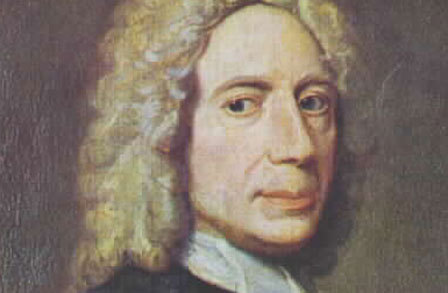
Horatius BonarThere is a series of book by Horatius Bonar called Light And Truth. I am currently reading one of the books in the series as I read through the New Testament in my personal devotional time. Typically I post a book review after I’ve finished a book (which I will do with Light And Truth [update: the review is posted here]), and then I share some quotes from that book. In this case I’m mixing things up a bit: I’m sharing some quotes from the first half of this book today, and then I’ll post a review and more quotes after I finish the book. Enjoy!

(Note: Scripture references appearing in brackets following the quote reflects the passage or verse on which Bonar was commenting.)

“What is at the bottom of all the persecutions of various ages? It is Christ troubling the world. If He would let it alone, it would let Him alone. What means the outcry, and alarm, and misrepresentation, and anger, in days of revival? It is Christ troubling the world. What means the resistance to a fully preached gospel? It is Christ troubling the world. A fettered gospel, a circuitous gospel, a conditional gospel—a gospel that does not truly represent Christ—troubles no man; for in such cases it is another Christ that is announced, and not the Christ, the King of the Jews, that troubled Jerusalem. But a large, free, happy, unconditional gospel, that fully represents Jesus and His grace, Jesus and His completeness, does trouble men. It troubles all to whom it comes, in some measure. Some it troubles and then converts; some it only troubles. … The world’s only hope is to be ‘troubled’ by Christ. … Yet all this troubling is in love. He sounds His trumpet to awake the sleepers.” [Matthew 2:3]

“The Lord ends speaking and begins working; He comes down from the pulpit and enters the hospital. Such is His whole life: words and deeds intermingled; words of health and deeds of health. His lips breathe fragrance, and in His hand is the balm of Gilead. … [The leper] wants to be made clean, and he casts himself on Christ for this. He is the hyssop, the water, the blood, the ashes, the priest, the physician, all in one. Thus we still come, doubting neither the willingness nor the power, yet casting ourselves on the will of the Lord; not presuming to dictate, yet appealing to His sovereign Grace. As the needy, the sick, the unclean, we come; for the whole need not a physician, but they that are sick.” [Matthew 8:1-3]

“It is the voice of authority. It reminds us of Genesis 1:2-3. He speaks as one who knew that He could cure. Not hesitatingly. Nor are the words a prayer, but a command. He speaks, and it is done. … Thus love, authority, and power are all conjoined. It is the voice of Omnipotence. … He is the same Christ still; with the same love, and authority, and power. He is still a Healer, and the worst of diseases fly from His touch and voice. Let us go to Him with all that afflicts us. He calls and He will heal us of all. … Be persuaded to present thyself to Him, just as thou art give this divine Healer thy simple confidence. Take Him for what He is, and He will take thee for what thou art. Thus shalt thou meet in love; thou to be healed, and He to heal; thou to have the joy of being healed, and He to have the joy of healing thee, and to announce to heaven, in the presence of the angels of God, that another leper has been healed!” [Matthew 8:1-3]

“And is not this oftentimes the very point of the difficulty we experience in believing? We cling to the visible, the palpable prop—the human rope which we hold in our hand, unwilling to let go. We speak of our inability to believe; but what is this save our tenacity in holding on to the very things which God asks us to quit? We say that we ‘cannot lay hold’; should we not rather say that we ‘cannot let go’? We complain that we have no power to cling and grasp; whereas it should be that we have no will to let go.”

“As iniquity increases, faith decreases. … As iniquity increases, truth decreases. … As iniquity increases, righteousness and holiness decrease. … As iniquity increases, religion decreases. … As iniquity increases, delight in the things of God decreases. … But the special thing of which Our Lord predicts the decrease is love—love to God, love to himself, love to one another.” [Matthew 24:12]

“Our Lord will come! This is one of the great certainties of the unknown future. He may tarry, but He will come at last. Many obstacles made seem to rise up, but He will come. Men may not desire Him, but He will come. The Church may be cold, but He will come. Earth may think she has no need of Him, but He will come! The scoffer may say, where is the promise of His coming? but He will come. satan may do His utmost to oppose; but He will come. This is the great future certainty which Christ and His apostles have proclaimed to us. Our Lord will come! … The hour is, no doubt, fixed in God’s purpose, but the knowledge of that time is kept from us. They do wrong, then, who try to fix the hour, thus seeking to extract a secret from God. They do wrong who neglect the whole subject because this secret is connected with it. They do wrong who scoff at the whole subject because of the rash attempts or wretched failures of some pretended interpreters of prophecy. Thus, ‘we know,’ and ‘we know not’: we know that He will come, we do not when. … Beware of falling under any influences that would make you indifferent to the Lord’s appearing. Beware of worldly arguments; beware of pretended spiritual arguments; beware of confounding death and Christ’s coming; beware of the errors and seductions of the age.” [Matthew 22:42, 44]

“Ah, does not our faith often thus fail just at this point? We can go to Him for a little thing; we cannot go to Him for a great thing. We count it presumption to expect much. Instead of feeling that the worse the case, the greater the glory to His power and love, we stop short, and cease to expect anything from Him at all. I need not trouble the Master, we say, my case is so desperate; instead of saying, because my case is so desperate, I will trouble Him, I will give Him this opportunity of magnifying His skill and grace.” [Mark 5:36]

“Understand what is passing day by day; interpret events; connect them with the coming of the Son of Man. You see false Christs; you hear a Babel of opinions; you mark the new forms of immorality and infidelity; you are startled with the bold assaults made on Scripture, and on the Christ of God, on His blood, and Cross, and righteousness—connect all these with the coming of the Lord; interpret them as signs of the last days; do not treat them as common things; do not close your eyes upon them; do not be indifferent to them; do not admire them as tokens of intellectual development and human progress. Understand them all according to God’s purpose and mind. Examine them in the light of apostolic teachings and warnings. Be not deceived concerning them. Beware of the strong delusion. … Pray, then, for a needy church, that in all these respects God would visit her; raising her up; reviving her; rekindling her light; reinvigorating her strength; re-adorning her with all gifts and graces; reclothing her in apostolic raiment, and sending her forth to do His work with the old power and success of primitive days. Pray for a needy world. It is blind, and knows it not; poor, and thinks itself rich; foolish, and thinks itself wise. It is doubly needy. It is not aware of the extent of its ruin, and alienation, and depravity; not alive to its danger and hopeless prospects; not anticipating its doom. There is a hardening, and searing, and blinding process going on in connection with ‘modern progress.’” [Mark 13:33]

Poetry Saturday—The Privileges Of The Living

Isaac WattsAwake, my zeal, awake, my love,
To serve my Savior here below,
In works which perfect saints above
And holy angels cannot do.

Awake my charity, to feed
The hungry soul, and clothe the poor:
In heaven are found no sons of need,
There all these duties are no more.

Subdue thy passions, O my soul!
Maintain the fight, thy work pursue,
Daily thy rising sins control,
And be thy victories ever new.

The land of triumph lies on high,
There are no foes t’ encounter there:
Lord, I would conquer till I die,
And finish all the glorious war.

Let every flying hour confess
I gave Thy gospel fresh renown;
And when my life and labor cease,
May I possess the promis’d crown. —Isaac Watts

The Counselor Makes Us Childlike

ChildlikeJesus loved being around kids! In fact, it still is the childlike nature that Jesus wants to see in all of us, and that’s one of the roles of the Holy Spirit as our Counselor.

There is a huge difference between being childish and childlike. Childish is being aware that what you’re doing is foolish; childlike is being innocently unaware.

Jesus was childlike.

  • He knew the kid’s songs in the street—Luke 7:32.
  • He wanted to have lot of kids around Him—Mark 10:14.
  • Most of His teaching examples were basic—farmers, birds, flowers, wedding parties.
  • Some were downright obvious—Matthew 15:16-17.
  • Some of His interactions with His adversaries were playful—Mark 11:27-33.

And when He described the way to Heaven—

He called a little child to Him, and placed the child among them. And He said: “Truly I tell you, unless you change and become like little children, you will never enter the kingdom of heaven. Therefore, whoever takes the lowly position of this child is the greatest in the kingdom of heaven. (Matthew 18:2-4)

Humbly loving God and innocently serving others. Isn’t that the essence of what Jesus taught us the Kingdom of Heaven was? Loving God and loving others in a childlike way.

Here’s how The Counselor trains us to be childlike:

  • Think of everyone as your friendMatthew 5:9, 44.
  • Laugh more often because you have no burdens weighing you downMatthew 11:28-30.
  • Don’t use double entendrés—…be innocent (harmless, guileless, and without falsity)… (Matthew 10:16, AMP).
  • Be fascinated by natureLuke 12:27.
  • Exercise your imaginationMatthew 18:10; Acts 6:15; 7:55-60.

The Counselor will teach us Christ-like childlikeness; He will reprove us when we are too “adult” in our thinking; He will continually correct us when we cross the line into childishness; and He will train us to love God and love others in a childlike way.