Thursdays With Oswald—The Wisdom In Appearing Foolish

Oswald ChambersThis is a weekly series with things I’m reading and pondering from Oswald Chambers. You can read the original seed thought here, or type “Thursdays With Oswald” in the search box to read more entries.

The Wisdom In Appearing Foolish

     A man can kill his own wisdom by living a part; he can atrophy his real life by keeping up a certain role. … It takes a tremendous amount of relationship to God for a man to be what he is. … 

     A wise man who has built his life in confidence in God will appear a fool when he is amongst people who are sleek and cunning. … If you stand true to your faith in God, there will be situations in which you will come across extortioners, cunning, crafty people, who use their wits instead of worshiping God, and you will appear a fool. Are you prepared to appear a fool for Christ’s sake? …

     If you are going to be true to God, you will appear a fool amongst those who do not believe in God, and you must lay your account with this. Jesus said, “Every one therefore who shall confess Me before men…,” and it tests a man for all he is worth to confess Jesus Christ. 

From Shade Of His Hand

Oswald Chambers is referencing Solomon’s words—Extortion turns wise people into fools, and bribes corrupt the heart (Ecclesiastes 7:7).

True wisdom comes from a trusting relationship to God as He is revealed in His Word, which to cunning people “who use their wits instead of worshiping God” sounds like pie-in-the-sky foolishness. Much like satan did with Eve, they will ask you, “Did God really say that?” and you are faced with a decision: will you stand true to God’s wisdom and look like a fool in their eyes?

Jesus said it would take the courage that comes from a sold-out relationship to Him to be able to endure the bribes and barbs of the world’s cunning people.

I pray we can all be wise enough to be willing to appear as fools in the world’s eyes!

Thursdays With Oswald—Living In The Now

Oswald ChambersThis is a weekly series with things I’m reading and pondering from Oswald Chambers. You can read the original seed thought here, or type “Thursdays With Oswald” in the search box to read more entries.

Living In The Now

     Jesus did not use figurative language in talking about the Hereafter. He said: “Let not your heart be troubled”—“My Business is with the Hereafter.” Our business is to live a godly life in the present order of things, and not to push out beyond the durations God has placed as limits. … 

     I have no power to choose whether or not I will take the consequences of my choice; no power to say whether or not I will be born…but I have power to choose which way I will use the times as they come. … 

     Jesus Christ taught a reasonable life on the basis of faith in God—“Be carefully careless about everything saving your relationship to Me. Don’t be disturbed today by thoughts about tomorrow, leave tomorrow alone, and bank in confidence on God’s organization of what you do not see. Yesterday is past, there is no road back to it, tomorrow is not; live in the immediate present, and yours is the life of a child.” … 

     Jesus Christ deliberately chose “the long, long trail”; we choose “the short cut,” and continually go wrong until we understand the meaning of the 23rd Psalm, “The Lord is my Shepherd, He leads me in the right paths.” 

From Shade Of His Hand

In Shade Of His Hand, Oswald Chambers is taking an in-depth look at the book of Ecclesiastes. In chapter 3 of Ecclesiastes, Solomon says there is a time for everything.

Chambers reminds us that we don’t choose the time we will be born, and we don’t choose the time we will die—God alone chooses those. But everything between birth and death is our choice. Jesus taught us that our choices and our level of joy in the moment will be much better if we seek God’s wisdom for all of those choices we make.

Book Reviews From 2016

The Power To Overcome Sexual Temptation

Focus On The Family“It’s not easy to overcome recurring sexual temptation. That’s because sexual sin is, at the most basic level, an illegitimate way of fulfilling a deep and legitimate human need: the need for love and intimacy.” —Focus On The Family

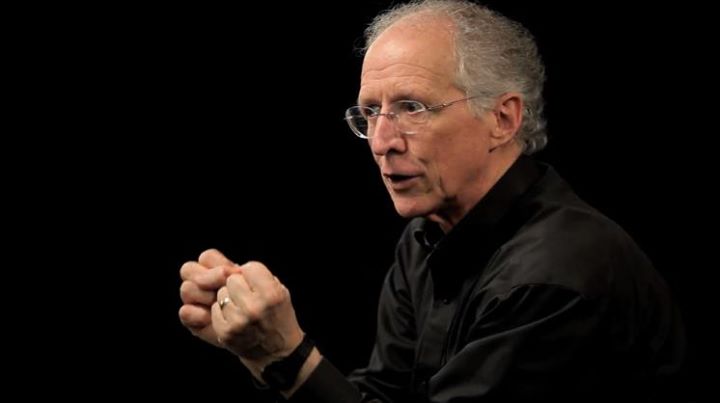
John Piper“Here is the secret of the power of faith to break the enslaving force of sinful attractions. If the heart is satisfied with all that God is for us in Jesus, the power of sin to lure us away from the wisdom of Christ is broken.” —John Piper

144 Buts

144 ButsThe book of Proverbs has so much timely wisdom. Many of the proverbs are presented as the opposite of what pop culture promotes. Nowhere is this more stark than chapters 10-15.

In these six chapters, nearly every verse uses the conjunction BUT to set apart God’s way from the world’s way. In fact, I counted 144 BUTs in these chapters. Clearly there is a lifestyle that God blesses, and a lifestyle that God rejects. 

I would encourage you to read these proverbs for yourself, but let me give you just a taste of what I’m talking about. In chapter 10, the BUTs show us that doing things God’s way leads to:

  • Joy
  • Eternal treasure
  • Honor
  • Blessing
  • Strength
  • Security
  • Peace
  • Unity
  • Wisdom

And doing things the world’s way leads to:

  • Grief
  • Worthless things
  • Disgrace
  • Rot
  • Ruin
  • Insecurity
  • Violence
  • Dissension
  • Foolishness

Or consider the proverbs about our vocabulary from chapter 12:

  • Wicked words are out for blood, BUT upright words rescue (v. 6).
  • Sinful talk ensnares, BUT righteous conversation avoids trouble (v. 13).
  • Truthful words build an honest reputation, BUT a false witness is never trustworthy (v. 17).
  • Reckless words wound, BUT wise words heal (v. 18).
  • Lies are short-lived, BUT the truth wins out (v. 19).
  • God detests lies, BUT He takes delight in those who are truthful (v. 22).

Take some time to study the BUTs in these chapters, and then comment below on what you find.

Links & Quotes

link quote

“satan is real and may have a hand in our calamities, but not the final hand, and not the decisive hand. James makes clear that God had a good purpose in all Job’s afflictions: ‘You have heard of the steadfastness of Job, and you have seen the purpose of the Lord, how the Lord is compassionate and merciful’ [James 5:11]. So satan may have been involved, but the ultimate purpose was God’s, and it was ‘compassionate and merciful.’” —John Piper

“God’s will is determined by His wisdom which always perceives, and His goodness which always embraces, the intrinsically good.” —C.S. Lewis

“Let us never suppose that there is any lack of charity in speaking of hell. Let us rather maintain that it is the highest love to warn men plainly of danger, and to beseech them to ‘flee from the wrath to come.’ It was satan, the deceiver, murderer, and liar, who said to Eve in the beginning, ‘You shall not surely die.’ (Genesis 3:4.) To shrink from telling men, that except they believe they will ‘die in their sins,’ may please the devil, but surely it cannot please God.” —J.C. Ryle

“You aren’t the only person with your skill. But you are the only person with your version of your skill.” —Max Lucado

“There is nothing natural about the Christian life. It is all supernatural. It’s a life dependent upon miracles from the very beginning (including your conversion). And it simply can’t be lived without faith in the supernatural.” —David Wilkerson

It is time for science to detach itself from an atheistic worldview. Douglas Rushkoff states, “By starting with Godlessness as a foundational principle of scientific reasoning, we make ourselves unnecessarily resistant to the novelty of human consciousness, its potential continuity over time, and the possibility that it has a purpose.”

Detroit Tigers fans (like me!) will love this: an interactive map that shows where every Tiger has been born.

John Stonestreet asks, “Why is pop music so angry?” Check out his answer in Bad Blood.

[VIDEO] John Maxwell challenges us to find someone we can inspire this weekend—


Poetry Saturday—The Rock

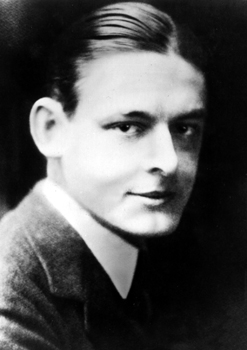
T.S. EliotThe endless cycle of idea and action,
Endless invention, endless experiment,
Brings knowledge of motion, but not of stillness;
Knowledge of speech, but not of silence;
Knowledge of words, and ignorance of the Word.
All our knowledge brings us nearer to our ignorance,
All our ignorance brings us nearer to death,
But nearness to death no nearer to God.
Where is the Life we have lost in living?
Where is the wisdom we have lost in knowledge?
Where is the knowledge we have lost in information?
The cycles of Heaven in twenty centuries
Bring us farther from God and nearer to the Dust. —T.S. Eliot

9 More Quotes From “Our Portrait In Genesis”

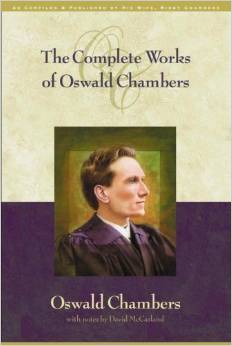
The Complete Works Of Oswald ChambersThere are always way too many quotes for me to share when I’ve finished reading an Oswald Chambers book! Check out my review of Our Portrait In Genesis, in which Chambers is our guide through the book of Genesis. Here is my second helping of quotes from Our Portrait.

“Every time your wits compete with the worship of God you had better take a strong dose of Isaiah 30:15-16—‘In returning and rest shall ye be saved; in quietness and in confidence shall be your strength: and ye would not.’ Beware of restlessness and wits persuading you that God has made a blunder—‘God would never allow me to fall sick after giving me such a blessing’; but He has! No matter what revelations God has made to you, there will be destitution so far as the physical apprehension of things is concerned—God gives you a revelation that He will provide, then He provides nothing and you will begin to realize that there is a famine, of food, or of clothes, or money, and your common sense as well as other people’s says, ‘Abandon your faith in God, do this, and that.’ Do it at your peril. Watch where destitution comes; if it comes on the heels of a time of quiet confidence in God, then thank Him for it and stay starving and He will bring a glorious issue.”

“All the qualities of a godly life are characteristic of the life of God; you cannot imitate the life of God unless you have it, then the imitation is not conscious, but the unconscious manifestation of the real thing. … The life of God has no pretense, and when His life is in you, you do not pretend to feel sweet, you are sweet.”

“The only standard for judging the saint is Jesus Christ, not saintly qualities.”

“Always beware when you can reasonably account to yourself for the action you are about to take, because the source of such clear reasoning is the enthroning of human understanding.”

“The reason we know so little about God’s wisdom is that we will only trust Him as far as we can work things out according to our own reasonable common sense.”

“Beware of obeying anyone else’s obedience to God because it means you are shirking responsibility yourself. … Remember, trust in God does not mean that God will explain His solutions to us, it means that we are perfectly confident in God, and when we do see the solution we find it to be in accordance with all that Jesus Christ revealed of His character.”

“It is in the dark night of the soul that the realization of God’s presence breaks upon us: we never see God as long as, like Esau, we are perfectly satisfied with what we are. When I am certain that ‘in me…dwelleth no good thing,’ I begin to experience the miracle of seeing and hearing, not according to my senses, but according to the way the Holy Spirit interprets the Word of God to me.”

“The true worship of God can only be maintained when the passing moments are seen as occurring in God’s order. If you try to forecast the way God will work you will get into a muddle; live the life of a child and you will find that every haphazard occasion fits into God’s order.”

“The nature of love is to give, not to receive. Talk to a lover about giving up anything, and he doesn’t begin to understand you! Love is not blind; love sees a great deal more than the actual, it sees the ideal in the actual, consequently the actual is transfigured by the ideal. … If you love someone you are not blind to his defects but you see the ideal which exactly fits that one. God sees all our crudities and defects, but He also sees the ideal for us; He sees ‘every man perfect in Christ Jesus,’ consequently He is infinitely patient.”

To read the first set of quotes from Our Portrait In Genesis, click here.

Links & Quotes

link quote

“The reason we know so little about God’s wisdom is that we will only trust Him as far as we can work things out according to our own reasonable common sense.” —Oswald Chambers

“To know God in His glory is to know ultimate reality—defining beauty, goodness, and truth. It is to enter into the heart of reality itself and to glimpse eternity in a most personal, intimate, and loving way. This is what God desires for us, that our hearts might soar within His glory and rejoice in things too wonderful to express.” —T.M. Moore

“My greatest fear in life is standing before the Lord and hearing Him say, ‘I had so much more for you, but you held on too tightly.’” —Larry Burkett

“Give me good proofs of what you have alleged: it is not enough to say—in such a bush there lies a thief—in such a cave a beast; you must show him to me ere I shoot, else I may kill one of my straggling sheep.” —William Shakespeare

“A man must keep his friendship in constant repair.” —Samuel Johnson

Eric Metaxas asks, “Why would a national museum refuse to remove an exhibit honoring one of the leading racists of the 20th century?” Check out his profound answer.

Bear Grylls praying over Barak ObamaThank you, Bear Grylls, for giving us a great example to follow! May we all pray for our President.

Exactly right: Christians cannot stand by and do nothing about these precious people displaced by war.

A very interesting legal look at the Kim Davis situation in Kentucky.

Links & Quotes

link quote

“Are our ears ever open? Are we eager listeners? As ready to hear as God is to speak? Oh, how much we lose of happy wisdom, simply from not listening!” —Horatius Bonar

“It would be a great folly and a great tragedy if a man loved his wedding band more than he loved his bride. But that is what this passage [Romans 1:22-23] says has happened. Human beings have fallen in love with the echo of God’s excellency in creation and lost the ability to hear the incomparable, original shout of love [Psalm 19:1-2].” —John Piper

Charles Spurgeon was a Calvinist, which means he held to the doctrine of predestination, but read how he pulled together both predestination and freewill. “It is a wonderful thing how God effects His purpose while still the creature is free. They who think that predestination and the fulfillment of the divine purpose is contrary to the free-agency of man, know not what they say, nor whereof they affirm. It would be no miracle for God to effect His own purpose, if He were dealing with stocks and stones, with granite and with trees; but this is the miracle of miracles, that the creatures are free, absolutely free, and yet the divine purpose stands. Herein is wisdom. This is a deep unsearchable. Man walks without a fetter, yet treads in the very steps which God ordained him to tread in, as certainly as though manacles had bound him to the spot. Man chooses his own seat, selects his own position, guided by his will he chooses sin, or guided by divine grace he chooses the right, and yet in his choice, God sits as Sovereign on the throne; not disturbing, but still over-ruling, and proving Himself to be able to deal as well with free creatures as with creatures without freedom, as well able to effect His purpose when He has endowed men with thought, and reason, and judgment, as when He had only to deal with the solid rocks and the imbedded sea.” —Charles Spurgeon

Moral truth advocatesJ. Warner Wallace asks, “Are moral truths a product of culture? Can they be explained by purely naturalistic forces?”

[VIDEO] Are you on the wrong side of history? Check out Jonah Goldberg’s insightful commentary on this question—