“One of the greatest curses of the modern evangelical movement, in my opinion, is that we are somehow becoming ‘popular.’ Just as soon as you become popular, something goes out of your life, or more accurately, something has gone out of your life before you get popular.
“Historically, the Christian had to be emphatic. He had two words: yea or nay. When God was talking to him, he said yes, and when the devil was talking to him he said no. When God said, ‘Do this,’ he said, ‘Yes, Lord.’ When sinners tempted him to stray, he said an emphatic no.
“The trouble with us now is that we are double-minded. That is why we are weak. Scripture speaks of the double-minded man. He is ‘unstable in all his ways’ (James 1:8). Elijah illustrated this when he said, ‘How long halt ye between two opinions? If the Lord be God, follow Him: but if Baal, then follow him’ (1 Kings 18:21). We need to be on one side or the other. Wholly committed to our high calling in Christ Jesus.” —A.W. Tozer, in The Wisdom Of God
I’m going to make a statement that might shock some people.
Some of you who have been around Christianity might have heard this before, and you may even mentally agree with it. But even people who mentally agree with it want to add a “Yeah, but…” to it. Or they mentally agree with it but don’t live like it’s true.
Ready? Here it is …
God is for you.
Far too many people mistakenly think God is looking for an opportunity to punish them; He’s trying to catch them doing something wrong; He’s perched on the edge of heaven with lightning bolts of judgment in His hand. God doesn’t want to blast you; He wants to bless you!
Although the word favor appears quite frequently in Scripture, God’s favor is also implied in the word grace, which means God’s unmerited favor.
It’s unmerited because none of us is worthy of God’s favor; it’s not something anyone can earn. We have all sinned, and therefore we’re all worthy of the death penalty. Every single one of us!
I have worshipped idols, I have blasphemed God’s name, I have broken the Sabbath, I have dishonored my parents, I have coveted, I have lied, I have committed adultery, and I have murdered. And so have you (see James 2:10).
Do you understand what Jesus did for us on the Cross? HE SWITCHED PLACES WITH US!
Jesus became my sin, and He made it possible for me to become His righteousness (2 Corinthians 5:21). Check this out:
For God took the sinless Christ and poured into Him our sins. Then, in exchange, He poured God’s goodness into us!
“It was because of His grace that God the Father sent His only Son to die in our place. To say it another way, Christ’s death was the result of God’s grace; grace is not the result of Christ’s death.” —Jerry Bridges
Don’t allow the devil’s lies of your unworthiness keep you from missing out on this truth. All of us are unworthy of God’s favor. But God demonstrated that He was for uswhen Jesus died on the Cross in our place. Now there is no more guilt, no more condemnation, absolutely nothing standing in the way of all of God’s unmerited favor because
This is a weekly series with things I’m reading and pondering from Oswald Chambers. You can read the original seed thought here, or type “Thursdays With Oswald” in the search box to read more entries.
Passion For Souls
You hear people say that Paul showed his wonderful breath of mind, his culture and generosity, his gentleness and patience, by becoming all things to all men [1 Corinthians 9:22]. He did nothing of the sort; he said, “I am become all things to all men” for one purpose only—“that I may by all means save some.” He did not say, “I became all things to all men that I might show what a wonderful being I am.” There is no thought of himself in the whole matter.
The phrase “a passion for souls” is a dangerous one; a passion for souls may be either a diseased lust or a Divine life. Let me give you a specimen of it as a diseased lust—“Woe to you, teachers of the law and Pharisees, you hypocrites! You travel over land and sea to win a single convert, and when he becomes one, you make him twice as much a son of hell as you are” (Matthew 23:15). …
But have we got clearly in our minds what the passion for souls as a Divine life is? Read James 5:19-20: “My brothers, if one of you should wander from the truth and someone should bring him back, remember this: Whoever turns a sinner from the error of his way will save him from death and cover over a multitude of sins.” …
God grant we may understand that the passion for souls is not a placid, scientifically worked-out thing, it compresses all the energy of heart and brain and body in one consuming drive, day and night from the beginning of life to the end—a consuming, fiery, living passion. …
God grant we may understand that the mainspring of our passion for souls must be a personal, passionate devotion to the Lord Jesus Christ.
From Workmen Of God
The root of our passion really does make a difference in our Christian activity. Is my passion to make converts so that people can say, “Look what a good guy he is”? Or is my passion to save a soul from death so that people can say, “Look what a great God He is”?
Fellow Christian, I pray our passion is always the latter.
For other Q&As from this series, check out discussions about the Bible here, and questions about the mark of the beast here, and a question about a Christian losing his/her salvation here.
Our annual Q Series is where folks send their questions to me on a variety of subjects and we do our best to answer them. This week we tackled questions like:
What does Christ’s Parable of the Sower mean?
Can people lose their salvation?
Are micro-chips implanted in humans the start of “the mark of the beast”?
What does “666” stand for?
Why aren’t all of my prayers answered?
Here’s what we discussed, along with the time this discussion appears on the video:
The book of Ecclesiastes in the Bible can be a challenging read for many people. In Shade Of His Hand, Oswald Chambers walks us through this biblical book of wisdom chapter-by-chapter. Shade is a great companion for your personal Bible study time in Ecclesiastes. Check out my full book review by clicking here.
Below are just a few of the many (many!) passages I highlighted in Shade. Some of the longer passages I have already shared in my weekly “Thursdays With Oswald” posts. You can read those by clicking here.
“We always get out of touch with the Bible attitude to things when we come to it with our own conclusions.”
“The intellectual order of life does not take things as it finds them, it makes us shut our eyes to actual facts and try to live only in the ideal world. … Solomon is fearless in facing facts as they are. … It is not a question of living a blind life in the brain away from actuality, not of living in dawns or on mountain tops; but of bringing what you see there straight down to the valley where things are sordid, and living out the vision there.”
“Unless you bank your faith in God, you will not only be wrongly related in practical life and have your heart broken, but you will break other things you touch.”
“Almighty God does not matter to me, He is in the clouds. To be of any use to me, He must come down to the domain in which I live; and I do not live in the clouds but on the earth. The doctrine of the Incarnation is that God did come down into our domain. The Wisdom of God, the Word of God, the exact expression of God, was manifest in the flesh.”
“To serve God in order to gain heaven, is not the teaching of Christianity. Satisfaction cannot be found in gain, but only in a personal relationship to God. … A man is not to serve God for the sake of gain, but to get to the place where the whole of his life is seen as a personal relationship to God.”
“Whenever we put theology or a plan of salvation or any line of explanation before a man’s personal relationship to God, we depart from the Bible line, because religion in the Bible is not faith in the rule of God, but faith in the God Who rules.”
“Sometimes it is cowardly to speak, and sometimes it is cowardly to keep silence. In the Bible the great test of a man’s character is his tongue (see James 1:26). The tongue only came to its right place with in the lips of the Lord Jesus Christ, because He never spoke from His right to Himself. He Who was the Wisdom of God Incarnate, said ‘the words that I speak unto you, I speak not of Myself.’ … We are either too hasty or too slow; either we won’t speak at all, or we speak too much, or we speak in the wrong mood. The thing that makes us speak is the lust to vindicate ourselves.”
“The general history of Christianity is that it has been tried and abandoned because it is found to be difficult; but wherever it has been tried and honorably gone on with, it has never failed.”
“The Christian faith is exhibited by the man who has the spiritual courage to say that that is the God he trusts in, and it takes some moral backbone to do it.”
“We reap terrific damage to our own characters when we vow and do not perform. … Promises are a way of shirking responsibility.”
“It is appalling to find spiritual people when they come into a crisis taking an ordinary common-sense standpoint as if Jesus Christ had never lived or died.”
More quotes from Shade Of His Hand are coming soon…
To me this sounds weird: Jesus grew spiritually strong. Think about that: Isn’t He already God?!
When Jesus came to Earth as a man, the writer of Hebrews says He was made like us humans in every way. So just as you and I have a spiritual health to maintain, so did Jesus while He was on earth.
Dr. Luke noticed this as well when he noted that Jesus grew mentally, physically, spiritually and emotionally. Luke notes His spiritual growth by saying Jesus “grew…in favor with God.” In other words, God was more and more pleased by what He saw developing in His Son.
Yesterday I listened to Pastor Josh Schram explain the parallels between our physical health and our spiritual health. He said that we all know what we need to do to grow physically strong—eat the right food, exercise, get proper rest, and have some way of monitoring our health.
It’s exactly the same way spiritually! We need…
…a good diet—Man does not live on bread alone but on every Word that comes from the mouth of the Lord (Deuteronomy 8:3). Jesus repeated this truth when He was confronted by the devil, and lived it out every day.
“The Bible does not contain chicken nuggets of knowledge, but the whole thing is good to eat.” @schram77
…proper exercise—All the health food in the world won’t do us a bit of good if we just sit around. It’s the same with the Bible: we can read it, memorize it, and talk about it, but if we don’t exercise it we won’t get spiritually fit. Be doers of the Word, and not hearers only (James 1:22).
…the right amount of rest—We can’t be in perpetual “go” mode if we want to be healthy physically or spiritually. Jesus knew the value of rest, and frequently He would “withdraw to deserted places and pray” (Luke 5:16).
…to monitor our progress—James talks about the Word of God being a mirror for us, and Paul advises us to “examine yourselves to see whether you are in the faith” (2 Corinthians 13:5).
But here was the most important takeaway for me in Josh’s message…
Health is not just one big one-time choice. Health is small daily choices.
”Health is not just one big one-time choice. Health is small daily choices.” @schram77
A good question for all of us to ask ourselves: Am I making good daily choices which will help me grow spiritually fit like Jesus.
I so enjoy sharing the teaching duties with a couple of really solid pastors-in-training in our church. They have helped me develop this series called Wholly Healthy, and have taken part in sharing messages in various aspects of this series. Please watch how Josh lays out the plan for our spiritual fitness.
Last week I asked you to imagine how your relationship grew with your best friend. You probably found that this special friendship was formed during hours andhours of talking.
I’m going to guess that at first your conversation was a little on the superficial side. You talked about “tame” topics like sports teams, or your job, or the city you lived in. But at some point you took a huge risk—you became vulnerable by sharing something really personal. Perhaps you shared a time that you got hurt, or something that makes you anxious, or maybe a big dream you carry around in your heart. But if that friend is still your friend, that means they treated what you shared reverently. They didn’t laugh at you, belittle your hurts or dreams, nor did they share with others what you said.
The relationships became deeper and more special because you now knew each other on a more intimate level.
Prayer is a conversation with a Friend. Of course, that Friend is God, so some people wonder, “What do I talk to God about?” The simple answer is anything and everything!
Time and time again God calls us to come closer to Him (see Isaiah 55:1-3), to discuss with Him things we don’t understand (Jeremiah 33:3), or to be assured that He is intimately tuned in to what’s happening in our life (Psalm 139:17; 1 Peter 3:12).
How do we get there? A good place to start is with our Bible. Dwight Moody said:
“The two first and essential means of grace are the Word of God and Prayer. … If we read the Word and do not pray, we may become puffed up with knowledge, without the love that buildeth up. If we pray without reading the Word, we shall be ignorant of the mind and will of God, and become mystical and fanatical, and liable to be blown about by every wind of doctrine.”
Scripture was written to point us to Jesus. So we don’t read the Bible just to read it; we read it to get to know God.
We don’t want to know the Word of God; we want to know the God of the Word.
A great place to start is in the book of the Psalms. Many of these were written as prayers, so it’s a good way to start our conversation with God. You can also search in the New Testament for all the places that biblical writers said, “I pray…” or “This is my prayer….”
I share a personal example of this in this video, especially if you want to fast forward to the 36:00 minute mark.
Don’t just read through the Bible this week—pray through the Bible. Use it as a means to have a conversation with the very Best Friend you could ever know!
I encourage you this week, as you think about this topic, to get together with an earthly friend and discuss these questions:
How can I use my Bible as a “conversation starter” with God?
How can I get into the regular practice of talking to God as a Friend?
I would like for you to get a really clear picture in your mind of your best friend. This is someone you have opened your heart to, and they have opened their heart to you as well. This is the friend that encourages you when you’re down, but never when you’re on a self-destructive path. This is the companion that cries with you when something is broken, but who also challenges you to accept responsibility if you are the one who broke it.
Do you have that friend clearly in mind?
Now I’d like you to imagine if your interaction with your friend went something like this. Every day around 7 o’clock in the morning, you call your friend and say…
“Good morning! I’m so grateful you took my call. Listen, I’ve got a few things that I’d love for you to help me with today. I’ve been fighting a cold and I’d really like you to help me feel better. My Aunt Sally is in the hospital, and it would be great if you could stop in to see her. Also, that guy at work has really been on my nerves lately and so I need some insight on how to deal with that. It would so great if you could help me with all of this. If you do, I’ll be singing your praises to everyone I meet. Have a great day. Thanks!”
And then you hang up and never talk to your friend again until the next morning when the exact same scenario is repeated. How do you think your relationship would progress? Do you see your relationship getting deeper over time, or becoming more distant? I’m guessing that, like me, you don’t see a future in this relationship.
Sadly, this is how many people treat prayer! We come to God once a day with our list of concerns, ask Him for His help, then say “goodbye” and never think about Him again until the next day. Or until we find ourselves in desperate need.
But we forget: God never leaves us!
We also forget something even more vital—God wants us to talk with Him, and He wants to talk with us, as a friend to a friend.
Abraham was called a friend of God—Abraham believed God, and it was credited to him as righteousness, and he was called God’s friend (James 2:23).
Moses, too, was also God’s friend—The Lord would speak to Moses face to face, as one speaks to a friend (Exodus 33:11).
This isn’t something that was just for them, but it’s relationship that’s available for ALL of us—For since our friendship with God was restored by the death of His Son while we were still His enemies, we will certainly be saved through the life of His Son. So now we can rejoice in our wonderful new relationship with God because our Lord Jesus Christ has made us friends of God (Romans 5:10-11).
From the moment we accepted Jesus as our Lord and Savior, His Holy Spirit took up residence in our heart. Before Jesus ascended to Heaven, He promised us, “I will talk to the Father, and He’ll provide you another Friend so that you will always have someone with you. This Friend is the Spirit of Truth” (John 14:16).
Amazing! Astounding! Mind-blowing! But totally true—Prayer is conversation with a Friend!
How would your day go differently if you kept up a conversation with your Best Friend all day long? How much more wisdom do you think you would receive? How many mistakes could you avoid if He was telling you which way to go and what to say?
You don’t have to live with the “what ifs.” He IS your constant Companion, your most loyal Friend, your wisest Counselor. All you have to do is keep the lines of conversation open!
Application questions:
How can I know God wants to be my Friend?
Have I been introduced to God?
How can I make the time to deepen my friendship with God?



 “One of the greatest curses of the modern evangelical movement, in my opinion, is that we are somehow becoming ‘popular.’ Just as soon as you become popular, something goes out of your life, or more accurately, something has gone out of your life before you get popular.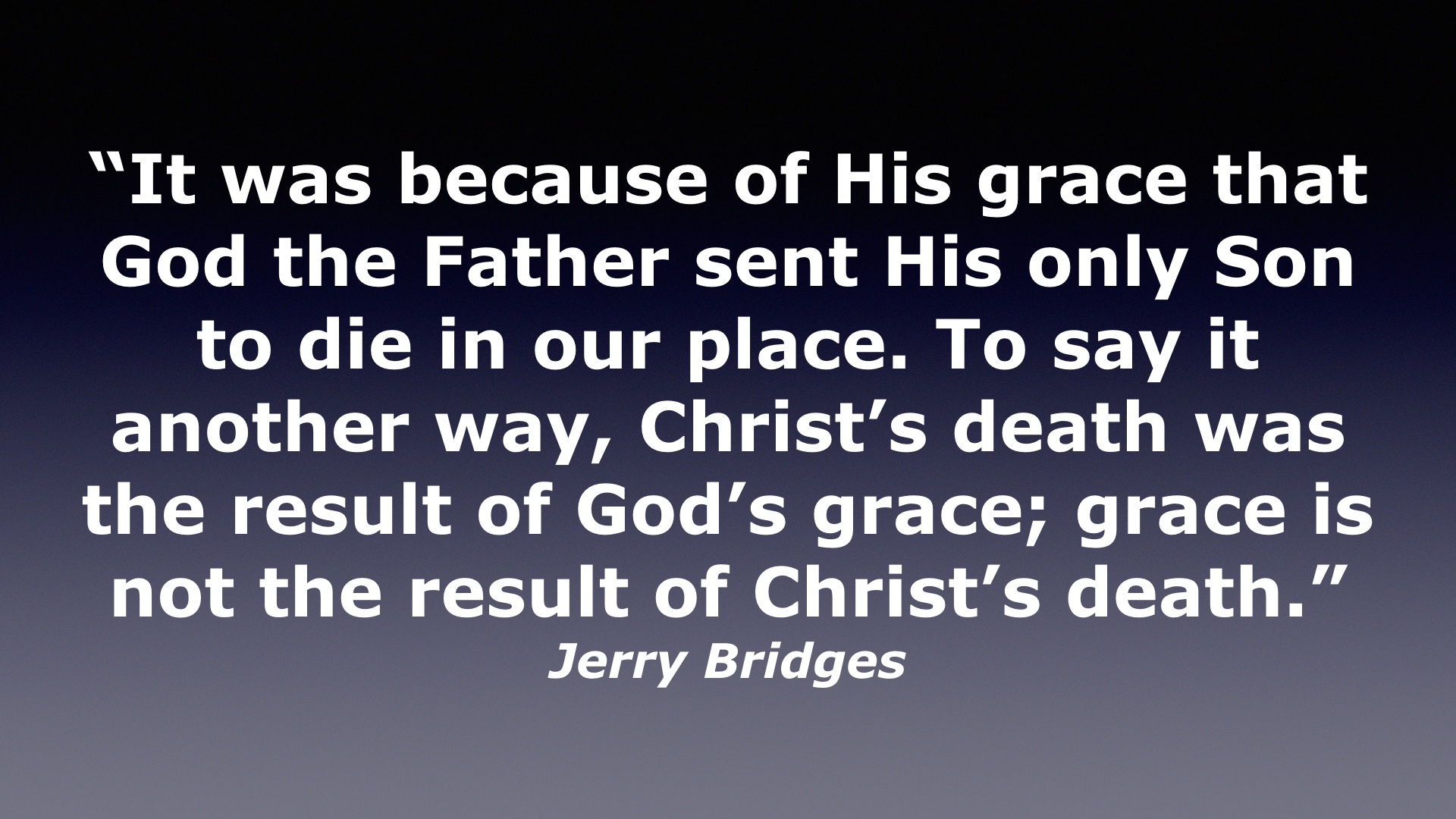








The Q Series—Parables, End Times, And Prayer
August 21, 2017 — Craig T. OwensHere’s what we discussed, along with the time this discussion appears on the video:
We will be answering your questions one more time next Sunday. Please click here to find all the ways you can submit your questions.
Share this: