A Lost Culture Of Reverence

Listen to the podcast of this post by clicking on the player below, and you can also subscribe on AppleSpotify, or Audible. 

There are several psalms that are regal in their focus—talking about the King’s coronation, or the King ruling on His throne, or the ultimate victory of the King that is coming in the future. Although these royal psalms are extolling God as King, many of these psalms use King David as an object lesson. The idea is seeing how a man after God’s heart (1 Samuel 13:14) became the standard by which all other kings were measured: 

  • Asa did what was right in the eyes of the Lord, as his father David had done (1 Kings 15:11) 
  • Amaziah did what was right in the eyes of the Lord, but not as his father David had done (2 Kings 14:3) 
  • Unlike his father, Ahaz did not do what was right in the sight of the Lord, as his father David had done (2 Chronicles 28:1) 

(Check out all of the Scriptures in this post by clicking here.)

The people followed their king in both righteousness and evil. They were fiercely loyal to their monarch. We don’t really get that loyalty today. “We’re Americans,” we cry, “We live in the land of the free and don’t ever bow our knee to a king!” 

That’s an appropriate response for those living in a democratic republic, but we would do well to learn to bow our knee to a true King. 

After the United States Constitution was adopt adopted, Elizabeth Willing Powel asked Benjamin Franklin, “Well, Doctor, what have we got, a republic or a monarchy?“ Franklin replied, “A republic, if you can keep it.” Franklin went on to say, “In these sentiments, Sir, I agree to this Constitution, with all its faults, if they are such; because I think a General Government necessary for us, and there is no form of government, but what may be a blessing to the people if well administered; and believe further, that this is likely to be well administered for a course of years, and can only end in despotism, as other forms have done before it, when the people shall become so corrupted as to need despotic government.” 

Because of our defiance as free people in our government, we have become lacking in our loyalty, which shows itself in a lack of proper reverence or respect. Just listen to how people talk so disrespectfully or even hatefully about those in “the other political party.” Benjamin Franklin also said, “Only a virtuous people are capable of freedom. As nations become corrupt and vicious, they have more need of masters.” 

Where are the days of the armor bearer who said to Prince Jonathan, “Do all you have in mind. I’m with you heart and soul,” even though Jonathan was proposing an impossible task? Or the loyalty of the men around David who heard him sigh about the water in Bethlehem, and they put their lives at risk to bring him a drink? This was even before he was on a throne, and yet they showed their loyalty to him. I fear that our lost culture of reverence for earthly leaders has eroded our reverence for the King of kings, and vice versa. 

The first royal psalm (Psalm 2) practically open the Psalter. This psalm calls us to consider the differences between earthly kings and the King of kings.  

Notice that earthly kings “conspire”—they angrily boast and rage. They plot (v. 1b) and scheme (AMPC). They take their stand together (v. 2). 

Against Whom? Against the LORD (Jehovah) and against His Anointed One (the Messiah)! 

Much like the fiercely independent people I described us as earlier, these earthly rulers want to call their own shots—they don’t want to take directions from anyone else because they think they know best (v. 3). But notice in v. 1 that the peoples have followed their leaders in their plot. 

God doesn’t rage at them, but He laughs, He scoffs, He rebukes, and the people are terrified when they realize that they cannot overcome Him. In v. 1 we see their plots are “in vain.” 

There is nothing men can do—no matter how powerful they may seem or how many of them “take their stand…together”—to thwart or even delay the plans of Jehovah. 

All of History is His Story. Notice the phrase that God speaks, “I have … I will” (in vv. 6-7; c.f. Daniel 4:25). 

In vv. 7-9 God speaks to His Son—the Messiah, the Anointed One, the King of kings. We hear this repeated in Acts 13:32-33 and in God’s own voice in Matthew 3:17. Then we see the fulfillment of this in passages like Philippians 2:9-11 and Revelation 11:17-18. 
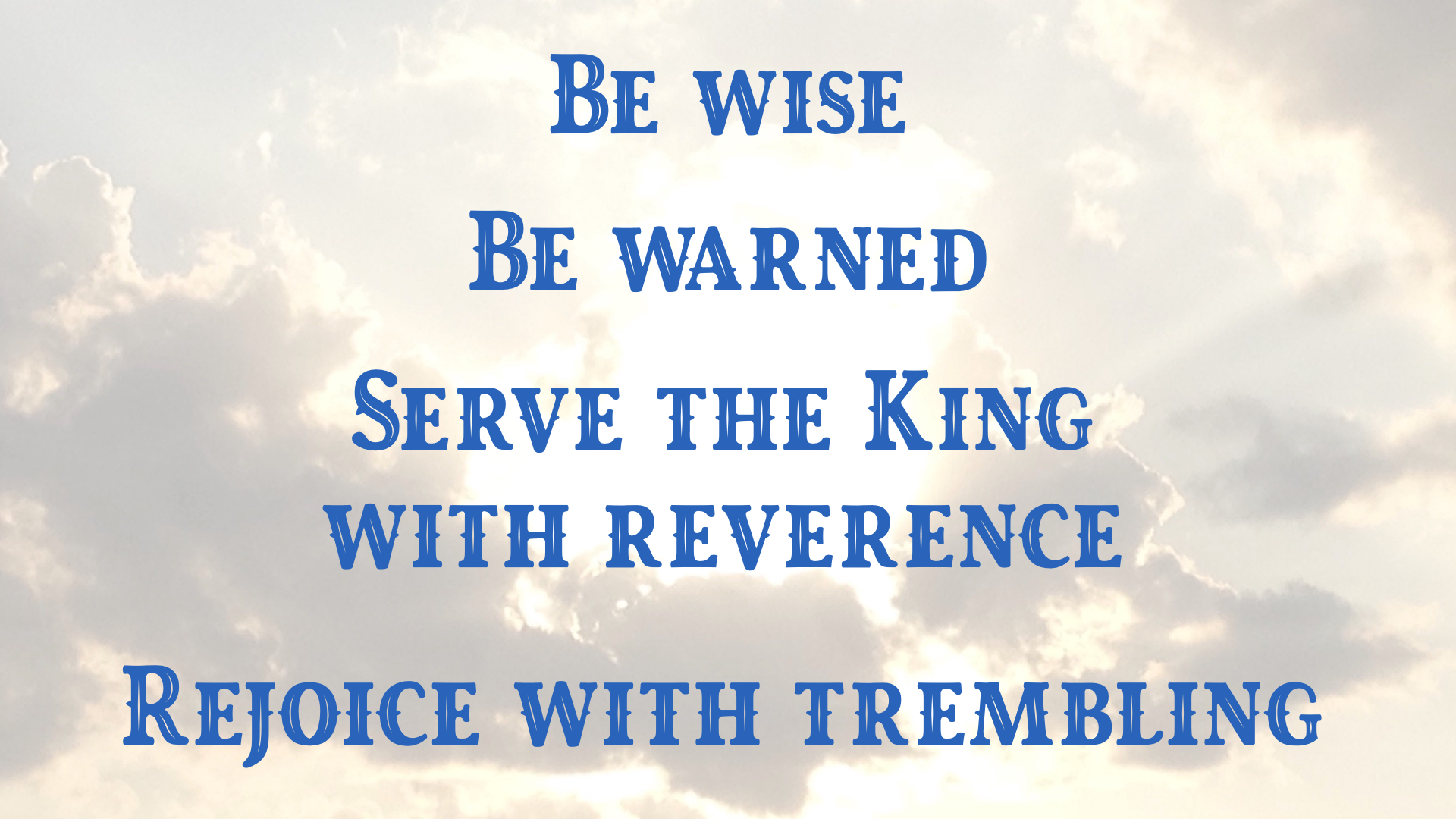
This royal psalm ends with an important conclusion: Therefore (vv. 10-12): 

  • Be wise 
  • Be warned 
  • Serve the King with reverential fear 
  • Rejoice with trembling  
  • Kiss the Son with absolute loyalty and joyful reverence 

Check out another “therefore” in Philippians 2:12-16. This is a call for righteous, reverent living for those who have acknowledged Jesus as their King. It’s only those who live this way who will know the blessed refuge in Him that is unshakable for ever and ever! 

Follow along with our look at all of the royal psalms by clicking here. 

►► Would you please prayerfully consider supporting this ministry? My Patreon supporters get behind-the-scenes access to exclusive materials. ◀︎◀︎

Links & Quotes

This is just one example of the power of a leader’s storytelling. Check the full conversation Greg and I had on The Craig And Greg Show. I have lots of new content every week, which you can check out on my YouTube channel.

“We are all born ignorant, but one must work hard to remain stupid.” —Benjamin Franklin

George Jeffreys was born with a limiting speech impediment, but with the empowering of the Holy Spirit, George and his brother Stephen led incredible Pentecostal revivals in England and Wales. They were said to be the greatest evangelists since George Whitefield and John Wesley. Someone asked Jeffreys how long a revival should last, and he responded, “Thank God, a revival started in my heart 30 years ago, and it has never stopped; it will never end.” He continued by saying, “As long as Jesus is kept in the front, and made the center of fellowship and blessing and unity, the revival will never end.” Check out this mini biography about his life.

John Stonestreet uses the example of C.S. Lewis’ Aslan to talk about how God can speak to us through our pain. John writes, “Pain is never the point of God’s plans, any more than it is the purpose of physical exercise. Never pushing ourselves to the point that it hurts means never improving our health. On the other hand, seeking pain is more likely to do harm than to aid our wellbeing. In and of itself, pain is not good, but it is meaningful. Pain indicates that something is wrong and needs to be addressed.”

“The best way to make a dream come true is to wake up.” —Dame Anna Wintour

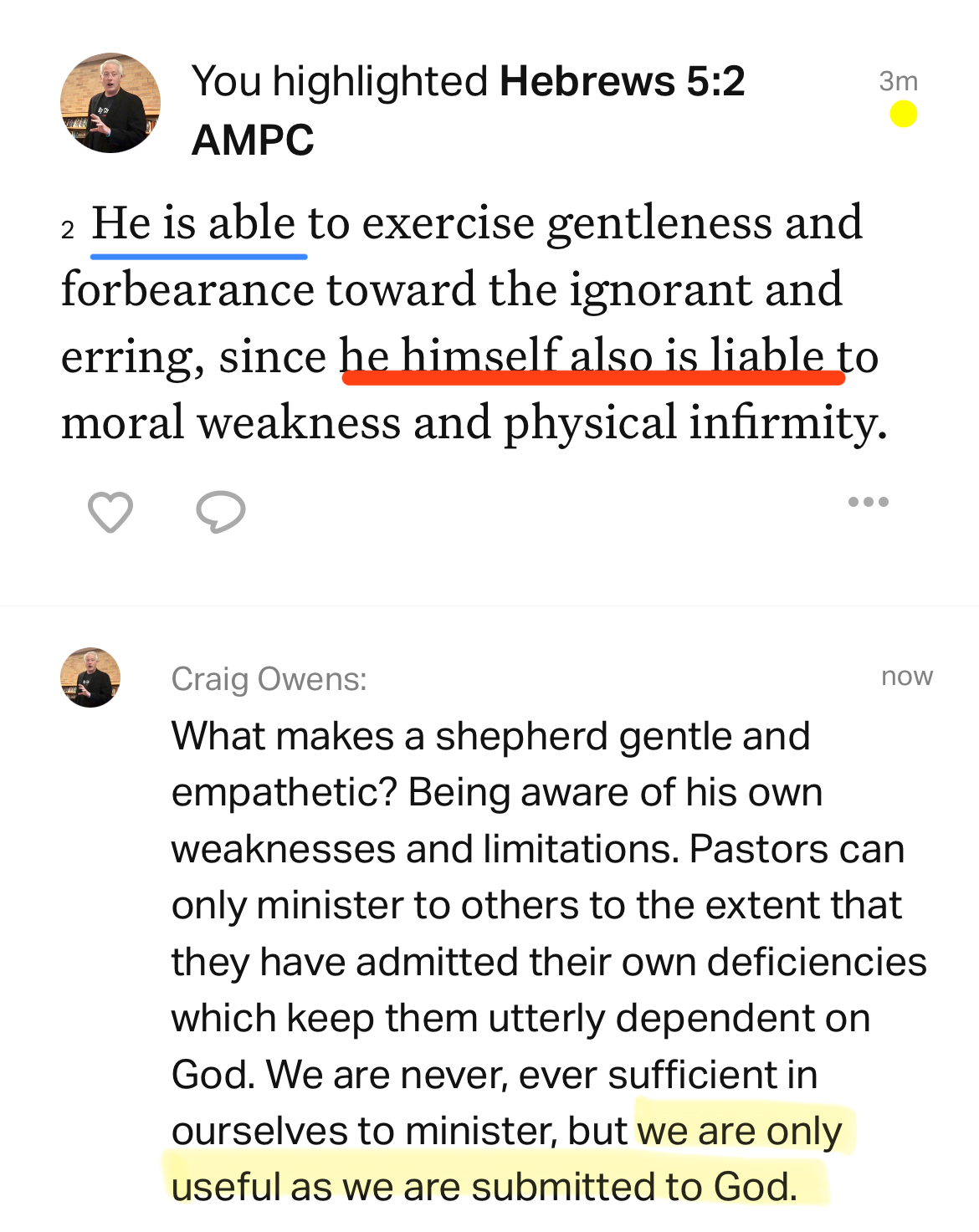
Because of the extensive prayer, research, and work I put into my book Shepherd Leadership, I am frequently drawn to passages of Scripture that reinforce the idea of pastors as shepherds. I was meditating on Hebrews 5:2 the other day, and I shared some of my thoughts with some of my pastor friends.

7 Quotes From “Faith Of Our Founding Fathers”

Parents, please download a FREE copy of this book to help educate your children on the biblical faith that informed the decisions of our Founding Fathers (link in the book review). You can read my complete book review of Faith Of Our Founding Fathers by clicking here. 

“The Bible is the best of all books, for it is the word of God, and teaches us the way to be happy in this world and in the next. Continue therefore to read it, and to regulate your life by its precepts.” —John Jay 

“Only a virtuous people are capable of freedom. As nations become corrupt and vicious, they have more need of masters.” —Benjamin Franklin 

“While we are zealously performing the duties of good Citizens and Soldiers we certainly ought not to be inattentive to the higher duties of Religion. To the distinguished Character of Patriot, it should be our highest Glory to add the more distinguished Character of Christian.” —George Washington 

“In this situation of this assembly, groping as it were in the dark to find political truth, and scarce able to distinguish it when presented to us, how has it happened, sir, that we have not hitherto once thought of humbly applying to the Father of lights, to illuminate our understandings? … I have lived, Sir, a long time; and the longer I live the more convincing Proofs I see of this Truth, That God governs in the Affairs of Men! And if a Sparrow cannot fall to the Ground without His Notice, is it probable than an Empire can rise without His Aid?—We have been assured, Sir, in the Sacred Writings, that ‘except the Lord build the House, they labor in vain that build it.’ I firmly believe this; and I also believe that without His concurring Aid we shall succeed in this political Building no better than the Builders of Babel…. I therefore beg leave to move, That henceforth Prayers, imploring the Assistance of Heaven, and its Blessing on our Deliberations, be held in this Assembly every Morning before we proceed to Business.” —Benjamin Franklin 

“And can the liberties of a nation be thought secure when we have removed their only firm basis, a conviction in the minds of people that these liberties are of the gift of God? That they are not to be violated but with His wrath? Indeed, I tremble for my country when I reflect that God is just; that His justice cannot sleep for ever….” —Thomas Jefferson 

“The diminution of public virtue is usually attended with that of public happiness, and the public liberty will not long survive the total extinction of morals.” —Samuel Adams 

“Neither the wisest constitution nor the wisest laws will secure the liberty and happiness of a people whose manners are universally corrupt.” —Samuel Adams

10 More Quotes From “When A Nation Forgets God”

Erwin Lutzer shares valuable history lessons in his book When A Nation Forgets God. In this book, he reveals some scary parallels between Nazi Germany and the current trends in the United States. To help bolster his case, Dr. Lutzer shares many historical quotes. Here are a few of them.

“The gas chambers of Auschwitz were the ultimate consequence of the theory that man is nothing but the product of heredity and environment—or as the Nazis like to say, ‘Of blood and soil.’ I’m absolutely convinced that the gas chambers of Auschwitz, Treblinka, and Maidanek were ultimately prepared not in some ministry or other of Berlin, but rather at the desks and in the lecture halls of nihilistic scientists and philosophers.” —Victor Frankl, psychologist and Holocaust survivor

“It would be misleading to give the impression that the persecution of Protestants and Catholics by the Nazi state tore the German people asunder or even greatly aroused the vast majority of them. It did not. A people who had so lightly given up their political and cultural and economic freedoms were not, except for a relatively few, going to die or even risk imprisonment to preserve freedom of worship.” —William Shirer, in The Rise And Fall Of The Third Reich

“Any society that would give up a little liberty to gain a little security will deserve neither and lose both.” —Benjamin Franklin

“We all declare for liberty; but in using the same words we do not all mean the same thing. With some the word liberty may mean for each man to do as he pleases with himself, and the product of his labor; while with others the same word may mean for some men to do as they please with other men, and the product of other men’s labor. Here are two, not only different, but incompatible things, called by the same name—liberty. And it follows that each of the things is, by the respective parties called by two different and incompatible names—liberty and tyranny.” —Abraham Lincoln

“This generation is not accidental; each step logically follows from what has preceded: the loss of the Bible leads to the loss of God, for in the Bible God is most clearly revealed; the loss of God leaves man at the naked mercy of his fellows, where might makes right.” —John Warwick Montgomery

“How fortunate for governments that the people they administer don’t think!” —Adolf Hitler

“Create a critical mass of people who cannot discern meaning and truth from nonsense, and you will have a society ready to fall for the first charismatic leader to come along.” —Richard Terrell

“The desire to believe something is much more persuasive than rational argument.” —Winston Churchill

“The magnitude of a lie always contains a certain factor of credibility, since the great masses of the people in the very bottom of their hearts tend to be corrupted rather than consciously and purposely evil, and that, therefore, in view of the primitive simplicity of their minds, they more easily fall a victim to a big lie than to a little one, since they themselves lie in little things, but would be ashamed of lies that were too big.” —Adolf Hitler, in Mein Kampf

“There is no problem in the wider culture that you cannot see in spades in the Christian Church. The rot is in us, and not simply out there. And Christians are making a great mistake by turning everything into culture wars. It’s a much deeper crisis.” —Os Guinness

You can read my review of When A Nation Forgets God by clicking here. And I also shared some quotes from Dr. Lutzer, which are posted here.

5 Quotes For The New Year

cto-low-expectations“God, forgive us for expectations of You that are too low.” —Craig T. Owens

“I am the God of unlimited creativity; expect Me to do surprising things in this year that stretches out before you.” —Jesus (from Sarah Young’s Jesus Always)

“Be always at war with your vices, at peace with your neighbors, and let each new year find you a better man.” —Benjamin Franklin

“Of all persons the Christian should be best prepared for whatever the New Year brings. He has dealt with life at its source. In Christ he has disposed of a thousand enemies that other men must face alone and unprepared. He can face his tomorrow cheerful and unafraid because yesterday he turned his feet into the ways of peace and today he lives in God. The man who has made God his dwelling place will always have a safe habitation.” —A.W. Tozer

“Real peace is knowing that no matter what I do, God will never stop loving me. Real peace is knowing that no matter what happens, God will never leave me alone. He’ll always be with me. Real peace means that no matter what happens in the New Year, or in the years to come, I know that God is going to give me the strength to handle it. Real peace is living by God’s Word, the Bible, so I can avoid a lot of the needless hang-ups and hurts and habits that mess up my life.” —Rick Warren, in On This Holy Night

Useful Maxims (book review)

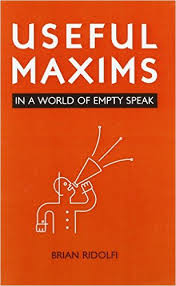
Useful MaximsKing Solomon had his maxims—Wounds from a friend can be trusted, but an enemy multiplies kisses. Benjamin Franklin had his maxims—A stitch in time saves nine. And now Brian Ridolfi gives us a book of fresh Useful Maxims.

Maxims are short, catchy, and very memorable; a brief, succinct statement that captures profound wisdom in a way that’s easy to recall at the appropriate time. Parents, teachers, pastors, and coaches have all sought ways to get their message across to their young charges, and have those messages come back to the forefront of their mind at crucial moments. This is where an appropriate maxim can be so helpful.

Useful Maxims is organized in broad chapter headings, and then the individual maxims are grouped together in various sub-headings throughout each chapter. Most of them are short—He who exalts himself halts himself—but occasionally Brian shares a short parable along with its memorable meaning.

If you are involved with instructing others, and want to find a way to have your point “stick” in their memory, Useful Maxims will become an invaluable, go-to tool for your lesson plans.

Book Reviews From 2015

A Sketch Of The Life And Labors Of George Whitefield (book review)

A Sketch of the Life and Labors of George WhitefieldI recently read a fascinating book about the intertwining lives of Benjamin Franklin and George Whitefield. In some follow up reading, I was somewhat shocked to discover how many people in the church vilified Whitefield! In less than a century following Whitefield’s death, many pastors in the Church of England were badmouthing him.

J.C. Ryle, and eminent scholar, theologian and pastor, decided to take another look at Whitefield’s life and ministry, to try to offer an unbiased view. Whitefield died in 1770, and just 77 years later Ryle presented a paper, later turned into the book A Sketch Of The Life And Labors Of George Whitefield, which explored the evangelist’s life and lasting impact.

Ryle was no Whitefield apologist, but when he calmly and rationally presented the facts of what God had accomplished through Whitefield’s tireless ministry, Ryle concluded: “After calm examination, I have come to the conclusion that Whitefield was one of the most powerful and extraordinary preachers the world has ever seen. My belief is, that hitherto he has never been too highly estimated, and that, on the contrary, he does not receive the credit he deserves.” And, “The plain truth is, the Church of England of that day was not ready for a man like Whitefield. The church was too much asleep to understand him.”

This is not a very lengthy book, but it is a very enjoyable read. History buffs—especially those who enjoy church history—will find much to like in this brief study.

14 Quotes From “The Printer And The Preacher”

The Printer And The PreacherI loved this book! It’s a great historical story of how Benjamin Franklin and George Whitefield’s lives intertwined at such a pivotal time in history. America exists the way it does politically and religiously today because of the influence of these two titans. You can read my full book review here. Below are a few quotes from this remarkable book.

“The Faith you mention has doubtless its use in the world…. But I wish it were more productive of good works than I have generally seen it: I mean real good works, works of kindness, charity, mercy, and public spirit; not a holiday-keeping, sermon-reading or hearing, performing church ceremonies, or making long prayers. … Your great Master thought much less of these outward appearances and professions than many of His modern disciples. He preferred the doers of the Word to the mere hearers…and those who gave food to the hungry, drink to the thirsty, raiment to the naked, entertainment to the stranger, and relief to the sick.” —Benjamin Franklin, in a letter to pastors

There are many who “perhaps fear less the being in Hell, than out of the fashion.” —Benjamin Franklin

“The alteration in the face of religion here is altogether surprising. Never did the people show so great a willingness to attend sermons, nor the preachers greater zeal and diligence in performing the duties of their function. Religion is become the subject of most conversations. No books are in request but those of piety and devotion; and instead of idle songs and ballads, the people are everywhere entertaining themselves with Psalms, hymns and spiritual songs. All of which, under God, is owing to the successful labors of the Reverend Mr. Whitefield.” —Benjamin Franklin, in a newspaper article

The Body of
B. Franklin
Printer;
Like the Cover of an old Book,
Its Contents torn out,
And stript of its Lettering and Gilding,
Lies here, Food for Worms.
But the Work shall not be wholly lost:
For it will, as he believ’d, appear once more,
In a new& more perfect Edition,
Corrected and Amended
By the Author. —Benjamin Franklin, the Epitaph he wrote for himself at age 22

“I have seen your Epitaph. Believe on Jesus, and get a feeling possession of God in your heart, and you cannot possibly be disappointed of your expected second edition finally corrected, and infinitely amended.” —George Whitefield 

“You blame me for weeping, but how can I help it when you will not weep for yourselves, though your immortal souls are on the verge of destruction?” —George Whitefield

Those who hear the gospel “have more need of heat than light. Would to God we had as much warmth in our hearts, as light in our understandings!” —George Whitefield

“If we are truly converted, we shall not only be turned and converted from sinful self, but we shall be converted from righteous self. That is the devil of devils: For righteous self can run and hide itself in its own doings, which is the reason self-righteous people are so angry with gospel preachers.” —George Whitefield

“Let your practice correspond to your profession.”—George Whitefield

“Oh pray, dear Mr. H., that God would always keep me humble, and fully convinced that I am nothing without Him, and that all the good which is done upon earth, God doth it Himself.” —George Whitefield, in a letter to Gabriel Harris, when his popularity was growing

“Will it not in the end destroy brotherly love, and insensibly take from us that cordial union and sweetness of soul, which I pray God may always subsist between us? … How glad would the enemies of the Lord be to see us divided? How many would rejoice, should I join and make a party against you? And in one word, how would the cause of our common Master every way suffer by our raging disputes about particular points of doctrines? … I write not this, honored Sir, from heat of spirit, but out of love. At present, I think you are entirely inconsistent with yourself, and therefore do not blame me, if I do not approve of all that you say.” —George Whitefield, in correspondence with John Wesley over doctrinal differences

“I find that you grow more and more famous in the learned world. As you have made a pretty considerable progress in the mysteries of electricity, I would now humbly recommend to your diligent unprejudiced pursuit and study the mystery of the new-birth. It is a most important, interesting study, and when mastered, will richly answer and repay you for all your pains. One at Whose bar we are shortly to appear, hath solemnly declared, that without it, ‘we cannot enter the kingdom of heaven.’ You will excuse this freedom. I must have aliquid Christi [something of Christ] in all my letters.” —George Whitefield, in a letter to Benjamin Franklin

“satan is angry. I am now mimicked and burlesqued upon the public stage. All hail such contempt! God forbid that I should glory, save in the Cross of Jesus Christ.” —George Whitefield, in a letter after a play was produced in London making fun of him

“Whitefield and Franklin were not just the two most famous people in America in their time—they were also the most significant. The effects of their lives and their work are still being felt today … If America was born as a Christian nation, it’s because many of its people were genuinely, powerfully Christians. It had less to do with the language in any founding documents and more to do with the fact that George Whitefield had been tromping from town to town, inviting people to hear the call of God. It had even less to do with church membership. God was grabbing lives. People’s hearts were flying open. No one was imposing Christianity on society. The power came from within.” —Randy Peterson

The Printer And The Preacher (book review)

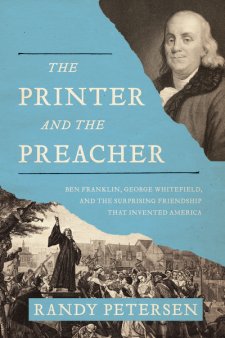
The Printer And The PreacherRandy Peterson has written an amazing story of the unlikely friendship between two men who loom large in history: Benjamin Franklin and George Whitefield. The book is called The Printer And The Preacher: The Surprising Friendship That Invented America.

These men were arguably the first celebrities in the American colonies. They each achieved their level of fame in totally different professions, and yet their paths continue to cross time and time again, until a 30-year-long friendship ensued. Each of them was instrumental in sharpening the other in their craft, promoting their pursuits, and defending each other’s reputations. And perhaps most notably, together they became pivotal in the build-up to America’s independence both politically and religiously.

In concluding this very enjoyable book, Peterson writes—

“Like George [Whitefield], we are, as a nation, very religious. Like Ben [Franklin], we like to make up our own beliefs. About half of Americans call themselves evangelical, children of the Great Awakening. Many even use George’s favorite term: born again. But others do not share this faith. Many, like Ben, are scientific in their outlook. They take an ‘enlightened’ approach to life, focusing on the natural world, not the supernatural.

“We are George and Ben.

“Thanks to Ben and others, we have religious liberty carved into our Constitution. We have freedom to be religious or not to be. We can be Methodists, Calvinist, Catholic, deist, Pietist, or all of the above. No authority can coerce us to believe anything or force us to say we do. Spiritual life is a personal matter, a transaction between us and God. George and Ben both taught us this.

“We are still figuring out how religious freedom works. As a nation, we seem to vacillate between Ben and George, skeptic and zealot, the right to doubt and the right to believe. The question in our deeply divided country is how to preserve the freedom to live without a vibrant Christian faith as well as the freedom to choose something else. The relationship between these two forefathers points to an answer.”

This book will appeal to so many people: history buffs, pastors, scientists, leaders, politicos, and biography readers. I highly recommend it!

I am a Thomas Nelson reviewer.