Listen to the podcast of this post by clicking on the player below, and you can also subscribe on Apple, Spotify, or Audible. Check out the video content in this post by clicking here.
Being the new leader of an organization is a difficult task. It doesn’t matter if you’re a first-time leader or have decades of leadership experience, you’re still “the new guy” to everyone else in the organization. So when you step into your new role and have to begin making changes you will most likely encounter areas of resistance.
In this episode, Greg and I have a thought-provoking discussion on how to mitigate and confront resistance to change, as well as laying out why we think patience can often be your most important trait during a transition.
Listen to the podcast of this post by clicking on the player below, and you can also subscribe on Apple, Spotify, or Audible. Check out the video content in this post by clicking here.
Greg and I were discussing how to keep your top talent from leaving your organization to find “greener pastures.” Here’s one strategy that can help you keep your superstars from leaving.
Speaking of the “boxes” on the corporate flowchart, Greg and I have a series of books calls Business by the Book. Check those out here.
If you would like to watch the full episode about retaining your top talent, you can find that here.
Listen to the podcast of this post by clicking on the player below, and you can also subscribe on Apple, Spotify, or Audible. Check out the video content in this post by clicking here.
Over the past several years Greg and I have given you innumerable pieces of advice on how to grow and develop your team. If you’ve been diligently working at mentoring, chances are you’ve got a handful of superstars on your team. So now the question becomes: how do you get them to stay? In today’s episode, we give you strategies to entice your high performers to remain on the team.
[1:45] As your teammates develop and mature, how do you keep your best talent from leaving your organization?
[3:16] It’s more profitable to keep your in-house talent than to hunt for new talent.
[4:20] Existing teammates know your culture better than new hires would.
[5:43] The best employees have other metrics which motivate them. You need to discover what those are.
[6:32] Including your top talent in your succession planning is a huge motivator for the longevity of their tenure.
[10:12] Micromanagement discourages top talent from sticking around.
[11:15] Here’s an idea of how to develop an organic plan for your next generation leaders.
[12:51] Leaders need to do more than focus on the bottom line if they want to see emerging leaders develop.
[15:18] If leaders are lifelong learners, mentoring the leaders around them to go to the next level will become quite natural.
[18:37] Let your top talent begin writing their own job descriptions.
[21:32] Show that you believe in your teammates by giving them bigger opportunities.
[24:24] A business coach can help you spot opportunities for leadership development that you may be missing.
Greg and I have co-authored a series of books called Business by the Book—what the Bible says about each department in a typical corporation. Check them out here.
Listen to the podcast of this post by clicking on the player below, and you can also subscribe on Apple, Spotify, or Audible. Check out the video content in this post by clicking here.
On a recent episode of The Craig and Greg Show, we talked about the underutilized leadership practice of journaling. Here is one idea I was able to capture and implement because of my commitment to keeping a journal.
Listen to the podcast of this post by clicking on the player below, and you can also subscribe on Apple, Spotify, or Audible. Check out the video content in this post by clicking here.
Journaling is more than just something for women in rom-coms, it’s a practice that has been utilized by many important people throughout history. In our country the journals of the Founding Fathers are full of writings that became the basis of the government we still have today. While your journals might not be the beginnings of a new country, they are still a valuable tool that can help enhance your leadership. Join Greg and me as we discuss the leadership-enhancing power of journaling.
[0:00] Introduction
[2:13] Greg highlights some values in journaling.
[3:48] When did I start journaling?
[6:07] Let’s clarify what journaling isn’t.
[7:58] How we can use our journals to leverage our ideas.
[10:16] Writing and thinking are powerfully linked.
[13:07] Greg has an interesting way he discovered to generate thinking points for his journal.
[14:58] History often repeats itself so journals can help us rediscover successful strategies.
[16:22] Journals can help us do new things better.
[18:47] Journaling can help us not get stuck on the busyness treadmill.
[21:27] I share a quote from Tim Tebow.
[23:03] Make journaling work for you.
[24:39] How I turned journal entries into an impactful book.
[25:47] Greg shares a quote about how he journals.
Listen to the podcast of this post by clicking on the player below, and you can also subscribe on Apple, Spotify, or Audible. Check out the video content in this post by clicking here.
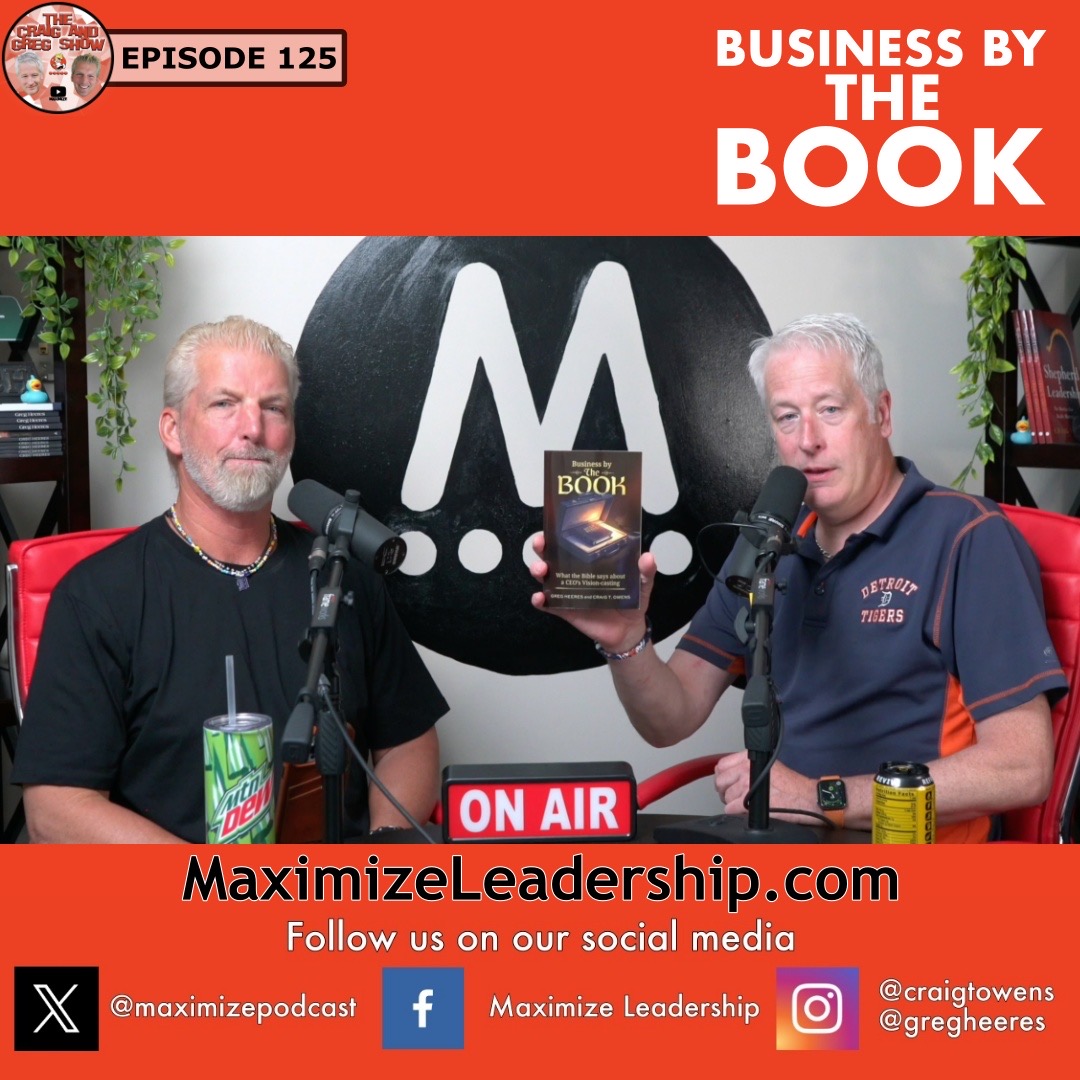
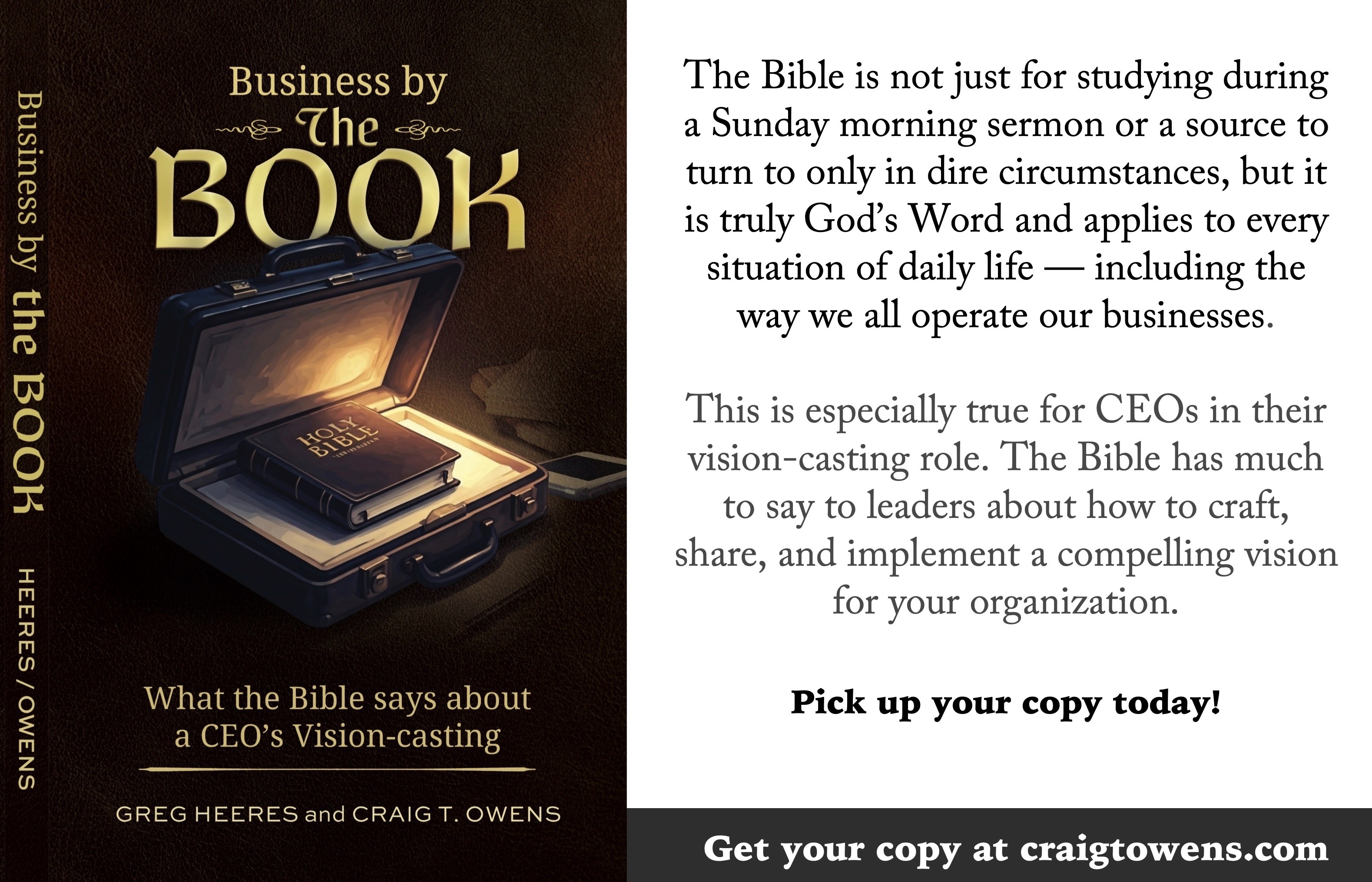
It seems like many people put business and faith in two separate boxes, considering them entirely different topics of discussion. Greg and I completely disagree—the Bible is a resource for all areas of our lives, from the board room to the living room. That’s why we wrote our Business By The Book series. This is a guide to help you apply biblical principles to the corporate world. In today’s episode we preview the first book in this series: Business by the Book: What the Bible says about a CEO’s vision-casting.
[0:00] Introduction
[2:10] What does it mean for the leader to cast vision for his or her organization?
[3:07] Here’s what you can expect from Business by the Book—What the Bible says about a CEO’s vision-casting
[4:13] After a leader has cast a vision, that leader then needs to empower his or her entire team to help them achieve the vision.
[6:46] Leaders must be self-aware of their strengths and weaknesses, and help their teammates learn about themselves as well.
[9:06] Organization chart maneuvering can help empower teammates to accomplish great things. And I also share a teaser about a new project on which Greg is working.
[10:26] Greg talks about two vastly different roles: Commander and Includer.
[12:27] I share an excerpt from a chapter that Greg wrote in this book, and then Greg elaborates on how this helps a team pursue the vision.
[16:37] Leaders can move from doing to facilitating, which will help others set up into new roles.
[18:21] Some counsel for leaders who are first time vision-casters.
[19:26] Greg shares a tip for facilitating meetings to get more people involved.
[21:44] “Leaders become great not because of their power, but because of their ability to empower others.”
[24:18] HERE’S HOW TO WIN A FREE COPY OF OUR NEW BOOK!
Listen to the podcast of this post by clicking on the player below, and you can also subscribe on Apple, Spotify, or Audible. Check out the video content in this post by clicking here.
When I would be struggling with stick-to-it-iveness, my Mom would say to me, “Anything worth having is worth working for.” From a young age, she was encouraging me to grind through the tough work to get to the payoff on the other side.
This is a great leadership principle, not only for leaders but for the teams they lead as well. Check out this clip where Greg and I talk about the grind necessary to achieve greatness.
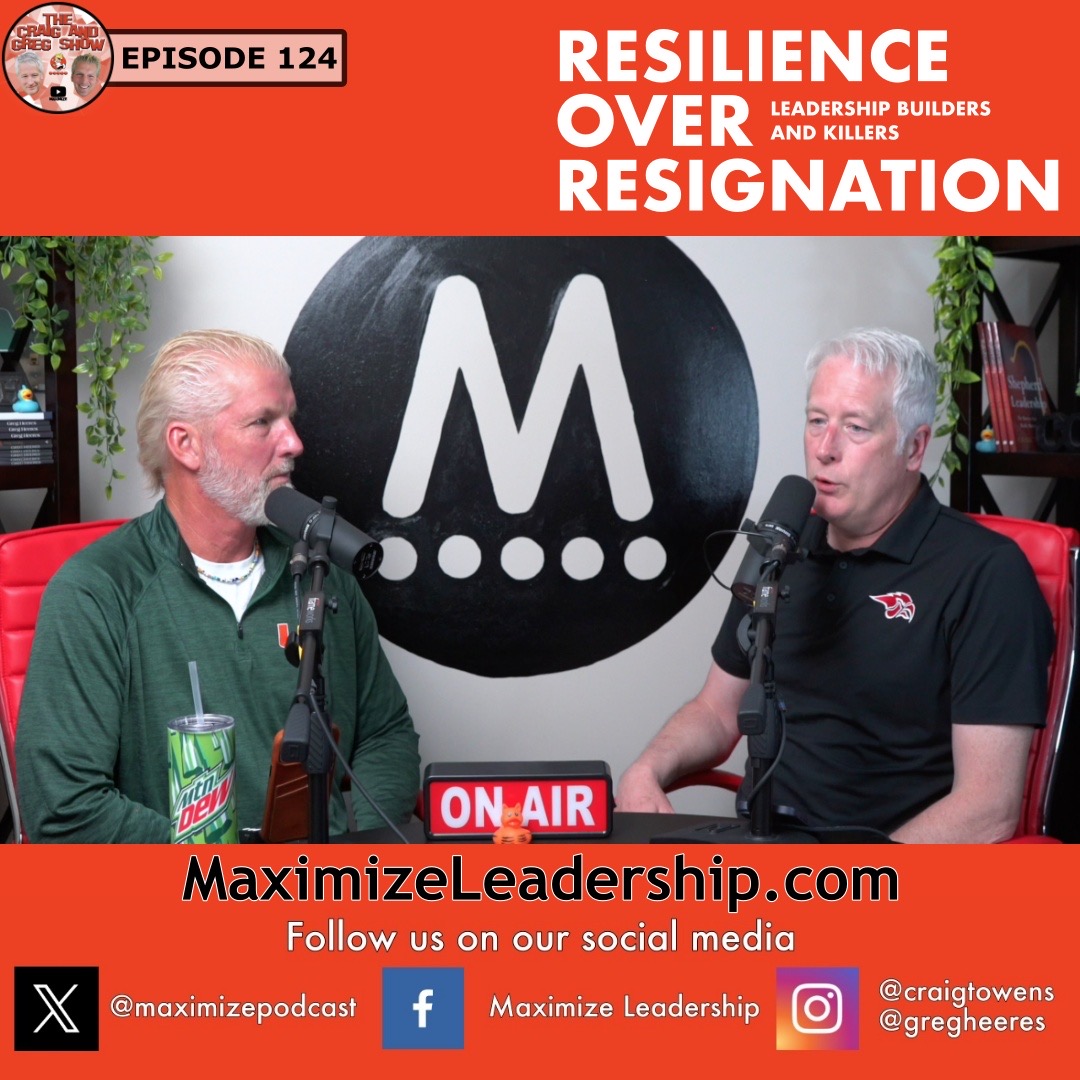
You can watch the full Craig and Greg Show episode where we discuss how the leadership builder of resilience can keep at bay the leadership killer of resignation.
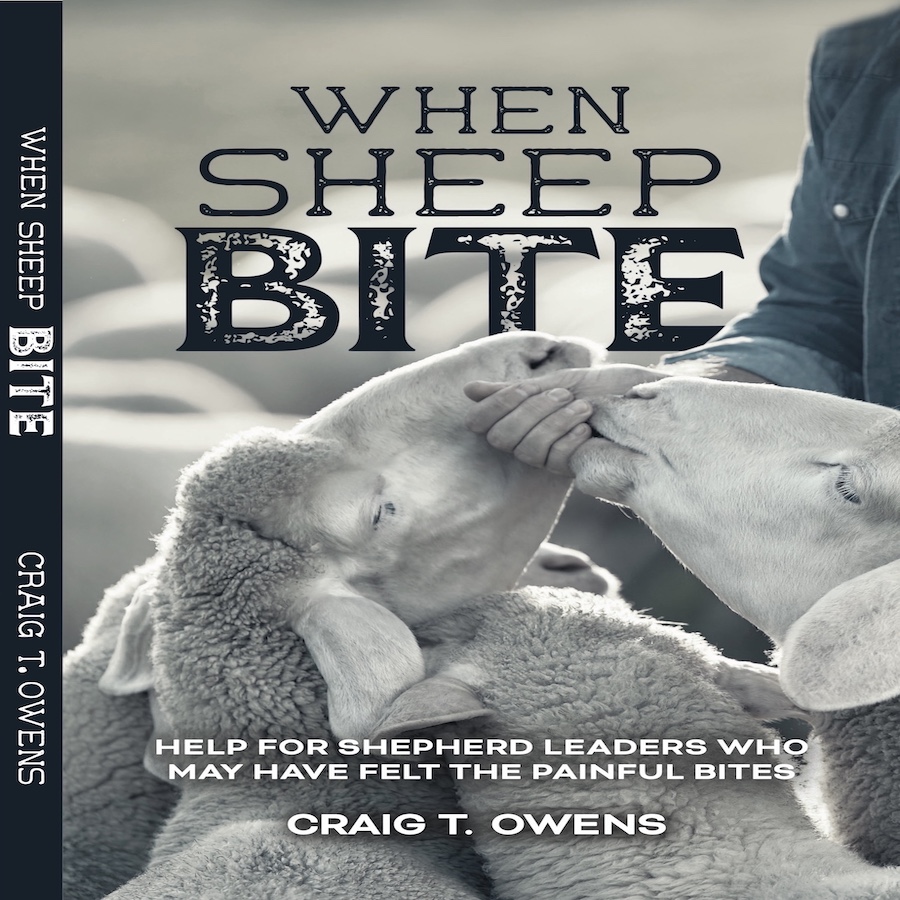
My book When Sheep Bite will help pastors who are trying to grind through the painful experience of biting sheep. This book has helped so many pastors see the factors that led up to the bite, the biblical responses to bites, and the resilience we can discover to help these shepherd leaders stay faithful to God’s calling. Check it out!
Listen to the podcast of this post by clicking on the player below, and you can also subscribe on Apple, Spotify, or Audible.
Greg Heeres is my lifelong friend and co-host of The Craig and Greg Show leadership podcast. We have just released the first book in our series called Business by the Book. These books will help business leaders see how relevant the Bible is for the day-to-day wisdom they need to make impactful decisions for their organizations.
I write chapters one, three, and five with a biblical example of the book’s focal point, and then Greg writes a business application of those examples in chapters two, four, and six.
Our first book is about the CEO’s vital role of vision-casting.
We wanted to give you a taste of what these books are all about, so here is the first chapter in this book entitled “Eyes on the Prize”—
Where there is no vision, the people are unrestrained. (Proverbs 29:18)
It All Starts with You
It all starts with you as the leader of your organization. If you have a clear vision in mind for both your personal life as well as for your organization, your people will join you on this journey, no matter how long or difficult it may seem.
On the other hand, the number one cause of both personal and corporate failure is drifting away from the vision that brought success.
God gives vision. He doesn’t give a vision to a leader so that a leader can have a better life, but so that leader can help people get to a better place. Vision is always through the leader to the people. Solomon said, “Where there is no vision, the people are unrestrained” (Proverbs 29:18).
Another translation of this verse carries even more weight, “Where there is no vision, the people perish.”
Eye Discipline
In almost every sport that involves a ball, the tried-and-true maxim is, “The ball goes where your eyes go.”
Greg and I first met on a basketball court. There were a group of guys that got together to play basketball every day at lunchtime. Because Greg and I were about the same height, we were almost always placed on opposite teams and I had the unenviable assignment of guarding this exceptional athlete.
One of the things I noticed right away about Greg’s game was how good he was “in traffic.” He could exploit a small gap between defenders and dribble the ball through that opening to give himself a good look at the hoop. That good look usually meant success in scoring.
I did my best to match Greg shot for shot, but I usually came out on the losing side of these match-ups. There is something about competition that causes me to focus on my task—both in business and on the basketball court. So as I guarded Greg, I studied what made him so successful. Eventually I spotted one of the main differences between us: It was his eyes.
As Greg drove through traffic, he kept his eyes on the basketball rim, so when he was ready to shoot, the ball went where his eyes already were. I noticed about myself that when I tried to navigate through all the bodies on the court, my eyes went down to the basketball, and only when I thought I was in the clear did I move my eyes to the rim.
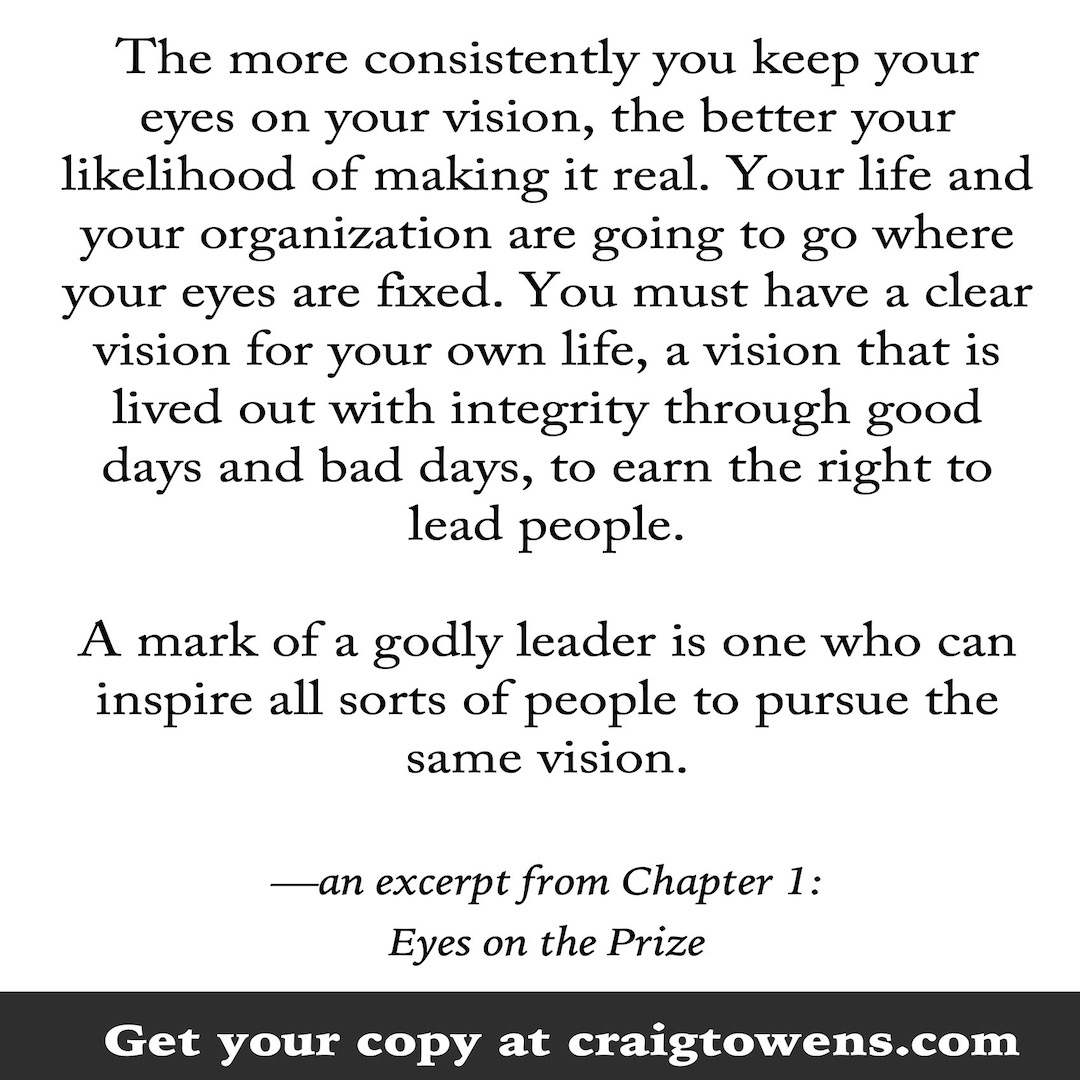
The more consistently you keep your eyes on your vision, the better your likelihood of making it real. Your life and your organization are going to go where your eyes are fixed. You must have a clear vision for your own life, a vision that is lived out with integrity through good days and bad days, to earn the right to lead people.
Nehemiah the Vision-caster
The nation of Israel was being allowed to return to their homeland after 70 years in exile. The capital city Jerusalem was in a shambles—the walls had been knocked down, the gates were burned, and their temple of worship had been demolished.
When Nehemiah arrived in Jerusalem, he made a careful inspection of the situation. He undertook his first assessment by himself at night; he didn’t share his findings with the people right away.
Nehemiah was a man of personal integrity. Throughout the historical account of his leadership, we see him handling his position of authority, the funds entrusted to him for the rebuilding project, his own personal finances, and even the “competitors” that wanted the Israelites to fail, with godly wisdom and impeccable character.
With his personal life in order, Nehemiah then approached the people of Israel. In his journal, recorded for us in the Book of Nehemiah in the Bible, he wrote—
Then I said to them, “You see the trouble we are in: Jerusalem lies in ruins, and its gates have been burned with fire. Come, let us rebuild the wall of Jerusalem, and we will no longer be in disgrace.” I also told them about the gracious hand of my God on me and what the king had said to me. (Nehemiah 2:17-18)
Because Nehemiah went first, the people readily accepted his vision of a rebuilt city: “So they said, ‘Let us rise up and build.’ Then they set their hands to this good work” (Nehemiah 2:18).
A mark of a godly leader is one who can inspire all sorts of people to pursue the same vision. Nehemiah did such a good job casting the vision God had given him that people from all professions and persuasions joined in.
Although the vision was to rebuild the walls around Jerusalem, most of those who joined Nehemiah in pursuing this vision were anything but builders. They were priests, goldsmiths, perfume makers, and merchants. They were young and old, men and women, native-born Israelites and God-fearing foreigners, those who lived in the city and those who lived in the countryside (see Nehemiah 3). With one voice they cried out, “Let’s rise up and build!” and they got down to business.
All these different people bought into one godly leader’s vision.
What’s Your Vision?
Do you have a clear vision for your own life? What about for your organization? You need to have your eyes on a prize that will stand the test of time and will have lasting—even eternal—significance.
If you cannot readily identify a compelling vision for either yourself or your organization, I would like to suggest three places you could start. You could say, “My/our vision is . . .
(1) . . . to do good. Peter summed up the entirety of Jesus’s public ministry by saying, “Jesus went around doing good and healing all who were oppressed by the devil” (Acts 10:38 NLT).
(2) . . . to do what is right, to love mercy, and to walk humbly with your God. This is an exact quotation of the vision statement God gave through the prophet Micah (Micah 6:8 NLT).
(3) . . . to bring life where there is death and to set captive people free. This was what Jesus stated as His personal vision for His public ministry (Luke 4:18-19).
Find your personal vision and keep your eyes on the prize. This will give you moral authority for the vision you will share with your team. Your vision as the leader is the key to unlocking your organization’s success.
Listen to the podcast of this post by clicking on the player below, and you can also subscribe on Apple, Spotify, or Audible. Check out the video content in this post by clicking here.
An insidious killer may be stalking your organization. As you look around at your team some of them may have already resigned. They might be showing up every day, but mentally and spiritually they have already quit trying. Join Greg and I as we discuss how resignation can creep in, and how your example of resilience can help stave it off.
Greg and I have co-authored the first book in our new series Business By The Book. Get your copy today.
[0:00] Introduction
[1:07] Resigning isn’t as obvious as someone saying, “I quit!”
[1:55] The attitude of resignation starts way before someone begins their work career.
[4:20] As a leader, is there value in telling people your story of grit? Does that encourage teammates or does it discourage them?
[6:14] Is resilience innate or learned or both?
[8:12] Resilience is often a grind, but it pays huge dividends for those who will stick with it. I share a conversation he had with an NBA player.
[11:08] Greg shares examples of two professional athletes who demonstrated resilience, as well as his own resilience on the football field.
[14:02] Leaders need to push themselves farther and not give themselves an “out.” This is how they show resilience as an encouragement for others.
[15:56] Greg shares how he transitioned an organization from a quiet culture to a hungry culture. I then share how I have helped others become hungry and resilient.
[18:08] Tough times are going to come to every individual and every organization. Leaders need to help prepare themselves and their teams.
[19:53] Is there a time for resigning? I think it’s possible that resigning is sometimes a healthy resilience.
[23:13] Greg shares a quote about resilience being a gift.
[25:01] Leaders are a gift to their entire organization when they are resilient.
Listen to the podcast of this post by clicking on the player below, and you can also subscribe on Apple, Spotify, or Audible. Check out the video content in this post by clicking here.
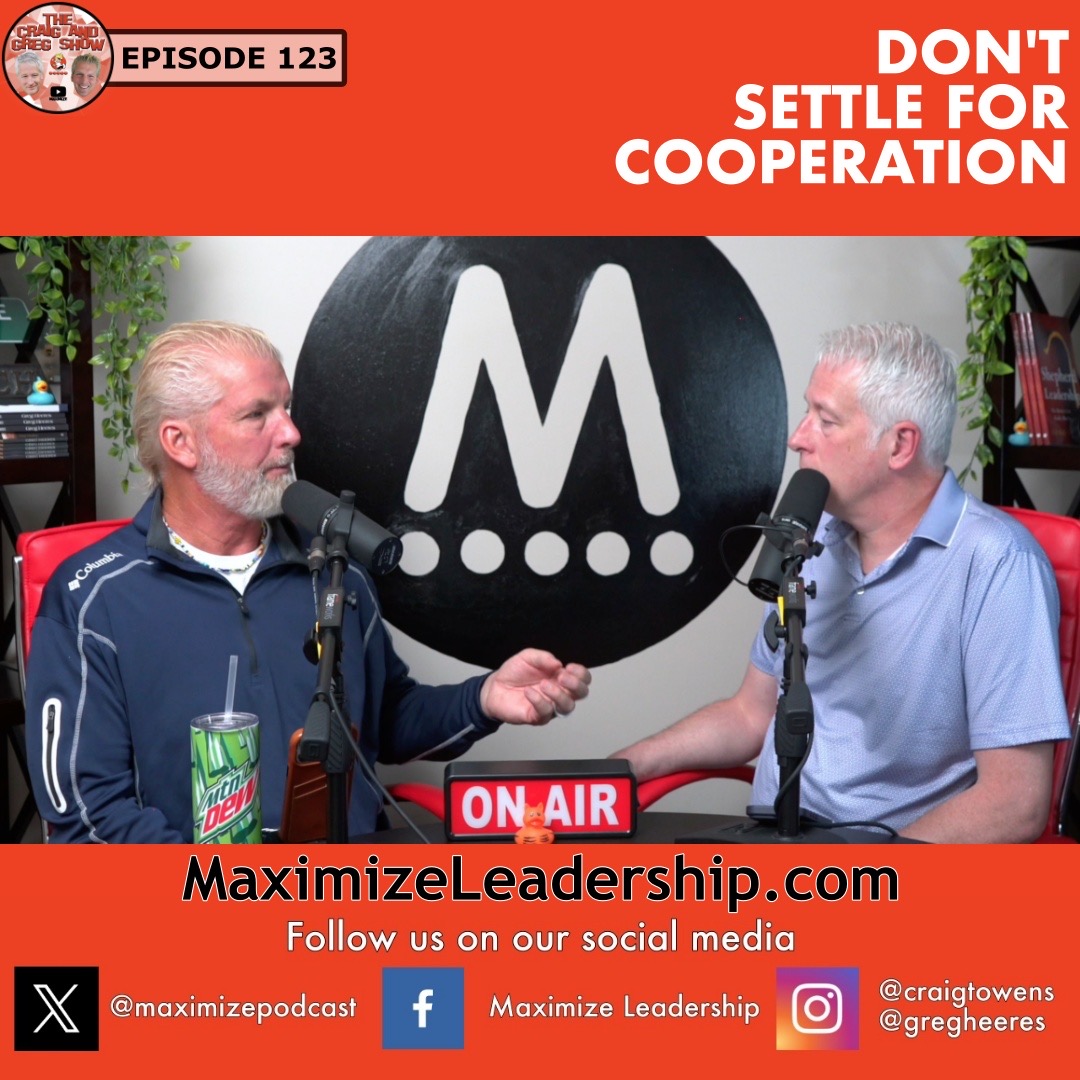
Greg and I promise we aren’t here to nitpick your grammar, but in some instances understanding the full meaning of words can help us to realize how they are affecting our patterns of thinking. In today’s episode we are discussing cooperation and collaboration—two words that are often used interchangeably. However, a deeper examination reveals that their differences can be the deciding factor between a surviving team and a thriving team.
[0:00] Introduction
[0:49] Not to nitpick on the definitions, but we need to make sure we understand the words “cooperate” and “collaborate.”
[2:03] Let’s start with cooperation—how do leaders get their teams to cooperate together?
[3:33] In our Business by the Book book for CEOs, we talk about a trailblazer in the Old West who sets a good example for us in how to get people to begin cooperating.
[7:13] Assumptions will kill cooperation before it even gets started.
[9:33] Stephen Covey has good insight for us in his book The 8th Habit that servant leaders can leverage for success.
[12:13] Collaboration is harder work, which will require more patience from the leader to allow the rest of the team to build their endurance for it.
[13:48] Teammates will have to wrestle with sacrifice and risk in order to allow the whole time to move forward.
[16:07] A strategy that Greg has employed successfully to help teammates move from cooperation to collaboration.
[18:02] The value of ideation in collaborative meetings is so much higher than sticking to the agenda of a cooperative meeting.
[19:27] We like the tension of the difficulty of collaboration.
[20:42] Moving from cooperation to collaboration will require legitimate humility on the part of the leader.
[23:08] An outstanding quote from John Maxwell’s book Teamwork 101.
[23:48] If you are wondering if your leadership might be stifling the move from cooperation to collaboration, please consider calling in Maximize Leadership as a business coach.



 Being the new leader of an organization is a difficult task. It doesn’t matter if you’re a first-time leader or have decades of leadership experience, you’re still “the new guy” to everyone else in the organization. So when you step into your new role and have to begin making changes you will most likely encounter areas of resistance.