God’s Vision, Not Mine

Listen to the podcast of this post by clicking on the player below, and you can also subscribe on AppleSpotify, or Audible. 

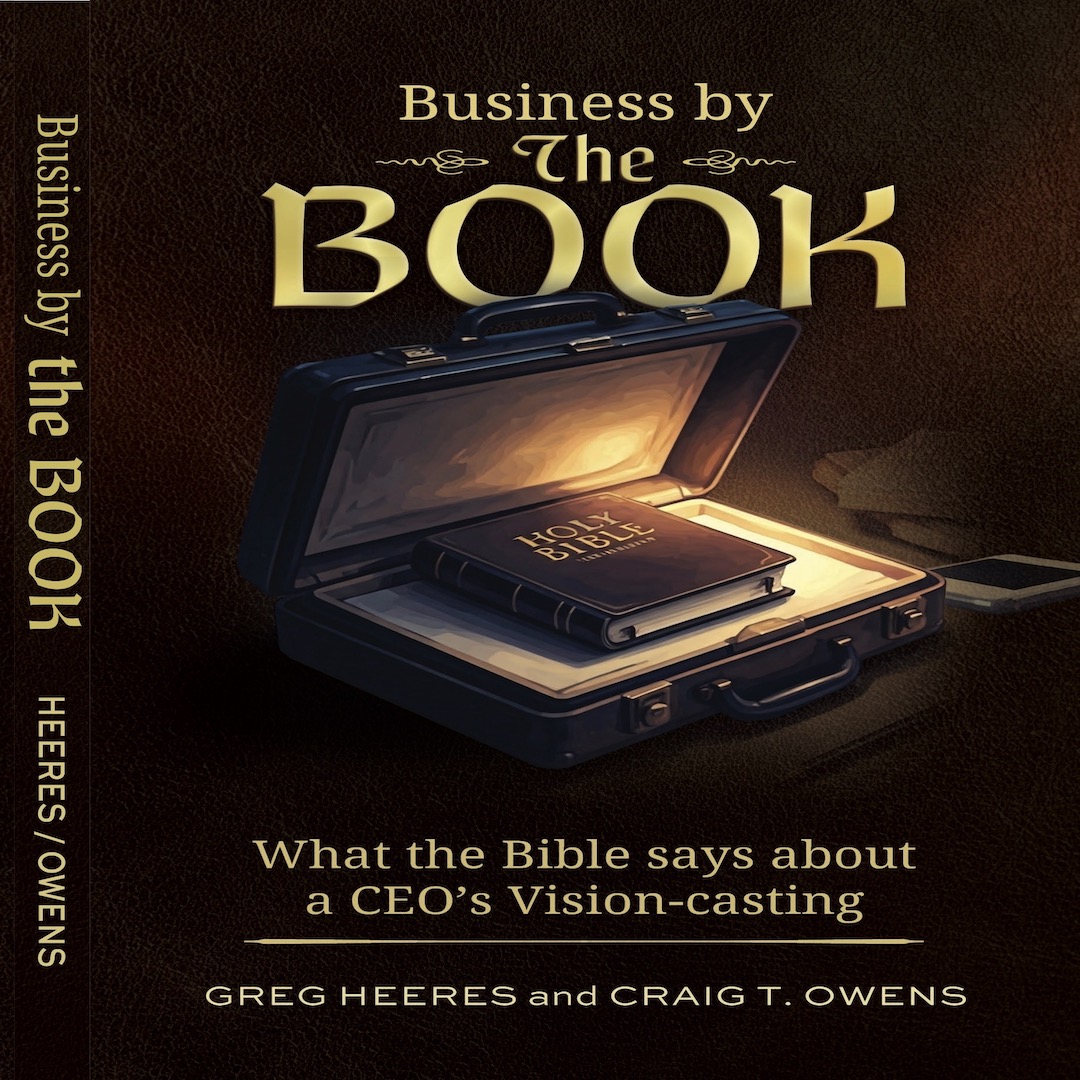
My podcast cohost, Greg Heeres, and I just finished our first co-authored book in our series Business by the Book. This book is both biblical wisdom and practical insight into how a CEO casts vision for themselves and the organization they lead. 

We write about the God-honoring way to cast vision, but there is another way—the human way. In their book Spiritual Leadership, Henry and Richard Blackaby describe it like this:

     “The Gospel of Luke provides a graphic contrast between peoples’ agendas and God’s [Luke 9:28-36]. Jesus took Peter, James, and John with Him up a mountain to experience a divine encounter. God the Father was unfolding His specific will for His Son. The Father brought Moses and Elijah to encourage Jesus for the enormous work of redemption He was about to accomplish. So sacred was that moment that Jesus radiated the glory of His divinity. Peter and his companions, however, had been sleeping. When they awoke and saw the magnificent scene unfolding, Peter spoke up: ‘Master, it’s good for us to be here! Let us make three tabernacles: one for You, one for Moses, and one for Elijah’ (v. 33). Peter’s first thought was to build something tangible to institutionalize the divine encounter. Peter, a natural leader, could already envision the ongoing ministry he and his friends would administer as a result of that encounter. However, the instant Peter began talking, the vision was removed, and only Jesus remained visible. Clearly Peter’s plan was not God’s agenda. The heavenly Father immediately rebuked Peter, saying, ‘This is My Son, the Chosen One; listen to Him!’ (v. 35). Peter, because he was human, instinctively thought in temporal terms. He envisioned something he could control and manage. He wanted to move Jesus, Moses, Elijah, James, and John on to his agenda instead of seeking to understand God’s will and adjusting his own life accordingly. Peter’s ignorance of spiritual ways is all too prevalent among today’s spiritual leaders. Too often people assume that along with their role of leader comes the responsibility of determining what should be done. They develop aggressive goals. They imagine grandiose dreams. They cast grand visions. Then they pray and ask God to join them in their agenda and bless their efforts. That’s not the spiritual leader’s role. Spiritual leaders seek God’s will, whether it is for their church, family, or corporation, and then they mobilize their people to pursue God’s plan. …  

     “We must emphasize that planning or goal setting is not wrong. Organizations must have direction and order. The key is the source of those plans. Spiritual leaders seek God’s guidance in discerning God’s purposes for their organization. Then they mobilize their organizations to effectively accomplish what God assigns.” 

God’s desire has always been to give vision to leaders who will lead in a God-honoring way. If you are the point leader for your organization, by all means seek to cast a compelling vision for your team, but use the wisdom in God’s Word to ensure your vision is something that makes an eternal difference. 

One final thought from the Blackabys: “God has the vision of what He wants to do. God does not ask leaders to dream big dreams for Him or to solve the problems confronting them with their own best thinking. He asks leaders to walk with Him so intimately that when He reveals His agenda they immediately adjust their lives and their organizations to His will and the results bring glory to God.”  

Please pick up a copy of Business by the Book: What the Bible says about a CEO’s Vision-casting today.  

►► Would you please prayerfully consider supporting this ministry? My Patreon supporters get behind-the-scenes access to exclusive materials. ◀︎◀︎
The Craig and Greg Show: Don’t Settle For Cooperation

Listen to the podcast of this post by clicking on the player below, and you can also subscribe on AppleSpotify, or Audible. Check out the video content in this post by clicking here. 

Greg and I promise we aren’t here to nitpick your grammar, but in some instances understanding the full meaning of words can help us to realize how they are affecting our patterns of thinking. In today’s episode we are discussing cooperation and collaboration—two words that are often used interchangeably. However, a deeper examination reveals that their differences can be the deciding factor between a surviving team and a thriving team.

  • [0:00] Introduction
  • [0:49] Not to nitpick on the definitions, but we need to make sure we understand the words “cooperate” and “collaborate.”
  • [2:03] Let’s start with cooperation—how do leaders get their teams to cooperate together?
  • [3:33] In our Business by the Book book for CEOs, we talk about a trailblazer in the Old West who sets a good example for us in how to get people to begin cooperating.
  • [7:13] Assumptions will kill cooperation before it even gets started.
  • [9:33] Stephen Covey has good insight for us in his book The 8th Habit that servant leaders can leverage for success.
  • [12:13] Collaboration is harder work, which will require more patience from the leader to allow the rest of the team to build their endurance for it.
  • [13:48] Teammates will have to wrestle with sacrifice and risk in order to allow the whole time to move forward.
  • [16:07] A strategy that Greg has employed successfully to help teammates move from cooperation to collaboration.
  • [18:02] The value of ideation in collaborative meetings is so much higher than sticking to the agenda of a cooperative meeting.
  • [19:27] We like the tension of the difficulty of collaboration.
  • [20:42] Moving from cooperation to collaboration will require legitimate humility on the part of the leader.
  • [23:08] An outstanding quote from John Maxwell’s book Teamwork 101.
  • [23:48] If you are wondering if your leadership might be stifling the move from cooperation to collaboration, please consider calling in Maximize Leadership as a business coach.

The Craig And Greg Show: Consistency Strengthens Leaders

Listen to the podcast of this post by clicking on the player below, and you can also subscribe on AppleSpotify, or Audible. 

Like many popular phrases in the lexicon you’ve probably heard “consistency is key” thousands of times and rarely given it a second thought, but Greg and I want to challenge you to revisit this vital area. In today’s episode we discuss how an intentional focus on consistency will make you a better leader—which in turn will make your team more effective and productive.

  • [0:00] Intro
  • [0:30] People naturally gravitate towards certainty.
  • [1:20] One of a leader’s biggest goals should be to be consistent for their team.
  • [2:29] Greg discusses how an inconsistent leader can derail an organization.
  • [3:50] What is the message to your team when you’re not consistent?
  • [5:05] We use non-business examples to highlight the importance of consistency.
  • [6:44] Consistency takes effort and intentionality.
  • [9:03] What are people looking for from their leader to be consistent?
  • [10:53] Greg shares a quote from Aristotle.
  • [12:46] Excellence isn’t just “a habit,” it is an intentional choice of habits.
  • [17:42] Protect your spirit.
  • [18:26] I reveal what has made me the most consistent.
  • [22:41] Greg and I want you to be more successfully consistent as well!

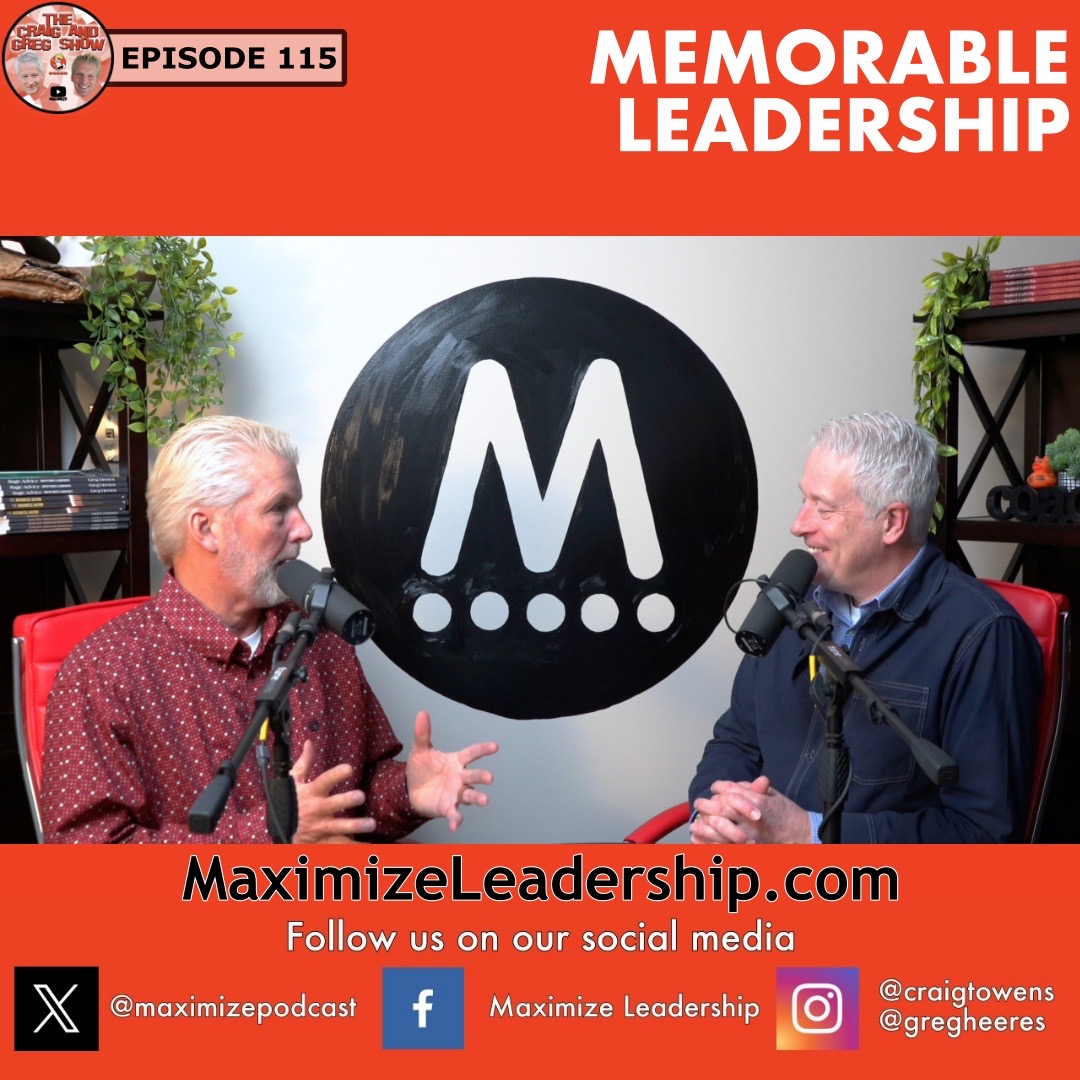
The Craig And Greg Show: Memorable Leaders

Listen to the podcast of this post by clicking on the player below, and you can also subscribe on AppleSpotify, or Audible.

What do you want people to remember about your leadership? It’s an easy question to overlook, but striving to be remembered well can help you to be a better leader every day. In today’s episode Greg and I discuss the attributes of a memorable leader and reminisce about past leaders in our lives.

  • [0:00] Introduction 
  • [0:42] Here’s a really important leadership question to contemplate about your legacy.
  • [1:53] Memorable leaders give us freedom to use our gifting.
  • [3:48] We debate going negative.
  • [4:07] Memorable leaders believe in us.
  • [7:10] Memorable leaders are calm in turbulent times.
  • [8:16] Memorable leaders love us enough to tell us the truth.
  • [10:20] Memorable leaders show us a preferable end goal.
  • [11:22] Memorable leaders are complimentary.
  • [12:46] Memorable leaders let us take the victory lap for the wins, but they take the blame for the losses.
  • [13:29] Memorable leaders give us grace for second chances.
  • [15:16] What’s one word we would like on our epitaph?
  • [17:59] Memorable leaders have an abundance mindset.
  • [18:41] How do you start becoming a memorable leader today?
  • [22:14] People are watching how you, as a leader, treat others.
  • [22:53] The value of a coach is so impactful for leaders who want to become more memorable.

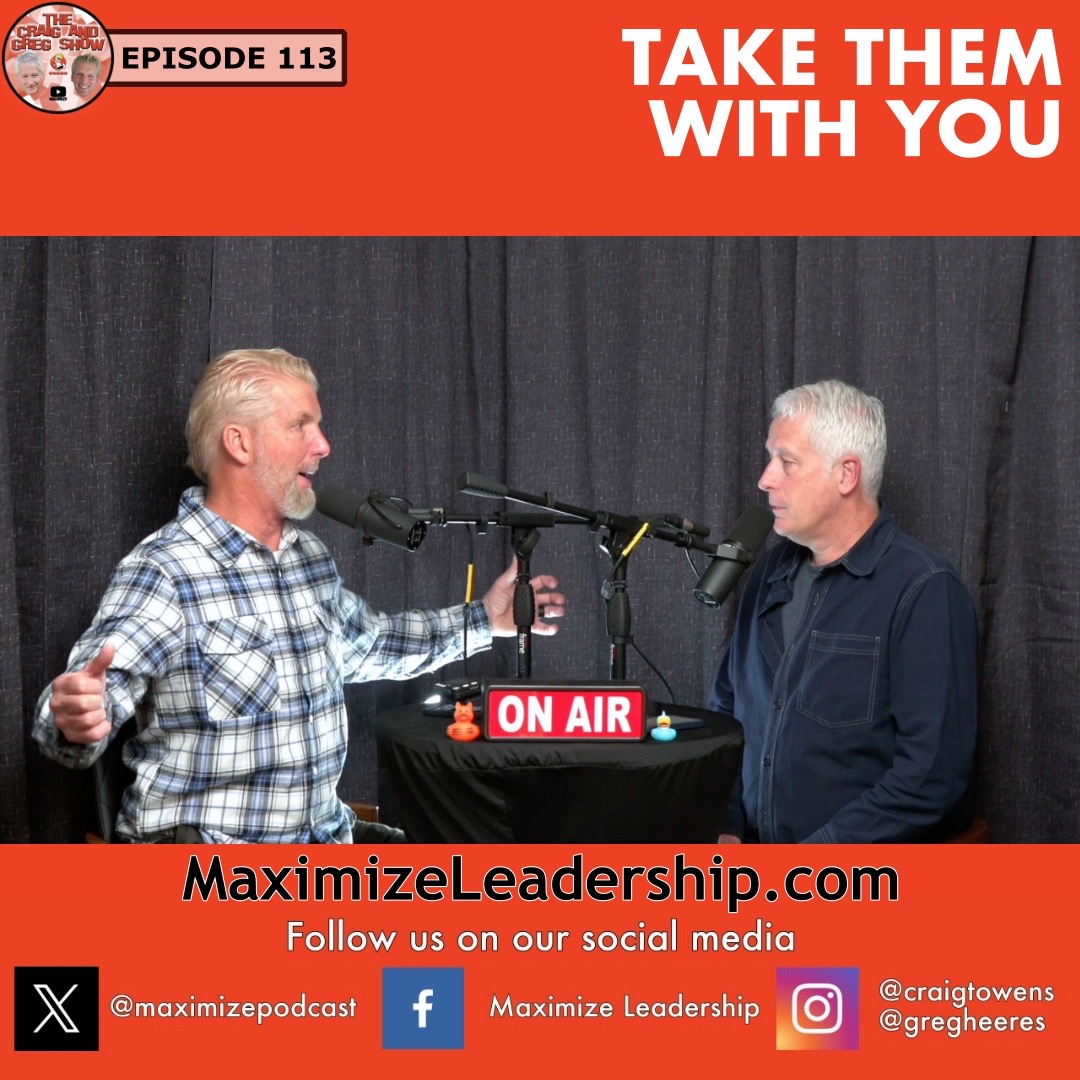
The Craig And Greg Show: Take Them With You

Listen to the podcast of this post by clicking on the player below, and you can also subscribe on AppleSpotify, or Audible.

In a previous episode we brought you the exciting news that Greg and I are collaborating to write a series of books called Business By The Book. In today’s episode, we revisit the first book in this series—A CEO’s Vision—and discuss how once the vision has been cast the next vital step is to bring your team along with you. 

  • [0:00] Introduction
  • [0:11] I welcome Greg to an exclusive club!
  • [0:49] We show why we think we are over-achievers.
  • [2:00] Leaders need to take others along with them, transitioning from “I” to “we.”
  • [4:39] How do leaders handle the frustration of a slow-moving team?
  • [6:51] How we wrote “Business by the Book” for a CEO who is casting vision.
  • [7:11] The importance a leader going first.
  • [10:53] Be realistic with your team about the challenges ahead.
  • [11:49] How do leaders handle doubts or questions from their teammates?
  • [14:37] Leaders need to know the pitfalls of casting vision.
  • [16:59] Watch out for the things that will distract from your vision!
  • [20:25] The courage to take the first step is vital.
  • [22:03] Leaders need to help the stragglers catch up with everyone else on the team.
  • [23:23] The last crucial step is for leaders to move forward confidently.
  • [24:31] Maximize Leadership has a lot of resources to help you on your leadership journey.

Check out my blog, my other podcasts, my books, and so much more at http://linktr.ee/craigtowens 

►► Would you please prayerfully consider supporting this ministry? My Patreon supporters get behind-the-scenes access to exclusive materials. ◀︎◀︎
Shepherd Your Family

Listen to the podcast of this post by clicking on the player below, and you can also subscribe on AppleSpotify, or Audible. 

One of the most important boundaries that shepherd leaders need to establish—especially when contending with biting sheep—is the protection of their family. Check out this clip from The Craig and Greg Show. 

You can watch the full episode in which Greg and I talk about some of the principles in When Sheep Bite by clicking here. 

Please pick up a copy of When Sheep Bite for yourself by clicking here. 

►► Would you please prayerfully consider supporting this ministry? My Patreon supporters get behind-the-scenes access to exclusive materials. ◀︎◀︎
The Craig And Greg Show: Sales Armageddon

Listen to the podcast of this post by clicking on the player below, and you can also subscribe on AppleSpotify, or Audible.

I am so excited to announce that my co-host Greg has written a new book called Sales Armageddon. As anyone in the profession knows, sales can be a battlefield. Through fables and insightful teaching Greg’s book will equip you with new strategies you can implement right away to keep yourself and your team in the fight.

  • [0:30] Greg’s new book is out.
  • [1:40] The book contains a business fable based on real people.
  • [3:39] Salespeople can learn from this book how to work well and grow because of others.
  • [5:52] This is a very entertaining book that helps us learn.
  • [7:16] All salespeople need o learn to work with their peers.
  • [8:40] Sales Armageddon is not just a soft story but it shares the science of sales as well.
  • [9:35] Here is a teaser of a key chapter on developing a robust sales pipeline.
  • [12:46] This book has both the emotion and the hard skills of excelling in sales.
  • [14:47] Greg says that each chapter is going to remind you of someone you’ve worked with before, or it may even remind you or yourself!
  • [16:37] This is not a “heavy” read, but this is something that you are going to be able to immediately apply to your sales work.

The Craig And Greg Show: The Balance Of Control

Listen to the podcast of this post by clicking on the player below, and you can also subscribe on AppleSpotify, or Audible.

Imagine your organization as a cruise ship you’re the captain of. It is your responsibility to man the helm, keeping the vessel away from danger and navigating to the correct destination. Along the way you decide that the guests’ towels need to be folded a particular way, so you step away from your post for hours to meticulously fold them to your exact specifications. You do a great job but in your absence the ship is listless, veering off course into dangerous waters. 

Of course it’s very likely you won’t find yourself in this exact situation, but the same logic can be applied to our terrestrial pursuits as well. In today’s episode, Greg and I discuss why it’s important for leaders to remain in control, but also vital that we don’t become controlling.

  • [1:00] How could a leader self-assess to make sure they are properly balanced in the way they control their organization? 
  • [3:38] Being organized is not a problem, but controlling the organization becomes the problem.
  • [4:50] I point out the differences between a productive river and a destructive flood.
  • [6:00] Controlling leaders stifle creativity and innovation.
  • [8:25] Tim Irwin’s book Derailed talks about how micro-managing has led to the collapse of many successful organizations.
  • [12:41] Over-controlling leaders are risk-adverse and untrusting of others on their team.
  • [14:13] The value of a coach is getting answers that others on your team aren’t giving you.
  • [17:12] Greg shares a quote about self-discipline as it relates to the proper balance of healthy control.
  • [18:20] Your teammates want your confidence, not your control.
  • [19:44] Leaders, it’s time for you to look in the mirror.

Check out this episode and subscribe on YouTube so you can watch all of the upcoming episodes. You can also listen to our podcast on Spotify and Apple.

A Book For Church And Business Leaders

Listen to the podcast of this post by clicking on the player below, and you can also subscribe on AppleSpotify, or Audible. 

On The Craig and Greg Show, Greg noted that my book When Sheep Bite isn’t just for church leaders, but business leaders can benefit from reading this as well. 

You can check out the full conversation Greg and I had on this episode of our leadership podcast. 

I recently shared a series of messages for all Christians about how to handle the painful bites that sometimes come from other Christians. The series was called When Sheep Bite Sheep. 

Please check out both of my books Shepherd Leadership and When Sheep Bite. 

►► Would you please prayerfully consider supporting this ministry? My Patreon supporters get behind-the-scenes access to exclusive materials. ◀︎◀︎
Pay Attention To The Signals

Listen to the podcast of this post by clicking on the player below, and you can also subscribe on AppleSpotify, or Audible. 

Leaders need to pay very careful attention not to disregard the signals others are sending them.

Check out the full conversation Greg and I had about blind spots.

►► Would you please prayerfully consider supporting this ministry? My Patreon supporters get behind-the-scenes access to exclusive materials. ◀︎◀︎