As a general rule, God would like us to pray much more boldly than we typically do.
Jesus told us that we could pray mountain-moving prayers! But C.S. Lewis rightly observed, “If we consider the unblushing promises of reward and the staggering nature of the rewards promised in the Gospels, it would seem that our Lord finds our desires, not too strong, but too weak.”
This Sunday we begin a new series of messages called Boldly Praying, in which we are going to consider how we can replace our weak prayers with bold prayers. We’ll be looking at the requests of four bold pray-ers that we meet in the pages of Scripture, and each one of them will teach us a new aspect of bold praying.
This is a request I can continue to make. Jesus is in heaven interceding for me (Hebrews 7:25), and He has given me His Holy Spirit to help me pray (Romans 8:26).
Jesus is the Perfect Pray-er, so He is the one to Whom I should continually say, “Lord, teach me to pray.”
The key thought Jesus presents is persistence (see Luke 11:8-10). Why? Because the One to Whom I persistently appeal has told me to! God is my Heavenly Father—He wants to give the best to His children. He even gives us “how much more”!
I learn to pray by praying.
I have to begin to do it and then let the Holy Spirit instruct me. In the meantime, even my childlike prayers are clarified and amplified by the Spirit, they are used by Jesus to intercede on my behalf, and they are carried into the throne room of Almighty God as an incense before Him. He loves to hear from me, or else He would not have told me to keep on asking, keep on seeking, and keep on knocking.
To paraphrase a father who was in desperate need of Christ’s help, “Lord, I am praying; help me to keep on praying!” (see Mark 9:24)
I love reading, and I love sharing my love of good books with others! Here is a list of the books I read and reviewed in 2018. Click on a title to be taken to that review.
I have the high privilege of being able to shepherd Calvary Assembly of God. It’s a privilege and responsibility I take as a charge from God, and the Scripture makes it clear that those who have been given such a stewardship must use it in a God-glorifying way.
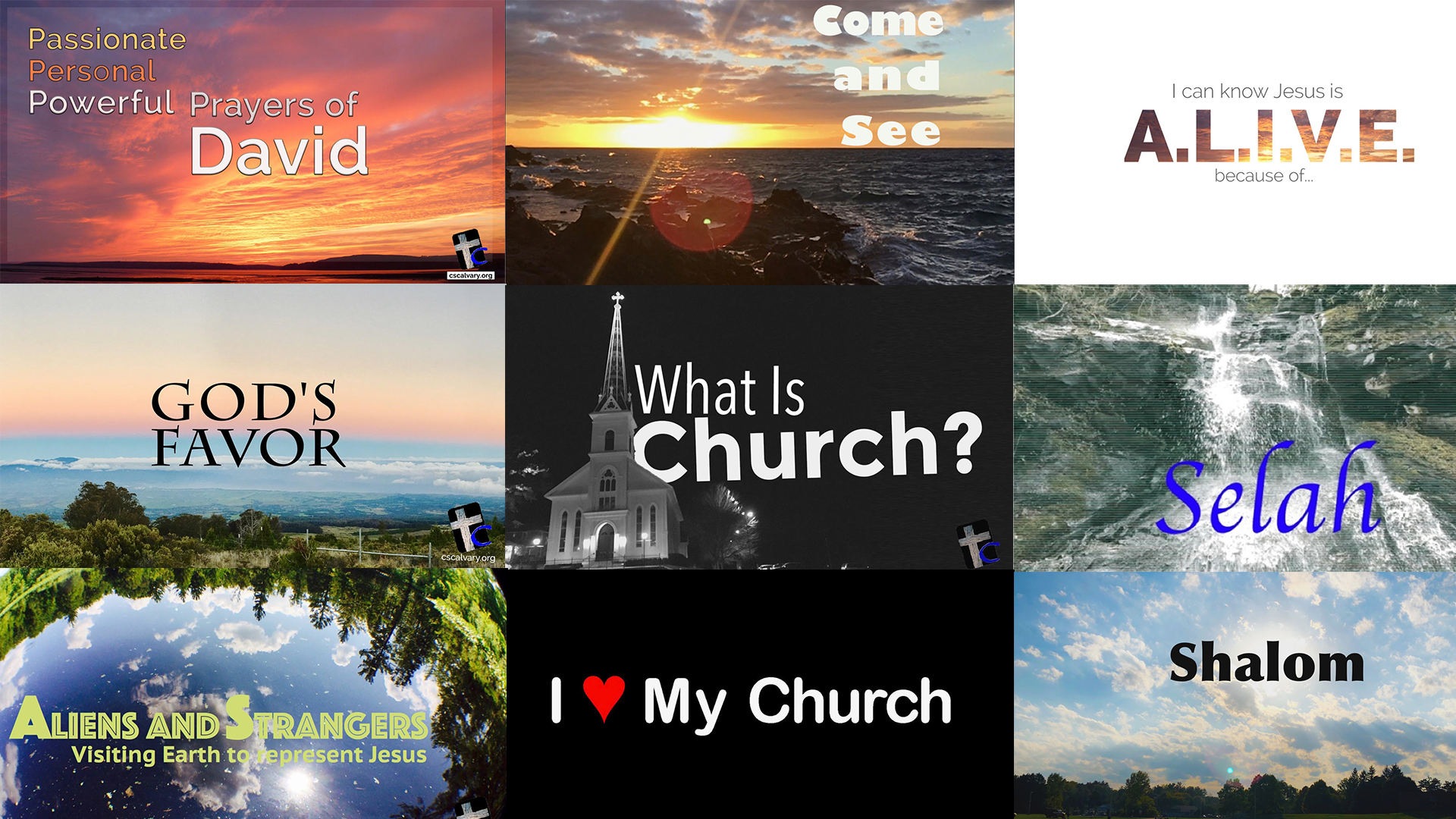
Just one way I can use such stewardship is in the weekly sermons I prepare for our church family. I faithfully study and pray to get God’s mind on the topics that we need to grow in Him. Below is a brief overview of each of the series of messages I shared in 2018, along with links to the weekly recaps I post after delivering each message.
The Prayers Of David—The life of David is an open book for us. One of the unique things about David’s life is that we get to read both the historical narrative of his life, and his diary-like thoughts recorded in his psalms, songs, and prayers in the Book of Psalms. David’s prayers are gut-level honest and full of raw emotion. His prayers are also very helpful for anyone who desires to be as close to God as David was, to be one God describes as “a man after my own heart, who will do everything I want him to do.”
Come And See—Survey after survey, and personal interview after personal interview, all report the same indisputable truth—the #1 reason unchurched people don’t come to church is no one has invited them! Wow! Christians have the life-changing truth of what a personal relationship with Jesus Christ can do, and they are for the most part keeping it to themselves. I want to present a very simple way to invite people to hear about our Risen Savior, and it’s just three simple words: Come and see.
A.L.I.V.E.—It is the foundational claim of Christianity: Christ died on a Cross and was raised back to life. It is also the claim many skeptics of Christianity find so difficult to process. This series explores evidence for for the resurrection of Jesus in each of the five letters of “ALIVE.” These messages are specifically designed for those skeptical of the claims of Christianity. The evidence won’t be a bunch of “churchy” platitudes, but court-room-level evidence that will attempt to make the case for what Christians believe about the death and resurrection of Jesus.
God’s Favor—What if I were to tell you that God is for you? What if I were to tell you that God wants to bless you? What if I were to tell you that God’s favor is constantly pursuing you? Well, here’s me telling you that it’s all true! Why would God do this? Because if you feel distant from Him, how can you glorify Him? If you feel disconnected from His love, how will you draw others to Him? If you feel like your relationship with Him is hanging by a thread, how can you happily abide in His presence? Knowing God’s favor is the key to living the abundant life Jesus purchased for you on the Cross!
What Is Church?—All across the world on Sunday morning, people met for church? But what exactly is church? Is it a place we go to? Is it something that only happens on Sundays? For Jesus, neither the day of the week nor the location determined the way He lived. Peter summed it up this way, “God anointed Jesus of Nazareth with the Holy Spirit and with power. Then Jesus went around doing good and healing all who were oppressed by the devil, for God was with Him” (Acts 10:38).
Selah—The word Selah appears nearly 70 times in the Bible, almost exclusively in the Psalms. Although it is primarily a musical term, it applies beautifully to our new summer series. Throughout the Psalms, Selah appears at the end of a verse, at the end of the psalm, or sometimes even mid-sentence. But each one of them is perfectly placed by the Spirit-inspired authors to get us to take a breath and deeply contemplate what we just read or sang.
Aliens And Strangers—Christians are not citizens of Planet Earth. Our citizenship is in a place called Heaven, and yet we are traveling on Earth during our present lifetime. So the question is: How is a citizen of Heaven supposed to act while visiting Earth? The Apostle Peter was one of the most active disciples of Jesus. During Christ’s first visit to Earth, Peter is recorded as speaking more than all of the other disciples combined. And not surprisingly, Jesus speaks more words directly to Peter than He does to all of the other 11 disciples combined. Peter got a lot of training! With that background, Peter gives us invaluable instructions in his first letter to the church. He calls Christians things like: strangers in the world, chosen people, peculiar people, and aliens and strangers in the world. He tells us travelers not only how to behave while traveling on Earth, but why we should travel in a God-honoring way.
I ♥ My Church—If you lived in the early first century AD—and if the donkey carts had bumper stickers—I’ll bet that you would have seen “IMy Church” bumper stickers on everything the early Christians owned. Both the Bible and historians of that day talked about the positive societal changes that Christians were making in their communities, and how every place they lived and worshipped got better. Why not today? Why not in your community?
Shalom—God makes a promise in Isaiah about His perfect peace being made available to His people. Ahhh, who wouldn’t want God’s perfect peace?! Sadly, many people actually block God’s peace from coming into their hearts. You see, God’s peace is always there, but there are things we humans frequently do that keeps us from experiencing His perfect peace. The Hebrew word for peace is shalom, which is a word packed with rich meaning! There are things God-loving people can do to keep shalom at the center of their lives, and I want to share these things with you.
The Carols Of Christmas—How many “old familiar carols” have you heard Christmas after Christmas until the words have almost lost their meaning? If we’re not careful, any song repeated too often can lose the richness of its original intent. There are some amazing messages in many of our old familiar Christmas carols because many of those messages are saturated with the old familiar story of Redemption that the Bible tells over and over again.
It’s been said that repetition is the mother of all learning. Keep on reminding yourself in refreshing ways again and again, and the lessons will become permanent.
Over the course of a year at Calvary Assembly of God, we cover a lot of ground biblically, crisscrossing the Bible, meeting old friends, learning timeless truths, and discovering how to apply those truths to our everyday lives.
The apostle Peter wanted his friends to keep biblical truths in the forefront of their minds—So I will always remind you of these things, even though you know them and are firmly established in the truth you now have. I think it is right to refresh your memory as long as I live in the tent of this body. … I want you to recall the words spoken in the past by the holy prophets and the command given by our Lord and Savior through your apostles (2 Peter 1:12-13; 3:2).
In the spirit of that constant reminding, I will be presenting a year-end review of all the topics we covered throughout 2018. This will be a great morning to invite your friends, as they will get a quick snapshot of what we’re learning. It will also be a wonderful morning for our regularly-attending church family to be reminded and refreshed.
This is a weekly series with things I’m reading and pondering from Oswald Chambers. You can read the original seed thought here, or type “Thursdays With Oswald” in the search box to read more entries.
Where Does Christian Character Come From?
Christian character is not expressed by doing good, but by God-likeness. It is not sufficient to do good, to do the right thing, we must have our goodness stamped by the image and superscription of God, it is supernatural all through. The secret of a Christian’s life is that the supernatural is made natural by the grace of God. The way it is worked out in expression is not in having times of communion with God, but in the practical details of life. The proof that we have been regenerated is that when we come in contact with the things that create a buzz, we find to our astonishment that we have a power to keep wonderfully poised in the center of it all, a power we did not have before, a power that is only explained by the Cross of Jesus Christ. …
“Be perfect, therefore, as your heavenly Father is perfect” [Matthew 5:48], not in a future state, but—“You shall be perfect as your Father in heaven is perfect if you let Me work that perfection in you.” If the Holy Spirit has transformed us within, we will not exhibit good human characteristics, but divine characteristics in our human nature. …
It is not a question of putting the statements of our Lord in front of us and trying to live up to them, but of receiving His Spirit and finding that we can live up to them as He brings them to our remembrance and applies them to our circumstances.
From Studies In The Sermon On The Mount
Jesus said one of the roles of the Holy Spirit was to remind us of everything Jesus said (John 14:26). The Holy Spirit will constantly be working to bring the principles in the Bible to be applied in the real-life circumstances we are in—this is how Christian character is formed in us.
God’s Word + the Holy Spirit’s application + our obedience = Christian character perfected in us
Are you reading God’s Word? Are you letting the Holy Spirit apply the Word to your life? Are you obeying what He’s showing you? These are the steps to exhibiting our heavenly Father’s divine characteristics in our human nature.
When C.S. Lewis first introduces us to the land of Narnia in The Lion, The Witch and The Wardrobe, we discover that the White Witch has Narnia seemingly under her iron fist, and has made it so that it’s always winter but never Christmas.
“Come on!” cried Mr. Beaver, who was almost dancing with delight. “Come and see! This is a nasty knock for the Witch! It looks as if her power is already crumbling. … Didn’t I tell you, that she’d made it always winter and never Christmas? Didn’t I tell you? Well, just come and see!”
And then they were all at the top and did see.
It was a sledge, and it was reindeer with bells on their harness. But they were far bigger than the Witch’s reindeer, and they were not white but brown. And on the sledge set a person whom everyone knew the moment they set eyes on him. He was a huge man in a bright red robe (bright as holly-berries) with a hood that had fur inside it and a great white beard that fell like a foamy waterfall over his chest. … Some of the pictures of Father Christmas in our world make him look only funny and jolly. But now that the children actually stood looking at him they didn’t find it quite like that. He was so big, and so glad, and so real, that they all became quite still. They felt very glad, but also solemn.
“I’ve come at last,” said he. “She has kept me out for a long time, but I have got in at last. Aslan is on the move. The Witch’s magic is weakening.”
I think the Israelites waiting for their Messiah must have felt a little like the Narnians: always winter, but never Christmas; trapped under the iron-fisted rule of Babylon, and Persia, and Rome.
But as they approached what we now call the year 1 AD, winter is about to end and the Advent of CHRISTmas is about to occur at long last!
You might think that the birth of Jesus brought us the King of Kings. But actually, there were three other “king of kings” that preceded Jesus, who all helped to fulfill God’s ultimate plan.
Nebuchadnezzar was the king of Babylon. God called him “My servant” and also gave him the title “king of kings” (Jeremiah 27:6; Ezekiel 26:7). It was he who defeated Judah and took captives with him to Babylon. Among those captives was a young man named Daniel.
God gave Daniel the ability to interpret Nebuchadnezzar’s dream which foretold of three other kingdoms which would follow Babylon, with the fourth kingdom being called a kingdom of iron. History shows us that Babylon was defeated by the Medes, who were in turn defeated by the Persians, who were themselves defeated by the Greco-Romans.
Artaxerxes was king of the Persians, and he called himself “king of kings” (Ezra 7:12). He helps to facilitate the Jews’ return back to Jerusalem, and even helped fund their efforts to rebuild the temple of Solomon and reestablish worship there.
In 44 BC, Julius Caesar was assassinated, and Octavius was named in Caesar’s will as his adopted son and heir. Eventually, Octavius quelled a 20-year-long civil war and established himself as the unquestioned ruler of the Roman Empire. He changed his name to Caesar Augustus, which means the exalted one. But all throughout the Mediterranean world archeologists have discovered numerous other titles for Caesar Augustus—Divine, Son of God, God Incarnate, God from God, Lord, Redeemer, Liberator, Savior of the World, and King of Kings.
Historian Luke records these words, “In those days Caesar Augustus issued a decree” (Luke 2:1). This decree called everyone to return to his hometown to be registered in Rome’s census. This decree meant that Joseph was obligated to return to Bethlehem. He took his pregnant wife with him to arrive just in time for Jesus to be born.
Jesus—THE eternal and ultimate King of Kings—was born in Bethlehem just as had been prophesied 700 years earlier in the winter of Israel’s captivity:
But you, Bethlehem Ephratah, you are little to be among the clans of Judah; yet out of you shall One come forth for Me Who is to be Ruler in Israel, Whose goings forth have been from of old, from ancient days (eternity). (Micah 5:2)
The coming of THE King of Kings is proof that God sees you too. God brought the king of kings named Nebuchadnezzar, and Artaxerxes, and Caesar Augustus to power just to move two “average Joes” 70 miles from Nazareth to Bethlehem so that THE King of Kings could be born there to fulfill the prophesy.
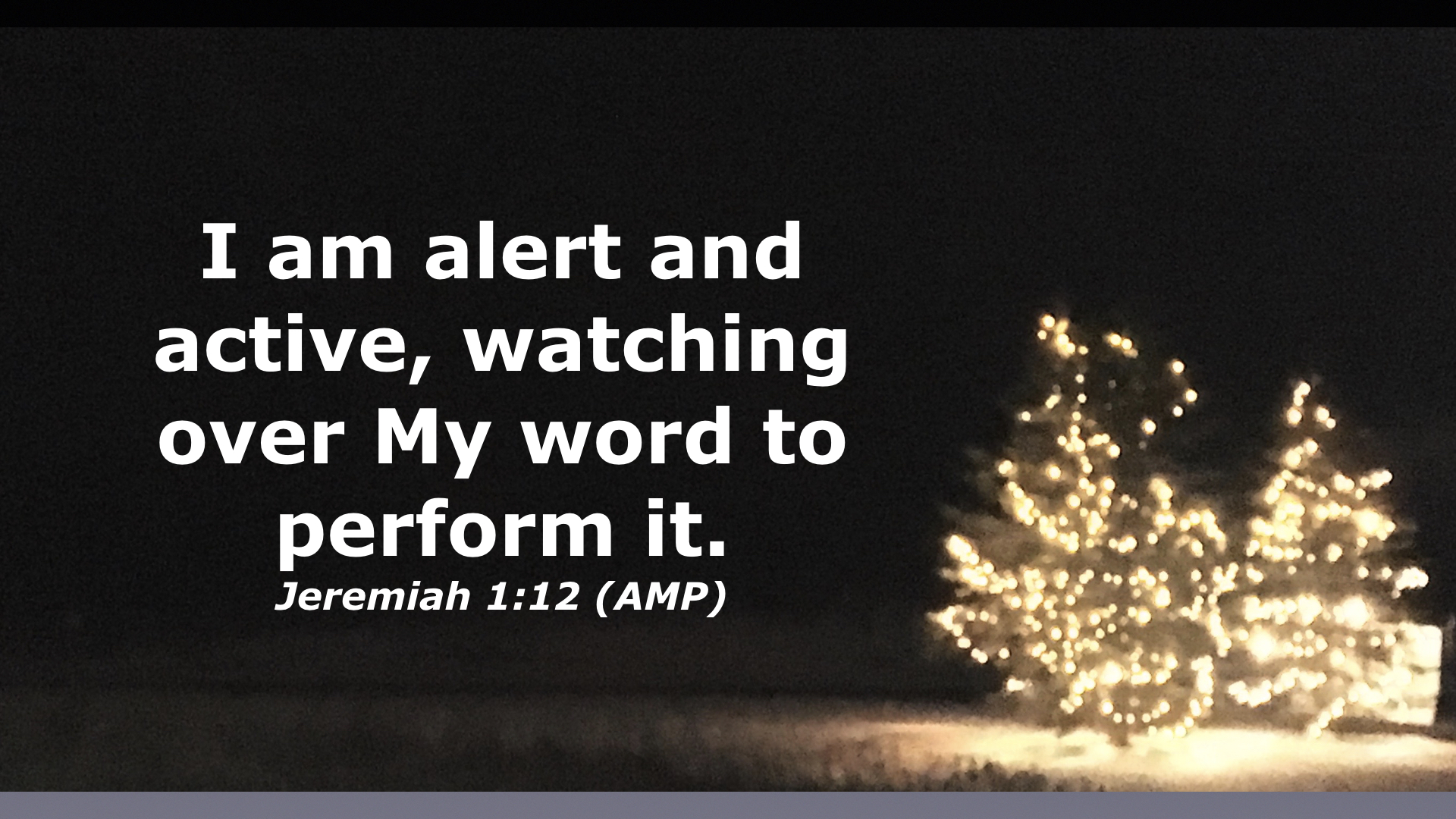
God has a plan for your life. His plan for you was in place before you were even conceived in your mother’s womb. And—even this very moment—He is watching over world events to make sure that every detail of His plan is fulfilled (see Ephesians 2:10; Psalm 139:16; Jeremiah 1:12)!
If you ever feel like you are in a “winter” season of your life—always winter and never Christmas—just remember that God sees you, He has a plan for you, and He will bring an end to your winter just in time to bring you CHRISTmas!
We live in an amazing time—the First Advent of Jesus has already happened in Bethlehem, and yet we are eagerly anticipating Christ’s Second Advent at any moment!
The fourth stanza of Charles Wesley’s classic Christmas carol Hark! The Herald Angels Sing is a wonderful between-the-Advents look at what happened at the First Advent, and what we have to look forward to in the Second Advent. The key thing to note in this stanza is the verbs: come, fix, rise, bruise, efface, stamp, and reinstate.
COME, Desire of nations—What is the “desire of nations”? It’s the restoration of God’s glory on earth, so it’s not really a what but a Who. The prophet Haggai informs us that our Desire is realized in the Advent of Jesus (2:1-9).
FIX in us Thy humble home—At His First Advent, Jesus came and humbly made His home among us, even dying to pay the penalty for our sins (Hebrews 2:14, 17; Philippians 2:7-8).
RISE, the woman’s conquering seed—Although Jesus was obedient to death—even death on a Cross, He didn’t stay dead but was resurrected (Philippians 2:8-9; Revelation 1:18)!
BRUISE in us the serpent’s head—With His death and resurrection, Jesus took away the sting of death from satan, fulfilling one of God’s first prophesies (Genesis 3:15; 1 Corinthians 15:19-26, 54-57).
Adam’s likeness now EFFACE—That means to wipe out, do away with, expunge. That’s exactly what God does with our forgiven sins (Psalm 103:1-4, 10-12)!
STAMP Thine image in its place—Although our sin has been effaced, God doesn’t leave us as blank slates, but instead He allows the image of His Son Jesus to be stamped onto our lives (2 Corinthians 1:21-22; 2 Corinthians 3:18).
REINSTATE us in Thy love—The relationship we longed for is now reborn in us (1 Corinthians 15:49)!
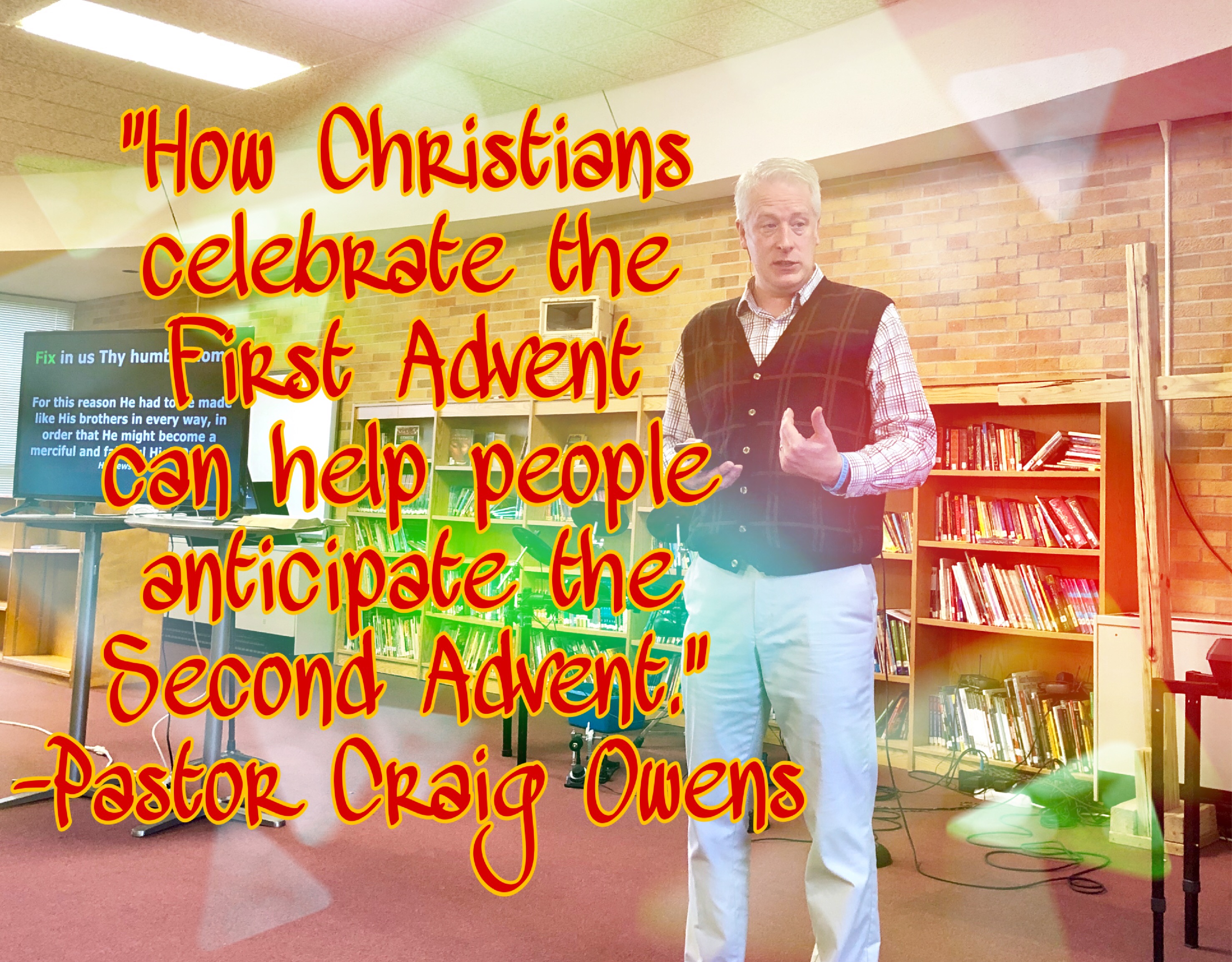
The Desire of Nations HAS come, and yet He WILL come again! We’re living between the Advents now, so a good question for Christians to ask is: “How are we to live?” I think there are three key things—
In celebration that Jesus came at His First Advent to be our Savior
In anticipation of the Second Advent
In obedience to God’s Word (Revelation 22:7)
To take a look at the other stanzas of this Christmas carol, please click here.
A man is at his finest towards the finish of the year; He is almost what he should be when the Christmas season is here; Then he’s thinking more of others than he’s thought the months before, And the laughter of his children is a joy worth toiling for. He is less a selfish creature than at any other time; When the Christmas spirit rules him he comes close to the sublime.



 As a general rule, God would like us to pray much more boldly than we typically do.





 Craig T. Owens