10 Quotes From “Letters To A Birmingham Jail”

Letters To A Birmingham JailIn Letters To A Birmingham Jail, it was very eye-opening to read how modern-day clergy respond to Dr. Martin Luther King’s 50-year-old “Letter From A Birmingham Jail.” What an innovative book! Check out my review of this book by clicking here, and then enjoy a few quotes.

“Our nation is losing a sense of gratitude for the abundance and great bounty that God has bestowed upon us. In America we have witnessed the god of materialism sink his teeth into the fabric of the human soul. He has unleashed a spirit of rugged individualism, fueled by selfish greed. This has become normalized behavior that discourages a care for the other, and especially for the poor. The hope for America is that we will see our responsibility to care for the least among us in recognition of the truth that every person is created in the very image of God.” —John Perkins

“God-centered, Christ-exalting, Bible-saturated churches where the gospel is cherished—these are the birthplace of the kind of racial harmony that gives long-term glory to God and long-term gospel good to the world.” —John Piper

“Some may have quoted, ‘Wait for the Lord; be strong, and let your heart take courage; wait for the Lord!’ (Psalm 27:14). But this call to wait for the Lord never meant stop doing what He commanded us to do in the pursuit of holy goals. Waiting for the Lord means our action is essential, but His is decisive. The farmer must wait for the harvest. But no one works harder than the farmer.” —John Piper

“Now, to be sure the Bible teaches that the government does exist for the well-being of the people; but too many Christians got lock-jaw, saying very little or nothing when in fact the country needed the engagement of the church and a word from God. Silence and business as usual did severe damage to our prophetic integrity. We’ve made progress but our efforts are still woefully inadequate.” —Crawford W. Loritts, Jr.

“I believe from Genesis to Revelation that God is the God of all nations and all peoples. He created all things, including all peoples, all people groups, all races, and all skin colors. From the beginning of the Bible to the end of the Bible, you see God redeeming all people to Himself. John 3:16 tells us God sent Jesus because ‘God so loved the world.’ The Acts of the Apostles tells the story of the earliest church plants. The gospel-dominated people of Matthew, Mark, Luke, and John spilled over into the launching of gospel communities, or church plants in Acts. Racial and cultural issues surfaced almost immediately. Jesus had actually been the One to begin stirring the pot in His ministry as He intentionally went to Samaria, and did all sorts of things with and for Gentiles that Jewish men were not supposed to do.” —John Bryson

“If the torrential force of the first church as found in the book of Acts is to become our twenty-first-century reality, then the faces of most of our churches must look like the faces of the first-century church: multiethnic.” —Bryan Loritts

“If folks feel that this kind of ‘affirmative action’ equals ‘reverse discrimination,’ we can gently lead them to the apostolic solution to the racial controversy in Acts 6:1-7, where the men appointed to resolve a serious ethnic crisis all appear to be from the minority Hellenistic population! It’s called Christian wisdom.” —Sandy Willson

“The mission of the church, the pursuit of the legacy of Christ, cannot simply be about business and culture as usual. If we allow it to be so simple, we will soon find ourselves in the trap the disciples are caught in as they begin to walk around Samaria out of habit, only to notice that Jesus is going a different way. How often this conflict arises when we attempt to follow Jesus! We set out with the best of intentions, and soon find ourselves not following Him but expecting Him to follow us. The sin in us longs to travel only the road that offers comfort and familiarity. Yet Jesus unapologetically walks the more challenging road, inviting us to witness what He will do if we choose to follow.” —Albert Tate

“Diversity is an implication and hope fueled by the gospel, but it is not the good news. Yet, while the gospel and diversity are not equal ideas, diversity is nevertheless an issue that we are weak in and need to grow in—an issue that requires much time, energy, and prayer.” —Matt Chandler

“Producing homogenous churches can be done with relative ease and a total lack of dependence on the Spirit.” —Matt Chandler

The Key Decision For Influential Men

Influence like JesusNo matter how you look at it, being a Dad is hard work! Men have this constant balancing act between being tough and being tender. Guys have to have their game face on at work, and their family face on at home. They’ve got to work hard knocking down work competitors, and then work just as hard building up their family members.

But there is one key decision that will determine how successful a man will be at work, at home, in his social circles, and even in his relationship with God. 

In Acts 10 we meet a centurion named Cornelius. Centurions were professional military officers in charge of a centuria (usually 100 soldiers). Centurions were always “on the clock,” never letting down their guard nor their professionalism.

All of the centurions mentioned in the New Testament have noble characteristics associated with them. Whereas someone might be uncertain how a typical Roman soldier would behave, people felt more assured when the centurion was on the scene. Even Roman governors like Pilate, and Jewish kings like Herod, all seemed to fully trust the judgement, honesty, and resourcefulness of centurions.

Centurions worked hard to get where they were, and had some well-earned perks:

  • Good pay (one built a temple, Luke 7:1-5).
  • “Men of authority” with soldiers and servants reporting to them (Matthew 8:8-9).
  • Opportunity for advancement (Rome was the dominate world force).
  • A certain degree of autonomy (they had their own residences (Matthew 8; Acts 10).

In order to keep this position, they would have to buy into kurios Caesar (Caesar is lord). To do otherwise was to put their position and future advancement at risk.

Yet Cornelius was different. 

He was a trusted centurion, but something unusual stood out about his life. Luke the historian describes him as devout and God-fearing, mentioning his pious activities of prayer and giving to the poor. Cornelius’ own soldiers referred to him as righteous and respected by notable people in the community.

But probably most telling of all: God noticed how committed Cornelius was (see Acts 10:3-4)!

Cornelius had a lot to lose by rejecting kurios Caesar for, as the Christians said, kurios Iesous (Jesus is Lord). Yet after carefully weighing his options, he saw that trusting God was the best thing he could do for his family. His view of the eternal outweighed anything that he could gain in the temporal.

This one decision changed everything! 

Because Cornelius trusted God, look at the expansiveness of his influence, not only at home, but at work, and among his friends and extended family, and throughout his community:

  • His family—ALL his family were devout and God-fearing (v. 2)
  • His employees—a devout soldier (v. 7)
  • His community—respected by ALL the Jewish people (v. 22)
  • His relatives and friends—his relatives and close friends (v. 24)
  • In fact everyone around him—we are ALL here in the presence of God (v. 33)
  • And most importantly, with God—your prayers and gifts have come up as a memorial offering before God (v. 4)

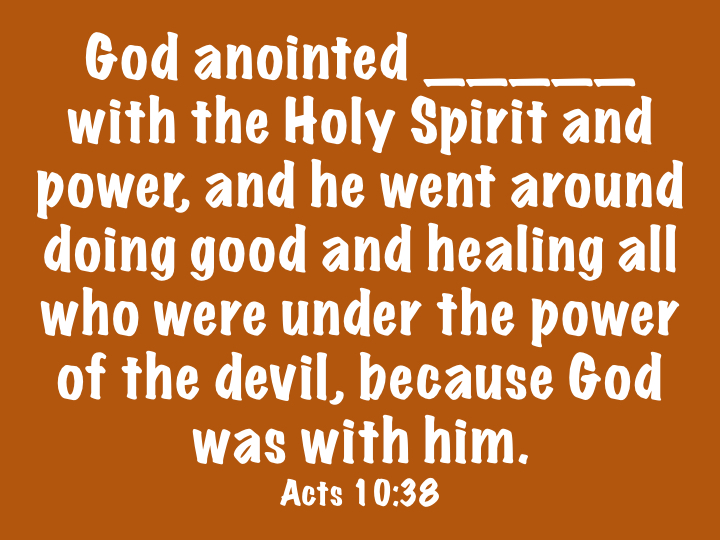
Fellas, you can have this same level of influence if you, too, will decide to live karios Iesous: Jesus is Lord. If you will do that, you can have said about your life what was said about Cornelius and Jesus: “God anointed ___________ with the Holy Spirit and power, and he went around doing good and healing all who were under the power of the devil, because God was with him!” (see Acts 10:38).

10 Quotes On The Difference Between Christianity And Islam

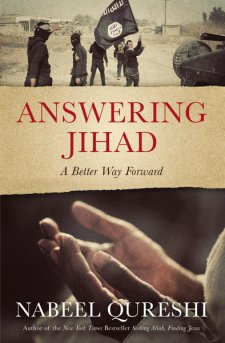
Nabeel Qureshi wrote a couple of outstanding books to help those in the West better understand Islam (Seeking Allah, Finding Jesus and Answering Jihad).

Answering JihadIn Answering Jihad, Nabeel invests several chapters in looking at the differences between Christianity as displayed in the Bible and Islam as displayed in the Quran. Here are some of the more noteworthy quotes I pulled from this book. The references in parenthesis in these quotes are references to a chapter and verse in the Quran.

“Christians believe Jesus is God, but the Quran is so opposed to this belief that it condemns Jesus worshipers to hell (5:72).”

“According to Jesus, God is our Father, yet the Quran very specifically denies that God is a father (112:1-4).”

“Islam roundly condemns worship of the Trinity (5:73), establishing in contrast its own core principle of Tawhid, the absolute oneness of God. Tawhid emphatically denies the Trinity, so much so that it is safe to say the doctrine of God in Islam is antithetical to the doctrine of God and Christianity. … The Trinity teaches that God is not a person, but three Persons: Father, Son, and Spirit. To assert that the God of Islam is the same person as the God of Christianity becomes almost nonsensical at this point, as the Christian God is tripersonal, two persons of Islam specifically denies in the Quran.”

“The Trinity is an elaboration of Jewish theology, not a rejection. By contrast, Tawhid is a categorical rejection of the Trinity, Jesus’ deity, and the Fatherhood of God, doctrines that are grounded in the pages of the New Testament and firmly established centuries before the advent of Islam. The earliest Christians were all Jews, incorporating their encounter with Jesus into their Jewish theology. Nothing of the sort is true of Muhammad, who was neither a Jew nor a Christian. Islam did not elaborate on the Trinity but rejected and replaced it.”

“Christians worship the triune God: a Father Who loves unconditionally, a Son Who incarnates and Who is willing to die for us so that we may be forgiven, and an immanent Holy Spirit Who lives in us. This is not who the Muslim God is, and it is not what the Muslim God does. Truly, Tawhid is antithetical to the Trinity, fundamentally incompatible and only similar superficially and semantically. Muslims and Christians do not worship the same God.”

“The warfare the Quran commands is not due to any evil action, but rather due to the beliefs of non-Muslims, such as the Christian belief that Jesus is the Son of God (9:29, 30).”

“Warfare in the Old Testament is not about subjugating inferior peoples. Yahweh does not promise the Jews that they are the best of people and that their enemies are less than they are. He makes this quite clear in Deuteronomy 9:4-6. … The Quran, by contrast, envisions Muslims as the best people: ‘You are the best of all people, evolved for mankind’ (3:110). It teaches that Jews and Christians who do not convert to Islam are the worst of all creation: ‘Those who do not believe [in Islam] from among the Jews and Christians and the idolaters will go to hell. They are the worst of creatures’ (98:6; see 98:1-5 for context). This is why the Quran in 9:33 commands Muslims to fight Jews and Christians, so that Allah may cause Islam ‘to prevail over all religions.’”

“Muhammad’s life moved from peaceful to violent in a crescendo, reflecting the trajectory of the Quran, and he died just after conquering the Arabian Peninsula. His words in the canonical collections were, ‘I have been ordered by Allah to fight against the people until they testify that none has the right to be worshiped but Allah and that Muhammad is Allah’s messenger. … [O]nly then will they save their lives and property from me’ (Sahih Bukhara 1.2.25). Muslims are commanded to follow Muhammad’s example, and his example was jihad.

“By contrast, the stories in the Old Testament do not enjoin Jews or Christians to fight today. Though commands to fight are recorded in the text, no Jew or Christian is commanded to memorialize these battles as ongoing conduct. They were a part of the history of Israel, certainly, not a mandate or continuing command going forward.”

“Violence has a very different place in Islam and Christianity’s theological frameworks. The final marching order of Islam is jihad. The final marching orders of Christians are grace and love.”

But I especially love this thought from Nabeel: “One can both love Muslims and insist that the God they worship is not the same as the Christian God.” Amen!

Other quotes from Answering Jihad are here and here.

Additional quotes from Seeking Allah, Finding Jesus are here.

Never Hurry, Just Persist

This is from On This Day.

Sheldon JacksonWe often rush when we should plod, forgetting that we usually accomplish more by persisting than by hurrying. 

Sheldon Jackson was born on May 18, 1834 in the Mohawk Valley of New York. When he was four his parents dedicated him to God’s service, and his ambition from youth was to be a missionary. After graduating from Princeton Theological Seminary, he joined the thousands trekking to the American West. Most were searching for gold, land, and open skies. Wagon trains were leaving St. Louis daily. The golden spike tied East to West in 1866 as the Union Pacific Railway opened. Boom towns arose. Cowboys and mining camps, rowdy saloons and gunfighters filled the frontier. Jackson was everywhere, searching for souls with the fervor of a prairie fire. He once organized seven churches in 15 days. 

He stood just over five feet tall, but his size, he said, allowed him to sleep anywhere. His bed was a stagecoach floor, a saloon loft, a hollow log, a teepee, a canoe. Someone described him as “short, bewhiskered, bespectacled, but a giant.”And his field was immense. He served as superintendent of Presbyterian missions from New Mexico to Minnesota. 

When the United States purchased Alaska, he headed there at once, and the North soon became his passion. He explored the dangerous, uncharted fog-hidden coasts of the Bering Sea and the Arctic Ocean. He established schools for the young and placed missionaries in the hamlets. He evangelized, established churches, and brought Bibles to the Eskimos. 

He worried that explorers and exploiters were slaughtering whales and seals, depriving Eskimos of their natural food supplies. So, braving criticism and ridicule, Sheldon raised $2,000 and brought reindeer from Siberia. Soon great herds were providing transportation, food, clothing, and livelihood for the people. Sheldon made 26 trips to Alaska, and during 50 years of ministry he traveled a million miles through the West and North. He oversaw the establishing of 886 churches. Few men have ever so planted the Christian faith over such a wide area. His secret? His friends simply explained, “He never hurried. He just persisted.” 

Good Friday—It Is Finished

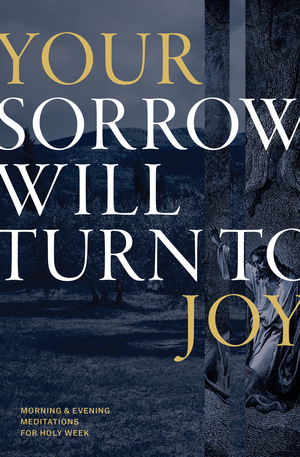
Your Sorrow Will Turn To JoyThis is from a chapter in Your Sorrow Will Turn To Joy, and is probably one of the best depictions of Good Friday I have read. Jon Bloom writes—

It is Friday, April 3, A.D. 33. It is the darkest day in human history, though most humans have no clue of this. In Rome, Tiberius attends to the demanding business of the empire. Throughout the inhabited world, babies are born, people eat and drink, marry and are given in marriage, barter in marketplaces, sail merchant ships, and fight battles. Children play, old women gossip, young men lust, and people die. 

But today, one death, one brutal, gruesome death, the worst and best of all human deaths, will leave upon the canvas of human history the darkest brushstroke. In Jerusalem, God the Son, the Creator of all that is (John 1:3), will be executed. 

The Garden 

The Jewish day dawns with night, and never has it been more fitting, since today the hour has come and the power of darkness (Luke 22:53). Jesus is in Gethsemane, where He has prayed with loud cries and tears, being heard by His Father (Heb. 5:7) whose will will be done. Jesus hears noises and looks up. Torches and hushed voices signal the arrest party’s arrival. 

Jesus wakes His sleepy friends who are jarred alert at the sight of their brother, Judas, betraying his Rabbi with a kiss. Soldiers and servants encircle Jesus. Peter, flushed with anger, pulls out his sword and lunges at those nearest Jesus. Malchus flinches, but not enough. Blinding pain and blood surge where his ear had been. Voices speak, but Malchus only hears the screaming wound, which he’s grabbed with both hands. He feels a hand touch his hands and the pain vanishes. Under his hands is an ear. Stunned, he looks at Jesus, already being led away. Disciples are scattering. Malchus looks down at his bloody hands. 

The Sanhedrin 

Jesus is led brusquely into the house of Annas, a former High Priest, who questions Him about His teaching. Jesus knows this informal interrogation is meant to catch Him disoriented and unguarded. He is neither, and gives this manipulative leader nothing. Rather, He refers Annas to his hearers and is struck with irony by a Jewish officer for showing disrespect. Frustrated, Annas sends Jesus on to his son-in-law Caiaphas, the current High Priest. 

At Caiaphas’s house the trial gets underway quickly. Morning will come fast. The Council needs a damning verdict by daybreak. The examination proceeds as bleary-eyed Sanhedrin members continue to file in. 

The trial has been assembled hastily and witnesses haven’t been screened well. Testimonies don’t line up. Council members look disconcerted. Jesus is silent as a lamb. Irritated and impatient, Caiaphas cuts to the quick: “I adjure You by the living God, tell us if you are the Christ, the Son of God” (Matt. 26:63). The hour has come. Charged in the name of His Father to answer, Jesus speaks the words that seal the doom for which He had come to endure (John 12:27): “You have said so. But I tell you, from now on you will see the Son of Man seated at the right hand of Power and coming on the clouds of heaven” (Matt. 26:64). 

In a moment of law-breaking (Lev. 21:10) politically religious theater, Caiaphas tears his robes in feigned outrage and thinly concealed relief over Jesus’s blasphemy. He declares the trial’s end with, “What further testimony do we need? We have heard it ourselves from His own lips” (Luke 22:71). 

As the sun breaks over Jerusalem’s eastern ridge, Judas swings from his own belt, Peter writhes in the grief of his failure, and Jesus’s face is streaked with dried blood and saliva from the pre-dawn sport of the temple police. The Council’s verdict: guilty of blasphemy. Their sentence: death. But it’s a sentence they cannot carry out. Rome refuses to delegate capital punishment. 

The Governor 

Pilate’s mood, already sour over the Sanhedrin’s sudden insistent intrusion so early in the morning, worsens as he grasps the situation. They want him to execute a Galilean “prophet.” His seasoned instincts tell him something isn’t right. He questions Jesus and then tells the Council, “I find no guilt in this Man” (Luke 23:4). 

A game of political chess ensues between Pilate and the Sanhedrin, neither realizing that they are pawns, not kings. Pilate makes a move. As a Galilean, Jesus falls under Herod Antipas’s jurisdiction. Let Herod judge. Herod initially receives Jesus happily, hoping to see a miracle. But Jesus refuses to entertain or even respond. Antipas, disappointed, blocks the move by returning Jesus to Pilate. 

Pilate makes another move. He offers to release Jesus as this year’s annual Passover pardoned prisoner. The Council blocks the move. “Not this man, but Barabbas!” they cry (John 18:40). Pilate is astounded. The Sanhedrin prefers a thief and murderer to this peasant prophet? 

Pilate tries another move. He has Jesus severely flogged and humiliated, hoping to curb the Council’s blood thirst. Again the move is blocked when the Council insists that Jesus must be crucified because “He has made Himself the Son of God” (John 19:7). Check. Pilate’s fear grows. Jesus’s divine claim could threaten Rome. Worse, it could be true. Roman deities supposedly could take on human form. His further questioning of Jesus unnerves him. 

One last move. Pilate tries to persuade the Sanhedrin to release Jesus. One last block and trap. “If you release this Man, you are not Caesar’s friend. Everyone who makes himself a king opposes Caesar” (John 19:12). The Council has Pilate where they want him: cornered. Checkmate. 

And the triune God has the Council, Pilate, and satan where He wants them. They would have no authority over the Son at all unless it had been given them from above (John 19:11). Fallen Jews, Gentiles, and spiritual powers unwittingly collaborate in executing the only innocent death that could possibly grant the guilty life. Checkmate. 

The Cross 

Morning wanes as Jesus stumbles out of the Praetorium, horribly beaten and bleeding profusely. The Roman soldiers had been brutal in their creative cruelty. Thorns have ripped Jesus’s scalp and His back is one grotesque, oozing wound. Golgotha is barely a third of a mile through the Garden Gate, but Jesus has no strength to manage the forty-pound crossbar. Simon of Cyrene is drafted from the crowd. 

Twenty-five minutes later, Jesus is hanging in sheer agony on one of the cruelest instruments of torture ever devised. Nails have been driven through His wrists (which we only know about because of the doubt Thomas will express in a couple days—see John 20:25). A sign above Jesus declares in Greek, Latin, and Aramaic who He is: the King of the Jews. 

The King is flanked on either side by thieves and around Him are gawkers and mockers. “Let Him save Himself, if He is the Christ of God, His Chosen One!” some yell (Luke 23:35). One dying thief even joins in the derision. They do not understand that if the King saves Himself, their only hope for salvation is lost. Jesus asks His Father to forgive them. The other crucified thief sees a Messiah in the mutilated man beside him, and he asks the Messiah to remember him. Jesus’s prayer is beginning to be answered. Hundreds of millions will follow. 

It is mid-afternoon now and the eerie darkness that has fallen has everyone on edge. But for Jesus, the darkness is a horror He has never known. This, more than the nails and thorns and lashings, is what made Him sweat blood in the garden. The Father’s wrath is hitting Him in full force. He is in that moment no longer the Blessed, but the Cursed (Gal. 3:13). He has become sin (2 Cor. 5:21). In terrifying isolation, cut off from His Father and all humans, He screams, “Eli, Eli, lema sabachthani,” Aramaic for “My God, My God, why have You forsaken Me?” (Matt. 27:46; Ps. 22:1). No greater love (John 15:13), humility (Phil. 2:8), or obedience (Heb. 5:8) has ever or will ever be displayed. 

Shortly after 3:00 P.M., Jesus whispers hoarsely for a drink. In love, He has drained the cup of His Father’s wrath to the dregs. He has born our full curse. There is no debt left to pay and He has nothing left to give. The wine moistens His mouth just enough to say one final word: “It is finished” (John 19:30). And God the Son dies. 

It is the worst and best of all human deaths. For on this tree He bears our sins in His body (1 Pet. 2:24), “the righteous for the unrighteous, that He might bring us to God” (1 Pet. 3:18). And now it is finished.

Book Reviews From 2015

O Holy Night & O Holy Day

O Holy NightIn 1847 an unnamed parish priest sent an unusual request to Placide Cappeau, the commissioner of wines in a small French town: “You are well known for your poems. Would you consider writing a poem for our Christmas mass?” Cappeau was both intrigued and honored, and he soon penned an essay called Cantique de Noel.

Cappeau felt that his poem was more worthy of a song, than just merely a poem, so he turned to his friend Adolphe Adams. Adams was a classically trained musician, but he was also a Jew. Adams said to Cappeau, “You’re asking me to write a melody for a poem that celebrates a Man I do not view as the Son of God, and a poem that celebrates a day I do not celebrate?” But because his friend Cappeau had requested it, he gave it his best effort. Three weeks later, Cantique de Noel was first heard at the Christmas Eve midnight mass.

Cantique de Noel quickly became popular throughout France. But when it was discovered that the lyricist Cappeau had left the church to become a socialist and that the musical composer Adams was a Jew, the Catholic Church banned the song from being sung in any of its churches. Still, the song grew in popularity.

During the build-up to the American Civil War, an abolitionist named John Dwight was especially moved by a line in Cantique de Noel: “Chains shall He break, for the slave is our brother, and in His name all oppression shall cease.” Dwight published his version of Cantique de Noel in his abolitionist magazine with the new title O Holy Night. The song quickly caught on in America.

The opening words of O Holy Night speak to our hearts today, as much as they did to those present at the First Advent—long lay the world in sin and error pining, till He appeared and the soul felt its worth. To pine for something means to long painfully for something just out of our reach. It’s what the psalmist in ancient Israel captured too when he wrote, My soul yearns, even faints, for the courts of the Lord; my heart and my flesh cry out for the living God (Psalm 84:2). There is a longing in all of us to know the Lord!

That’s why Christ’s First Advent is such a blessed, joyous event! In the second stanza we sing—In all our trials born to be our Friend; He knows our need, to our weakness is no stranger. Indeed the writer of Hebrews tells us why Jesus was born as a human (Hebrews 2:14-18), and why we can approach Him confidently (4:15-16).

Christ’s Incarnation allows us to put our faith in Him. When we do, we experience the Atonement. I like to remember this word by saying it at-onement. In other words, the Heavenly Father now sees me at-onement with His Son—when He looks at me, He sees Jesus. That’s why God forgets our forgiven sins (Hebrews 8:12)!

Then the third stanza of O Holy Night begins to tell us how we live out the at-onement every day by loving one another, enjoying His peace, living free and helping others get free too, singing joyfully to God day after night after day after night!

The First Advent was a holy night because Christ’s Atonement it makes us holy. So now all our nights are O holy nights, and all our days are O holy days, and all our work is O holy work, and all our relationships are O holy relationships!

Christ’s First Advent changes EVERYTHING for those who put their faith in Him. Is that you? Are you living in Christ’s at-onement? If not, you can be today by simply asking Him to come into your life.

You can check out some of the other Christmas carols we have looked at here. And check out the video of this message too—

If you have missed any of the messages in our series The Carols Of Christmas, you can find the full list by clicking here.

Links & Quotes

link quote

“It is the consistent teaching of the Scriptures that Christian faith is not genuine until it comes to expression in good works. Jesus taught this (Matthew 7:20), as did the apostles Paul (Ephesians 2:10), James (James 2:14-17), John (1 John 2:1-6), Peter (2 Peter 1:5-11), and the writer of the book of Hebrews (Hebrews 6:10-12; 10:24).” —T.M. Moore

Fascinating question: Did the New Testament authors know they were writing Scripture?

[VIDEO] Why do Christians follow some biblical commands, but not others?

Live Action reports: Yes, defunding Planned Parenthood will affect low-income women. It will help them!

True: Thanksgiving starts on Sunday.


6 Ways To Make Sure Everything You Do Is Sacred

It's all sacredAround 1300 AD, the Church began propagating a myth. It showed up in two words that were created around that time: clergy and laity.

Simply stated, clergy is from a root word that means “the learned men … the ones enlighten for ministry.” And laity is anyone not in that inner circle.

Insecure leaders did this to maintain control. They continued to read the Scriptures in Latin, which few could read, so they made sure that the clergy alone had a Bible, and they alone became the expounders of how the Bible told us to live.

In the clergy-laity divide, they also created a sacred-secular divide.

When Paul addresses the Colossians he does so with anything but a clergy-laity divide in mind. He calls them the holy and faithful brothers in Christ (Colossians 1:2). The KJV translates holy as saints, for that’s how Paul indeed sees them. And he sees them as his very own faith-filled brothers.

Paul also has anything but a sacred-secular divide in mind as he instructs then—whatever you do, whether in word or deed.

He makes it clear that everything we do as faith-filled, holy saints is to be sacred and God-honoring.

How do we do whatever we do in a sacred, God-honoring way? We ask these six questions:

[1] Can it be done with a clear conscience? (Acts 23:1; 24:16)

  • “It is not WHAT a man does that determines whether his work is sacred or secular, it is WHY he does it.” —A.W. Tozer

[2] Will it promote the Gospel? (Philippians 1:27)

[3] Is it a good deed? (Acts 10:38; James 3:13)

[4] Does it point people to God? (1 Peter 2:12; 1 Corinthians 10:31)

[5] Can I do it in the name of Jesus? (Colossians 3:17do it ALL in the name of Jesus)

[6] Does it cause others to be thank-full? (Colossians 3:17giving THANKS to God the Father).

Live according to your high calling, for all you do is sacred!

(To check out more thoughts on Colossians 3:15-17, click here and here.)

William Tyndale & Charles Spurgeon On Sacred Words And Deeds

William TyndaleThis morning in my message, we looked at the example of William Tyndale.

William Tyndale believed the Bible should be read by all (not just by the “enlightened” clergy), and he undertook the process of translating the Hebrew and Greek into English. In the preface to the first five books of the Old Testament, he wrote, “I had perceived by experience, how that it was impossible to stablish the lay people in any truth, except the Scripture were plainly laid before their eyes in their mother tongue, that they might see the process, order, and meaning of the text.”

  • The clergy tried to intimidate Tyndale into stopping his work, but he said, “I defy the Pope and all his laws. If God spare my life, ere many years I will cause a boy that driveth the plough to know more of the Scripture, than he doust.”
  • Eventually he was put on trial for heresy, where he was also accused of trying to profit from his work. He replied, “I call God to record against the day we shall appear before our Lord Jesus, that I never altered one syllable of God’s Word against my conscience, nor would do this day, if all that is in earth, whether it be honor, pleasure, or riches, might be given me.”
  • Ultimately Tyndale was strangled to death, and then burned at the stake. But his dying words were, “Lord, open the eyes of the king.”

William Tyndale was notable in his struggle to break down the unbiblical clergy/laity (or sacred/secular) divide. Another great man who addressed this topic over 300 years after the death of Tyndale was Charles Spurgeon—

C.H. Spurgeon“To a man who lives unto God nothing is secular, everything is sacred. He puts on his workday garment and it is a vestment to Him. He sits down to his meal and it is a sacrament. He goes forth to his labor, and therein exercises the office of the priesthood. His breath is incense and his life a sacrifice. He sleeps on the bosom of God, and lives and moves in the divine presence. …The Lord hath cleansed your houses, He has cleansed your bed chambers, your tables, your shops, He has made the bells upon your horses holiness to the Lord, He has made the common pots and pans of your kitchens to be as the bowls before the altar, if you know what you are and live according to your high calling. You housemaids, you cooks, you nurses, you ploughmen, you housewives, you traders, you sailors, your labor is holy if you serve the Lord Christ in it, by living unto Him as you ought to live. The sacred has absorbed the secular.”