6 Quotes From “The Dawn Of Christianity”

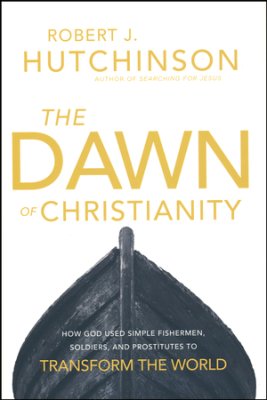
Robert J. Hutchinson makes the history around the birth, life, death, and resurrection of Jesus, as well as the history of Christ’s followers after His resurrection, come to life in The Dawn Of Christianity. Check out my full review by clicking here.

“Skeptics make much of the fact that historians have no independent corroboration from outside sources of most of the events described in the Gospels, but this is common with ancient history and hardly unique to Christianity. For example, virtually everything historians know about the Three Hundred, the Spartan warriors who held off a Persian invasion at the mountain pass of Thermopylae in 480 BC, comes from the writings of a single Greek author, Herodotus. What’s more, the earliest copy historians have of Herodotus’s chronicle of this event, The Histories, dates to the tenth century AD—or more than 1,350 years after it was written! In comparison, historians have a cornucopia of historical sources and archaeological evidence about Jesus of Nazareth and the early Christian community. For example, more than fifty papyrus manuscripts of New Testament texts exist that date before AD 300. The earliest of these manuscripts, a papyrus fragment from the Gospel of John known as P52, dates to around AD 125 or just thirty years after the original was likely written.”

“Around 20 BC, the half-Jewish King Herod the Great set himself the task of renovating and expanding the temple and surrounding area. There had been a small natural plateau there before, fixed atop the ridge in the northeastern corner of Jerusalem; but Herod wanted something far more spectacular. He therefore enclosed this natural plateau on all sides with four immense retaining walls, some more than one hundred feet high, made up of massive rectangular ashlars, or cut stones, that weighed as much as 415 tons each. These stones are so large that even modern cranes and bulldozers would have some difficulty moving them. Herod then filled in this entire quadrangle with stones and dirt, creating an artificial hilltop plaza—roughly 1,500 feet long by 1,000 feet wide—of more than thirty-five acres. In modern terms, Herod’s Temple Mount is so large that about twenty-six American football fields could fit in the space available. This massive engineering marvel has endured for two thousand years and still stands today, almost wholly intact.”

“Simon the Rock continued to loudly protest that he was willing to die, if need be, but would never deny Jesus. The other disciples said the same. This is one of those incidents that even many skeptics believe must be historical under the ‘criterion of embarrassment,’ which means that the Christian community was unlikely to invent a story that cast such a bad light on its leaders; therefore, it must have actually happened.” 

“Recent archaeological discoveries are showing that the New Testament in general, and the Gospels in particular, are far more reliable historical sources than previous generations of New Testament experts realized.”

“All four Gospels report that this board, what the Romans called the titulus, held the inscription ‘The King of the Jews.’ John’s Gospel alone reports that Jesus’ name was also on the titulus, ‘Jesus of Nazareth, the King of the Jews,’ and that it was written in Hebrew, Latin, and Greek (19:19-20). In Latin the charge read Iesus Nazarenus Rex Iudaeorum, which is why, to this day, the letters INRI appear at the top of crucifixes.”

“In 1968, archaeologists uncovered a first-century tomb at Giv’at ha-Mivtar, northeast of Jerusalem. Inside the tomb they found in ossuary containing the skeleton of a crucified man—the first and only relic of a crucified man found in Israel. Inscribed on the ossuary was his name in Hebrew: Yehochanan. On top of the bone of his right heel was a wooden board, and through the board, and his heel, was a 4.5-inch iron nail.”

The Dawn Of Christianity (book review)

Sometimes when people are reading the Gospels and the Book of Acts in the New Testament of the Bible they forget what an accurate history is presented at a pivotal time in world events. In The Dawn Of Christianity, Robert J. Hutchinson makes the history behind, surrounding, and after the biblical accounts come to life in a fresh way.

The Dawn Of Christianity tells the history surrounding Jesus of Nazareth and His followers almost in a novel-like format. Hutchinson masterfully puts together the four Gospel accounts and Luke’s history of the early church in chronological order, and then brings in archaeological, geographic, and anthropological resources like a supporting cast to the biblical account. Along the way, we are introduced to extra-biblical characters, places, and customs that add a new depth of understanding to the history presented in Scripture.

Hutchinson notes, “Recent archaeological discoveries are showing that the New Testament in general, and the Gospels in particular, are far more reliable historical sources than previous generations of New Testament experts realized.” Indeed, he makes good use of as many pertinent finds as possible to enhance his storytelling.

The Dawn Of Christianity spans the time from just before the birth of Jesus Christ of Nazareth and then tracks the spread of Christianity for about 20 years following Christ’s ascension into heaven. It’s a fascinating and enlightening story for both Bible aficionados and skeptics alike.

I am a Thomas Nelson book reviewer.

Does Your Life Have A “BC/AD” Split?

Today we live in 2017 AD. But 1800 years ago the A.D. stood for “Anno Diocletiani” which means “the year of Diocletian,” a ruthless, anti-Christian Roman emperor. In 525 AD, a monk named Dionysius proposed changing the A.D. to “Anno Domini” which means “the year of our Lord,” referring to the Advent of Jesus Christ. Then to mark the dates of the calendar before Christ’s birth properly, the “B.C.” (before Christ) period was introduced.

But BC/AD is just a dating system. There is no such thing as “BC”—there has never been a time before Christ! He has always been! Throughout what we now refer to as the Old Testament (or the BC period),  Jesus is constantly revealing Himself through little hints here and there, but when He comes to earth as a Man, all the hints become a bright, blazing, unmistakable Truth!

Just like Dionysius came up with a new dating system based on the Advent of Jesus, the Israelites had a new starting point marked by the Passover (see Exodus 12:1-7). Everything from this point backward is reset and dates are now counted forward from this moment. Before this time they were slaves in Egypt; after this time they were free and called God’s special people.

The “BC” Passover had three important components:

  • A perfect lamb without any defect (Exodus 12:5)
  • The lamb is slaughtered at twilight (v. 6)
  • The blood is applied to the door (v. 7)

When Jesus came to Earth, He showed how He was all three of those elements. In the “AD” Jesus is—

In both BC and AD God declares the same message: “When I see the blood, I will pass over you.” The blood seals the deal and brings God’s forgiveness of sins, and His blessings on the life that is now completely His.

The word remember appears frequently in the BC, as in “remember what God did for you.” In the AD remember appears at a pivotal time—when Jesus shared His last supper with His followers, He told them that Communion would be a time for them to remember all that Jesus did for us as the Perfect Lamb, whose Blood is applied to the Door of our heart, so that God’s judgment could pass over us.

Do you have a Passover date? A time when the BC became AD in your life? If so, good! Keep remembering that, and don’t ever go back to being a citizen of anything but God’s Kingdom.

If not, today can be the first day of a new era for you. By faith you can apply the Blood of the Perfect Lamb to the Door of your heart, and you will no longer be a slave of “Egypt” (a picture of being utterly trapped and unable to help yourself), but a citizen of Heaven! All it takes is for you to believe that Christ’s blood purchased your freedom, so you can ask God the Father to forgive you of all your BC past, and then you can live forever in the AD with Jesus as your Savior and Master!

Check out this video where I explain this BC/AD system more, and join me next week as we learn more about how Jesus Christ bridges the BC/AD divide.

How John Newton Found God

“It took John Newton to write the hymn Amazing Grace. ‘Let me not fail to praise that grace that could pardon,’ he said, ‘such sins as mine.’

“Newton had gone to sea at age 11, apprenticed on his father’s ship. He spent his teen years learning to be profane, irreligious, and indulgent. Female slaves being transported from Africa were at Newton’s disposal, and even seasoned sailors were alarmed at his corruption. Newton’s life angered his father and disgusted his friends, and he was finally pressed into service for the British Navy. He deserted, but was arrested, stripped, and flogged. He became the property of a slave trader in Sierra Leone, who gave him to his sadistic mistress. John became a loathsome toy she tormented for over a year. He finally boarded ship for Britain.

“On March 9, as he carelessly read a Christian book to pass the time, the thought came to him, ‘What if these things are true?’ He snapped the book closed and shook off the question. ‘I went to bed in my usual indifference, but was awakened by a violent sea which broke on us. Much of it came down below and filled the cabin where I lay. This alarm was followed by a cry that the ship was going down. We had immediate recourse to the pumps, but the water increased against all our efforts. Almost every passing wave broke over my head. I expected that every time the vessel descended into the sea, she would rise no more. I dreaded death now, and my heart foreboded the worst, if the Scriptures, which I had long since opposed, were true.’

“The vessel survived the March 10, 1748, storm, and Newton began earnestly studying the Bible. He embraced Christ and eventually entered the ministry, becoming one of England’s best-loved preachers and a leader in the fight against slavery. He once recalled, ‘That tenth of March is a day much remembered by me; and I have never suffered it to pass unnoticed since the year 1748—the Lord came from on high and delivered me out of deep waters.’” —from On This Day

William Carey’s Perseverance

“William Carey, the ‘father of modern missions,’ wanted to translate the Bible into as many Indian languages as possible. He established a large printshop in Serampore where translation work was continually being done. Carey spent hours each day translating Scripture, while his insane wife ranted and raved.

“Carey was away from Serampore on March 11, 1832. His associate, William Ward, was working late. Suddenly Ward smelled smoke. He leaped up to discover clouds belching from the printing room. He screamed for help, and workers passed water from the nearby river until 2 a.m., but everything was destroyed.

“On March 12, 1812 missionary Joshua Marshman entered a Calcutta classroom where Carey was teaching. ‘I can think of no easy way to break the news,’ he said. ‘The printshop burned to the ground last night.’ Carey was stunned. Gone were his massive polyglot dictionary, two grammar books, and whole versions of the Bible. Gone were sets of type for 14 eastern languages, 1200 reams of paper, 55,000 printed sheets, and 30 pages of his Bengal dictionary. Gone was his complete library. ‘The work of years—gone in a moment,’ he whispered.

“He took little time to mourn. ‘The loss is heavy,’ he wrote, ‘but as traveling a road the second time is usually done with greater ease and certainty than the first time, so I trust the work will lose nothing of real value. We are not discouraged; indeed the work is already begun again in every language. We are cast down but not in despair.’

“When news of the fire reached England, it catapulted Carey to instant fame. Thousands of pounds were raised for the work, and volunteers offered to come help. The enterprise was rebuilt and enlarged. By 1832, complete Bibles, New Testaments, or separate books of Scripture had issued from the printing press in 44 languages and dialects. The secret of Carey’s success is found in his resiliency. ‘There are grave difficulties on every hand,’ he once wrote, ‘and more are looming ahead. Therefore we must go forward.’” —from On The Day

The Gift Of Fanny Crosby


Image processed by CodeCarvings Piczard ### FREE Community Edition ### on 2016-02-09 20:53:56Z | http://piczard.com | http://codecarvings.com“The hymns To God Be the Glory, Blessed Assurance, All the Way My Savior Leads Me, and He Hideth My Soul remind us that it’s never too late to begin serving Christ. Some people start as children, others as teens or young adults. But Moses was 80 when God commissioned him, and Paul was middle-aged. So was Fanny Crosby, author of the above hymns.

“Fanny was born in a cottage in South East, New York, in 1820. Six weeks later, she caught a cold in her eyes, and a visiting doctor prescribed mustard poultices, leaving her virtually blind for life. Growing into childhood, she determined to make the best of it, writing at age eight:

O what a happy soul I am!
Although I cannot see, 
I am resolved that in this world contented I will be.

“Fanny spent many years in New York’s Institution for the Blind, first as a student, then as a teacher and writer-in-residence. Her career flourished; her fame swelled. She recited her poems before Congress and became friends with the most powerful people in America, including presidents. But not until 1851 did Fanny meet her greatest friend, the Lord Jesus. While attending a revival meeting at John Street Methodist Church in New York, she later recalled, a prayer was offered, and ‘they began to sing the grand old consecration hymn, “Alas! And Did My Savior Bleed?” and when they reached the line, “Here, Lord, I give myself away,” my very soul was flooded with celestial light.’

“Fourteen years later she met the hymnist William Bradbury, who told her, ‘Fanny, I thank God we have met, for I think you can write hymns.’ Bradbury suggested an idea for a song he needed, and on February 5, 1864, Fanny Crosby, seizing his idea, wrote:

We are going, we are going
To a home beyond the skies
Where the fields are robed in beauty
And the sunlight never dies.

“It was her first hymn, and she was 44. But by the time she reached her ‘home beyond the skies’ 50 years later, she had written 8,000 more.” —From On This Day

The Unusual History Of The King James Bible

on-this-day“How odd that the most famous Bible in history should bear the name of a hard-drinking, foul-mouthed, ego-driven homosexual who rejected all demands for reform within the church.

“James VI of Scotland, son of imprisoned Mary, Queen of Scots, was raised in drafty Scottish castles by self-serving lords. He grew up religious and well-trained in theology. He went to church every day. But he was rude, rough, loud, conceited, and bisexually immoral. He was also shrewd.

“At age 37 he managed to succeed his cousin, Elizabeth I, as England’s monarch. As he traveled from Scotland to London, he met a group of Puritans bearing a ‘Millenary Petition’ signed by nearly 1,000 pastors. It demanded renewal within the church. The Puritans, stirred by the Geneva translation of the Bible and by Foxe’s popular Book of Martyrs, wanted to purify the church. The established clergy opposed Puritan demands, and the new king realized his kingdom was torn.

“He convened a conference for church leaders at his Hampton Court estate on January 12, 1604, and the Puritans vigorously presented their concerns. James rejected their requests, sometimes thundering against them, white with rage. At the conclusion of the conference he flung his arm toward the Puritans, shouting, ‘I shall make them conform or I will harry them out of this land, or do worse.’ Many of the dispirited Puritans, abandoning hope for the Anglican Church, began worshiping in small groups as they felt the Bible taught them. They were tagged Separatists, but from these persecuted cells came the Baptists in 1611, the Pilgrims who fled to America in 1620, and other dissenting groups.

“But on one issue at Hampton Court the king and Puritans had agreed. When Puritan John Rainolds requested a new translation of the Bible, James promptly approved it, saying, ‘I have never yet seen a Bible well-translated. But I think the Geneva is the worst.’ Seven years later the Authorized Version was unveiled, ironically making vice-prone King James one of the best-recognized names in English church history.” —Robert Morgan, On This Day

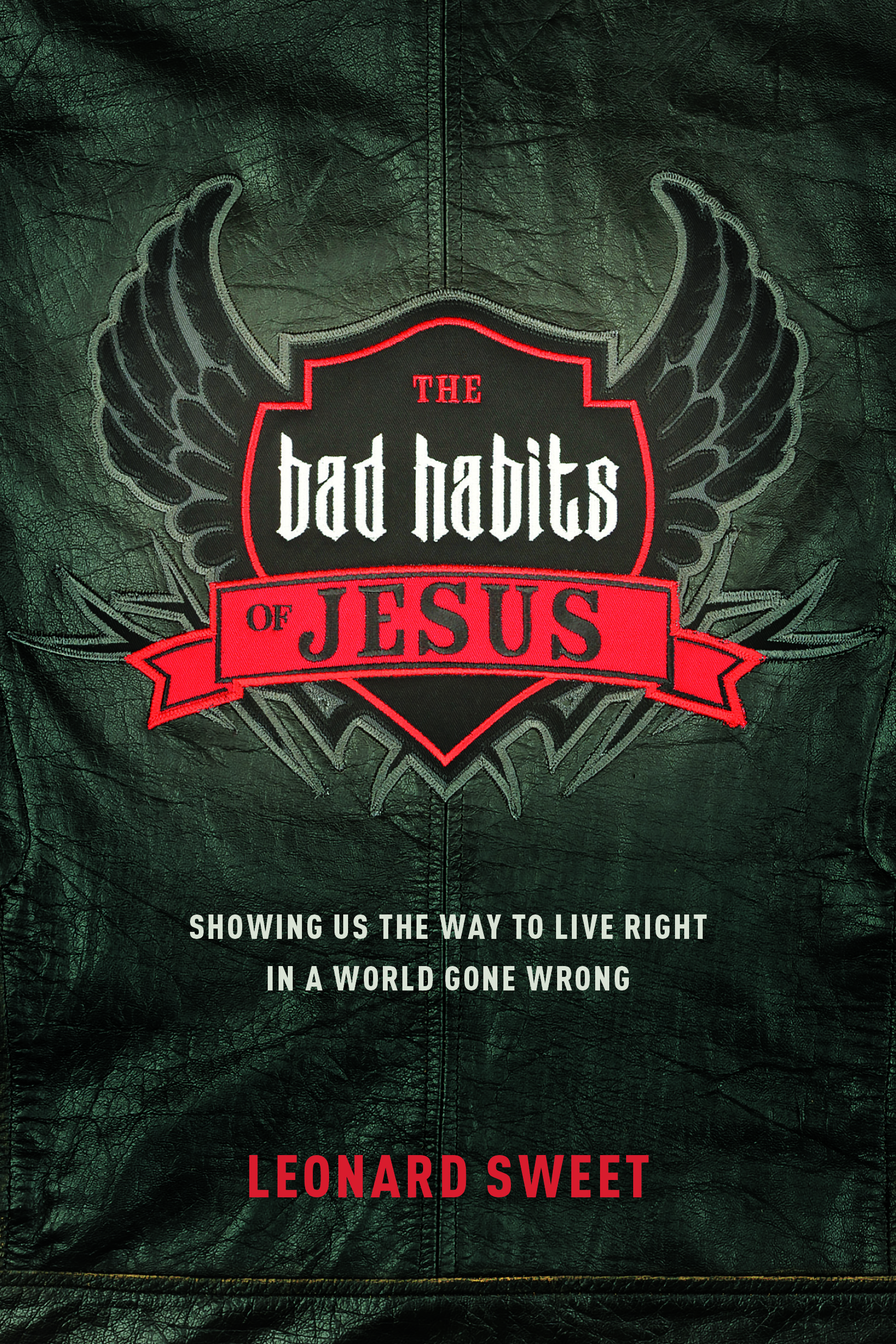
The Bad Habits Of Jesus (book review)

the-bad-habits-of-jesusMy wife asked me what book I was reading, and I told her, “The Bad Habits Of Jesus by Leonard Sweet.” Her quick reply was, “Oh, He didn’t have any!” Her gut reaction to this book’s title is probably the gut reaction of most Christians. But to think of Jesus that way is to completely misconstrue how much of a revolutionary Jesus was!

Sweet gives us 15 bad habits Jesus demonstrated while He lived and ministered in first-century Israel. They were “bad habits” because they went against the grain of all that polite, religious society had ingrained in the culture.

To give you an idea, let me list just one of Jesus Christ’s bad habits: He enjoyed the company of women. I know today many people would say, “Yeah, so what’s the big deal.”

The big deal is that women were called “misbegotten” by Aristotle. They were persona non grata if they weren’t in the company of their fathers or husbands. They could be mistreated or divorced solely because their husbands wanted to. And women could never—ever!—be a student of a rabbi.

And yet Jesus not only taught women, but He treated them with a dignity and respect that was unheard of in His culture. He allowed them to have key roles in supporting His ministry, and He elevated their value in society. Leonard Sweet points out, “Jesus is the first Person in recorded history, in fact, to critique the ‘male gaze,’ saying that ‘Anyone who looks at a woman lustfully has already committed adultery with her in his heart.’ Jesus took the proverb ‘As he thinks in his heart, so is he’ seriously but went beyond ‘Don’t do it’ to ‘Don’t even think about it!’” Jesus protected women like they had never been protected before.

This is truly an innovative, paradigm-busting, eye-opening book, and in the process, my understanding of what Jesus taught and demonstrated in the Gospels was expanded as well. The Bad Habits Of Jesus is written in such an engaging style that you will have a hard time putting it down.

I am a Tyndale book reviewer.

Encouragement For The Parent Of A Prodigal

There is perhaps nothing more heart-wrenching for a Christian parent than to see their son or daughter living a life differently than how they were raised.

One biblical promise these parents can claim in prayer is—Train up a child in the way he should go: and when he is old, he will not depart from it (Proverbs 22:6).

But perhaps an historical example might be helpful as well—

He was born in 354 in a North African town set among the woods near the Mediterranean. His father was a pagan, but his mother, Monica, was of devout Christian stock. 

Augustine was an undisciplined child, idle and truant despite frequent beatings. He loved sports and pranks and soon discovered a host of adolescent pleasures. … Augustine was also brilliant, and he soon moved to Carthage to further both his studies and his fun. Monica warned him against fornication, but ‘I ran headlong with blindness.’ 

At about 18 he found himself the father of a son. At the same time he joined a cult. Years passed, and Monica, praying ceaselessly, heard that Augustine was planning to leave Africa for Rome. She begged him not to go. When he refused, she determined to go with him. Using deception, he left her praying in a chapel and sailed without her; but she took a later boat and intercepted him. They traveled to Milan where she persuaded him to listen to the great Bishop Ambrose. The bishop’s razor-sharp sermons penetrated Augustine’s head, if not yet his heart. Monica continued praying, confiding her struggles to Ambrose. He told her not to worry: ‘It isn’t possible for the son of such prayers to be lost.’ 

One day as Augustine sat in a friend’s garden he heard a child singing, ‘Take up and read!’ He opened the Bible near him and read from Romans 13: ‘Don’t go to wild parties or get drunk or be vulgar or indecent.… Let the Lord Jesus Christ be as near to you as the clothes you wear.’ By the time he finished the sentence, he later said, he was converted. On the eve of Easter, April 24, 387, Augustine and his son Adeodatus were baptized by Ambrose as Monica watched. Her lifetime of prayer was answered, and a church father was born.

Years later as Augustine shared about his conversion in his book Confessions, he wrote out this prayer to God: “My mother, Your faithful servant, wept to You for me, shedding more tears for my spiritual death than others shed for the bodily death of a son. You heard her.”

So, Christian Mom and Dad, don’t EVER stop praying for your wayward child! God hears those prayers, and is moving on behalf of your child.

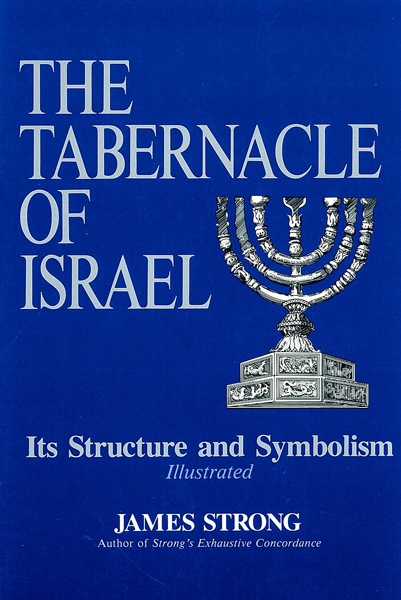
The Tabernacle Of Israel (book review)

the-tabernacle-of-israelIf you have ever used the Strong’s Exhaustive Concordance Of The Bible, you are probably familiar with the work of Dr. James Strong. By the way, if you haven’t used this concordance, it is 1500+ pages listing every word in the Bible and their Hebrew or Greek word and definition. By contrast, Dr. Strong’s book on The Tabernacle Of Israel is only 170 pages, but it’s just as jam-packed with helpful information.

I was recently reading through the books of the Bible where God gives Moses highly specific instructions for the portable Tabernacle that is to be used for the Hebrews to conduct their worship services. This temporary Tabernacle not only served them while they sojourned in the wilderness for 40 years, but it became the pattern for the brick-and-mortar Temple that King Solomon built years later, and its pattern is referred to again in the New Testament book of Hebrews as being a pattern of the worship in heaven. Obviously this is a significant thing!

Dr. Strong uses his extraordinary skills to compile an easy-to-follow study of the design guidelines, building materials, and exact layout of this Tabernacle. He uses not only the biblical accounts, but also augments his work with extensive archeological discoveries.

Then to wrap up the book, Dr. Strong talks about the significance of the layout, colors, materials, and even mathematical significance of the Tabernacle’s design, showing how it still impacts the New Testament Christian to this day.

This is an academic book, but it is well worth your time if you would like to get a more in-depth knowledge of the Tabernacle which God commanded Moses to build.