


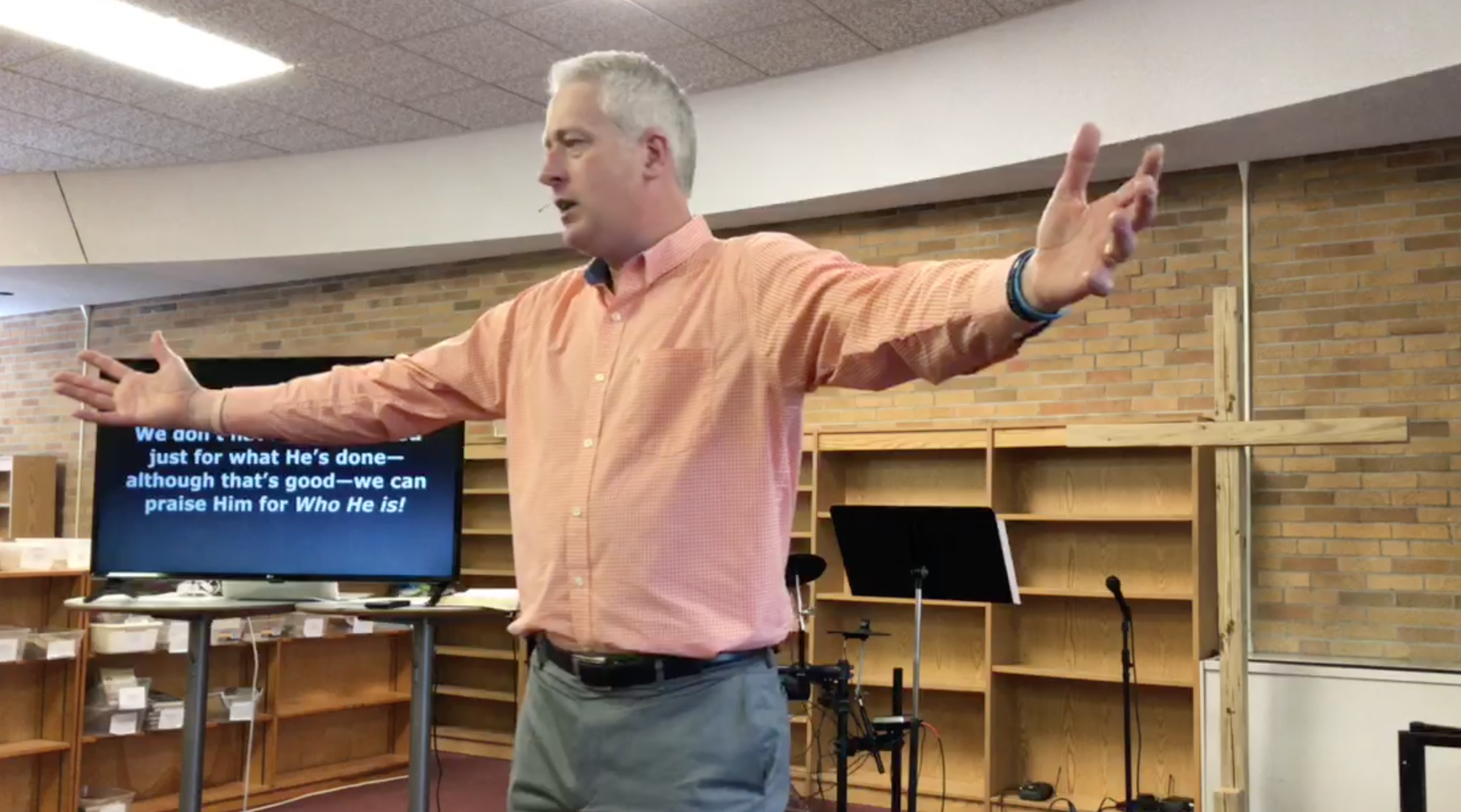
 The Lord is gracious and compassionate, slow to anger and rich in love. (Psalm 145:8)
Let those words sink in because most of us live like the exact opposite is true. Check out this 2-minute explanation …
The Lord is gracious and compassionate, slow to anger and rich in love. (Psalm 145:8)
Let those words sink in because most of us live like the exact opposite is true. Check out this 2-minute explanation …
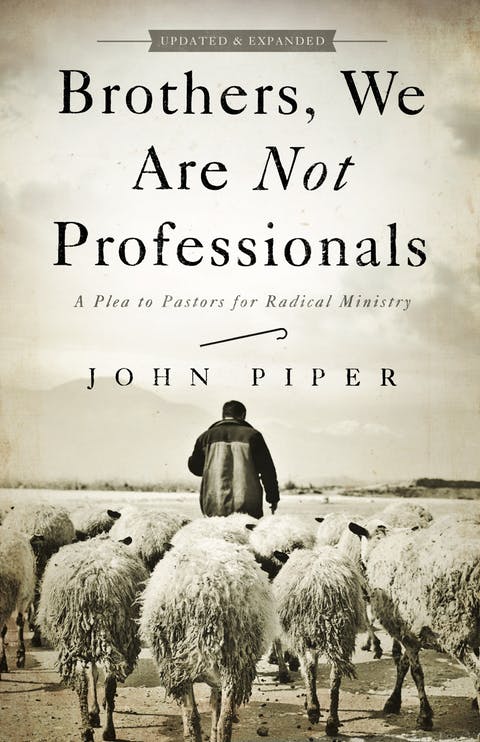 John Piper has written a book that I think every pastor should read: Brothers, We Are Not Professionals. You can read my review of this book here. Below are just a few quotes that caught my attention.
“We pastors are being killed by the professionalizing of the pastoral ministry. The mentality of the professional is not the mentality of the prophet. … The professionalization of the ministry is a constant threat to the offense of the gospel.”
“I defined spiritual leadership as ‘knowing where God wants people to be and taking the initiative to get them there by God’s means in reliance on God’s power.’ … So the goal of spiritual leadership is to muster people to join God in living for God’s glory.”
“The Son of Man has not come seeking employees. He has come to employ Himself for our good.”
“In this fallen world, the tide is always going out. That is, the affections of our people have for God Himself (as distinct from His gifts) are continually prone to shrink. Our job is to tilt the world, by the power of the Spirit and the Word, so that the tide rolls in again.”
“A pastor who feels competent in himself to produce eternal fruit knows neither God nor himself.”
“Salvation is a gift of God (Ephesians 2:8). Love is a gift of God (1 Thessalonians 3:12). Faith is a gift of God (1 Timothy 1:14). Wisdom is a gift of God (Ephesians 1:17). Joy is a gift of God (Romans 15:13). Yet as pastors we must labor to ‘save some’ (1 Corinthians 9:22). We must stir up the people to love (Hebrews 10:24). We must advance their faith (Philippians 1:25). We must impart wisdom (1 Corinthians 2:7). We must work for their joy (2 Corinthians 1:24). We are called to labor for that which is God’s alone to give. The essence of the Christian ministry is that its success is not within our reach.”
“Are not our people really yearning to be around a man who has been around God? Is it not the lingering aroma of prayer that gives a sense of eternity to all our work?”
“Few things frighten me more than the beginnings of barrenness that come from frenzied activity with little spiritual food and meditation.”
“The domestication of God is a curse on preaching in our day. We need to recover reality and the language of majesty and holiness and awe and glory.”
“He knows that the only way he can deliver God’s message to God’s people is by being rooted in it and by saturating his sermon with God’s own revelation in the Bible. The Bible-oriented preacher wants the congregation to know that his words, if they have any abiding worth, are in accord with God’s words. He wants this to be obvious to them. That is part of his humility and his authority. Therefore, he constantly tries to show the people that his ideas are coming from the Bible. He is hesitant to go too far toward points that are not demonstrable from the Bible.”
“Our salvation and the salvation of those who hear us week after week depend in large measure on our faithful attention to personal holiness and sound teaching” [see 1 Timothy 4:16]. … Oh, how earnest we should be in attending to ourselves and the soundness and helpfulness of our teaching!”
 David shows us a picture of a man who made prayer the cornerstone of all he did. He’s quick to cry, “Help!” when he’s in trouble, and he doesn’t hold back when he’s crying out to God.
But he also shows us that prayer isn’t just for times of trouble. Prayer should be an ongoing conversation with God so that we can get to know His heart. God knows what’s going to happen (Isaiah 46:10), and He wants us to ask Him to make things clear to us (Jeremiah 33:3).
In Psalm 145, David challenges us to lift up our praise to God, as well as our prayers. This psalm of praise teaches us that we don’t have to only praise God for what He’s done—although that’s a great thing to do—but we can also praise God simply for Who He is!
In this psalm, David says God is…
Let’s not be known just for our petitions, but for our praise.
Please join me in our continuing look at the Prayers Of David.
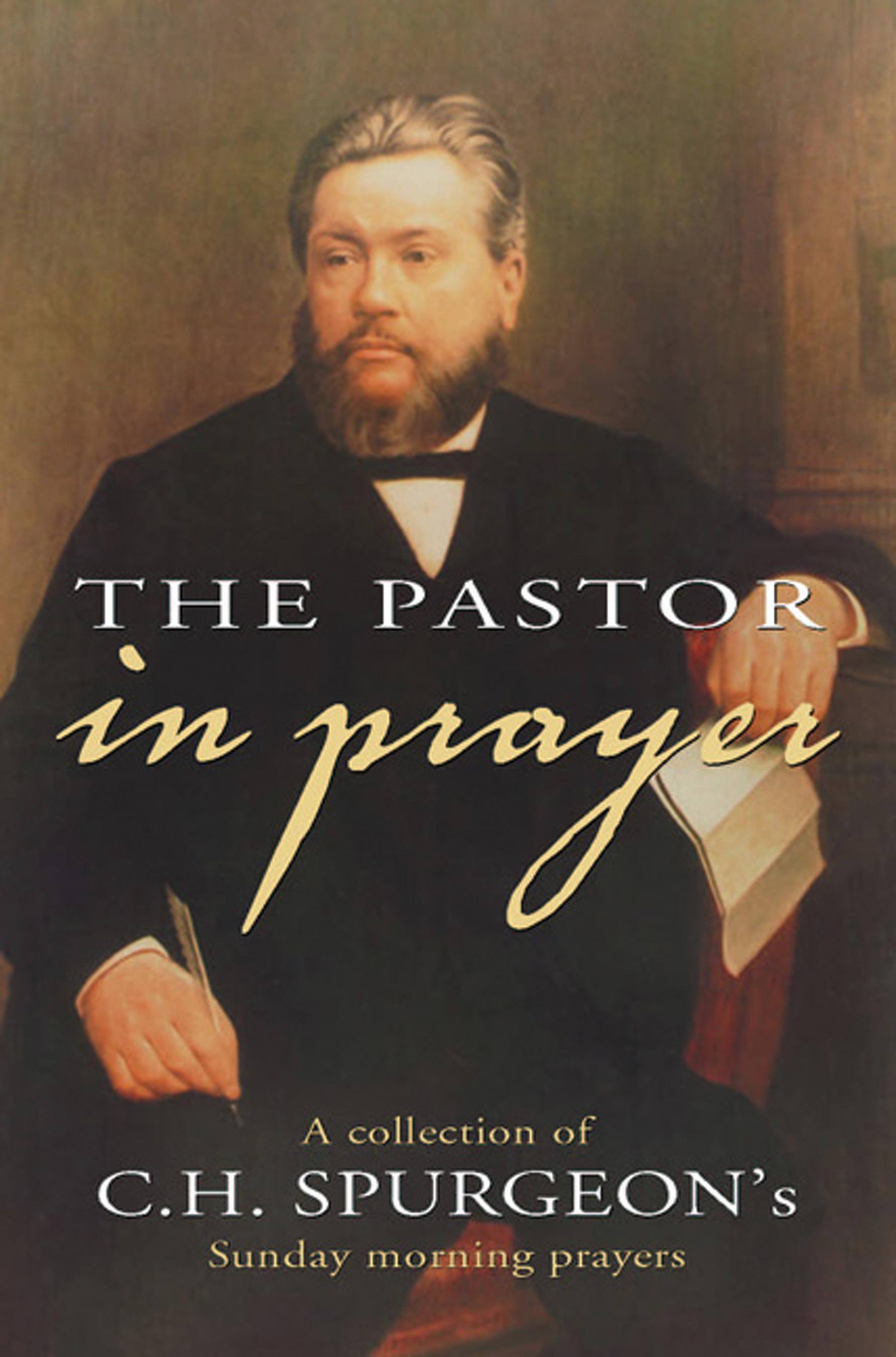 Charles Spurgeon was called (and rightly so!) “the prince of preachers.” I think in large part this was because Spurgeon’s sermons were so steeped in God’s Word. But Spurgeon was also renown for his moving prayers, and again I think this is due to the biblical content that was used to weave these prayers. We get a small sample of these prayers in The Pastor In Prayer.
In D.L. Moody’s first sermon at his church in Chicago, he recounted his time visiting Spurgeon’s church. The editor of The Pastor In Prayer summarizes Moody’s words this way: “What impressed him most was not the praise, though he thought he had never heard such grand congregational singing; it was not Mr. Spurgeon’s exposition, fine though it was, nor even his sermon; it was his prayer. He seemed to have such access to God that he could bring down the power from heaven; that was the great secret of his influence and his success.”
Truly prayer is the fuel for any meaningful church activity. We are blessed to have access to these moving, fueling prayers which Spurgeon prayed over his congregation every week. We can hear echoes of his sermon, challenges to draw closer to God, calls to repentance, pleas for revival, blessings on his congregation and on his country.
Truly Spurgeon’s prayers are as memorable and moving as are his sermons!
Pastor, I urge you to read this book and follow Spurgeon’s monumental example in praying for your congregation and in calling them to bolster their own prayer life. But even if you are not in the pastorate, all Christians can be inspired to greater depth in prayer by Mr. Spurgeon’s moving, passionate prayers.
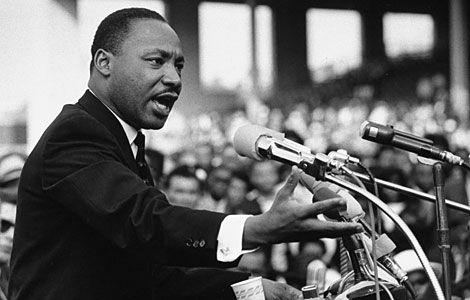 “The trouble isn’t so much that we don’t know enough, but it’s as if we aren’t good enough. The trouble isn’t so much that our scientific genius lags behind, but our moral genius lags behind. The great problem facing modern man is that, that the means by which we live have outdistanced the spiritual ends for which we live. So we find ourselves caught in a messed-up world. The problem is with man himself and man’s soul. …
“The great danger facing us today is not so much the atomic bomb that was created by physical science. Not so much that atomic bomb that you can put in an aeroplane and drop on the heads of hundreds and thousands of people—as dangerous as that is. But the real danger confronting civilization today is that atomic bomb which lies in the hearts and souls of men, capable of exploding into the vilest of hate and into the most damaging selfishness—that’s the atomic bomb that we’ve got to fear today. …
“My friends, all I’m trying to say is that if we are to go forward today, we’ve got to go back and rediscover some mighty precious values that we’ve left behind.” —Martin Luther King, Jr. (February 28, 1954)
 There’s a time when David was fainting and had no one to help him—my spirit was overwhelmed and fainted, throwing all its weight on me. I look for someone to come and help me, but no one gives me a passing thought! No one will help me; no one cares a bit what happens to me (Psalm 142:3-4).
Here’s the backdrop to this prayer. King Saul has tried to kill David twice, not including the time Saul sent assassins to David’s house to kill him there. Even Jonathan, Saul’s son, was embarrassed and grieved at his father’s shameful treatment of David.
David runs away from Saul so quickly that he doesn’t take any food or even a weapon. He literally only has the clothes on his back and the sandals on his feet. He’s able to get some day-old bread from Ahimelech the priest, and he also takes Goliath’s sword from the temple.
David is clearly not thinking clearly. He is wearing Goliath’s sword on his side. Remember that David killed Goliath. Goliath is from Gath. And where does David run? To Gath!! He has to pretend he’s gone insane in order to escape from Gath, and he flees to the cave of Adullam.
It’s here that he prays an intense prayer. How intense? David literally shouts this prayer. He uses phrases like:
Just how desperate is your situation? Just how heavy is your burden? Have you come to the realization that God is your ONLY help? Then, like David, cry out louder and louder to Him until He answers you!
A blind man got the attention of Jesus by yelling at the top of his lungs, “Jesus, Son of David, have mercy on me!!” Jesus said that this man’s faith healed him. What was the demonstration of his faith? It was the persistent calling out to the only One who could help him.
Earlier in this chapter, Jesus says this: So what makes you think God won’t step in and work justice for His chosen people, who continue to cry out for help? Won’t He stick up for them? I assure you, He will. He will not drag His feet. But how much of that kind of persistent faith will the Son of Man find on the earth when He returns? (Luke 18:7-8).
Once again Jesus links a continual cry for help to the definition of persistent faith.
So I’ll ask again: just how desperate are you for God to answer you? If you will cry out loud to Him, God will see your persistent faith and will step in and work for you.
Please join me on Sunday as we continue to learn more lessons from David’s prayers.
 David and his men are on the run from King Saul, but they hear that the small town of Keilah is being harassed by the Philistines. The bad guys are stealing the harvest from the people of Keilah, making it a very real possibility that they would starve during the upcoming winter. In his usual habit, David prays and asks God if he should help the people of Keilah, and God gives him the go-ahead to attack.
David and his men defeat the Philistines, not only returning the crops that had been stolen but also delivering some livestock that they took from the defeated Philistines. You might expect that David and his men were given a ticker-tape parade. Instead, as soon as David was within the city’s walls, he finds out that the people of Keilah are planning to sell him out to King Saul. Talk about ingratitude!
David and his men flee to the Desert of Ziph, where they won’t be a bother to anyone. Except the Ziphites get word to King Saul that they will gladly turn him over to the King whenever he asks for it.
What is David’s response? As usual, it’s prayer. His prayer is short and straight to the point—
Help, Lord, for the godly are no more; the faithful have vanished from among men.
In other words, David asks God, “Where have all the decent people gone?” It’s no different in our day, as Paul told his friend Timothy that people will only become more hypocritical liars, with their conscience not bothering them a bit!
What I love about David’s prayer is that he quotes God back to God. Check out the quotation mark: “Because of the oppression of the weak and the groaning of the needy, I will now arise. I will protect them from those who malign them.” And then David is quick to add that God’s words never fail!
I am convinced that our spiritual battles are largely lost or won in our minds. We need to recall God’s Word—Yet this I call to mind and therefore I have hope: Because of the Lord’s great love we are not consumed, for His compassions never fail (Lamentation 3:21-22).
So we cry, “Help!” to God because He is the only One who can help us: The Lord is my Helper; I will not be afraid. What can man do to me? (Hebrews 13:6).
But David has an important question to ask: “How long do we continue to call for help?” Have you ever asked God that?
Jesus said that the key to our successful praying is for us to remain in Him and for His Words to remain in us, like a branch remains connected to the vine (John 15:7). So let me ask you a question: How long should the branch remain connected to the vine before it’s ready to go off on its own?
The answer is simple—if the branch wants to remain alive and fruitful, it must stay in relationship with the vine forever!
So once again, look at how Jesus answers the “How long?” question—Keep on asking and it will be given you; keep on seeking and you will find; keep on knocking reverently and the door will be opened to you. (Matthew 7:7)
“Help!” is a great prayer that God loves to answer. “How long” do we pray that prayer? Until it’s answered … keep on, keep on, KEEP ON!
 When I was growing up and struggling with a problem, my Mom would always challenge me with one simple question—“Have you prayed about it?”
This is a great question because it helps us keep the main thing the main thing.
Typically we have three substitutes for prayer—
(1) Ignoring the problem. We’re like the board of directors that was facing falling sales and falling profits, but their solution was to just wait for something magical to happen.
(2) Talking about the problem. Christians often call this “a prayer request.” We take 10 minutes to give our friends all the gory, depressing details of our situation and oftentimes say “please pray for me” as we walk away. Solomon said, “Talk is cheap, like daydreams and other useless activities” (Ecclesiastes 5:7).
(3) Working to solve the problem. This isn’t in the Bible, but many times we act as if it is: God helps those who help themselves. Instead, God wants us to call on Him so He can reveal things to us (see Jeremiah 33:3).
Something that is in the Bible is this: “Ask whatever you wish, and it will be done for you.” But there is a condition for this, and it’s the part of the sentence that comes before the asking that makes all the difference—
If you remain in Me and My words remain in you, ask whatever you wish, and it will be done for you (John 15:7).
Oswald Chambers said, “We are apt to think of prayer as a common-sense exercise of our higher powers in order to prepare us for work; whereas in the teaching of Jesus, prayer is not to fit us for the ‘greater works,’ prayer is the work. Prayer is…the means whereby we assimilate more and more of His mind, and the means whereby He unveils His purposes to us.”
Prayer IS the work!
We don’t ignore the problem, and we don’t just talk about the problem. But neither do we pray and then work on the problem. Prayer is the work!
It can’t be stated enough: Prayer doesn’t prepare us to work, prayer IS the work.
Even the Apostle Paul identified this in his teaching on spiritual warfare. In language similar to what Jesus said in John 15:7, Paul says, “Be strong IN the Lord and IN His mighty power. Put on the full armor of God SO THAT you can take your stand against the devil’s schemes” (Ephesians 6:10-11).
Paul doesn’t tell us to ignore the devil’s schemes, nor does he tell us to talk about them. But neither does he tell us to put on God’s armor to fight against the devil’s schemes. He tells us to put on the armor of God so that we can pray (see Ephesians 6:18-20).
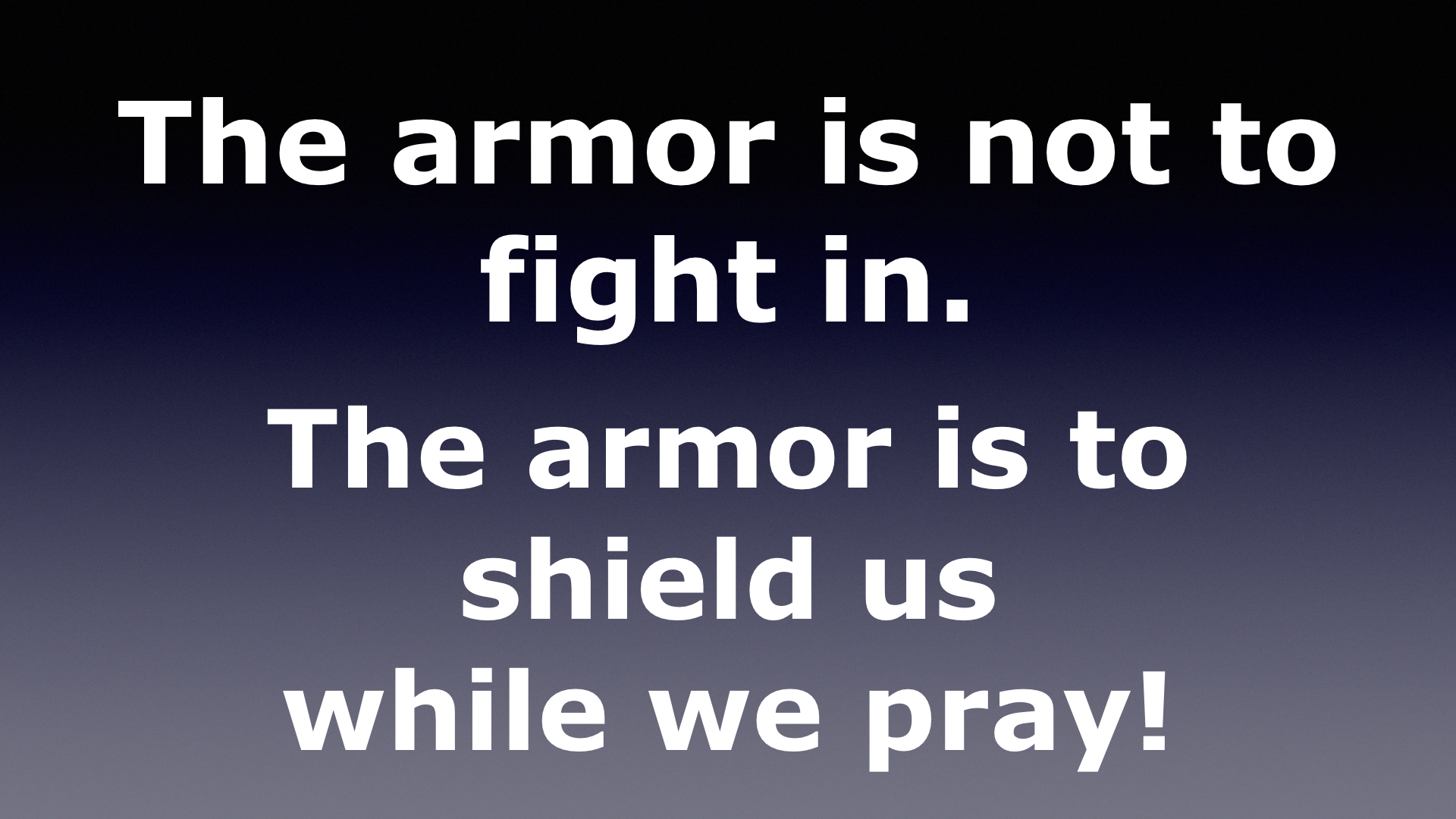
The armor of God is NOT to fight in, but to shield us while we pray!
When you are facing a difficulty, don’t ignore it, don’t just talk about it, and don’t go to work fighting it. Listen to the Holy Spirit asking you, “Have you prayed about it,” and then drop to your knees and PRAY!
This principle is illustrated so wonderfully in the life of David. We’ll be looking at David’s prayers over the next few weeks, and I hope you will join me in learning that prayer is the battle!
 A lot of Christians struggle with what is considered “worldly,” trying hard to avoid such things. In our last Q Series, this was a question that was asked by a couple of people: what exactly makes something “worldly”? Check out this short video clip…
In the video I reference the following Scriptures:
You can check out some other topics that we addressed in the Q Series like an apologetic for the Bible, parables, end times events, and prayer.
 I love reading, and I love sharing my love of good books with others! Here is a list of the books I read and reviewed in 2017. Click on a title to be taken to that review.
Everything You Always Wanted To Know About God
Evidence That Demands A Verdict
Interpretation Of The Scriptures
Leadership Promises For Every Day
The Christian Book Of Mystical Verse
The Christian In Complete Armour
Here are my book reviews for 2011.
Here are my book reviews for 2012.
Here are my book reviews for 2013.
Here are my book reviews for 2014.
Here are my book reviews for 2015.
Here are my book reviews for 2016.


 Craig T. Owens