Book Reviews From 2016

BookshelfHere are the books I read and reviewed in 2016. Click a title to read the review…

#struggles

Alive

An Angel’s Story

Answering Jihad

Archeological Study Bible

Chase The Lion

Churchill’s Trial

Culture

Hope … The Best Of All Things

How To Read A Book

I Stand At The Door And Knock

Jesus Always

Letters To A Birmingham Jail

Light & Truth—Acts & The Larger Epistles

Light & Truth—Revelation

Light & Truth—The Lesser Epistles

More Than A Carpenter

Of Antichrist And His Ruin

On This Day

One Of The Few

Our Iceberg Is Melting

Shaken

So, Anyway…

Streams In The Desert

The American Patriot’s Almanac

The Bad Habits Of Jesus

The Beauty Of Intolerance

The Blessing Of Humility

The Dawn Of Indestructible Joy

The Duty Of Pastors

The Gospels Side-By-Side

The Mathematical Proof For Christianity

The Philosophy Of Sin

The Place Of Help

The Porn Circuit

The Psychology Of Redemption

The Seven Laws Of Love

The Shadow Of An Agony

The Tabernacle Of Israel

Think On These Things

Today’s Moment Of Truth

Useful Maxims

Your Sorrow Will Turn To Joy

Here are my book reviews for 2011.

Here are my book reviews for 2012.

Here are my book reviews for 2013.

Here are my book reviews for 2014.

Here are my book reviews for 2015.

The Dawning Of Indestructible Joy (book review)

the-dawning-of-indestructible-joySometimes I am concerned that even those who know the story of the Incarnation of Jesus miss out on the stunningly powerful miracle that took place in Bethlehem. Instead of being awed by the majesty of Christ’s First Advent, we merely give lip service to His birth. John Piper’s book The Dawning Of Indestructible Joy will give you a fresh perspective of the miracle of Christ’s birth and all that it means.

The Dawning Of Indestructible Joy is written in 25 chapters, building an exciting countdown from December 1 until Christmas morning. Each day John Piper will awaken your heart and mind again to the unimaginable gifts that Jesus Christ made available to us through His incarnation. Gifts such as freedom from sin, intimacy with God, eternal life, and soul-lifting joy.

Each chapter is short enough to serve as an ideal family reading time, perhaps each evening around the dinner table in December. The Scripture passage for each day is short enough, too, for everyone to memorize so that they are prepared to share with anyone else the joy that comes with the miracle of the Advent.

Make this book a part of your family Christmas tradition.

What Child Is This Anyway?!

christ-the-kingA couple of years ago as we were setting up for our Living Nativity, I was wrapping a towel around the doll we were going to use for the infant Jesus. A young boy from the community was carefully watching me and he asked, “Is that baby Santa?”

“No, it’s not Santa,” I said. “See this manger? We’re getting things setup to tell the story about the very first Christmas, long before St. Nick came on the scene. Maybe you’ve heard about Mary and Joseph?”

The young lad’s eyes lit up as he seem to get the answer. “Oh! Is that baby Moses?!”

Clearly, people don’t know all the facts surrounding the first Advent of Jesus. Sometimes things in culture and church get jumbled—what belongs to which? Is Christmas a pagan holiday? Where do Christmas trees come in? Was the birth of Jesus actually on December 25? What does it all matter anyway?

Instead of running from these questions, Christians should use them to point people in the right direction. 

Have you heard the tune called Greensleeves? It’s been around longer than anyone knows. William Shakespeare referenced it in two of his plays and didn’t feel the need to explain it to his audience. The tune has been set to some pretty bawdy words about New Year’s Eve parties, and even as a mocking song to some folks about to go to the gallows. And then in the mid-1800s William Chatterton Dix used this tune to write words about Christ’s birth in What Child Is This?

What an excellent question! Who exactly is this Child? Is Jesus merely a line on the pages of history? Or is His birth something more? Oswald Chambers noted, “The tremendous revelation of Christianity is not the Fatherhood of God, but the Babyhood of God—God became the weakest thing in His own creation, and in flesh and blood He levered it back to where it was intended to be. No one helped Him; it was done absolutely by God manifest in human flesh.”

The first-century historian Luke simply records that Mary is pregnant with “a child.” That is, until Jesus is taken to the temple in Jerusalem eight days later, and we see that a man named Simeon didn’t just see this Child as any baby, but as a fulfillment of prophecy (see Luke 2:25-32; Isaiah 7:14 and 9:6).

This Child is much more than just a historic person. He not only split history into BC and AD, but He has changed my life, and countless others’ lives as well! That’s why the chorus of this Christmas carol joyfully announces, “This, THIS is Christ the King!”

People may be confused about what tradition belongs to culture or Christendom. You may even be confused about what belongs to which. But none of that should stop us from knowing the Child we celebrate this Christmas. None of that should stop us from helping seekers to find Jesus as their own Savior. None of that should stop us from enthroning Jesus Christ as King and giving Him the highest praise He deserves!

Jesus used common, everyday things—farmers, fish, trees, weather, children’s songs—to tell people about a Heaven that was prepared for them. Paul used the cultural idols and poets to point his community to Jesus. Philip used the Scripture a governmental official was reading to point him to Jesus.

So we, too, can use whatever is around us to point people to Jesus this Christmas! What Child is this? This, THIS is Christ MY King! Merry Christmas!!

If you’ve missed any of the messages in our series The Carols Of Christmas, you can find the full list here.

The First Noël

romans-3-22When I worked in the business field, I was invited to be a teacher for a program called GROW (Grand Rapids Opportunities for Women), where I taught a class on marketing. Then later on, I served as a reviewer as the students turned in their marketing plans.

One of the main points I tried to drive home to my students is a basic Marketing 101 principle which says—you can’t be all things to all people. You have to pick a niche market and then try to dominate that market. There are two general ideas here: (1) Make your product or service pricey and therefore exclusive to a select group, or (2) Make your product or service affordable and accessible for the mass market.

The Incarnation of Jesus totally violates this Marketing 101 principle. (Which goes to show you that God knows more than all the world’s so-called “experts”!)

First, there was a marketing message to shepherds (see Luke 2:8-11). This would have been the “mass market” as shepherds represented the every-day, working-class man. The first two verses of The First Noël carol addresses these “certain poor shepherds in fields where they lay.”

But then there is this appearance of a very exclusive group of Magi (see Matthew 2:1-2, 11). These men were highly educated and had gained great influence and affluence. Verse 3 of The First Noël references these “wise men…from country far” who could present such lavish gifts to Jesus.

God did exactly what I told my GROW students they shouldn’t do if they wanted to be successful!

The Incarnation of Jesus is one of those rarest of rare things that actually can be all things to all people! Why? Because ALL people need what the Incarnation of Jesus brings. That’s why the final verse of The First Noël calls for ALL of us to join in singing our praise to God because of the salvation Jesus had purchased for ALL mankind.

Here’s the reason—

  • ALL we like sheep have gone astray (Isaiah 53:6)…
  •    …and the penalty for that straying from God is death for ALL sinners (Romans 6:23).
  • But Jesus came to ransom ALL from that penalty (Mark 10:45)…
  •    …so that ALL who believe in Him will be saved (Romans 3:22)!

“The coming of Jesus was a search-and-save mission. ‘The Son of Man came to seek and save the lost.’ So Advent is a season for thinking about the mission of God to seek and to save lost people from the wrath to come. … ‘As the Father has sent Me, even so I am sending you’ (John 20:21). It’s the story of how the vertical Advent of God in the mission of Jesus bends out and becomes the horizontal Advent of Jesus in the mission of the church. In us.” —John Piper

You have been rescued, now go be a rescuer. Take this Noël message to ALL … young/old, rich/poor, Black/white, educated/illiterate, healthy/sick, friend/enemy…. the message in the First Noël and every Noël is for everyone! 

If you’ve missed any of the messages in our series The Carols Of Christmas, you can find the full list here.

Poetry Saturday—Plea To Science

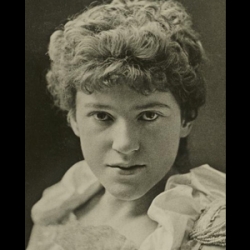
Ella Wheeler WilcoxO Science, reaching backward through the distance,
   Most earnest child of God,
Exposing all the secrets of existence,
   With thy divining rod,
I bid thee speed up to the heights supernal,
   Clear thinker, ne’er sufficed;
Go seek and bind the laws and truths eternal,
   But leave me Christ.

Upon the vanity of pious sages
   Let in the light of day;
Breaking down the superstitions of all ages—
   Thrust bigotry away;
Stride on, and bid all stubborn foes defiance,
   Let Truth and Reason reign:
But I beseech the, O Immortal Science,
   Let Christ remain.

What canst thou give to help me bear my crosses,
   In place of Him, my Lord?
And what to recompense for all my losses,
   And bring me sweet reward?
Thou couldst not with thy clear, cold eyes of reason,
   Thou couldst not comfort me
Like One who passed through that tear-blotted season
   In sad Gethsemane!

Through all the weary, wearing hours of sorrow,
   What word that thou hast said
Would make me strong to wait for some tomorrow
   When I should find my dead?
When I am weak, and desolate, and lonely—
   And prone to follow wrong?
Not thou, O Science—Christ, my Savior, only
   Can make me strong.

Thou art so cold, so lofty, and so distant,
   Though great my need might be,
No prayer, however constant and persistent,
   Couldst bring thee down to me.
Christ stands so near, to help me through each hour,
   To guide me day by day
O Science, sweeping all before thy power—
   Leave Christ, I pray! —Ella Wheeler Wilcox

Thursdays With Oswald—Christ’s Incarnation Means Our Freedom

Oswald ChambersThis is a weekly series with things I’m reading and pondering from Oswald Chambers. You can read the original seed thought here, or type “Thursdays With Oswald” in the search box to read more entries.

Christ’s Incarnation Means Our Freedom

     Other religions deal with sins; the Bible alone deals with sin. The first thing Jesus Christ faced in man was this heredity of sin, and it is because we have ignored it in our presentation of the Gospel that the message of the Gospel has lost its sting, its blasting power; we have driveled it into insurance tickets for heaven, and made it deal only with the wastrel element of mankind. …  

     The revelation is not that Jesus Christ was punished for our sins, but that He was made to be sin. “Him who knew no sin” was made to be sin, that by His identification with it and removal of it, we might become what He was. … Jesus Christ went straight through identification with sin that every man and woman on earth might be freed from sin by His atonement. He went through the depths of damnation and came out more than conqueror; consequently everyone of us who is willing to be identified with Him is freed from the disposition of sin, freed from the connection with the body of sin, and can come out more than a conqueror too because of what Jesus Christ has done. … 

     The Holy Spirit will take my spirit, soul and body and bring them back into communion with God, and lead me into identification with the death of Jesus Christ, until I know experimentally that my old disposition, my right to myself, is crucified with Him, and my human nature is now free to obey the commands of God. 

From The Shadow Of An Agony

As we approach the time of year we celebrate the Incarnation of Jesus, it’s amazing to think that He didn’t come just to identify with our sin, but to be made sin! Without Jesus Christ’s death on a Cross in our place, there is no hope for us.

As we celebrate the First Advent, it’s a good idea to keep in the front our our minds what Christ’s Incarnation means for us. It means we can be freed from sin—free to obey God, and free to look forward to Christ’s Second Advent, where He will take away His saints to be with Him forever!

Thursdays With Oswald—Get Rid Of Jargon!

Oswald ChambersThis is a weekly series with things I’m reading and pondering from Oswald Chambers. You can read the original seed thought here, or type “Thursdays With Oswald” in the search box to read more entries.

Get Rid Of Jargon! 

     The New Testament is not written to prove that Jesus Christ is God Incarnate; the New Testament does not prove anything; it simply confirms the faith of those who believe beforehand. Christian evidences don’t amount to anything; you can’t convince a man against his will. … 

     Creeds are the effects of our belief, not the cause of it. I do not have to believe all that before I can be a Christian; but after I have become a Christian I begin to try and expound to myself Who Jesus Christ is, and to do that I must first of all take into consideration the New Testament explanation. “Blessed art thou, Simon bar Jonah: for flesh and blood hath not revealed it unto thee, but My Father which is in heaven.” … 

     Jesus Christ did not come primarily to teach; He came to make it possible for us to receive His heredity, to have put into us a new disposition whereby we can live totally new lives. … The Sermon on the Mount is impossible to a man, and yet it is what our Lord taught. Jesus Christ did not come to teach man to be what he cannot be, but to reveal that He can put into him a totally new heredity; and all He requires a man to say is—“I need it.” … Jesus Christ cannot begin to do anything for a man until he knows his need; but immediately he is at his wits’ end through sin or limitation or agony and cannot go any further, Jesus Christ says to him, “Blessed are you; if you ask God for the Holy Spirit, He will give Him to you.” God does not give us the Holy Spirit until we come to the place of seeing that we cannot do without Him (Luke 11:13). … 

     We have been taken up with creeds and doctrines, and when a man is hit we do not know what to give him; we have no Jesus Christ, we have only theology. For one man who can introduce another to Jesus Christ by the way he lives and by the atmosphere of his life, there are a thousand who can only talk jargon about Him.

From The Shadow Of An Agony

Oswald Chambers is reminding Christians that we only learn more about Jesus by confessing “I need You!” Then the Holy Spirit can begin to reveal real-life truths to us from God’s Word.

Peter reminded us that in order to be ready to give an answer to anyone who asks a Christian the reason for the hope they had, we must first make Jesus the Lord of our life (see 1 Peter 3:15). Creeds and doctrines and theories are of no help to a friend who is in trouble. Let’s not be one of the thousands “who can only talk jargon about Him,” but let’s really know Jesus as Lord, so that we have something real and tangible to pass on to our friends.

Get rid of the jargon! Go deeper in your personal relationship with Jesus Christ!

Thursdays With Oswald—Stay True To The Word

Oswald ChambersThis is a weekly series with things I’m reading and pondering from Oswald Chambers. You can read the original seed thought here, or type “Thursdays With Oswald” in the search box to read more entries.

Stay True To The Word

     We must disabuse our minds of the idea that God sits like a Judge on a throne and batters humanity into shape. …

     We have to remember that an enthusiasm for humanity which ignores the Bible is sure to end in disaster. … 

     It is quite possible for the human mind to blot God out of its thinking entirely, and to work along the line of the elements which are the same in every man, and to band the whole of the human race into a solid atheistic community. … 

     When men depart from the Bible they call humanity “God” in differing terms; the use of the term “God” means nothing to them, God is simply the name given to the general tendencies which further men’s interests. This spirit is honeycombing everything, we find it coming into the way we talk of Christian experience; there is creeping in the idea that God and Jesus Christ and the Holy Ghost are simply meant to bless us, to further our interests. … 

     Watch the tendency abroad today; people want to get rid of Jesus Christ, they cannot prove that He did not live, or that He was not a remarkable Man; but they set to work to dissolve Him by analysis, to say He was not really God Incarnate. Jesus Christ always upsets the calculations of humanity; that is what made Voltaire say “Crucify the wretch, stamp Him and His crazy tale out,” because He was the stumbling block to all the reasonings of men. You cannot work Jesus Christ into any system of thinking. If you could keep Him out, everything could be explained. The world could be explained by evolution, but you cannot fit Jesus Christ into the theory of evolution. Jesus Christ is an annoyance to satan, a thorn in the side of the world at large, an absolute distress to sin in the individual.

From The Philosophy Of Sin

Oswald Chambers always penned wise words, but what makes his words so wise is that they are solidly rooted in Scripture.

In the above passages, Chambers warns us what happens when we forget the word of God as given to us in the Bible:

  • We see God as harsh and unloving
  • We make short-sighted decisions
  • We build a community in our image
  • We all have a different idea of who God is
  • We make “God” fit into our own molds
  • We water down who Jesus is
  • We create new worldviews not consistent with God’s design

Bottom line: Stay in the Word. Make Bible reading a regular part of your life, so that you don’t get caught up in the churning waves of “popular” culture.

10 Quotes On The Difference Between Christianity And Islam

Nabeel Qureshi wrote a couple of outstanding books to help those in the West better understand Islam (Seeking Allah, Finding Jesus and Answering Jihad).

Answering JihadIn Answering Jihad, Nabeel invests several chapters in looking at the differences between Christianity as displayed in the Bible and Islam as displayed in the Quran. Here are some of the more noteworthy quotes I pulled from this book. The references in parenthesis in these quotes are references to a chapter and verse in the Quran.

“Christians believe Jesus is God, but the Quran is so opposed to this belief that it condemns Jesus worshipers to hell (5:72).”

“According to Jesus, God is our Father, yet the Quran very specifically denies that God is a father (112:1-4).”

“Islam roundly condemns worship of the Trinity (5:73), establishing in contrast its own core principle of Tawhid, the absolute oneness of God. Tawhid emphatically denies the Trinity, so much so that it is safe to say the doctrine of God in Islam is antithetical to the doctrine of God and Christianity. … The Trinity teaches that God is not a person, but three Persons: Father, Son, and Spirit. To assert that the God of Islam is the same person as the God of Christianity becomes almost nonsensical at this point, as the Christian God is tripersonal, two persons of Islam specifically denies in the Quran.”

“The Trinity is an elaboration of Jewish theology, not a rejection. By contrast, Tawhid is a categorical rejection of the Trinity, Jesus’ deity, and the Fatherhood of God, doctrines that are grounded in the pages of the New Testament and firmly established centuries before the advent of Islam. The earliest Christians were all Jews, incorporating their encounter with Jesus into their Jewish theology. Nothing of the sort is true of Muhammad, who was neither a Jew nor a Christian. Islam did not elaborate on the Trinity but rejected and replaced it.”

“Christians worship the triune God: a Father Who loves unconditionally, a Son Who incarnates and Who is willing to die for us so that we may be forgiven, and an immanent Holy Spirit Who lives in us. This is not who the Muslim God is, and it is not what the Muslim God does. Truly, Tawhid is antithetical to the Trinity, fundamentally incompatible and only similar superficially and semantically. Muslims and Christians do not worship the same God.”

“The warfare the Quran commands is not due to any evil action, but rather due to the beliefs of non-Muslims, such as the Christian belief that Jesus is the Son of God (9:29, 30).”

“Warfare in the Old Testament is not about subjugating inferior peoples. Yahweh does not promise the Jews that they are the best of people and that their enemies are less than they are. He makes this quite clear in Deuteronomy 9:4-6. … The Quran, by contrast, envisions Muslims as the best people: ‘You are the best of all people, evolved for mankind’ (3:110). It teaches that Jews and Christians who do not convert to Islam are the worst of all creation: ‘Those who do not believe [in Islam] from among the Jews and Christians and the idolaters will go to hell. They are the worst of creatures’ (98:6; see 98:1-5 for context). This is why the Quran in 9:33 commands Muslims to fight Jews and Christians, so that Allah may cause Islam ‘to prevail over all religions.’”

“Muhammad’s life moved from peaceful to violent in a crescendo, reflecting the trajectory of the Quran, and he died just after conquering the Arabian Peninsula. His words in the canonical collections were, ‘I have been ordered by Allah to fight against the people until they testify that none has the right to be worshiped but Allah and that Muhammad is Allah’s messenger. … [O]nly then will they save their lives and property from me’ (Sahih Bukhara 1.2.25). Muslims are commanded to follow Muhammad’s example, and his example was jihad.

“By contrast, the stories in the Old Testament do not enjoin Jews or Christians to fight today. Though commands to fight are recorded in the text, no Jew or Christian is commanded to memorialize these battles as ongoing conduct. They were a part of the history of Israel, certainly, not a mandate or continuing command going forward.”

“Violence has a very different place in Islam and Christianity’s theological frameworks. The final marching order of Islam is jihad. The final marching orders of Christians are grace and love.”

But I especially love this thought from Nabeel: “One can both love Muslims and insist that the God they worship is not the same as the Christian God.” Amen!

Other quotes from Answering Jihad are here and here.

Additional quotes from Seeking Allah, Finding Jesus are here.

O Holy Night & O Holy Day

O Holy NightIn 1847 an unnamed parish priest sent an unusual request to Placide Cappeau, the commissioner of wines in a small French town: “You are well known for your poems. Would you consider writing a poem for our Christmas mass?” Cappeau was both intrigued and honored, and he soon penned an essay called Cantique de Noel.

Cappeau felt that his poem was more worthy of a song, than just merely a poem, so he turned to his friend Adolphe Adams. Adams was a classically trained musician, but he was also a Jew. Adams said to Cappeau, “You’re asking me to write a melody for a poem that celebrates a Man I do not view as the Son of God, and a poem that celebrates a day I do not celebrate?” But because his friend Cappeau had requested it, he gave it his best effort. Three weeks later, Cantique de Noel was first heard at the Christmas Eve midnight mass.

Cantique de Noel quickly became popular throughout France. But when it was discovered that the lyricist Cappeau had left the church to become a socialist and that the musical composer Adams was a Jew, the Catholic Church banned the song from being sung in any of its churches. Still, the song grew in popularity.

During the build-up to the American Civil War, an abolitionist named John Dwight was especially moved by a line in Cantique de Noel: “Chains shall He break, for the slave is our brother, and in His name all oppression shall cease.” Dwight published his version of Cantique de Noel in his abolitionist magazine with the new title O Holy Night. The song quickly caught on in America.

The opening words of O Holy Night speak to our hearts today, as much as they did to those present at the First Advent—long lay the world in sin and error pining, till He appeared and the soul felt its worth. To pine for something means to long painfully for something just out of our reach. It’s what the psalmist in ancient Israel captured too when he wrote, My soul yearns, even faints, for the courts of the Lord; my heart and my flesh cry out for the living God (Psalm 84:2). There is a longing in all of us to know the Lord!

That’s why Christ’s First Advent is such a blessed, joyous event! In the second stanza we sing—In all our trials born to be our Friend; He knows our need, to our weakness is no stranger. Indeed the writer of Hebrews tells us why Jesus was born as a human (Hebrews 2:14-18), and why we can approach Him confidently (4:15-16).

Christ’s Incarnation allows us to put our faith in Him. When we do, we experience the Atonement. I like to remember this word by saying it at-onement. In other words, the Heavenly Father now sees me at-onement with His Son—when He looks at me, He sees Jesus. That’s why God forgets our forgiven sins (Hebrews 8:12)!

Then the third stanza of O Holy Night begins to tell us how we live out the at-onement every day by loving one another, enjoying His peace, living free and helping others get free too, singing joyfully to God day after night after day after night!

The First Advent was a holy night because Christ’s Atonement it makes us holy. So now all our nights are O holy nights, and all our days are O holy days, and all our work is O holy work, and all our relationships are O holy relationships!

Christ’s First Advent changes EVERYTHING for those who put their faith in Him. Is that you? Are you living in Christ’s at-onement? If not, you can be today by simply asking Him to come into your life.

You can check out some of the other Christmas carols we have looked at here. And check out the video of this message too—

If you have missed any of the messages in our series The Carols Of Christmas, you can find the full list by clicking here.