Stop Letting Fear Limit Your Life

Listen to the podcast of this post by clicking on the player below, and you can also subscribe on AppleSpotify, or Audible.

It’s inescapably true: We let fears limit us when we listen to them. 

John Piper wrote, “I call you today to stop defining and limiting your future in terms of your past and start defining it in terms of your God.”

When we have a spirit of fear instead of the confidence that comes from a right relationship with God through Jesus, the smallest of things sends us ducking for cover! “As for those of you who may be left, I will also bring weakness into their hearts in the lands of their enemies. And the sound of a driven leaf will chase them, and even when no one is pursuing they will flee as though from the sword, and they will fall.” (Leviticus 26:36 NASB) 

God says, “Fear not—there is nothing to fear—for I am with you; do not look around you in terror and be dismayed, for I am your God. I will strengthen and harden you to difficulties, yes, I will help you; yes, I will hold you up and retain you with My victorious right hand of rightness and justice.” (Isaiah 41:10 AMPC)

“When God calls you to be free from fear (to overcome this natural emotion and have peace), He does not leave the command hanging in the air. He puts pillars under it. Five of them in Isaiah 41:10. That’s the nature of all biblical commands. They come with divine support.

  1. Fear not . . . God is with you.
  2. Fear not . . . God is your God.
  3. Fear not . . . God will strengthen you.
  4. Fear not . . . God will help you.
  5. Fear not . . . God will uphold you.” —John Piper

When we grasp that God is with us, that God is helping us, that God is bigger than the things we wrongly fear, there is nothing we cannot do! 

As Jonathan said to his young armor-bearer, “Come, and let us go over to the garrison of these uncircumcised; it may be that the Lord will work for us. For there is nothing to prevent the Lord from saving by many or by few.” (1 Samuel 14:6 AMPC)

O Sovereign Lord! You made the heavens and earth by Your strong hand and powerful arm. Nothing is too hard for You! (Jeremiah 32:17 NLT)

“Because you’re not yet taking God seriously,” said Jesus. “The simple truth is that if you had a mere kernel of faith, a poppy seed, say, you would tell this mountain, ‘Move!’ and it would move. There is nothing you wouldn’t be able to tackle.” (Matthew 17:20 MSG)

►► Would you please prayerfully consider supporting this ministry? ◀︎◀︎
9 Quotes From “God’s Promises”

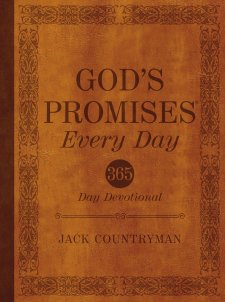
God’s Promises by Jack Countryman is a wonderful resource to help you use the Bible to enhance your prayer life and build your faith. Check out my full review of this fantastic book by clicking here.

“Each day we can look forward to God’s Spirit going before, clearing the way, leading the path, and giving us the guidance we need. … But God doesn’t stop at mere survival. He doesn’t just satisfy and strengthen. Though there will be difficulties and times of drought in our lives, God guides us to His living waters. He enables us to flourish ‘like a watered garden,’ where His blessings always bloom.” [Isaiah 58:11] 

“When life darkens our door with its troubles and trials, satan wants nothing more than for us to feel forsaken and alone—but we are not! God stands by our side; He guides, counsels, and comforts. Rest assured, no matter what you face in the coming year, nothing can separate you from the love of your Father (Romans 8:38-39). Therefore walk boldly into each new day, knowing that you follow the footsteps of the One who never leaves you.” [Deuteronomy 31:8] 

“Troubles are never pleasant at the time, but they quickly turn into tools when entrusted to God. Our Lord will take our times of troubles and trials—even the hard feelings we experience in them—then use them to teach us to fully rely on Him and His provision.” [Psalm 138:7] 

“Our God is a loving God, but He isn’t Santa Claus or a genie in a bottle. Our God loves to give good gifts, but in His economy the best gifts are not tangible or material. Yes, our God feels compassion when we hurt, but He still allows hardships into our lives that will refine our character and strengthen our faith. Against the backdrop of these truths, we can better understand the often-misread statement that God will give us the desires of our hearts. The real promise of this verse is that, as we pray, read His Word, and grow closer to the Lord, He will change our hearts so that what we desire for ourselves is what He desires for us.” [Psalm 37:4] 

“Mercy. We don’t deserve it. We haven’t done—can’t possibly do—anything to earn it. And yet we are promised that this unbelievably lavish gift is ours when we choose to follow Jesus. Why? Why would such a perfect and powerful God gives such a gift to ones so undeserving? He tells us in Titus 3:4: because of ‘the kindness and love of God our Savior toward man.’ And He not only gave us mercy, He also ‘poured out on us abundantly’ His own Spirit, to live and work within us, making us more and more like the Savior who died to save us.” [Titus 3:4-6] 

“Our God is not some fickle, capricious, changeable sort of God. He does not search out ways to be angry or displeased with His people. In fact, He so wants to be pleased with us that He gave us the example of His Son to follow.” [Ephesians 5:2] 

“When our burdens and sorrows seem too heavy for us to bear, God offers to carry them for us, inviting us to cast them upon Him (Psalm 55:22). And when the sorrow is so great that we feel we cannot put one foot in front of the other, God gives us this promise: ‘I will carry you; I will sustain you’ (Isaiah 46:4).” 

“Perhaps nothing is as devastating as being betrayed by someone you love and trust. Know that Jesus—betrayed by Judas, denied by Peter—fully understands. He will enable you to recover. The key, as hard as it is, is to pray for that person and ask God to bless him or her. When you pray to God—and you may have to do this again and again—you release the anger and disappointment that come with being betrayed. It is difficult to despise someone you lift up in prayer. And though retaliating is a natural response, it’s not a godly one. Praying is always the best option. Allow the Lord to receive your hurt and to replace it with His peace.” [Psalm 3:4, 6] 

“When we place our faith in Christ, the stormy seas of our lives—churned up by our own sins—are stilled. And while the storms may still rage around us in this sin-plagued world, they do not rage within us. That does not mean our troubles and tribulations are over, but it does mean we can rest in knowing God will see us through them.” [Romans 5:1] 

God’s Call On A Leader’s Life

For this is he who was spoken of by the prophet Isaiah… (Matthew 3:3).

There is no doubt about: John the Baptist was called by God.

God uses people to fulfill His purpose. Some, like John, are mentioned by prophets, but all of us have our lives written in God’s Book before we are born (Psalm 139:13-16; Jeremiah 1:5; Ephesians 2:10; Luke 1:13-17).

Just as John was obedient to his calling, I need to be obedient to God’s calling as well.

John spoke God’s word clearly. He lived it out. He didn’t water down nor compromises his message. He didn’t let “ministry success” lead to pride. His whole life pointed everyone to Jesus.

This I must do too!

A mark of a godly leader is one who is humbly confident that God has a call on his life.

This is part 33 in my series on godly leadership. You can check out all of my posts in this series by clicking here.

When Fear Must Go

Listen to the podcast of this post by clicking on the player below, and you can also subscribe on AppleSpotify, or Audible.

I love the balancing thought of being humbly confident in God’s presence (or if you like: being confidently humble).

Humble to know I have nothing in myself that gives me access to God’s presence and love and power, but confident to know that God through Christ’s work on the Cross desires to have me with Him. 

C.S. Lewis wisely noted: “Humility is not thinking less of yourself, it’s thinking of yourself less.” Fear comes in when I’m thinking about me—how unworthy I am, how I messed up, how I wish I would have….

Fear leaves when I set my thoughts on Christ—how absolutely worthy He is, how He has accomplished everything for me, how He is working all things together for good. 

There is no fear in love—dread does not exist—but full-grown, complete, perfect love turns fear out of doors and expels every trace of terror! For fear brings with it the thought of punishment, and so he who is afraid has not reached the full maturity of love—is not yet grown into love’s complete perfection. (1 John 4:18)

It is humbly confident (and confidently humble) to keep my mind off me and take all my thoughts to His perfect love. That’s when fear must go!

“The mark of God’s people is not incapacitating fear, but rather contrite courageous confidence in God. … The good news of the Bible is not that we are not worms, but that God helps worms who trust Him.” —John Piper, commenting on Isaiah 41:14

►► Would you please prayerfully consider supporting this ministry? My Patreon supporters get behind-the-scenes access to exclusive materials. ◀︎◀︎

God Must Have Broken Things

“It is when a beautiful grain of corn is broken up in the earth by death, that its inner heart sprouts forth and bears hundreds of other grains. And thus, on and on, through all history, and all biography, and all vegetation, and all spiritual life, God must have broken things. Those who are broken in wealth, and broken in self-will, and broken in their ambitions, and broken in their beautiful ideals, and broken in worldly reputation, and broken in their affections, and broken ofttimes in health; those who are despised and seem utterly forlorn and helpless, the Holy Ghost is seizing upon, and using for God’s glory. ‘The lame take the prey,’ Isaiah tells us [33:23].” —Lettie Cowman, in Streams In The Desert

Book Reviews From 2018

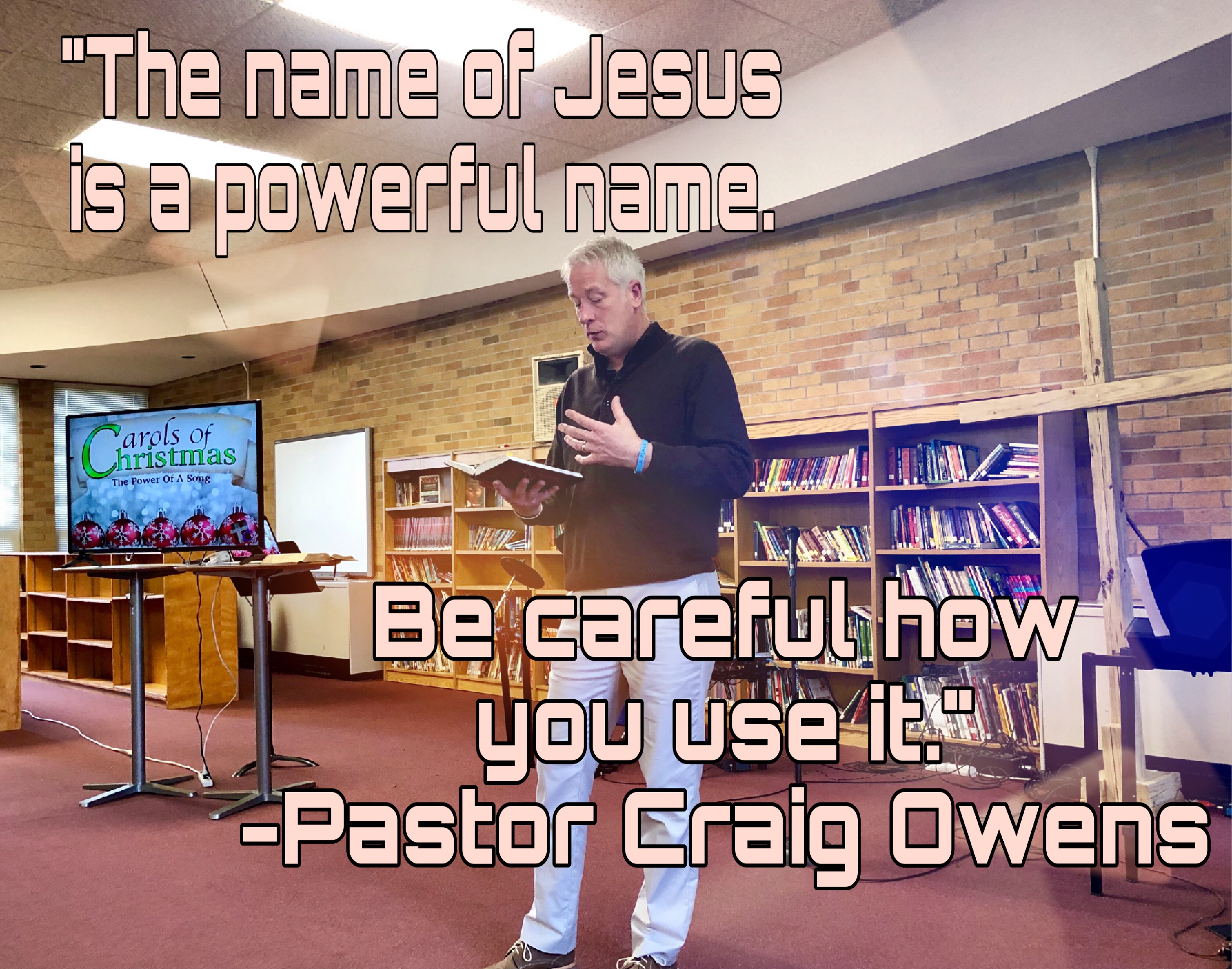
The Powerful Name Of Jesus

As we approach Christmas Day and we think about the First Advent, many times our thoughts go to the scene of a lowly manger, tired parents, and a newborn baby wrapped in cloths. We tend to focus on the Baby. 

And rightly so! 

It is fascinating to think that before He was even born an angel appeared to both Joseph and Mary to tell them that this Baby should be named Jesus (Matthew 1:21 and Luke 1:31). But have you also noticed all of the other names and titles given to the Baby at His birth? 

  • a Savior who is Christ the Lord
  • Immanuel which means “God with us” 
  • Son of the Most High 
  • King of the Jews
  • Ruler of God’s people
  • Son of the Most High God
  • God Himself

What do we do with the name of the Lord? 

When I say “the name of the Lord” I’m not talking about the five letters that spell J-E-S-U-S or even C-H-R-I-S-T. The name of the Lord means all of God’s character, His majesty, His personality, His magnificence, everything that makes God God. 

The Bible clearly tells us how to use God’s name properly. We are to use the name of the Lord for

  • salvation
  • protection
  • batting the enemy
  • preaching
  • praying
  • casting out demons
  • healing the sick

The use of the name of the Lord should distinguish us. CHRISTians bear the name of Christ, so they should represent the character of God accurately, and in a way that causes others to glorify Him and want to approach Him. 

If there is a proper way of using the name of the Lord, that also means there are ways we can misuse the name of the Lord, something God expressly forbids in the third of the Ten Commandments (Exodus 20:7). 

We misuse the name of the Lord when we… 

There is a holy balance—Jesus is both King of kings and a Friend of sinners. God paid an incredibly high price so that we could be reconciled to Him, but not so that you could treat Him ignorantly or carelessly. This calls for some serious searching by the Holy Spirit! Perhaps you could pray a prayer that David penned: Search me, God, and know my heart; test me and know my anxious thoughts. See if there is any offensive way in me, and lead me in the way everlasting.

To take a look at the other stanzas of this Christmas carol, please click here.

The Value Of The Old Testament

“Jesus exalted the law of God, and made its importance more evident even than it had been before. In a word, ‘He magnified the law and made it honorable’ (Isaiah 42:21). …

“Let us beware of despising the Old Testament under any pretense whatever. Let us never listen to those who bid us throw it aside as an obsolete, antiquated, useless book. The religion of the Old Testament is the embryo of Christianity. The Old Testament is the Gospel in the bud. The New Testament is the Gospel in full flower. The Old Testament is the Gospel in the blade. The New Testament is the Gospel in full ear. …

“Let us, for another thing, beware of despising the law of the Ten Commandments. Let us not suppose for a moment that it is set aside by the Gospel, or that Christians have nothing to do with it. The coming of Christ did not alter the position of the Ten Commandments one hair’s breadth. If anything, it exalted and raised their authority (Romans 3:31). …

“In the last place, let us beware of supposing that the Gospel has lowered the standard of personal holiness, and that the Christian is not intended to be as strict and particular about his daily life as the Jew. … The more light we have, the more we ought to love God. The more clearly we see our own complete and full forgiveness in Christ, the more heartily we ought to work for His glory. …

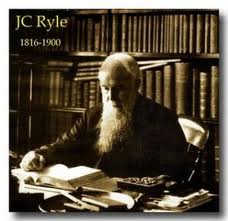
“Jesus shows us that the law, as expounded by Him, was a far more spiritual and heart-searching rule than most of the Jews supposed.” —J.C. Ryle, in Expository Thoughts On The Gospels

What Is Shalom?

Shalom is the Hebrew word for peace. Some of the best definitions of shalom include ideas of completeness, soundness, and wholeness. One Jewish rabbi commented that when you say “Shalom” to someone, you’re really saying, “may you be full of well-being.” Or another way of thinking of shalom is—nothing missing, nothing broken. 

Some have tried to describe shalom as the absence of conflict, but that’s not quite accurate. On the verge of going into the Promised Land to fight their enemies, God commanded Aaron to speak a blessing of peace of the people (Numbers 6:24-26). And just before Jesus said, “Blessed are those who are persecuted because of righteousness,” He said, “Blessed are the peacemakers” (Matthew 5:9-10). 

Shalom is not controlled by outward circumstances. Shalom is a deep-seated, rock-solid, unshakable assurance that I am in God’s hand. 

Isaiah describes how we live in shalom like this—

You will guard him and keep him in perfect and constant peace whose mind—both its inclination and its character—is stayed on You, because he commits himself to You, leans on You, and hopes confidently in You. (Isaiah 26:3)

How do we do keep our mind stayed on God? The Apostle Paul says, “We take captive every thought to make it obedient to Christ” (2 Corinthians 10:5). Psychologists call this process metacognition: when we think about what we’re thinking about. It’s being aware of our anxious thoughts that are robbing us of shalom and then talking back to them. 

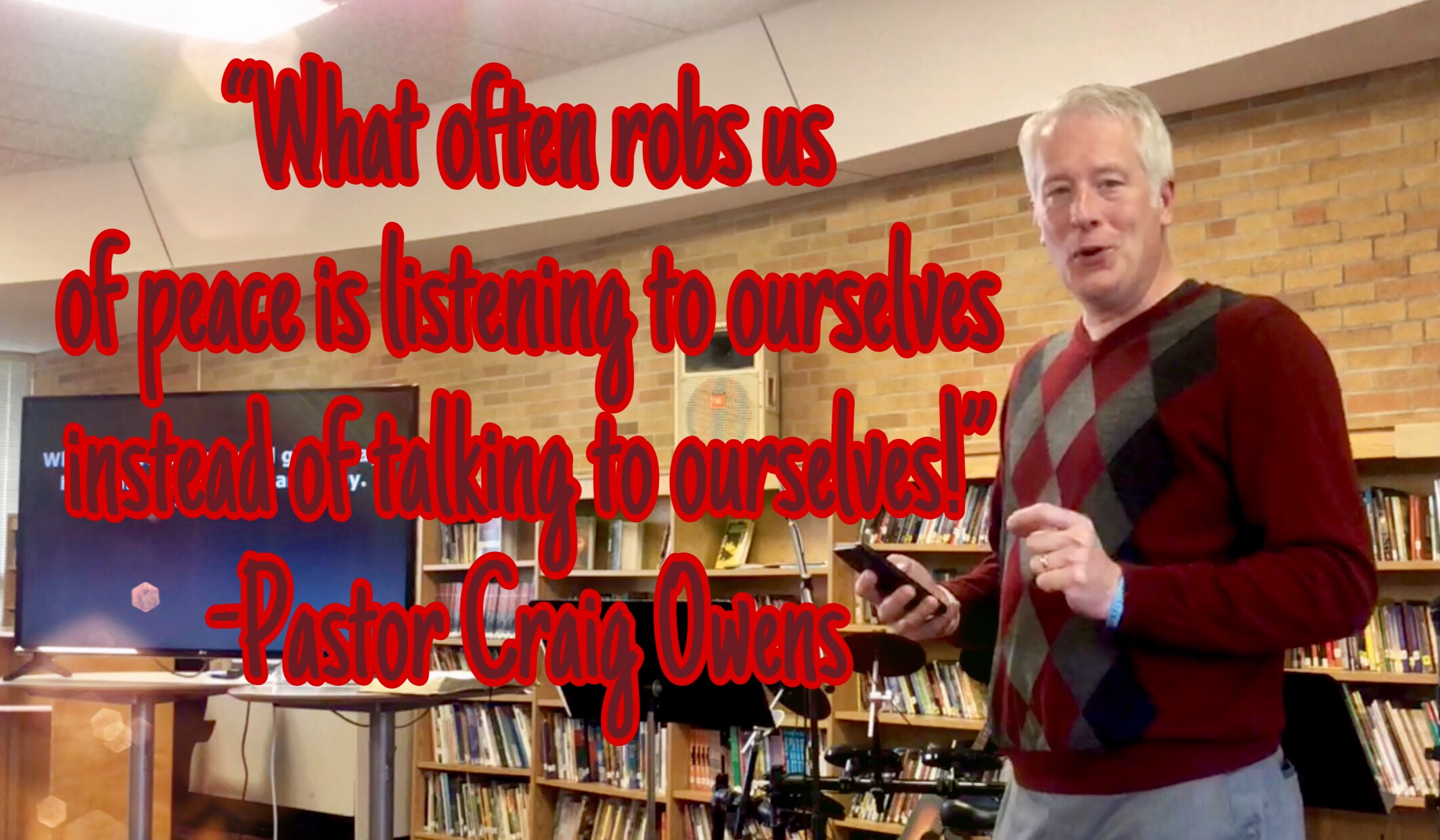
What often robs us of peace is listening to ourselves instead of talking to ourselves! 

Someone once asked evangelist Smith Wigglesworth, “Smith, how do you feel?” He replied, “I never ask Smith how I feel. I tell him how he feels!” Exactly right! 

Why do we make our thoughts obedient to Jesus? Because one of the titles given to Jesus before He was born was Prince of Peace (Isaiah 9:6), and Jesus assures us that His peace is unlike anything we can ever find in earthly things (John 14:27, 16:33). 

God’s peace is always there, but our divided minds keep us from experiencing His peace. So Isaiah tells us to keep our mind steadfast on God’s goodness, and Paul says the same thing—Don’t fret or worry. Instead of worrying, pray. Let petitions and praises shape your worries into prayers, letting God know your concerns. Before you know it, a sense of God’s wholeness, everything coming together for good, will come and settle you down. It’s wonderful what happens when Christ displaces worry at the center of your life. (Philippians 4:6-7)

I want to encourage you to practice what the Bible calls capturing your thoughts—or what psychologists call metacognition. Ask yourself, “Why am I thinking that?” Capture those thoughts and make them obedient to Christ. Don’t let your worrisome thoughts rob you of God’s shalom.

Join me this Sunday as we take a closer look at the “shalom cycle,” including the things that can derail it. 

Thursdays With Oswald—Jeremiah 29

Oswald ChambersThis is a weekly series with things I’m reading and pondering from Oswald Chambers. You can read the original seed thought here, or type “Thursdays With Oswald” in the search box to read more entries.

Jeremiah 29

[These are notes from Oswald Chambers’ lecture on Jeremiah 29.] 

     The great message of the prophets is that evil and tyranny are there by the permissive will of God, there is never any room for thinking that these things happen by chance (cf. Isaiah 45:7). Never tie God up in His own laws; He is never guided by precedence. If a prophet is more concerned with logic than with loyalty to God, he will always mislead. … 

     We have no control whatever over external history; God has, and as saints we have to wait in patience wherever we are placed in the providential order of tyranny. …  

     Build houses and settle down; plant gardens and eat what they produce. Marry and have sons and daughters; find wives for your sons and give your daughters in marriage…. Also, seek the peace and prosperity of the city to which I have carried you into exile. Pray to the Lord for it, because if it prospers, you too will prosper (Jeremiah 29:5-7). Jeremiah commands the people to obey God’s order in the dust and dirt of captivity. When we become rightly related to God we are loosened from everything around us, and the danger is to imagine we have to get out of the world. Our Lord did not pray that His disciples should be taken out of the world, but that they should be kept from the evil. It is nothing but unmitigated cowardice to get out of the world; we have to remain unspotted in the midst of it. “Do you mean to tell me I can live a holy life there?” If you cannot, the grace of God is a fiction. External surroundings make no difference to our inner life, but our inner life makes a telling difference on our surroundings (see Philippians 2:15). … 

     Our problem is not one of proportion: how much worldliness can I live in? but of spiritual insight which will enable me to live a holy life in the midst of worldliness, looking for the fulfillment of God’s promises. 

From Notes On Jeremiah

Christians living here on earth are truly “temporary residents” or “aliens and strangers,” as Peter calls us. As such, we sometimes feel a bit perplexed about the evil all around us and how we’re supposed to respond to it and to the Earthlings who question us about it. 

Chambers reminds us that God is not surprised by the evil, nor is He surprised where we are. All of these things are under His sovereign control. 

We are not to give in to evil, compromise with evil, or even try to pretend that evil doesn’t really exist. We are to live with our eyes fixed on Jesus regardless of our evil surroundings. This is the only way we will shine like stars in our evil world, and point the way for Earthlings to have a relationship with Christ for themselves. 

Shine on!