Do not spread slanderous gossip among your people.Do not stand idly by when your neighbor’s life is threatened. I am the LORD. (Leviticus 19:16 NLT)
Slander is defined as: “The utterance of false charges or misrepresentations which defame and damage another’s reputation.” (Merriman-Webster dictionary)
I will not tolerate people who slander their neighbors. I will not endure conceit and pride. (Psalm 101:5 NLT)
Hiding hatred makes you a liar; slandering others makes you a fool. Too much talk leads to sin. Be sensible and keep your mouth shut. (Proverbs 10:18-19 NLT)
And I tell you this, you must give an account on judgment day for every idle word you speak. (Matthew 12:36)
In my book When Sheep Bite, I have a whole chapter about dealing with slanderers. In that chapter I wrote—
You might be thinking, “But I have to respond to these lies, right? I can’t just let them continue to fly around unchecked because people may start believing these falsehoods.” I think this is a very natural response, but I want to again call us to strive for a supernatural response—something we can only do if we are completely yielded to God. Just as we saw what Peter wrote about the way Jesus didn’t verbally lash out at His slanderers (1 Peter 2:23), we need to respond in the same way as our Chief Shepherd did. …
Don’t treat those who criticize and slander you as an enemy. Instead, grieve for their hardened hearts and pray for God’s mercy on them. Intercede for them to be able to acknowledge their sinful words, so they may ask God for forgiveness before His judgment inevitably falls on them. Remember that these sheep—though they are angry and attacking—are still ones for whom Jesus shed His blood. The natural response may be a desire to see our slanderers eternally punished, but the supernatural response is to desire for their soul to be eternally in God’s presence. (Excerpt from When Sheep Bite)
God-fearing people are not to listen to slander nor to slander another. Every human is created in the image of God—to slander another is to slander his or her Creator.
Listen to the podcast of this post by clicking on the player below, and you can also subscribe on Apple, Spotify, or Audible.
Then one of the synagogue leaders, named Jairus, came, and when he saw Jesus, he fell at His feet. He pleaded earnestly with Him, “My little daughter is dying. Please come and put Your hands on her so that she will be healed.” (Mark 5:22-23)
The fact that we know Jairus’ name leads me to believe that he became both a follower of Jesus as Messiah and a part of the Church after Christ’s ascension.
Some might say, “Of course he was a ‘believer’—Jesus raised his little girl from the dead!”
True. But let’s not overlook some the events leading up to this miracle, including the role of an unnamed woman whose apparent interruption may have led to Jairus’ little girl’s death in the first place.
This woman “had been subject to bleeding for twelve years. She had suffered a great deal under the care of many doctors and had spent all she had, yet instead of getting better she grew worse” (vv. 25-26). Luke, a trained physician himself, adds that she had tried many remedies in her desperation “but no one could heal her” (Luke 8:43).
This desperate woman’s goal was just to touch the fringe of Jesus’ robe. She had no hopes of talking directly to Jesus because in her unclean status, her touch could make Jesus unclean too (Leviticus 15:25-27). This almost assuredly made people treat her as an untouchable leper.
Her touch did indeed provide a miracle for her! The words “immediately” and “at once” (Mark 5:29, 30) are the same Greek word. Jesus and the woman felt it simultaneously—she was healed!
Jesus—who was on His way to heal a dying little girl—stopped in His tracks.
The woman probably tried to melt into the crowd. “But Jesus kept looking around to see who had done it” (v. 32). Fearfully, probably still kneeling on the ground, this healed woman told Jesus her full story. Jesus spoke lovingly to her, calling her “daughter” to assure her that it was her faith, and not His clothing, that had healed her.
Meanwhile, as Jairus waited (im)patiently, the news arrives: “There is no need to bother Jesus any longer. Your daughter has died. It’s hopeless. Please come back home.”
Jesus, knowing what the messengers had just shared with Jairus, looked at him and said, “Don’t be afraid; just believe.”
Maybe the words of Jesus were even something like, “Don’t be afraid, but just like this healed woman did, believe. Your faith can bring about the same kind of miracle for your daughter.”
As a synagogue leader, perhaps Jairus knew this woman. She would have come to a priest after every treatment and every doctor’s visit to see if she could be pronounced clean. Time after time the verdict was, “Unclean.” It seemed hopeless. And yet just a single faith-filled touch—right before the eyes of Jairus—had brought about a miracle that no one else could accomplish.
I think Jairus could turn his fear into faith because of what he had just witnessed. Without that miracle happening right before his eyes, perhaps his fear would have overwhelmed his faith, just like those who were mourning at Jairus’ house would later laugh at Jesus when He said, “The little girl is not dead but only sleeping” (vv. 39-40).
The faith and boldness of this woman unleashed faith in Jairus!
We can see Jarius’ fear turn to faith in the simple act of allowing Jesus to continue walking with him back to his home. As they approached his home, perhaps Jairus’ wife was angry and distraught that Jairus and Jesus had been so delayed in arriving. But as Jairus took his wife by the hand and said, “I believe Jesus can do something miraculous for our daughter,” his faith also unleashed her faith.
They walked into that bedroom with Jesus and saw their faith rewarded as they received their daughter back from the dead!
Are you facing a situation that seems impossible? Perhaps you have been to doctors and experts but no one can find an answer for you. Maybe you started to approach Jesus, only to be confronted by the cruel facts that what you had hoped for was dead. Or maybe it seems that the arrival of Jesus has been delayed for so long that there is no longer any need to seek His help.
If your fear is greater than your faith at this time, you can look to these examples recorded for us in the Scripture. Perhaps you can even look back in your own history, or the history of your family, to see a miraculous example.
There’s another great reason for you to continue to trust in Jesus. Just as the unclean woman sought an answer for years, the moment of her miracle was the moment faith was renewed in those who saw her healing. As you continue to seek your miracle, know that God’s timing is perfect. Your answer will come at the perfect moment to unleash faith in another wavering heart.
Keep believing in faith. Keep trusting in Jesus. Keep expecting your miracle.
“Expect great things from God: Attempt great things for God.” —William Carey
“God gave us a self, not so that we would have something to exult in, but something to exult with. He gave us a self, not to be the object of our joy, but the subject of joy. That is, not to be the focus of happiness in front of the mirror or the selfie, but the furnace of happiness in front of Jesus. He gave us a self, not as an instrument of self-worth but as an instrument of worship.” —John Piper
“In reference to this command [Leviticus 19:17], the rabbis teach that if we feel offended by someone, we must go to him, tell him how we feel, give him a chance to explain and possibly apologize, and then forget and forgive.” —Rabbi Kirt A. Schneider
“Resolved, never to give over, nor in the least to slacken my fight with my corruptions, however unsuccessful I may be.” —Jonathan Edwards
“The struggle itself is not proof that something is wrong with your faith. Rather, it is evidence that something is alive in you that now opposes sin. Before Christ, there was no real fight. Now there is tension, resistance, even grief over sin.” —Dr. Mike Paalz, commenting on Romans 7:14-23
Listen to the podcast of this post by clicking on the player below, and you can also subscribe on Apple, Spotify, or Audible. Check out the video content in this post by clicking here.
Have you ever heard the phrase, “Choose work you love, and you will never have to work a day in your life”? I’m not sure that is totally accurate. Work that is meaningful and fulfilling will be draining, hard work. We see Jesus taking time away from His work to be replenished from the activities that drained Him.
Instead, I think we need to find joy in our work. That joy comes from knowing why we are working. If we know the answer to the question, “Why do I do what I do, even if what I do is hard and demanding work” (and we can stay focused on that), then I think there is a joy that makes our duty a delight.
Jesus knew His duty from the very beginning. We see this in the story Luke shares with us about 12-year-old Jesus visiting Jerusalem (Luke 2:41-50). The phrase “I had to be in My Father’s house” (NIV) is rendered “must be” (NLT, KJV), and “I had to be here dealing with the things of My Father” (MSG). And I think the AMPC version is especially telling: Did you not see and know that it is necessary as a duty for Me to be in My Father’s house and occupied about My Father’s business?
Jesus came to Jerusalem every year for the festivals of Passover, Unleavened Bread, and Firstfruits (see Leviticus 23:4-6, 9-14). Now at “twelve years old” He has had His bar mitzvah and is considered a Man in the eyes of the Jewish community. Eighteen years later, we see Jesus still focused on this same duty (Luke 3:23, 9:18-22).
Jesus found delight and fulfillment in doing His duty (Luke 10:21; John 4:31-34).
Jesus calls His followers to this same food that sustained Him (John 4:35-38). He calls this “hard work” that allows us to “be glad together.” Our joy is the joy of Jesus. Notice in Luke 10:21 that His joy was because His followers found joy in doing their duty for Him (Luke 10:1-3, 17).
Don’t look for the wages or your reward here, but do your duty joyfully in expectation of future and eternal rewards (Luke 17:7-10; John 3:27-30).
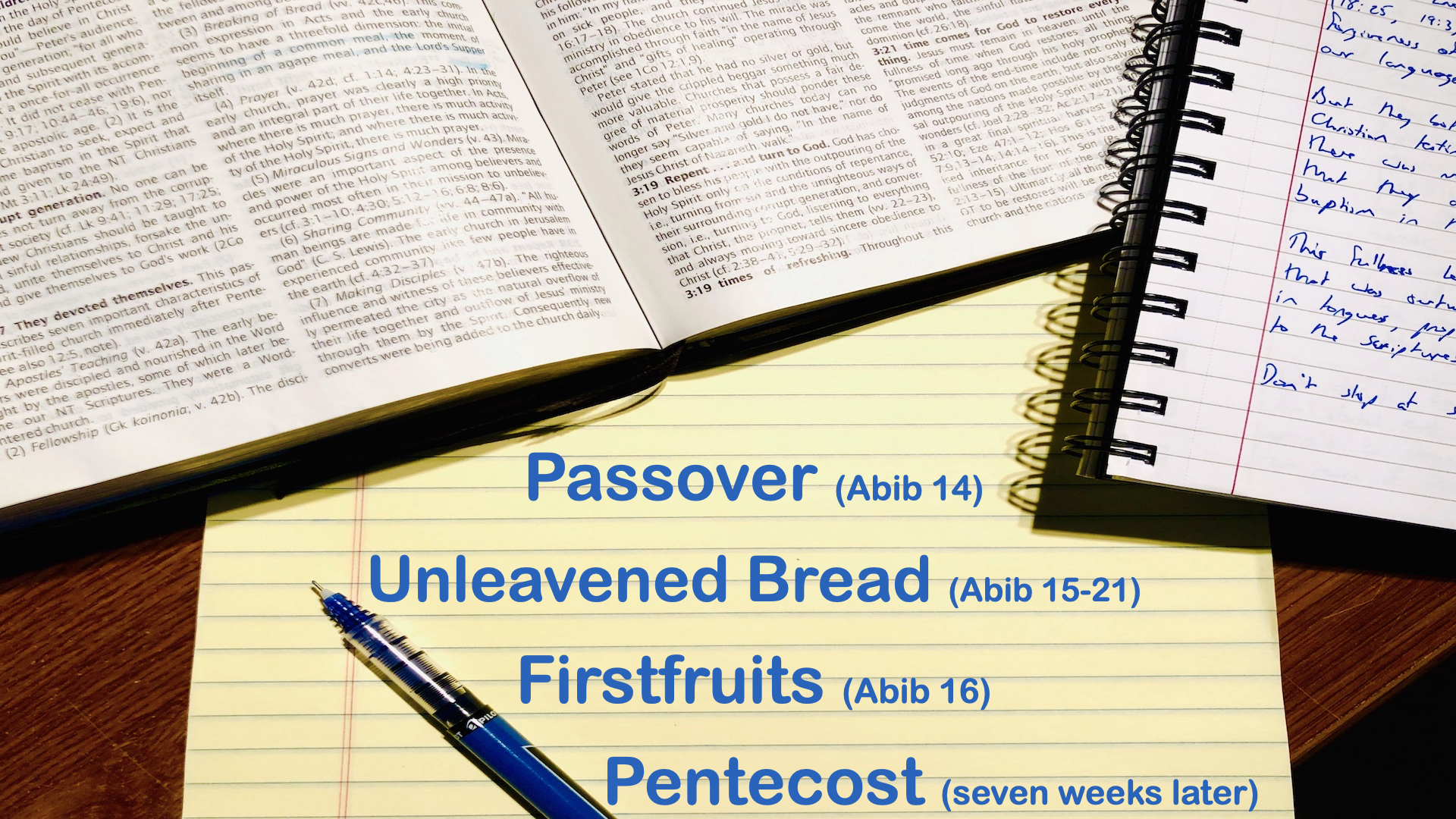
Let’s go back to 12-year-old Jesus in the temple. He was there during three Old Testament feasts that all pointed to Him and were fulfilled in Him:
Passover (Abib 14)—the day Jesus was crucified
Unleavened Bread (Abib 15-21)—when Jesus was in the grave
Firstfruits (Abib 16)—the day Jesus was resurrected (see James 1:18)
Pentecost (50 days after Firstfruits)
Twenty-one years after this story in Luke 2, in the very same place where Jesus is interacting with these religious leaders, the followers of Jesus would be baptized in the Holy Spirit! He is the One Who makes our duty a delight.
We get a foreshadowing of the joy in the Holy Spirit in Luke 1:41-44 when just a greeting from Mary—who was pregnant with Jesus by the Holy Spirit—causes the baby in Elizabeth’s womb to leap with joy in the Holy Spirit. We, too, live in joy when the Spirit is actively at work in us (John 15:11; Romans 5:3-5). The Spirit reminds us of the rewards for our joyful duty (Matthew 25:34; Luke 12:35-37).
You can stick with your have-to-do duties if you have a get-to-do attitude that comes from the joy the Holy Spirit gives.
Which is why Jesus prays for our joy to be complete, and Paul prays, “May the God of hope fill you with all joy and peace as you trust in Him, so that you may overflow with hope by the power of the Holy Spirit” (Romans 15:13).
Check out all of the messages in this series about the power of the Holy Spirit in our lives by clicking here.
Listen to the podcast of this post by clicking on the player below, and you can also subscribe on Apple, Spotify, or Audible.
You may have noticed that the intensity of the pain of these sheep bites has been escalating—from flattery, to criticism, to gossip. Now we come to probably the most painful of bites: slander. This is the bite that will have the strongest pull toward the natural response, which will require our greatest reliance on the Holy Spirit to respond supernaturally.
Remember that gossip has a veneer of truth on it; slander has no truth at all. They are outright lies. They are flimsy lies. They are malicious lies. One of the Hebrew words translated slander means scandal-monger: someone who trades in lies (Jeremiah 6:28 NLT; Leviticus 19:16).
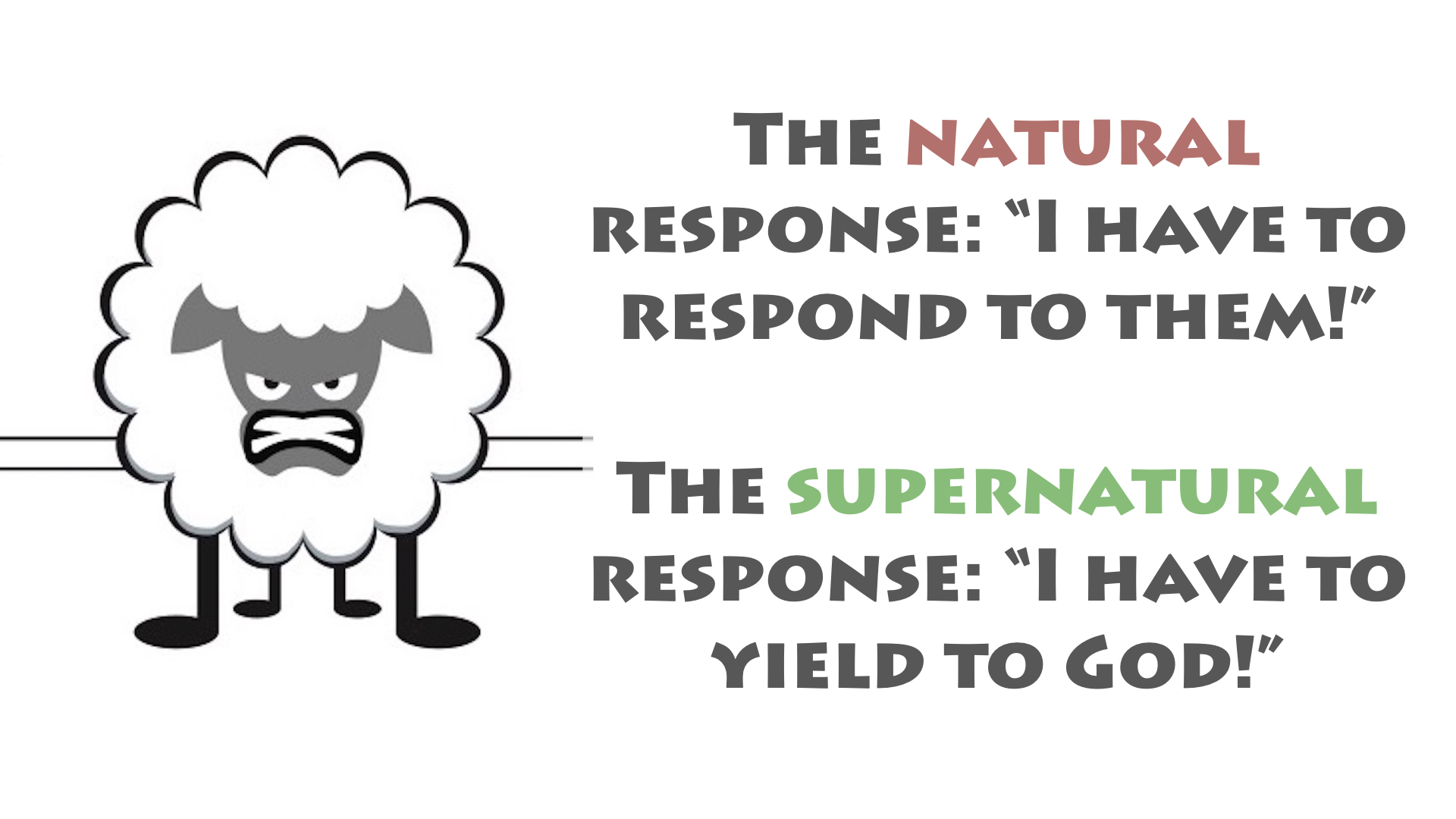
The natural response to slander is, “I have to respond to them!” The supernatural response to slander is, “I have to yield to God!”
The natural response, however, is fueled by my wounded pride. On the other hand, the supernatural response is fueled by humility toward God.
Slanderers are arrogant people too (remember Jeremiah said “they are as hard as bronze and iron” [Jeremiah 6:28]). God’s people are learning to humble themselves to wait for God (Psalm 38:12-15). These humble people are the ones who get God’s help, and not His laughter (James 4:6; Proverbs 3:34 NLT).
Look at how Jesus dealt with the very natural urge to respond to those who slandered Him. After Jesus was arrested by the temple guards, He was hauled before one group after another and each time the slanderous lies were spitefully spit at Him. In front of the Sanhedrin, before Roman governor Pontius Pilate, and in the throne room of King Herod Antipas, angry men unleashed their venomous claims—none of which were true.
There are two common themes we can notice in all of these settings.
The lies were seen for what they were: complete fabrications without any truth behind them—Mark 14:55. Governor Pilate said “I find no basis for a charge against Him” (Luke 23:4), and he added, “Herod came to the same conclusion and sent Him back to us” (v. 15).
The silence of Jesus: “Jesus remained silent and gave no answer” (Matthew 27:13-14; Mark 14:61, 15:5). The only red letters in this interaction with both the Sanhedrin and Pilate are when Jesus is asked a direct question. Jesus quickly answers the questions, “Are You the Messiah,” “Are You a King,” and “Don’t You know the power I have?” (Mark 14:61, 15:2; John 19:10), but He never responds to the slander.
Let me repeat: Our supernatural response can only come from yielding to the Holy Spirit’s influence.
We cannot treat slanderers as anything less than people created in the image of God (Genesis 1:27; Psalm 15:1, 3).
We must take our pain into God’s presence. This is what Jesus did (1 Peter 2:21-23). We can help ourselves by praying imprecatory prayers. These are words for God’s ears only (Jude 1:9; Psalm 58:6-8).
We have to learn to pray for our slanderers. We have to mature from praying against them to praying for them. Look at how Jesus interceded for His slanderers (Luke 23:34), which He calls us to as well (Luke 6:28).
We have to live as overcomers. We overcome by NOT responding to slander in the natural way (Romans 12:21). But we allow our supernatural response to be used as a powerful testimony (2 Corinthians 6:3-10; Colossians 3:1-2, 8, 12-14).
We can do this—the Holy Spirit is empowering us to do this. Let’s not get down in the mud with those who slander us, but let’s yield to God and allow Him to handle this painful situation far better than we ever could.
If you’ve missed any of the messages in this series, you can find them all here. And if you are a pastor, please check out my book When Sheep Bite, which will help you both respond to sheep bites and teach others how to respond as well.
Listen to the podcast of this post by clicking on the player below, and you can also subscribe on Apple, Spotify, or Audible.
We’ve made it to the top step after a long climb. We’ve arrived! But arrived for what? Not for taking it easy, but for serving.
Jesus was at the top, and consider what He did with that position:
He laid aside His prerogatives as God to serve us—Philippians 2:6-8
He demonstrated this by becoming a servant of the servants—John 13:3-5
He said, “For who is greater, the one who is at the table or the one who serves? Is it not the one who is at the table? But I am among you as One who serves.” (Luke 22:27)
We strive for the top not to be served, but to serve. This is why the final Song of Ascent addresses those at the top as “servants of the Lord” (Psalm 134:1).
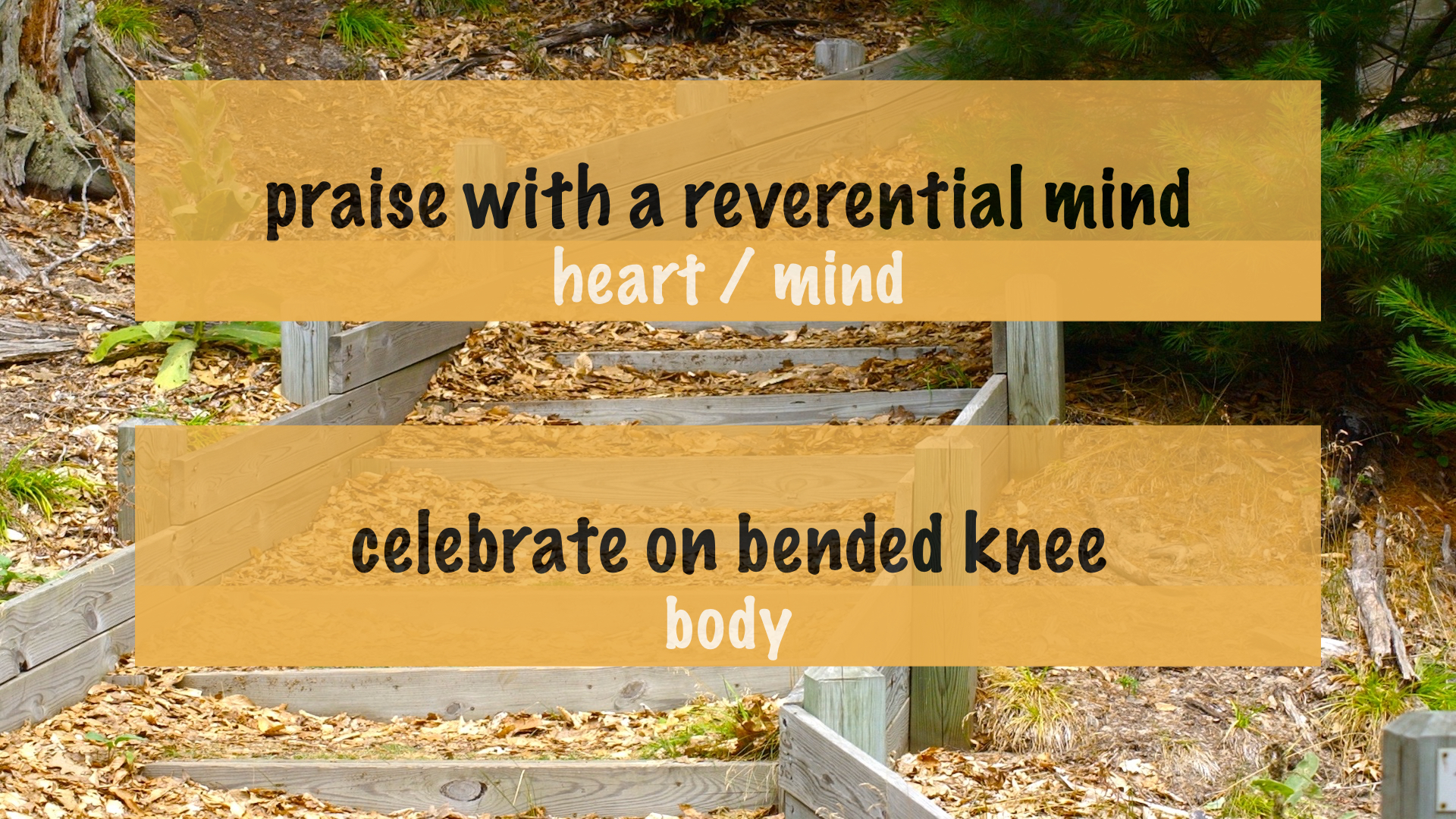
The first duty of the servants is to praise (2x in vv. 1, 2). The KJV actually renders this word “bless,” which I believe is a good way for us to think about this. The word means:
praise God with a reverential mind and
celebrate God on bended knee
In other words, both our heart and our body need to be in a posture of a praising servant. In the Septuagint, the word used for praise / bless is eulogeo, which means to say good words. In putting the two parts of the definition together, it mean we aren’t grumbling about our service (like “I have to do this”), but we are thankfully and worshipfully serving (as in “I get to do this!”).
These servants are called to “minister…in the house of the Lord [and] in the sanctuary” (134:1-2), just as the priests in the tabernacle (1 Chronicles 9:33; Leviticus 6:13; 24:2, 4).
This blessing and serving is itself a blessing which unlocks even more blessing. The final words of the final Song of Ascent is a prayer request (notice the word “may” in v. 3).
The word bless in this final is the same word translated praise in vv. 1-2, except here the form of the verb means “to be shown divine favor”!
We don’t get blessed by God because we have blessed God, but we bless God because He has already blessed us. I don’t command His blessing, but I bless Him in recognition of the blessing that continually flows from Him to me.
To word minister as in v. 1 means to:
endure all hardships
continue until the task is done
cause or help others to stand too
God loves to bless people who love to bless people!
As long as we’re here, keep blessing and serving others as your act of worship to God. Say good words to people about God and say good words to God about people. Lift up your hands, fall on your knees, sing out loud, or worship quietly in your heart. But keep on serving like Jesus. All of this blesses God.
Your final and eternal reward in the Heavenly Zion is coming and it is beyond compare—
It will be good for those servants whose Master finds them watching when He comes. Truly I tell you, He will dress Himself to serve, will have them recline at the table and will come and wait on them. It will be good for those servants whose Master finds them ready, even if He comes in the middle of the night or toward daybreak. (Luke 12:37-38)
In blessing others, we are blessing the God who has already blessed us and who longs to bless us for all of eternity!
If you’ve missed any of the messages looking at the fifteen Songs of Ascent, you can find them all here.
I like the bridge in the song I Keep Falling In Love With Him—
When I first fell in love with Jesus, I gave Him all my heart And I thought I couldn’t love him more than I did right at the start. But now I look back over the mountains, and the valleys where I’ve been And It makes me know I love Him so much more than I did then
Out of the depths—Think how far we’ve come on this climb. In the first Song of Ascent, we were experiencing the woes of being in the valley (Psalm 120:5-7). But now in this song, the feelings of being in the depths are not from someone else’s sinful activity.
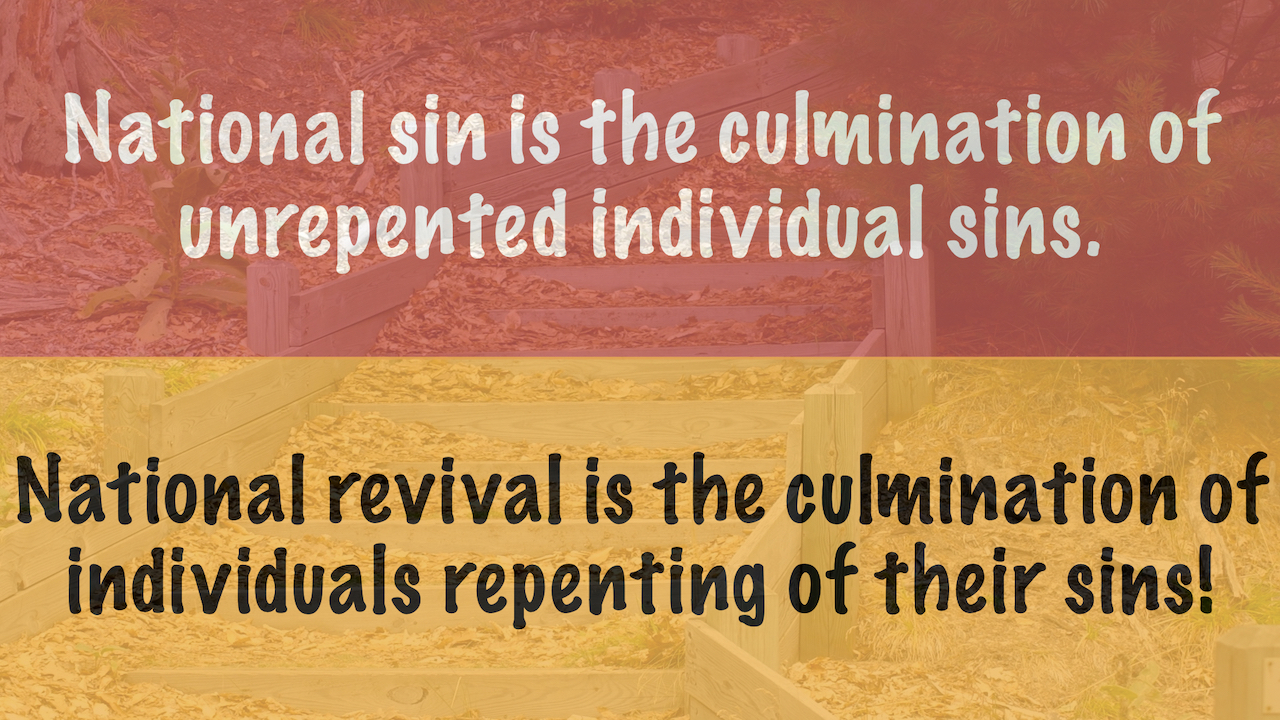
The psalmist is pointing out that national sin is the culmination of unrepented individual sins. God addressed this in Leviticus 20:22—Keep all My decrees and laws and follow them, so that the land where I am bringing you to live may not vomit you out.
Even in these depths, the psalmist is confident that God will hear—let Your ears be attentive (v. 2). Nehemiah was confident too. Look how he joins his personal sin to the national sin after Israel had be vomited out of the land (Nehemiah 1:1-7).
Our confidence comes from the rock-solid assurance that God completely forgives our sins and then forgets all that He forgives (vv. 2-3; Psalm 103:10-12).
The middle verses (vv. 5-6) have the key words wait, watch, and hope. This middle part comes down to: (1) What I’m going to pay attention to, and (2) What God pays attention to.
God is attentive to our cries for mercy, and He is watchful for our care, not for our punishment!
We are called to wait and watch in hope because God has proven that He is all in for us. Look at this completeness:
full forgiveness (v. 3)
unfailing love (v. 7a)
full redemption (v. 7b)
all their sins (v. 8)
Notice in v. 7 the phrase “all THEIR sins” is now corporate (not singular, personal as in the opening verses).
We’ve gone FROMmy voice, my cryTOyour hope, O Israel and redemption of their sins.
If national sin is the culmination of unrepented individual sins, then national revival is the culmination of individuals repenting of their sins!
Listen to the podcast of this post by clicking on the player below, and you can also subscribe on Apple, Spotify, or Audible.
On Mother’s Day, I mentioned that Proverbs 31 might be an intimidating description for Moms, but it doesn’t need to be that way. This chapter lists what is possible when a woman is fully committed to God, her husband, and her children.
Her faithfulness is her superpower which unleashes so many good things for those around her. Or as we said it: Her nobility helps her be a king maker.
I concluded by saying that men have an important role to play in order to honor the king-making power which the godly women in his life have unlocked. This is a man’s superpower! Together, God-fearing men and women can create a legacy of king makers. But separated or self-focused men and women can create a legacy of king breakers.
The Hebrew word for noble is used five times in Proverbs: three times for the godly superwoman (Proverbs 12:4, 31:10, 31:29), and twice for the godly superman (13:22, 31:3).
Remember that this word is also translated in different versions of the Bible as excellent, virtuous, and strong in character.
In Proverbs 31:3 the word vigor for men is attached to that same Hebrew word. In this context, the word can be defined as strength, efficiency, ability, or wealth.
On Mother’s Day, we said that Eve is the “help meet” (as the old King James Version says), which means that she is the key that unlocks Adam’s potential. The teaching throughout Proverbs says that men can squander this unlocked potential by…
…forgetting God’s laws—Proverbs 31:4-5
…not stewarding the unlocked leadership opportunities in our marriage, parenting, work, or community involvement (Proverbs 5:15-20; 2:1-5, 12-17; 22:29; 31:23).
In essence, we cancel the definition of vigor that we saw above, changing strength to weakness, efficiency to inefficiency, ability to inability, and wealth to poverty.
On Mother’s Day we looked at virtuous Ruth who used her godly superpower to unlock the potential for Boaz, the man who would become her husband. Let’s look at his example:
he was called a man of standing because his righteousness was well known in Bethlehem—Ruth 2:1
he was obedient to the smallest details of the law—Ruth 2:3; Leviticus 19:9-10
he honored his father by following his example—Matthew 1:5; Joshua 2:1-24, 6:23
he was an honored employer—Ruth 2:4
he was also (just like Ruth) called a man of noble character—Ruth 3:7-11, 14
A Dad’s superpower looks very similar to a Mom’s superpower. The godly woman unlocks the potential, and when the godly man carefully stewards that potential, he is also using his godly superpower (Luke 12:42-43, 48)!
Guys, when we use our God-given superpower, we honor Him and the godly women in our lives who have made this possible for us. We do this by…
…faithfully loving God with all our heart, soul, mind, and strength—Proverbs 31:4-5; Mark 12:28-31
…caring for our bride like Jesus cares for His bride—Ephesians 5:25
…honoring the legacy of our parents—Ephesians 6:2-3
…passing on a godly heritage to our children—Ruth 4:21-22
This is God’s design. And it is God’s delight when we live this way. So we must make the choice to either carry on the godly heritage that was handed down to us, or reverse the ungodly heritage that we may have inherited.
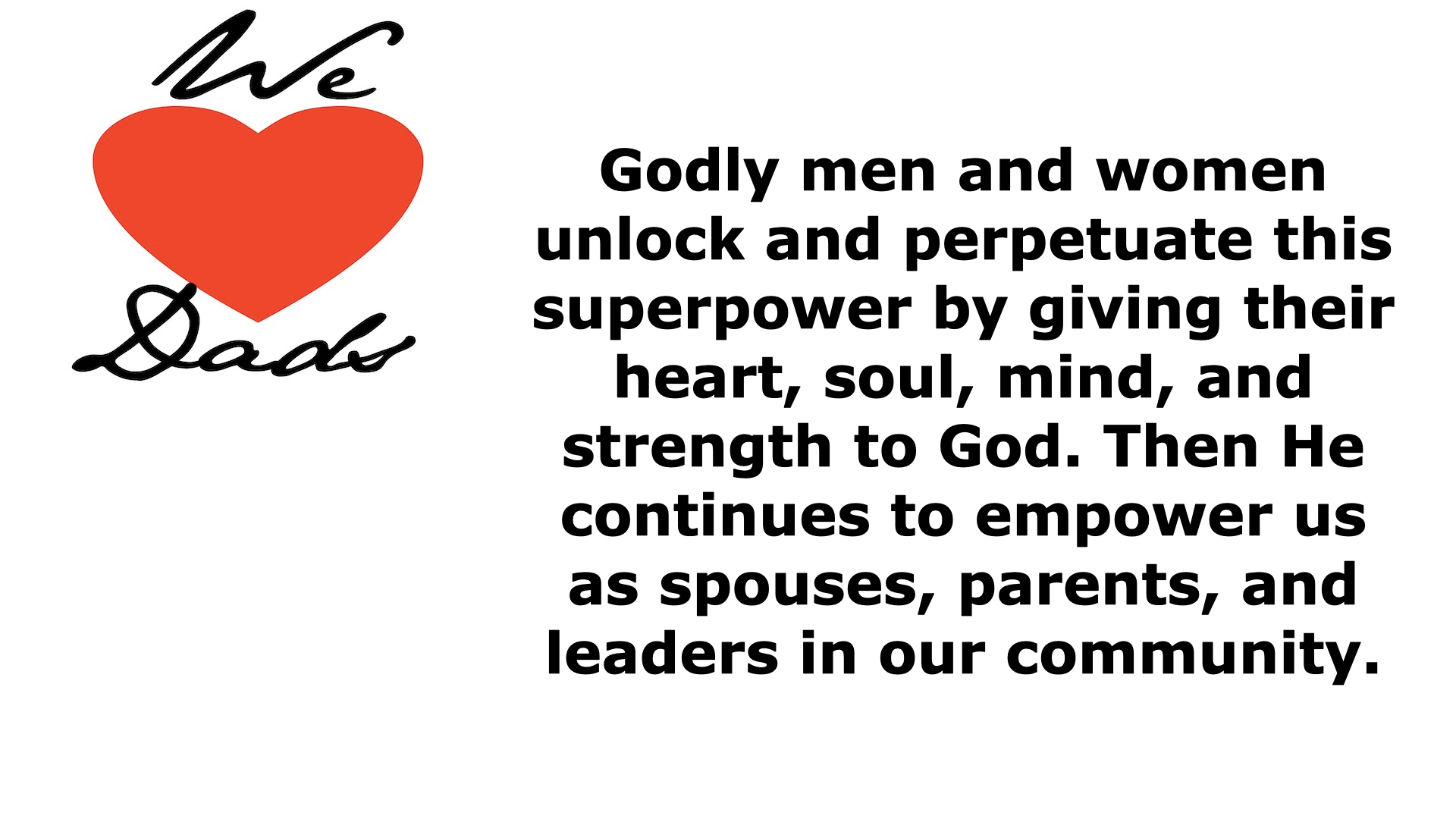
Godly men and women unlock and perpetuate their God-given superpower by giving their heart, soul, mind, and strength to God. And then God will continue to empower us as the spouses, parents, and leaders in our community that He desires for us to be!
He turned to God and the people put away their idols <or>
He turned from God and the people turned to their idols
It’s true: As goes the leader, so go the people.
In my life, I’ve experienced that the good things that I do over-the-top are only moderately emulated by those around me. But the unhealthy things that I even slightly indulge in are adopted quickly by everyone else.
Godly leaders must be so aware of how their example impacts everyone around them, and they must fight to maintain biblical standards. When we miss the mark, we must be quick to admit our shortcoming, repent, and get back on track.
In Hosea 4:9, God warns that the people will follow the ungodly example of their leaders, which is why God’s punishment is often more severe for those leaders.
On the positive side, in Leviticus 9, Moses and Aaron demonstrate the leadership example of spending time in God’s presence and fully obeying everything God had revealed to them there. Then verse 23 it says that after they came out of His presence, God’s glory appeared to all the people. The positive example of the leaders led to huge blessings for all the people!
A mark of a godly leader is one who increasingly aware of the power of his example.
Leaders, let’s be first to go first in…
…being in God’s presence
…obeying God’s commands
…repenting when we fall short
…asking forgiveness of those who have seen our poor example
…asking God to bless His people because of our good example
This is part 77 in my series on godly leadership. You can check out all of my posts in this series by clicking here.
We’ve added things that we think should be in our prayer vocabulary. But kingdom praying should be as natural as talking to the most loving Father you can imagine! Check out more thoughts in my series of posts called Kingdom Praying. I have lots of new content every week, which you can check out on my YouTube channel.
“Obstacles don’t have to stop you. If you run into a wall, don’t turn around and give up. Figure out how to climb it, go through it, or work around it.” —Michael Jordan
In the post-Flood rock layers, fossils are often found of animals that were much larger than are currently observed. This has been called giantism. “Evolutionists claim that adaption occurs as random mutations make some organisms better fitted for their environment, and the less-fit organisms then die off. … This supposed, random, trial-and-error process requires long periods of time waiting for the ‘right’ random mutation to occur. In contrast, ICR gives credit to Jesus. He designed organisms with built-in sensors that enable them to detect changes in their environment. Internal genetic programming then allows these organisms to rapidly adapt to these changes in predictable ways. Such adaptation is often too rapid for natural selection to be the correct explanation. This design-based paradigm of adaptation is called continuous environmental tracking (CET).” This is an excellent article.
“If the stone falls on the pot, alas, for the pot; if the pot falls on the stone, alas for the pot.” —Jewish proverb, based on Psalm 118:22 and Luke 20:17-18
…ears consecrated to hear God’s voice and the voice of the people
…hands dedicated to ministering in love and obedience
…feet that only walk in God-directed paths
Godly leaders don’t minister to please people, but to lead people to God. So godly leaders are ever aware that in all they do, they must hear God say, “Well done, good and faithful servant.”









 You might be thinking, “But I have to respond to these lies, right? I can’t just let them continue to fly around unchecked because people may start believing these falsehoods.” I think this is a very natural response, but I want to again call us to strive for a supernatural response—something we can only do if we are completely yielded to God. Just as we saw what Peter wrote about the way Jesus didn’t verbally lash out at His slanderers (1 Peter 2:23), we need to respond in the same way as our Chief Shepherd did. …






Links & Quotes
February 24, 2024 — Craig T. OwensWe’ve added things that we think should be in our prayer vocabulary. But kingdom praying should be as natural as talking to the most loving Father you can imagine! Check out more thoughts in my series of posts called Kingdom Praying. I have lots of new content every week, which you can check out on my YouTube channel.
“Obstacles don’t have to stop you. If you run into a wall, don’t turn around and give up. Figure out how to climb it, go through it, or work around it.” —Michael Jordan
In the post-Flood rock layers, fossils are often found of animals that were much larger than are currently observed. This has been called giantism. “Evolutionists claim that adaption occurs as random mutations make some organisms better fitted for their environment, and the less-fit organisms then die off. … This supposed, random, trial-and-error process requires long periods of time waiting for the ‘right’ random mutation to occur. In contrast, ICR gives credit to Jesus. He designed organisms with built-in sensors that enable them to detect changes in their environment. Internal genetic programming then allows these organisms to rapidly adapt to these changes in predictable ways. Such adaptation is often too rapid for natural selection to be the correct explanation. This design-based paradigm of adaptation is called continuous environmental tracking (CET).” This is an excellent article.
“If the stone falls on the pot, alas, for the pot; if the pot falls on the stone, alas for the pot.” —Jewish proverb, based on Psalm 118:22 and Luke 20:17-18
Godly leaders don’t minister to please people, but to lead people to God. So godly leaders are ever aware that in all they do, they must hear God say, “Well done, good and faithful servant.”
Share this: