7 Quotes From “He Chose The Nails”

Max Lucado takes us in for a closer look at the Cross and all that Jesus did there for us. Please check out my full book review and then read this book—you will be glad you did! 

“Maybe you’ve never spit on anyone, but have you gossiped? Slandered? Have you ever raised your hand in anger or rolled your eyes in arrogance, have you ever blasted your high beams in someone’s rearview mirror? Ever made someone feel bad so you would feel good? That’s what the soldiers did to Jesus. When you and I do the same, we do it to Jesus too. ‘I assure you, when you did it to one of the least of these My brothers and sisters, you were doing it to Me!’ (Matthew 25:40 NLT). How we treat others is how we treat Jesus. …

“Allow the spit of the soldiers to symbolize the filth in our hearts. And then observe what Jesus does with our filth. He carries it to the Cross. Through the prophet He said, ‘I did not hide My face from mocking and spitting’ (Isaiah 50:6). Mingled with His blood and sweat was the essence of our sin.” 

“‘He canceled the record that contained the charges against us. He took it and destroyed it by nailing it to Christ’s Cross’ (Colossians 2:14 NLT). Between His hands and the wood there was a list. A long list. A list of our mistakes: our lusts and lies and greedy moments and prodigal years. A list of our sins. Dangling from the Cross is an itemized catalog of your sins. The bad decisions from last year. The bad attitudes from last week. There, in broad daylight for all of heaven to see, is a list of your mistakes. … The list God has made, however, cannot be read. The words can’t be deciphered. The mistakes are covered. The sins are hidden. Those at the top are hidden by His hand; those down the list are covered by His blood. Your sins are ‘blotted out’ by Jesus (KJV). ‘He has forgiven you all your sins: He has utterly wiped out the written evidence of broken commandments which always hung over our heads, and has completely annulled it by nailing it to the Cross’ (Colossians 2:14 Phillips).” 

“Seats at God’s table are not available to the sloppy. But who among us is anything but. Unkempt morality. Untidy with truth. Careless with people. Our moral clothing is in disarray. Yes, the standard for sitting at God’s table is high, but the love of God for His children is higher. So He offers a gift.… a seamless robe… a robe worn by His Son, Jesus.” 

“What appeared to be the cruelty of man was actually the sovereignty of God. Matthew tells us: ‘And when Jesus had cried out again in a loud voice, He gave up His spirit. At that moment the curtain of the temple was torn into from top to bottom’ (27:50-51). It’s as if the hands of heaven had been gripping the veil, waiting for this moment.” 

“Why is the Cross the symbol of our faith? To find the answer look no farther than the Cross itself. Its design couldn’t be simpler. One beam horizontal—the other vertical. One reaches out—like God‘s love. The other reaches up—as does God’s holiness. One represents the width of His love; the other reflects the height of His holiness. The Cross is the intersection. The Cross is where God forgave His children without lowering His standards.” 

“‘Just look what they did to me!’ we defy and point to our hurts. ‘Just look what I did for you,’ Jesus reminds and points to the Cross. Paul said it this way: ‘If someone does wrong to you, forgive that person because the Lord forgave you’ (Colossians 3:13). You and I are commanded—not urged, commanded—to keep no list of wrongs.” 

“Knowing His last deeds would be forever pondered, don’t you think Jesus chose them carefully? Deliberately? Of course He did. There were no accidents that day. Jesus’ last moments were not left up to chance. God chose the path; He selected the nails. Our Lord planted the trio of crosses and painted the sign. God was never more sovereign than in the details of the death of His Son. … The message: ‘I did it for you. I did it all for you.’” 
He Chose The Nails (book review)

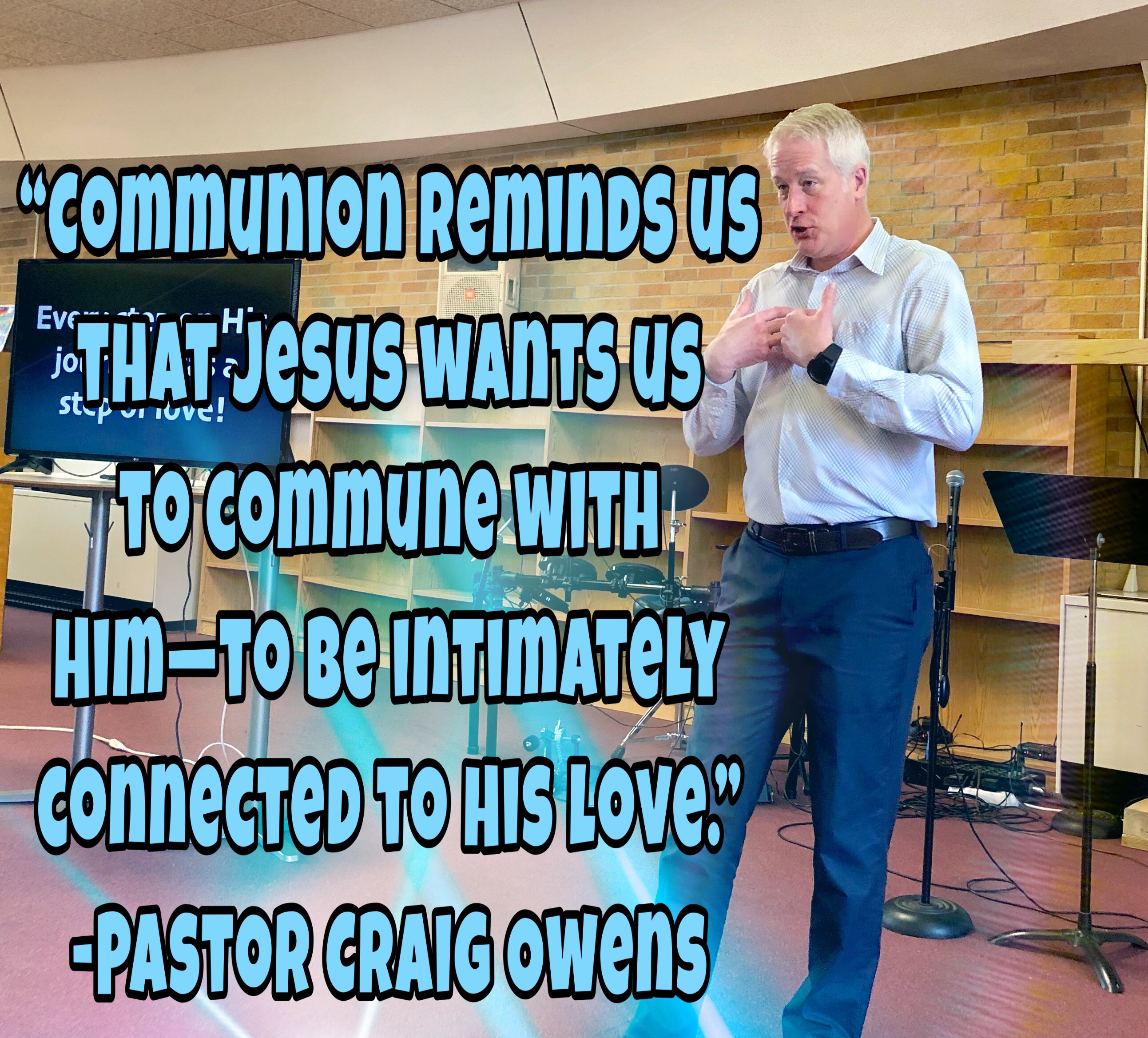
Max Lucado has an inimitable style of writing that immediately draws us into his subject—in this book the focal point is what Jesus did for us on the Cross—gets us to look at it in a new light, and then helps us walk away with a fuller understanding. The title of this book is really the answer to the sub-title—Q: What did God do to win your heart? A: He Chose The Nails.

In keeping with the theme of God answering the book’s question of how He won your heart, all but two of the chapters use statements from God as their title. Statements like “I will bear your dark side,” and “I forgive you,” and “I understand your pain,” and “I will love you forever.” In each chapter, Max takes us nearer to the Cross and to the Savior who bled and died there to show us how much God loves us. 

This is a book that can easily be read together with your family or a group of friends; especially if you then utilize the study guide questions for each chapter at the back of the book. This is a book that could be read rather quickly, but because Max paints such a vivid picture of God’s unexpected love you will want to read slowly and savoringly. This is a book that could be read at any time, but I would recommend you read it during the days and weeks approaching Good Friday and Resurrection Sunday. 

Whether reading alone or with friends, reading quickly or slowly, reading it during the Lenten season or at another time, I can promise you that your heart will beat more strongly with the assurance of God’s overwhelming, mind-blowing love for you. 

Love Securely

Jesus is journeying toward the Cross. On Thursday, it’s His last opportunity to impart His most important thoughts to His disciples. He is about to be arrested, and everything is about to go sideways for the disciples—“this isn’t the way this is supposed to happen!”—and Jesus needs to prepare them with the truth they will need to sustain them through this. 

“I have eagerly desired to eat this Passover with you before I suffer,” Jesus says (Luke 22:15).  

So Peter and John are sent to make arrangements for the Passover meal, but one of the arrangements that they overlooked was the host duties—washing the feet of each guest, anointing them with perfume, and giving them a welcoming kiss. 

As they are eating dinner, Jesus makes four important statements:

  1. “One of you will betray Me”
  2. “All of you will abandon Me”
  3. “I will rise again and restore you”
  4. “I have prayed for you”

These statements get the disciples arguing about who’s going to betray Jesus—“It’s not me, is it?!”—and over how faithful they are—“I would never abandon Him!” Ultimately they begin to argue over who is the greatest disciple among them. 

Jesus not only explains to them how the servant is greater than the master in God’s sight (Luke 22:24-27), but He then becomes the living example of that when He washes their feet (John 13:1-5, 12-17). 

Here’s an important principle—Only secure people can lovingly serve others. 

Insecure people don’t like to serve others because they feel they are being misused, or taken advantage of, or that others will look down on them. 

Jesus “knew” (John 13:1, 3) how much power His Father had given Him, making Him secure enough to serve. Security really means, “I am loved by God, and I know who I am in Him.”

Jesus served out of love: the profound love that He knew His Father had for Him. He gave His disciples the same mandate: Serve others out of love for Me and show the world that you are My disciples (see John 13:34-35).

When Jesus ate this last supper with His disciples, He instituted a remembrance celebration that we now call Communion. The root word is “commune” which the dictionary defines as a “conversation with profound intensity and intimacy.” 

This is the type of intimate relationship Jesus had with His Father, and this is the type of relationship He calls us to with Him. The broken bread of Communion reminds us that Jesus can make whole any broken area that would keep us from communing with Him. The cup of Communion reminds us that Jesus can instantly and fully forgive any sin that would keep us from communing with Him. 

Jesus set the example—we are to commune with our Heavenly Father through the way He made by His broken body and His shed blood. It’s out of this communion that we are empowered by His love, and then feel secure enough to serve others in love too. 

Poetry Saturday—I See His Blood Upon The Rose

I see His blood upon the rose
And in the stars the glory of His eyes,
His body gleams amid eternal snows,
His tears fall from the skies.

I see His face in every flower;
The thunder and the singing of the birds
Are but His voice—and carven by His power
Rocks are His written words.

All pathways by His feet are worn,
His strong heart stirs the ever-beating sea,
His crown of thorns is twined with every thorn,
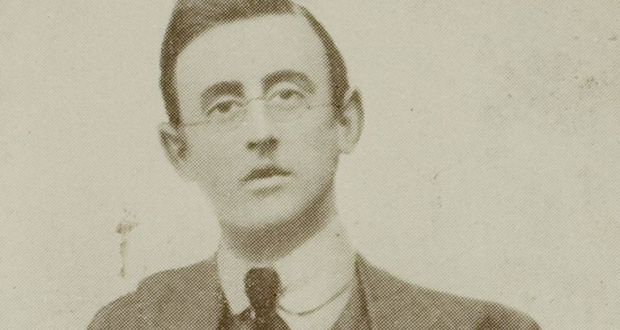
His Cross is every tree. —Joseph Mary Plunkett

Christ’s Passionate Journey

In some of our favorite action movies, when the crucial moment for our hero has finally arrived, filmmakers will often switch into slow motion filming. They want you to feel the tension. They want you to see the emotion etched on the face of our hero. They want to make sure you don’t miss a single detail of this pivotal moment in the story. 

The same thing happens in the life of Jesus.

The four Gospels record 3+ years of the life of Jesus on earth. But when Jesus is approaching the Cross—the crucial moment of His ministry—all the Gospel writers go into slow motion. 

For example, Mark doesn’t mention anything about the birth of Jesus and only gives us one verse to tell about satan’s temptation of Jesus in the wilderness. But he uses nearly 40% of his writing to describe the last week of Christ’s life. The numbers are similar for Matthew and Luke, with John devoting almost one-half of his account to Christ’s Passion Week. 

Clearly, there is something happening here that the Gospel writers want to ensure that we don’t miss a single detail! 

Jesus knew all that was about to happen to Him. When Peter swung his sword at the soldiers that came to arrest Him, Jesus said, “Do you think I cannot call on My Father, and He will at once put at My disposal more than twelve legions of angels? But how then would the Scriptures be fulfilled that say it must happen in this way” (Matthew 26:53-54). 

Every step that Jesus took toward the Cross was a step of love. Every word He spoke in His final moments before His death was calculated to sink deep into the memories of all who observed this story. 

We are going to go into “slow motion” as well as we look closely at each day of Christ’s final week of ministry. From His dinner in Bethany to His resurrection, we’ll slow down and ponder deeply the love message Jesus is still conveying to us. 

Here are the days we explored on this journey:

When Fear Must Go

Listen to the podcast of this post by clicking on the player below, and you can also subscribe on AppleSpotify, or Audible.

I love the balancing thought of being humbly confident in God’s presence (or if you like: being confidently humble).

Humble to know I have nothing in myself that gives me access to God’s presence and love and power, but confident to know that God through Christ’s work on the Cross desires to have me with Him. 

C.S. Lewis wisely noted: “Humility is not thinking less of yourself, it’s thinking of yourself less.” Fear comes in when I’m thinking about me—how unworthy I am, how I messed up, how I wish I would have….

Fear leaves when I set my thoughts on Christ—how absolutely worthy He is, how He has accomplished everything for me, how He is working all things together for good. 

There is no fear in love—dread does not exist—but full-grown, complete, perfect love turns fear out of doors and expels every trace of terror! For fear brings with it the thought of punishment, and so he who is afraid has not reached the full maturity of love—is not yet grown into love’s complete perfection. (1 John 4:18)

It is humbly confident (and confidently humble) to keep my mind off me and take all my thoughts to His perfect love. That’s when fear must go!

“The mark of God’s people is not incapacitating fear, but rather contrite courageous confidence in God. … The good news of the Bible is not that we are not worms, but that God helps worms who trust Him.” —John Piper, commenting on Isaiah 41:14

►► Would you please prayerfully consider supporting this ministry? My Patreon supporters get behind-the-scenes access to exclusive materials. ◀︎◀︎

7 More Quotes From “Defiant Joy”

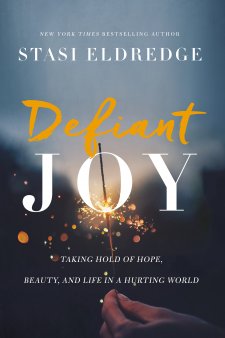
It may sound like an oxymoron—defiant joy—but it’s a powerful combination that Stasi Eldredge unpacks in her book. Check out my full review of Defiant Joy by clicking here. 

“Times of testing can also be times of refining and growth. The counterintuitive truth is that suffering can deepen our hope. It enlarges our hearts so that we can know the love and presence of Jesus in ways that we would not if we did not go through the stretching the process.” 

“The waiting can be hard when you are hungry, but when you know a feast is coming, you know that the waiting won’t last forever. Dear ones, the waiting is not going to last. But there is no shame in being hungry while you wait. … In our waiting God often deepens our hunger as well.” 

“We are alive. And to be alive means that we will feel. We don’t need to deny it, and we don’t need to have it rule us. We dare not marry it to cynicism, and we must not fuel it with fatalism. It is not the end of our reality. It is instead a clue that we are strangers in a strange land. And we are passing through. Sadness touches us all, but God can use it to enhance the beauty and joy of the lives we are living. Sadness can fuel our hope. It can arouse our expectancy.” 

“God displayed His fierce, constant love for us once and for all on the Cross of Calvary. The essence of His heart is no longer up for question. Because of all that Jesus won for us and our choice to receive it, God promises that we actually have nothing to fear.” 

“satan comes to rob us of our joy, our peace, and our connection to and faith in God. He whispers lies to us when we are vulnerable and does his best to warp our perception of our lives with his depressing and evil spin. His endless attacks can wear a person down if they are aware that the perceptions being suggested are coming straight from hell.

“satan is very good at stealing. He’s devoted all his malice to separating us from intimacy with our good Father and the experience of deep joy that comes straight from Jesus’ heart. The evil one uses the circumstances of our lives and of the world to bring discouragement and despair. That is why we must remember that though happiness is rooted in our circumstances, joy is rooted in eternity.” 

“Depth of character doesn’t come easily. It doesn’t come at all to those who refuse to admit the difficulties in their lives are painful. It comes when we fix our gaze on Jesus and the reality that this life is only part of the grand scheme of things.” 

“There is something forged in all of us that can only be forged through fire. Perhaps intense periods of struggle, pain, betrayal, persecution, and rejection are the times when the baptism by fire that Jesus talks about occurs. When we cling to Jesus and proclaim He is good in the midst of the licking flames, our spirits rise in a strength that is proven unshakable, and God is glorified beyond reckoning. Our pain becomes the terrain of God. It becomes sacred.” 

Check out some more quotes I shared from Defiant Joy here.

Book Reviews From 2018

Living Between The Advents

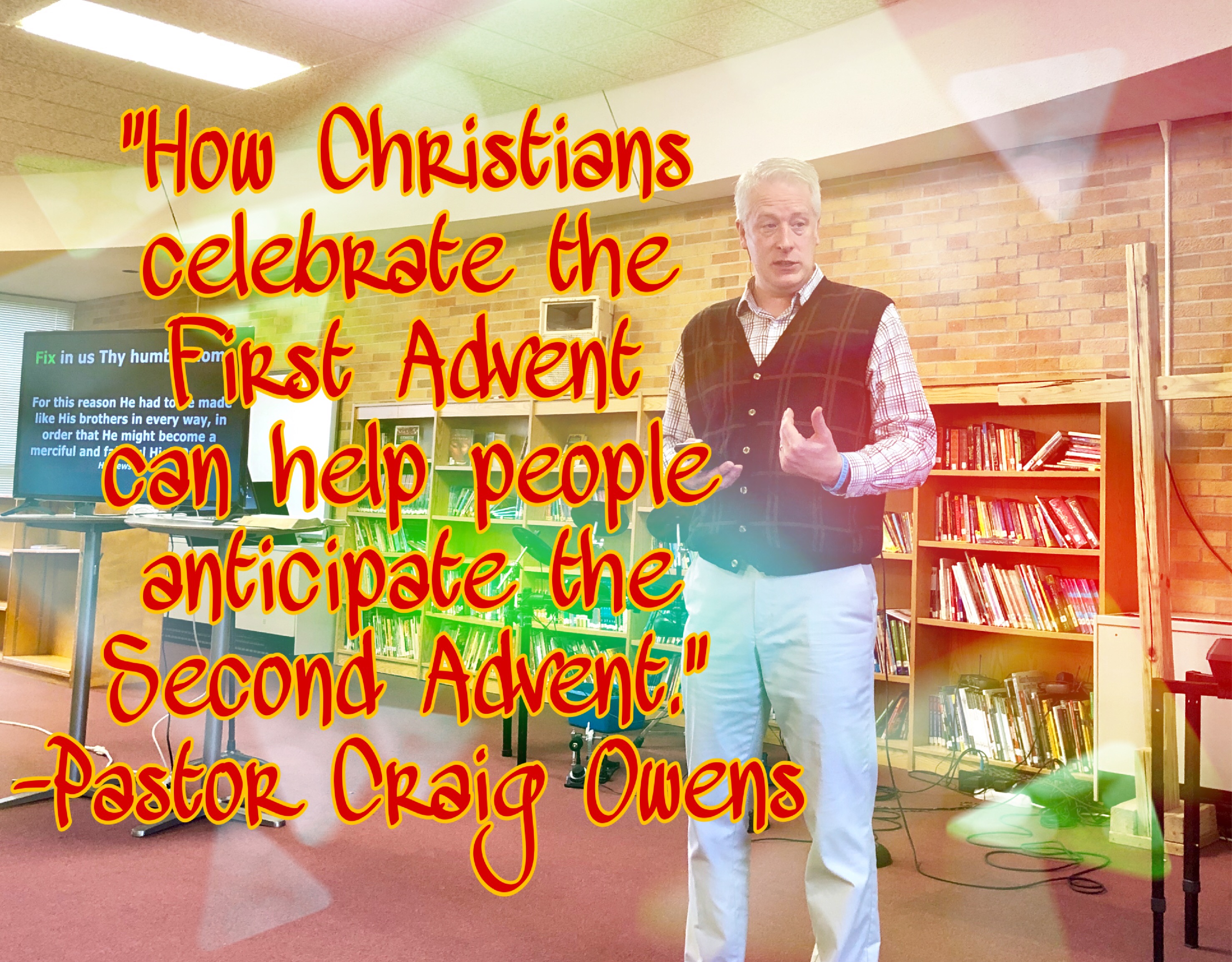
We live in an amazing time—the First Advent of Jesus has already happened in Bethlehem, and yet we are eagerly anticipating Christ’s Second Advent at any moment! 

The fourth stanza of Charles Wesley’s classic Christmas carol Hark! The Herald Angels Sing is a wonderful between-the-Advents look at what happened at the First Advent, and what we have to look forward to in the Second Advent. The key thing to note in this stanza is the verbs: come, fix, rise, bruise, efface, stamp, and reinstate. 

COME, Desire of nations—What is the “desire of nations”? It’s the restoration of God’s glory on earth, so it’s not really a what but a Who. The prophet Haggai informs us that our Desire is realized in the Advent of Jesus (2:1-9).  

FIX in us Thy humble home—At His First Advent, Jesus came and humbly made His home among us, even dying to pay the penalty for our sins (Hebrews 2:14, 17; Philippians 2:7-8). 

RISE, the woman’s conquering seed—Although Jesus was obedient to death—even death on a Cross, He didn’t stay dead but was resurrected (Philippians 2:8-9; Revelation 1:18)! 

BRUISE in us the serpent’s head—With His death and resurrection, Jesus took away the sting of death from satan, fulfilling one of God’s first prophesies (Genesis 3:15; 1 Corinthians 15:19-26, 54-57).  

Adam’s likeness now EFFACE—That means to wipe out, do away with, expunge. That’s exactly what God does with our forgiven sins (Psalm 103:1-4, 10-12)! 

STAMP Thine image in its place—Although our sin has been effaced, God doesn’t leave us as blank slates, but instead He allows the image of His Son Jesus to be stamped onto our lives (2 Corinthians 1:21-22; 2 Corinthians 3:18). 

REINSTATE us in Thy love—The relationship we longed for is now reborn in us (1 Corinthians 15:49)! 

The Desire of Nations HAS come, and yet He WILL come again! We’re living between the Advents now, so a good question for Christians to ask is: “How are we to live?” I think there are three key things—

  1. In celebration that Jesus came at His First Advent to be our Savior
  2. In anticipation of the Second Advent
  3. In obedience to God’s Word (Revelation 22:7)

To take a look at the other stanzas of this Christmas carol, please click here.

11 Quotes From “Notes On Jeremiah”

Oswald Chambers gives us some unparalleled insights into the Book of Jeremiah. This is a must-read for serious students of the Bible. Check out my full book review of Notes On Jeremiah by clicking here.

“Very few of us understand why clouds of darkness come. It is God trying to get us into line with the prophets and apostles. It is the Holy Spirit seeking to bring us into the place of vicarious intercession, and we nearly always misunderstand it and say, ‘I must have sinned,’ or ‘I must get out of this, I have got the blues.’” 

“We do not need a new Gospel; what we need is the old truth re-stated to hit the things that are wrong today.” 

“Few of us realize the power God has given us to grip on the threshold of the mind as in a vice the things that ought not to be there.” 

“The Cross of Jesus Christ is not a martyrdom, it does not procure salvation; it is the only salvation.” 

“Beware of ever saying to yourself, ‘God’s law is not exactly binding to me, I am under grace.’ To be under grace should mean that we can fulfill the law of God gracefully.” 

“Prosperity that does not spring from a godly motive is the external sign of having forsaken God.” 

“We cannot answer God’s call collectively (John 6:68-70). Never get disturbed out of hearing God’s voice by saying other people have not heard it.” 

“Human nature hates God’s message that there is a bad tendency inside that has to be plucked out, and unless it is it will damn us.” 

“Jesus Christ’s salvation is the destruction of the sinner in the man, not of the man.” 

“The measure of my misery when I turn from God is proportioned to my knowledge of Him when I walked with Him.” 

“Our Lord Jesus Christ and the Old Testament prophets are inseparable from one another, for in the Person and the teaching of our Lord all that the prophets taught is in part fulfilled, and will be completely fulfilled.” 

Every week I post longer passages from Oswald Chambers’ books in my “Thursdays With Oswald” feature.