A Chronology Of The Life Of Paul

The Apostle Paul is a fascinating figure that looms so large across the New Testament and beyond.

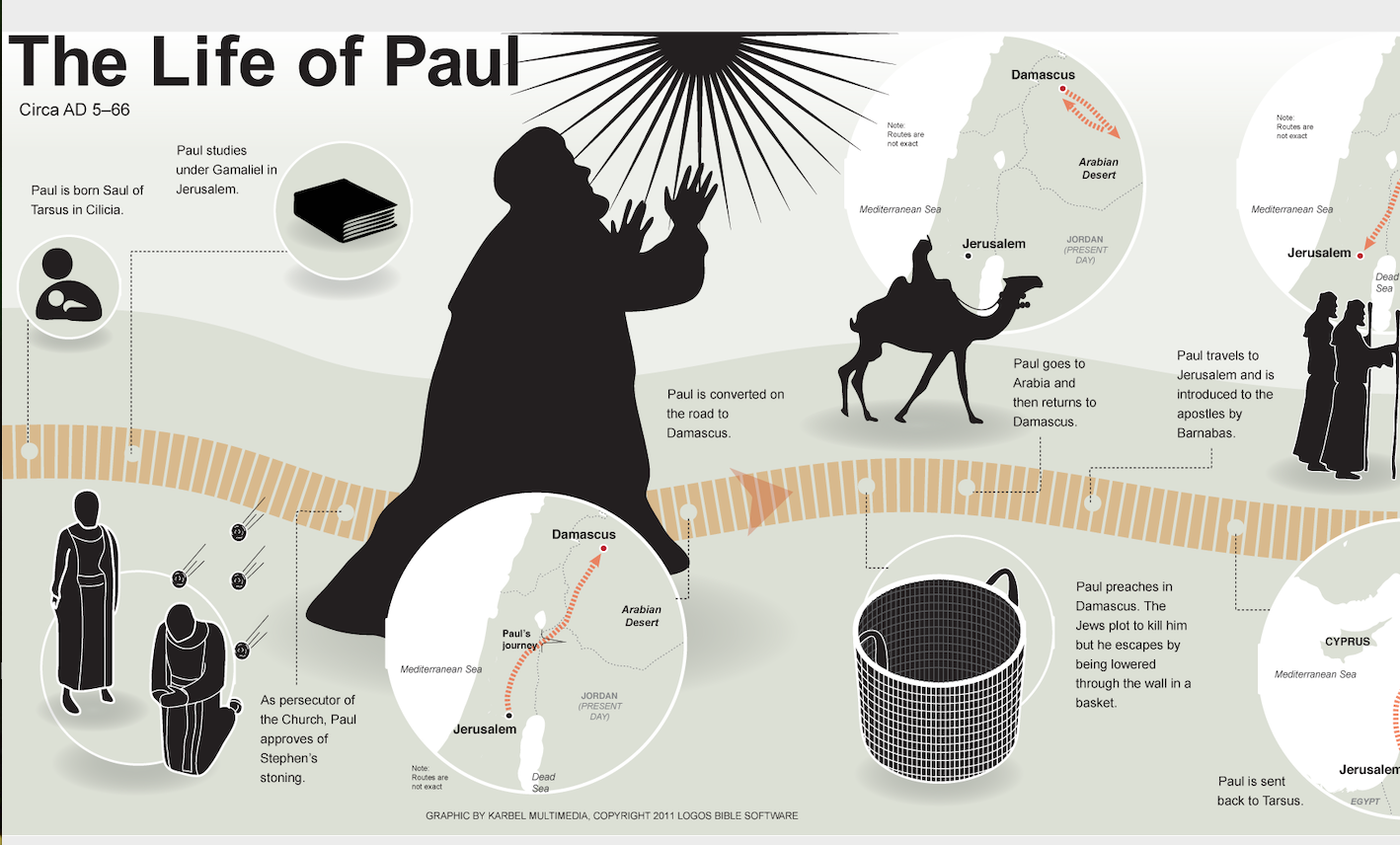
I recently came across these amazingly helpful study tools to put the life of Paul into perspective. These are both from the Faithlife Illustrated Study Bible, which I highly recommend to you for adding a new depth to your Bible study time.

This is an illustrated timeline of the key dates and events of Paul’s life. Click on the graphic to view it better, or check it out on the Biblia website.

If you would like to research both the biblical texts and the attestations of Paul’s ministry outside of the New Testament, you may want to download this PDF chart → Apostle Paul Chronology

And it’s worth repeating: get a copy of the Faithlife Illustrated Study Bible for yourself as soon as you can!

Putting CHRIST In Christmas

Does it seem like many people substitute “Happy holidays” for “Merry Christmas”? Or that more and more people prefer spelling it “X-mas” instead of Christmas? 

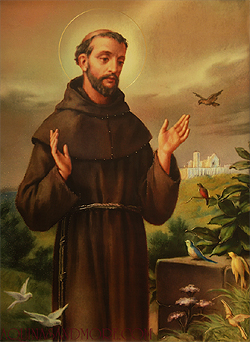
This isn’t something new in our culture. Francis of Assisi dealt with this same situation in the 12th century. 

“Many people spell Christmas without Christ, the glory of a Holy Day being supplanted by the glitz of a holiday—a problem that reaches back to the days of St. Francis of Assisi. 

“Francis was born in 1182 in central Italy, son of a rich merchant. After a scanty education, he joined the army and was captured in war. He came to Christ shortly after his release, and soon he began traveling around the countryside, preaching the gospel. At a February 1209 Mass, Francis was gripped by words being read from Matthew 10: As you go, preach this message: ‘The kingdom of heaven is near.’ Heal the sick, raise the dead, cleanse those who have leprosy, drive out demons. Freely you have received, freely give. Do not take along any gold or silver or copper in your belts; take no bag for the journey, or extra tunic, or sandals or a staff … (NIV). 

“Francis felt that Christ Himself was speaking directly to him. He decided to obey those words as literally as possible, preaching the kingdom and possessing nothing. It is as though a 1,200-year bridge were crossed, putting Francis in the shoes of the original wayfaring apostles themselves. 

“He spent his remaining days making Christ real to everyone he met—a passion leading to history’s first living nativity scene. On December 24, 1223, Francis found a cave near Greccio, Italy, and brought in animals traditionally associated with the birth of Christ. (Francis loved animals and sometimes even preached to them.) He built the crib, arranged the hay, and finished the scene. Crowds gathered full of curiosity and wonder; and there on Christmas Eve Francis preached the wonder of God made man, born a naked infant and laid in the manger. ‘Behold your God,’ he said, ‘a poor and helpless Child, the ox and donkey beside Him. Your God is of your flesh.’ 

“Glitz gave way to glory that evening as the people of Greccio learned afresh how to spell the word Christmas.” —From On This Day 

This Advent season, let us remember that there is no Christmas without Christ! 

I ❤️ My Church!

If you lived in the early first century AD—and if the donkey carts had bumper stickers—I’ll bet that you would have seen “I ❤️ My Church” bumper stickers on everything the early Christians owned. 

Both the Bible and historians of that day talked about the positive societal changes that Christians were making in their communities, and how every place they lived and worshipped got better. 

Why not today? 

Why not in your community? 

I believe Christians can—and should—live in such a way that everyone in their communities would sit up and take notice of the positive changes. If Christians really lived this way, we wouldn’t even need “I ❤️ My Church” bumper stickers because our lives would be the best advertisement there was! 

Join me this Sunday as we learn how the first Christians lived such positive, society-changing lives, and how we can do the same thing today. Join us in person or on Facebook Live this Sunday. 

Covenants To God

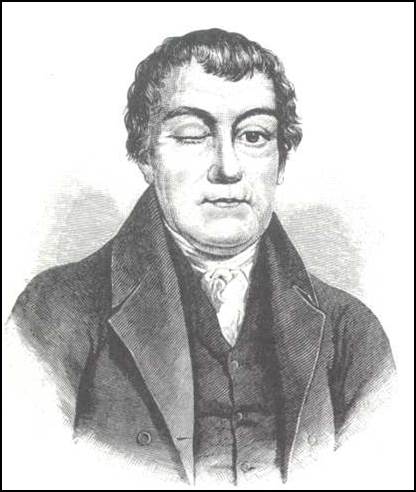
Christmas Evans tells us in his diary that one Sunday afternoon he was traveling a very lonely road to attend an appointment, and he was convicted of a cold heart. He wrote,

“I tethered my horse and went to a sequestered spot, where I walked to and fro in an agony as I reviewed my life. I waited three hours before God, broken with sorrow, until there broke over me a sweet sense of His forgiving love. I received from God a new baptism of the Holy Ghost.

“As the sun was westering, I went back to the road, found my horse, mounted it and went to my appointment. On the following day I preached with such new power to a vast concourse of people gathered on the hillside, that a revival broke out that day and spread through all Wales.”

Christmas went on to write 13 covenants to God. You can read all 13 of them by clicking here, but here are six of them that especially resonated with me—

V. O Jesus Christ, Son of the living God, take for the sake of Thy cruel death, my time, and strength and the gifts and talents I possess; which, with a full purpose of heart, I consecrate to Thy glory in the building up of Thy Church in the world, for Thou art worthy of the hearts and talents of all men.

VI. I desire Thee, my great High Priest, to confirm, by Thy power from Thy High Court, my usefulness as a preacher, and my piety as a Christian, as two gardens nigh to each other; that sin may not have a place in my heart to becloud my confidence in Thy righteousness, and that I may not be left to any foolish act that may occasion my gifts to wither, and I be rendered useless before my life ends…. 

VIII. … Grant that I may experience the power of Thy Word before I deliver it, as Moses felt the power of his own rod, before he saw it on the land and waters of Egypt. Grant this, for the sake of Thine infinitely precious blood, O Jesus, my hope, and my all in all.

IX. Search me now, and lead me into plain paths of judgment. Let me discover in this life what I am before Thee, that I may not find myself of another character when I am shown in the light of the immortal world, and open my eyes to all the brightness of eternity…. 

X. Grant me strength to depend upon Thee for food and raiment, and to make known my requests…. 

XII. Grant, O blessed Lord, that nothing may grow and be matured in me to occasion Thee to cast me off from the service of the sanctuary, like the sons of Eli; and for the sake of the Thine unbounded merit, let not my days be longer than my usefulness…. (emphasis mine)

If you want to do great things for God—if you want Him to do great things through you—then you must be wholly committed to Him. Perhaps Christmas Evans’ covenant statements will help you draft your own, or adopt a couple of his, to consecrate yourself to God’s service. 

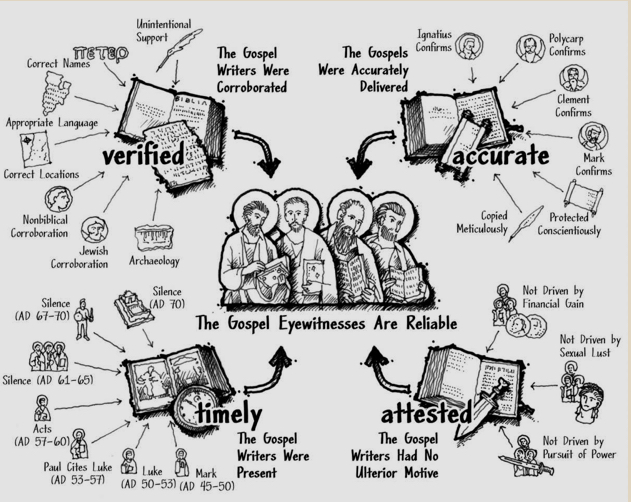
10 Quotes + 1 Infographic From “Cold-Case Christianity”

Cold-Case Christianity by J. Warner Wallace is educational in a number of ways. Not only will you learn more about police investigations and courtroom deliberations, but Christians and skeptics alike will learn about the reliability of the biblical account concerning Jesus. You can check out my full book review by clicking here. 

“The Christian tradition is actually intellectually robust and satisfying, even if we believers are occasionally unable to respond to your challenges. The answers are available; you don’t have to turn off your brain to be a believer. Yes, it is possible to become a Christian because of the evidence rather than in spite of the evidence.” 

“Faith is actually the opposite of unbelief, not reason. … The biblical definition of faith is a well-placed and reasonable inference based on evidence.” 

“What about cases that have no direct evidence connecting the suspect to the crime scene? Can the truth be proved beyond a reasonable doubt when all the evidence we have is circumstantial? Absolutely. 

“Jurors are instructed to make no qualitative distinction between direct and circumstantial evidence in a case. Judges tell jurors, ‘Both direct and circumstantial evidence are acceptable types of evidence to prove or disprove the elements of a charge, including intent and mental state and acts necessary to a conviction, and neither is necessarily more reliable than the other. Neither is entitled to any greater weight than the other.’” 

“William Dembski (the well-known mathematician, statistician, theologian, and intelligent-design advocate) has argued that specified complexity (and, therefore, the intervention of an intelligent agent) can be identified by using an ‘explanatory filter.’ If an object or event (1) cannot be explained by some natural law that necessitates its appearance, (2) exists in spite of the high improbability that it could occur as the result of chance, and (3) conforms to an independently existing and recognizable pattern, the most reasonable inference is that it is the product of an intelligent designer.” 

“The early church fathers and leaders recognized that the Gospels were the eyewitness testimony of the apostles, and they set the Gospels apart for this reason. The ancient Christian author Tertullian wrote in AD 212: ‘The same authority of the apostolic churches will afford evidence to the other Gospels also, which we possess equally through their means, and according to their usage—I mean the Gospels of John and Matthew—whilst that which Mark published may be affirmed to be Peter’s whose interpreter Mark was’ (Against Marcion). 

“Skeptics cannot reject the reasonable inferences from the evidence we do have, simply because there may possibly be some evidence we don’t have; skeptics also need to defend their doubt evidentially.” 

“The reasonable inference from the circumstantial evidence is that the Gospels were written very early in history, at a time when the original eyewitnesses and gospel writers were still alive and could testify to what they had seen.” 

“Some have argued that the Gospels are late because none of the authors specifically identifies himself in the accounts. … BUT … The Gospels are not the only ancient documents that fail to identify the author within the text of the manuscripts. Tacitus (the Roman senator and historian who lived from AD 56 to AD 117) wrote a history of the Roman Empire from the reign of Augustus Caesar to Nero entitled Annals. Tacitus was, in fact, present during much of this period of time, but failed to include himself in any of his descriptions or identify himself as the author.” 

“While it is possible that the Gospels were not written by the traditional first-century authors and were given these attributions only much later in history, it is not evidentially reasonable. If skeptics were willing to give the Gospels the same ‘benefit of the doubt’ they are willing to give other ancient documents, the Gospels would easily pass the test of authorship.” 

“The most reasonable inference is that the gospel writers were present, corroborated, accurate, and unbiased. If this is the case, we can conclude with confidence that their testimony is reliable.” 

Book Reviews From 2017

I love reading, and I love sharing my love of good books with others! Here is a list of the books I read and reviewed in 2017. Click on a title to be taken to that review.

#Truth

10 Commitments For Dads

50 Core American Documents

A New Kind Of Apologist

Absolute Surrender

As Kingfishers Catch Fire

Born After Midnight

Brady vs. Manning

Cherish

Everything You Always Wanted To Know About God

Evidence That Demands A Verdict

How Great Is Our God

If

Interpretation Of The Scriptures

Islam Booklets

Joy To Your World

Know Who You Are

Leadership Promises For Every Day

Live Dead Journey

Live Dead Life

Longing For A Changed World

Man—The Dwelling Place Of God

Marching Off The Map

No Limits

On Calvary’s Hill

Ordering Your Private World

Paths To Power

Peace In The Face Of Cancer

Prevailing Prayer

Run Today’s Race

Seeing Jesus

Shade Of His Hand

Take Your Life Back

The Broken Way

The Christian Book Of Mystical Verse

The Christian In Complete Armour

The Christmas Candle

The Dawn Of Christianity

The Servant As His Lord

The World’s Last Night

Transforming Grace

When A Nation Forgets God

Your Next 24 Hours

Here are my book reviews for 2011.

Here are my book reviews for 2012.

Here are my book reviews for 2013.

Here are my book reviews for 2014.

Here are my book reviews for 2015.

Here are my book reviews for 2016.

7 Ways For Christians To Point Others To Jesus

Have you ever had a really bad job? How about a job that you said, “This job is killing me”? They probably weren’t as bad as the job Ernest Shackleton advertised for:

“Men Wanted for Hazardous Journey. Small wages, bitter cold, long months of complete darkness, constant danger, safe return doubtful. Honor and recognition in case of success.”

And probably not as bad as the help wanted ad for the Pony Express:

“Wanted. Young, skinny, wiry fellow not over 18. Must be expert riders, willing to risk death daily. Orphans preferred.”

Several times in his letter to Christians, the Apostle Peter tells Christians that living in a Christ-honoring way on earth is going to be tough. So are Christians just supposed to grin and bear it? Are they just supposed to slap a smile on their face and hang on until the end?

In a word: No! 

Instead, Peter points out seven ways Christians can live so that they will point others to Jesus.

  1. Live in reverent fear of an All-Righteous Judge who doesn’t miss a thing we say or do (1:17)
  2. Live such good lives that consistently glorify God (2:12)
  3. Live as the best of citizens, respecting those in leadership (2:13-17)
  4. Live as good employees (2:18)
  5. Live as Christ’s ambassadors by following the example of Jesus (2:19-24)
  6. Live with your spouse faithfully and submissively (3:1, 7)
  7. Live focused on eternity (4:1-2)

(you can read all the passages from 1 Peter here)

When the first Christians lived this way, everyone spoke well of them and held them in high regard because Christians…

  • Transformed life for women
  • Built the first hospitals
  • Founded the first free medical dispensaries
  • Established orphanages and homes for the aged
  • Made life better for children
  • Brought a dignity to marriage

“Anyone who asks the question: ‘What has Christianity done for the world?’ has delivered himself into a Christian debater’s hands. There is nothing in history so unanswerably demonstrable as the transforming power of Christianity and of Christ on the individual life and on the life of society.” —William Barclay 

Bottom line—We need to live so that people will say “I those Christians!”

If you’ve missed any messages in this series, you may find the complete list by clicking here.

13 Introspective Questions From “Longing For A Changed World”

As Ralph Lehman made his case for Christian to (re)establish a prayer focus for revival in his book Longing For A Changed World, he asked several penetrating questions. Here are a few of them for you to consider.

“[Josiah’s revival] was one revival that began with the leaders of government. Are we praying for our leaders?”

“Our government has entered many areas that were once considered to be the Church’s sphere of ministry. How can we lead our churches back into these areas?”

“Have you considered that you are grieving the Spirit when you deprive Him of conversing with God by choosing not to pray?”

“As men of prayer, should we not strive to be like the great prayer warriors of the Bible?”

“Tertullian, a church father who lived in the Roman Empire around 200 A.D., stated that the Roman emperor and his armies benefited greatly from the prayers of the Christians who interceded on their behalf. Can we present the same argument to our political leaders today?”

“What would we be willing to leave or to set aside for the sake of more time in prayer, seeking the Kingdom and righteousness of God?”

“Do we seek the Lord of revival, or merely desire His blessings?”

“If we do not enjoy God’s presence, through His Word and prayer, we are missing the true blessing God intends for us—the blessing of Himself. If we will not seek the presence of God day by day, how can we expect Him to go with us in our daily lives?”

“If God was willing to take the Israelites into the Promised Land without His presence [Exodus 33:3-4], what does this say to the proponents of the ‘health and wealth’ gospel?”

“Even though we have been blessed immeasurably by living here in the United States, do our hearts long for God’s rule to be acknowledged in our land? Do we yearn to abide in His presence? Or are we idle in our contentment with the milk and honey?”

“Sometimes, our areas of giftedness become spheres where we fail to ask God for strength. Have you considered your strengths may be the very areas that satan exploits?”

“Are we praying for revival, are we also praying that we would conduct ourselves in such a way that the world would take notice, even if this meant for us to suffer?”

“Is the God of today’s church big enough to surprise us?”

You can check out some other quotes from Longing For A Changed World by clicking here, and my full book review is available here.

Thursdays With Oswald—What Is A Missionary?

Oswald ChambersThis is a weekly series with things I’m reading and pondering from Oswald Chambers. You can read the original seed thought here, or type “Thursdays With Oswald” in the search box to read more entries.

What Is A Missionary?

     A missionary is a saved and sanctified soul detached to Jesus. The one thing that must not be overlooked is the personal relationship to Jesus Christ and to His point of view; if that is overlooked, the needs are so great, the conditions so perplexing, that every power of mind and heart will fail and falter. We are apt to forget that the great reason for missionary enterprise is not first the elevation of the people; nor first the education of the people; nor even first the salvation of the people, but first and foremost the command of Jesus Christ—“Go ye therefore, and make disciples of all the nations.” If we are going to remain true to the Bible’s conception of a missionary, we must go back to the source—a missionary is one sent by Jesus Christ as He was sent by the Father. … 

     In revising the lives of men and women of God and the history of the Church of God, there is a tendency to say—“How wonderfully astute those men and women were! How perfectly they understood what God wanted of them!” The truth is that the astute mind behind these men and women was not a human mind at all, but the mind of God. We give credit to human wisdom when we should give credit to the Divine guidance of God through childlike people who were foolish enough in the eyes of the world to trust God’s wisdom and supernatural equipment, while watching carefully their own steadfast relationship to Him. … 

     The special person called to do missionary work is every person who is a member of the Church of Christ. The call does not come to a chosen few, it is to everyone of us.

From So Send I You

Are you a Christian? Then Jesus calls you His missionary too!

Do you feel equipped to be a missionary? Jesus said all that is required for missionary service is a total reliance on Him.

With that in mind, go be Christ’s missionary to your world today!

10 Quotes From “Longing For A Changed World”

Longing For A Changed World will help you (re)establish a prayer focus that could be the beginning of the next great revival! You can check out my full book review here, and then enjoy some of the quotes that especially caught my attention.

“Our age, severed from its Biblical moorings, is neglecting history’s lessons.”

“Another characteristic of today’s Church is a lack of prayer. Instead of communing and listening to God, lifting our needs and concerns to the Lord, we rely on our own abilities and in technology to compensate for any inadequacy we may have. Thus armed, we are confident in taking on the challenges of our day, even those spiritual in nature.”

“True revival impacts all aspects of life, even to the concerns of the last, the least, and the lost. A people who uphold justice and righteousness and seeks to alleviate the plight of the poor and needy, are a people truly gripped with revival. For when we are consumed with God’s holiness and how blessed we are by His grace, we are compelled to take this Gospel to all aspects of our culture.”

“Our propensity is to focus on being doers—to be on the battlefield, sword in hand, fighting for the Kingdom and for righteousness. But as in the battle with the Amalekites, battles are won by God’s people lifting up their arms to the Lord.”

“I have been more focused on what I wanted to say in my prayer than on Whom I am approaching in prayer. This often leads to prayer that amounts to a tallying-up of my wants, without proper regard for the One into Whose presence I have come.”

“Our prayers as a whole, and prayers for revival, should reflect our poverty and powerlessness before a God who is forgiving and gracious.”

“Pray for boldness in the church—boldness to proclaim God’s Word and to firmly stand on it. Pray for boldness to confront sin yet boldness accompanied with humility as the church is aware (painfully aware) of its own sinfulness. And pray for boldness to present Christ as the Way and the Truth.”

“Praying expectantly requires us to pray to God in line with His Word and His promises. Thus a decline in biblical literacy has resulted in our prayer life wavering as well.”

“Our pleas for revival will go unheeded until we stand up for God’s Word, forsake the idols of our age, shake off the trappings of our secular and materialistic age, and embrace God’s truth.”

“As we pray for revival—for changed lives, renewed churches, and a transformed culture—our tendency might be to enlist the charismatic, the eloquent, and those who project confidence and success, traits that so readily appeal to us. But God’s manner of bringing revival has often been through ordinary people who endure affliction, hardship, and suffering, much as he did with Paul and Timothy and the Apostles.”

I’ll be sharing more resourced and thoughts from this book soon, so stay tuned!