Out Of The Depths (book review)

Listen to the podcast of this post by clicking on the player below, and you can also subscribe on Apple, Spotify, or Audible. 
I’ve heard it reported (and I quite believe it) that “Amazing Grace” is the best-known song in the world. This song of God’s unfathomable grace was written by a pastor who was once a slave trader. Out Of The Depths is the autobiography of slave-trader-turned-pastor John Newton. 

This story is told largely through the re-printing of letters that John Newton wrote to a friend over a lengthy correspondence. The original letters were not preserved, so as Mr. Newton wrote them again, he said that he added details that he hadn’t included in the first writing. Then the book closes with some remembrances of a dear friend, and a compilation of some short maxims that Pastor Newton used in his sermons and in conversations with friends. 

One of the real benefits of Newton writing these letters so long after the actual events is his ability to look back at the lessons he learned through his various trials. Granted, many of his trials were brought on by his own stubbornness, but still the beginning of the message of grace from his memorable hymn is heard in the recounting of these stories. 

Another key aspect of his story is his relationship with his wife. She and her family were much more committed Christians than Newton was at the time he began to show an interest in his bride-to-be, but neither she nor her family allowed the courtship to proceed until Newton had entirely surrendered his life to Jesus Christ. Their marriage was a source of great strength and encouragement to Pastor Newton. 

I highly recommend this book to those who enjoy learning about the key figures of church history. 

►► Would you please prayerfully consider supporting this ministry? ◀︎◀︎

Links & Quotes

One of the last pictures I took with my Mom ♥

“Love of the Word appears preeminently in our Lord and Savior Jesus Christ. He read it publicly. He quoted it continually. He expounded it frequently. He advised the Jews to search it. He used it as His weapon to resist the devil. He repeatedly said, ‘The Scripture must be fulfilled.’ Almost the last thing He did was to ‘open their minds so they could understand the Scriptures’ (Luke 24:45). I am afraid that man cannot be a true servant of Christ, who has not something of his Master’s mind and feeling towards the Bible.” —J.C. Ryle, Bible Reading 

“The character of our praying will determine the character of our preaching. Light praying will make light preaching. …The preacher must be preeminently a man of prayer. His heart must graduate in the school of prayer. In the school of prayer only can the heart learn to preach.” —E.M. Bounds, Power Through Prayer 

I have blogged several thoughts about the historicity of the Bible. Here’s a post on Breakpoint about yet another archeological discovery that once again vindicates the Bible’s trustworthiness.

“Some pastors and preachers are lazy and no good. They do not pray; they do not read; they do not search the Scripture. … The call is: watch, study, attend to reading. In truth you cannot read too much in Scripture; and what you read you cannot read too carefully, and what you read carefully you cannot understand too well, and what you understand well you cannot teach too well, and what you teach well you cannot live too well. … The devil … the world … and our flesh are raging and raving against us. Therefore, dear sirs and brothers, pastors and preachers, pray, read, study, be diligent.” —Martin Luther

Looking at God’s awesomeness brings a peace that nothing else can.

A very thought-provoking Q&A with Sean McDowell and Dr. Stephen Meyer: Does Science Point to God?

The Legacy Of Sovereign Joy (book review)

Listen to the podcast of this post by clicking on the player below, and you can also subscribe on Apple, Spotify, or Audible. 

God uses humans—flawed, imperfect humans—to accomplish His sovereign plan. As we yield to His sovereignty we can discover an unparalleled joy. In The Legacy Of Sovereign Joy, John Piper shows us this principle in the lives of three notable men of church history: Augustine of Hippo, Martin Luther, and John Calvin. 

Although separated by 1000 years, these men are inseparably linked to the beginning of the Reformation. Both Luther and Calvin relied heavily on the writings of Augustine as they called Christians away from the unbiblical teachings and traditions, and back to the pure, freeing truths of the Bible. 

These men are also linked in another way that should be quite encouraging to us. Augustine struggled with his sexual passions, Luther struggled to control his razor-sharp tongue, and Calvin used some rather worldly means to fight for biblical truths. All of them were flawed men, and yet God sovereignly used them. And through all of their struggles, the Holy Spirit brought all three of them into a place where they savored the sovereign joy that only God can give. This should give us great encouragement that God can use us too. 

By themselves, John Piper’s biographies of these men are worth your time to read, but the way Pastor John intertwines their stories to show us how sovereign joy can be our mainstay as well is absolutely brilliant. 

This was the first book Pastor John published in his series “The Swans Are Not Silent.” If you’re interested, I have previously shared reviews on The Hidden Smile Of God and Seeing Beauty And Saying Beautifully. 

Students of church history and those longing to know the joy of the Lord more deeply will enjoy reading The Legacy Of Sovereign Joy. 

►► Would you please prayerfully consider supporting this ministry? ◀︎◀︎

Book Reviews From 2021

Listen to the podcast of this post by clicking on the player below, and you can also subscribe on Apple, Spotify, or Audible.

I love reading, and I love sharing my love of good books with others! Here is a list of the books I read and reviewed in 2021. Click on a title to be taken to that review.

24

AC/DC

Churchill’s Ministry Of Ungentlemanly Warfare

Faithlife Illustrated Study Bible

George Whitefield

Hal Moore On Leadership

His Last Bow

Holy Sexuality And The Gospel

How Christianity Changed The World

How I Got This Way

How To Bring Men To Christ

Jesus On Trial

John Adams

Miracles Out Of Somewhere

My Lucky Life

Out Of The Silent Planet

Perelandra

Pilgrim’s Progress

Prayer

Prophet With A Pen

QB

Reading The Bible With The Founding Fathers

Secrets Of Dynamic Communication

Seeing Beauty And Saying Beautifully

Shepherd Leadership

Star Struck

Talking To GOATs

That Hideous Strength

The Art Of Writing And The Gift Of Writers

The Hidden Smile Of God

The Hiding Place

Thompson Chain-Reference Bible

To The Work!

Voice Of A Prophet

Washington’s Immortals

Word-For-Word Bible Comic: Jonah

Here are my book reviews for 2011.

Here are my book reviews for 2012.

Here are my book reviews for 2013.

Here are my book reviews for 2014.

Here are my book reviews for 2015.

Here are my book reviews for 2016.

Here are my book reviews for 2017.

Here are my book reviews for 2018.

       Here are my book reviews for 2019.

Here are my book reviews for 2020.

►► Would you please prayerfully consider supporting this ministry? ◀︎◀︎

Prophet With A Pen (book review)

Listen to the podcast of this post by clicking on the player below, and you can also subscribe on Apple, Spotify, or Audible. 

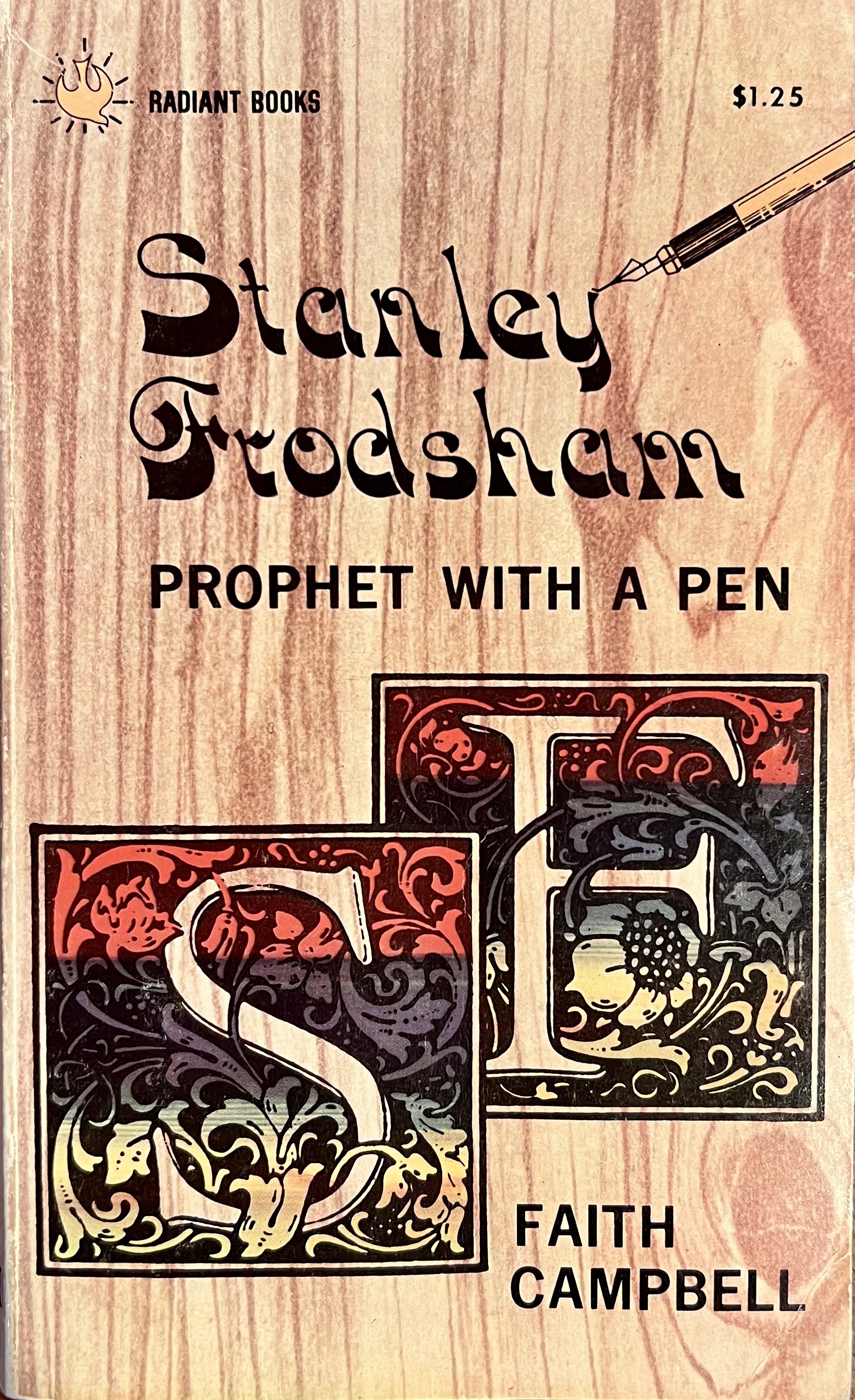
This book is personal for me—it’s a part of my family tree and my spiritual legacy. Prophet With A Pen is the biography of Stanley Frodsham, lovingly told by his only daughter Faith Campbell. 

Stanley Frodsham’s pen was truly anointed. From his history of the modern-day Pentecostal movement, to his biography of renown evangelist Smith Wigglesworth, to his editing of the worldwide Pentecostal Evangel magazine, all the way down to his personal correspondence. Frodsham’s pen may have done more for the Pentecostal movement than anyone else’s did. 

As a case in point, consider the powerful preaching of Smith Wigglesworth. His sermons were not prepared and written out ahead of time, but they were Holy Spirit-breathed at the moment Wigglesworth was preaching them. Most of those sermons that have been preserved for us in writing were due to the careful shorthand notes of Stanley Frodsham. 

In Prophet With A Pen, Frodsham’s daughter tells us his life story through her personal recollections, her extensive library of her father’s letters, and the remembrances of lifelong friends of the Frodshams. It’s an intimate portrait of a man who never sought the limelight, but simply wanted everyone to personally experience the power of Pentecost. 

I mentioned that this book is personal for me. Faith Campbell was my great-aunt, and her husband (who was quite an evangelist himself) shared many of these stories with me personally as I was growing up. Reading this collection of remembrances of Stanley Frodsham has reinforced my commitment to honor the heritage that I’ve been given, and to pass on a vibrant spiritual legacy to those who will come after me. 

Anyone who enjoys church history will thoroughly enjoy this behind-the-scenes look at the men and women who were so crucial to the early Pentecostal movement. 

►► Would you please prayerfully consider supporting this ministry? ◀︎◀︎

George Whitefield (book review)

Listen to the podcast of this post by clicking on the player below, and you can also subscribe on Apple, Spotify, or Audible. 

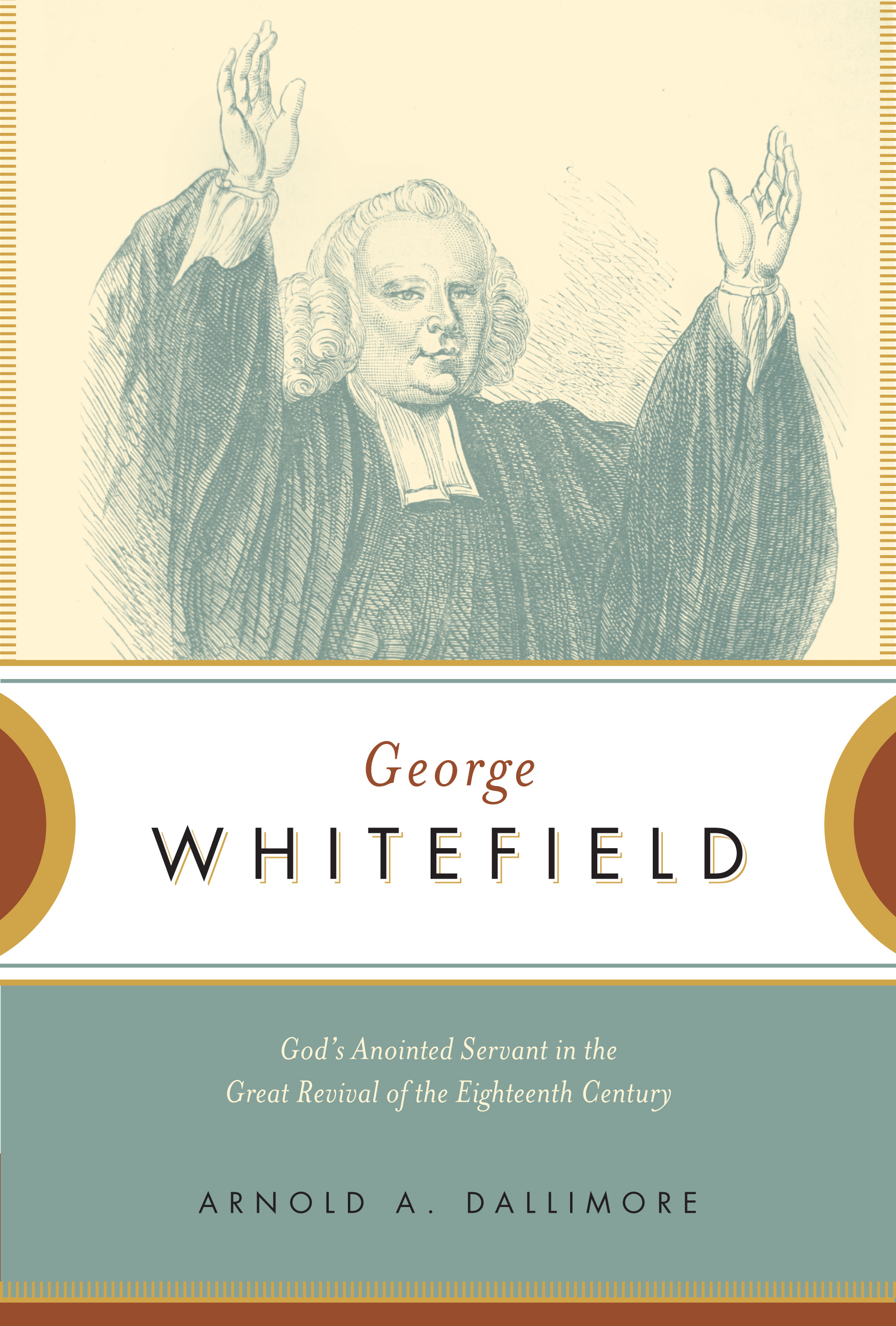
The ministry of George Whitefield in both the British Isles and the American colonies is still unequaled today. Of very few men could it be said that they both initiated a revival and put mechanisms in place for the long-range growth of the church in two entirely different cultures. Arnold Dallimore captures this well in his biography George Whitefield: God’s Anointed Servant in the Great Revival of the Eighteenth Century. 

Previously, I read and reviewed J.C. Ryle’s biography of George Whitefield. Bishop Ryle wrote this book to correct some of the maliciously untrue reports that were circulating about Whitefield. Rev. Dallimore’s book has the benefit of more years of history in which to test the assertions of Bishop Ryle. The result is a well-rounded work that takes us through the beginning of Whitefield’s ministry, his maturing thoughts and practices, and the lasting legacy that is still being felt today. 

Rev. Dallimore does address some of the same falsehoods that Bishop Ryle sought to debunk, but he goes farther to give us a sweeping overview of the tireless and highly effective ministry Whitefield undertook for nearly all of his life. Students of church history will definitely want to add this excellent book to their library. 

►► Would you please prayerfully consider supporting this ministry? ◀︎◀︎
Major Lessons From Minor Prophets (concluded)

Sometimes the naming of things gives us an inaccurate picture of the thing being named. For instance, many people think the “old” in Old Testament means outdated or perhaps updated by the “new” in the New Testament. When in fact, both Testaments are needed to give us the full picture of God’s love and glory. 

A similar thing happens with the headings “major prophets” and “minor prophets.” It makes it sound like the major prophets have something major to say to us, while we could take or leave the minor messages of the minor prophets. 

In reality, they were given these headings simply because of the volume of writing—the five major prophets consist of 182 chapters, whereas the 12 minor prophets only have 67 chapters. The volume of their writing may be minor, but their content carries major messages of meteoric power! 

Join me this Sunday as we rejoin this highly informative series.

If you have missed any of the messages in this current session, check them out here:

Book Reviews From 2020

Major Lessons From Minor Prophets (continued)

Sometimes the naming of things gives us an inaccurate picture of the thing being named. For instance, many people think the “old” in Old Testament means outdated or perhaps updated by the “new” in the New Testament. When in fact, both Testaments are needed to give us the full picture of God’s love and glory. 

A similar thing happens with the headings “major prophets” and “minor prophets.” It makes it sound like the major prophets have something major to say to us, while we could take or leave the minor messages of the minor prophets. 

In reality, they were given these headings simply because of the volume of writing—the five major prophets consist of 182 chapters, whereas the 12 minor prophets only have 67 chapters. The volume of their writing may be minor, but their content carries major messages of meteoric power! 

Join me this Sunday as we rejoin this highly informative series. You can check out the topics we covered last year by clicking here.

If you have missed any of the messages in this current session, check them out here:

Book Reviews From 2019