This is a weekly series with things I’m reading and pondering from Charles Spurgeon. You can read the original seed thought here, or type “Thursdays With Spurgeon” in the search box to read more entries.
Listen to the podcast of this post by clicking on the player below, and you can also subscribe on iTunes or Spotify.
Walking Preachers
For we walk by faith, not by sight. (2 Corinthians 5:7)
Walking is a position that…signifies activity. You would suppose from the way some Christians deport themselves, that their whole life was spent in meditation. It is a blessed thing to sit ‘with Mary at the Master’s feet.’ But we walk as well as sit. We do not merely learn, but we practice what we know. We are not simply scholars, but, having been taught as scholars, we go on to show our scholarship by working in the vineyard or wherever else the Master may be pleased to place us. …
You would gather indeed from what others say, that the whole life of a Christian is to be spent in prayer. Prayer, it is true, is the vitality of the secret parts of Christian life, but we are not always on our knees! We are not constantly engaged in seeking blessings from heaven. We do continue in prayer, but we are also engaged and showing forth to others the blessings that we have received and in exhibiting in our daily actions the fruits that we have gathered on the mountaintop of communion with God. We walk, and this implies activity. …
‘We walk.’ This is more than some can say. They can affirm, ‘We talk. We think. We experience. We feel.’ But true Christians can say with the apostle Paul, ‘We walk.’ Oh, that we may ever be able to say it too! Here, then, is the activity of the Christian life.
From Faith Versus Sight
Edgar A. Guest captured this idea well in his poem “Sermons We See.” The first stanza says,
I’d rather see a sermon than hear one any day;
I’d rather one should walk with me than merely show the way.
The eye’s a better pupil and more willing than the ear;
Fine counsel is confusing, but example’s always clear.
And the best of all preachers are the men who live their creeds.
For to see the good in action is what everybody needs.
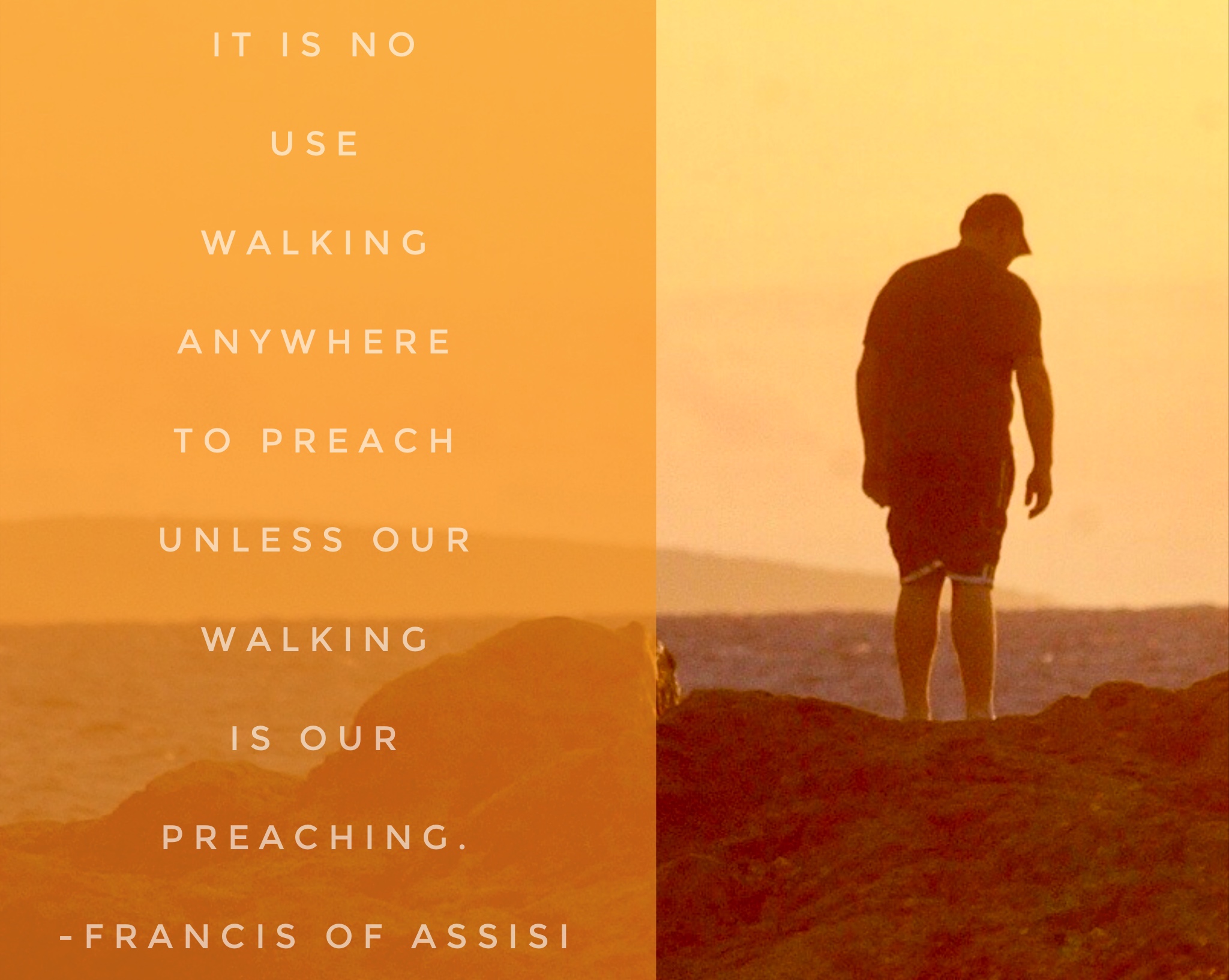
Or as Francis of Assisi noted, “It is no use walking anywhere to preach unless our walking is our preaching.”
So a fantastic question for every Christian to ask themselves is this: Do people know that I’m walking with Jesus even if I never open my mouth to tell them?
Listen to the podcast of this post by clicking on the player below, and you can also subscribe on Apple, Spotify, or Audible.
Have you ever heard this truism: The person with an experience is never at the mercy of the person with an argument?
There are, sadly, many who deny the reality of God’s divine healing for today. They may say God healed in the past, but that age has passed, or they may simply deny all supernatural activity. I have the best reply to these skeptics or deniers—and you may have this same reply: God does heal today; I know this is true because He has healed me!
Our truth statement about this says: “Divine healing is an integral part of the gospel. Deliverance from sickness is provided for in the atonement, and is the privilege of all believers.” Let me break this down into three parts.
(1) “Divine healing is an integral part of the gospel.” After that word “integral” I’d like to insert the word “indisputable.” When God does the miraculous, it is an undeniable proof of His love and power. A great story to prove this point is when Jesus healed a paralytic after He forgave him of his sins (Luke 5:17-26).
Notice how the people responded: Everyone was amazed and gave praise to God. This glory to God has always been the reason God performs miracles (see Mark 6:7-13; Acts 2:43; Acts 3:9-12).
(2) “Deliverance from sickness is provided for in the atonement.” I like to remember that the word atonement means “at-onement” and stands opposed to disease which I like to say as “dis-ease.” Sin is our ultimate dis-ease—the ultimate separator—so Jesus took care of both our spiritual dis-ease and our physical dis-ease when He died on the Cross for us, just as Isaiah prophesied. That’s why the New Testament also shows us salvation and healing frequently being linked together (Acts 10:38; 8:4-8).
(3) “And is the privilege of all believers.”ALL believers, not just a select few and not just those who lived at the time of the first apostles.
Divine healing has been—and always will be—an integral and indisputable part of the gospel precisely because it exalts God as THE Healer.
Many people today still believe what the disciples of Jesus believed: Disease is a consequence of personal sin. In addressing this misunderstanding, Jesus said that disease was “so that the work of God might be displayed” in the life of the one about to be healed. He said something similar while at the graveside of Lazarus, before he raised that dead man back to life (John 9:1-38; 11:4-45).
Sometimes God heals us now, but ALWAYS He heals us in our glorified bodies (2 Corinthians 12:9-10; 5:1-9; Revelation 21:4). Our patience and hope in our future, ultimate healing glorifies God in the present.
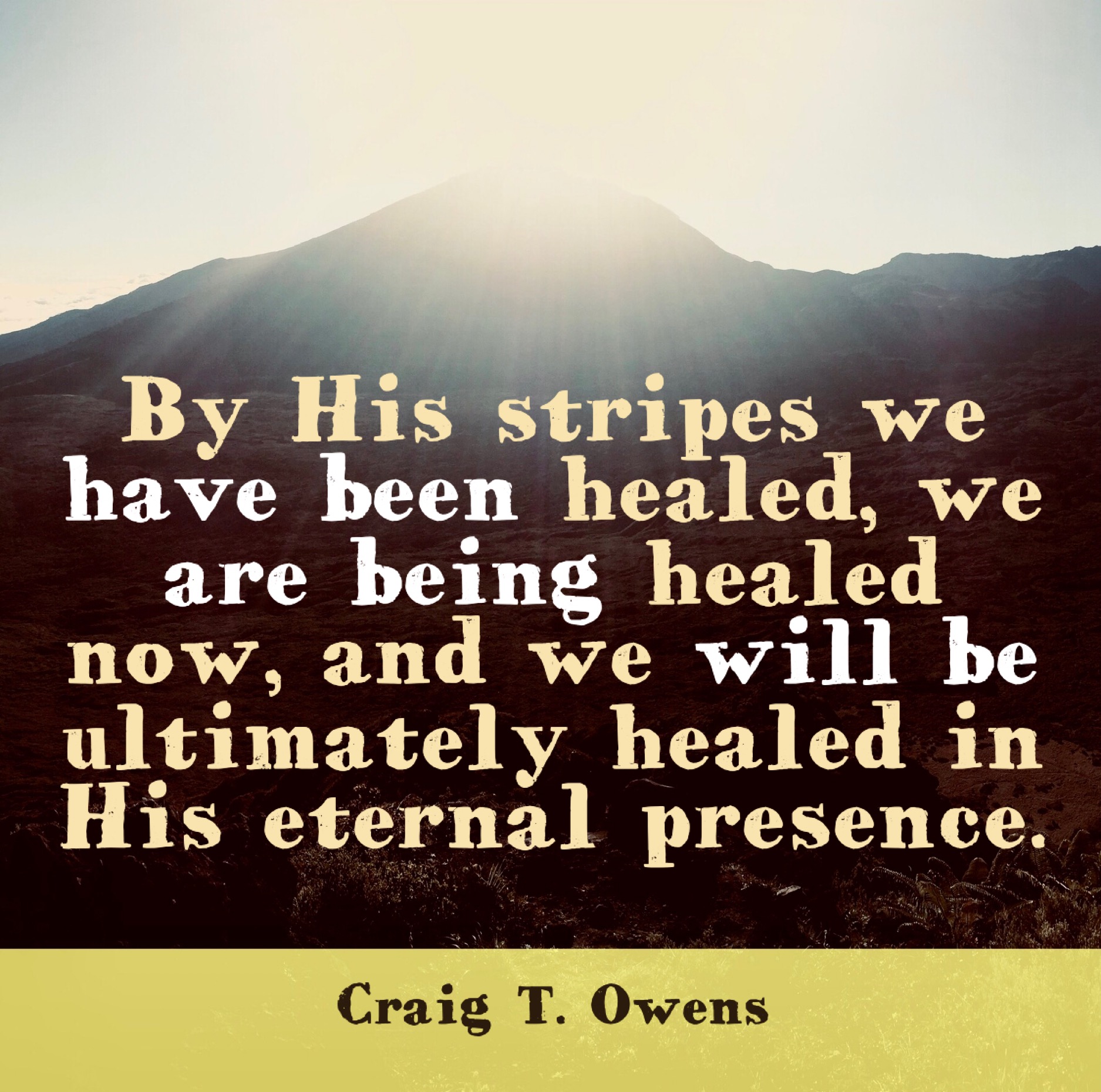
By faith in Jesus we can claim that “by His stripes we have been healed” (1 Peter 2:24). The verb tense Peter uses means we have been healed, we are being healed now, and we will be ultimately healed in Christ’s eternal presence. Whether we are healed here or not, we can live knowing that His healing power always brings Him glory and always draws people to Him, so don’t hesitate to keep on asking Him for His healing touch on your body and soul.
Listen to the podcast of this post by clicking on the player below, and you can also subscribe on Apple, Spotify, or Audible.
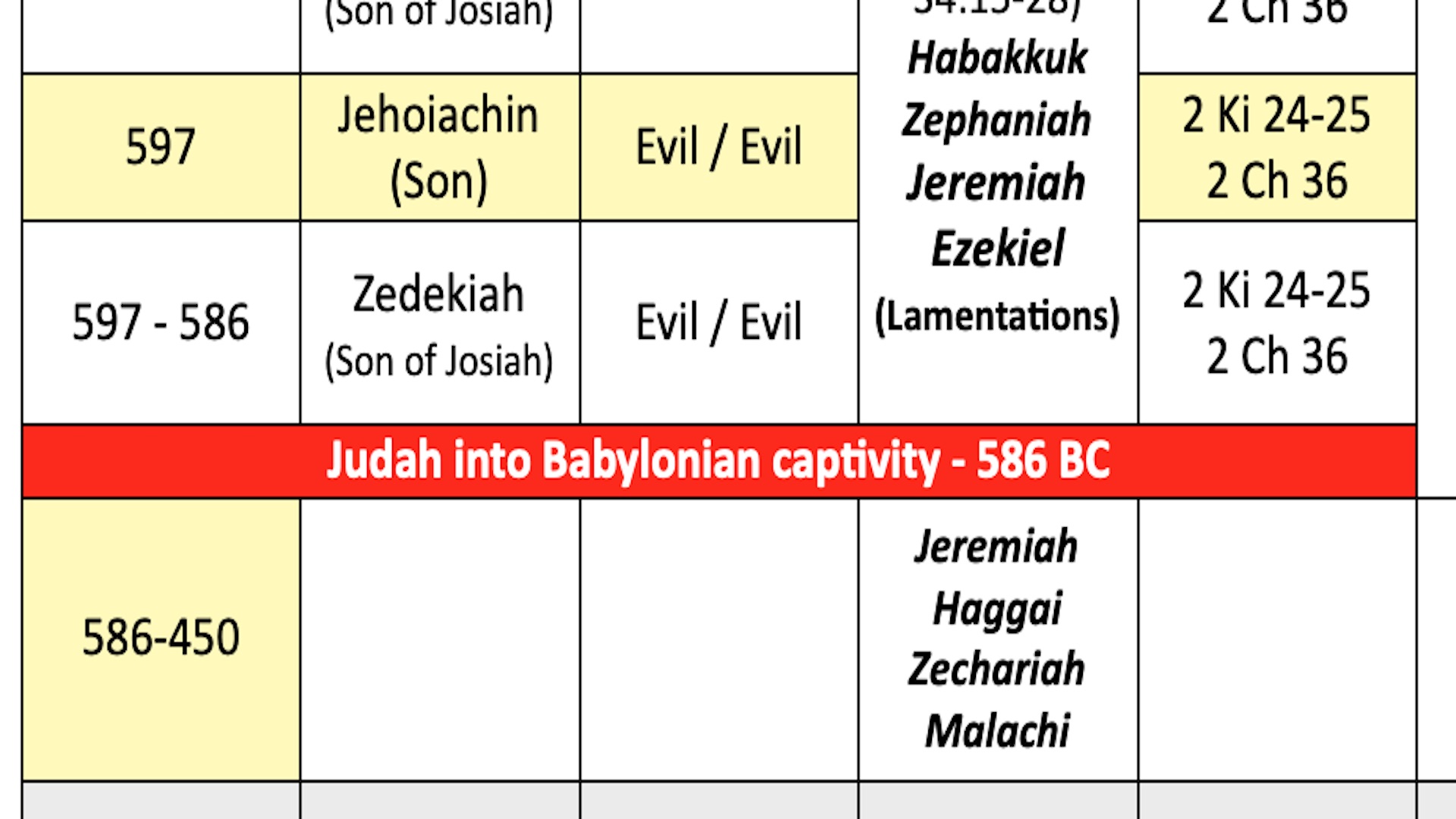
Haggai appears on the historical scene for just five months, but what a bright light he shines! He is the first of three post-exilic prophets to encourage the Israelites who have returned to Jerusalem.
Before we talk about Haggai’s ministry, we need a brief grammar lesson. Specifically, let’s look at two prefixes: un- and non-. Both of them ultimately mean “not,” but there is a distinction that we need to consider when it comes to the Bible:
unbiblical would mean something contrary to the teaching of the Bible
non-biblical is something that may or may not be correct, but it’s not specifically mentioned in the Bible
Let me give you an example from my book Shepherd Leadership: The Metrics That Really Matter. Chris asked me whether I preferred the title senior pastor or lead pastor. This is a non-biblical issue; that is, it doesn’t really matter to me because neither of those titles are found in the Bible. Technically, the word pastor isn’t in the Bible either. The word that is usually translated “pastor” is really a herdsman or a shepherd.
The problem is that if we put too much focus on non-biblical things, those things can end up becoming unbiblical pursuits. Like when Jesus took the Pharisees to task for their focus on traditions over Scripture (see Matthew 15:1-6). I wrote Shepherd Leadership mainly to get pastors and church leaders to spot non-biblical metrics which may have sneakily turned into unbiblical pursuits, so that they could return to pure biblical principles. In the Preface of my book, I wrote—
“My larger concern is that churches, parachurch organizations, and nonprofit ministries that are largely founded to fulfill a biblical mandate are straying from the simple, freeing truths found in the Bible. Or maybe I should say that they are adding things to their ministries that aren’t in the pages of Scripture. Whichever way you want to say it, the result is the same: We are using the wrong metrics to define ‘success’ for our ministries. I fear that in our focus on unbiblical practices, we are missing the joy of really doing ministry.”
Haggai calls God’s people to return to God’s Word. This is the second-shortest book in the Old Testament (at just 38 verses long), yet Haggai says something like “this is what God says” 28 times in these 38 verses!
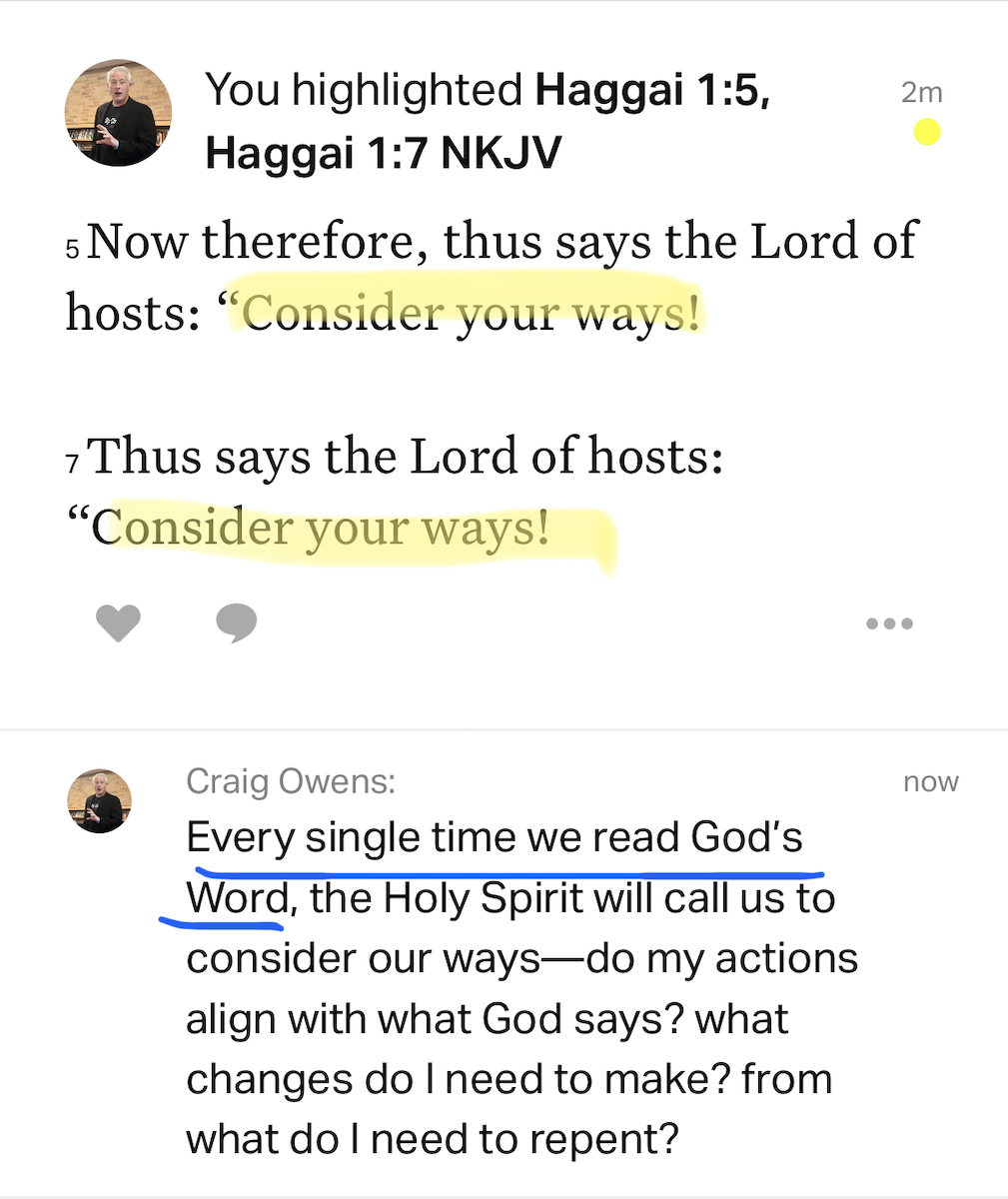
Haggai also records five times that God says, “Give careful thought to your ways.” This phrase literally means to take a strong hold on each thought and examine it intensely. This idea is always connected to a phrase like, “This is what the Lord Almighty says” (1:5, 7; 2:14-15, 17-18). In other words, we are to thoughtfully examine our lifestyle with God’s Word being THE standard of measurement.
Paul made a similar connection in the New Testament: We demolish arguments and every pretension that sets itself up against the knowledge of God, and we take captive every thought to make it obedient to Christ (2 Corinthians 10:5).
Jesus did this too. When speaking to the religious leaders, He said, “You are wrong because you know neither the Scriptures nor God’s power” (Matthew 22:29). And even with His own disciples, He had to open their minds to see how the Scriptures pointed to Him and were fulfilled in Him (Luke 24:25-27, 44-45).
Indeed, the phrase “it is written” is used 75 times in the New Testament!
That’s why Haggai’s words still ring true to us today: “Give careful thought” to how you live in light of how God says you should be living. Christians need to…
We must become people of the Word of God or else we run the very real risk of letting our non-biblical decisions spiral downward into a sinful, unbiblical lifestyle that grieves the heart of God.
Listen to the podcast of this post by clicking on the player below, and you can also subscribe on Apple, Spotify, or Audible.
When you’ve been at a church service have you ever asked yourself, “What are we doing here? What exactly is ‘church’? What are we supposed to be doing?”
Some people think church is saints going out to tell people about Jesus, and some people think church is saints coming together to hear about Jesus (see Matthew 28:19-20; 1 Corinthians 11:18). I think this is an either-or trap.
I think a better way of looking at this is “both-and” and “so that”: BOTH coming to a gathering of believers so that we can be equipped to go out AND going out to tell people about Jesus so that we can bring new disciples into the church.
Our foundational truth statement says: The Church is the Body of Christ, the habitation of God through the Spirit, with divine appointments for the fulfillment of her great commission. Each believer, born of the Spirit, is an integral part of the General Assembly and Church of the Firstborn, which are written in heaven.
To help us see where we play a vital role in all of this, the Bible gives us three pictures of the church:
All of these pictures speak of multiple parts making up one unified, healthy whole. Remove any part or any function, and the whole thing is diminished. All of these pictures also speak of intentionality. No one becomes healthy by accident, or builds a sound structure by accident, or enjoys a fulfilling marriage by accident. Health, soundness, and fulfillment all result from being intentional about our choices and interactions.
I believe these three pictures also help us see what the church isn’t and is.
A healthy church isn’t about numbers
A healthy church isn’t about the day of the week that we meet
The first Church in the New Testament showed us how they followed the example of Jesus. Before trying to fulfill the Great Commission of going into all the world, they first obeyed the directive from Jesus to stay in Jerusalem until they were empowered by the Holy Spirit. Then we see an intentionality, and an empowerment, and a complete reliance on the Holy Spirit in everything they undertook from that point on.
It’s not about going to “my church” or going to “your church.” It’s about being the Church (with a capital “C”)—the Body of of Christ, the Building of Christ, the Bride of Christ.
Bottom line:
Christians are being the Church when they are intentionally living in a way that makes Jesus known.
Listen to the podcast of this post by clicking on the player below, and you can also subscribe on Apple, Spotify, or Audible.
One of the things I enjoy about my Apple Watch is the connection I have with others who also use an Apple Watch. For instance, I get notified when my wife has finished a workout, and one of the pre-set replies I could choose is, “I’ve got questions!” That’s a funny way of me saying, “How did you complete that workout?!”
In Psalm 75 and Psalm 76, Asaph tells us how God will deal with the wicked. But then Psalm 77 begins with Asaph using words like, “My soul refused to be comforted, my spirit is overwhelmed,” and then he launches into the tough questions like: “How long is this going to last? Has God forgotten me? Have I fallen out of favor with God? Has His mercy dried up? Can God keep what He has promised? Is God angry with me?” When I read all this, I feel like saying, “Asaph, I’ve got questions!”
Yet, these complaints of Asaph ring true to real life. Like when a friend called me last week and started our conversation by asking, “Why can’t things just go easy for me?”
Here’s the simple answer: The Story isn’t over yet. We are in a battle, and the enemy of our soul is still trying to take us out, or at least shut us up.
In Psalm 77, Asaph tells his story to Jeduthun (a Levite worship leader whose name means praising) in four chapters, with a Selah for each of the breaks between the chapters.
Chapter 1—Distress (vv. 1-3)
The word distress means confronted by an adversary. Ever been there? Every follower of God has been, so Asaph invites us to Selah: pause to contemplate things like (a) Is this distress causing me to reevaluate the foundation on which I stand? (b) What is it God is shaking in my life? When God shakes things up, it is to cause us to remember and muse about the ONLY sure foundation that can withstand any storm (see Matthew 7:24-27).
Chapter 2—Questioning (vv. 4-9)
Notice the words Asaph uses: thought, remembered, mused, inquired. He is asking those tough questions, but he is asking them in a way that he can carefully consider the answers. That means he is really taking a Selah pause with each question. I think he has come to this conclusion: “Aren’t all these really just rhetorical questions? And isn’t the answer to all of them a resounding ‘NO!’?” If you aren’t sure the answer to all of these questions is no, please read Romans 8:31-39.
Chapter 3—Recalling (vv. 10-15)
Notice the continuation of the words: thought, remember, meditate, consider. He also asks another question in v. 13 which he then answers in the next two verses. His call to Selah here is another pause to reflect: “Has God lost His power? Has He changed His mind?” And once again the answer is a loud and clear, “NO!” (see Isaiah 59:1; Hebrews 13:8)
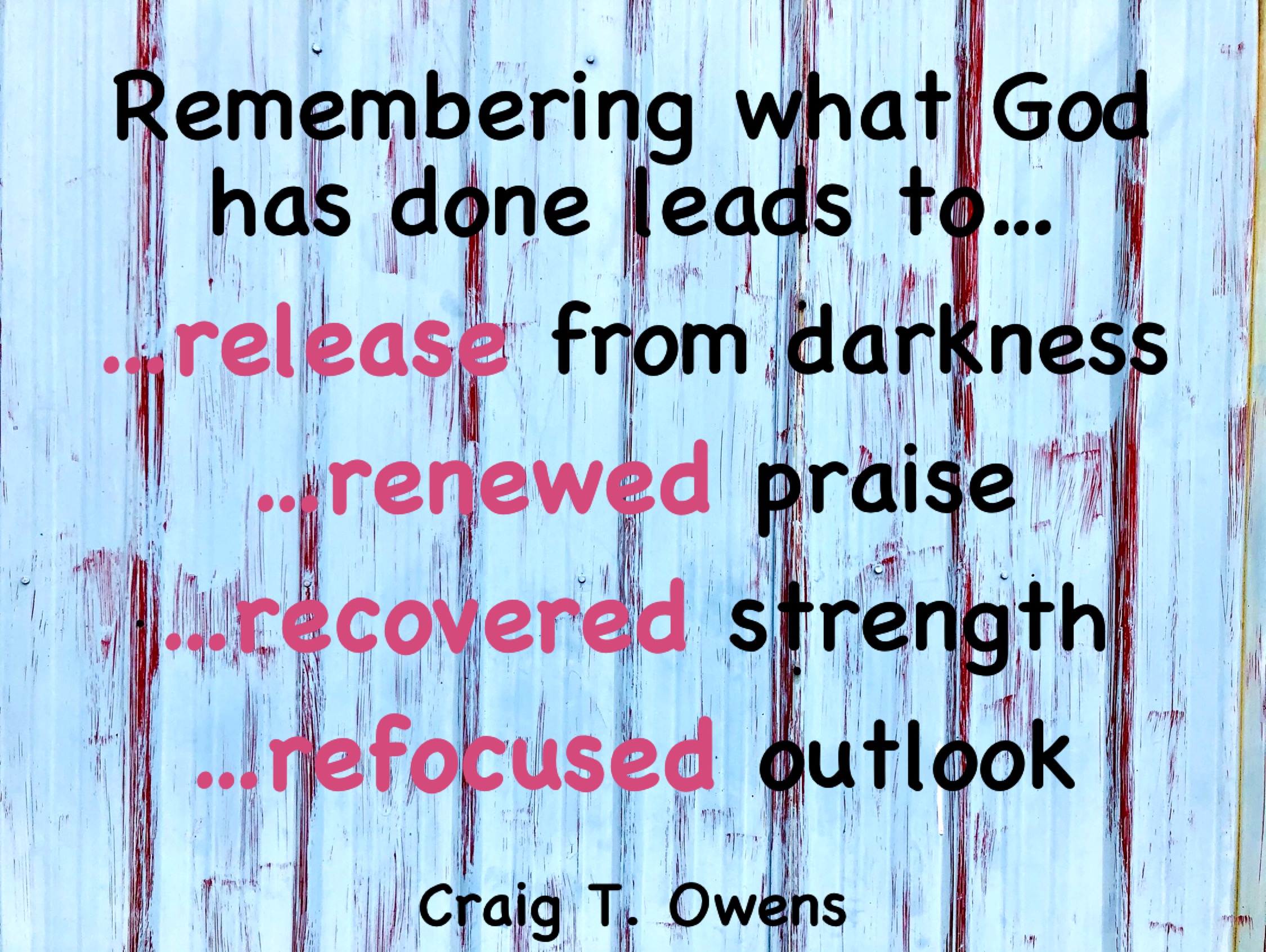
One of the important takeaways from this stanza of Psalm 77 is this: Looking back in gratitude at what God has done allows me to look forward in hope to what He is still going to do. My remembering what God has done in the past leads to:
Release from the darkness
Renewed praise
Recovered strength
Refocused outlook
Chapter 4—Hope (vv. 16-20)
Asaph says, “Look what God did! And since He is the same today as He was yesterday, guess what He’s still able to do!” We know this because the Bible says, “For no matter how many promises God has made, they are ‘Yes’ in Christ. And so through Him the ‘Amen’ is spoken by us to the glory of God” (2 Corinthians 1:20).
Remember I said earlier that God isn’t done telling His story yet? God isn’t done yet, He knows His Story, and His Story is still being told. But He’s also already told us how His story will end (see Revelation 21:4-6). And the end of His story is really just the beginning of the Real Story!
C.S. Lewis said it this way in the closing words of The Last Battle:
“And for us this is the end of all the stories, and we can most truly say that they all lived happily ever after. But for them it was only the beginning of the real story. All their life in this world and all their adventures in Narnia had only been the cover and the title page; now at last they were beginning Chapter 1 of the Great Story, which no one on earth has read; which goes on forever; in which every chapter is better than the one before.”
When you find yourself saying, “I’ve got questions: How long is this going to last,” Selah to remember that the Story isn’t over yet. The Storyteller knows how it ends, and He promises us: But what of that? For I consider that the sufferings of this present time—this present life—are not worth being compared with the glory that is about to be revealed to us and in us and for us and conferred on us! (Romans 8:18 AMP)
Listen to the podcast of this post by clicking on the player below, and you can also subscribe on Apple, Spotify, or Audible.
If you are a Christian, the Bible describes you as a living example of the life-changing power of Jesus Christ. Check out these verses:
Your very lives are a letter that anyone can read by just looking at you. Christ Himself wrote it—not with ink, but with God’s living Spirit; not chiseled into stone, but carved into human lives—and we publish it. (2 Corinthians 3:3 MSG)
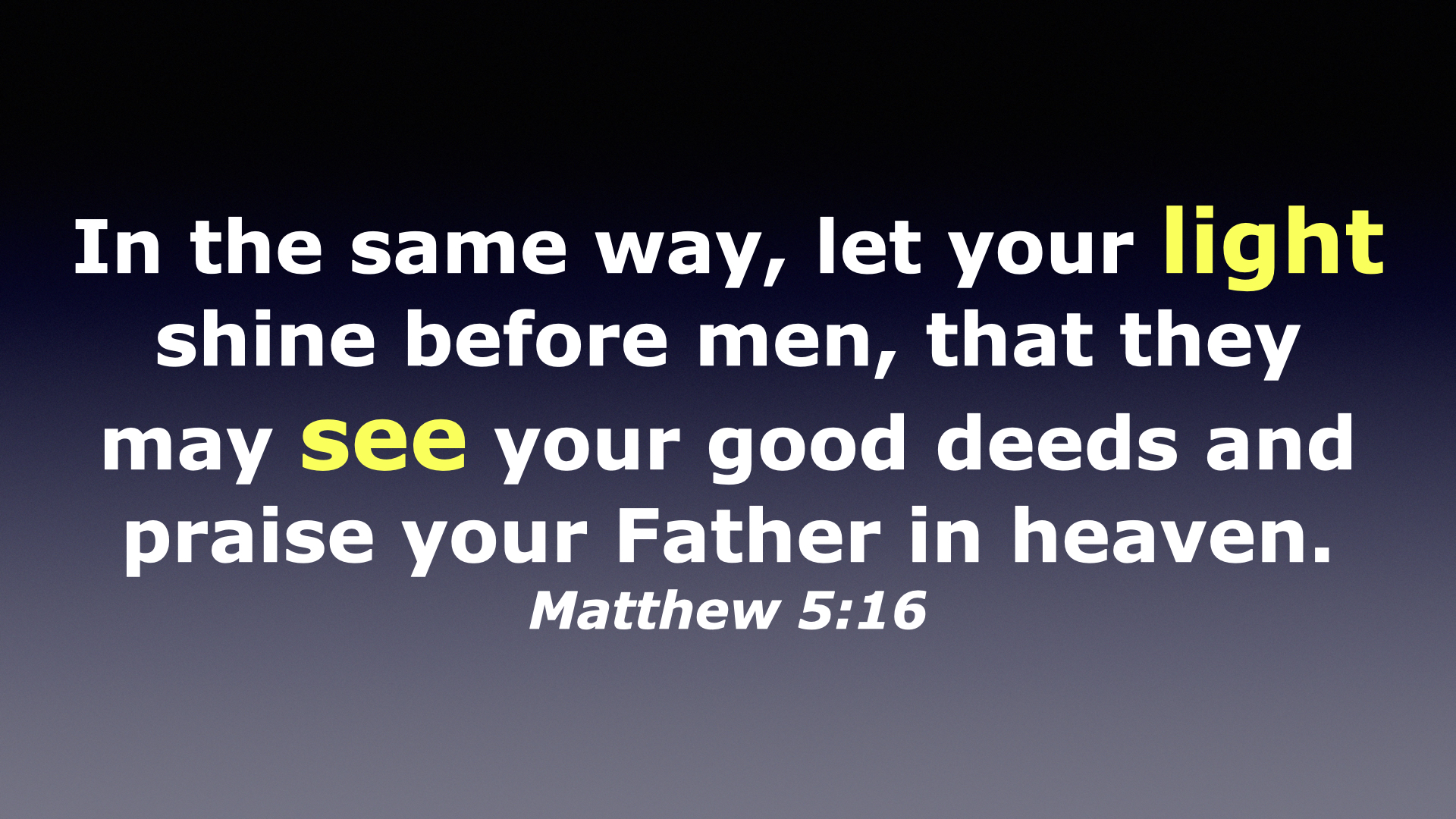
Let your light shine before others, that they may seeyour good deeds and glorify your Father in heaven. (Matthew 5:16)
No one lights a lamp and puts it in a place where it will be hidden, or under a bowl. Instead they put it on its stand, so that those who come in may see the light. (Luke 11:33)
Here’s a really simple way everyone who sees you can see Jesus working through you—
Leave every place better than you found it.
Want some examples on this? Check out this 2-minute segment from a message I shared…
My friend, shine your light brightly today for everyone to see Jesus in you simply by leaving every place—every situation—better than you found it. I promise you: God will be glorified in this!
Listen to the podcast of this post by clicking on the player below, and you can also subscribe on Apple, Spotify, or Audible.
A few years ago Mark Schultz wrote a song about someone living a go-go-go, overly-busy life and he entitled the song “Running just to catch myself.” Ever been there?
There’s a Hebrew word that shows up 70 times in the Bible (mostly in the Psalms) that, sadly, many English translations of the Bible have relegated to a footnote. That’s too bad because Selah is such a powerful word. Unless we want to live our lives “running just to catch myself,” we all need a take time to Selah. Look how some have translated this word:
“Stop there and consider a little” (Matthew Henry)
“the sacred pause” (Charles Spurgeon)
“pause and calmly think of that” (AMP)
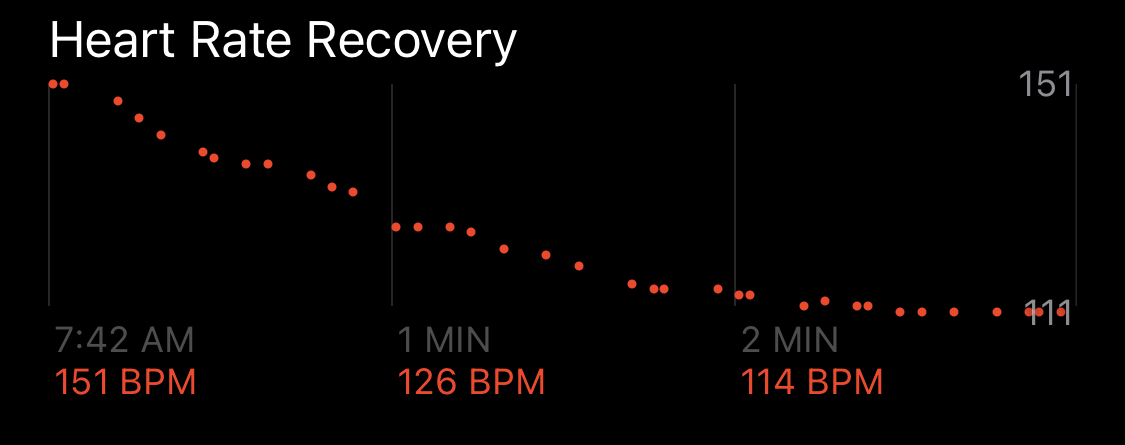
Whether it’s a planned exercise time or just something that frightens or excites us, our heart rate is designed by God to increase—this is how we prepare for fight-or-flight. Doctors say that one of the most vital statistics they now look at to gauge overall cardio health is heart rate recovery (HRR). Doctors want to see a significant increase in HRR after exercise, fright, or excitement.
A few of the factors that boost HRR:
Regular, planned exercise
Getting the proper amount of quality sleep
Reducing stress
Respond-and-recover is part of a health-building cycle. But if we’re “running just to catch myself” all the time, this time of recovery isn’t happening. Not only are we not recovering well, but we are not properly prepared for the next time our heart needs to start beating faster.
This HRR is just as vital for us emotionally and spiritually as it is physically: We cannot always be stressed or always be “on.” We need a Selah—a time to stop and consider, a time to take a sacred pause to calmly think.
This is what David teaches us in Psalm 68. Check out the “bookend verses” where he reminds us that when God arises His enemies are scattered, and that God is awesome and He gives power and strength to His people (vv. 1, 35). And look a the middle verse where David says that when God ascends in victory He gives gifts (v. 18).
This tells me two things: (1) God is sovereignly in charge (not me or anyone else), and (2) In His love, God delights to use His sovereign power to bless His children.
The question is not IF I’m going to be confronted by difficult things or difficult people, but HOW will I recover from these confrontations?
May I suggest a 3-step process to increase your spiritual HRR?
Acknowledge your situation—don’t try to cover it up or justify it
God uses His strength to care for His people (vv. 28-31)
Sing praises and Selah (vv. 32-35)
As you breathe deeply in this worship of recovery, think on this: “Your sigh can move the heart of Jehovah; your whisper can incline His ear to you; your prayer can stay His hand; your faith can move His arm.” —Charles Spurgeon
Our Selah pause leads to proper perspective, which allows us to recover more quickly. That, in turn, helps us to be better prepared for the next time we’re confronted by difficulties.
This is a weekly series with things I’m reading and pondering from Charles Spurgeon. You can read the original seed thought here, or type “Thursdays With Spurgeon” in the search box to read more entries.
Listen to the podcast of this post by clicking on the player below, and you can also subscribe on iTunes or Spotify.
Context Is King
And the glory that You gave Me I have given them, that they may be one just as We are One: I in them, and You in Me; that they may be made perfect in one, and that the world may know that You have sent Me, and have loved them as You have loved Me. (Jesus in John 17:22-23)
Some words serve many uses and have many meanings. We are very apt to make mistakes if we give the same sense in all places to the same word. The word world throughout Scripture is used with a very remarkable variety of meaning, and one had need to have his wits about him and to read carefully in order to know what is the precise source of the term in each place where it occurs. …
I say again, the word world, therefore, has many shades of meaning ranging from that jet black meaning in which the world lies in the wicked one—‘Love not the world, neither the things that are in the world’ (1 John 2:15)—upward to the milder sense in John 1:10, ‘He was in the world, and the world was made through Him, and the world did not know Him.’ And yet higher to the bright meaning, ‘The kingdoms of this world have become the kingdoms of our Lord and of His Christ’ (Revelation 11:15). It is not in the worst sense that our text speaks of the world, but in the same manner as we find it used in such passages as these: ‘The Lamb of God who takes away the sin of the world!’ (John 1:29). ‘God was in Christ reconciling the world to Himself, not imputing their trespasses to them’ (2 Corinthians 5:19). And again in 1 John 2:2, ‘And He Himself is the propitiation for our sins, and not for ours only but also for the whole world.’
It is certain that ‘God so loved the world that He gave His only begotten Son, that whoever believes in Him should not perish but have everlasting life’ (John 3:16), and we cannot suppose that the great Redeemer would refuse to pray for those whom He was given. I understand in this particular place by the word world the whole mass of mankind upon the face of the earth who are not as yet converted. …
For the sake of the world, He would have the church in a high state of holy beauty and strength. May His gracious prayer be answered in all of us by the working of the Holy Spirit! … Our wish is to bring multitudes to the Savior and to conquer province after province of this revolted world for King Jesus. ‘Let the whole earth be filled with His glory’ (Psalm 72:19) is a prayer that we cannot, we dare not, we would not fail to pray!
From The Glory, Unity, And Triumph Of The Church
When we are studying our Bibles, we must remember that context is so vital. We have to read each inspired word in its proper context so that we know how to believe, think, live, and pray. I urge you to slow down in your Bible reading—aim for better and richer comprehension than to just try to read a lot in one sitting. Sometimes in my own personal Bible study time, I may spend several minutes just thinking about one phrase, and that may be the only part that I read on that particular morning.
However you read your Bible, make sure you are reading each part in its proper context. Pray before you begin reading and ask the Holy Spirit—Who inspired the Scriptures—to illuminate them to your heart and mind. These thoughtful Bible studies will do more to grow your spiritual maturity than simply rushing through your reading time.
Listen to the podcast of this post by clicking on the player below, and you can also subscribe on Apple or Spotify.
Don’t you wish that you could clean things up and they would stay clean? After you get everything set the way you like it, why can’t it just stay that way? Quite simply, things can’t stay clean and pristine because of the Law of Entropy. Entropy is the measure of disorder in a system, and the Law of Entropy says that unless sufficient energy is applied, an ordered system will always move toward disorder. This is as true spiritually as it is in physics.
God created a perfectly ordered system both physically and spiritually, but man’s sin brought in disorder, disease, and decay. It gets so bad that just three chapters after man’s first sin we read, “The Lord saw how great the wickedness of the human race had become on the earth, and that every inclination of the thoughts of the human heart was only evil all the time” (Genesis 6:5).
Throughout history, there have been revivals, reformations, and awakenings where people see the disorder and decay that sin has brought to their lives and they want to return to God. The pain of entropy causes people to repent, and the Spirit of God moves in with sufficient energy to restore. Sadly, unless the Holy Spirit’s energy is continually applied, entropy will again begin to run its downward course.
Jesus not only came to reverse the entropy of sin (see Isaiah 9:2, 49:9; John 1:5, 8:12), but He sent us out into a sinful world to do the same thing. Jesus told us that we are salt that reverses entropy’s decay and we are light that reverses entropy’s darkness (Matthew 5:13-14). Jesus also told us that there’s no way we can maintain this entropy-reversing energy on our own—we need the Holy Spirit’s empowerment (Luke 24:49; Acts 1:8). [Check out all of these verses by clicking here.]
Paul talked about this same idea in 2 Corinthians 3. He contrasts the ministry of the Old Testament with its fading glory, and the ministry of the New Testament with terms like moreglorious, surpassing glory, and ever-increasing glory.
Do you realize that Spirit-filled Christians never have to long for “the good ol’ days”? Being baptized in the Holy Spirit means, as Paul reminds us, that we are perpetually being transformed into the image of Jesus and we are therefore reflecting more and more of His glory. Every day can be more glorious than the day before. We don’t have to experience any entropy in our spiritual walk.
This isn’t because of our actions. Paul says, “not that we are competent in ourselves…but our competence comes from God. … [We] are being transformed into His likeness with ever-increasing glory, which comes from the Lord, who is the Spirit.”
Spirit-filled Christians are the agents of change in the world IF we are being transformed by the Holy Spirit. In other words, we will tend toward entropy (and uselessness) unless we have the Spirit’s energy continually applied to our lives.
Being transformed is an ongoing, continual process. We have to have the energy of the Holy Spirit continually at work on us personally to keep us from entropy. And then we’ll be able to reflect that entropy-defeating light to a dark world.
I’ve said this before, but I’m going to keep on saying it: Don’t stop at salvation—be baptized in the Holy Spirit. Don’t let entropy decay your salt or dim your light. Let the Holy Spirit help you reflect the light Jesus so that you can reverse the entropy of a dark, sinful world.
Listen to the podcast of this post by clicking on the player below, and you can also subscribe on Apple or Spotify.
“Jesus is risen indeed!” This is the glorious good news that Christians around the world celebrate.
But good news is really only good news when you fully realize how bad the bad news was. Like when the doctor comes in to tell you, “You’re going to be fine,” and you breathe a sigh of relief. And then the doctor goes on to explain what your condition was and all of the heroic efforts that were undertaken on your behalf, and you realize how close to death you actually were that your sigh of relief turns into a shout of joy!
Our fourth foundational belief says: “Man was created good and upright…. However, man by voluntary transgression fell and thereby incurred not only physical death but also spiritual death, which is separation from God.”
They sinned. “And sure enough, they then had knowledge of good and evil, but it was from the standpoint of becoming evil and remembering how good they once were,” said Nancy Guthrie. Because they sinned, now all of us are unable not to sin. Why? Because no one has been able to demonstrate to us how to be able not to sin.
Their sin had consequences for them that have extended to us:
they felt shame at their vulnerability before God
they were fearful to be in God’s presence
they were separated from God
and they doomed all of us to live an utterly meaningless existence forever!
But Adam and Eve’s sin didn’t send God scrambling for a remedy. Our fifth foundational truth says: “Man’s only hope of redemption is through the shed blood of Jesus Christ the Son of God.”
Jesus turned the absolutely worst news into the most eternally, overwhelmingly good news ever!
Jesus was made the cure for sin from before the foundation of the world. God made Jesus to be our sin (not just to carry our sins). In order for this to happen, Jesus had to become human like us. That means that Jesus, like Adam and Eve, had the same choice to sin or to not sin but He did not sin. This allowed Him to be our perfect sacrifice on the Cross.
When He died on the Cross, Jesus removed the uncrossable abyss between us and God. Jesus made it possible once again for us to be able not to sin. Not only that, but Jesus covers the shame that would linger even after our sin is forgiven by clothing us in His own righteousness!
Sin had us doomed to not only a meaningless existence on earth, but also to an utterly meaningless existence for the eternity following death. Jesus became our sin to allow us to be reunited with God and reclothed in Christ’s righteousness. This is not just good news, it’s eternally, overwhelmingly good news!









 Craig T. Owens