Listen to the podcast of this post by clicking on the player below, and you can also subscribe on Apple, Spotify, or Audible. Check out the video content in this post by clicking here.
Nearly every church has a pulpit where the pastor stands to deliver the weekly sermon. And almost every evangelical church gathering has the same order of service. Where did these things originate?
I talk more about biblical and non-biblical issues in this video, and in my blog post and video called “Use the right term.”
The full sermon from which this clip came is here.
Listen to the podcast of this post by clicking on the player below, and you can also subscribe on Apple, Spotify, or Audible. Check out the video content in this post by clicking here.
I’m going to spoil some of the surprise right up front. We’re going to look at two questions about death, and the answer to the question, “Is that in the Bible?” is “No” for both questions.
Persisting to do unbiblical things is a sin because we are trying to point out why God is wrong and why our opinion is right.
But there is also a danger in pursuing non-biblical things, when we try to give our non-biblical opinion or preferencebiblical weight, and then look down on anyone who doesn’t believe or act like we do. The Bible does tell us tobe peacemakers (Romans 14:13-21).
Statement #17—Cremating a loved one exempts them from heaven. Is that in the Bible?No.
The preferred method in the Old Testament appears to be burial. Sometimes in the ground, but more typically in a cave or man-made crypt. There were exceptions. For instance, the bodies of Saul and Jonathan were cremated (1 Samuel 31:11-13), and King Jehoram could have been cremated, but certainly he wasn’t interred the same way that his father and grandfather were (2 Chronicles 21:1, 4-6, 18-20).
In the New Testament era there was an end-of-life process the Greeks adopted called ossilegium. The Greeks frequently anointed the body with oil and wine and burned it until just the bones were left. The Jews wrapped the dead body in burial shroud and anointed it with spices—as with Lazarus (John 11:38-44) and Jesus (John 19:38-41). About a year after death, the bones would be collected and placed in an ossuary. Most often, multiple family members’ bones would share the same ossuary.
Statement #18—Suicide is an unforgivable sin. Is that in the Bible?No.
We don’t see suicide a lot in Scripture:
Saul died by his own sword—1 Samuel 31:4
Zimri died by self-immolation—1 Kings 16:18
Ahithophel and Judas both hanged themselves—2 Samuel 17:23; Matthew 27:5
But no where does Scripture speak to this form of death as being a reason to exclude that person from Heaven. These deaths do seem like last-ditch, hopeless acts. Because they are the very last act, it seems like these people have utterly rejected God. It has been a misconception for a long time that the way you die determines your eternal home. Consider a scene in Hamlet by William Shakespeare. Hamlet will not kill Claudius while he’s praying and send him to heaven—
And now I’ll do ’t.
⌜He draws his sword.⌝
And so he goes to heaven,
And so am I revenged. That would be scanned:
A villain kills my father, and for that,
I, his sole son, do this same villain send
To heaven.
Why, this is ⟨hire⟩ and ⟨salary,⟩ not revenge.
He took my father grossly, full of bread,
With all his crimes broad blown, as flush as May;
And how his audit stands who knows save heaven. …
To take him in the purging of his soul,
When he is fit and seasoned for his passage?
No. …
⌜He sheathes his sword.⌝
When he is drunk asleep, or in his rage,
Or in th’ incestuous pleasure of his bed,
At game, a-swearing, or about some act
That has no relish of salvation in ’t—
Then trip him, that his heels may kick at heaven,
And that his soul may be as damned and black
As hell, whereto it goes.
Here are the truths we see in Scripture:
We are created in God’s image and given a body—Genesis 1:26-27; 2:7.
Yet our body is called a temporary tent—2 Corinthians 5:1-3.
We will be raised either to eternal life or a second and eternal death—Luke 12:4-5; 1 Corinthians 15:42-54, 20-21; Revelation 20:11-15.
How we die and how our body is disposed of makes no difference to where we will spend eternity. The only thing that matters is if our name is written in the Book of Life. Our name is written there only if we are covered by the blood of Jesus (Hebrews 10:10, 17-22).
Check out more of the questions we have covered in our Is That In The Bible? series by clicking here.
Listen to the podcast of this post by clicking on the player below, and you can also subscribe on Apple, Spotify, or Audible.
Charles Spurgeon said, “The resurrection of Christ is the cornerstone of the glorious temple of truth, the keystone of the arch of revelation.”
What we believe about the resurrection gives meaning and purpose to everything else. The resurrection is the defining Truth. In 2 Timothy 2:19 we read two important truths about this foundation: (1) God knows those who truly know Him, and (2) Those who really know Him must unabashedly stand for the Truth.
Words are powerful, they are creative. At the very beginning of Time, God said, “Light” and light existed (Genesis 1:1-3). God’s Word is still creating today (Hebrews 4:12). There are words we need to let go, and there is the Word for which we must stand without wavering or backing down.
In 1 Timothy 1:3-7, Paul essentially says we have two choices: Do we want to promote controversy or do we want to promote God’s work? We have to learn to distinguish what is biblical and what is not.
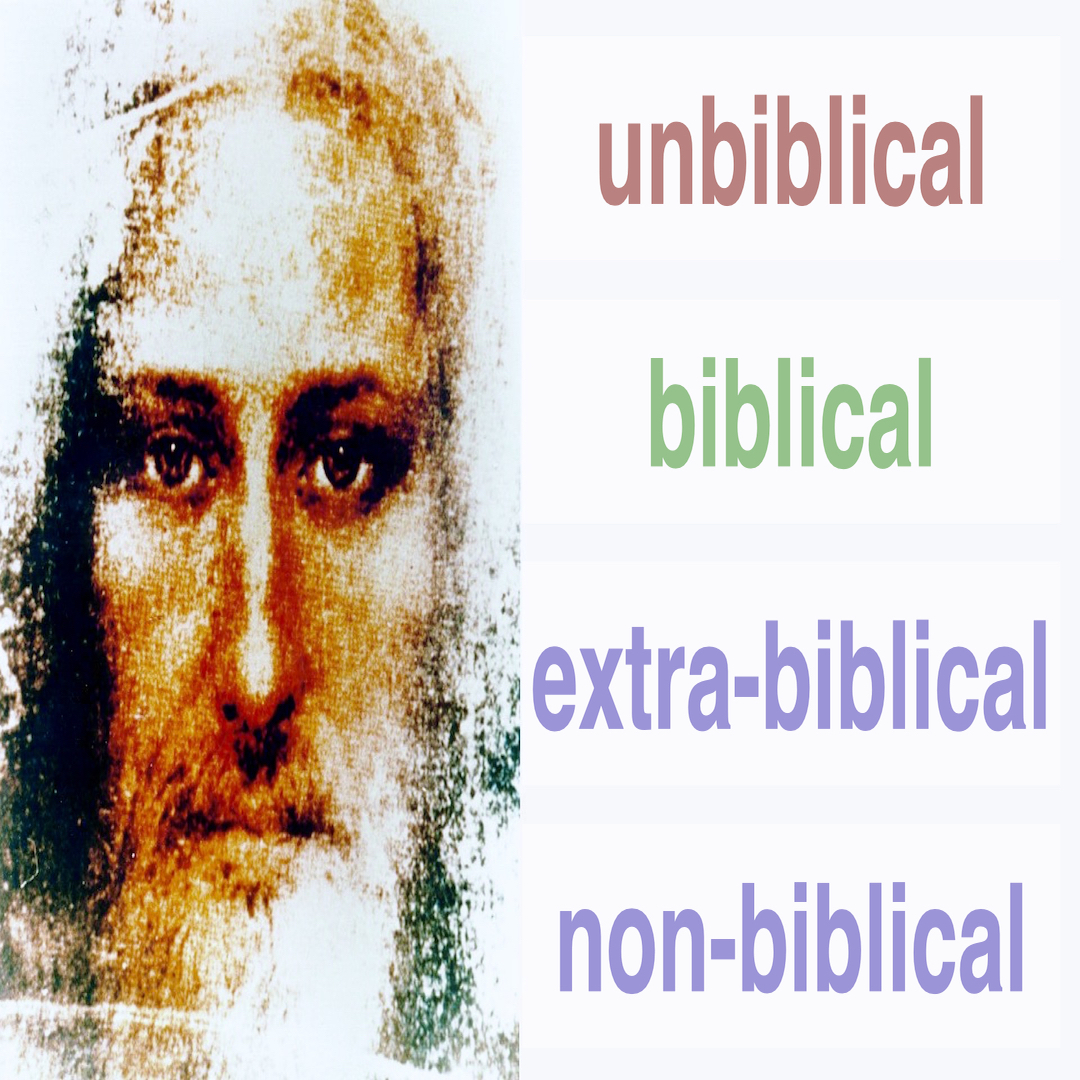
Biblical things—God’s Word clearly tells us “Yes” (2 Timothy 3:14-17)
Unbiblical things—God’s Word clearly tells us “No” (like: do not murder, do not commit adultery, etc.)
These two are fairly straightforward. As Dr. Donald Stamps wrote, “The Church has the responsibility to safeguard the true and original apostolic doctrines found in Scripture and commit it to others without compromise or corruption.”
What is harder to sort out is:
Extra-biblical things—something in addition to or outside of God’s Word
Non-biblical things—something not specifically addressed in God’s Word
Passages like 1 Timothy 4:1-7 and 2 Timothy 2:14-19 help us sort out biblical and non-biblical things.
Are extra-biblical things wrong? Not necessarily. Paul quoted poets, and even uses an extra-biblical example of Jannes and Jambres [who] opposed Moses (3:8).
Are non-biblical things wrong? Not necessarily. But both extra-biblical and non-biblical things can become wrong when we give these things biblical status (Mark 7:9).
“Church” and “Christian” can completely lose their biblical meaning if we allow unbiblical, extra-biblical, or non-biblical ideas to define them. We must stand firm on God’s Word to give biblical meaning to everything we say and do.
Jesus said, “I will build MY Church.” He’s going to build it His way, not our way. We don’t want to fight the Architect, but neither do we want to fight the erring saint or the scoffing skeptic (2 Timothy 2:22-26).
Let me give you four applications for this:
Do get into God’s Word everyday.
Don’t define the words but let God define His own words.
Do gently challenge those saints who are getting caught up in non-biblical or extra-biblical things.
Don’t quarrel with those who are living an unbiblical lifestyle (Colossians 4:5; Jude 1:22).
You can find all of the other messages in this series called “I will build My Church” by clicking here.
You may also be interested in these posts and videos:
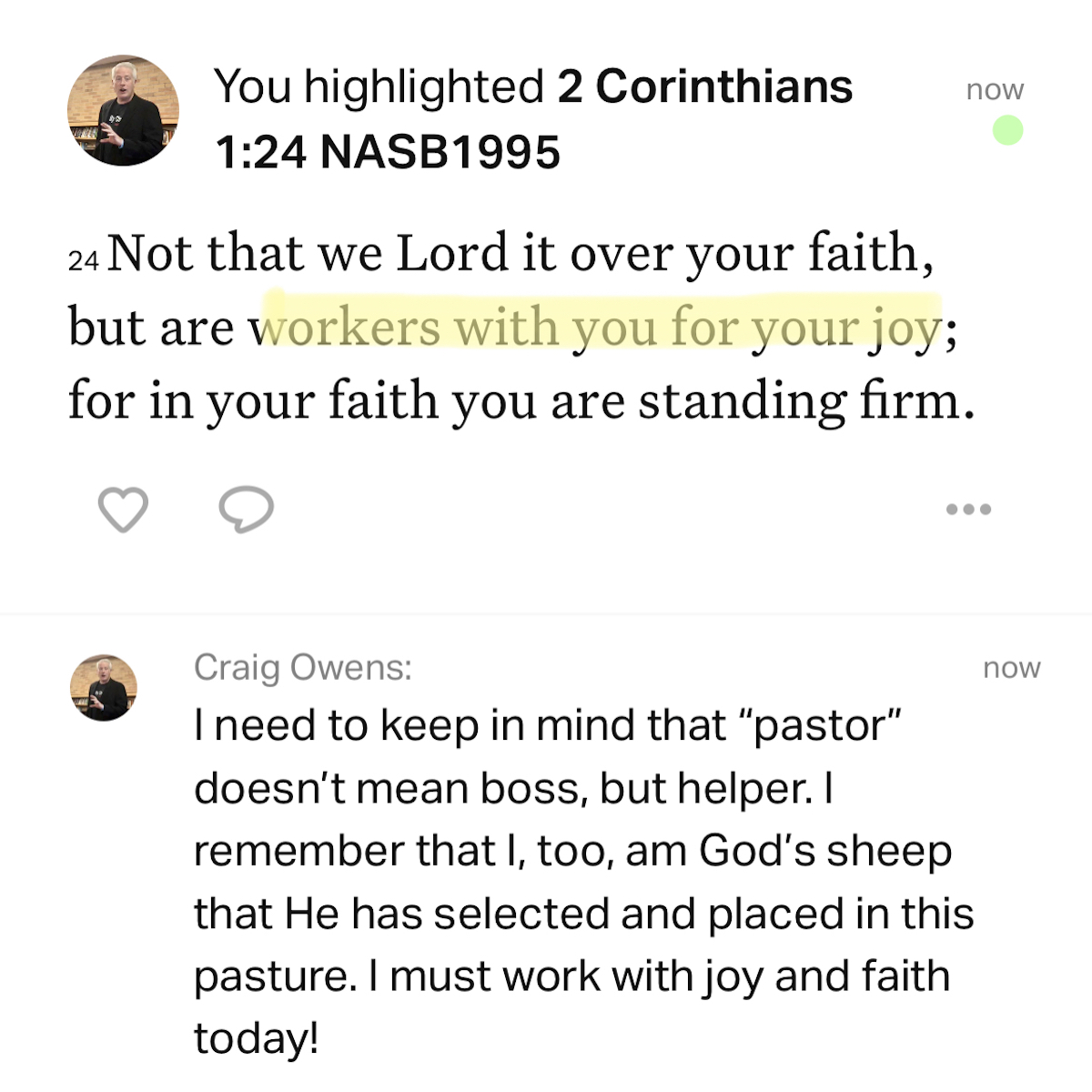
When Paul is writing to his friend Titus some instructions for pastors, he uses a Greek word for “authority” three times.
First, in regard to his own calling he says, “Paul, a bond-servant of God and an apostle of Jesus Christ, for the faith of those chosen of God and the knowledge of the truth which is according to godliness … but at the proper time revealed His word in the proclamation with which I was entrusted according to the commandment of God our Savior” (Titus 1:1, 3 NASB).
The phrase “chosen of God” in verse 1 literally means the same thing he says in verse 3: “according to the commandment of God.”
The third usage of this word is when Paul tells Titus that he has this same authority: “These things speak and exhort, and rebuke with all authority. No one is to disregard you” (Titus 2:15).
Interestingly, Paul uses this Greek word a total of seven times in his letters, with three of those times being in this short letter to Titus.
Paul also uses this word three times in his two letters to the saints in Corinth (1 Corinthians 7:6, 25; 2 Corinthians 8:8). But in all of three of these instances, Paul says, “I choose not to use my God-given authority on this, but I’m asking you to make a good choice.”
The only other time Paul uses this word in a letter is found in his closing remarks to the saints in Rome, with the emphasis there on the authority of the Word of God which he preaches—
Now to Him who is able to establish you according to my gospel and the preaching of Jesus Christ, according to the revelation of the mystery which has been kept secret for long ages past, but now has been disclosed, and through the Scriptures of the prophets, in accordance with the commandment of the eternal God, has been made known to all the nations, leading to obedience of faith. (Romans 16:25-26 NASB)
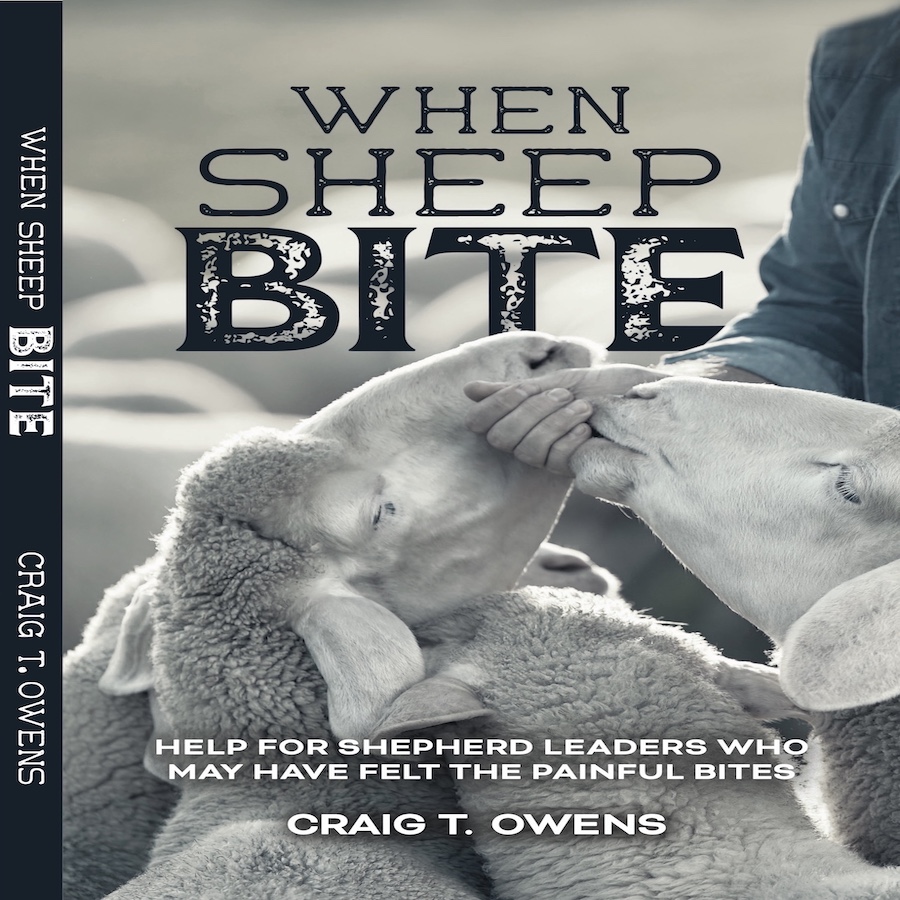
Questioning of our pastoral authority is one of the sheep bites I discuss in my book When Sheep Bite. Here is one passage from that chapter—
When our conversation with criticizing sheep hasn’t gone well, and when those unhealthy sheep begin to gossip and then slander, it’s inevitable that they will eventually began to question your authority as a shepherd. Perhaps they think you’re too young and naive, or too old and out of touch. They may question your motives, or the vision you’ve imparted for the church, or your ability to follow through on what you have already shared. Whatever the case, these biting sheep seem to be implying that they know better than you do how this pasture should be run.
During times like these, it is tempting to want to “prove” that we are qualified, that we do know what we’re doing, and that we can indeed successfully pursue the vision we’ve articulated for them. Once again, it’s natural to want to say, “I’ll show you just how qualified I am!”
Before we respond, we need to recognize the source of our authority. There is a certain authority that comes with a position or an office. For instance, a parent can say to a child who is questioning a rule, “Because I’m the parent and I say this is how it is going to be.” We see similar positional authority for CEOs, police officers, school teachers, and pastors. But like the little boy we met at the beginning of this book, people may say to a positional leader, “I may be obeying you on the outside, but on the inside I’m questioning everything you’re saying!”
Far greater than positional authority is moral authority. This is authority that comes not merely from a title or position, but from who conferred that title or position on the leader. If God has called us and appointed us to this pasture, that is all the authority we need.
Let me wrap up with four takeaways for shepherd leaders:
A godly leader’s authority is imparted by God. Keep in mind these three powerful words, “God chose me.” That means you have nothing to prove.
As a godly leader, you are “entrusted” with your authority and that means you have to give an account to God for its application. Don’t let the pain of the moment tempt you to react in a shortsighted way.
There are times to use God’s authority to hold the line; specifically when addressing issues which are biblical or unbiblical (Titus 1:9-14, 3:1-8).
Being a godly shepherd leader is not for the faint of heart! But God has called YOU which means He has also equipped YOU to respond appropriately in each situation.
My book When Sheep Bite is packed with biblical examples, personal experiences, practical applications, and prayers for each of these biting problems you will face. I hope you will pick up a copy today.
Listen to the podcast of this post by clicking on the player below, and you can also subscribe on Apple, Spotify, or Audible.
As missionaries, we are people sent on a mission. We are sent to everyone everywhere. We are to take Him to every street where God sends us.
“Main Street” (or Jerusalem) is a great place to start, and probably a place where we will always have work to do. These will typically be the people that are most like us—people with whom we will have the most in common.
There are others that need to hear the Good news of forgiveness that Jesus has made available. As our circle of witness widens, we may have less in common with those with whom we are interacting. This may take us out of our comfort zone, but since the Holy Spirit is in us we will never be out of our empowerment zone!
But you will receive power when the Holy Spirit comes on you; and you will be My witnesses in Jerusalem, and in all Judea… (Acts 1:8).
We need to ask two questions:
What did it mean then? Judea was still compromised of Jewish people, but it was the area slightly outside the neighborhood of Jerusalem.
What does it mean now? These are people very similar to people on Main Street, but we are starting to see more differences. These differences often become the source of controversies.
I’m going to describe some people in our Judea as cultural Christians but not biblical Christians. In the time of Jesus we could think of the Pharisees: People who would call themselves godly because they have set their own standards.
Lombard Street in San Francisco is a short, curvy street. This is a one-way street and motorists are only supposed to drive 5 mph, and still there are frequent controversies on the right-of-way between homeowners, motorists, work crews, bicyclists, and pedestrians. Everyone thinks their way is the right way.
How do we take the message of Jesus to those on our “Lombard Street”?
(1) Distinguish the biblical from the non-biblical.
Both the Pharisees that interacted with Jesus and today’s cultural Christians seem to quote more from their own traditions than they do from the Scripture, so we need to distinguish that the source of our beliefs is from God’s inspired Word. (I share more about the concept of biblical, unbiblical, and non-biblical in this post.)
A great example for us is how Jesus answered two questions from an expert in the Mosaic law: How do I earn eternal life? Who is my neighbor? See Luke 10:25-37.
(2) Stick to Scripture and your personal story.
Remember that the person with an experience is never at the mercy of the person with an argument. When the Sanhedrin questioned the legitimacy of the healing of a lame man, Luke wrote, “But since they could see the man who had been healed standing there with them [Peter and John], there was nothing they could say” (Acts 4:14)!
Love the personal story of the healed blind man in John 9!
Judea can be translated “he shall be praised.” We glorify Jesus not by arguing with those on Lombard Street, but by simply proclaiming biblical truth and our personal testimony.
Sing to the Lord, all the earth; proclaim good news of His salvation from day to day. Tell of His glory among the nations, His wonderful deeds among all the peoples. (1 Chronicles 16:23-24)
As we stick with the Scripture and our personal testimony, the Holy Spirit will use our witness to open minds to the Good News of Jesus (2 Corinthians 3:18-4:5).
Follow along with all of the streets we are looking at in our series Takin’ Him to the streets by clicking here.
Listen to the podcast of this post by clicking on the player below, and you can also subscribe on Apple, Spotify, or Audible.
Last week we mentioned that one of the things the Holy Spirit did after the Day of Pentecost was to unite individual Christians into the Church. In a world divided by religious and political factions, the unity of the Christians set them apart. Is our culture any different? Of course not! So the unity that the Holy Spirit brings is just as vital today.
In Psalm 133, David longs for this unity among believers. This psalm is in the collection of “Songs of Ascent.” That means that pilgrims to Jerusalem sang these songs as they literally went up the hill to Jerusalem. Psalm 133 opens with David singing, “How good and pleasant it is when brothers and sisters live together in unity” (v. 1).
Maybe David thought back to the time when people were joining him to give him support as king—David went out to meet them and said to them, “If you have come peaceably to me to help me, my heart shall be knit to you…” (1 Chronicles 12:17 AMP). In the next two verses of Psalm 133, David explains how this unity from being knit together is seen as a blessing.
Last week, we talked about the blessing of peace the priests pronounced on the people. That word for “peace” is shalom which could be defined as “nothing missing.” But couldn’t we also say that shalom is “no one missing”? Yes, because each and every part of the Body of Christ is vital and indispensable!
We see this same unity when the followers of Jesus were baptized in the Holy Spirit on the Day of Pentecost. Acts 2:1 says these Christians were “all together” (or some translations say “one accord”). This is one word in Greek (homothumadon)which describes the beauty of unity. One Greek dictionary defines this word,“The image is almost musical; a number of notes are sounded which, while different, harmonize in pitch and tone. As the instruments of a great concert under the direction of a concert master, so the Holy Spirit blends together the lives of members of Christ’s church.”
This picture of a majestic musical is further amplified in the next verses of Acts 2 where people from all over the world heard these Christians praising God in their own native tongues. Luke goes on to use homothumadon again and again throughout Acts to show what a powerful testimony their unity was to the watching world.
Paul emphasized the need for unity in the Church when he wrote—
As a prisoner for the Lord, then, I urge you to live a life worthy of the calling you have received. Be completely humble and gentle; be patient, bearing with one another in love. Make every effort to keep the unity of the Spirit through the bond of peace. There is one body and one Spirit, just as you were called to one hope when you were called; one Lord, one faith, one baptism; one God and Father of all, who is over all and through all and in all. (Ephesians 4:1-6)
How does the Holy Spirit help us handle our differences and keep this unity? We first need the Spirit’s help to distinguish whether it’s a biblical, unbiblical, or non-biblical issue.
Biblical issues must send us back to the Bible to find the truth (2 Timothy 3:16-17).
Unbiblical issues—where a brother or sister is living in a way contrary to Scripture—call on us to speak the truth in love and correct in love only after allowing the Holy Spirit to examine our own lives (Ephesians 4:15; Matthew 7:1-5; James 5:19-20). Notice that we are to do this with fellow brothers and sisters, not with those outside the Church.
Non-biblical issues are the trickiest. These are issues over which we should immediately stop fighting as we defer to the weakest brother or sister (Romans 12:10, 14:19-21).
The Church needs this unity today. We need to be in “one accord.” In a world divided by religious and political factions, our unity enhances our witness.
Listen to the podcast of this post by clicking on the player below, and you can also subscribe on Apple, Spotify, or Audible.
I had such a great time with Karl Vaters on his podcast called The Church Lobby. Right at the beginning of the conversation, Karl wanted to talk about the subtitle of my book: The metrics that really matter.
Listen to the podcast of this post by clicking on the player below, and you can also subscribe on Apple, Spotify, or Audible.
Leaders will always get some pushback from the people on their team. It doesn’t matter how much the people love their leader, when the leader shares a change or a correction, there will always be some people that are uncomfortable with that.
And they will pushback.
I’ve already shared some thoughts for leaders to make sure the issues they are addressing are biblical issues, not getting caught up in non-biblical controversies that can result in some very unbiblical attitudes! But when a leader is promoting a biblical change, there is a right way to handle it.
Check out how I discussed this topic with some ministry interns—
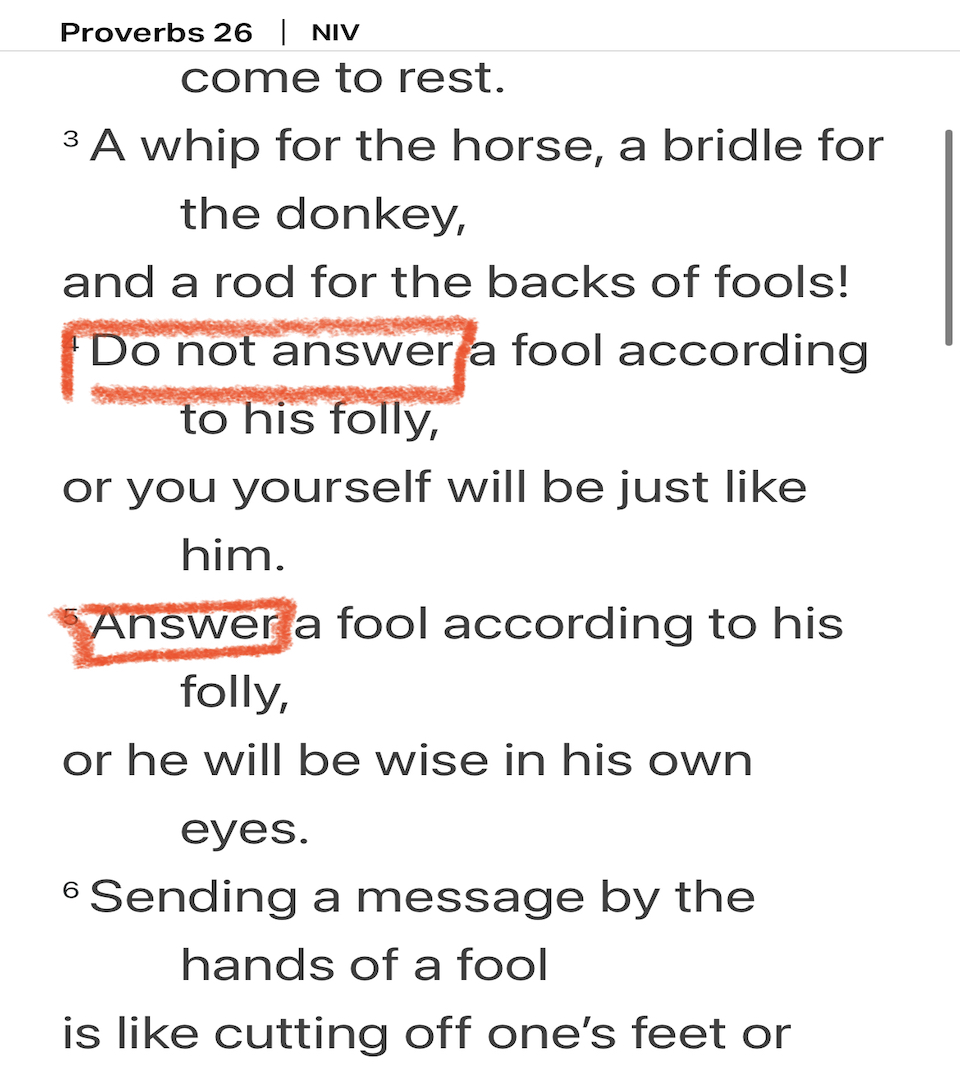
I really do like going back to those two verses in Proverbs:
Do not answer a fool according to his folly, or you yourself will be just like him. Answer a fool according to his folly, or he will be wise in his own eyes. (Proverbs 26:4-5)
Make sure you are not arguing just to argue. Good leaders only speak up for the good of the team and the individuals on the team. They never speak up just because they need to prove themselves right or they need to win an argument.
If you would like to go a little deeper into this, you may want to check out a couple of other posts and videos I’ve shared:
Handling pushback the right way is going to be an important component of your leadership, so take some time to get it right the first time. If I can help coach you through a leadership challenge you are facing, please don’t hesitate to get in touch with me.
Don’t rush through your Bible reading time. Slow down to savor the good stuff. And if there’s something you don’t understand, ask the “Chef”—the Holy Spirit loves to make God’s Word clear to you.
On a recent Breakpoint broadcast, John Stonestreet reported, “Even while many nations pump the brakes on radical transgender ideology and healthcare practices, Americans at both the state and federal level continue to push culture-wide affirmation, social transition of minors, hormone therapies, and harmful surgeries. Advocates frequently claim that so-called and misnamed ‘gender-affirming’ treatments—including surgery—‘save lives,’ that gender dysphoria is a permanent condition even among minors, and that regret by those who undergo such treatments are minimal or non-existent. Increasingly, research suggests otherwise.”
“Hazael’s historicity has never truly been in doubt; there are far too many inscriptions from the ancient world testifying to his existence.” Check out this archeological biography of King Hazael who appears several times in the Bible.
John Piper explains that there are three levels of how to live with material things. He then dives deeper into what the purpose of prosperity really is.
T.M. Moore has a stern word for pastors: “If we are faithful in telling the whole truth of the Gospel, not everyone will be thrilled with our preaching. We need to make sure Jesus is. When it comes to sin, let’s not mince words, and let’s not act like it’s not the big deal it is. No progress in faith can be made where sin is not consistently and thoroughly confessed, repented of, and forsaken.”
Listen to the podcast of this post by clicking on the player below, and you can also subscribe on Apple, Spotify, or Audible.
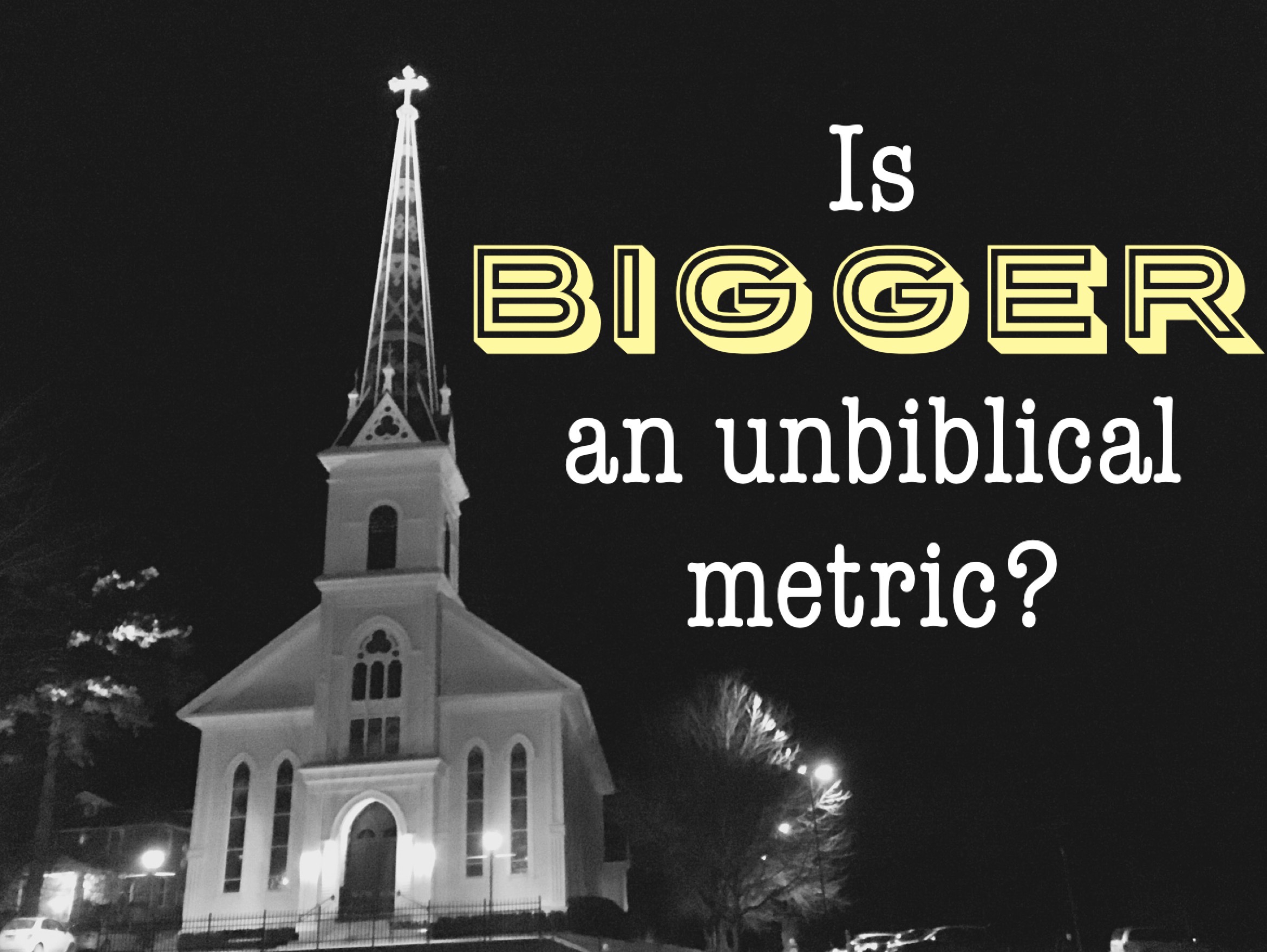
Many “church growth experts” will tell people how to grow their church. But when we say “grow,” what exactly do we mean? Does that mean more people? Does that mean more engaged church members? Or is it a combination of both?
But more importantly: What does the Bible say about church growth? Does it give us any indication about whether church growth should be quantity or quality?
I taught on this subject with some summer ministry interns. Take a look…
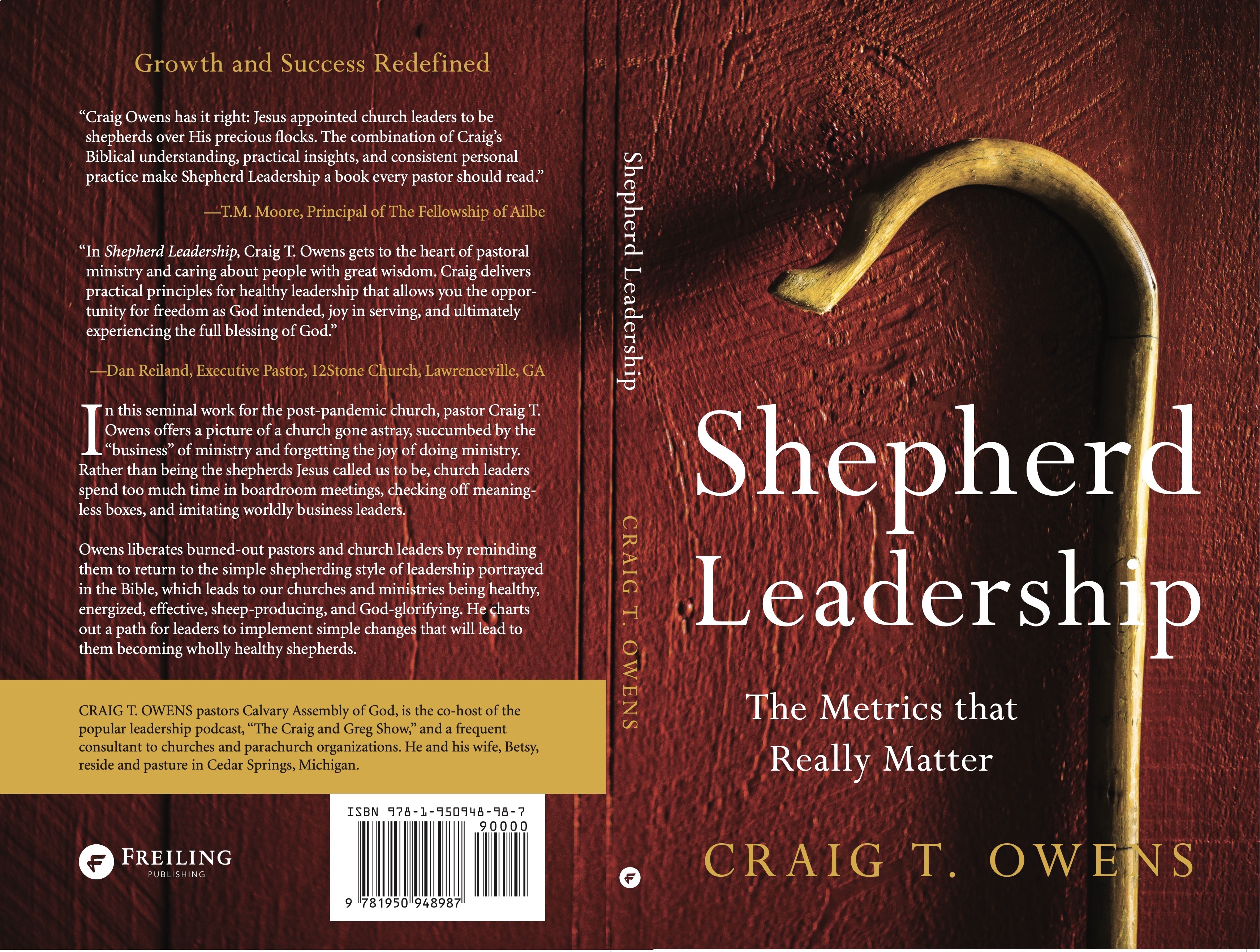
I unpack this idea in much greater depth in my book Shepherd Leadership: The Metrics That ReallyMatter. My book is available in print or ebook, and in audiobook through either Audible or Apple.