This is a weekly series with things I’m reading and pondering from Oswald Chambers. You can read the original seed thought here, or type “Thursdays With Oswald” in the search box to read more entries.
On Rituals And Vows To God
There is a use for ritual in a man’s religious life. Because anything is necessary at one time of life, it does not follow that it is necessary all through. … When a man is in a right relationship to God ritual is an assistance; the place of worship in the atmosphere are both conducive to worship. …
Any amount of futile religion is based on this line of things—“I have been eating too much, but now Lent has come and I will fast for a time.” There is nothing genuine in it, it has not the grip of God about it. When a man comes into the presence of God he refrains himself and remembers that he is not there to suffer from his own reactions, to get comfort for himself, to pray along the line of “O Lord, bless me.” He is there to refrain from his own personal needs and to get into the scope of God’s outlook. …
No man can keep himself a Christian, it is impossible; it is God Who keeps a man a Christian. … Jesus Christ came for the weak, for the ungodly and the sinful, and He says, “Blessed are the poor in spirit,” not—“Blessed is the man who has the power to decide and to keep his vow.” Jesus Christ calls the man who says—“I cannot do it; others may have the strength, but I haven’t.” Jesus Christ says to such, “Blessed are you.” It is not our vows before God that tell, but our coming before God, exactly as we are in all our weakness, and being held and kept by God.
From Shade Of His Hand
These words from Oswald Chambers are his commentary on Solomon’s words in Ecclesiastes 5:1-7. In this passage, Solomon warns against making hasty vows. Solomon says it’s better to remain silent than to make a vow and not follow through.
Chambers reminds us that it is impossible for us to keep a vow in our own strength. We don’t make vows to try to impress God, or as a part of a ritual, or because we think we need to do something special to “make up” for where we’ve fallen short. God wants us to come to Him in our weakness and say, “I can’t do this, but Christ in me can do this. I need Your help!” This is the posture and attitude that God honors and delights to help.
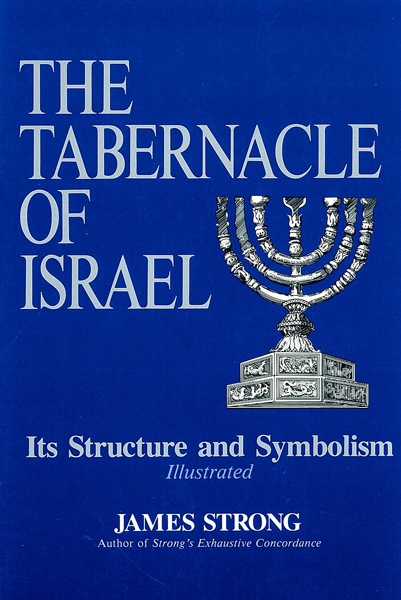
If you have ever used the Strong’s Exhaustive ConcordanceOf The Bible, you are probably familiar with the work of Dr. James Strong. By the way, if you haven’t used this concordance, it is 1500+ pages listing every word in the Bible and their Hebrew or Greek word and definition. By contrast, Dr. Strong’s book on The Tabernacle Of Israel is only 170 pages, but it’s just as jam-packed with helpful information.
I was recently reading through the books of the Bible where God gives Moses highly specific instructions for the portable Tabernacle that is to be used for the Hebrews to conduct their worship services. This temporary Tabernacle not only served them while they sojourned in the wilderness for 40 years, but it became the pattern for the brick-and-mortar Temple that King Solomon built years later, and its pattern is referred to again in the New Testament book of Hebrews as being a pattern of the worship in heaven. Obviously this is a significant thing!
Dr. Strong uses his extraordinary skills to compile an easy-to-follow study of the design guidelines, building materials, and exact layout of this Tabernacle. He uses not only the biblical accounts, but also augments his work with extensive archeological discoveries.
Then to wrap up the book, Dr. Strong talks about the significance of the layout, colors, materials, and even mathematical significance of the Tabernacle’s design, showing how it still impacts the New Testament Christian to this day.
This is an academic book, but it is well worth your time if you would like to get a more in-depth knowledge of the Tabernacle which God commanded Moses to build.
“We cannot follow what we do not know. And if we do not know Jesus, if our vision and understanding of Him are vague or merely general, following Him, in any sense, will be an act of self-deception. …
“The writer of Hebrews understood this. Twice in his epistle he instructs us to ‘consider Jesus.’ We must consider Jesus if we have any hope of persisting in the faith, no matter the struggle or threat that comes our way (Hebrews 3:1). And we must consider Jesus if we are to run our own particular race as fully and swiftly as possible (Hebrews 12:3). Following Jesus, it seems, means considering Him carefully. The writer uses two different words which we translate by the term consider.
“The first, in Hebrews 3:1, is the same word Jesus used to instruct us to consider the lilies of the field. It seems to have an aesthetic sense to it, implying wonder, admiration, mystery, and awe. To consider Jesus in this way is to wonder at His beauty, majesty, mystery, and power, and to delight in meditating on Him and lingering in His presence.
“The second use of consider, in Hebrews 12:3, encourages a more analytical, logical, and even theological consideration of Jesus Christ. We must study Jesus, think about all the implications of His life, death, and resurrection, and apply our minds to taking every thought captive for obedience to Him (2 Corinthians 10:3-5).” —T.M. Moore
“Just as men spontaneously praise whatever they value, so they spontaneously urge us to join them in praising it. ‘Isn’t she lovely? Wasn’t it glorious? Don’t you think that magnificent?’ The Psalmists in telling everyone to praise God are doing what all men do when they speak of what they care about.
“My whole, more general, difficulty about the praise of God depended on my absurdly denying to us, as regards the supremely Valuable, what we delight to do, what indeed we can’t help doing, about everything else we value. I think we delight to praise what we enjoy because the praise not merely expresses but completes the enjoyment; it is its appointed consummation. It is not out of compliment that lovers keep on telling one another how beautiful they are; the delight is incomplete till it is expressed. … This is so even when our expressions are inadequate, as of course they usually are. But how if one could really and fully praise even such things to perfection—utterly ‘get out’ in poetry or music or pain the upsurge of appreciation which almost bursts you? Then indeed the object would be fully appreciated and our delight would have attained perfect development. The worthier the object, the more intense this delight would be.” —C.S. Lewis, in Reflections On The Psalms
“Give me a new idea,” I said, While musing on a sleepless bed; “A new idea that’ll bring to earth A balm for souls of priceless worth; That’ll give men thoughts of things above, And teach them how to serve and love, That’ll banish every selfish thought, And rid men of the sins they’ve fought.”
The new thought came, just how, I’ll tell: ‘Twas when on bended knee I fell, And sought from Him who knows full well The way our sorrow to expel. See God in all things, great and small, And give Him praise whate’er befall, In life or death, in pain or woe, See God, and overcome thy foe.
I saw Him in the morning light, He made the day shine clear and bright; I saw Him in the noontide hour, And gained from Him refreshing shower. At eventide, when worn and sad, He gave me help, and made me glad. At midnight, when on tossing bed My weary soul to sleep He led.
I saw Him when great losses came, And found He loved me just the same. When heavy loads I had to bear, I found He lightened every care. By sickness, sorrow, sore distress, He calmed my mind and gave me rest. He’s filled my heart with gladsome praise Since I gave Him the upward gaze.
‘Twas new to me, yet old to some, This thought that to me has become A revelation of the way We all should live throughout the day; For as each day unfolds its light, We’ll walk by faith and not by sight. Life will, indeed, a blessing bring, If we SEE GOD IN EVERYTHING.” —A.E. Finn
“How can we have rain without clouds? Our troubles have always brought us blessings, and they always will. They are the dark chariots of bright grace. These clouds will empty themselves before long, and every tender herb will be gladder for the shower. Our God may drench us with grief, but He will refresh us with mercy. Our Lord’s love-letters often come to us in black-edged envelopes. His wagons rumble, but they are loaded with benefits. His rod blossoms with sweet flowers and nourishing fruits. Let us not worry about the clouds, but sing because May flowers are brought to us through the April clouds and showers.
“O Lord, the clouds are the dust of Thy feet! How near Thou art in the cloudy and dark day! Love beholds Thee, and is glad. Faith sees the clouds emptying themselves and making the little hills rejoice on every side.” —Charles Spurgeon (emphasis added)
King David loved God, and he loved God’s people. He was passionate about everyone getting as deeply connected with God as he was, so he wrote worship songs, setup worship teams, and organized the temple for worshippers.
The first song of ascent he wrote was one anticipating how good it was going to be when everyone got to the temple in Jerusalem to worship.
In fact, David was so excited about what he was expecting to happen in their worship together that he practically glowed with joy! Really! The word for rejoiced in his song means to be so cheerful and happy that you make others around you bright by your happiness. 😀
What was it that David thought was going to happen? First of all, we need to look at the name Jerusalem. Traditionally this means the City of Peace, but the two words that make up “Jerusalem” are much richer than that. Yes, -salem means “peace.” But the first part of the word (yara-) literally means water flowing through, or an arrow being shot out.
In other words, David anticipated that we are going to a peaceful place to be sent out full of peace, to take that peace to others who don’t have it, but desperately need it.
While we are in our “Jerusalem” (for us in the New Testament, this is our “church,” even if it’s just two or three people getting together), here are five blessings you should expect—
Unity—with all the “tribes” joining together.
Praise—joining together to tell God how great He is!
Learning—we come together to learn God’s statutes.
Judgment—what?! How is judgment a blessing? If you are nervous about being judged, just remember Who does the judging in God’s temple: the Holy Spirit. He judges us in a loving way, and in a way that allows us an opportunity to see our sin, repent from it, and experience unconditional forgiveness. That is exciting!
Peace, security, prosperity—the word shalom is used multiple times in the closing verses of this song. The best definition of shalom is: nothing missing, nothing broken. In other words, when we gather together to worship we should expect that God will heal any dis-ease we have, that He will supply what has fallen short, that He will fill up what’s empty.
With those five blessings in mind, here’s the declaration all Christians can make—
Inside these walls…
we live in unity
we praise the Lord
we learn God’s laws
we judge ourselves by God’s standards
repenting, confessing, forgiving, and being forgiven
we fight for peace
we bless God and one another
We descend back to the valleys
to take this message to valley-dwellers
that they, too, may pilgrimage
with us to Jerusalem
It starts here in God’s family!
It starts with me!
Check out the full video of this message, where I explain each of these ideas more fully. And if you’re in the area, join us on Sunday as we continue our look at the Psalms of Ascent.
“Too often we view leadership as purely outward, thinking only of how we will climb the next mountain, or overcome the next obstacle without considering who we will be when we do. But true leadership, great leadership, starts within.”
“Your capacity for life changing leadership is directly related to your willingness to be led, not your eagerness to perform. Lean in to the promises of God, allow Him to mature you in goodness, knowledge, self-control, perseverance, and love; true hallmarks of a leader worth following.”
“The more we look, act, love, and lead like Jesus, the more impactful our leadership will be to the world around us.”
“There is no choosing to lead through the Spirit of God without choosing to be changed by the Spirit. … What is not cultivated in secret cannot be called upon in public. We have to pray for the transformative power of the Spirit to work His way in our hearts and minds, changing us forever, so our leadership is not a facade, but a reflection of His power at work within us.”
“Jesus calls us further, calls us to more, and through His power we have to change the landscape of leadership in our world. We must demonstrate that leadership through Christ speaks life and value into people’s hearts. That the way we treat the Father’s children matters, and is our greatest end.”
“Father, help me to see Your children the way You do. Give me eyes to look beyond what my flesh sees, and to focus on how to affirm, love, and care for those You’ve entrusted me to lead. Create in me a compassionate heart, one that turns first to You in worship and then towards Your children with love.”
“God, this world is Yours, everything in it is Yours. I am Yours, do with my life what You will. Help me to release the things of my flesh, so that I may be transformed according to Your Spirit. Give me a heart for those around me, a burden for my community that compels me to fulfill the mission You have may give me. Teach me to clothe myself in You, to speak Your words and offer Your hands. May my leadership radiate You, and draw people towards Jesus.”



 Speak, lips of mine!








 Craig T. Owens
Book Reviews From 2016
December 27, 2016 — Craig T. Owens#struggles
Alive
An Angel’s Story
Answering Jihad
Archeological Study Bible
Chase The Lion
Churchill’s Trial
Culture
Hope … The Best Of All Things
How To Read A Book
I Stand At The Door And Knock
Jesus Always
Letters To A Birmingham Jail
Light & Truth—Acts & The Larger Epistles
Light & Truth—Revelation
Light & Truth—The Lesser Epistles
More Than A Carpenter
Of Antichrist And His Ruin
On This Day
One Of The Few
Our Iceberg Is Melting
Shaken
So, Anyway…
Streams In The Desert
The American Patriot’s Almanac
The Bad Habits Of Jesus
The Beauty Of Intolerance
The Blessing Of Humility
The Dawn Of Indestructible Joy
The Duty Of Pastors
The Gospels Side-By-Side
The Mathematical Proof For Christianity
The Philosophy Of Sin
The Place Of Help
The Porn Circuit
The Psychology Of Redemption
The Seven Laws Of Love
The Shadow Of An Agony
The Tabernacle Of Israel
Think On These Things
Today’s Moment Of Truth
Useful Maxims
Your Sorrow Will Turn To Joy
Here are my book reviews for 2011.
Here are my book reviews for 2012.
Here are my book reviews for 2013.
Here are my book reviews for 2014.
Here are my book reviews for 2015.
Share this: