An Eye For An Eye

Listen to the podcast of this post by clicking on the player below, and you can also subscribe on AppleSpotify, or Audible. 

We have to be very attentive when we hear anyone say something that they claim is a word from God. The first question we need to ask is, “Is that in the Bible?” If it is, then the next question is, “Is that statement being used in its proper context—does it conform with the whole counsel of God’s Word?” 

So here is statement #14 in our series—An eye for an eye, and a tooth for a tooth. Is that in the Bible? Yes.  

This first shows up in Exodus 21:24, and it is a part of the legal code God gave through Moses (Exodus 21:1). This code was entrusted to capable men (i.e. judges) in Exodus 18:19-22, 25. 

(Check out all of the Scriptures I reference in this post here.) 

This has been referred to as “the law of exact retribution.” Later on the Romans would name it lex talionis—the law of the tooth. This was to prevent one-upmanship or escalating retaliation, and it also applied to false witnesses who were trying to get someone else in trouble (Deuteronomy 19:15-21). 

By the time of Jesus, this legal maxim was so well known that when Jesus quoted it to His audience, everyone knew what it meant (Matthew 5:38). 

One of the most innate responses that we humans have to threats or to an attack is fight-or-flight. 

In this case, flight would be sweeping it under the run or pretending it didn’t happen. But it did happen, and there is a sense of justice in us that wants to see retribution. If this offense isn’t acknowledged and dealt with appropriately, the desire for retribution will allow unforgiveness to fester. This shows up in all sort of negative ways—physically and emotionally—and often there is a breaking point where the injured party lashes out. 

Fight would be taking the law into our own hands. I want everyone to know that I was wronged by you, and I want you to suffer more than you made me suffer. But the first time this law is given, God calls for precise compensation (Exodus 21:22-25). 

God’s means for carrying our the lex talionis today is exactly the same—a legal code administered by trained judges (Romans 13:1-4). 

This is the law of the land—the natural law—but Jesus calls on us to respond supernaturally. Not to be the judge or jury, but to remember that God perfectly judges and vindicates (Luke 8:17; Deuteronomy 32:35). 

Jesus continually calls us forego the natural reaction for the supernatural response. Notice the repeated pattern of, “You have heard that it was said” and then, “But I tell you…” in Matthew 5:21-22, 27-28, 31-32, 33-37, 43-44 and specifically vv. 38-42. 

If our eyes are on the one who injured us, our eyes are off of the only One who can vindicate and heal us (Romans 12:17-21). 

Natural people merely react out of innate instinct. Supernatural people are able to respond with Christlike love. 

Don’t give in to the merely natural reaction, but submit to the Holy Spirit who can help you respond supernaturally. 

Check out all of the other topics we have covered in our “Is that in the Bible?” series. 

►► Would you please prayerfully consider supporting this ministry? My Patreon supporters get behind-the-scenes access to exclusive materials. ◀︎◀︎
Unity Is Not Conformity

Listen to the podcast of this post by clicking on the player below, and you can also subscribe on AppleSpotify, or Audible.

Unity is not conformity nor is it mimicry. The Holy Spirit unites Christians in their message of hope to the world, but He does this by empowering each of our unique testimonies to our culture. 

This is a message I shared with the congregation at Country Chapel during their week-long revival meetings.

The Scriptures I reference in this message are—2 Chronicles 18:1-13; Romans 12:2; Mark 12:28-31; John 12:49-50; John 8:34-36; 2 Corinthians 3:16-18; Acts 15:1-35; Acts 1:8; Acts 2:1-11.

I have previously shared a whole series of messages about how the Holy Spirit empowers Christians for ministry:

►► Would you please prayerfully consider supporting this ministry? My Patreon supporters get behind-the-scenes access to exclusive materials. ◀︎◀︎
Strength In Unity

Listen to the podcast of this post by clicking on the player below, and you can also subscribe on AppleSpotify, or Audible. 

The 12th Song of Ascent (Psalm 131) was written by David to remind us to rely on God’s help even more as we progress on the journey (or mature in our faith). In the 13th Song (Psalm 132), the psalmist says, “Remember David” and his passion for God’s people to experience God’s righteousness and joy. In order for us to know that, we have to remember Jesus. 

Those who put this collection of Songs of Ascent together now include David’s fourth song (Psalm 133) in this collection which expresses his desire for unity among God’s people. 

(Check out all of the Scriptures in this post by clicking here.)

Can you imagine the pilgrims starting out from their individual villages? Maybe there’s not very many of them to begin with and traveling is pretty easy, but they do have to be vigilant against dangers on the road. 

As they progress, they begin to join with pilgrims from other villages. Maybe these are from the same tribe, perhaps even distant relatives. The journey may go a bit slower now that there are more people to keep track of, and some complications of personality may start to arise. But the level of safety and assistance also increases. 

Soon the group is getting larger as they now join with pilgrims from other tribes. These aren’t near relatives at this point, so there may be more complications, but there is even greater encouragement, safety, and potential. 

Aha! Potential. 

We’ve gone singing with a small ensemble to singing in a choir. And David is anticipating us singing in an even larger, majestic choir! There will undoubtedly be more problems, but there is also assuredly so much more potential, beauty, and strength in their combined worship. 

My friend Dan Chastain has over 20 years of experience in the United States Army. He points out that the Army did the same things in his day as we read in the Old Testament. 

The unity of a fighting force, Dan said, is a blessing. David was a professional soldier. Many people today join the military because of this professional, unity, and camaraderie. Maintaining this unity is the responsibility of everyone, because disunity leads to mistrust, chaos, and defeat. 

David says this choir paints a picture—“it is like” (v. 2) and “it is as if” (v. 3). He is saying that God desires overflowing blessings on His people (v. 2), and that God desires saturating blessings on His people (v. 3). Why? Because God wants to give us more than enough for our needs so that there is plenty left for those who aren’t brothers and sisters yet. He longs for our choir to include people from every tribe, race, and nation. 

Just as we said last week that a Christian’s joy is a testimony, a choir of Christians is an even more compelling testimony! 

David calls this unity “good” which really means so much better than the alternative. And he calls this unity “pleasant.” The Hebrew word literally means singing a sweet sound! 

The Hebrew word for “unity” here is also instructive. It means to be together in the same place—not just in spirit and desire—but in physical proximity. This is exactly the picture we see in the first Church (Acts 2:44, 46-47), as well as the picture of the choir from every nation, tribe, people, and language singing around God’s throne in Heaven (Revelation 7:9-10). 

In order to navigate all of the differences of personality that could keep us from this unity, we have to work at. We need the attitude of Jesus (Philippians 2:1-5). This requires a daily transformation of our minds (Romans 12:1-3), and this transformed mind is what helps us move from a small ensemble to a majestic choir (Romans 12:4-5, 16-18). 

Remember the word “saints” is always plural in the New Testament. You and I each have a vital part to play in helping other saints! 

If you’ve missed our look at any of the other Songs of Ascent, you can find them all listed here. 

►► Would you please prayerfully consider supporting this ministry? My Patreon supporters get behind-the-scenes access to exclusive materials. ◀︎◀︎
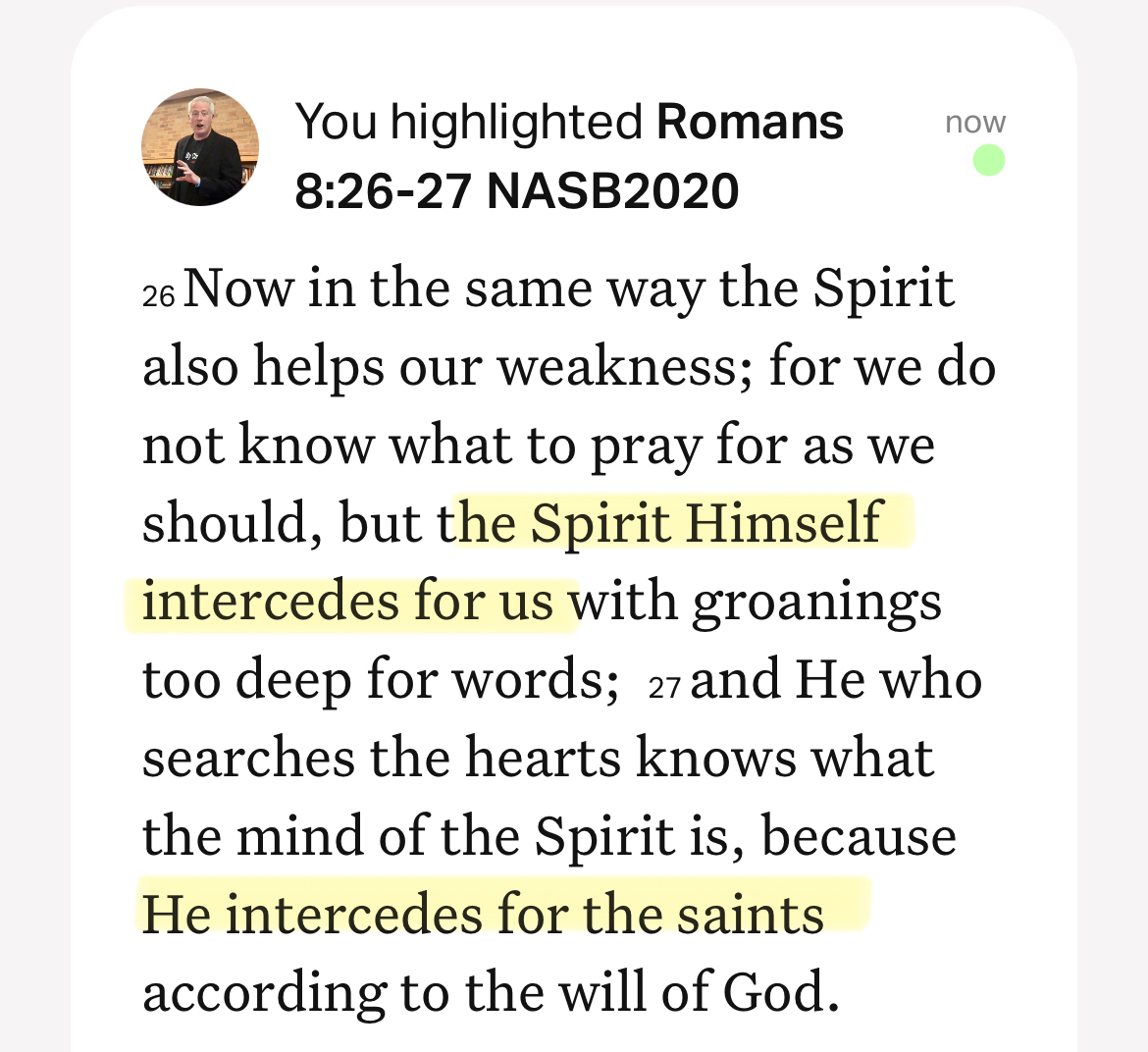
Still Maturing

Listen to the podcast of this post by clicking on the player below, and you can also subscribe on AppleSpotify, or Audible. 

Have you ever said to yourself… 

  • …I should have known better?  
  • …why I am going through this again?  
  • …I thought I was over this hurdle? 
  • …you would think I would have matured enough by now to not have to deal with this?  

Maybe the author of Psalm 129 felt this way: “Here I am on the 10th step and I’m still having to deal with this! When will I finally arrive at the top and be done with these issues?” (compare Psalm 129:1-2 with 124:1-5). 

(Check out all of the Scriptures I use in this post by clicking here.) 

I think those statements—“I should have known better” or “I thought I was over this”—pre-suppose that we will reach a point in our life where we “arrive.” If nothing else, this psalm is a reminder that we are still on the journey, that we are still a work-in-progress, that the saint-ification process is still ongoing. It’s clear from Scripture that we never “arrive” until we arrive in Heaven and hear our Master say, “Well done, good and faithful servant.” 

While we are ascending up toward our heavenly home, these great oppressions and plowings remind us that there is still work to be done in us and through us to bring glory to God (Romans 5:3-4; James 1:2-4, 12). 

Of his Soviet prison, Alexander Solzhenitsyn said, “I bless you, prison—I bless you for being in my life—for there lying on rotting prison straw, I learned the object of life is not prospering as I had grown up believing, but the maturing of the soul.” 

The reality is God is using all of those things for my good and for His glory (Romans 8:28). 

What happens as I am oppressed and plowed? 

(1) I am refined—Psalm 66:8-12, 16-20. God is removing the impurities from my life. 

(2) My prayers are matured. Psalm 129:5-8 is an imprecatory prayer, a prayer that says, “Get ‘em, God!” These have their place, but for us they are to be our emergency release valve (which I discuss in more depth in my book When Sheep Bite). But Jesus calls for our prayers to mature from imprecatory to intercessory (Matthew 5:43-45). In my book I write, “This is the highest level of Christian maturity: To pray like Jesus did for those who insulted Him, slandered Him, and crucified Him, ‘Father, forgive them for they don’t understand what they are doing’ (Luke 23:34)” 

(3) I develop more intimate God-dependence—2 Corinthians 1:8-10. 

(4) I am better equipped to help others—2 Corinthians 1:3-6.  

(5) Others feel more inclined to pray for me—2 Corinthians 1:7, 11.  

“God uses broken things. It takes broken soil to produce a crop, broken clouds to give rain, broken grain to give bread, broken bread to give strength.” —Vance Havner 

Oppressed? Yes! Defeated? No! 

Plowed? Yes! Enslaved by the plow’s cords? No! 

God uses this to bring us closer and closer to Him until He can eventually say to us face-to-face, “Well done, good and faithful servant!” That’s when we truly arrive! Until then, we keep on ascending. 

If you’ve missed any of the other messages in our series looking at these songs of ascent, you can check them all out here. 

►► Would you please prayerfully consider supporting this ministry? My Patreon supporters get behind-the-scenes access to exclusive materials. ◀︎◀︎

Pray For Them?!

Listen to the podcast of this post by clicking on the player below, and you can also subscribe on AppleSpotify, or Audible. 

How exactly should we pray for those who have so badly mistreated us? There’s a natural response, and then there’s a supernatural response that Jesus calls us to.

Check out this episode of The Podcast.

In chapter 14 of When Sheep Bite I wrote—

      In the New Testament, the Greek word for “bless” is eulogeo. The prefix eu- means “good” and the root logos is “word.” So, in the New Testament context in which we now live, to bless someone literally means to say good words both to them and about them. So when Jesus tells us, “Bless those who curse you and pray for those who mistreat you,” He is telling us to say good words to them, and to say good words about them in prayer to our Heavenly Father. …

      Commenting on Psalm 109:4, my friend Kevin Berry said, “While they accuse me like satan, I will pray for them like Jesus.” This is the highest level of Christian maturity: To pray like Jesus did for those who insulted Him, slandered Him, and crucified Him, “Father, forgive them for they don’t understand what they are doing” (Luke 23:34).

The Scriptures that I reference on this episode of The Podcast are Matthew 5:44; Psalm 109:4; Revelation 12:10; John 10:10; Luke 23:34; Psalm 139:23-24; Romans 12:18-21.

And the blog posts I mention are: Unexpected Response and Choice Four-Letter Words.

I truly believe that When Sheep Bite will be a healing resource for shepherd leaders who are still feeling the pain of their latest sheep bite. Please pick up a copy today! 

►► Would you please prayerfully consider supporting this ministry? My Patreon supporters get behind-the-scenes access to exclusive materials. ◀︎◀︎

Moderate Stress Is Healthy

Listen to the podcast of this post by clicking on the player below, and you can also subscribe on AppleSpotify, or Audible. 

We do ourselves and the world around us a huge disservice if we are constantly striving for a stress-free life. 

First, I don’t think that is even possible! Adam and Eve in the perfection of the Garden of Eden faced a stressful decision. And Jesus, the Perfect Man, was constantly dealing with the stressors that pushed in on Him. 

But more importantly, stress is vital for healthy growth. In this case, I am talking about the healthy stress that doctors call eustress. This is the push against the forces that would ultimately pull down our physical health, our relationships, our mental health, and a host of other things if we simply opt to “go with the flow.” 

I read this in a recent article from Fight The New Drug

“In a world that often sells ways to avoid stress, it’s crucial to remember that stress can be healthy in moderation. Stress and anxiety can trigger neural and chemical processes in your body designed to help you respond to challenges. Stress researcher Daniela Kaufer explains that ‘some amounts of stress are good to push you to the level of optimal alertness for behavioral and cognitive performance.’ Her research on stress in rats has even demonstrated that intermittent stressful events can create new brain cells in the rats that actually improve their future mental performances.”  

The Bible makes it clear that persevering through the stressors that come against us can make us stronger, healthier, and better equipped for the next challenge. We are also fortified to help others through their times of stress (James 1:2-4; Romans 5:3-5; 2 Corinthians 1:3-5). 

As I’ve often said, easy, stress-free roads teach very few valuable lessons! 

The poet Epictetus noted this about the mighty Hercules—

“What would have become of Hercules do you think if there had been no lion, hydra, stag or boar—and no savage criminals to rid the world of? What would he have done in the absence of such challenges?
“Obviously he would have just rolled over in bed and gone back to sleep. So by snoring his life away in luxury and comfort he never would have developed into the mighty Hercules.
“And even if he had, what good would it have done him? What would have been the use of those arms, that physique, and that noble soul, without crises or conditions to stir into him action?” —Epictetus, The Discourses 

So the next time you are thinking about avoiding something that causes stress in your life, why don’t you reframe that thought. Instead, think about how you can become stronger, healthier, and more empathetic toward others because you are committed to successfully navigating that stressful situation. 

Don’t ask God to get you out of this situation, but ask Him to help you get something out of this situation. 

►► Would you please prayerfully consider supporting this ministry? My Patreon supporters get behind-the-scenes access to exclusive materials. ◀︎◀︎

Where This Book Originated

Listen to the podcast of this post by clicking on the player below, and you can also subscribe on AppleSpotify, or Audible. 

I would like to take you behind the scenes to the origin of my second book. In this video, you will hear how I first came up with the idea for When Sheep Bite, and how the Holy Spirit redirected my original book design.

Check out this episode of The Podcast.

I wrote this in the Introduction to Section One of When Sheep Bite

      I know that when you are in distress you are looking for immediate relief. You may be tempted to jump right to Section 2 of this book where I outline specific thoughts and strategies for handling the ways your sheep are biting and kicking, but I invite you to hold off. … It may appear from your perspective that the fault lies entirely with the attacking sheep—and that you feel that you haven’t done anything to provoke them. But these attacks can open our eyes to things we haven’t noticed before and teach us invaluable lessons, if we are willing to quiet ourselves before the Holy Spirit’s counsel. …

     If we don’t have the heart of a shepherd leader, we will not only treat every bite and kick as if it is completely their fault, but we will never be looking for ways to bring healthy correction and restoration to that wayward sheep. Let me remind you that all of us were those wayward sheep—biting God’s hand, running away from Him—when Jesus put His very life on the line to bring us into the sheepfold (Romans 5:6-8). This kind of shepherding doesn’t come just because we outwardly try to do the right thing, but because we have a right heart attitude (Philippians 2:5).

I truly believe that When Sheep Bite will be a healing resource for shepherd leaders who are still feeling the pain of their latest sheep bite. If you are a pastor—or if you love your pastor—please pick up a copy today! 

►► Would you please prayerfully consider supporting this ministry? My Patreon supporters get behind-the-scenes access to exclusive materials. ◀︎◀︎

Links & Quotes

Romans 8:28 tells us that God uses ALL things to accomplish His purpose for our lives. Too many times I tried to rush through things without getting anything out of it. I have lots of new content every week, which you can check out on my YouTube channel.

He is 98 years old and he’s still busy serving other people! I pray we can all be as selfless and vibrant in ministering to others until the day God calls us home.

“When with an eye of faith we behold Christ crucified we ought to weep, not for Him, but for ourselves. We must not be affected with the death of Christ as with the death of a common person whose calamity we pity, or of a common friend whom we are likely to part with. The death of Christ was a thing peculiar; it was His victory and triumph over His enemies; it was our deliverance, and the purchase of eternal life for us. And therefore let us weep, not for Him, but for our own sins, and the sins of our children, that were the cause of His death; and weep for fear (such were the tears here prescribed) of the miseries we shall bring upon ourselves, if we slight His love, and reject His grace, as the Jewish nation did, which brought upon them the ruin here foretold.” —Matthew Henry, on Jesus’ word, “Do not weep for Me” in Luke 23:28

J. Warner Wallace shares three responses Christians can give to those who make the claim that Jesus didn’t think He was God. In this video, Detective Wallace talks about a section of his website that gives further evidence. You can find that section here.

The Institute for Creation Research is a group of scientists explaining how science points to a Creator. What does Creation have to do with Easter? “Any view of Christianity that incorporates long ages of death and suffering before Adam makes a sham of the Cross. This Easter season, as we remember our salvation made possible by the death of our Lord Jesus Christ on the Cross and His triumphant resurrection from the grave, let us understand it within the ‘big picture’ of a ‘very good’ creation that was ruined by our rebellion but restored by the willing sacrifice of our great Creator-Savior.”

“One measure of the greatness of a man is not only that he practices what he preaches, but also that he doesn’t consider himself above the ordinary means of grace that all Christians need.” —John Piper

“Beware of idleness—satan sows most of his seed in fallow ground.” —Thomas Watson

He prayeth best who loveth best
All things both great and small;
For the dear God who loveth us,
Hath made and loveth all. —Samuel T. Coleridge

So Good!

Listen to the podcast of this post by clicking on the player below, and you can also subscribe on AppleSpotify, or Audible. 

You may have heard it this last weekend. Someone says, “Jesus is risen,” and their friend responds, “He is risen indeed!” Jesus Christ’s resurrection from the dead is the greatest event ever! And yet some people just can’t seem to grasp how good this truly is.

We’ve been trained to believe if something sounds too good to be true, then it probably is. So we are careful to be skeptical of any too-good-to-be-true claims that we may hear. Our heart might get excited at the possibilities, but then our logical mind begins to shout, “Wait!” 

Here’s what a logical argument looks like: P1 + P2 + P3 = C. 

The Ps are premises, and if we put true premises all together, then the C (conclusion) is true as well. All I have to do is invalidate one of the Ps and the whole argument falls apart. Then my logical mind can say, “See! I told you it was too good to be true!” 

People heard the teachings of Jesus, they saw His miracles, thousands of them had even tasted the bread and fish He miraculously multiplied. They had hoped He was the One they had been longing for—the Messiah that would deliver them. But then He was crucified and their excitement was extinguished. 

On the Sunday morning after His crucifixion, rumors began to swirl that Jesus had been resurrected back to life. Others said they had actually seen Him and talked with Him. Hearts began to swell with excitement again. But for many of them, their logical minds began to shout, “Wait! Don’t fall for another too-good-to-be-true story!” 

We meet a couple of men who felt like this in Luke 24:13-24. They so wanted it to be true that Jesus was the Messiah they had longed for, but I notice that they use the word “but” three times. That’s their logical mind trying to invalidate any one of the premises. 

Jesus was indeed resurrected from the dead. There is so much evidence that I don’t have time to go through today, but let me just share one item with you: Paul listed all of the people who had seen Jesus alive (1 Corinthians 15:3-8). Facing persecution and even martyrdom, none of these eyewitnesses recanted their faith. 

Chuck Colson, who was at the center of the Watergate scandal and who was not a Christian at that time, said,  

“I know the resurrection is a fact, and Watergate proved it to me. How? Because twelve men testified they had seen Jesus raised from the dead, then they proclaimed that truth for 40 years, never once denying it. Every one was beaten, tortured, stoned and put in prison. They would not have endured that if it weren’t true. Watergate embroiled twelve of the most powerful men in the world and they couldn’t keep a lie for three weeks. You’re telling me twelve apostles could keep a lie for 40 years? Absolutely impossible.”  

Remember our logical statement: P1 + P2 + P3 = C. 

Jesus gave one of His own in Luke 18:31-33. It would go something like this: 

  • ✔️ P1 (He was turned over to the Romans) 
  • ✔️ P2 (He mocked, flogged, killed) 
  • ✔️ P3 (He was raised from the dead)
  • ✔️ C (Jesus fulfills every promise of God) 

The disciples on their way to Emmaus used the word “but” three times, but Jesus counteracted that by using the word “all” three times (Luke 24:25-27), when He said all of the Scriptures point to Him and are fulfilled in Him! 

The Bible is packed with promises! Promises of courage, assurance, wisdom, healing, direction, provision. And they are all valid promised because of the resurrection of Jesus—

For no matter how many promises God has made, they are “Yes” in Christ. And so through Him the “Amen” is spoken by us to the glory of God. … What, then, shall we say in response to these things? If God is for us, who can be against us? He who did not spare His own Son, but gave Him up for us all—how will He not also, along with Him, graciously give us all things? (2 Corinthians 1:20; Romans 8:31-32)

It may seem like these promises are too-good-to-be-true, but Jesus is so good that He makes all of the promises true! 

If you missed any of the messages in our series looking at how Jesus fulfilled the smallest of details of prophecy, check them out here. 

►► Would you please prayerfully consider supporting this ministry? My Patreon supporters get behind-the-scenes access to exclusive materials. ◀︎◀︎
Fearless Stewards

Listen to the podcast of this post by clicking on the player below, and you can also subscribe on AppleSpotify, or Audible. 

I’ve noticed over the years that some people get quite nervous—even fearful—with the thought of God coming close to then. Some people have told me, “I can’t go to church—the roof will fall in on me!” 

If I’m honest, I had a time in my life when I feared God’s approach. I didn’t want to pray, “God, use me however You want to” because I just knew He was going to send me somewhere I didn’t want to go, or ask me to give up something that was special to me. 

But from the the birth of Jesus until His ascension, the consistent message is: Fear not! and Rejoice! 

Today we celebrate what is now called Palm Sunday. This is the triumphal arrival of Jesus in the Holy City of Jerusalem, just a few days before His earthly ministry will reach its climax at His crucifixion. This is a story recounted by all four Gospel writers.

Matthew 21:4 says that Christ’s arrival on a donkey was “to fulfill” another one of the jots and tittles. And John adds, “Jesus found a young donkey and sat upon it, as it is written, ‘Do not be afraid, O Daughter of Zion; see, your King is coming, seated on a donkey’s colt’” (John 12:14-15).  

Typically, conquerors came with a show of overwhelming force, not a show of humility. But Jesus came to Jerusalem with the same message repeated at His birth, “Fear not.” 

This is elaborated on in the original prophecy found in Zechariah 9:9-14, where the opening word is, “Rejoice!” We rejoice because He is coming to take away the instruments of war that the occupying forces used to keep the citizens in bondage. He is coming to bring freedom He is coming to announce hope and restoration. 

With all of these jot-and-tittle prophecies, we have been asking three questions. 

(1) What did it mean then? Quite simply, on that first Palm Sunday it meant that this was not the time for judgment. 

(2) What does it mean now? Since the final judgment has not taken place, it must mean it still is not a time of judgment, but a time of favor. God is still drawing people to Himself by His kindness (Romans 2:4). 

Zechariah 9:14 makes it clear that there will be a day of judgment. And Peter says that God’s not being slow about this, but He is demonstrating His patience so that none will have to perish without Him (2 Peter 3:9-10). 

(3) What does it mean for me? It means that I don’t have to fear the approach of God. 

First, there is no fear when God calls me to stand before Him because my sins have been forgiven (Romans 8:1). 

Second, there is no fear when God asks me to give something to Him because God has equipped me ahead of time to respond obediently. When Jesus sent His disciples ahead of Him to bring back the donkey that He would ride into Jerusalem, Jesus must have already informed the donkey’s owners that this would be coming. The disciples were simply to say, “The Master needs the donkey now.” 

God has already prepared me to say, “Yes” to whatever He calls me to do (Psalm 139:16). 

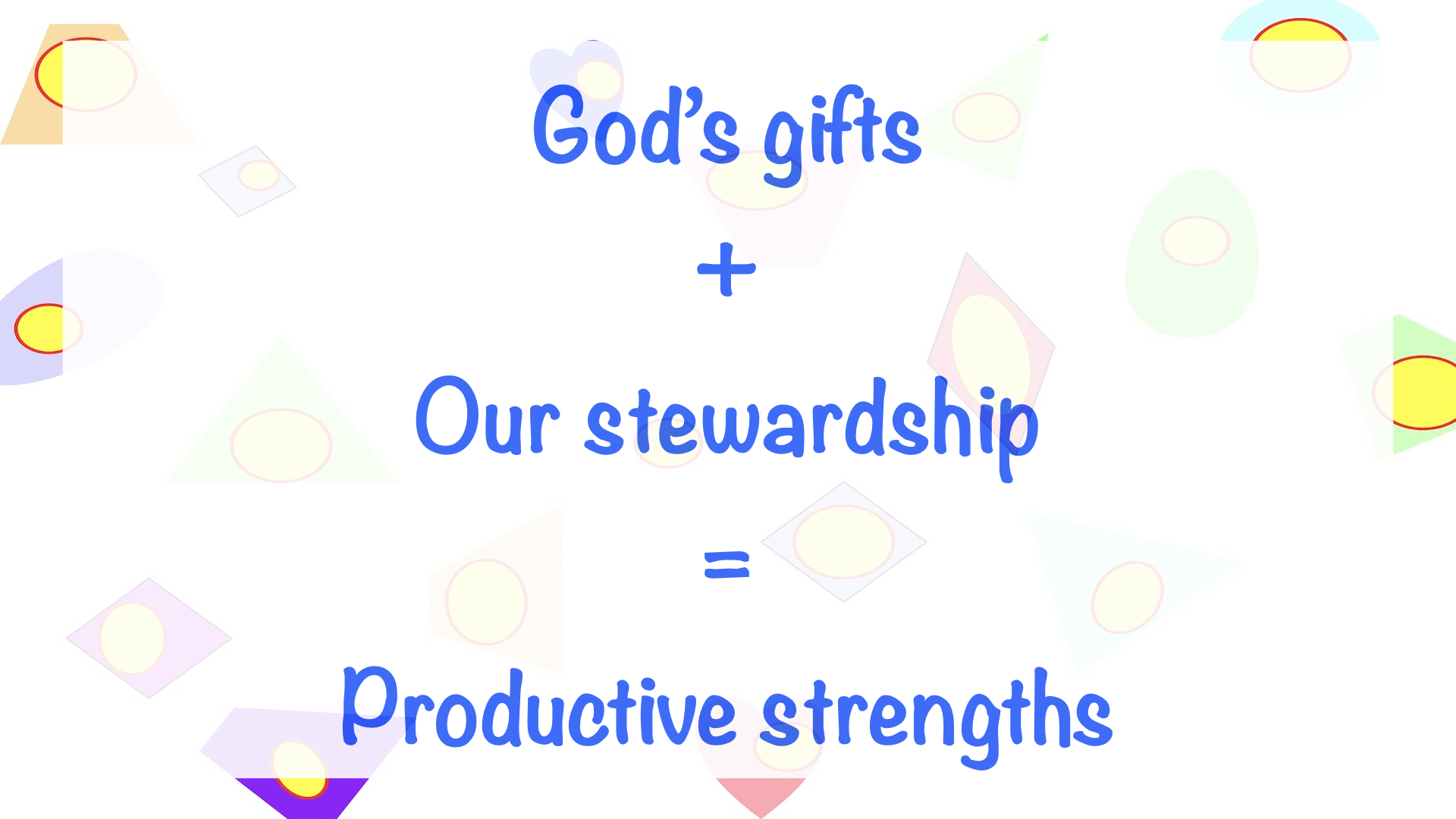
Finally, there is no fear when God asks me to give something to Him because I’m only giving back to Him what is already His. You and I are just stewards of what God has given us. When the disciples talked to the steward of the donkey, they assured him, “The Lord needs it and will send it back here shortly” (Mark 3:11). And the prophecy in Zechariah, God says, “Now I announce that I will restore twice as much to you” (Zechariah 9:12). Maybe not here on earth, but the rewards in Heaven will be incalculable for His faithful servants! 

Those who know Jesus as their Master can live as fearless stewards. 

We don’t fear the requests of our King, but we rejoice to allow Him access. We don’t fear the approach of our Judge, but we rejoice to stand before Him forgiven and rejoicing! 

If you’ve missed any of the other messages in this series, you can find them all here. 

►► Would you please prayerfully consider supporting this ministry? My Patreon supporters get behind-the-scenes access to exclusive materials. ◀︎◀︎