No Fear Of God’s Holy Mountain

Listen to the podcast of this post by clicking on the player below, and you can also subscribe on AppleSpotify, or Audible. Check out the video content in this post by clicking here. 
Looking at King David, we can see an imperfect picture of our perfect King Jesus. 

Let’s be honest: Coming into the king’s presence can be a fearful activity. Does he know something about you that you don’t know? Is he in a good mood? For the law-abiding citizen of Israel, coming before King David was without fear or punishment, but with a healthy respect of who he was. But with King David, we see a healthy, loving attitude that the people had. 

  • David and all Israel celebrated when the ark of the covenant of the Lord came to Jerusalem (2 Samuel 6:5). 
  • And the way David blessed all the people following this would have raised the level of esteem they had for him. 
  • God was pleased with David too: The Lord gave David victory wherever he went (8:6). 
  • David continued to do the right thing (8:15). 
  • At the end of David’s life the eyes of all Israel were on David to see who he would select to sit on his throne after him. 

(All of the Scriptures in this post may be viewed by clicking here.)

Psalm 99 appears to be one that was written during the reign of King David. This royal psalm looks at the limited reign of David to see a better picture of the throne room of King Jesus. 

The opening words tell us “the LORD reigns” (v. 1a). The word tremble can have two definitions. The first is to be perturbed or disquieted. This is addressed to the nations who don’t bow their knee to Yahweh, as a result they shake in fear. Second, this word tremble can also mean to be excited about coming before the King. 

King Jesus is called “great, exalted over all the nations” (not just Israel), and He is said to have a “great and awesome name.” 

He IS holy,” which means He is the undisputed standard of all that is right and wrong, and no one can question His ruling. The nations that don’t know the King as their King tremble and shake, but those who do know Him as their King praise His awesome name (Revelation 5:13). 

In many translations the word King is capitalized in v. 4, but we don’t know if this is referring to God or David. Since v. 2 refers to the “LORD in Zion,” that would appear to be a capital “K” King. But v. 4 mentions Jacob (not Zion), so I believe this is a lower case “k” referring to David. Let me restate verse 4 this way: “David is mighty, David loves justice—David has established equity; in Jacob David has done what is just and right.” 

David’s own prayers also bear out this interpretation (see Psalm 20:6-9; 21:1-7). This is what the royal psalms do: Point us to David to show us a better picture in Jesus. 

This is the end of stanza 1 which ends with this call to worship (v. 5). 

Verses 6-7 give us another example (prior to the era of the kings) of Moses, Aaron, and Samuel. These priests could call on God’s name and expect to receive an answer from Him. They lived obediently to all God spoke to them (v. 7b). Then v. 8 reminds us that God still speaks and forgives, but He is also the final Judge who will punish “misdeeds.” These verses clearly speak to Jesus who is both King and Priest before God’s throne. 

This is the end of stanza 2, which has a similar call to worship as stanza 1 (v. 9). 

I want you to also notice some places of worship: 
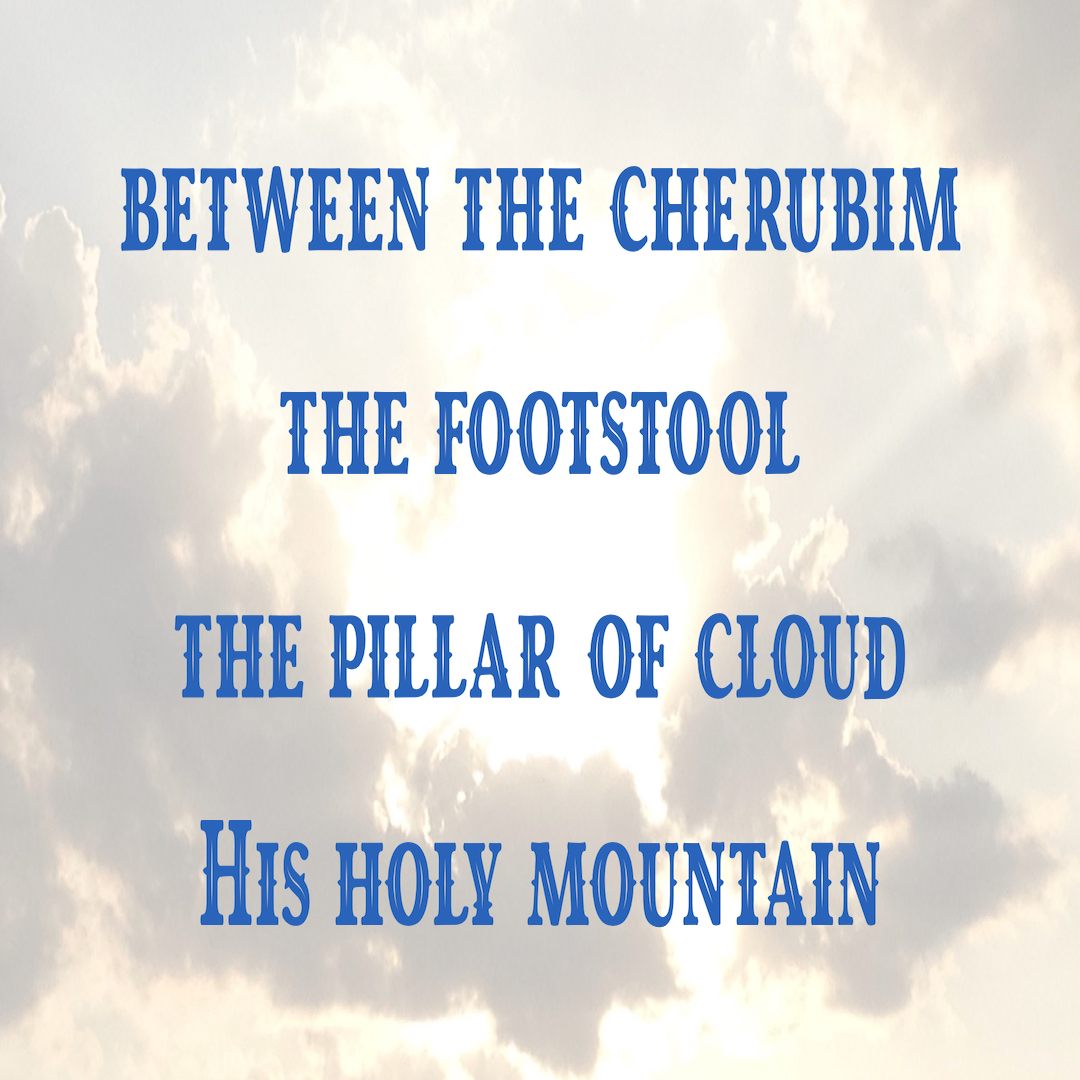
  • between the cherubim (v. 1)—God’s mercyseat. This is where sin was atoned every year under the old system of David’s era, but where Jesus has has presented the once-for-all atonement for all who will believe on Him. 
  • His footstool (v. 5)—another name for the ark of the covenant of the LORD (1 Chronicles 28:2). 
  • the pillar of cloud (v. 7)—the covering of God’s presence and the reminder of His protection. 
  • His holy mountain (v. 9)—see Hebrews 12:18-29. 

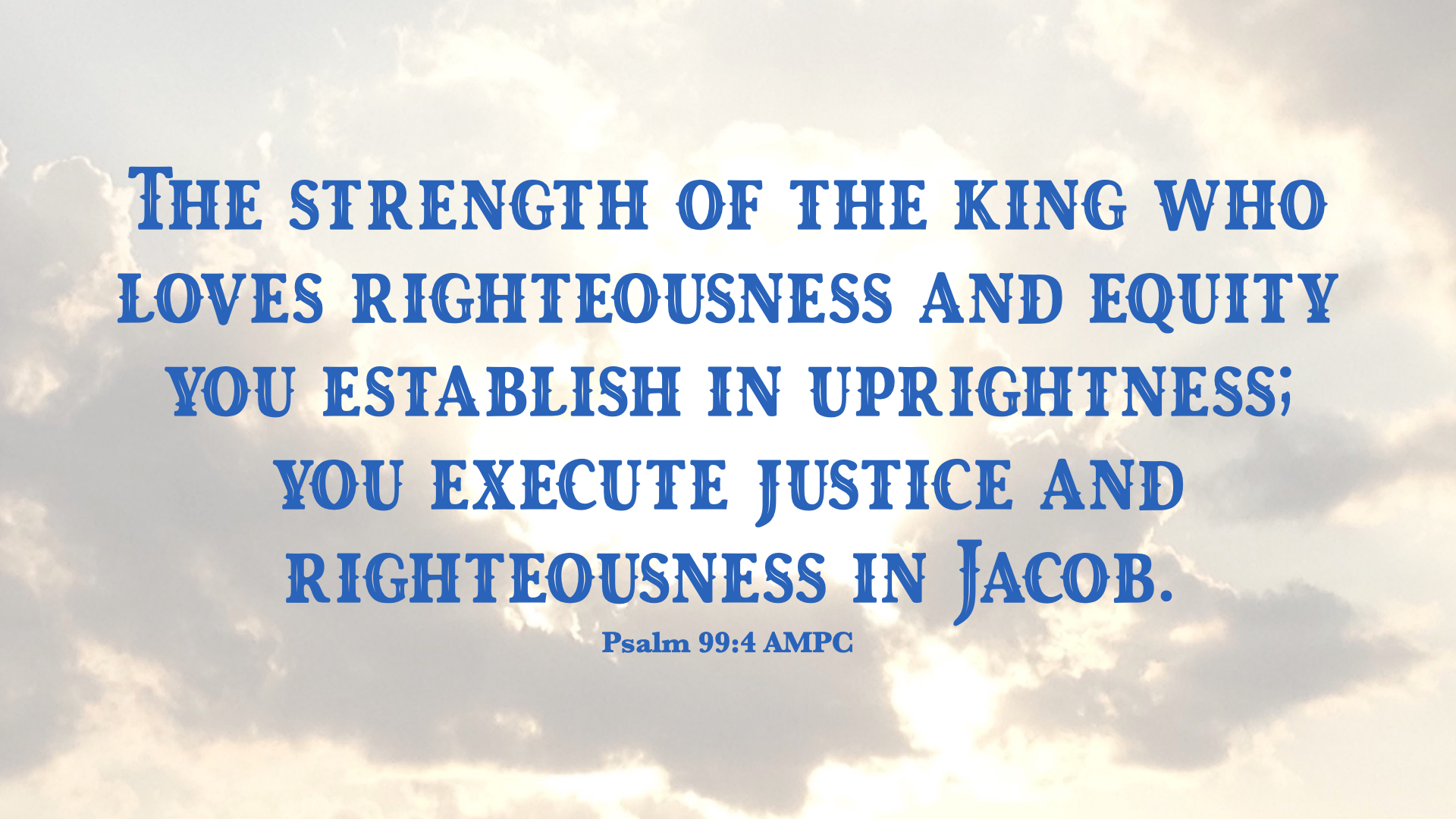
Remember Psalm 99:4 in the AMPC—The strength of the king who loves righteousness and equity You establish in uprightness; You execute justice and righteousness in Jacob (Israel). 

King Jesus is the perfect King of justice and righteousness (Isaiah 9:7; Revelation 5:12). 

One day every knee will bow at the footstool of God’s holy mountain. They will either bow in despair and shaking because they did not put their faith in Jesus, or they will bow in humble adoration for the atonement that King Jesus made for them. 

For those who don’t know Jesus—Away from Me, all you evildoers! There will be weeping there, and gnashing of teeth, when you see Abraham, Isaac and Jacob and all the prophets in the kingdom of God, but you yourselves thrown out. (Luke 13:27-28) 

For those who know King Jesus, there is no fear (Luke 12:4-5; 1 Corinthians 15:55-57)! 

Christians must live every day exalting and worship God, bowing gratefully at His footstool. This lifestyle of adoration of the great and awesome King is our testimony to a skeptical and searching world. 

If you’ve missed any of the other Royal Psalms we’ve discussed in this series, you can check them all out here. 

►► Would you please prayerfully consider supporting this ministry? My Patreon supporters get behind-the-scenes access to exclusive materials. ◀︎◀︎

An Eye For An Eye

Listen to the podcast of this post by clicking on the player below, and you can also subscribe on AppleSpotify, or Audible. 

We have to be very attentive when we hear anyone say something that they claim is a word from God. The first question we need to ask is, “Is that in the Bible?” If it is, then the next question is, “Is that statement being used in its proper context—does it conform with the whole counsel of God’s Word?” 

So here is statement #14 in our series—An eye for an eye, and a tooth for a tooth. Is that in the Bible? Yes.  

This first shows up in Exodus 21:24, and it is a part of the legal code God gave through Moses (Exodus 21:1). This code was entrusted to capable men (i.e. judges) in Exodus 18:19-22, 25. 

(Check out all of the Scriptures I reference in this post here.) 

This has been referred to as “the law of exact retribution.” Later on the Romans would name it lex talionis—the law of the tooth. This was to prevent one-upmanship or escalating retaliation, and it also applied to false witnesses who were trying to get someone else in trouble (Deuteronomy 19:15-21). 

By the time of Jesus, this legal maxim was so well known that when Jesus quoted it to His audience, everyone knew what it meant (Matthew 5:38). 

One of the most innate responses that we humans have to threats or to an attack is fight-or-flight. 

In this case, flight would be sweeping it under the run or pretending it didn’t happen. But it did happen, and there is a sense of justice in us that wants to see retribution. If this offense isn’t acknowledged and dealt with appropriately, the desire for retribution will allow unforgiveness to fester. This shows up in all sort of negative ways—physically and emotionally—and often there is a breaking point where the injured party lashes out. 

Fight would be taking the law into our own hands. I want everyone to know that I was wronged by you, and I want you to suffer more than you made me suffer. But the first time this law is given, God calls for precise compensation (Exodus 21:22-25). 

God’s means for carrying our the lex talionis today is exactly the same—a legal code administered by trained judges (Romans 13:1-4). 

This is the law of the land—the natural law—but Jesus calls on us to respond supernaturally. Not to be the judge or jury, but to remember that God perfectly judges and vindicates (Luke 8:17; Deuteronomy 32:35). 

Jesus continually calls us forego the natural reaction for the supernatural response. Notice the repeated pattern of, “You have heard that it was said” and then, “But I tell you…” in Matthew 5:21-22, 27-28, 31-32, 33-37, 43-44 and specifically vv. 38-42. 

If our eyes are on the one who injured us, our eyes are off of the only One who can vindicate and heal us (Romans 12:17-21). 

Natural people merely react out of innate instinct. Supernatural people are able to respond with Christlike love. 

Don’t give in to the merely natural reaction, but submit to the Holy Spirit who can help you respond supernaturally. 

Check out all of the other topics we have covered in our “Is that in the Bible?” series. 

►► Would you please prayerfully consider supporting this ministry? My Patreon supporters get behind-the-scenes access to exclusive materials. ◀︎◀︎
Links & Quotes

It’s easy to get along with those we like. But God calls on Christians to do the hard—but rewarding—work of getting along with everyone! Check out this full sermon about the strength in Christian unity.

I have lots of new content every week, which you can check out on my YouTube channel.

“Dad always said you could fall off the same ladder you climbed up.” —Hank Aaron

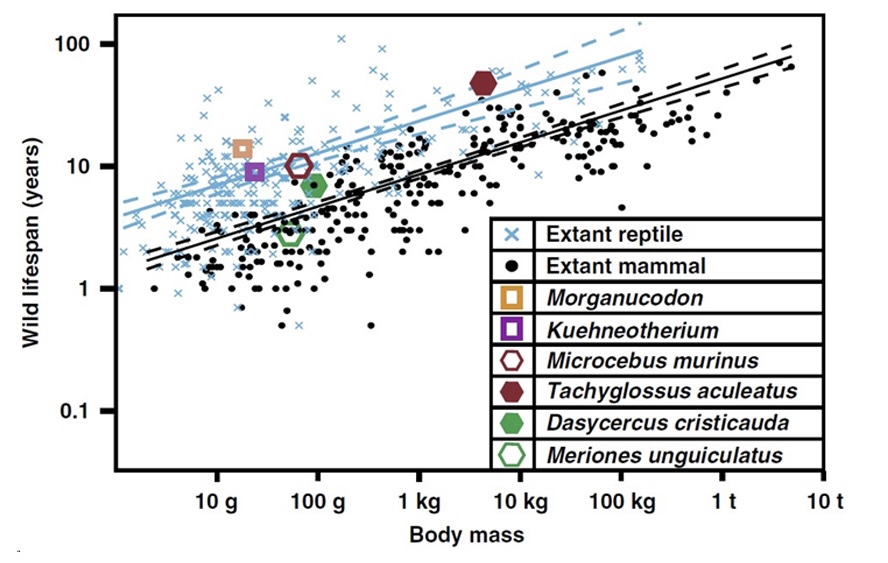
Paleontologists have noted that what Creationists would call pre-Flood mammals lived longer than similar mammals today. “This research should be of interest to Bible-believing Christians because, as chronicled in Genesis 5, humans in the pre-Flood world were experiencing much greater lifespans. Moreover, the advanced ages of the Genesis 5 patriarchs at the births of their sons strongly suggest delayed sexual maturation and possible delayed skeletal maturation, too. The Bible gives no hint that this amazing longevity was in any way supernatural.”

“If we leave our failure, we don’t learn from our failure. If we learn from our failure, we seldom have to leave because of our failure.” —John Maxwell 

Dr. Steve Nichols hosts a great podcast called 5 Minutes In Church History. In the episode this week, he talked about the church politics Jonathan Edwards had to confront when he first arrived in Stockbridge. It came to a head in a letter Edwards received: “All it did was go into, again, politics, accusing Edwards of mis-running the school, which wasn’t true, and deflecting the blame and the focus away from the Williams family. And now Edwards needs to vindicate himself. Well, all that to say, we think of these church history figures, and we see their portraits, we sometimes forget that they’re actually people, and they had to deal with challenges too.” These types of faultfinding accusations are what I address in my book When Sheep Bite.

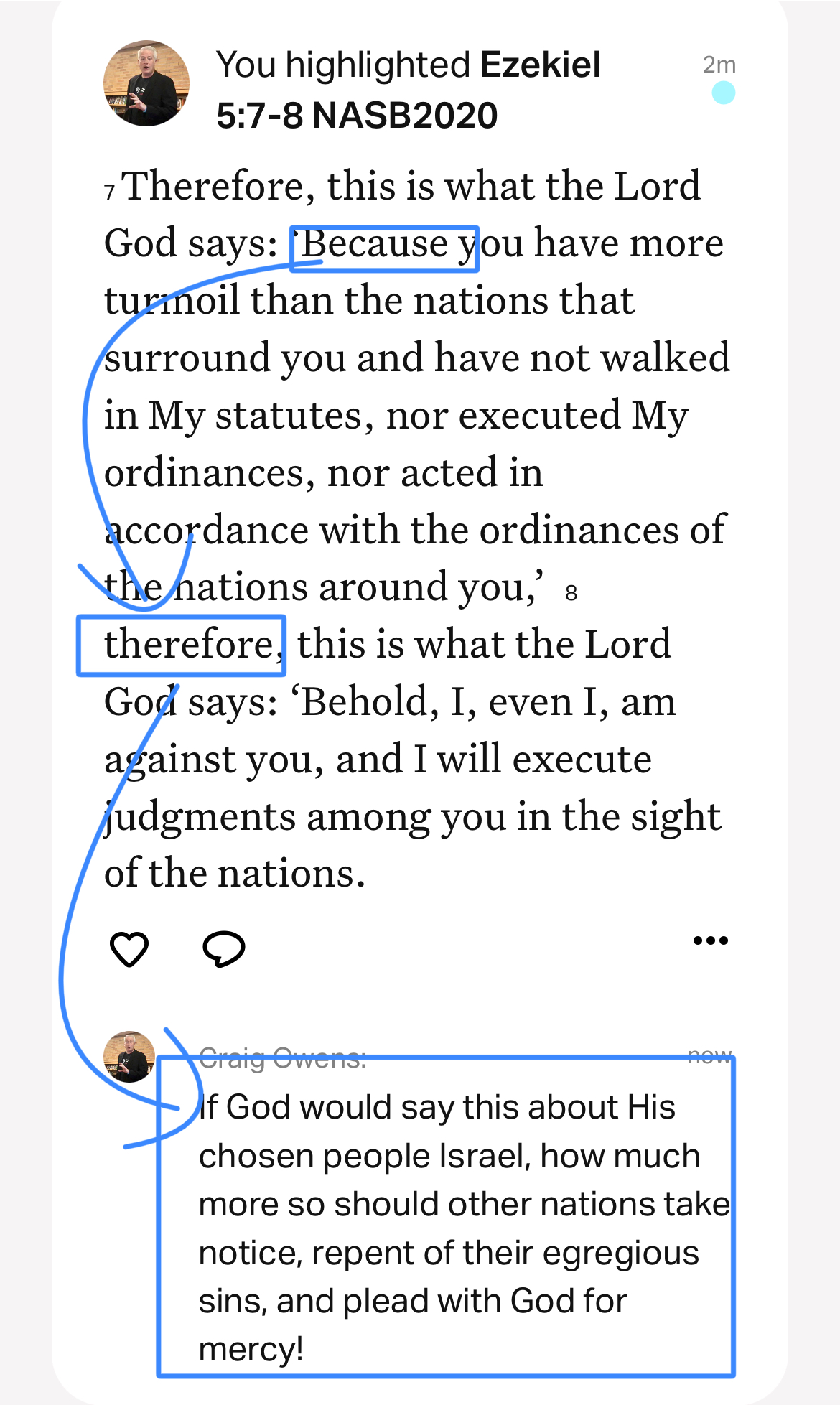
If God would say this (Ezekiel 5:7-9) about His chosen people Israel, how much more so should other nations take notice, repent of their egregious sins, and plead with God for mercy!

The Throne Of Shalom

Listen to the podcast of this post by clicking on the player below, and you can also subscribe on AppleSpotify, or Audible. 

The main point in Hebrew literature is usually found in the middle. In Psalm 122 that would be verse 5 where we see the keyword in this verse is thrones—“thrones for judgment” and “thrones of the house of David.” Before this, we have the call to go up to Jerusalem (the City of Peace) in the first four verses, and after this, we have overwhelming, saturating peace in the last four verses.

But I wonder: How do thrones—especially a throne of judgment—bring about peace? 

Remember that these are songs of ascent: we are called upward. I think “up” implicitly appears in verse 1—“I rejoiced with those who said to me, ‘Let us go UP to the house of the Lord,’—and “up” explicitly appears in verse 4—“That is where the tribes go UP, the tribes of the Lord, to praise the name of the Lord.” 

There is clearly a longing to go up to meet with God, but I also detect a note of uncertainty. Let me show you what I see. First of all, verse 3 in the New Living Translation says about Jerusalem that “its seamless walls cannot be breached.” And yet the walls were breached in 586 BC when Jerusalem fell to the Babylonians. So anyone singing this song of ascent after the time of exile would have known that the walls weren’t as secure as David hoped they would be. 

Second, verse 4 in the Contemporary English Version says that “every tribe of the Lord obeys Him.” And yet it was the disobedience of every tribe of the Lord that led to their defeat and then their 70-year exile. So, again, anyone singing this song of ascent after the time of exile would know about the punishment for disobedience. 

In an earlier Psalm, David asked God who could go up to the Holy City, and then he answered his own question like this—

The one whose walk is blameless, who does what is righteous, who speaks the truth from their heart; whose tongue utters no slander, who does no wrong to a neighbor, and casts no slur on others; who despises a vile person but honors those who fear the Lord; who keeps an oath even when it hurts, and does not change their mind; who lends money to the poor without interest; who does not accept a bribe against the innocent. (Psalm 15:1-5) 

That description also sounds a bit unachievable to me, because who has ever fulfilled all of the items on that list perfectly? 

So we get to verse 5 and read about the thrones. The word “throne” means the seat of honor, authority, and power. It represents the place where the final and unchallengeable word is spoken. There is a final day of judgment before God’s throne, which John records in Revelation 20:11-15. 

And yet, that day of judgment is not here yet. Jesus quoted the prophecy from Isaiah about Himself in His first sermon, but He purposely left off the last phrase about the day of judgment. He, instead, ended with the phrase where He had come to “proclaim the year of the Lord’s favor” (Isaiah 61:1-2; Luke 4:17-21). We see this thought again in John’s Gospel—

For God so loved the world that He gave His one and only Son, that whoever believes in Him shall not perish but have eternal life. For God did not send His Son into the world to condemn the world, but to save the world through Him. (John 3:16-17)

The reason why it’s so important that the “the throne of the house of David” is in the middle of Psalm 122 is because Jesus is the fulfillment of that—He is the final and eternal King to come from David’s line (see 2 Samuel 7:8-18; Matthew 1:1; Acts 2:25-36; Revelation 22:16)! 

If we try to earn our own way into the Eternal Jerusalem, we will find that the walls can be breached, our obedience is not consistent, and that we are unable to keep that full list in Psalm 15. As a result, we face a throne of judgment. 

But when we place our faith in what Jesus did for us on the Cross, where He paid the price for our sin, took away our unrighteousness, and gave us His righteousness in its place, then we will stand before the throne of shalom. 

In the second half of Psalm 122, the words we read are peace, secure, peace, security, brothers and friends, peace, prosperity. That word “peace” is the Hebrew word shalom, which means nothing lost, nothing missing. Jesus wants us to be in the Eternal Jerusalem with Him for ever and ever. 

Christ’s desire is that none should be separated from Him (see 2 Peter 3:9-14), so we could also say that shalom means no one lost, no one missing. We should want everyone—every tribe, nation, and people—to be with us in the Eternal Jerusalem forever!

I rejoiced with those who said to me, “Let us go UP to the house of Lord.” Let’s not go alone. Let’s bring as many people with us as we can to enjoy the eternal shalom of God’s Holy City! 

If you’ve missed any of the other messages in our look at the Psalms of Ascent, you can find them all here. 

►► Would you please prayerfully consider supporting this ministry? My Patreon supporters get behind-the-scenes access to exclusive materials. ◀︎◀︎

Judging The Right Way

Listen to the podcast of this post by clicking on the player below, and you can also subscribe on AppleSpotify, or Audible. 

I have probably heard this verse quoted more by non-Christians than any other verse: “Do not judge, or you too will be judged” (Matthew 7:1). 

Does Jesus mean that we can never point out to anyone else an area of concern? No, because Jesus Himself did this as well as nearly every epistle writer of the New Testament. What it does mean is that confrontation needs to be truly corrective and never condemning. 

Correcting means that I am never serving as the judge and jury. But it does mean that I can lovingly help someone before they have to stand before God on Judgment Day. Jesus said that if I am a mean, self-serving judge of others, I can expect to receive that same treatment (v. 2). 

Instead, I need to first recognize that what I may see in another person may only be apparent to me because I am afflicted with the same thing. So my first response when I see “a speck” in someone else’s eye is to ask the Holy Spirit to show me a possible “plank” in my own eye. Only after I have dealt with this through repentance and making appropriate changes, will I have the necessary empathy and gentleness to help my brother or sister deal with their own eye speck (vv. 3-4). 

Jesus said that trying to get someone else to repent of something that still exists in my own life is being a hypocrite. It’s playing a role that isn’t me. So Jesus says “first” deal with my own sin, “then” I may help a brother or sister (v. 5). 

Notice that I have been very careful to use the phrase “brother and sister.” I believe that Christians should deal with fellow Christians, but we shouldn’t try to bring correction to those who don’t come from the same biblical paradigm that we have. In legal terms, I may say that we have no standing, or that non-Christians are out of my jurisdiction. 

One final thought. I think I need to treat a concern that another person brings to me in a very similar fashion as I would treat an eye speck in someone else. Perhaps God sent them to me, so I need to ask the Holy Spirit to show me any “plank” that may be in my eye, even if it has been brought to my attention through a judgmental person. It is very God-honoring for me to give that person the benefit of the doubt by saying that they cared enough for my well-being that they would be willing to point something out to me. 

Correction is an important aspect of Christian maturity. But we need to make sure we do it in a Christlike way.

►► Would you please prayerfully consider supporting this ministry? My Patreon supporters get behind-the-scenes access to exclusive materials. ◀︎◀︎
Our Blessed Hope

Listen to the podcast of this post by clicking on the player below, and you can also subscribe on AppleSpotify, or Audible. 

As we wrap up our series looking at our foundational belief statements, I want to combine the last four statements together, not only because they all cover the same theme of end-times events, but also because these statements should give every Christian hope! 

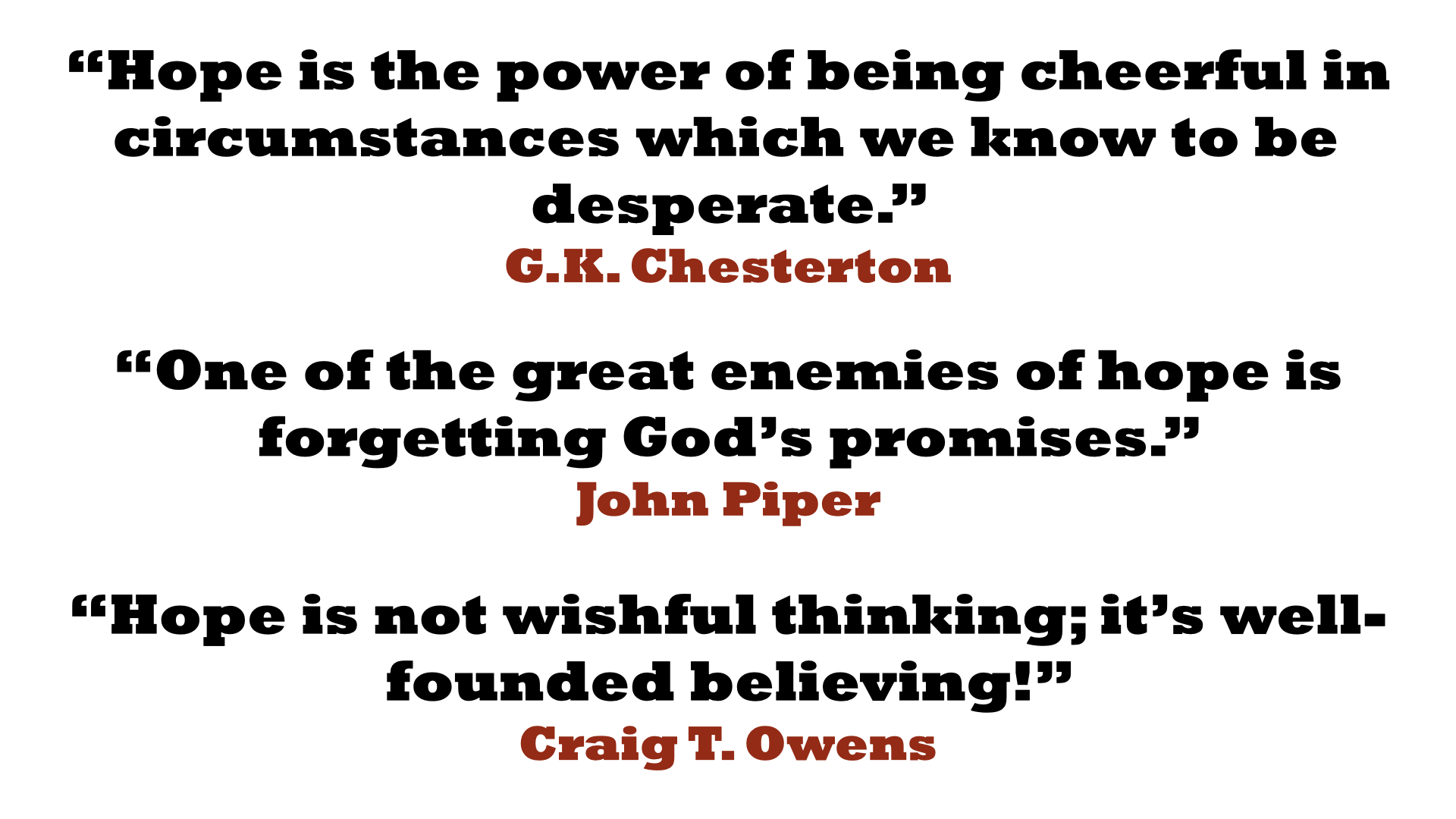
  • “Hope is the power of being cheerful in circumstances which we know to be desperate.” —G.K. Chesterton 
  • “One of the great enemies of hope is forgetting God’s promises.” —John Piper 
  • “Hope is not wishful thinking; it’s well-founded believing!” —Craig T. Owens 

Christians have a fantastic, unshakable, blessed hope on which we can stand not only secure but joyful! 

Foundational truth #13: “The resurrection of those who have fallen asleep in Christ and their translation together with those who are alive and remain unto the coming of the Lord is the imminent and blessed hope of the church.” 

This blessed hope in the future helps us live with joy today! Knowing that death has been defeated and Jesus will come back to take us home with Him should fuel us to say “no” to the temporary pleasures of sin, and live such godly lives that it turns others’ eyes to Jesus (Titus 2:11-14; 1 Corinthians 15:51-52; 1 Thessalonians 4:16-17). 

Foundational truth #14: “The second coming of Christ includes the rapture of the saints, which is our blessed hope, followed by the visible return of Christ with His saints to reign on earth for one thousand years.” 

Sometimes you will hear Christians talk about the “rapture” of the Church. Although this word itself isn’t in the Bible, the Greek word harpazo in 1 Thessalonians 4:17 means “catching up.” It also means “to eagerly claim for one’s self,” which reminds me that Jesus is thrilled to bring His Bride home to be with Him forever! After the Church has been caught up to Heaven, a period of tribulation will plague the earth, followed by Christ’s Second Coming and His millennial reign (Zechariah 14:4-5; Revelation 19:11-15; 20:1-10). 

Foundational truth #15: “There will be a final judgment in which the wicked dead will be raised and judged according to their works. Whosoever is not found written in the Book of Life, together with the devil and his angels, the beast and the false prophet, will be consigned to the everlasting punishment in the lake which burns with fire and brimstone, which is the second death.” 

Christians have no fear of the second (or final) death because our names are written in the Book of Life (Luke 12:4-6; Revelation 20:11-15). Not only is there judgment for the wicked, but there will be rewards for the righteous. 

Foundational truth #16: “In keeping with His promise we are looking forward to a new heaven and a new earth, where righteousness dwells” (2 Peter 3:13). Revelation 21-22 give us a small glimpse of our eternal home. 

In light of these truths, how should Christians live while still on earth? I think there are three ways we should live: 

  1. Live circumspectly
  2. Live on-mission
  3. Live unafraid

(see Ephesians 5:15; Matthew 28:18-20; Proverbs 24:11-12; Jude 1:20-25) 

With this blessed hope of the Second Coming of Jesus and our security in knowing we will remain with Him forever, let’s tell everyone we can how they too can know what it is to live with this hope in their heart. 

If you’ve missed any of the messages in our series exploring our foundational beliefs, you can access the full list by clicking here. 

►► Would you please prayerfully consider supporting this ministry? ◀︎◀︎

Really Bad News And Really, Really Good News

Listen to the podcast of this post by clicking on the player below, and you can also subscribe on AppleSpotify, or Audible. 

My cousin Dick Brogden wrote in his book Missionary God, Missionary Bible, “Since good news must often indeed rectify bad news, the gospel message is both warning and invitation.” This is so appropriate when reading the prophet Zephaniah: He wanted to share some really, really good news, but first, he must make us confront the really bad news. 

Zephaniah prophesied near the end of Judah’s decline toward exile. He saw the great revival in King Josiah’s day, and then watched his fellow Israelites once again turn their backs on God. If Jeremiah spoke to faithless Israelites, and Habakkuk spoke to faithful Israelites, then Zephaniah spoke to fake Israelites—those who appeared to be religious, but whose hearts were not actually devoted to God. 

This whole book looks backward in history and forward to soon-to-be-fulfilled prophecy. Most of the time when God speaks, He is asking us to look forward to what is unavoidably coming. Zephaniah then takes God’s words as a call for us to apply them to our lives today. 

In the first chapter, God’s forward-look is a warning of the judgment that most assuredly is coming. Built into His warning are two backward looks to the law of Deuteronomy (vv. 13 and 15 look back to Deuteronomy 28:29-30). 

Zephaniah uses this warning as a wake-up call for us, telling us to “seek the Lord” and “seek righteousness, seek humility” before the day of God’s judgment comes (2:1-3). 

The fact that God’s judgment would fall on godless people shouldn’t surprise anyone (2:4-15), but when Zephaniah says, “Woe to the city of oppressors” (3:1), he’s talking to the people of Judah! Zephaniah addresses his warning to the fake Israelites, the hypocritical people—those claiming God’s name but not God’s nature. 

The apostle Paul sounds a similar warning to New Testament Christians: 

Now these things occurred as examples to keep us from setting our hearts on evil things as they did. Do not be idolaters, as some of them were; as it is written: ‘The people sat down to eat and drink and got up to indulge in revelry.’ We should not commit sexual immorality, as some of them did—and in one day twenty-three thousand of them died. We should not test Christ, as some of them did—and were killed by snakes. And do not grumble, as some of them did—and were killed by the destroying angel. These things happened to them as examples and were written down as warnings for us, on whom the culmination of the ages has come. So, if you think you are standing firm, be careful that you don’t fall! (1 Corinthians 10:6-14) 

The really bad news is ALL of us have sinned and we have ALL fallen short of God’s righteous standard. As a result, ALL of us would stand guilty before God on Judgment Day. 

But the really, really good news is that Jesus allowed our penalty to fall on Him instead! So if we put our faith in Jesus, God’s judgment will be appeased in Christ instead of on us! 

Christians, then, take the name of Jesus Christ, but we need to make sure we also take His nature.  Fake—hypocritical—Christians are those who are “Christian” in name only. 

I like the way Eugene Peterson paraphrased part of the 1 Corinthians passage above—These are all warning markers—danger!—in our history books, written down so that we don’t repeat their mistakes. Our positions in the story are parallel—they at the beginning, we at the end—and we are just as capable of messing it up as they were. Don’t be so naive and self-confident. You’re not exempt. You could fall flat on your face as easily as anyone else. Forget about self-confidence; it’s useless. Cultivate God-confidence. (The Message) 

As we read those words, “So if you think you are standing firm, be careful that you don’t fall,” I’d like to suggest four action steps:

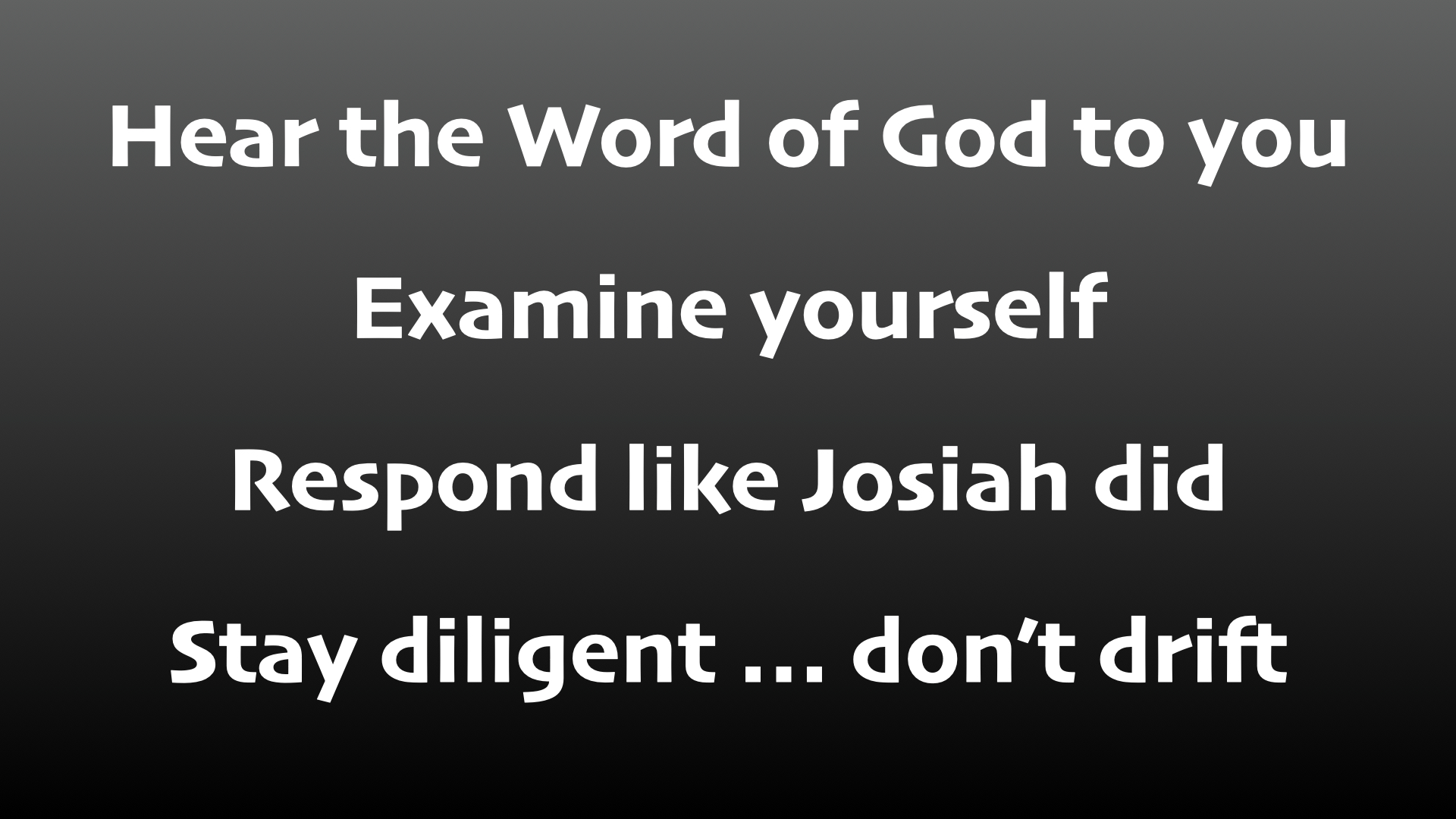
  1. Hear the Word of God to YOU—not your neighbor—but you personally. 
  2. After you hear the Word, examine yourself to see if you are truly living in God’s nature and not just using His name. 
  3. Respond like King Josiah did when he heard God’s Word: He made a public commitment “to follow the Lord and keep His commands, statutes and decrees with ALL his heart and ALL his soul” (2 Kings 23:3). 
  4. Stay diligent—Hebrews 2:1 tells us, “We must pay the most careful attention, therefore, to what we have heard, so that we do not drift away.” 

Don’t delay—the Day of the Lord is closer today than it’s ever been before! Pay attention to the really bad news that Judgment Day is coming, but then make certain you are standing in the nature of Jesus Christ on that day so that God’s judgment will pass over you. 

If you’ve missed any of the messages in our series looking at the major lessons in the minor prophets, you can find the full list of messages by clicking here. 

►► Would you please prayerfully consider supporting this ministry? ◀︎◀︎

Watch Your Horn

Listen to the podcast of this post by clicking on the player below, and you can also subscribe on AppleSpotify, or Audible. 

During my freshman year of college, I was once the butt of a good-natured joke. I didn’t mind it so much except for the fact that there were several people in the room that didn’t know me, so they would have walked away thinking I was a jerk. As I vented to my roommate about this, his counsel was simply, “Just forgive ‘em, man!” 

Yeah, right … easier said than done! I didn’t want forgiveness—I wanted payback! Ever been there? 

The Hebrew word Selah is a call for us to pause and calmly think about what’s going on in our heart and mind. For instance, in those moments where we may want someone to get justice for the way they hurt us. 

In Psalm 75, God is literally the One who speaks the Selah. In fact, God speaks twice in this short psalm: once in verses 2-5 and again in verse 10 to close this psalm. Putting together His two speeches, God says, “I choose the right time, I judge perfectly, I hold everything firm. Selah. I will cut off the horns of all the wicked, but the horns of the righteous will be lifted up.” 

What is meant by “the horn of the wicked” or “the horn of the righteous”? Literally, it means a show of strength, but it can be used in both a negative or a positive sense. 

In the negative sense it means:

  • boasting of your own power 
  • standing in defiant opposition to all other powers 
  • proudly trumpeting your own strength
  • the English words “arrogant” and “boast” in verse 5 are both the same word Hebrew word halal. This means to shine a light on yourself, literally to say “Hallelujah!” to or about yourself! 

This pride is so dangerous! As C.S. Lewis said, “Pride is ruthless, sleepless, unsmiling concentration on the self.”

In the positive sense, a horn means the righteous person who shines a light on God, who concentrates on Him, who knows that anything good they have comes from Him. 

The wicked lift up their own horn (literally lift up themselves), while the righteous bow their horn (literally lift up God). What does God do? God opposes the proud but shows favor to the humble (1 Peter 5:5). 

This psalm essentially has God giving two warnings:

  1. To the wicked He says, “Do not lift up your horn against Me.” 
  2. To the righteous He says, “Submit to Me and do not try to rush My timing.” 

Notice that Asaph says “a cup of foaming wine” is coming to the wicked (v. 8). This symbolizes God’s judgment (Revelation 19:11-16). This was to be our just punishment too, but Jesus took the cup of God’s wrath Himself, and in its place gave us the cup of God’s blessing (Isaiah 51:22; Matthew 26:39-42; 1 Corinthians 10:16). This switching of the cups is what we celebrate every time we drink the cup of Communion. 

God was patient with us and He is still being patient with the boastful wicked, which is why He warns them—and us—to Selah. We were rescued from judgment and now God calls upon us to tell others about Him, so that they may also be reconciled to Him through Jesus Christ (Proverbs 24:11-12; 2 Peter 3:9). 

Here’s the call to Christians: Watch your horn! Don’t shine a light on yourself, but shine a light on Jesus Christ and remain on-mission to rescue those who persist in blowing their own horn. 

If you’ve missed any of the other messages in our Selah series, you can find the full list by clicking here. 

►► Would you please prayerfully consider supporting this ministry? ◀︎◀︎

What We Can Know

… we know … (1 John 3:16, 19, 24; 4:2, 6, 13; 5:2, 13, 19, 20).

God clearly reveals Himself to us so that it is not a mystery of how to abide with Him. 

The word John uses for “know” in the Greek is ginosko. This is a knowledge through personal, firsthand experience; not knowledge someone told us about secondhand. 

God reveals Himself in Creation, in His law, in the rituals of worship, in our conscience, and in the voice of the prophets. Ultimately—and most unmistakably of all—God reveals Himself in Jesus (John 14:9). 

So here are 8 things we can now know…

  1. We know true love because of the sacrifice of Jesus (3:16; 4:7-10).
  2. We know we have God’s love in us by the way we treat others (3:17-19; 4:11; 4:20-21).
  3. We know our hearts our confident by the inward witness of the Holy Spirit Who assures us that we abide in God and He in us (3:20-24).
  4. We know how to discern deceptive spirits (4:1-6).
  5. We know what it means to be confident on Judgment Day (4:12-19).
  6. We know that loving others fulfills God’s commands (5:1-13).
  7. We know God hears our prayers (5:14-17).
  8. We know that we can be victorious over sin (5:18-21).

WE KNOW!

No doubts, no ambiguity. It’s crystal clear, pure knowledge through Him Who loves us!  

Thursdays With Spurgeon—You Cannot Hide Your Heart From God

This is a weekly series with things I’m reading and pondering from Charles Spurgeon. You can read the original seed thought here, or type “Thursdays With Spurgeon” in the search box to read more entries.

You Cannot Hide Your Heart From God

Hell and destruction are before the Lord: how much more then the hearts of the children of men? (Proverbs 15:11 KJV) 

     God knows the burial places of all His people. He notes as well the resting place of the man who is buried tombless and alone as the man over home a mighty mausoleum has been raised. He saw the traveler who fell in the barren desert, whose body became the prey of vultures and whose bones were bleach in the sun. He saw the mariner, who was wrecked far out at sea and over whose corpse no dirge was ever wailed, except the howling of the winds and the murmuring of the wild waves. God knows the thousands who have perished in battle, unnumbered and unnoticed; the many who have died alone amid dreary forests, frozen seas, and devouring snowstorms; all these and the places of their sepulcher. God has marked that silent grotto within the sea, where pearls lie deep, where now the shipwrecked one is sleeping, as the death place of one of His redeemed. …

     Yes, hell, horrible as it is and veiled in many clouds and covered over with darkness, is naked before the vision of the Most High. There is the grand fact stated: “Hell and destruction are before the Lord.” After this the inference seems to be easy: “How much more, then, the hearts of the children of men?” … 

     God who sees death and hell sees our hearts, for they are far less extensive. … Scarcely have we time enough to tell the story before it comes to its end. Surely, then, God may easily understand the history of a man, when He knows the history of the monarchies of death and hell. [see Psalm 44:21; Jeremiah 23:24; Revelation 2:23] … 

     God does not judge by the appearance of a man’s great heart, or the outside appearance of a good heart. But He puts it in the scales and weighs it; puts His own Word in one scale and the heart in the other. He knows the exact weight. He knows whether we have grace in the heart, which makes us good weight, or only presence in the heart, which makes us weigh light when put into the scale. He searches the heart in every possible way. …

     Oh, you may endeavor as much as you can to hide your faults from God. But beyond a doubt, He will discover you.  

From God, The All-Seeing One

When—not if—God looks at your heart, what will He find? 

Yes, we should pray—Search me, O God, show me anything that is offensive to You [Psalm 139:23-24]—but then we must repent and ask forgiveness when the offense is revealed. No excuses, no covering up!