


Listen to the podcast of this post by clicking on the player below, and you can also subscribe on Apple, Spotify, or Audible. Check out the video content in this post by clicking here.
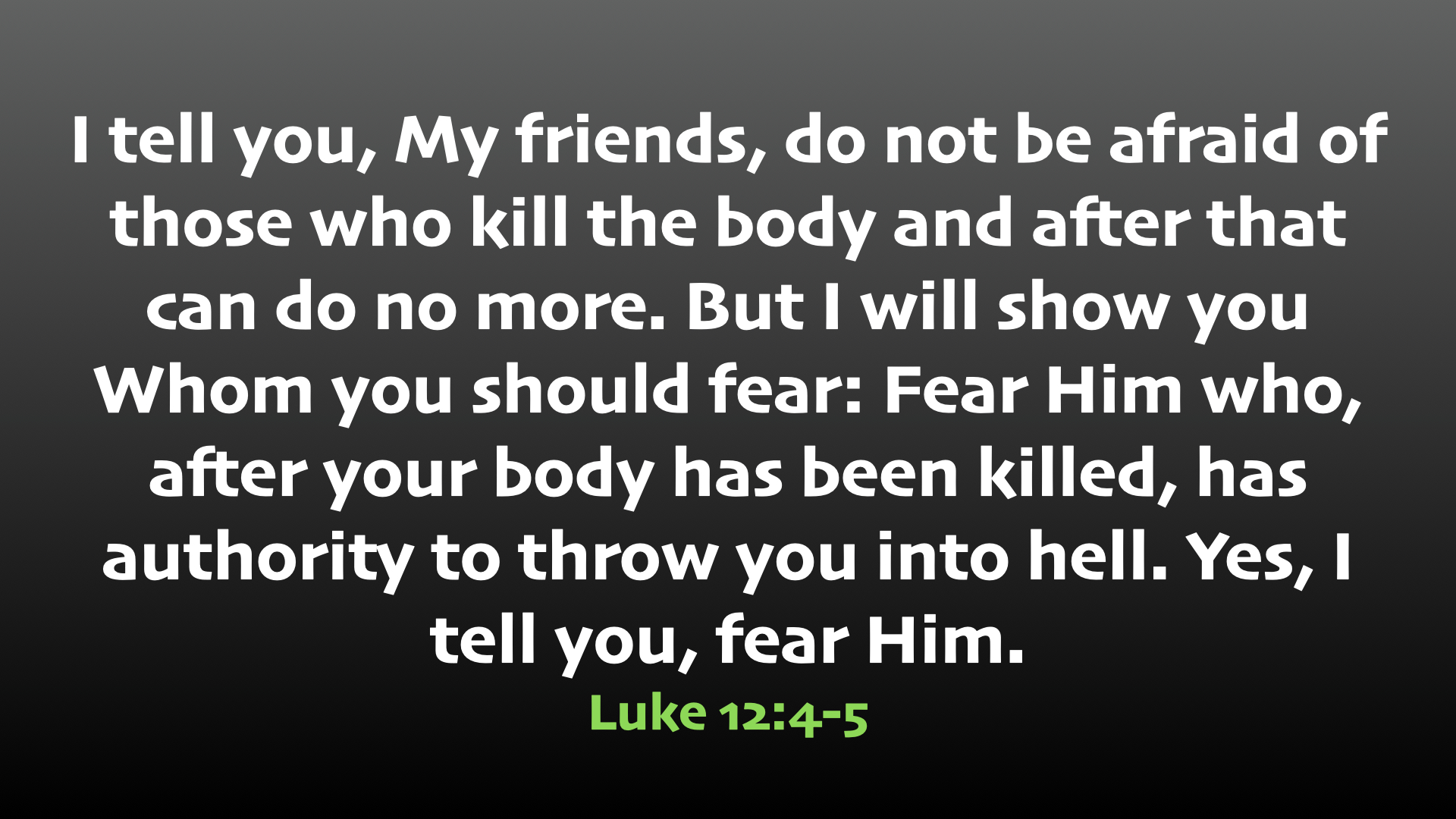 I’m going to spoil some of the surprise right up front. We’re going to look at two questions about death, and the answer to the question, “Is that in the Bible?” is “No” for both questions.
So the question we are really going to have to wrestle with is: Is it unbiblical—that is the Bible says it is wrong—or is it non-bibilcal—the Bible doesn’t tell us explicitly one way or the other.
Persisting to do unbiblical things is a sin because we are trying to point out why God is wrong and why our opinion is right.
But there is also a danger in pursuing non-biblical things, when we try to give our non-biblical opinion or preference biblical weight, and then look down on anyone who doesn’t believe or act like we do. The Bible does tell us to be peacemakers (Romans 14:13-21).
(See all the Scriptures in this post by clicking here.)
Statement #17—Cremating a loved one exempts them from heaven. Is that in the Bible? No.
The preferred method in the Old Testament appears to be burial. Sometimes in the ground, but more typically in a cave or man-made crypt. There were exceptions. For instance, the bodies of Saul and Jonathan were cremated (1 Samuel 31:11-13), and King Jehoram could have been cremated, but certainly he wasn’t interred the same way that his father and grandfather were (2 Chronicles 21:1, 4-6, 18-20).
In the New Testament era there was an end-of-life process the Greeks adopted called ossilegium. The Greeks frequently anointed the body with oil and wine and burned it until just the bones were left. The Jews wrapped the dead body in burial shroud and anointed it with spices—as with Lazarus (John 11:38-44) and Jesus (John 19:38-41). About a year after death, the bones would be collected and placed in an ossuary. Most often, multiple family members’ bones would share the same ossuary.
Statement #18—Suicide is an unforgivable sin. Is that in the Bible? No.
We don’t see suicide a lot in Scripture:
- Saul died by his own sword—1 Samuel 31:4
- Zimri died by self-immolation—1 Kings 16:18
- Ahithophel and Judas both hanged themselves—2 Samuel 17:23; Matthew 27:5
But no where does Scripture speak to this form of death as being a reason to exclude that person from Heaven. These deaths do seem like last-ditch, hopeless acts. Because they are the very last act, it seems like these people have utterly rejected God. It has been a misconception for a long time that the way you die determines your eternal home. Consider a scene in Hamlet by William Shakespeare. Hamlet will not kill Claudius while he’s praying and send him to heaven—
 Here are the truths we see in Scripture:
- We are created in God’s image and given a body—Genesis 1:26-27; 2:7.
- Yet our body is called a temporary tent—2 Corinthians 5:1-3.
- We will be raised either to eternal life or a second and eternal death—Luke 12:4-5; 1 Corinthians 15:42-54, 20-21; Revelation 20:11-15.
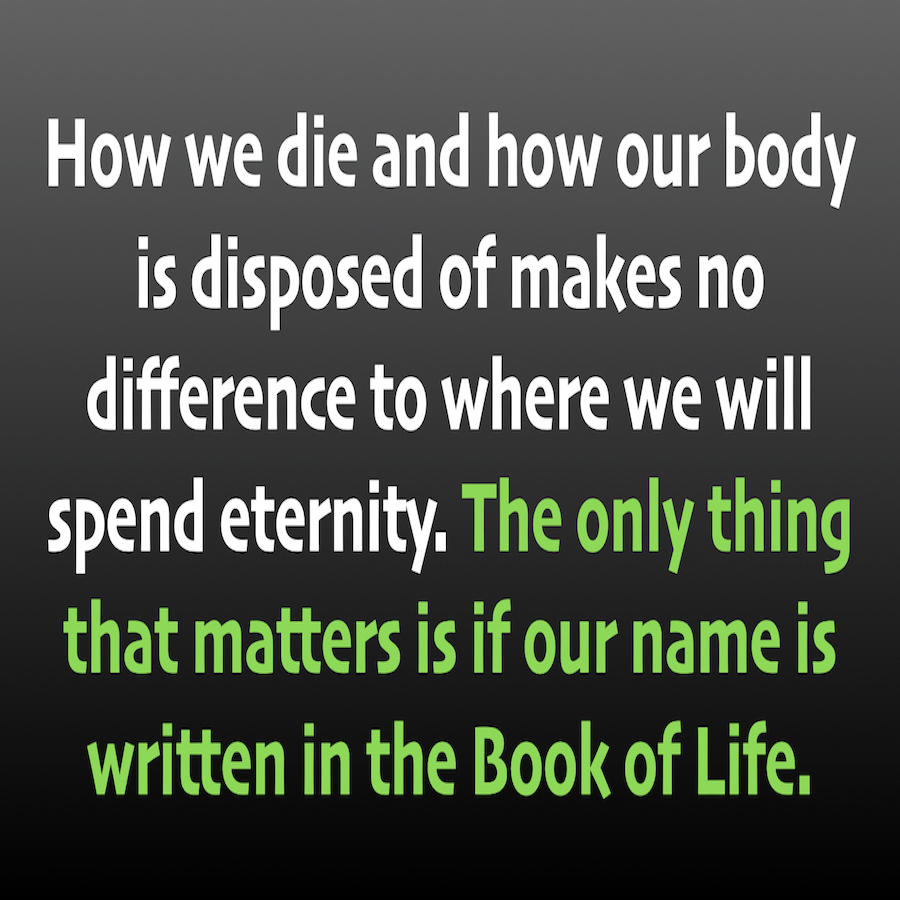
How we die and how our body is disposed of makes no difference to where we will spend eternity. The only thing that matters is if our name is written in the Book of Life. Our name is written there only if we are covered by the blood of Jesus (Hebrews 10:10, 17-22).
Check out more of the questions we have covered in our Is That In The Bible? series by clicking here.
►► Would you please prayerfully consider supporting this ministry? My Patreon supporters get behind-the-scenes access to exclusive materials. ◀︎◀︎


 Craig T. Owens