Listen to the podcast of this post by clicking on the player below, and you can also subscribe on Apple, Spotify, or Audible. Check out the video content in this post by clicking here.
One of the most difficult—but rewarding—decisions a leader will ever make is to honestly confront themselves on their part in a relationship or organizational problem.
Check out the full conversation Greg and I had on the Craig and Greg Show episode called Growth from the Hard Road. And you may also want to check out a whole series of messages I shared in the series Thankful in the Night.
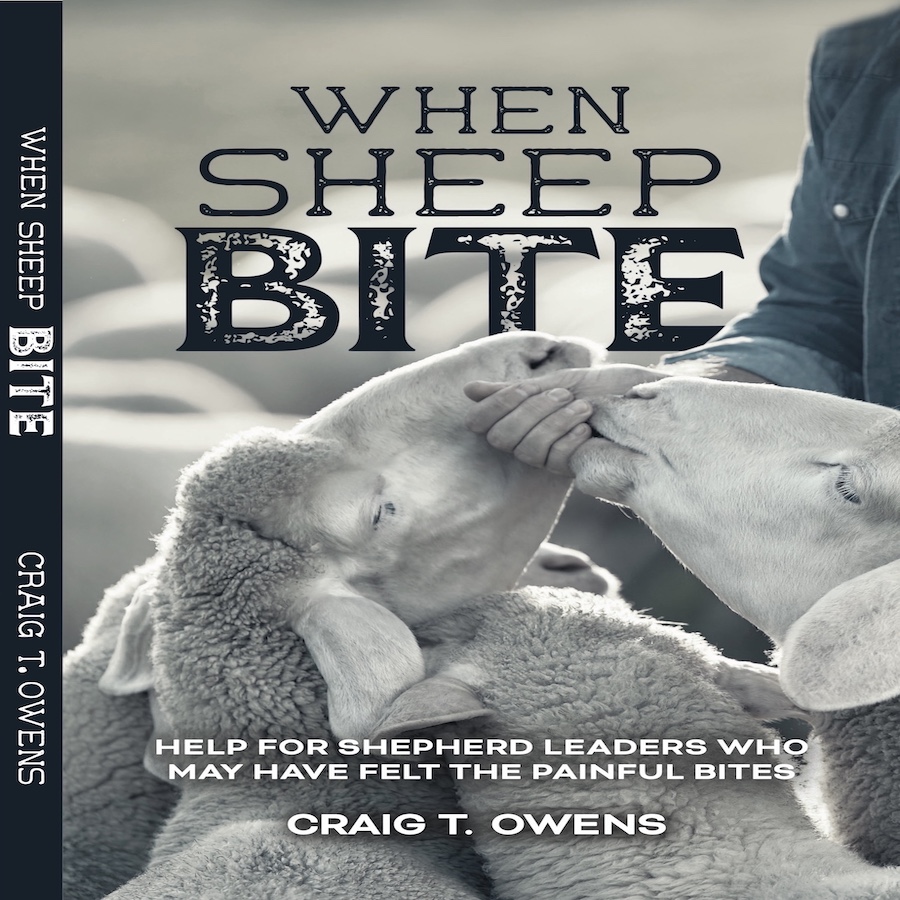
Get more information on my book When Sheep Bite by clicking here.
Listen to the podcast of this post by clicking on the player below, and you can also subscribe on Apple, Spotify, or Audible.
Remember your leaders… (Hebrews 13:7).
As the writer of Hebrews closes his epistle, he speaks to the saints about how they should interact with their leaders (Hebrews 13:7-21). He concludes this section by saying their confidence in their leaders brings joy to their leaders.
But I would like to flip the script on this to describe how leaders are supposed to live in a way that makes it a joy for people to follow their leadership.
So, leaders, let’s make sure we are…
…speaking the Word of God, not any kinds of “strange teachings” (vv. 7, 9).
…living a life worthy of imitation. This requires a consistent and steadfast example of Christ-like living (vv. 7-8).
…strengthening people with grace, not man-made strategies (v. 9).
…not giving ourselves special privileges just because we are in leadership positions (v. 10).
…not concerned with public perceptions while we stand for Jesus (vv. 11-13).
…keeping in mind that our reward is in Heaven, so we don’t look for human accolades here but in “the city that is to come” (v. 14).
…setting the example in hospitality (v. 16).
…leading with the integrity and gentleness that makes it easy for saints to have confidence in our leadership (v. 17a).
…serving with sober joy (v. 17b).
…praying for others to be empowered “to live honorably” and with a clear conscience (vv. 18-19).
A mark of a godly leader is one who makes it desirable for others to follow Jesus.
Jesus is “that great Shepherd of the sheep” (v. 20). We are merely under-shepherds of small flocks, but we have been appointed to this pasture by Him.
He will equip us “with everything good for doing His will” (v. 21a), which means we don’t have to attempt to equip ourselves. Instead, we can operate in His empowerment.
He will also work in us “what is pleasing to Him” (v. 21b). We are not trying to please people, but we should want to please the One to Whom we must give an account.
All “glory for ever and ever” goes to Him! We are not serving as His under-shepherds so that we can be recognized, but so people can draw closer to Him. We shepherd people to make Jesus known.
If we will keep these things in mind, we are free to serve. Leaders who are secure—who are humbly confident in their calling—are leaders who are easy to follow.
Let’s pray: Holy Spirit, help me to lead in a way that allows others to see Jesus because of my lifestyle. I want to be an example that helps others draw ever closer to Him. Amen!
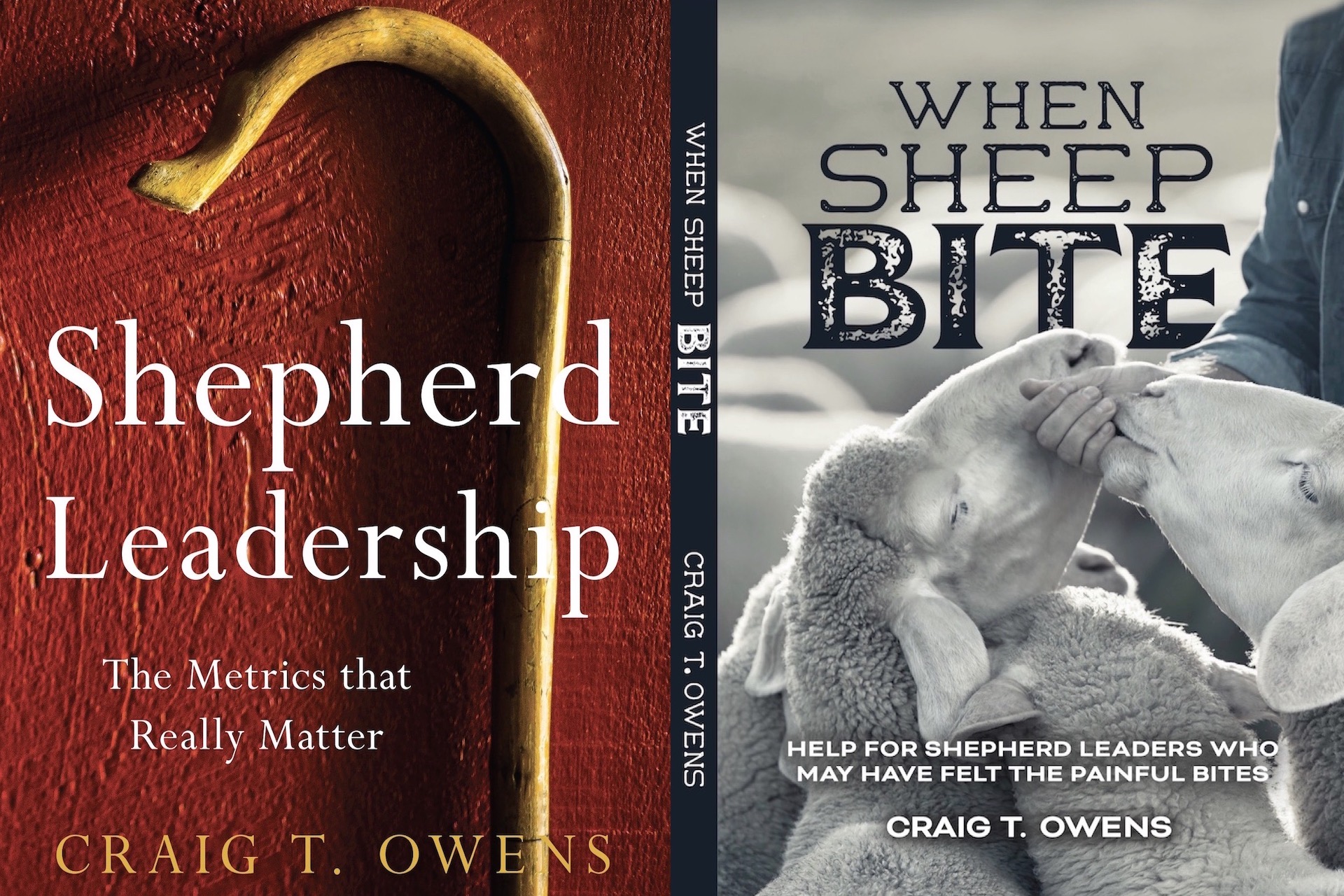
This is part 88 in my series on godly leadership. You can check out all of my posts in this series by clicking here. And you may also want to check out my books for church leaders—Shepherd Leadership and When Sheep Bite.
Sometimes leaders will have to part ways with a staff member. The way this is done can either bring resolution or it can create lingering problems. Check out this clip from our conversation on combatting toxicity in the workplace.
I thoroughly enjoyed this commentary from John Piper on the power of silence in the face of critics and revilers. Pastor John noted, “Both the teachings and the sufferings of Jesus are meant to teach us how to respond when we are treated badly, unjustly. We are to glorify God by finding in Him the reward that satisfies our heart deeply enough that we don’t need to return evil for evil.” I really leaned into this supernatural response to critics in my book When Sheep Bite.
“To preach Christianity meant primarily to preach the Resurrection. … The Resurrection is the central theme in every Christian sermon reported in the Acts. The Resurrection, and its consequences, were the ‘gospel’ or good news which the Christians brought: what we call the ‘gospels’, the narratives of Our Lord’s life and death, were composed later for the benefit of those who had already accepted the gospel. They were in no sense the basis of Christianity: they were written for those already converted. The miracle of the Resurrection, and the theology of that miracle, comes first: the biography comes later as a comment on it.” —C.S. Lewis, Miracles
“We all know that exercise makes us feel better, but most of us have no idea why. We assume it’s because we’re burning off stress or reducing muscle tension or boosting endorphins, and we leave it at that. But the real reason we feel so good when we get our blood pumping is that it makes the brain function at its best, and in my view, this benefit of physical activity is far more important—and fascinating—than what it does for the body. Building muscles and conditioning the heart and lungs are essentially side effects. I often tell my patients that the point of exercise is to build and condition the brain.” —Dr. John Ratey
“When it comes to leadership, attitude becomes even more important. You need to see possibilities when others don’t, encourage people when they are feeling defeated, and demonstrate commitment when others want to quit.” —John Maxwell
J. Warner Wallace not only makes the case that original accounts in the Gospels haven’t been changed over time, but he also shows how the corroborating sources affirm the original account—
After all, who is Apollos? Who is Paul? We are only God’s servants through whom you believed the Good News. Each of us did the work the Lord gave us. (1 Corinthians 3:5 NLT)
The most well-known evangelist is only God’s servant, and the most obscure pastor in the smallest of communities is only God’s servant.
It’s not important who does the planting, or who does the watering. What’s important is that God makes the seed grow. (1 Corinthians 3:7 NLT)
God‘s rewards are not for how big I did my ministry, but for how faithfully I did my ministry.
The one who plants and the one who waters work together with the same purpose. And both will be rewarded for their own hard work.(1 Corinthians 3:8 NLT)
The subtitle of my book Shepherd Leadership is “The metrics that really matter.” The whole third section of my book When Sheep Bite is about remaining faithful to the field where God has called you.
Your faithfulness to God’s call is what matters. God sees you, God will sustain you, and God will reward your faithfulness!
Listen to the podcast of this post by clicking on the player below, and you can also subscribe on Apple, Spotify, or Audible. Check out the video content in this post by clicking here.
When some sort of chemical or toxin is spilled in the environment it doesn’t just stay put, it spreads, corrupting everything around it. The same principle is true in our organizations—toxic behaviors that are allowed to fester will spread until they consume your entire team. So put on your hazmat suit and join Greg and me as we address common toxic behaviors and offer strategies on how to root them out before they can take hold.
[0:00] Introduction
[1:00] A quick list of some toxic behaviors leaders will have to address.
[3:09] Let’s think about the analogy of our organizations as a human body that’s nursing an injury.
[5:50] How should leaders treat toxicity in their organizations?
[9:38] Greg wants to know how I have addressed toxic teammates.
[11:20] Greg shares how moving the problem instead of dealing with the problem actually multiplies the problem.
[15:17] At some point leaders might have to admit that a toxic teammate isn’t a good fit for the organization. Now what do we do?
[17:42] There was an important part of my book When Sheep Bite that Greg helped me to see more clearly.
[18:54] Being too quick to deal with problems is just as dangerous as being too slow to deal with it.
[25:28] It’s easy to get swayed by your emotions when dealing with these toxic topics, but an outside coach isn’t emotionally invested like you are, so they can give you a much more objective viewpoint.
[27:00] The behavior you accept will determine the culture of your organization.
Listen to the podcast of this post by clicking on the player below, and you can also subscribe on Apple, Spotify, or Audible. Check out the video content in this post by clicking here.
There is a phrase the apostle Paul uses frequently: “in service to God.” Let me give you one example from Romans 15:17—“Therefore I glory in Christ Jesus in my service to God.” The Amplified Bible renders this verse like this: “In Christ Jesus, then, I have legitimate reason to glory (exult) in my work for God—in what through Christ Jesus I have accomplished concerning the things of God.”
In this passage in Romans 15 Paul says he preached in service to God.
A few verses later he says that he was on his way to minister to the financial needs of the saints “in the service of the Lord’s people” in Jerusalem (vv. 25-26). He uses similar words to the church at Corinth when he speaks of people devoting themselves “to the service of the Lord’s people” (1 Corinthians 16:15; 2 Corinthians 8:4). He tells them, “This service that you perform is not only supplying the needs of the Lord’s people but is also overflowing in many expressions of thanks to God” (2 Corinthians 9:12-13).
In other words, Paul says that we may be serving people, but this is really service to God through Jesus. Jesus Himself would say that all of our ministry to people is ultimately done “for Me” (see Matthew 25:40).
Because this is service done for Jesus, it is only recognition from Jesus that we should desire. We want to hear Jesus say to us, “Well done, good and faithful servant.”
Sadly, in the very next chapter of Romans, Paul warns the saints about people who are serving “their own appetites” instead of serving Jesus—
I urge you, brothers and sisters, to watch out for those who cause divisions and put obstacles in your way that are contrary to the teaching you have learned. Keep away from them. For such people are not serving our Lord Christ, but their own appetites. By smooth talk and flattery they deceive the minds of naive people. (Romans 16:17-18)
Notice that those who speak with smooth talk and flattery are serving themselves by trying to earn accolades from other people. But this motivation only ends up causing divisions.
In my book When Sheep Bite, I call flattery from others—and the desire to receive human praise—the “sneaky bite.”
Flattery needs to be quickly identified and quarantined because it has two ways it can set up a shepherd for a painful fall.
First, the flatterers are usually more concerned about themselves than they are about the shepherd. You may appreciate the compliments at first, but if you listen closely you can begin to pick up the note of insincerity that morphs these encouraging compliments into dangerous flattery. …
The second sneaky danger in flattery is what it does to your heart, especially if you have been recently bitten, attacked, or abandoned by other sheep. Mark Twain once quipped, “I can live for two months on a good compliment.” It’s true that we can get parched for a kind word if we haven’t heard one for a while. A thirsty man will drink just about anything, and a flatterer can offer you a tasty refreshment that, if you gulp it down, can end up turning quite bitter later on.
When no one praises your sermon, or appreciates your wisdom that made the difference, or notices your long hours given in service to them, how do you feel?
If you feel like you should have been recognized for your shepherding work, let me ask another question: For whom were you working?
Jesus told us that when you lead sheep to green pastures, or when you guide them to sparkling waters, when you care for the sick, carry the weak on your shoulders, and rescue the wandering lambs, you are really doing all of this for Him. They are His sheep which have been entrusted to your care for this period of time (see Matthew 25:31-46). (From chapter 6 ‘When the Sheep Flatter You’)
Although When Sheep Bite was written for those in leadership, we can all learn this important lesson—
We want to speak serving words to encourage people to praise Jesus; we don’t want to speak smooth words to encourage people to praise us.
There is a massive difference between serving words and smooth words. This will be made abundantly and eternally clear when Jesus returns and says, “Take your inheritance” to those who served Him by their words, or “Depart from Me” to those who merely served themselves by their words.
Take a close listen to make sure your words are serving words, and that the posture of your heart is to only help others praise Jesus.
Listen to the podcast of this post by clicking on the player below, and you can also subscribe on Apple, Spotify, or Audible.
Think back to some of the hard times you’ve been through. Do those times conjure up fond memories and a longing to return to yesteryear? Of course not! Most people do their best to forget these moments as quickly as possible, but a mature leader recognizes the value of the suffering they’ve endured. Join us for today’s episode as we discuss how your most painful moments have the potential to be your biggest opportunities for growth.
[0:00] Introduction
[0:16] During this episode you might be saying, “I don’t want to go there!”
[2:03] Growth comes from switching from, “How do I get out of this?” to “What can I get out of this?”
[3:08] Why do we avoid that painful lessons that could help us grow?
[4:53] Greg shares about a learning experience from his football career.
[6:13] My rough season led to a book called When Sheep Bite.
[8:15] We have to practice learning in difficult seasons.
[10:00] Pain can show us what needs to be changed to realize growth opportunities.
[13:02] Greg asks me what is one thing that held me back from learning from adversity.
[14:55] Greg shares what held him back earlier in his leadership journey.
[16:52] I have learned an important first response in difficult times.
[18:53] Sometimes we need an outside mentor to help us see where we’re struggling.
[22:00] “Your hardest times often lead to some of your greatest moments.”
My books are for my fellow pastors. Shepherd Leadership will help us keep the biblical metrics in mind when we are thinking about our leadership roles. When Sheep Bite is an invaluable resource to help pastors continue to serve their flock, even after being painfully attacked. And Amen Indeed is a book of prayers for pastoral effectiveness.
If you are a pastor—or if you love your pastor—please pick up copies of these books today!
Listen to the podcast of this post by clicking on the player below, and you can also subscribe on Apple, Spotify, or Audible.
On the Leading From Alignment podcast, I was discussing my book When Sheep Bite which is about leadership pain. John Opalewski asked me to share some things leaders should consider when they get bit.
On a different podcast, I discussed in more detail the idea in Luke 2:52 about Jesus growing in favor with men. Check out The Pinnacle of a Leader’s Health.
You can get more information on When Sheep Bitehere. And also check out my book of prayer for pastors called Amen Indeed.
Jesus showed us how to remain faithful as a shepherd even in the face of painful attacks. If you are a pastor—or if you love your pastor—please check out my books Shepherd Leadership and When Sheep Bite.
Every year I see the same unsubstantiated claims that the Christian celebration of Christmas is a hodgepodge of pagan and cultic myths cobble together and hijacked by Christians. Here are three myths refuted by archeological evidence.
Dr. Allen Tennison points out how Luke emphasizes the work of the Holy Spirit all throughout his Gospel, and then continues that theme as he moves into the Book of Acts.
“One of the first gospel blessings is that of complete justification. A sinner, though guilty in himself, no sooner believes in Jesus than all his sins are pardoned. The righteousness of Christ becomes his righteousness, and he is accepted in the Beloved.” —Charles Spurgeon
“For the apostle Paul, as, indeed, for all the apostles and early Christians, the Church is the Body of Christ, the continuing incarnation of the reigning and conquering King of Glory. The Church, according to the apostles, is the centerpiece of Christ’s historical agenda (Matthew 16:18). Whatever Christ intends to do on earth prior to His imminent return, the focal point of that work will be in and through His Church. … We do not have the mind of Christ if we are not thinking the same way about His Body, the Church. We need the Church, and if we do not think this is so, then we do not have the mind of Christ. We need the Church. But we need it according to the purpose with the guidance and blessing of the Lord Jesus Christ.” —T.M. Moore
What an amazing story of faithfulness! The faithfulness of God is seen in the loving actions of an unnamed Sunday School teacher and in a lifelong missionary.
Cold-case detective J. Warner Wallace contrasts blind belief and unreasonable belief with what he calls forensic faith. His conclusion: “A forensic faith gives you confidence in uncertainty, strength in adversity, and the ability to engage intellectually with both believers and skeptics. It transforms faith from mere hope into informed trust, and that makes all the difference in how you live out your beliefs in a world that’s constantly questioning them.”
“Depression is one of satan’s most dynamic weapons to divert you from God’s purpose for your life. If he can scatter a little dejection here and there in your thoughts—and even in your prayers—he can convince you to remove your breastplate of righteousness because it is too cumbersome and will go against your material and temporal interest. Do not give in that easily!” —William Gurnall, The Christian In Complete Armor