Unity Enhances Our Witness

Listen to the podcast of this post by clicking on the player below, and you can also subscribe on AppleSpotify, or Audible. 

Last week we mentioned that one of the things the Holy Spirit did after the Day of Pentecost was to unite individual Christians into the Church. In a world divided by religious and political factions, the unity of the Christians set them apart. Is our culture any different? Of course not! So the unity that the Holy Spirit brings is just as vital today. 

In Psalm 133, David longs for this unity among believers. This psalm is in the collection of “Songs of Ascent.” That means that pilgrims to Jerusalem sang these songs as they literally went up the hill to Jerusalem. Psalm 133 opens with David singing, “How good and pleasant it is when brothers and sisters live together in unity” (v. 1). 

Maybe David thought back to the time when people were joining him to give him support as king—David went out to meet them and said to them, “If you have come peaceably to me to help me, my heart shall be knit to you” (1 Chronicles 12:17 AMP). In the next two verses of Psalm 133, David explains how this unity from being knit together is seen as a blessing. 

Last week, we talked about the blessing of peace the priests pronounced on the people. That word for “peace” is shalom which could be defined as “nothing missing.” But couldn’t we also say that shalom is “no one missing”? Yes, because each and every part of the Body of Christ is vital and indispensable! 

We see this same unity when the followers of Jesus were baptized in the Holy Spirit on the Day of Pentecost. Acts 2:1 says these Christians were “all together” (or some translations say “one accord”). This is one word in Greek (homothumadon) which describes the beauty of unity. One Greek dictionary defines this word,  “The image is almost musical; a number of notes are sounded which, while different, harmonize in pitch and tone. As the instruments of a great concert under the direction of a concert master, so the Holy Spirit blends together the lives of members of Christ’s church.”

This picture of a majestic musical is further amplified in the next verses of Acts 2 where people from all over the world heard these Christians praising God in their own native tongues. Luke goes on to use homothumadon again and again throughout Acts to show what a powerful testimony their unity was to the watching world.  

Paul emphasized the need for unity in the Church when he wrote—

As a prisoner for the Lord, then, I urge you to live a life worthy of the calling you have received. Be completely humble and gentle; be patient, bearing with one another in love. Make every effort to keep the unity of the Spirit through the bond of peace. There is one body and one Spirit, just as you were called to one hope when you were called; one Lord, one faith, one baptism; one God and Father of all, who is over all and through all and in all. (Ephesians 4:1-6) 

How does the Holy Spirit help us handle our differences and keep this unity? We first need the Spirit’s help to distinguish whether it’s a biblical, unbiblical, or non-biblical issue. 

  • Biblical issues must send us back to the Bible to find the truth (2 Timothy 3:16-17). 
  • Unbiblical issues—where a brother or sister is living in a way contrary to Scripture—call on us to speak the truth in love and correct in love only after allowing the Holy Spirit to examine our own lives (Ephesians 4:15; Matthew 7:1-5; James 5:19-20). Notice that we are to do this with fellow brothers and sisters, not with those outside the Church.  
  • Non-biblical issues are the trickiest. These are issues over which we should immediately stop fighting as we defer to the weakest brother or sister (Romans 12:10, 14:19-21).  

(I wrote much more about biblical, unbiblical, and non-biblical issues here, and how to correctly apply the principle of confrontation here.)

The Church needs this unity today. We need to be in “one accord.” In a world divided by religious and political factions, our unity enhances our witness.

If you’ve missed any of the messages in our series We Are: Pentecostal, you can check them all out by clicking here. 

►► Would you please prayerfully consider supporting this ministry? My Patreon supporters get behind-the-scenes access to exclusive materials. ◀︎◀︎
The Timeliest Of Words

Listen to the podcast of this post by clicking on the player below, and you can also subscribe on AppleSpotify, or Audible.

Jesus began to speak to them in parables… (Mark 12:1). 

This is only the fourth parable that Mark records, and as the final parable that Jesus uses in this Gospel, it brings His public ministry to a close. 

Jesus concludes this parable by quoting from Psalm 118. This psalm is the last of the “Hallel Psalms” to be sung at the conclusion of the Passover celebration—it is the psalm that looks eagerly to the Messiah‘s arrival. It contains the words that the crowds just used on Palm Sunday: “Lord, save us! Lord, grant us success! Blessed is He who comes in the name of the Lord” (Psalm 118:25-26; Mark 11:9-10).

At the conclusion of this parable, the religious leaders “knew He had spoken this parable against them” (Mark 12:12). 

This is the essence of a Holy Spirit-anointed sermon: The connection of timeless Scripture to current events. The Holy Spirit is also the One who brings the application to bear on the hearts of the audience. 

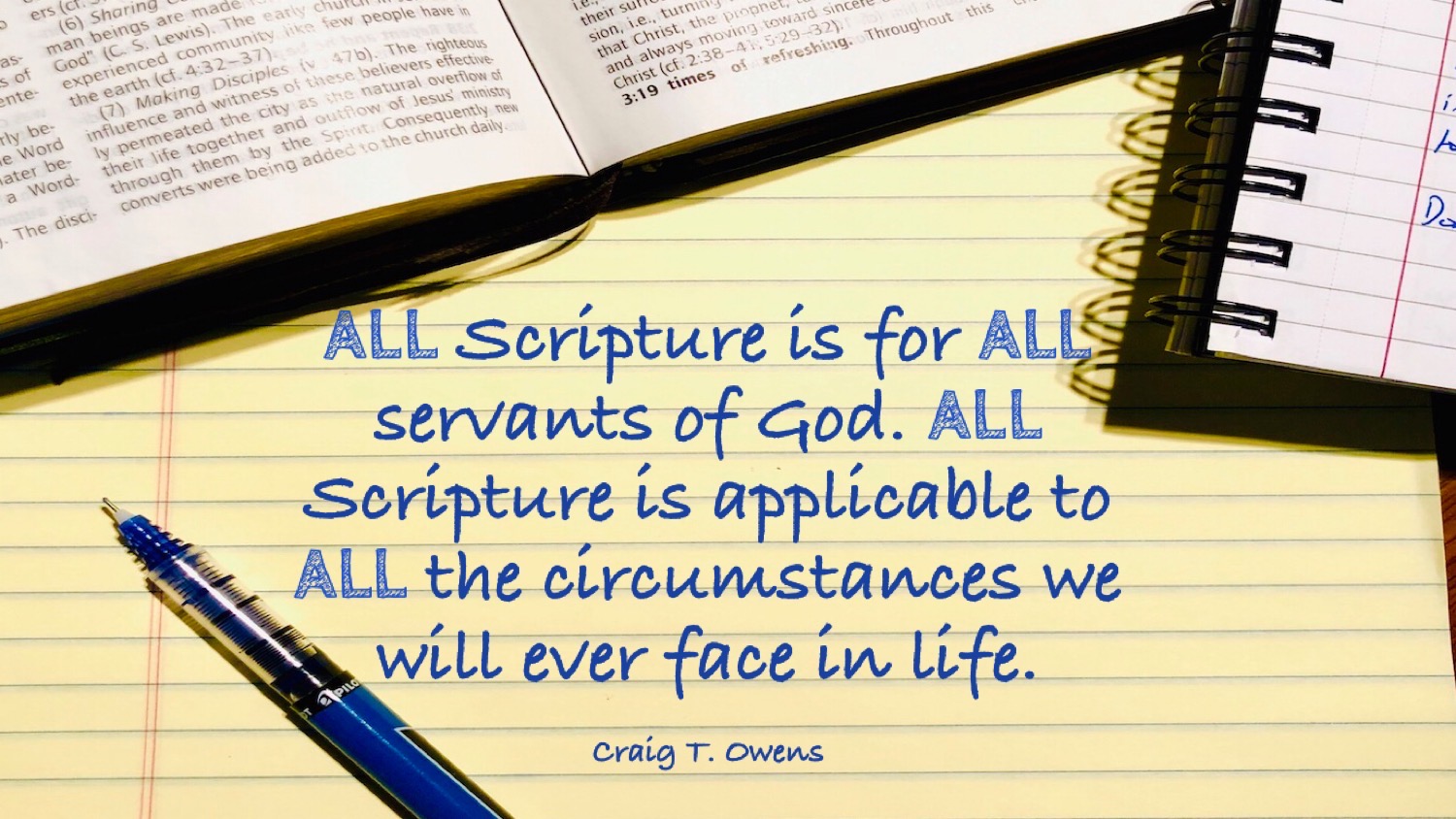
This is important for pastors as they prepare their sermons, but it’s also important for every Christian. We face challenges every day. The Holy Spirit can give us the timeliest of words. The Word of God is the inspired message for us. It is just as relevant and applicable today as it was the day the words were penned. The same Holy Spirit who inspired the authors of Scripture is the same Holy Spirit in us today who will illuminate and apply the Word for us (John 14:26).

Let’s not find our “timely word” from the ever-changing attitudes and opinions of culture, but let us continually go back to the unchanging, always-timely, always-relevant Word of God. That is the only place to find the timeliest of words every single time!

►► Would you please prayerfully consider supporting this ministry? My Patreon supporters get behind-the-scenes access to exclusive materials. ◀︎◀︎
God’s Blessing Empowers Our Witness

Listen to the podcast of this post by clicking on the player below, and you can also subscribe on AppleSpotify, or Audible. 

Last week we learned that we have a job to do. If we want to see Jesus come back to take us Home, we need to share the Good News with everyone. Jesus said that we didn’t have to obey Him in this Great Commission by ourselves, but we can go in His authority and with the empowerment of the Holy Spirit (Matthew 24:14; 28:18-20; Acts 1:8). 

In Acts 1:8 notice that Jesus said we are “be My witnesses.” This isn’t an action first, but they are actions that spring out of who we are. So we need to ask: How are we to be His witnesses? Answer: By being blessed by God! 

God has desired that we know the blessing of His presence since the very beginning. He instructed the priests to bless the people with these words: 

The Lord bless you and keep you; the Lord make His face shine on you and be gracious to you; the Lord turn His face toward you and give you peace. (Numbers 6:24-26)

The Hebrew word for “peace” in this passage is shalom. One of the most basic definitions for shalom is “nothing missing.” In other words, we are blessed people when we realize there is nothing keeping us back from God’s presence. 

If you asked someone in the Old Testament where they thought God’s presence was, they would probably point you to the Tent of Meeting or the Tabernacle in Jerusalem. But that was merely a foreshadowing of what God truly desired for His relationship with us. Jesus promised His followers, “On that day you will realize that I am in My Father, and you are in Me, and I am in you” (John 14:20). So if Jesus is in the Father, and we are in Him, that means we are also in the Father. In this position, we can experience the nearness to the Father that Jesus knows (see Ephesians 1:3-8). 

This nearness is our source of peace: Now may the Lord of peace Himself give you peace at all times and in every way. The Lord be with all of you (2 Thessalonians 3:16). In this verse, the Greek word for “peace” is eirene, which means a soul at utter peace with God because it is assured of its eternal Home in God’s presence. 

Blessed people are abundance people. Blessed people have all their needs supplied so that they can be a conduit of blessing to others. Our increasing awareness of God’s blessing empowers us to be witnesses for Him. 

Let me take you back to the Book of Psalms. In Psalm 67, the psalmist asks for God’s blessing on his life four times in just seven short verses. Why does he desire this blessing? It’s not for himself but for others. Look at just the first two verses of this psalm: 

May God be gracious to us and bless us and make His face shine on us THAT Your ways may be known on earth, Your salvation among all nations.

Recall that Jesus commissioned us to go to all nations and that the Holy Spirit empowers our witness to all peoples. This psalmist is asking for God’s blessing so that he can be a witness to everyone. Nine times he says that he desires that all nations or all peoples will know and worship the Most High God. 

God’s blessing on His people is really SO THAT all peoples and nations can see His blessing and turn to Him. One of the roles of the Holy Spirit in a believer’s life is to remind us that we are indeed blessed in Jesus, and that we have a mission to fulfill in taking that blessing to others. 

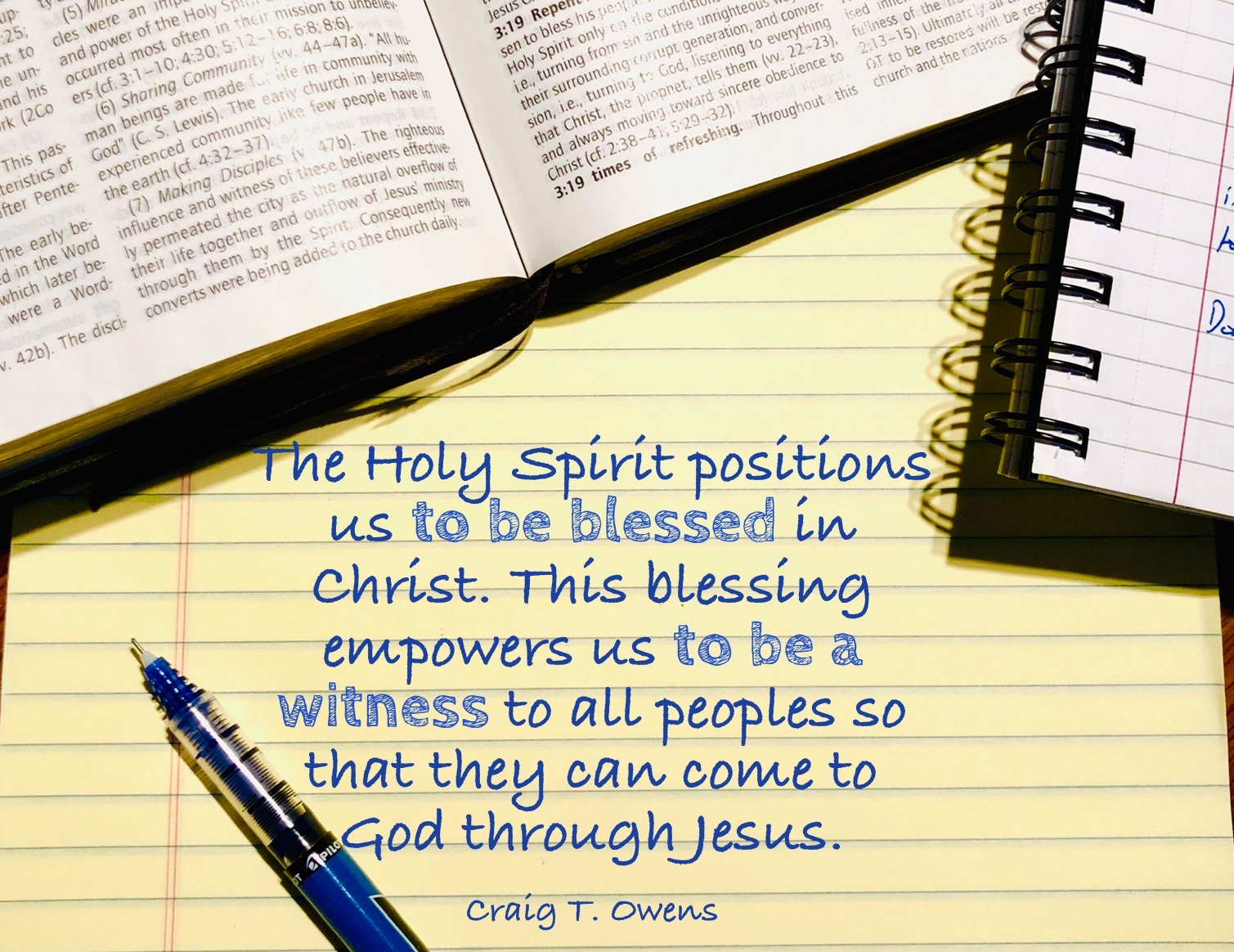
The Holy Spirit positions us to be blessed in Christ. This blessing empowers us to be a witness to all peoples so that they can come to God through Jesus. 

It is good for us to pray for the Spirit’s blessing on our lives so that we can BE a blessing to all nations and peoples. 

If you would like to check out all of the other messages in our series called We Are: Pentecostal, please click here. 

►► Would you please prayerfully consider supporting this ministry? My Patreon supporters get behind-the-scenes access to exclusive materials. ◀︎◀︎
The Compliance Of Silence

Listen to the podcast of this post by clicking on the player below, and you can also subscribe on AppleSpotify, or Audible.

A couple of weeks ago I shared a recap from my sermon called Eloquent Silence. Jesus serenely remained silent when He was being falsely accused by those who wanted Him out of the way. Yet, His silence was eloquent and convicting. 

We would do well to learn this lesson from our Savior. 

There is a flip side to this: Sometimes our silence can signal compliance or acceptance of those who are speaking or perpetrating evil. 

David wrote, “Do you indeed speak righteousness, you silent ones? Do you judge uprightly, you sons of men? No, in heart you work wickedness; you weigh out the violence of your hands in the earth” (Psalm 58:1-2 NKJV). 

Commenting on this psalm, Charles Spurgeon wrote, “It would be well, if people would sometimes pause and candidly consider this: ‘Do you indeed speak righteousness, you silent ones?’ Some of those who surrounded Saul were passive rather than active persecutors—they held their tongues when the object of royal hate was slandered. In the original, this first sentence appears to be addressed to them, and they are asked to justify their silence. Silence gives consent. People who refrain from defending the right are themselves accomplices in the wrong.”  

Silence does have its place. King Solomon wrote, “He who despises his neighbor lacks sense, but a man of understanding keeps silent. He who goes about as a talebearer reveals secrets, but he who is trustworthy conceals a matter” (Proverbs 11:12-13 NASB1995). But to remain silent in the face of evil or falsehood could also be a sin. 

Consider a few other wise words:

“No one wants to be thought of as holding to a ‘minority position’ on anything, so, rather than speak up in the face of many who are doing so, most will remain silent. This is where the Christian community finds itself at this time, trapped in a spiral of silence before a blustering but empty secular and unbelieving worldview. So it is very important that believers in Jesus Christ make the best use of every opportunity to talk about what is good and pleasing to God.” —T.M. Moore 

“Don’t be a bystander, be on stand by. I will not allow a bully to bully others. I will not laugh at his jokes, I will not remain silent. I will stand up and say ‘Enough is enough.’” —Nick Vujicic 

“As Christians we are tempted to make unnecessary concession to those outside the Faith. We give in too much. Now, I don’t mean that we should run the risk of making a nuisance of ourselves by witnessing at improper times, but there comes a time when we must show that we disagree. We must show our Christian colors, if we are to be true to Jesus Christ. We cannot remain silent or concede everything away.” —C.S. Lewis 

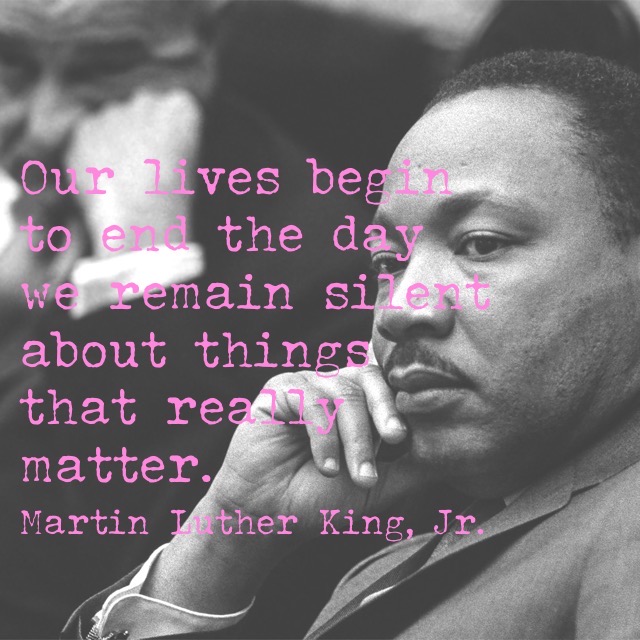
“Our lives begin to end the day we remain silent about things that really matter.” —Martin Luther King, Jr.

When to speak up and when to remain silent is a huge issue for Christians. This is why we need to be sensitive to the Holy Spirit telling us when to hold our tongues and when to speak out boldly.

►► Would you please prayerfully consider supporting this ministry? My Patreon supporters get behind-the-scenes access to exclusive materials. ◀︎◀︎

Keep In Tune

Listen to the podcast of this post by clicking on the player below, and you can also subscribe on AppleSpotify, or Audible. 

When Luke says first that “Jesus grew in wisdom” before he mentions any of the other ways Jesus grew, that is our indication that a healthy mind is at the foundation for every other aspect of health (Luke 2:52). If you’ve missed the mental health keys we’ve already learned, you can review them by clicking here. 

It’s been said that lions are tamed with a chair. Specifically, with the legs of the chair. These powerful animals are trying to focus on too many points at one time which keeps them from initiating an attack. So they are not so much “tamed” as they are paralyzed and overwhelmed by trying to concentrate on too many things. 

It’s the same with us: If we try to concentrate on every voice speaking to us, we’ll become overwhelmed and paralyzed. “The Bible says this … my Mom says that … my best friend told me to try … my agnostic coworker said I should….” It’s overwhelming and mentally draining! Just like our bodies can become exhausted, so can our minds. Exhausted bodies are susceptible to germs, and so are exhausted minds susceptible to unhealthy ideas. 

Consider all of the voices Jesus had to deal with in His last days heading toward Calvary. From about 4 months out, things really began to intensify. He still had the voices of His critics constantly harping on Him, and I’m sure the devil was still looking for his “opportune time” (Luke 4:13), not to mention all of the other voices around Jesus. There are two important principles to keep in mind here: 

  1. God can speak truth to us through harsh, unfriendly voices 
  2. The devil can lie to us through kind, friendly voices 

So we cannot automatically listen to or ignore messages because of who the messenger is.

The friendly voice of Peter told Jesus, “You are the Messiah!” To which Jesus replied, “The Holy Spirit revealed that to you. Now let me remind you that we are heading to Jerusalem where I am going to be crucified.” 

The now not-so-friendly voice of Peter then rebuked Jesus, “Never, Lord! This shall never happen to You!” Jesus turned to Peter to say, “Get behind Me, satan! You are a stumbling block to Me; you do not have in mind the concerns of God, but merely human concerns.” 

The Father gave Peter, James, and John a glimpse of the glory Jesus would have when He was resurrected from the dead when they saw Him transfigured. During this time Moses and Elijah affirmed that Jesus was headed to Jerusalem to fulfill all that was prophesied about Him. In the aftermath of His transfiguration, Jesus again repeated, “I am going to be crucified and resurrected.” 

As Jesus entered Jerusalem on the day we now celebrate as Palm Sunday, people cheered and the religious leaders jeered. To both groups, Jesus once again affirmed His mission, “I am going to be crucified and resurrected.” 

(See Luke 9:18-44; 18:31-33; Matthew 16:23; John 12:12-19, 23-33)

No matter what others said or did, Jesus never changed His tune. How did He keep clear about the mission He was on? He simply compared every voice with God’s voice. Jesus never changed His tune because He was in tune with the Father’s voice. 

Years ago, I played the tympani in our church orchestra. I learned very quickly that the best way to tune these big kettle drums was to put my face close to the drumhead while I hummed the proper note. Then as I adjusted the tuning pedal, I knew I had the tympani tuned to the right note when what I was humming resonated back to me from the drumhead. 

At the Transfiguration, the Father told the disciples to listen to the voice of Jesus. Jesus claimed that He only said and did what the voice of His Father resonated to Him. And Jesus told us that His sheep know and follow His voice in the same way (Luke 9:35; John 12:49-50; John 10:3-5). 

The Book of Psalms opens with these words: 

Blessed is the one who does not walk in step with the wicked or stand in the way that sinners take or sit in the company of mockers, but whose delight is in the law of the Lord, and who meditates on His law day and night. (Psalm 1:1-2)

The word meditate can be translated as “hum.” When we read and study God’s Word, the Holy Spirit will help us know which voices are in-tune with the Father’s heart and which ones are out-of-tune. You can check out a great example of this from the life of the apostle Paul in Acts 20:22-24; 21:10-15. 

So our important mental health reminder is this: To make sure we are listening to the right voices, tune your ear to the voice of the Holy Spirit. Then receive any voice that resonates with that tune, and reject any voice that is out of key. 

If you would like to download the graphic of this reminder for your phone, simply leave me a comment with the model of the phone, and I’ll get the right-sized graphic right out to you. If you’ve missed any of the messages in our mental health series, you can find all of them by clicking here. 

►► Would you please prayerfully consider supporting this ministry? My Patreon supporters get behind-the-scenes access to exclusive materials. ◀︎◀︎

Links & Quotes

When you say, “I don’t know how to do this,” your mind stops looking for answers. But if we simply add one word—“I don’t know how to do this yet”—your mind will stay active. Adding this one word will unleash the creative, solution-finding part of your mind.

“Our preaching ought to have a voice for all classes, and all should have an ear for it. To suit our word to the rich alone is wicked sycophancy, and to aim only at pleasing the poor is to act the part of a demagogue. Truth may be so spoken as to commend the ear of all, and wise teachers seek to learn that acceptable style.” —Charles Spurgeon, Spurgeon And The Psalms

“How did Jesus live among us? He was different things to different people. See if you find yourself on this list.
To the victim, Jesus defended.
To the rebel, He held out mercy.
To the brutalized, Jesus comforted with kindness.
To the questioning, He spoke truth.
To the fearful, Jesus stood beside.
To the lonely, He nodded, ‘I’ve been there.’
To the sick, Jesus revitalized.
To the outlier, He welcomed in.
To the forgotten, Jesus remembered in detail.
To the filthy, He washed clean.
To the broken, Jesus empathized.
To the doubting, He listened.
To the isolated, Jesus joined company.
To the discouraged, He drew near.
To the cynic, Jesus answered.
To the rejected, He restored.
To the anxious, Jesus calmed.
To the betrayed, He identified.
To the betrayer, Jesus forgave.
To the wounded, He sympathized.
To the wanderer, Jesus pointed the way.
To the shattered, He rebuilt dreams.
To the lost, Jesus led home.
To the abandoned, He was home.
To the destitute, Jesus deepened.
To the single again, He completed.
To the tempted, Jesus was available.
To the courageous, He gave purpose.
To the one in trouble, Jesus led out.
To the exhausted, He was wholeness.
To the hurried, Jesus patiently waited.
To the over-committed, He built margin.
To the weak, Jesus fortified.
To the one in debt, He released.
To the searching, Jesus satisfied.
To the foolish, He said, ‘Turn around.’
To the pure in heart, Jesus blessed.
To the one who keeps on going, He rewarded.” —He Gets Us (part 2) reading plan on YouVersion

This is a pretty long article, but it’s quite fascinating to see the engineering behind the artificial intelligence (AI) of ChatGPT.

“God is not afraid of my questions. Am I afraid of His answers?” —Betsy Owens

C.M. Ward was the speaker for the Revivaltime radio broadcast for a quarter of a century. Dan Betzer, who was also involved in these broadcasts, once said that he heard Rev. Ward preach on the story of the prodigal son in Luke 15 more than a dozen times without ever repeating himself. Here is a quick biographical sketch of this influential man’s ministry. I have also shared before my brief encounter with Rev. Ward when I was a young man.

A bonus quote from Charles Spurgeon: “‘No God’ means no law, no order, no restraint to lust, no limit to passion. Who but a fool would be of this mind? What a bedlam, or rather what a battleground, would the world become, if such lawless principles came to be universal!” —Charles Spurgeon, commenting on Psalm 53:1

A reminder of just how amazing our Sun is! Our Creator perfectly fashioned our Sun and Earth and solar system to sustain the life we enjoy. Check out this amazing article from The Institute for Creation Research.

Don’t Try To Get Even

Listen to the podcast of this post by clicking on the player below, and you can also subscribe on AppleSpotify, or Audible. 

When I work with students I frequently find that conflicts between them are really one-upmanship. Here’s what I mean: one student intentionally or unintentionally tweaks another student, that student then responds with a decidedly intentional verbal or physical shove, which is responded to by the initial student with a louder and more intentional reprisal. And on and on it escalates until someone steps in to stop it.

I often ask these students who are upset with each other, “What did you think was going to happen when you treated the other person that way?” The quick response is almost always, “I don’t know.” And I believe that because most of us don’t think through the counter-reaction to our reaction. 

So I will ask a follow-up question: “Did you think that by shoving him in response to his insult that he was going to say, ‘Oops, my bad. I’m sorry for that and I won’t do it again’?” 

Usually, the student answers quite honestly, “No, I didn’t think that would happen.” They were just so upset that they wanted to let the other person know that they had been hurt.

This idea of getting even is the longing of so many of the psalms: How long until we see victory? (see Psalms 6, 13, 35, and 94 as examples). It’s the cry of the martyrs before God’s throne: How long until we see justice? It’s the desire of every Christian wrongly accused and condemned: God, how long until Your truth prevails? 

Matthew quotes a passage from Isaiah 42:1-4 that is fulfilled in the ministry of Jesus. Part of that description says, “A bruised read He will not break, and a smoldering wick He will not snuff out, till He leads justice to victory. In His name the nations will put their hope” (Matthew 12:20-21). Notice this key word: till HE leads justice to victory

Jesus is Justice and Truth, and He does ultimately triumph. But notice how Jesus accomplishes this because it is to be our model too: 

  • No quarreling 
  • No shoving back on those who have hurt us
  • No attacking those who have attacked me

Victory comes only through Jesus. I have to relent trying to balance the scales of justice—this is never my place. If I try to make things right on my own, my so-called justice only sets off a one-upmanship shoving match that continues to escalate in very ungodly ways. 

Vengeance is God’s. Justice is God’s. My hope—my immovable hope—is only in what Jesus has accomplished. Remember what Matthew quoted: “In His name the nations” [and all those who have been persecuted, wronged, and martyrd] “will put their hope”! 

Let’s all ask the Holy Spirit to remind us of this the next time we want to shove back the person who just shoved us. 

►► Would you please prayerfully consider supporting this ministry? My Patreon supporters get behind-the-scenes access to exclusive materials. ◀︎◀︎

Come To God And Keep Walking With Him

Listen to the podcast of this post by clicking on the player below, and you can also subscribe on AppleSpotify, or Audible. 

I have been so grateful for the insights of Dr. Gary Chapman in his book The Five Love Languages. I have found this book to be of immense value in helping couple prepares for marriage, and in helping married couples get beyond a place where intimacy has become stuck. 

In short, the five love languages are words of affirmation, quality time, gifts, acts of service, and physical touch. The goal of learning the other person’s love language—and learning to speak it consistently and fluently—is an increased level of intimacy. In the book of Amos, God asks, “Can two people walk together without agreeing on the direction?” (Amos 3:3 NLT), and speaking the right love language definitely helps people agree! 

The whole reason we come to God in prayer as a Father, as a Brother, and as a Counselor is so that we can hear Him speaking our love language and we can continue to walk in deeper intimacy with Him. 

When my then-girlfriend Betsy and I first met, we spent hours and hours getting to know each other. We would ask questions, share stories, and tell things we did and didn’t enjoy. This is the epitome of intimate conversation: getting to know the other person’s heart as you open up your heart to them as well.

I’ve shared this analogy before, but intimacy grows stale and can eventually disappear altogether if those in a relationship are no longer walking together. It doesn’t work if I say, “Betsy, I’m looking forward to spending an hour with you each week,” or even if I say, “I’ll give you 15 minutes each morning.” Instead, our relationship needs to be one of continual walking. 

It’s the same thing for us as Christians: we cannot only give God an hour at a church service on Sunday mornings, nor is intimacy going to increase if I only walk and talk with my Savior for a few minutes in my morning devotions. 

Walking closely with Him is what God has desired right from the beginning. He walked with Adam and Eve each evening. This phrase “walking with God” is used consistently throughout the Bible of those who had an intimate relationship with their Father, Brother, and Counselor—Noah, Abraham, Isaac, the people of Israel (Genesis 3:8, 6:9, 17:1, 48:15; Leviticus 26:12). And even as the New Testament era dawns, we read, “And they [Zechariah and Elizabeth] were both righteous before God, walking in all the commandments and ordinances of the Lord blameless” (Luke 1:6 NKJV). 

But I’m especially intrigued by the story of Enoch in Genesis 5:21-24. Twice in four short verses, we read “Enoch walked with God.” Remember that verse in Amos—“Can two people walk together without agreeing on the direction?”—so Enoch and God had to be in agreement. In fact, that’s exactly what we read about Enoch in the Book of Hebrews: 

By faith Enoch was taken from this life, so that he did not experience death: “He could not be found, because God had taken him away.” For before he was taken, he was commended as one who pleased God. And without faith it is impossible to please God, because anyone who comes to Him must believe that He exists and that He rewards those who earnestly seek Him. (Hebrews 11:5-6)

If you’ve taken Dr. Chapman’s love language assessment, you probably found that you were pretty lopsided: maybe you scored very highly in one love language and then barely registered in another. We may be lopsided in our love language skill, but God speaks every language perfectly! 

  • Words of affirmation—Hosea 2:14; Isaiah 40:2 
  • Quality time—Deuteronomy 31:6; Psalm 23:3-4
  • Gifts—James 1:17; 2 Peter 1:3
  • Acts of service—Philippians 2:13; Romans 8:28
  • Physical touch—Psalm 139:13-15; Luke 24:39 

(Click here to check out all of those verses.) 

Dr. Chapman noted that when our love language is being spoken to us sincerely and consistently, our love tank is filled, and all of the love languages begin to become more meaningful. 

Just as God walked with Enoch until the day He brought him Home, so He wants to walk with us. 

  • Walk in obedience to all that the Lord your God has commanded you, so that you may live and prosper. (Deuteronomy 5:33) 
  • The Lord will establish you as His holy people, as He promised you on oath, if you keep the commands of the Lord your God and walk in obedience to Him. (Deuteronomy 28:9) 
  • May He turn our hearts to Him, to walk in obedience to Him and keep the commands. (1 Kings 8:58) 
  • Blessed are all who fear the Lord, who walk in obedience to Him. (Psalm 128:1) 
  • And this is love: that we walk in obedience to His commands. As you have heard from the beginning, His command is that you walk in love. (2 John 6) 

When we walk in loving intimacy with Him, our intimacy grows deeper and more mature. Sometimes they will say of couples who have been married for a long time and walk in increasingly deeper intimacy with each other, “They seem to know each other’s thoughts.” That’s because they know each other’s hearts—and that’s what God wants to do with us. He did it with Enoch, and He will do that with us too (Jude 14; Jeremiah 33:3; Habakkuk 3:19). 

Enoch walked intimately with God for 365 years. Let us walk intimately with God for 365 days a year, for as many years as He gives us until God takes us away with Him forever! 

If you’ve missed any of the messages in our prayer series called Intimate Conversation, you can find all of the messages by clicking here. 

►► Would you please prayerfully consider supporting this ministry? My Patreon supporters get behind-the-scenes access to exclusive materials. ◀︎◀︎

Year-End Review (2022 Edition)

Listen to the podcast of this post by clicking on the player below, and you can also subscribe on AppleSpotify, or Audible.

The apostle Peter said he wrote two letters to the church “as reminders to stimulate you to wholesome thinking” (2 Peter 3:1). And Paul reminded his young friend Timothy to “keep reminding [your congregation] of these things” (2 Timothy 2:14). 

In the spirit of those great apostles, I have made it a practice to take time at the end of each year to look back on all that we have learned in the previous year, and then to look forward to where God may be leading Calvary Assembly of God in this upcoming year.

Clicking on each series title will take you to a list of all of the sermons in that series. 

Awesome—Jesus told us that we could pray in His name and expect amazing things (see John 14:13-14, 15:16, 16:23-24). This does not mean that simply adding the phrase “in Jesus’ name, Amen” to the end of a prayer unlocks a secret code. Rather, it means that the more we understand just how awesome our Savior is, and that He is the Key to God’s storeroom, the more we will being to align our prayers with the will of God. Jesus desires for His Father’s glory to be seen on earth through the answers to our prayers. The writer of Hebrews opens his letter by reminding us that Jesus is “the radiance of God’s glory and the exact representation of His being, sustaining all things by His powerful word” (Hebrews 1:3).

Is That In The Bible? (part 1 and part 2)—A meme that makes me chuckle every time I see it is a “quote” attributed to Abraham Lincoln in which he says, “The problem with quotes found on the internet is that they are often not true.” (Not to spoil the joke for you, but unless Lincoln knew how to time travel to the future, I don’t think he knew about the modern internet! 😂). I love this meme because it captures something that so many people fall into: a quick acceptance of a statement without verifying its source or thinking through the implications of the statement’s truthfulness. I think you may be surprised to discover just how many phrases we call biblical aren’t, and how many phrases there are that we never realized are actually in the Bible.

Christmas Unwrapped At Easter—Remember as a kid when you would unwrap a gift and discover it wasn’t something you really wanted, but then your parents explained that it was something you needed? The birth of Jesus in Bethlehem was a little like that—it wasn’t exactly what people were hoping for, but it was exactly what they needed. The real meaning of that Christmas gift wasn’t realized until after Jesus was crucified and resurrected back to life.

We Are: Pentecostal—Pentecost for over 1500 years was a celebration in Jerusalem that brought in Jews from all over the world. But on the Day of Pentecost that came just ten days after Jesus ascended back into heaven, the meaning of Pentecost was forever changed! Followers of Jesus—now empowered by an infilling of the Holy Spirit—began to take the good news of Jesus all over the world. These Spirit-filled Christians preached the Gospel and won converts to Christ even among hostile crowds, performed miracles and wonders, stood up to pagan priests and persecuting governmental leaders, and established a whole new way of living as Christ-followers. We, too, can be Pentecostal followers of Jesus Christ today. 

Selah—The word Selah appears nearly 70 times in the Bible, almost exclusively in the Psalms. Although it is primarily a musical term, it applies beautifully to our summer series. It means a pause. Throughout the Psalms, Selah appears at the end of a verse, at the end of the psalm, or sometimes even mid-sentence. But each one of them is perfectly placed by the Spirit-inspired authors to get us to take a breath and deeply contemplate what we just read or sang. 

Craving—Doesn’t it seem like far too many Christians think of their relationship with Jesus as bland? After all, we’ve been told that any cravings we have should be quickly downplayed so that they don’t carry “good Christians” away. But what we discover in the Bible is that God made us to be craving creatures—He wants us to long deeply and find ultimate satisfaction for those longings. In short, God created us to long after the things that only He can fulfill. As we dive into this new series, I think you will find it quite eye-opening and heart-lifting. 

The Great Attitude Of Gratitude—There’s something about gratitude that distinguishes people. Think about it: would you rather hang around with grumblers or grateful people? The gratitude of Paul and Silas certainly made them stand out from the crowd when they were in Philippi. Wrongly accused, beaten, and thrown in prison, but instead of bellyaching, they were praising God. Later on, when Paul wrote his letter to the Christians in Philippi, the theme of gratefulness permeates his letter. The distinguishing mark is actually in the title: The GReat ATTITUDE spells out GRATITUDE!

Bethlehem Is Proof—The prophet Micah foretells that the Messiah will arrive in dark times. Enemies will surround Israel, and Israel’s ruler will receive a nasty punch to the jaw. Demonic strongholds, witchcraft, and idolatry will appear to be gaining the upper hand. And then Micah turns his attention to a small village just south of Jerusalem—a village so small that it is often overlooked—a village from which no one would expect Israel’s Deliverer. And yet, Micah writes, “But you, Bethlehem Ephrathah, though you are small among the clans of Judah, out of you will come for Me One who will be Ruler over Israel, Whose origins are from of old, from ancient times” (Micah 5:2). Jesus the Deliverer was born in the little town of Bethlehem, and His birth there 700 years after Micah foretold it is our proof that God always gets the last word, the decisive word, and the best word!

We will be returning to a couple of these series in 2023, and we’ll be launching some brand-new ones as well. If you don’t have a home church in the northern Kent County area, I would love to have you join us! 

►► Would you please prayerfully consider supporting this ministry? My Patreon supporters get behind-the-scenes access to exclusive materials. ◀︎◀︎

Helping Our Teammates Destress

Listen to the podcast of this post by clicking on the player below, and you can also subscribe on AppleSpotify, or Audible. 

An interesting comment that Jesus made that should catch the attention of every leader is this: “I know My sheep and My sheep know Me” (John 10:14). Jesus is telling us that He knows the uniqueness of every person. 

Combine this with David’s encouraging words about Jesus as our Good Shepherd in the opening words of Psalm 23, “The Lord is my shepherd; I have all that I need” (Psalm 23:1 NLT). 

This tells me that quality shepherd leaders…

  1. …are around their teammates enough to know them personally. 
  2. …can quickly ascertain when their teammates are feeling stress or anxiety. 
  3. …know how to give their teammates what they need to destress in a healthy way. 

My friend Greg and I discussed how leaders can use playtime as an effective tool to keep their teammates at their healthiest. Check out this short clip—

If you would like to watch this full episode from The Craig And Greg Show, please click here. 

I also talk about how wise leaders take care of those under their care in my book Shepherd Leadership: The Metrics That Really Matter. It’s available in print or ebook, and in audiobook through either Audible or Apple.

►► Would you please prayerfully consider supporting this ministry? My Patreon supporters get behind-the-scenes access to exclusive materials. ◀︎◀︎