Don’t Try To Get Even

Listen to the podcast of this post by clicking on the player below, and you can also subscribe on AppleSpotify, or Audible. 

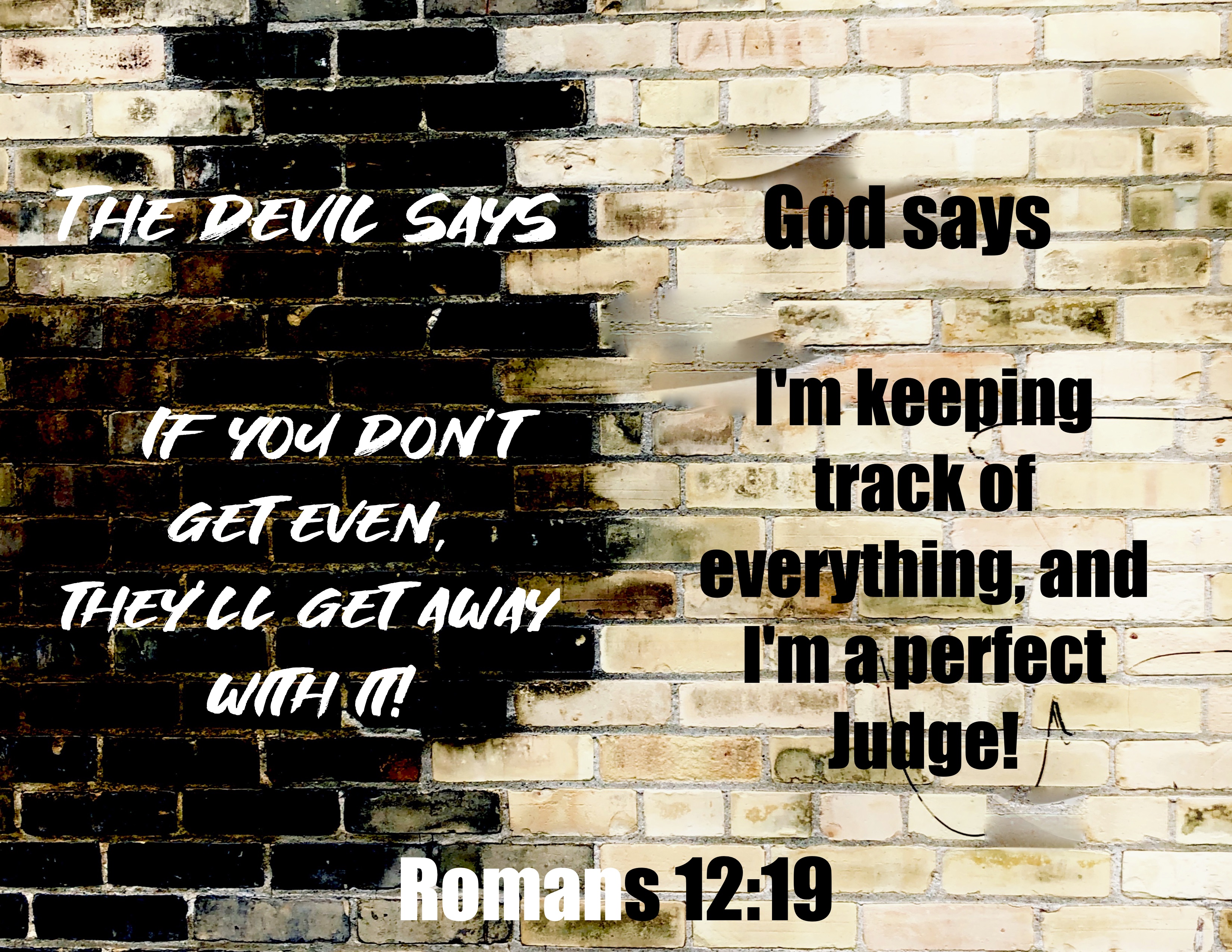
When I work with students I frequently find that conflicts between them are really one-upmanship. Here’s what I mean: one student intentionally or unintentionally tweaks another student, that student then responds with a decidedly intentional verbal or physical shove, which is responded to by the initial student with a louder and more intentional reprisal. And on and on it escalates until someone steps in to stop it.

I often ask these students who are upset with each other, “What did you think was going to happen when you treated the other person that way?” The quick response is almost always, “I don’t know.” And I believe that because most of us don’t think through the counter-reaction to our reaction. 

So I will ask a follow-up question: “Did you think that by shoving him in response to his insult that he was going to say, ‘Oops, my bad. I’m sorry for that and I won’t do it again’?” 

Usually, the student answers quite honestly, “No, I didn’t think that would happen.” They were just so upset that they wanted to let the other person know that they had been hurt.

This idea of getting even is the longing of so many of the psalms: How long until we see victory? (see Psalms 6, 13, 35, and 94 as examples). It’s the cry of the martyrs before God’s throne: How long until we see justice? It’s the desire of every Christian wrongly accused and condemned: God, how long until Your truth prevails? 

Matthew quotes a passage from Isaiah 42:1-4 that is fulfilled in the ministry of Jesus. Part of that description says, “A bruised read He will not break, and a smoldering wick He will not snuff out, till He leads justice to victory. In His name the nations will put their hope” (Matthew 12:20-21). Notice this key word: till HE leads justice to victory

Jesus is Justice and Truth, and He does ultimately triumph. But notice how Jesus accomplishes this because it is to be our model too: 

  • No quarreling 
  • No shoving back on those who have hurt us
  • No attacking those who have attacked me

Victory comes only through Jesus. I have to relent trying to balance the scales of justice—this is never my place. If I try to make things right on my own, my so-called justice only sets off a one-upmanship shoving match that continues to escalate in very ungodly ways. 

Vengeance is God’s. Justice is God’s. My hope—my immovable hope—is only in what Jesus has accomplished. Remember what Matthew quoted: “In His name the nations” [and all those who have been persecuted, wronged, and martyrd] “will put their hope”! 

Let’s all ask the Holy Spirit to remind us of this the next time we want to shove back the person who just shoved us. 

►► Would you please prayerfully consider supporting this ministry? My Patreon supporters get behind-the-scenes access to exclusive materials. ◀︎◀︎
Come To God And Keep Walking With Him

Listen to the podcast of this post by clicking on the player below, and you can also subscribe on AppleSpotify, or Audible. 

I have been so grateful for the insights of Dr. Gary Chapman in his book The Five Love Languages. I have found this book to be of immense value in helping couple prepares for marriage, and in helping married couples get beyond a place where intimacy has become stuck. 

In short, the five love languages are words of affirmation, quality time, gifts, acts of service, and physical touch. The goal of learning the other person’s love language—and learning to speak it consistently and fluently—is an increased level of intimacy. In the book of Amos, God asks, “Can two people walk together without agreeing on the direction?” (Amos 3:3 NLT), and speaking the right love language definitely helps people agree! 

The whole reason we come to God in prayer as a Father, as a Brother, and as a Counselor is so that we can hear Him speaking our love language and we can continue to walk in deeper intimacy with Him. 

When my then-girlfriend Betsy and I first met, we spent hours and hours getting to know each other. We would ask questions, share stories, and tell things we did and didn’t enjoy. This is the epitome of intimate conversation: getting to know the other person’s heart as you open up your heart to them as well.

I’ve shared this analogy before, but intimacy grows stale and can eventually disappear altogether if those in a relationship are no longer walking together. It doesn’t work if I say, “Betsy, I’m looking forward to spending an hour with you each week,” or even if I say, “I’ll give you 15 minutes each morning.” Instead, our relationship needs to be one of continual walking. 

It’s the same thing for us as Christians: we cannot only give God an hour at a church service on Sunday mornings, nor is intimacy going to increase if I only walk and talk with my Savior for a few minutes in my morning devotions. 

Walking closely with Him is what God has desired right from the beginning. He walked with Adam and Eve each evening. This phrase “walking with God” is used consistently throughout the Bible of those who had an intimate relationship with their Father, Brother, and Counselor—Noah, Abraham, Isaac, the people of Israel (Genesis 3:8, 6:9, 17:1, 48:15; Leviticus 26:12). And even as the New Testament era dawns, we read, “And they [Zechariah and Elizabeth] were both righteous before God, walking in all the commandments and ordinances of the Lord blameless” (Luke 1:6 NKJV). 

But I’m especially intrigued by the story of Enoch in Genesis 5:21-24. Twice in four short verses, we read “Enoch walked with God.” Remember that verse in Amos—“Can two people walk together without agreeing on the direction?”—so Enoch and God had to be in agreement. In fact, that’s exactly what we read about Enoch in the Book of Hebrews: 

By faith Enoch was taken from this life, so that he did not experience death: “He could not be found, because God had taken him away.” For before he was taken, he was commended as one who pleased God. And without faith it is impossible to please God, because anyone who comes to Him must believe that He exists and that He rewards those who earnestly seek Him. (Hebrews 11:5-6)

If you’ve taken Dr. Chapman’s love language assessment, you probably found that you were pretty lopsided: maybe you scored very highly in one love language and then barely registered in another. We may be lopsided in our love language skill, but God speaks every language perfectly! 

  • Words of affirmation—Hosea 2:14; Isaiah 40:2 
  • Quality time—Deuteronomy 31:6; Psalm 23:3-4
  • Gifts—James 1:17; 2 Peter 1:3
  • Acts of service—Philippians 2:13; Romans 8:28
  • Physical touch—Psalm 139:13-15; Luke 24:39 

(Click here to check out all of those verses.) 

Dr. Chapman noted that when our love language is being spoken to us sincerely and consistently, our love tank is filled, and all of the love languages begin to become more meaningful. 

Just as God walked with Enoch until the day He brought him Home, so He wants to walk with us. 

  • Walk in obedience to all that the Lord your God has commanded you, so that you may live and prosper. (Deuteronomy 5:33) 
  • The Lord will establish you as His holy people, as He promised you on oath, if you keep the commands of the Lord your God and walk in obedience to Him. (Deuteronomy 28:9) 
  • May He turn our hearts to Him, to walk in obedience to Him and keep the commands. (1 Kings 8:58) 
  • Blessed are all who fear the Lord, who walk in obedience to Him. (Psalm 128:1) 
  • And this is love: that we walk in obedience to His commands. As you have heard from the beginning, His command is that you walk in love. (2 John 6) 

When we walk in loving intimacy with Him, our intimacy grows deeper and more mature. Sometimes they will say of couples who have been married for a long time and walk in increasingly deeper intimacy with each other, “They seem to know each other’s thoughts.” That’s because they know each other’s hearts—and that’s what God wants to do with us. He did it with Enoch, and He will do that with us too (Jude 14; Jeremiah 33:3; Habakkuk 3:19). 

Enoch walked intimately with God for 365 years. Let us walk intimately with God for 365 days a year, for as many years as He gives us until God takes us away with Him forever! 

If you’ve missed any of the messages in our prayer series called Intimate Conversation, you can find all of the messages by clicking here. 

►► Would you please prayerfully consider supporting this ministry? My Patreon supporters get behind-the-scenes access to exclusive materials. ◀︎◀︎

Year-End Review (2022 Edition)

Listen to the podcast of this post by clicking on the player below, and you can also subscribe on AppleSpotify, or Audible.

The apostle Peter said he wrote two letters to the church “as reminders to stimulate you to wholesome thinking” (2 Peter 3:1). And Paul reminded his young friend Timothy to “keep reminding [your congregation] of these things” (2 Timothy 2:14). 

In the spirit of those great apostles, I have made it a practice to take time at the end of each year to look back on all that we have learned in the previous year, and then to look forward to where God may be leading Calvary Assembly of God in this upcoming year.

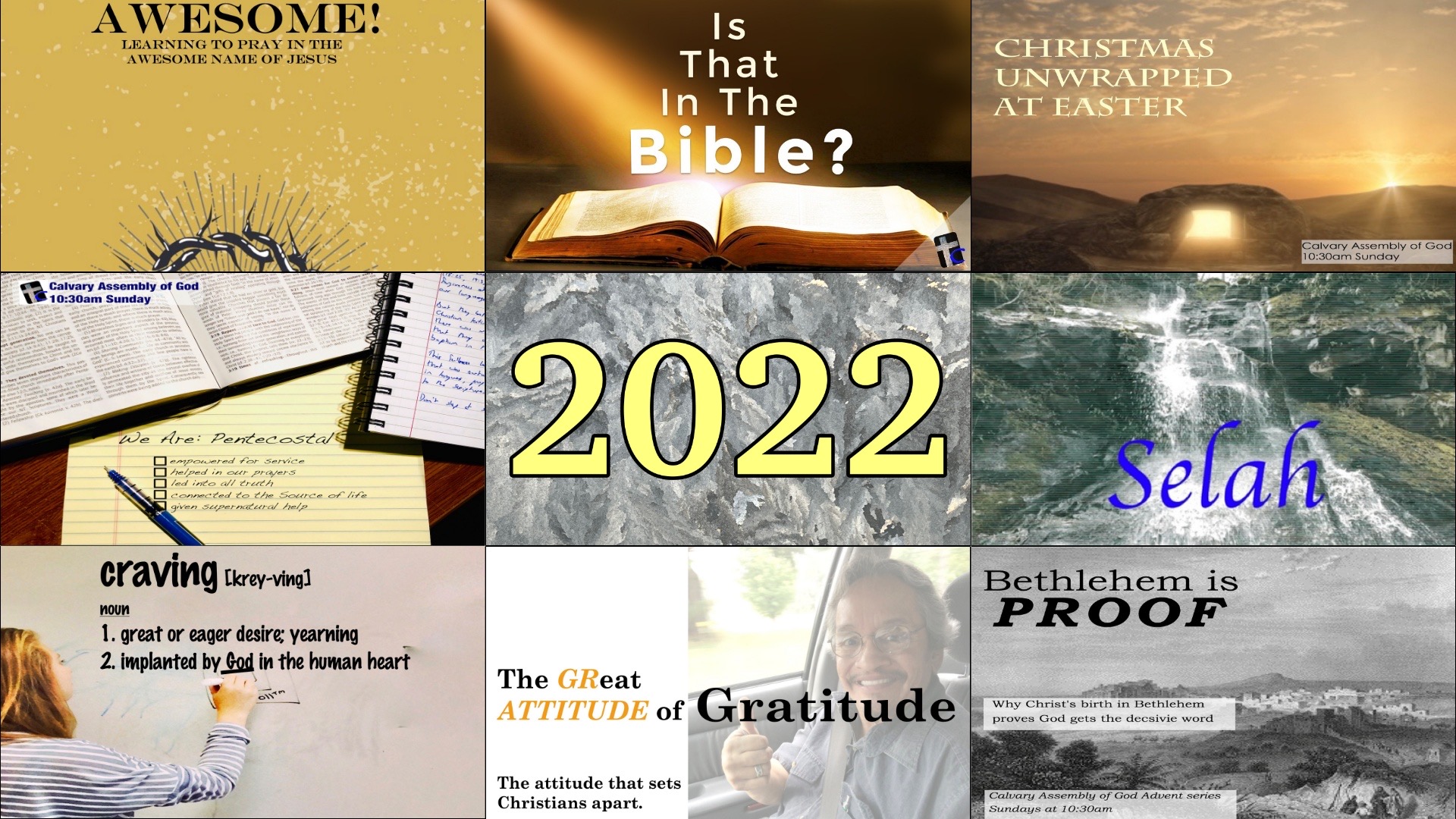
Clicking on each series title will take you to a list of all of the sermons in that series. 

Awesome—Jesus told us that we could pray in His name and expect amazing things (see John 14:13-14, 15:16, 16:23-24). This does not mean that simply adding the phrase “in Jesus’ name, Amen” to the end of a prayer unlocks a secret code. Rather, it means that the more we understand just how awesome our Savior is, and that He is the Key to God’s storeroom, the more we will being to align our prayers with the will of God. Jesus desires for His Father’s glory to be seen on earth through the answers to our prayers. The writer of Hebrews opens his letter by reminding us that Jesus is “the radiance of God’s glory and the exact representation of His being, sustaining all things by His powerful word” (Hebrews 1:3).

Is That In The Bible? (part 1 and part 2)—A meme that makes me chuckle every time I see it is a “quote” attributed to Abraham Lincoln in which he says, “The problem with quotes found on the internet is that they are often not true.” (Not to spoil the joke for you, but unless Lincoln knew how to time travel to the future, I don’t think he knew about the modern internet! 😂). I love this meme because it captures something that so many people fall into: a quick acceptance of a statement without verifying its source or thinking through the implications of the statement’s truthfulness. I think you may be surprised to discover just how many phrases we call biblical aren’t, and how many phrases there are that we never realized are actually in the Bible.

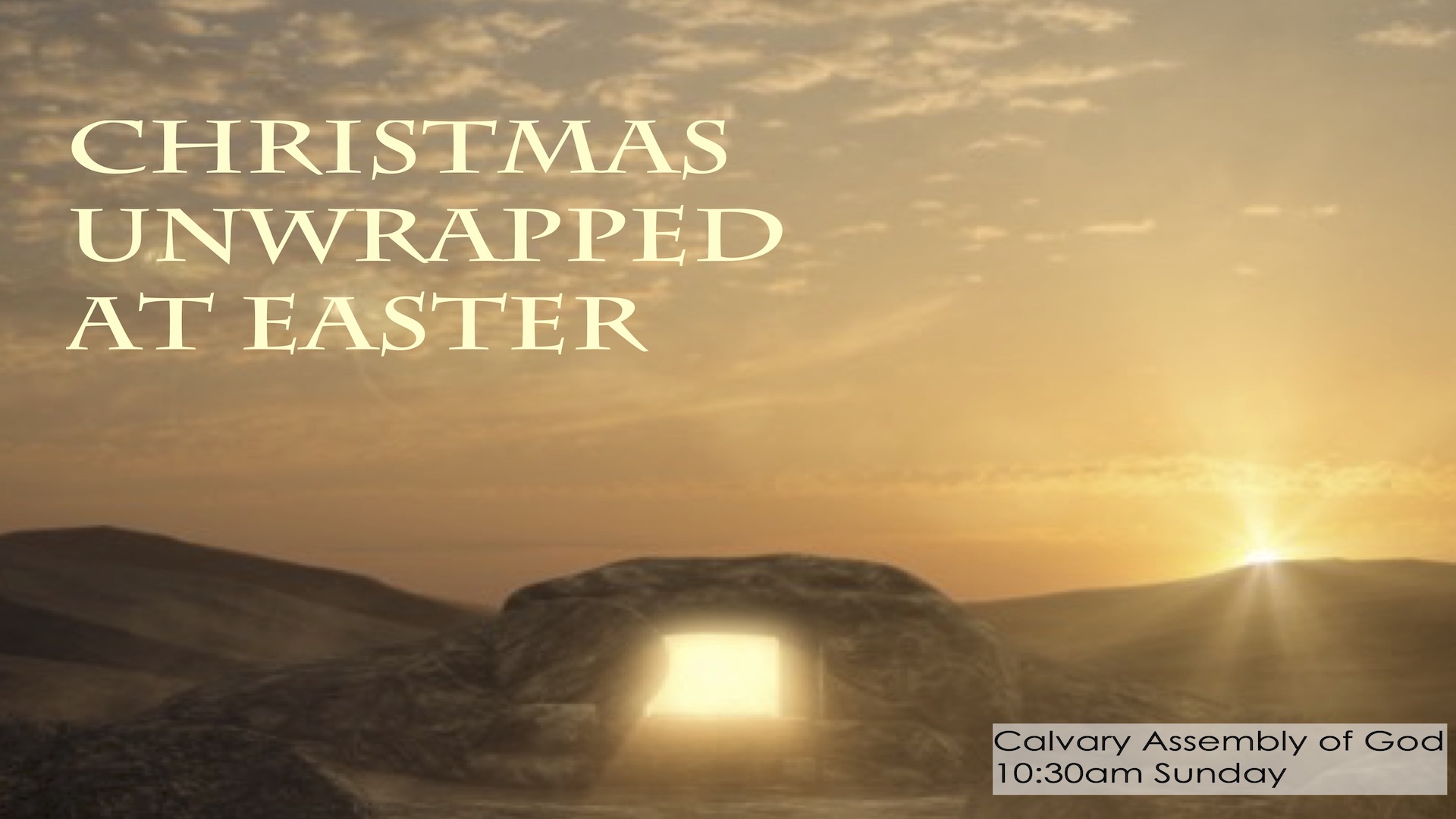
Christmas Unwrapped At Easter—Remember as a kid when you would unwrap a gift and discover it wasn’t something you really wanted, but then your parents explained that it was something you needed? The birth of Jesus in Bethlehem was a little like that—it wasn’t exactly what people were hoping for, but it was exactly what they needed. The real meaning of that Christmas gift wasn’t realized until after Jesus was crucified and resurrected back to life.

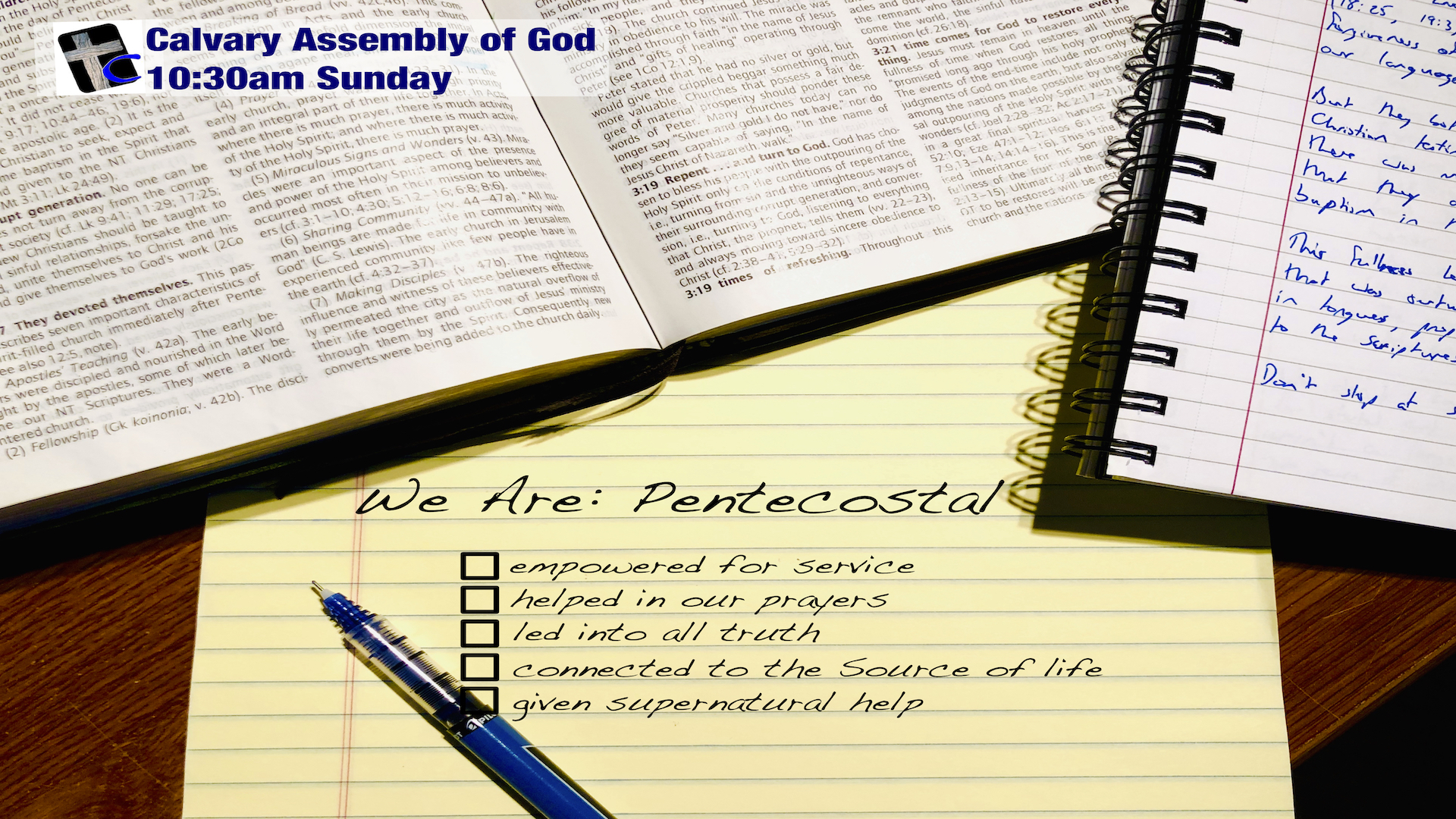
We Are: Pentecostal—Pentecost for over 1500 years was a celebration in Jerusalem that brought in Jews from all over the world. But on the Day of Pentecost that came just ten days after Jesus ascended back into heaven, the meaning of Pentecost was forever changed! Followers of Jesus—now empowered by an infilling of the Holy Spirit—began to take the good news of Jesus all over the world. These Spirit-filled Christians preached the Gospel and won converts to Christ even among hostile crowds, performed miracles and wonders, stood up to pagan priests and persecuting governmental leaders, and established a whole new way of living as Christ-followers. We, too, can be Pentecostal followers of Jesus Christ today. 

Selah—The word Selah appears nearly 70 times in the Bible, almost exclusively in the Psalms. Although it is primarily a musical term, it applies beautifully to our summer series. It means a pause. Throughout the Psalms, Selah appears at the end of a verse, at the end of the psalm, or sometimes even mid-sentence. But each one of them is perfectly placed by the Spirit-inspired authors to get us to take a breath and deeply contemplate what we just read or sang. 

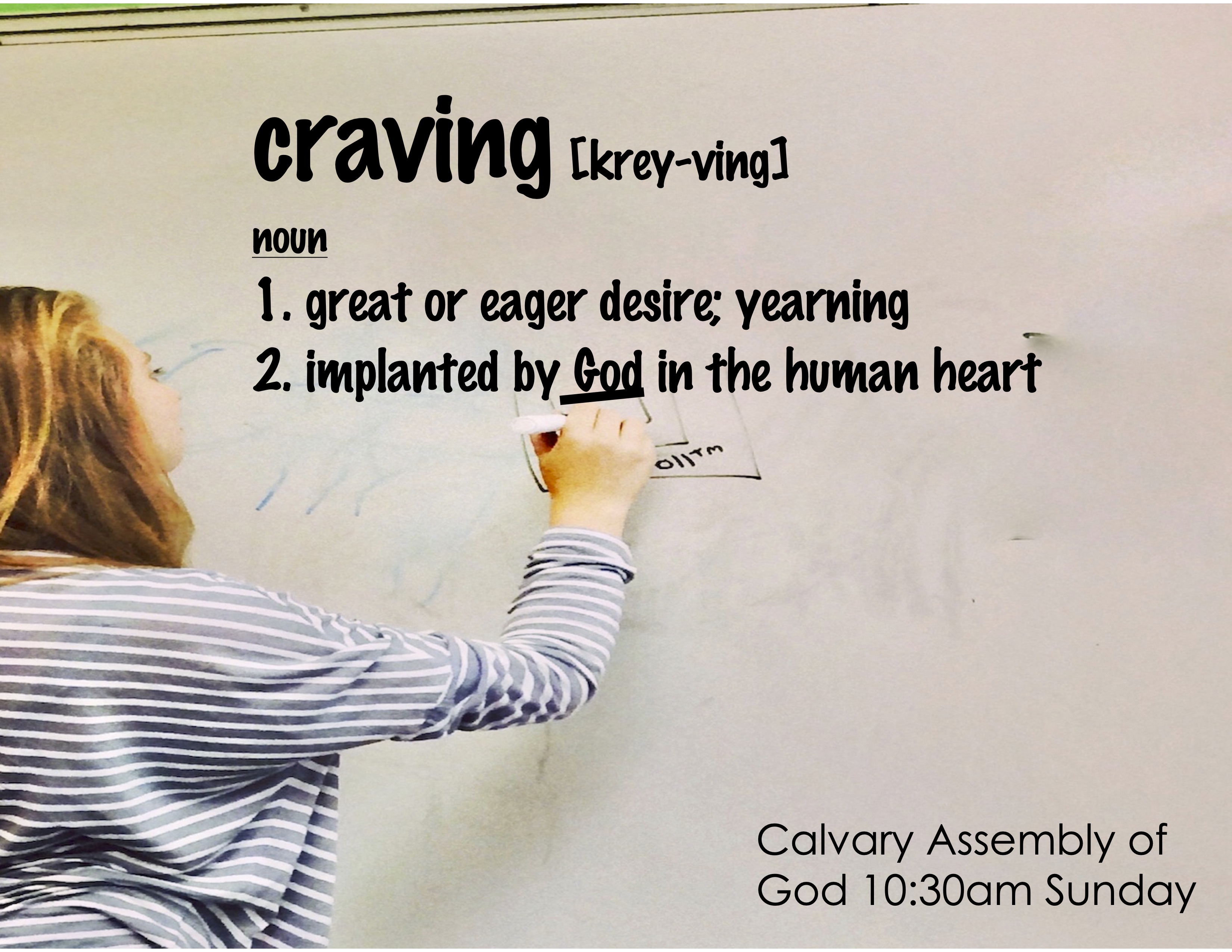
Craving—Doesn’t it seem like far too many Christians think of their relationship with Jesus as bland? After all, we’ve been told that any cravings we have should be quickly downplayed so that they don’t carry “good Christians” away. But what we discover in the Bible is that God made us to be craving creatures—He wants us to long deeply and find ultimate satisfaction for those longings. In short, God created us to long after the things that only He can fulfill. As we dive into this new series, I think you will find it quite eye-opening and heart-lifting. 

The Great Attitude Of Gratitude—There’s something about gratitude that distinguishes people. Think about it: would you rather hang around with grumblers or grateful people? The gratitude of Paul and Silas certainly made them stand out from the crowd when they were in Philippi. Wrongly accused, beaten, and thrown in prison, but instead of bellyaching, they were praising God. Later on, when Paul wrote his letter to the Christians in Philippi, the theme of gratefulness permeates his letter. The distinguishing mark is actually in the title: The GReat ATTITUDE spells out GRATITUDE!

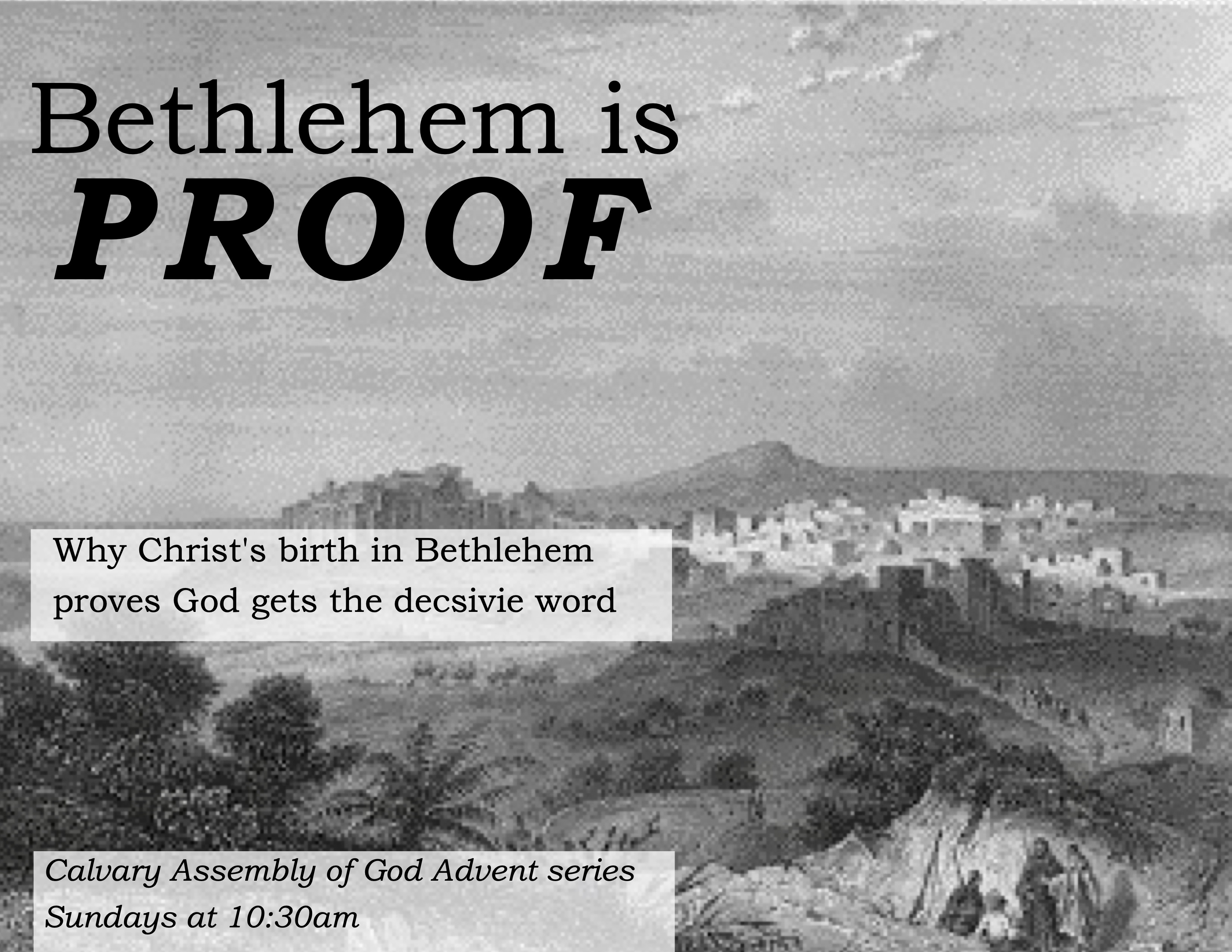
Bethlehem Is Proof—The prophet Micah foretells that the Messiah will arrive in dark times. Enemies will surround Israel, and Israel’s ruler will receive a nasty punch to the jaw. Demonic strongholds, witchcraft, and idolatry will appear to be gaining the upper hand. And then Micah turns his attention to a small village just south of Jerusalem—a village so small that it is often overlooked—a village from which no one would expect Israel’s Deliverer. And yet, Micah writes, “But you, Bethlehem Ephrathah, though you are small among the clans of Judah, out of you will come for Me One who will be Ruler over Israel, Whose origins are from of old, from ancient times” (Micah 5:2). Jesus the Deliverer was born in the little town of Bethlehem, and His birth there 700 years after Micah foretold it is our proof that God always gets the last word, the decisive word, and the best word!

We will be returning to a couple of these series in 2023, and we’ll be launching some brand-new ones as well. If you don’t have a home church in the northern Kent County area, I would love to have you join us! 

►► Would you please prayerfully consider supporting this ministry? My Patreon supporters get behind-the-scenes access to exclusive materials. ◀︎◀︎
Helping Our Teammates Destress

Listen to the podcast of this post by clicking on the player below, and you can also subscribe on AppleSpotify, or Audible. 

An interesting comment that Jesus made that should catch the attention of every leader is this: “I know My sheep and My sheep know Me” (John 10:14). Jesus is telling us that He knows the uniqueness of every person. 

Combine this with David’s encouraging words about Jesus as our Good Shepherd in the opening words of Psalm 23, “The Lord is my shepherd; I have all that I need” (Psalm 23:1 NLT). 

This tells me that quality shepherd leaders…

  1. …are around their teammates enough to know them personally. 
  2. …can quickly ascertain when their teammates are feeling stress or anxiety. 
  3. …know how to give their teammates what they need to destress in a healthy way. 

My friend Greg and I discussed how leaders can use playtime as an effective tool to keep their teammates at their healthiest. Check out this short clip—

If you would like to watch this full episode from The Craig And Greg Show, please click here. 

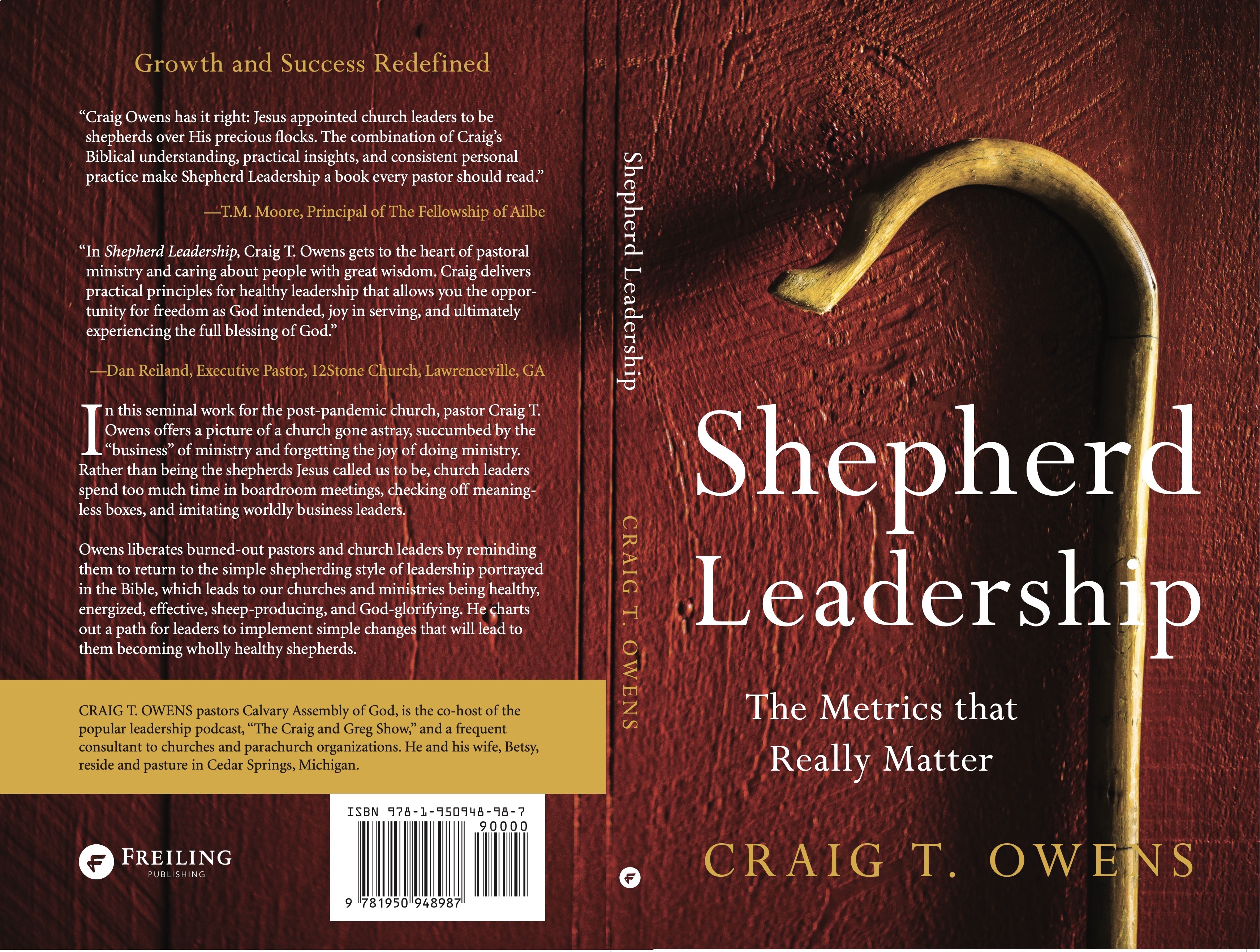
I also talk about how wise leaders take care of those under their care in my book Shepherd Leadership: The Metrics That Really Matter. It’s available in print or ebook, and in audiobook through either Audible or Apple.

►► Would you please prayerfully consider supporting this ministry? My Patreon supporters get behind-the-scenes access to exclusive materials. ◀︎◀︎

Book Reviews From 2022

Listen to the podcast of this post by clicking on the player below, and you can also subscribe on AppleSpotify, or Audible.

I love reading, and I love sharing my love of good books with others! Here is a list of the books I read and reviewed in 2022. Click on a title to be taken to that review.

Autobiography of Calvin Coolidge

Cary Grant

Contending For Our All

Father Sergius

Hank Greenberg: The Story Of My Life

Living In A Gray World

Out Of The Depths

Roots Of Endurance

Simple Truths Of Leadership

Spurgeon And The Psalms

Susanna Wesley

The Holy War

The Legacy Of Sovereign Joy

The Poetry Of Prayer

The Self-Aware Leader

Who Says Elephants Can’t Dance?

Who’s Pushing Your Buttons?

Here are my book reviews for 2011.

Here are my book reviews for 2012.

Here are my book reviews for 2013.

Here are my book reviews for 2014.

Here are my book reviews for 2015.

Here are my book reviews for 2016.

Here are my book reviews for 2017.

Here are my book reviews for 2018.

       Here are my book reviews for 2019.

Here are my book reviews for 2020.

Here are my book reviews for 2021.

►► Would you please prayerfully consider supporting this ministry? My Patreon supporters get behind-the-scenes access to exclusive materials. ◀︎◀︎

The Prince Of Peace

Listen to the podcast of this post by clicking on the player below, and you can also subscribe on AppleSpotify, or Audible. 

Last week we saw the dark times in which Micah lived as he prophesied the advent of the Messiah. Israel was both surrounded by enemies as well as lots of practices within their borders that were heartbreaking to God. Many times, our lives can feel the same way: enemies of God all around us and our own turmoil and doubts inside our hearts and minds.      

In this dark, hopeless time, the Messiah came as our Great Shepherd. Take a look at what this Shepherd brings us:

He will stand and shepherd His flock in the strength of the Lord, in the majesty of the name of the Lord His God. And they will live securely, for then His greatness will reach to the ends of the Earth. And He will be their peace. (Micah 5:4-5)

We see this idea of Jesus our Great Shepherd bringing peace to our hearts in the New Testament as well: 

May the God of peace, who through the blood of the eternal covenant brought back from the dead our Lord Jesus, that Great Shepherd of the sheep, equip you with everything good for doing His will, and may He work in us what is pleasing to Him, through Jesus Christ, to Whom be glory for ever and ever. Amen. (Hebrews 13:20-21) 

This peace is also implied in Psalm 23:1 when David wrote, “The Lord is my Shepherd, I shall not be in want.” That phrase “I shall not be in want” really captures the definition of peace. 

The Hebrew word for peace is shalom. An easy-to-remember definition of shalom is “nothing lost, nothing missing.” Our Great Shepherd makes sure nothing is lost or missing that would cause us anxiety or doubt, so we can have total peace—we can have shalom!

Jesus said the devil’s agenda was for everything to be lost or missing—“the thief comes only to steal and kill and destroy”—but our Great Shepherd’s agenda is for there to be nothing lost or missing—“I have come that they may have life, and have it to the full” (John 10:10). 

Isaiah, who was prophesying at the same time as Micah, sounded a similar note:

Therefore the Lord Himself will give you a sign: The virgin will conceive and give birth to a Son, and will call Him Immanuel. … And He will be called Wonderful Counselor, Mighty God, Everlasting Father, Prince of Peace. (Isaiah 7:14, 9:6) 

When this Great Shepherd was born in Bethlehem, the shepherds in the field were the first to hear the good news. Notice what the angels announced: “Glory to God in the highest heaven, and on earth peace to those on whom His favor rests” (Luke 2:14). 

Who has God’s favor? Those with faith in Him: “Without faith it is impossible to please God” (Hebrews 11:6). So those with faith in God have God’s favor. 

Faith in what? In all that Jesus purchased for us by His blood shed on the Cross: “Therefore, since we have been justified through faith, we have peace with God through our Lord Jesus Christ” (Romans 5:1). 

Check this out: The root word of shalom is a word that means, “It is finished.” These are the exact same words our Price of Peace announced from the Cross! Jesus finished the work that brings us peace from the turmoil and anxiety of sin! 

Faith comes from believing that God has made the promise of peace, that God has fulfilled the promise of peace through Jesus, and that God is bringing us to His eternal peace. So now our lives of peace in a world of turmoil can serve as a testimony to others. 

Jesus called His followers to be peacemakers (Matthew 5:9) but we cannot do this while we are experiencing anxiety or doubts. To be peacemakers we must be full of peace because of our relationship with the Prince of Peace, who has ensured that nothing is lost and nothing is missing! 

If you feel anxious, remember that Bethlehem is your proof that the Prince of Peace has come to remove doubts, anxiety, fear, and inner turmoil. Let every pang of anxiety be immediately a call to run to the Prince of Peace. He has paid an incalculable price to purchase your peace, so don’t leave this gift unopened and unused. A dark, anxious world is looking for peace. Know the author of shalom so that you can introduce others to this Prince of Peace. 

If you’ve missed any of the message in this series, please check them out by clicking here. 

►► Would you please prayerfully consider supporting this ministry? My Patreon supporters get behind-the-scenes access to exclusive materials. ◀︎◀︎

Thursdays With Spurgeon—Our Tricky Tongues

This is a weekly series with things I’m reading and pondering from Charles Spurgeon. You can read the original seed thought here, or type “Thursdays With Spurgeon” in the search box to read more entries.

Listen to the podcast of this post by clicking on the player below, and you can also subscribe on AppleSpotify, or Audible. 

Our Tricky Tongues

I said, “I will guard my ways, lest I sin with my tongue; I will restrain my mouth with a muzzle, while the wicked are before me.” I was mute with silence, I held my peace even from good; and my sorrow was stirred up. My heart was hot within me; while I was musing, the fire burned…. (Psalm 39:1-3)

     Tongue sins are great sins; like sparks of fire ill words spread and do great damage. ‘I will guard my ways, lest I sin with my tongue’ (v. 1). If believers utter hard words of God in times of depression, the ungodly will take them up and use them as a justification for their sinful courses. If parents’ own children rail at them, no wonder if their enemies’ mouths are full of abuse. 

      Our tongue always wants watching, for it is fidgety as an ill-broken horse, but especially must we hold it in when the sharp cuts of the Lord’s rod excite it to rebel. 

     David was not quite so wise as our translation would make him; if he had resolved to be very guarded in his speech, it would have been altogether commendable. When he went so far as to condemn himself to entire silence, ‘even from good,’ there must have been at least a little sullenness in his soul.

From Spurgeon And The Psalms

Oh, how often our tongues trip us up! More times than we would like to admit, our tongues completely undo the good example we have previously shown. James spends almost an entire chapter talking about the fire our tongues can kindle, concluding that our tongues are “a restless evil, full of deadly poison” (James 3:1-18)! 

Part of David’s solution was to notice who was around him so that his words would not add fuel to their skepticism about God. But notice that he went too far because he didn’t speak out the good that he should have spoken. 

Clearly, there is a time to speak and a time to be silent. David’s son Solomon talked about the wisdom of speaking the appropriate words at the appropriate time (see especially Proverbs 10).  

In Mere Christianity, C.S. Lewis talks about a valuable discipline: A personal review of our words and actions at the end of the day. After all, it’s hard to correct something of which we are unaware. Here’s what Lewis wrote—

“When I come to my evening prayers and try to reckon up the sins of the day, nine times out of ten the most obvious one is some sin against charity; I have sulked or snapped or sneered or snubbed or stormed. And the excuse that immediately springs to mind is that the provocation was so sudden or unexpected. I was caught off my guard, I had not time to collect myself…. Surely what a man does when he is taken off guard is the best evidence of what sort of man he is. Surely what pops out before the man has time to put on a disguise is the truth. If there are rats in the cellar you are most likely to see them if you go in very suddenly. But the suddenness did not create the rats; it only prevents them from hiding. In the same way the suddenness of the provocation does not make me an ill-tempered man: it only shows what an ill-tempered man I am.” 

We would do well to pause and ask the Holy Spirit to show us the rats in our cellar—evil words spoken that shouldn’t have been uttered, and helpful words left unspoken at the moment they should have been said. If we will humbly listen, the Holy Spirit will help us mature in this vital area of taming our tricky tongues. 

►► Would you please prayerfully consider supporting this ministry? My Patreon supporters get behind-the-scenes access to exclusive materials. ◀︎◀︎

Forgive Like You’ve Been Forgiven

Listen to the podcast of this post by clicking on the player below, and you can also subscribe on AppleSpotify, or Audible. 

Jesus said that the devil’s agenda was to steal, kill, and destroy (John 10:10). We see this on full display in the aftermath of the first sin in the way relationships humans had with each other changed. 

God said to Eve, “Your desire will be for your husband, and he will rule over you” (Genesis 3:16). Dr. Henry Halley commented, “The last two lines of this verse could be paraphrased, ‘You will now have a tendency to try to dominate your husband and he will have the tendency to act as a tyrant.’” And to Adam, God said that he would now have to work harder than ever before to harvest the food he needed for survival, which undoubtedly caused stress in his relationship with Eve. In the very next chapter, the strained relationship between Cain and Able resulted in the first homicide (Genesis 3:17-19, 4:1-8). 

In these relationships, intimacy was stolen, closeness was killed, and life was destroyed. 

An irreplaceable tool for avoiding this heartache and destruction that sin causes in our relationships is forgiveness. 

Peter asked Jesus, “How many times should I forgive my brother or sister who sins against me? Up to seven times?” (Matthew 18:21). In reply, Jesus told a story about a man who owed the equivalent of 20 years of a day laborer’s wages and a man who owed about three months of a day laborer’s wages. The first man who owed so much was forgiven entirely of his debt, but he wouldn’t forgive the paltry amount that was owed to him by the second man. 

To the forgiven but unforgiving man, Jesus said, “Shouldn’t you have had mercy on your fellow servant just as I had on you?” (see Matthew 18:22-35). 

That should be our standard: Not how others treat me, but how God has treated me! Not how much others owe me, but how much God has forgiven me!

Do I want God to put a quota on how many times I can be forgiven? Do I want there to be a limit on how big of an offense God will forgive in me?

Of course not!

That’s my standard. I must show the same mercy to others as I have been shown by God. 

If my forgiven sins are forgotten sins (and they are), then I need to treat my brother and sister the same way. This is why Jesus told Peter to stop counting the number of offenses. We are to treat every offense as though it was the first and only offense.

The man who owed so much money asked for more time to repay his debt. But the master did more than that: He forgave the debt—he wiped it off the books completely, as though it had never happened! 

When God forgives our sin, He separates our sin from us as far as the east is from the west. He keeps no record of the offense ever having occurred (Psalm 103:10-12). 

This is to be our standard too. We are to forgive others as God has forgiven us. Forgiveness will restore intimacy, closeness, and life to our relationships. 

This is difficult to do. As Peter pointed out, a brother or sister—someone close to his heart—had sinned against him. But this is why Jesus taught us to pray, “Forgive us our sins, as we have forgiven those who sin against us” (Matthew 6:12). Or as Eugene Peterson paraphrases that verse in The Message, “Keep us forgiven with You and forgiving others.” 

May the Holy Spirit help us in this important work of ongoing, complete, and restoring forgiveness!

►► Would you please prayerfully consider supporting this ministry? My Patreon supporters get behind-the-scenes access to exclusive materials. ◀︎◀︎

The Great Shepherd

Listen to the podcast of this post by clicking on the player below, and you can also subscribe on AppleSpotify, or Audible. 

God delights to show up when the situation seems hopeless from any human standpoint. When He does what no one else can do, He alone is glorified!

A very notable dark time took place in Israel about 700 BC as the nation was surrounded by enemies. Micah prophesied the arrival of the Messiah. But he also prophesied that before He came, there would be dark days. He talks about the siege of enemies surrounding them, Israel’s ruler being stuck on the cheek with a rod, not to mention the strongholds, witchcraft, and idolatry that plagued the nation within its own borders (Micah 5:1, 11-13). 

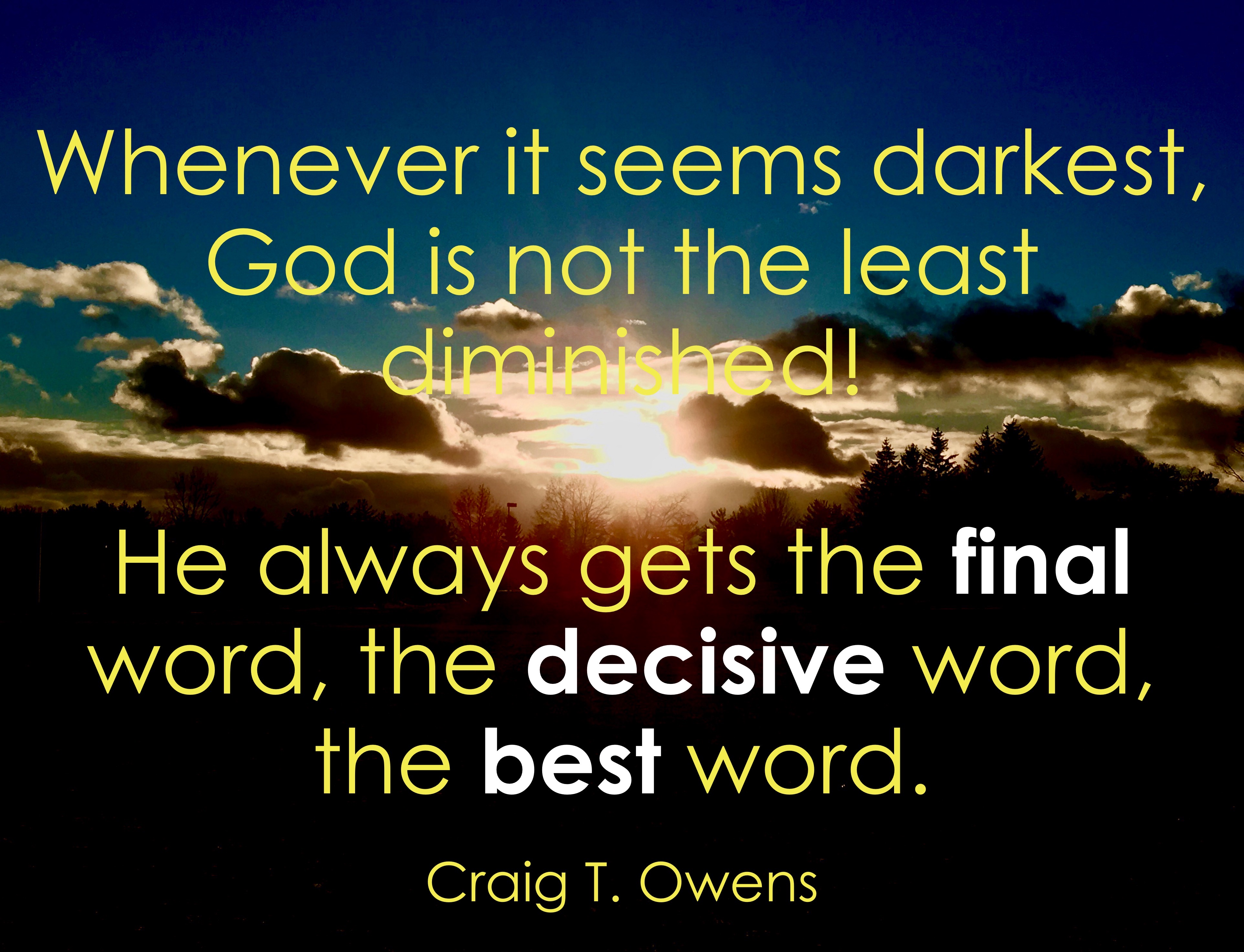
But whenever it seems darkest, God is not the least diminished! He always gets the final word, the decisive word, the best word. 

So into this inky darkness, Micah prophesies a ray of light—“But you, Bethlehem Ephrathah, though you are small among the clans of Judah, out of you will come for Me One who will be Ruler over Israel, whose origins are from of old, from ancient times” (Micah 5:2). 

I’m sure many people thought that Bethlehem was too small of a village for anyone of significance to be born there.

The Last Battle is the final book in C.S. Lewis’ Narnia series. This story also portrays a similar dark time. Shift the ape has convinced Puzzle the donkey to wear an ill-fitting lion skin to pretend to be the great king Aslan. Through tricks, sleight of hand, deception, and the plans of some evil schemers, many of the Narnians come to believe that Puzzle is Aslan. But it’s confusing because this “Aslan” is not the kind, strong king they believed in, so many begin to just look out for themselves. 

In a fitting setting, Puzzle is being hidden inside an old stable. A great battle takes place with the true Narnians ending up inside the stable, and yet once inside they discover not a dark stable, but a sunlit land spreading farther than their eyes can see. Lord Digory observes, “Its inside is bigger than its outside.”  

But I love this line from Queen Lucy, “In our world too a stable once had something inside it that was bigger than our whole world.” 

Inside that Bethlehem stable was born the Great Shepherd! Who was inside that stable and what He would accomplish became so much grander and more beautiful than any human had ever imagined! 

Jesus is our Great Shepherd—He will stand and shepherd His flock in the strength of the Lord, in the majesty of the name of the Lord His God. And they will live securely, for then His greatness will reach to the ends of the earth (Micah 5:4). 

Jesus is strong, majestic, and great (John 10:10-15). 

Jesus equips us to be victorious (Hebrews 13:20-21). 

Jesus walks with us every step of the way (Psalm 23:1-6). 

And Jesus takes us Home to be with Him forever (1 Peter 5:4). 

(Check out all of these passages by clicking here.) 

Our faith is not rooted in some mysterious thing with an uncertain history. It is a faith rooted in real historical events. The Great Shepherd being born in the town that was prophesied 700 years beforehand is one more proof that God is in control, that God loves you, and that God always gets the final word, the decisive word, the best word! 

If you’ve missed any of the messages in our Advent series Bethlehem Is Proof, you find the full list by clicking here. 

►► Would you please prayerfully consider supporting this ministry? My Patreon supporters get behind-the-scenes access to exclusive materials. ◀︎◀︎

Help With Our Blind Spots

Listen to the podcast of this post by clicking on the player below, and you can also subscribe on AppleSpotify, or Audible. 

Check out a snippet of this conversation I had with John Opalewski and Jim Wiegand on the Leading From Alignment podcast. If you want to watch the full 30-minute interview, check out this link. 

I’m not sure if you’ve noticed, but I have posted quite a bit this week about a leader’s self-awareness—from my book review of John Maxwell’s The Self-Aware Leader, to my training with a pastoral team in South Carolina, to the clip I just shared from this interview. This aspect is so crucial for leadership success. 

As one of my friends commented to me this week, “Your timing on this is incredible—I was just thinking about self-awareness this morning. It’s probably my biggest fear as a leader: am I accurate in my own self-assessment? am I who I think I am?” These are questions that all leaders should be asking regularly. 

I’ll be sharing more clips from this Leading From Alignment interview soon, so please stay tuned. Shepherd Leadership: The Metrics That Really Matter is available in print or ebook, and in audiobook through either Audible or Apple.

►► Would you please prayerfully consider supporting this ministry? My Patreon supporters get behind-the-scenes access to exclusive materials. ◀︎◀︎