(1) God allows the humble to know Him more intimately. For though the Lord is high, yet has He respect to the lowly—bringing them into fellowship with Him—but the proud and haughty He knows and recognizes only at a distance (Psalm 138:6).
(2) God gives the humble help to overcome evil. But He gives us more and more grace—power of the Holy Spirit, to meet this evil tendency and all others fully. That is why He says, “God sets Himself against the proud and haughty, but gives grace continually to the lowly (those who are humble enough to receive it)” (James 4:6).
(3) God gives His favor to the humble. …Clothe (apron) yourselves, all of you, with humility—as the garb of a servant, so that its covering cannot possibly be stripped from you…. For God sets Himself against the proud—the insolent, the overbearing, the disdainful, the presumptuous, the boastful—and He opposes, frustrates, and defeats them, but gives grace (favor, blessing) to the humble (1 Peter 5:5).
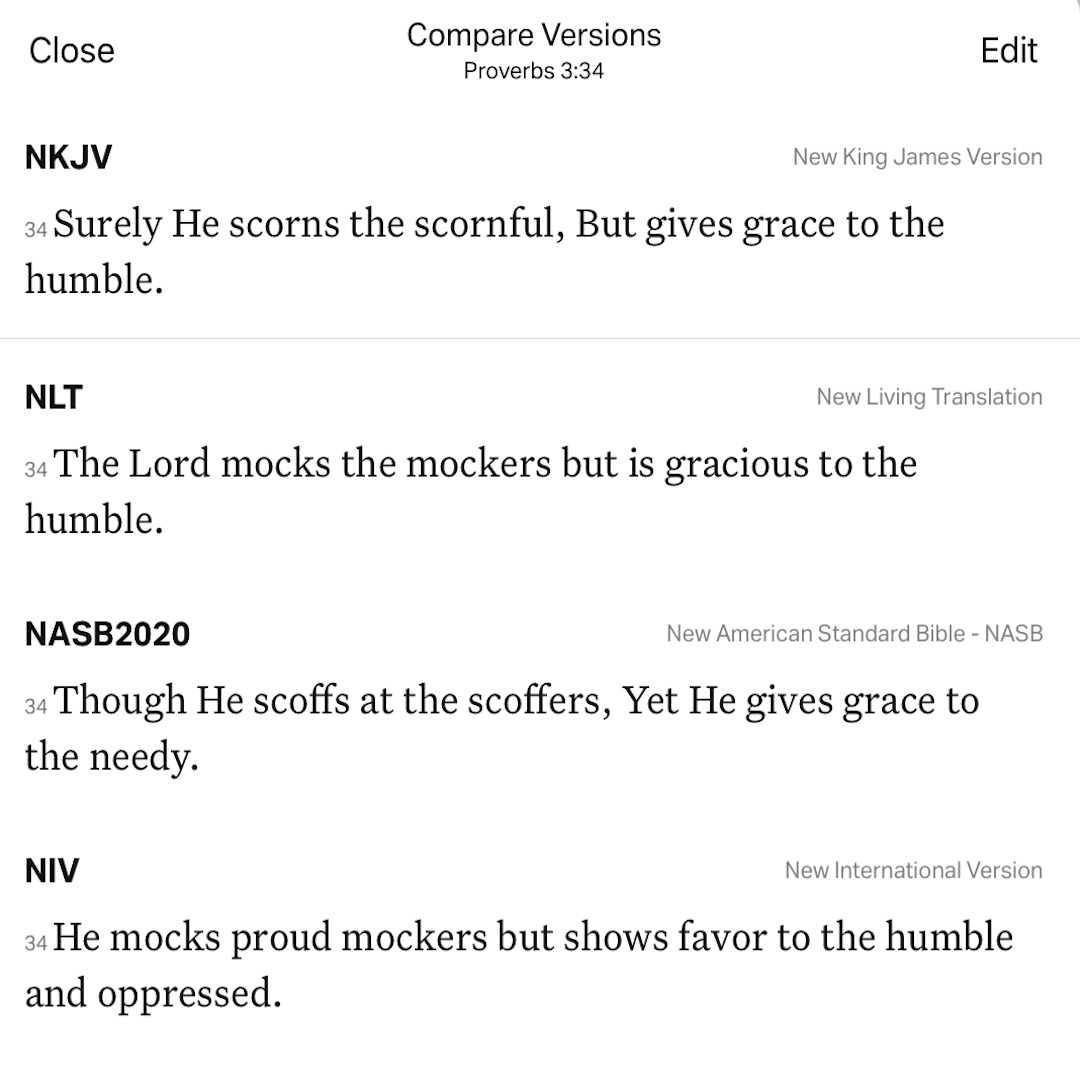
The bottom line—God mocks proud mockers but shows favor to the humble and oppressed (Proverbs 3:34).
Names convey character traits, honoring of the past, and hopes for the future. God knows all of our days and how our name will be remembered at each pivotal moment of our lives (Psalm 139:16). Our names are lovingly tattooed on His hands so He always sees them (Isaiah 49:16).
God not only knows and uses the name our parents have given us, but He has a name for each of us that only He knows. When we get to Heaven, He will reveal to each of us the unique name He has for us (Revelation 2:17).
Axis reported this in their weekly Cultural Translator newsletter. “Gallup polling data has found a huge spike in the percentage of Americans who say they get less sleep than they need. Survey results also indicate an increase in Americans’ daily stress. Why it’s news you can use: This data indicates that when you interact with anyone—in a store, on the road, at work, or in church—there’s a decent chance that particular human is feeling both exhausted and stressed out. The odds of this stress/exhaustion matrix are even higher if you are conversing with a young woman aged 18 to 29. In 2001, 42% of young women in that bracket said they get enough sleep, but that number has dropped to 27%. Younger women are also the most likely to say they experience daily stress. Stress and sleep have a symbiotic relationship, and parents should understand how both factors play a role in teens’ mental health.” I have written quite a few posts about getting enough sleep, and about taking some time for self-care.
“The world and its culture will not improve unless we play an active role in trying to improve it. Beginning with ourselves, we must make sure the culture we choose honors God and spreads His grace to the people around us. From there we must become informed about the state of culture, especially that which is most potent in conveying ideas and establishing practices—law, education, entertainment, social media, and pop culture in all its forms. That’s not to say we have to participate in all these; but at the least, we need to understand the times and how they shape and are shaped by various forms of culture so that we can know what we ought to do in pursuing a culture of love (1 Chronicles 12:32).” —T.M. Moore
“A man gives little if he gives much with a frown; he gives much if he gives little with a smile.” —Talmud, Ketubot
This is a very helpful interactive map of Paul’s missionary journeys. While you are on the viz.bible website, be sure to check out all of the other amazing infographics they have. I use these quite often to help me grasp the message of Scripture visually.
Listen to the podcast of this post by clicking on the player below, and you can also subscribe on Apple, Spotify, or Audible.
Every monarch or president on the planet has certain protocols for anyone who interacts with them. There are requirements on how to walk into the room, titles that have to be used, the way you have to act, things you can or can’t say, and the list goes on and on.
So it’s natural to think that this is how we also have to approach the Sovereign King of the Universe. But this King so desires intimate conversation with His people that Jesus gave us this simple protocol: “Our Father” (Matthew 6:9-13).
Jesus told us that He wanted us to dispense with the world’s expected protocols. He said that when we approach God, those protocols are gone. In the preceding verses, He told us that we pray…
…NOT for show or else we are called hypocrites—putting on an act or performance to earn applause or approval.
…NOT with “alien” vocabulary or else we are pagans—adopting manners that aren’t our own as a means to be accepted.
The prayers of Jesus seldom sound like our modern idea of “prayer.” Instead, they sound more like an everyday conversation when He’s talking to His Father, and the sound like commands when He’s casting out demons or healing diseases (see examples in Matthew 8:3, 13, 26, 32; John 11:40-44).
Jesus also reminded us that we pray because…
He told us to
He wants us to seek God’s Kingdom
He wants us to receive God’s Kingdom
He wants us to live in the power of God’s Kingdom every single moment
Let me repeat: our protocol for prayer is nothing like the world’s protocols for interacting with rulers. Our protocol is simply coming to our Heavenly Father in simple, childlike love and anticipation.
Kingdom praying should be as natural as talking to the most loving Father you can imagine!
Check out the others messages in our series Kingdom Prayingby clicking here.
Listen to the podcast of this post by clicking on the player below, and you can also subscribe on Apple, Spotify, or Audible.
The apostle Peter said he wrote two letters to the church “as reminders to stimulate you to wholesome thinking” (2 Peter 3:1). And Paul reminded his young friend Timothy to “keep reminding [your congregation] of these things” (2 Timothy 2:14).
In the spirit of those great apostles, I have made it a practice to take time at the end of each year to look back on all that we have learned in the previous year, and then to look forward to where God may be leading Calvary Assembly of God in this upcoming year.
Clicking on each series title will take you to a list of all of the sermons in that series.
Intimate Conversation—The dictionary defines the word “intimate” with these phrases: associated in close personal relations, characterized by warm friendship, and closely personal. These words perfectly describe the relationship God wants to have with His children through prayer. Pete Briscoe said, “Prayer is an intimate conversation with the One who passionately loves you and lives in you.” The One who loves you so passionately desires to walk with you and share intimate knowledge with you. Prayer is not something formal, cold, or mechanical, but it is vibrant, warm, engaging, and life-changing.
A Christian’s Mental Health—I don’t think there is any arguing that Jesus was the healthiest individual who ever walked planet Earth. Some may want to push back with, “Of course He was because He didn’t have any problems to deal with!” But the writer of Hebrews tells us that Jesus experienced everything you and I will ever experience (Hebrews 2:17), so His deity didn’t exclude Him from the stressors that His humanity would have to face. And yet, He handled all of these things successfully. Luke the physician observed the growth of Jesus and tells us that it all began with Jesus having a robust mental health. From that foundation, everything else—physical, spiritual, relational—all could develop properly. We must learn from this example and pay careful attention to our own mental health.
Bold Claims—“That’s a pretty bold claim. Are you prepared to back that up?” I’ll bet you have heard something like that said to you, and maybe you have even said that yourself to someone else who made a big, audacious statement. After Jesus is arrested by the religious leaders—an arrest that will ultimately lead to Jesus being crucified on the Cross—there are some incredibly bold claims spoken by key people in this part of the Story. For the most part, these are claims that we don’t read earlier in any of the Gospels, but as this story is heading toward its most crucial moment, we have these audacious statements pronounced. But here’s the most important part: These bold claims weren’t just made, but they were backed up with proof as well.
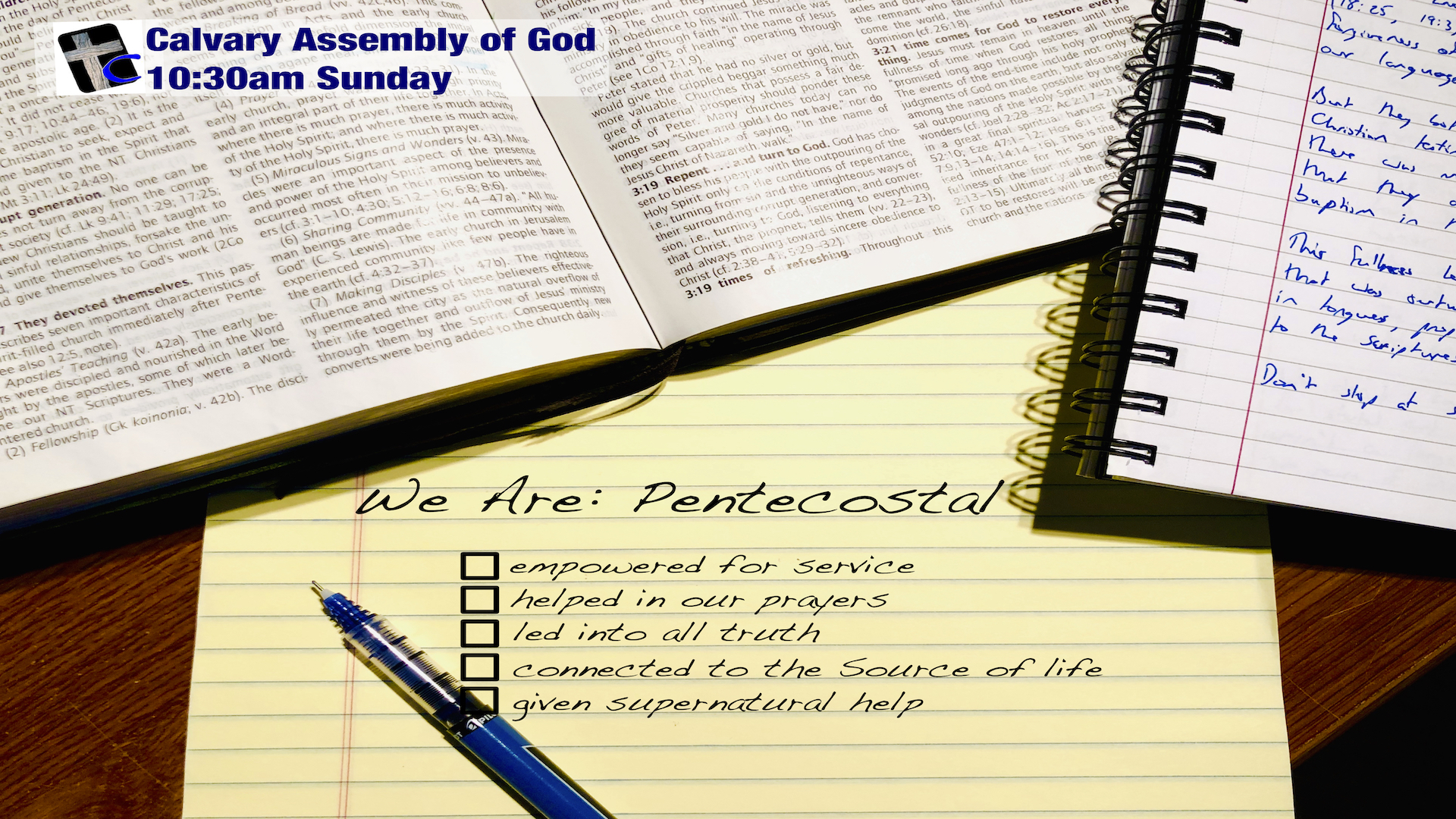
We Are: Pentecostal—Pentecost for over 1500 years was a celebration in Jerusalem that brought in Jews from all over the world. But on the Day of Pentecost that came just ten days after Jesus ascended back into heaven, the meaning of Pentecost was forever changed! Followers of Jesus—now empowered by an infilling of the Holy Spirit—began to take the good news of Jesus all over the world. These Spirit-filled Christians preached the Gospel and won converts to Christ even among hostile crowds, performed miracles and wonders, stood up to pagan priests and persecuting governmental leaders, and established a whole new way of living as Christ-followers. We, too, can be Pentecostal followers of Jesus Christ today.
Ascending—Every year, Jews from around the world made four pilgrimages up to Jerusalem for various feasts and sacrifices. These journeys reminded them of God’s goodness as they went to the Temple to worship, and they helped refocus on God’s ways as they returned to their regular routines. Jerusalem is over 2500 feet above sea level, so the pilgrimage there was a physical workout as well as a spiritual workout. These workouts were beneficial for God’s people, preparing them to minister in their cities in the following months. The Book of Psalms contains 15 songs that these pilgrims would sing to and with each other as they traveled up to Jerusalem. These Psalms of Ascent are still instructive for Christians today.
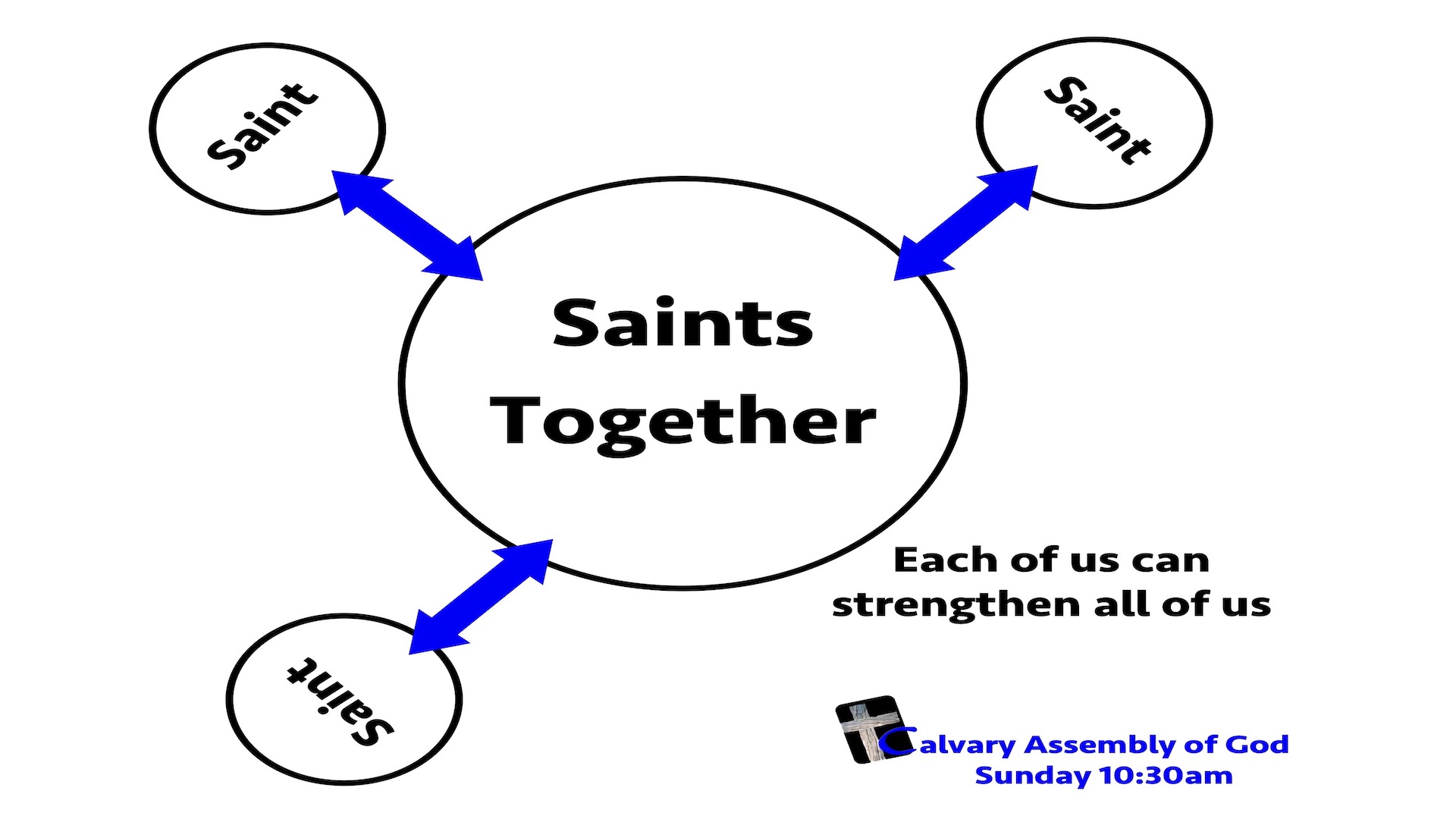
Saints Together—Throughout the New Testament the word “saints” is always in the plural form. This is a clear indication that none of us can develop into the full-fledged Christians we were meant to be on our own. We all need each other. More specifically, we all need the most mature version of each other. A key component of an individual saint’s development is the time spent alone being forged by the discipline of the Holy Spirit. Maturing saints then come together with each other to continue to strengthen and sharpen everyone in the church. Strong individual saints make a strong church, and a strong church makes strong individual saints! Let’s learn about six important spiritual disciplines that each individual saint must put into practice so that they can use their newly developed strengths to help other saints in their own development.
The Great Attitude Of Gratitude—There’s something about gratitude that distinguishes people. Think about it: would you rather hang around with grumblers or grateful people? The gratitude of Paul and Silas certainly made them stand out from the crowd when they were in Philippi. Wrongly accused, beaten, and thrown in prison, but instead of bellyaching, they were praising God. Later on, when Paul wrote his letter to the Christians in Philippi, the theme of gratefulness permeates his letter. The distinguishing mark is actually in the title: The GReat ATTITUDE spells out GRATITUDE!
Long Live The King Of Kings—Throughout human history, whenever a king died, the people would say something like, “The king is dead. Long live the king!” They would say this because the next king ascended to the throne immediately after his predecessor died. Except when a nation had been defeated, the cry, “The king is dead” was unanswered by, “Long live the king!” Israel must have felt like this. After being defeated by Nebuchadnezzar and spending 70 years in exile, it appeared to many that the line of kings was broken. Even after retuning to their homeland, Israel continued to live under the thumb of other powerful nations. And yet, some still clung to the glimmer of the promise God had made about an eternal King sitting on Jerusalem’s throne. The First Advent of Jesus revealed to us in the Gospels reassures us that the promise of an eternal King is true. Jesus came to earth to reveal His majesty to us. The First Advent is so important because it bolsters our faith for the imminent Second Advent when Jesus will return as the King of kings! Christmas is a great time to be reminded that even now we can confidently declare, “Long live the eternal King of kings!”
2024 promises to be an exciting year! If you don’t have a home church in the northern Kent County area, I would love to have you join us!
Listen to the podcast of this post by clicking on the player below, and you can also subscribe on Apple, Spotify, or Audible.
Let’s say you are thinking about buying a particular book. Are you more likely to buy that book because the author says it’s good, because a book reviewer says it’s good, or because a close friend says it’s good? I think all of us give more weight to the suggestions from our friends, especially because they have nothing to gain from making that suggestion.
In the same way, when someone close to us says, “I know from personal experience that following Jesus is the best decision that I have ever made. Making Jesus my Lord and Savior has completely changed everything for me,” it’s easier for us to make that same decision for ourselves.
The deeper the level of our intimacy with someone usually means we have more influence with them.
Jesus told us all about the Holy Spirit when He was discussing His ascension. He wasn’t going to leave us as orphans, but told us of the intimate connection the Spirit would make for us. For instance, Jesus said, “And I will ask the Father, and He will give you another Counselor to be with you for ever—the Spirit of Truth” (John 14:16-17).
Notice that Jesus considers the Holy Spirit an irreplaceable and coequal part of the Godhead—I will ask the Father, and He will give you another Counselor (see also Matthew 3:16-17; Luke 10:21; Matthew 28:19).
The word Jesus uses for Counselor is parakletos. This means One who comes alongside to help us. I like all the words the Amplified Bible uses: “Comforter—Counselor, Helper, Intercessor, Advocate, Strengthener, and Standby.” Indeed, Luke records numerous instances where the Holy Spirit is alongside Christians to strengthen and encourage them (for instance: Acts 4:8, 6:10, 9:31).
Notice as well that Jesus tells us that as a part of the Trinity the Holy Spirit is eternal: “to be with you for ever.” Because the Holy Spirit is fully God, He knows the end from before the beginning. His perspective is infinite, so He can guide us in ways that only One who can see everything could guide us. For example, He leads us to places we might not have chosen on our own (Luke 4:1; Acts 8:29), or stops us from going somewhere at the wrong time (Acts 16:7), or talking with people we might have overlooked (Acts 10:19, 11:12).
Jesus also calls the Him the Spirit of Truth. He reveals things that we could not have perceived with our natural minds (see Acts 5:1-9).
And Jesus calls the Holy Spirit a great Teacher, “The Counselor, the Holy Spirit, whom the Father will send in My name, will teach you all things and will remind you of everything I have said to you” (John 14:26). So we see the Holy Spirit helping us apply Scripture to our prayers (Acts 4:25-26) and to incredibly complex and delicate situations (Acts 11:15-18, 15:1-21).
The Holy Spirit is not a force to fear but a Person to know ever more intimately.
When our lives are transformed and expanding because of an intimate, ongoing, vibrate relationship with the Holy Spirit, we are witness (Acts 1:8). You cannot exhaust all that the Spirit has for you, so keep abiding and growing in that intimate relationship. Let it be said of you as it was said of Peter and John: “We can tell you have been with Jesus!” (Acts 4:13).
Listen to the podcast of this post by clicking on the player below, and you can also subscribe on Apple, Spotify, or Audible.
I have been so grateful for the insights of Dr. Gary Chapman in his book The Five Love Languages. I have found this book to be of immense value in helping couple prepares for marriage, and in helping married couples get beyond a place where intimacy has become stuck.
In short, the five love languages are words of affirmation, quality time, gifts, acts of service, and physical touch. The goal of learning the other person’s love language—and learning to speak it consistently and fluently—is an increased level of intimacy. In the book of Amos, God asks, “Can two people walk together without agreeing on the direction?” (Amos 3:3 NLT), and speaking the right love language definitely helps people agree!
The whole reason we come to God in prayer as a Father, as a Brother, and as a Counselor is so that we can hear Him speaking our love language and we can continue to walk in deeper intimacy with Him.
When my then-girlfriend Betsy and I first met, we spent hours and hours getting to know each other. We would ask questions, share stories, and tell things we did and didn’t enjoy. This is the epitome of intimate conversation: getting to know the other person’s heart as you open up your heart to them as well.
I’ve shared this analogy before, but intimacy grows stale and can eventually disappear altogether if those in a relationship are no longer walking together. It doesn’t work if I say, “Betsy, I’m looking forward to spending an hour with you each week,” or even if I say, “I’ll give you 15 minutes each morning.” Instead, our relationship needs to be one of continual walking.
It’s the same thing for us as Christians: we cannot only give God an hour at a church service on Sunday mornings, nor is intimacy going to increase if I only walk and talk with my Savior for a few minutes in my morning devotions.
Walking closely with Him is what God has desired right from the beginning. He walked with Adam and Eve each evening. This phrase “walking with God” is used consistently throughout the Bible of those who had an intimate relationship with their Father, Brother, and Counselor—Noah, Abraham, Isaac, the people of Israel (Genesis 3:8, 6:9, 17:1, 48:15; Leviticus 26:12). And even as the New Testament era dawns, we read, “And they [Zechariah and Elizabeth] were both righteous before God, walking in all the commandments and ordinances of the Lord blameless” (Luke 1:6 NKJV).
But I’m especially intrigued by the story of Enoch in Genesis 5:21-24. Twice in four short verses, we read “Enoch walked with God.” Remember that verse in Amos—“Can two people walk together without agreeing on the direction?”—so Enoch and God had to be in agreement. In fact, that’s exactly what we read about Enoch in the Book of Hebrews:
By faith Enoch was taken from this life, so that he did not experience death: “He could not be found, because God had taken him away.” For before he was taken, he was commended as one who pleased God. And without faith it is impossible to please God, because anyone who comes to Him must believe that He exists and that He rewards those who earnestly seek Him. (Hebrews 11:5-6)
If you’ve taken Dr. Chapman’s love language assessment, you probably found that you were pretty lopsided: maybe you scored very highly in one love language and then barely registered in another. We may be lopsided in our love language skill, but God speaks every language perfectly!
Dr. Chapman noted that when our love language is being spoken to us sincerely and consistently, our love tank is filled, and all of the love languages begin to become more meaningful.
Just as God walked with Enoch until the day He brought him Home, so He wants to walk with us.
Walk in obedience to all that the Lord your God has commanded you, so that you may live and prosper. (Deuteronomy 5:33)
The Lord will establish you as His holy people, as He promised you on oath, if you keep the commands of the Lord your God and walk in obedience to Him. (Deuteronomy 28:9)
May He turn our hearts to Him, to walk in obedience to Him and keep the commands. (1 Kings 8:58)
Blessed are all who fear the Lord, who walk in obedience to Him. (Psalm 128:1)
And this is love: that we walk in obedience to His commands. As you have heard from the beginning, His command is that you walk in love. (2 John 6)
When we walk in loving intimacy with Him, our intimacy grows deeper and more mature. Sometimes they will say of couples who have been married for a long time and walk in increasingly deeper intimacy with each other, “They seem to know each other’s thoughts.” That’s because they know each other’s hearts—and that’s what God wants to do with us. He did it with Enoch, and He will do that with us too (Jude 14; Jeremiah 33:3; Habakkuk 3:19).
Enoch walked intimately with God for 365 years. Let us walk intimately with God for 365 days a year, for as many years as He gives us until God takes us away with Him forever!
If you’ve missed any of the messages in our prayer series called Intimate Conversation, you can find all of the messages by clicking here.
Listen to the podcast of this post by clicking on the player below, and you can also subscribe on Apple, Spotify, or Audible.
I’ll bet you have “go-to” people in your life. The ones you immediately call when you need computer help, relationship insights, household or car repairs, Bible questions, or even cooking instructions.
We love having these go-to people in our lives, but I’m also going to guess that none of us has someone who possesses all of these go-to skills. After all, all of us are only human, with limitations and deficiencies.
We’ve learned that in prayer we can come to God as a Father—calling Him our Abba Father.We can also come to God as a Brother—knowing that Jesus has walked every path we will ever walk, and He intercedes to the Father on our behalf.
In fact, we saw last week that Jesus was never at a loss of what to say, what path to take, or what prayer to pray. He spoke what He did, and did what He did, and prayed what He did because of the help of the indwelling Holy Spirit.
This is the same Holy Spirit that is in us as Christians. It’s because of this that we can come to God as a Counselor. The Holy Spirit is THE Go-To Resource for everything!
Andrew Murray wrote, “Prayer is simply the breathing of the Spirit in us; power in prayer comes from the power of the Spirit in us as we wait on Him. Failure in prayer is the result of a spirit that is not yielded to the Spirit of God.”
What does it mean to yield to the Holy Spirit? It means that we don’t look for other go-to people for certain situations, but we trust the Spirit to be the Go-To Resource for everything. This is what Jesus did.
As Jesus relied on the Counselor, so must we. As the Counselor helped Jesus, so He will help us.
Second, Jesus was never at a loss of what path to take, and neither do we have to experience any confusion about what to do and when to do it (Matthew 4:1; Luke 2:27; Acts 16:6-10).
In addition, there is not one issue we will ever face that God hasn’t already addressed for us in Scripture (Ephesians 3:4-5). We see Jesus being totally reliant on Scripture (Luke 4:4, 8, 12). In an identical way, the Holy Spirit will help illuminate and apply the Scripture to our lives (John 14:26; 1 Corinthians 2:13).
Let me repeat this vital truth: The Holy Spirit is THE Go-To Resource for everything!
We are vulnerable to temptation without the help of our Go-To Counselor.
We are limited in our understanding of Scripture without the help of our Go-To Counselor.
We have a shallow prayer life without the help of our Go-To Counselor.
We will be frequently confused about words to use or paths to take without the help of our Go-To Counselor.
Let us learn to rely on our Counselor, as we keep our eyes on our Brother, and as we go together to our Father in childlike prayer. This is what leads to true intimate conversation!
If you’ve missed any of the other messages in our prayer series Intimate Conversation, please click here.
Listen to the podcast of this post by clicking on the player below, and you can also subscribe on Apple, Spotify, or Audible.
Being the firstborn, I didn’t have a big brother, but I took being the big brother to my little sister very seriously! Like when young men would come to pick her up for a date, I would meet them on the front porch and say, “I hope you have a really nice evening. Just so you know, I will be home all evening waiting by the phone. You’d better pray that my little sister doesn’t have to call me!” Hopefully, that let my sister know I was ready to protect her whenever she may need it.
Whenever we go into any situation for the first time, there is always a natural fear of the unknown. What’s going to happen? How do I behave? What do I say? How will others treat me? How will I know who to trust? Or even, how will I know what to pray for?
Those unknowns cause fear, and fear prevents intimacy. The Bible says, “There is no fear in love” (1 John 4:18). Where there is love, fear has to leave. But when there is fear, love is pushed aside.
We learned that we can come to God in prayer as a Father—we can bring Him all our fears and concerns and problems—but did you know that we can also come to God in prayer as coming to a Brother?
Jesus loves the fact that we can come to our Abba Father just as He did, which is why He taught us to begin our prayers with, “Our Father in heaven.”
How wonderful it is to have a “big brother” to show us the ropes, to walk with us, to give us his counsel! One that says, “I’ve already been to that high school … I know that employer … I have experience with that kind of relationship … I’ve solved that problem … I’ve tasted that pain.…” That’s exactly what Jesus does for us. He is our perfect Big Brother!
Jesus knows everything we will experience in life. There might be unknown things that we walk into, but they are never unknown to Him. And more importantly, they are never unexperienced by Him. Check out these assuring words from the Book of Hebrews—
Both the One who makes people holy and those who are made holy are of the same family. So Jesus is not ashamed to call them brothers and sisters. … For this reason He had to be made like them,fully human in every way, in order that He might become a merciful and faithful high priest in service to God, and that He might make atonement for the sins of the people. Because He Himself suffered when He was tempted, He is able to help those who are being tempted. (2:11, 17-18)
For we do not have a high priest who is unable to empathize with our weaknesses, but we have one who has been tempted in every way, just as we are—yet He did not sin. Let us then approach God’s throne of grace with confidence, so that we may receive mercy and find grace to help us in our time of need. (4:15-16)
Jesus has been there, done that, and has the scars to prove that He is victorious!
We never have to be at a loss of what to say (John 12:49-50)
We never have to be at a loss of what path to take (John 14:6)
We never have to be at a loss of what prayer to pray (John 16:23)
Charles Spurgeon said, “The Lord Jesus Christ is always ready to take the most imperfect prayer and perfect it for us. If our prayers had to go up to heaven as they are, they would never succeed; but they find a Friend on the way, and therefore they prosper.”
Solomon wrote, “Trust in the Lord with all your heart; do not depend on your own understanding.Seek His will in all you do, and He will show you which path to take (Proverbs 3:5-6).
“We tend to crave God’s explicit direction for the momentous choices of life—marriage, study, career, transition, promotion, change—but sail through a thousand daily choices independent of consultation with Him. Functionally, we act as if we only need God’s help for big things because we can handle the small things without Him. The error in this dichotomy of dependence (thinking we only need God’s help for big decisions) is twofold. First, big decisions are not divorced from small decisions; they are simply the crowning act, the summary of a legion of choices. Second, big decisions are not more important than small decisions. It is the small, simple, silent, serial choices of daily living that make one wise. When we acknowledge the Lord in all the minutia, our course is chosen and our path is set, and we do not stand bewildered at the critical crossroads of life.”
Walking with Jesus as our Brother keeps us free from fear. His perfect love opens our hearts to have intimate conversation with our Heavenly Father. You can trust our Brother to help you with every single decision at every single moment. Let’s learn to lean on Him more!



 (1) God allows the humble to know Him more intimately. For though the Lord is high, yet has He respect to the lowly—bringing them into fellowship with Him—but the proud and haughty He knows and recognizes only at a distance (Psalm 138:6).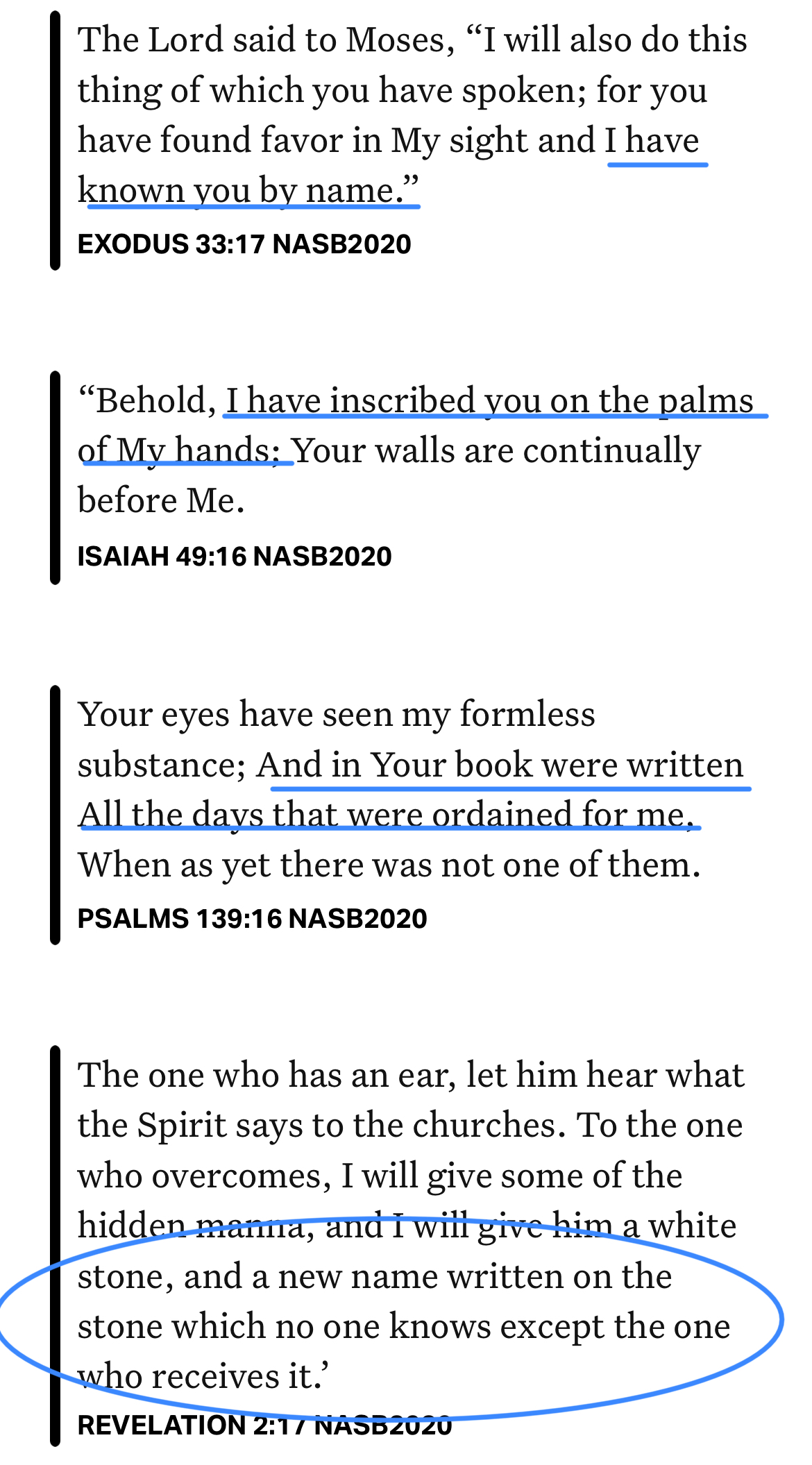













 Craig T. Owens