


This is part 1 in our series looking at phrases that sound biblical and then asking, “Is that in the Bible?”
 Statement #1—God helps those who help themselves. Is that in the Bible? No, it is not!
The reason why I think people have accepted this as biblical is an incorrect view of God.
- Humanism says God is us, which makes us believe, “If it’s going to be, it’s up to me.”
- Fatalism says there is no God and therefore no meaning to life, which makes us believe, “The outcome is what it is and no one has any say in the matter.”
- Deism says there is a God, but it’s hard to get His attention, which makes us believe “He is either disinterested in me or unapproachable. He’s only available for the ‘big’ things.”
The Bible flat-out rejects all three of these isms.
Instead, we see a loving, approachable God. One who is both all-powerful and all-loving. He says things like…
- I made you and know everything about you, and I remain infinitely interested and intimately involved in your life
- Come to Me and I will give you rest
- I want you to cast all your anxieties on Me
- Don’t be anxious about anything, but tell Me about everything that troubles you (Psalm 139:1-18; Matthew 11:28-29; 1 Peter 5:7; Philippians 4:6)
Not only is “God helps those who help themselves” untrue, but the exact opposite is also true—God helps those who cannot help themselves!
In Isaiah 40:28-29, we read that God gives strength to the weary and increases the power of the weak.
“Yes, it is our strength, not our weakness, that is our hindrance and stumbling block.” —Horatius Bonar
God gives power to the weak. He gives strength to those with no might of their own. God does NOT help those who think they can help themselves! God helps those who cannot help themselves! This is what Jesus came to do, and why we should rejoice in the fact that He does indeed help those who could never rescue themselves (Isaiah 53:4-5; 2 Corinthians 12:9)!
It is our can’ts that God uses as His opportunities to show how limitless He is. Our limitations magnify His love and His power.
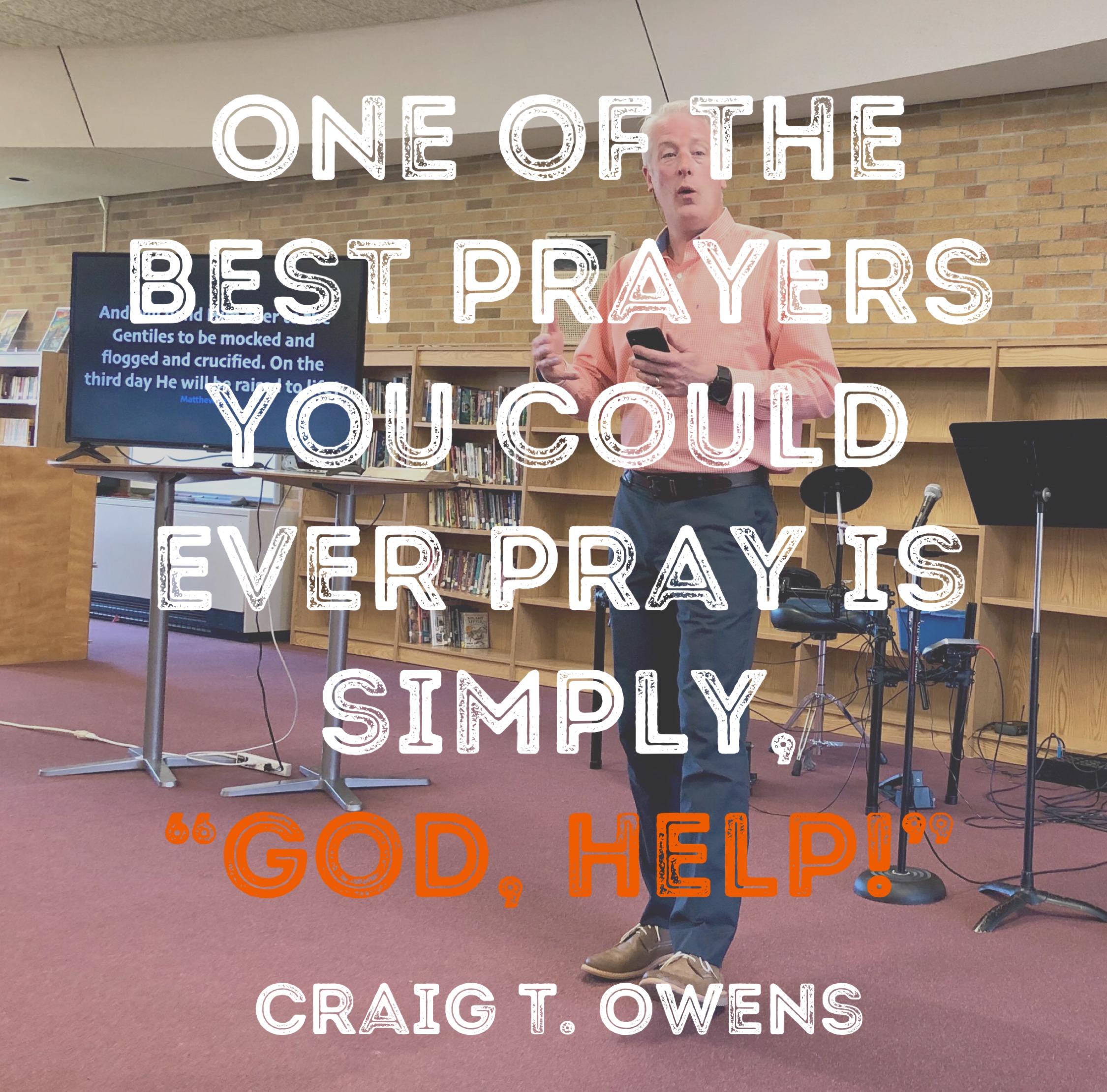
One of the best prayers you could ever pray is simply, “God, help!” This simple prayer acknowledges in just two words that you can’t but He most assuredly can!
But those who wait for the Lord—who expect, look for, and hope in Him—shall change and renew their strength and power; they shall lift their wings and mount up close to God as eagles mount up to the sun; they shall run and not be weary, they shall walk and not faint or become tired. (Isaiah 40:31 AMP)
Join me next week as we continue to explore various statements and ask, “Is that in the Bible?”






 Craig T. Owens
“Ye Shall Be As Gods”
May 9, 2019 — Craig T. Owens“The world’s history is the same. Our race has been eating the fruit of lies [Hosea 10:13]; not simply of sin, but of lies. The sorrows, sighs, tears, pains of our race are the fruit of lies—the original lie of Paradise, and a thousand such since then. …
“The two original satanic lies are continually coming up, and along with them myriads of others, all leading us astray. Each day brings forth the lie, the fruit, the eating thereof. satan, or the world, or the flesh, or a friend, or a book, or a scene whispers the lie; it is fair and specious, we believe it; it brings forth fruit, we eat of it, and the end is bitterness and disappointment. We feed on lies. … We persuade ourselves that this world is good, and pleasant, and excellent, so we pursue it in preference to the world to come. …
“Jesus says, ‘Yes, ye shall not surely die, but that deliverance shall not be in the way you think. Death is the wages of sin, yet I bring life to the sinner, everlasting life, life through the belief of the Truth, even as death came through the belief of a lie. Yes, ye shall be as gods, but not in your way. I will make you partakers if the divine nature, not by eating the forbidden tree, but by eating of Me.’” —Horatius Bonar, in Light & Truth—The Old Testament
Share this: