Listen to the podcast of this post by clicking on the player below, and you can also subscribe on Apple, Spotify, or Audible.
Plato said, “Arguments, like men, are often pretenders.” This is both true and a logical syllogism. It is true because men often pretend, and they design their arguments to support their pretenses.
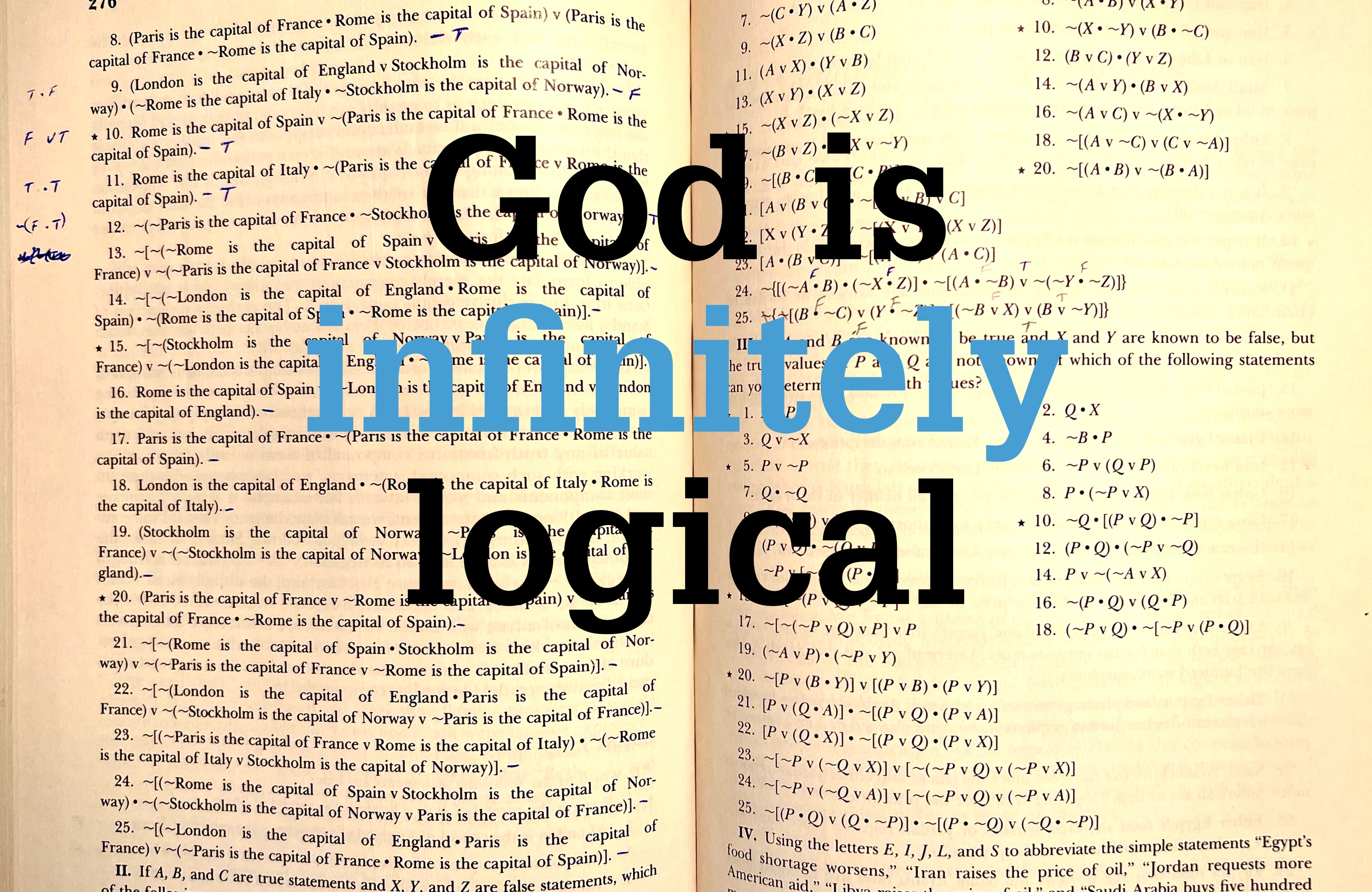
One of my favorite classes in college was “Introduction to Logic.” In fact, it is one of my few college textbooks that is still in my personal library today. It always struck me that God created logic. That means He is infinitely logical.
So we can restate Plato’s quote like this, “God’s arguments, like God Himself, are always authentic, logical, and valid.”
In my Bible study time, I often highlight the words that denote premisses and conclusions. In just Ezekiel 36 alone I find:
therefore (6x)
because (2x)
then (6x)
for (1x)
so that (1x)
We can argue against God’s logic, and we can even try to invalidate His arguments. But to do so makes me illogical. God not only gives the premisses and the conclusion, but He makes them both logical and valid. God told Jeremiah, “I am watching to see that My word is fulfilled” (Jeremiah 1:12).
So any of my attempts to redefine or re-order or invalidate what God has logically presented ultimately brings disorder, collapse, and frustration. It is far better for me to simply follow the premisses and trust God to bring about His promised—and logical—conclusion.
I encourage you to look for these logic statements as you read the Bible yourself. Here is a Bible study from Proverbs 2 that can help get you started.
Listen to the podcast of this post by clicking on the player below, and you can also subscribe on Apple, Spotify, or Audible.
When Jesus said, “Let the reader understand,” He was saying He wants us to be able to understand and apply every Scripture we read. Check out this teaching video—
And although I didn’t mention it in the video, you can check out five different kinds of Bible studies I have shared here and here.
I’m excited to hear about your Bible study journey. If you have questions or other resources to share, please get in touch with me or leave a comment below.
Listen to the podcast of this post by clicking on the player below, and you can also subscribe on Apple, Spotify, or Audible.
The apostle Peter said he wrote two letters to the church “as reminders to stimulate you to wholesome thinking” (2 Peter 3:1). And Paul reminded his young friend Timothy to “keep reminding [your congregation] of these things” (2 Timothy 2:14).
In the spirit of those great apostles, I have made it a practice to take time at the end of each year to look back on all that we have learned in the previous year, and then to look forward to where God may be leading Calvary Assembly of God in this upcoming year.
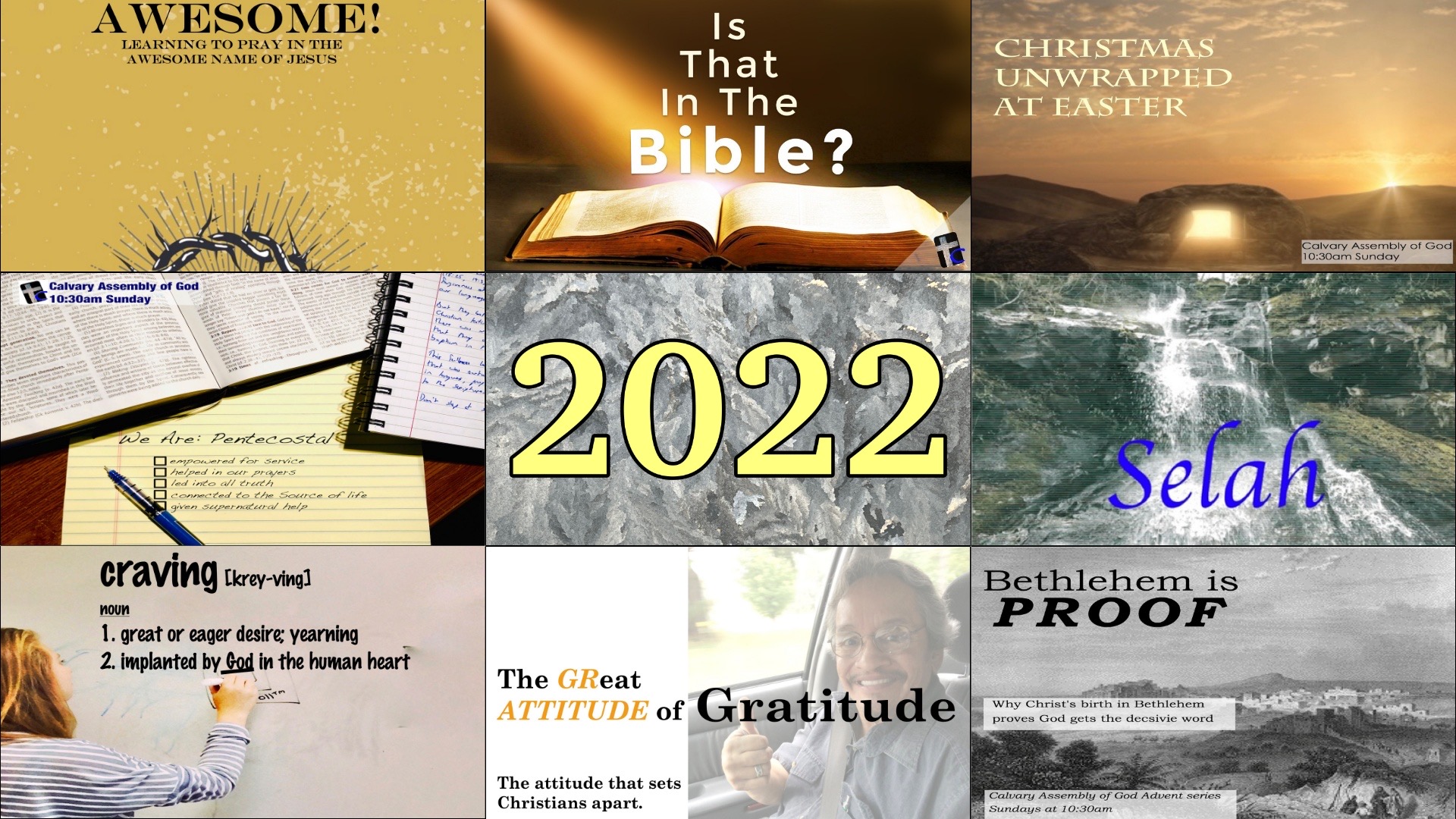
Clicking on each series title will take you to a list of all of the sermons in that series.
Awesome—Jesus told us that we could pray in His name and expect amazing things (see John 14:13-14, 15:16, 16:23-24). This does not mean that simply adding the phrase “in Jesus’ name, Amen” to the end of a prayer unlocks a secret code. Rather, it means that the more we understand just how awesome our Savior is, and that He is the Key to God’s storeroom, the more we will being to align our prayers with the will of God. Jesus desires for His Father’s glory to be seen on earth through the answers to our prayers. The writer of Hebrews opens his letter by reminding us that Jesus is “the radiance of God’s glory and the exact representation of His being, sustaining all things by His powerful word” (Hebrews 1:3).
Is That In The Bible? (part 1 and part 2)—A meme that makes me chuckle every time I see it is a “quote” attributed to Abraham Lincoln in which he says, “The problem with quotes found on the internet is that they are often not true.” (Not to spoil the joke for you, but unless Lincoln knew how to time travel to the future, I don’t think he knew about the modern internet! ). I love this meme because it captures something that so many people fall into: a quick acceptance of a statement without verifying its source or thinking through the implications of the statement’s truthfulness. I think you may be surprised to discover just how many phrases we call biblical aren’t, and how many phrases there are that we never realized are actually in the Bible.
Christmas Unwrapped At Easter—Remember as a kid when you would unwrap a gift and discover it wasn’t something you really wanted, but then your parents explained that it was something you needed? The birth of Jesus in Bethlehem was a little like that—it wasn’t exactly what people were hoping for, but it was exactly what they needed. The real meaning of that Christmas gift wasn’t realized until after Jesus was crucified and resurrected back to life.
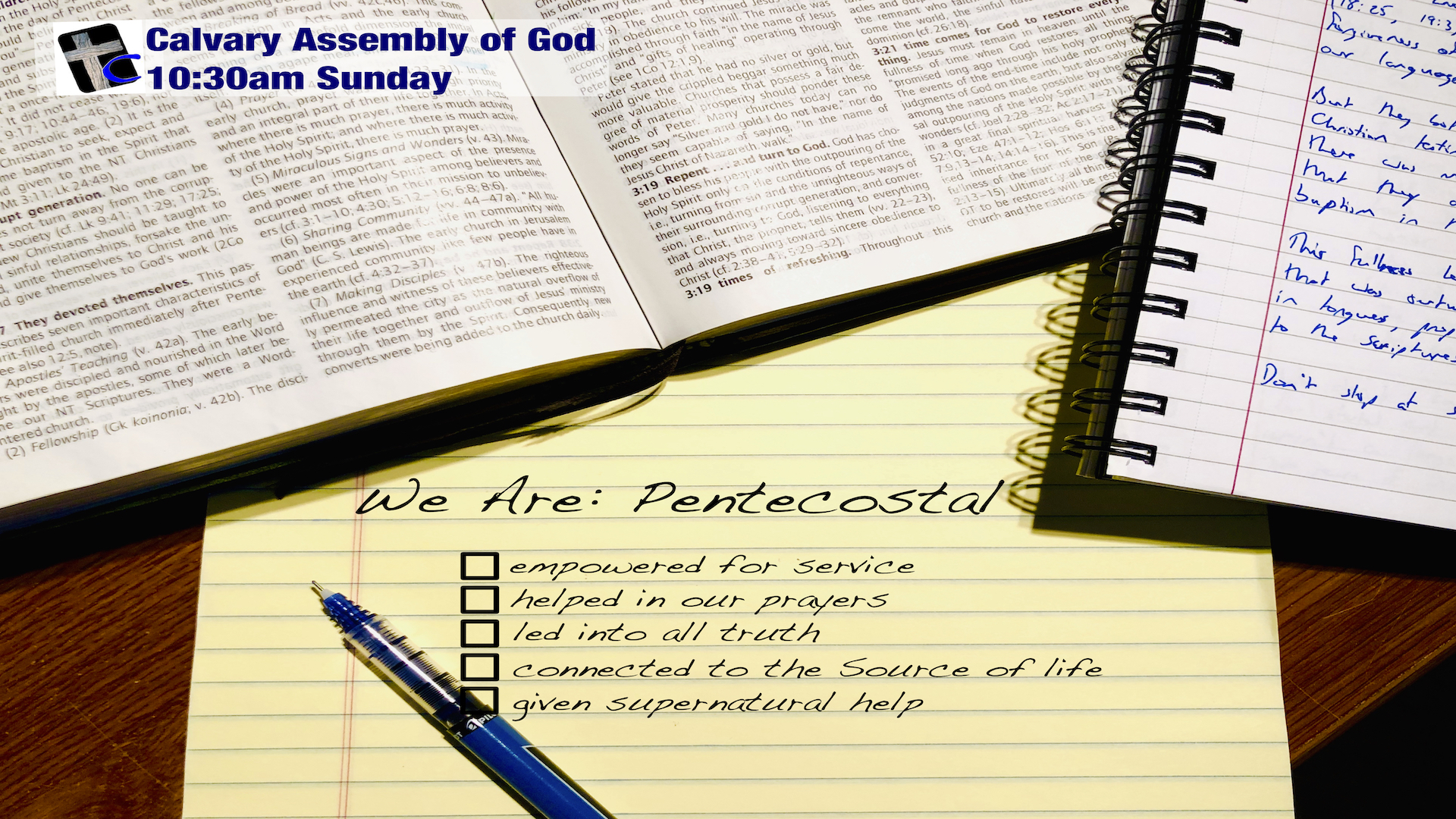
We Are: Pentecostal—Pentecost for over 1500 years was a celebration in Jerusalem that brought in Jews from all over the world. But on the Day of Pentecost that came just ten days after Jesus ascended back into heaven, the meaning of Pentecost was forever changed! Followers of Jesus—now empowered by an infilling of the Holy Spirit—began to take the good news of Jesus all over the world. These Spirit-filled Christians preached the Gospel and won converts to Christ even among hostile crowds, performed miracles and wonders, stood up to pagan priests and persecuting governmental leaders, and established a whole new way of living as Christ-followers. We, too, can be Pentecostal followers of Jesus Christ today.
Selah—The word Selah appears nearly 70 times in the Bible, almost exclusively in the Psalms. Although it is primarily a musical term, it applies beautifully to our summer series. It means a pause. Throughout the Psalms, Selah appears at the end of a verse, at the end of the psalm, or sometimes even mid-sentence. But each one of them is perfectly placed by the Spirit-inspired authors to get us to take a breath and deeply contemplate what we just read or sang.
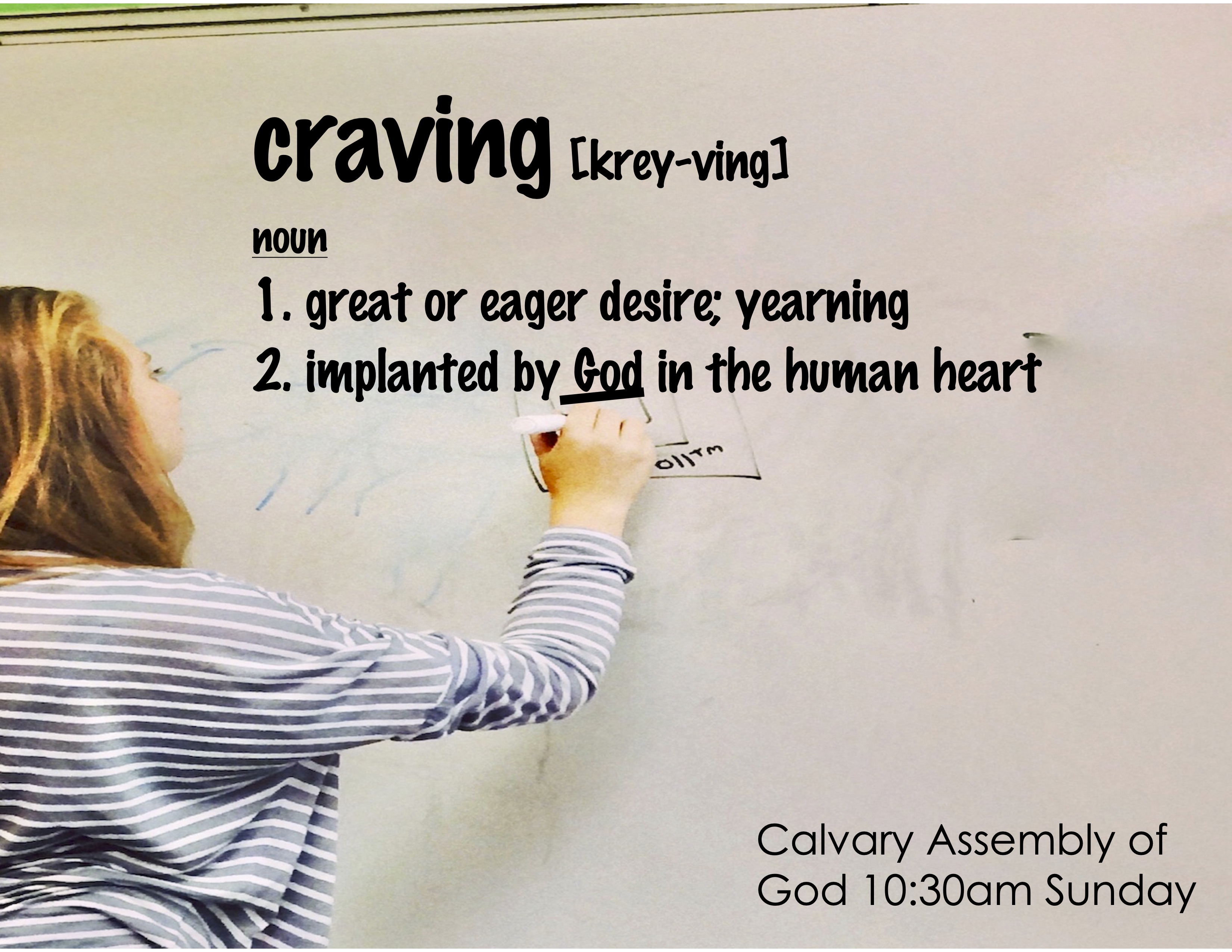
Craving—Doesn’t it seem like far too many Christians think of their relationship with Jesus as bland? After all, we’ve been told that any cravings we have should be quickly downplayed so that they don’t carry “good Christians” away. But what we discover in the Bible is that God made us to be craving creatures—He wants us to long deeply and find ultimate satisfaction for those longings. In short, God created us to long after the things that only He can fulfill. As we dive into this new series, I think you will find it quite eye-opening and heart-lifting.
The Great Attitude Of Gratitude—There’s something about gratitude that distinguishes people. Think about it: would you rather hang around with grumblers or grateful people? The gratitude of Paul and Silas certainly made them stand out from the crowd when they were in Philippi. Wrongly accused, beaten, and thrown in prison, but instead of bellyaching, they were praising God. Later on, when Paul wrote his letter to the Christians in Philippi, the theme of gratefulness permeates his letter. The distinguishing mark is actually in the title: The GReat ATTITUDE spells out GRATITUDE!
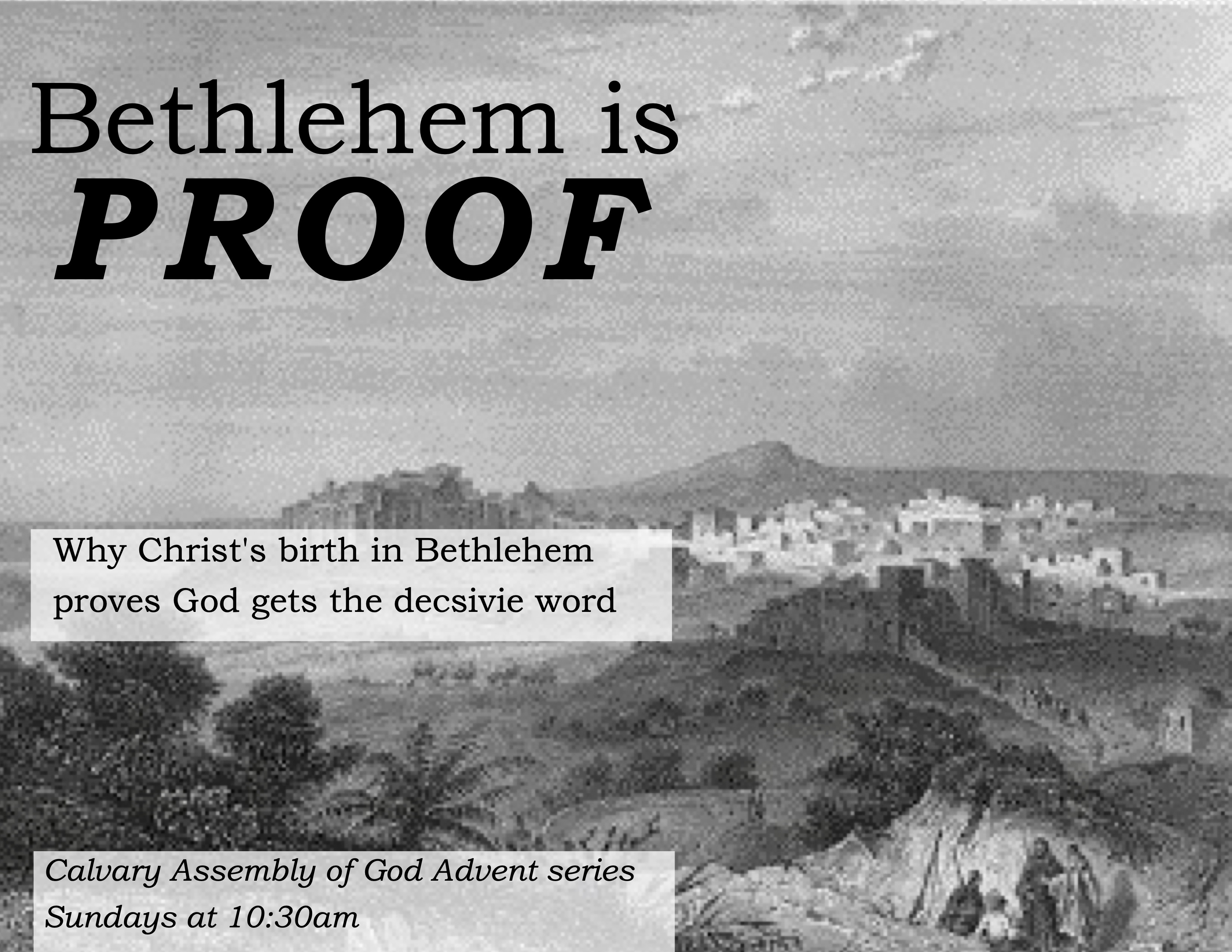
Bethlehem Is Proof—The prophet Micah foretells that the Messiah will arrive in dark times. Enemies will surround Israel, and Israel’s ruler will receive a nasty punch to the jaw. Demonic strongholds, witchcraft, and idolatry will appear to be gaining the upper hand. And then Micah turns his attention to a small village just south of Jerusalem—a village so small that it is often overlooked—a village from which no one would expect Israel’s Deliverer. And yet, Micah writes, “But you, Bethlehem Ephrathah, though you are small among the clans of Judah, out of you will come for Me One who will be Ruler over Israel, Whose origins are from of old, from ancient times” (Micah 5:2). Jesus the Deliverer was born in the little town of Bethlehem, and His birth there 700 years after Micah foretold it is our proof that God always gets the last word, the decisive word, and the best word!
We will be returning to a couple of these series in 2023, and we’ll be launching some brand-new ones as well. If you don’t have a home church in the northern Kent County area, I would love to have you join us!
Every Monday I share a 1-minute thought to get your week started. It’s my weekly Monday Motivation series of videos. Check out this week’s video that I posted the day after Christmas, and please subscribe on YouTube.
T.M. Moore wrote one of the endorsements for my book Shepherd Leadership. In an interview I then did on his Fellowship of Ailbe podcast, I shared my dismay over unbiblical ideas and practices that have crept into the church. Both T.M. and I share a passion to see our church leadership return to our secure biblical foundation.
In a recent blog post, T.M wrote, “From the days of the apostles onward, a tendency has existed among church leaders to drift from the plain teaching of the Word of God into forms of Christian life and ministry that derive from sources other than Scripture. Or that stretch the meaning of Scripture to fit the shape of certain cultural forms.” Please check out T.M.’s post “Do not go beyond.”
In a fascinating post from Rabbi Benjamin Blech, I read these thoughts about the power of a name: “The Hebrew word for soul is neshamah. Central to that word, the middle two letters, shin and mem, make the word shem, Hebrew for ‘name.’ Your name is the key to your soul. … When the Torah says, ‘God created,’ it doesn’t suggest that He worked with what He fashioned by labor, but merely that He spoke—and the very words describing the object came into being. God said, ‘Let there be light and there was light.’ The Almighty merely gave it a name, and the very letters defined its atomic structure.” Check out the full post here.
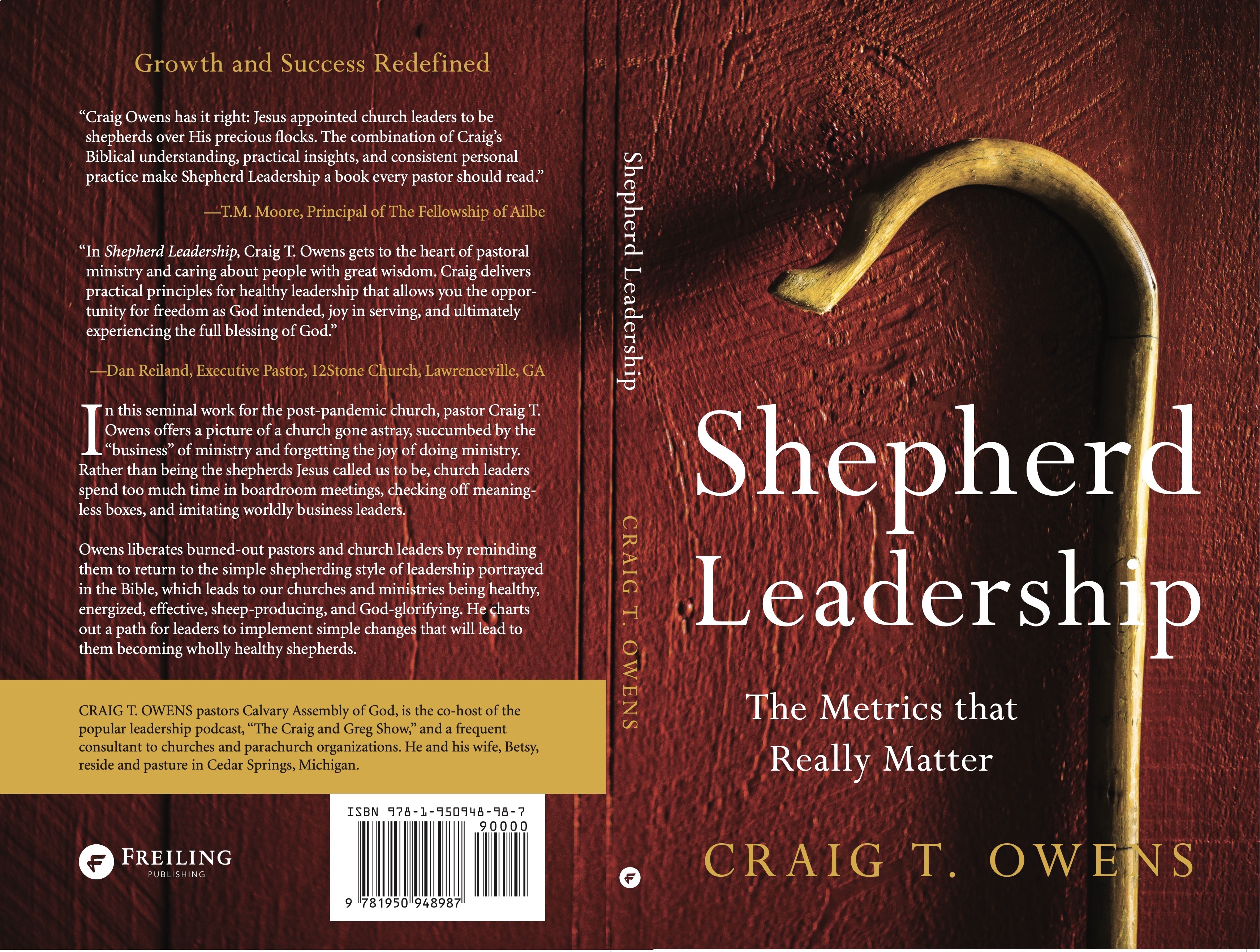
“Success” doesn’t always mean bigger numbers. King David got into trouble with God when he wanted to measure his success by how many fighting men he had under his command. Consistently throughout the Bible God’s measure of success is our trust in Him. This thought was a key part of the sub-title of my book Shepherd Leadership: The Metrics That Really Matter.
Listen to the podcast of this post by clicking on the player below, and you can also subscribe on Apple, Spotify, or Audible.
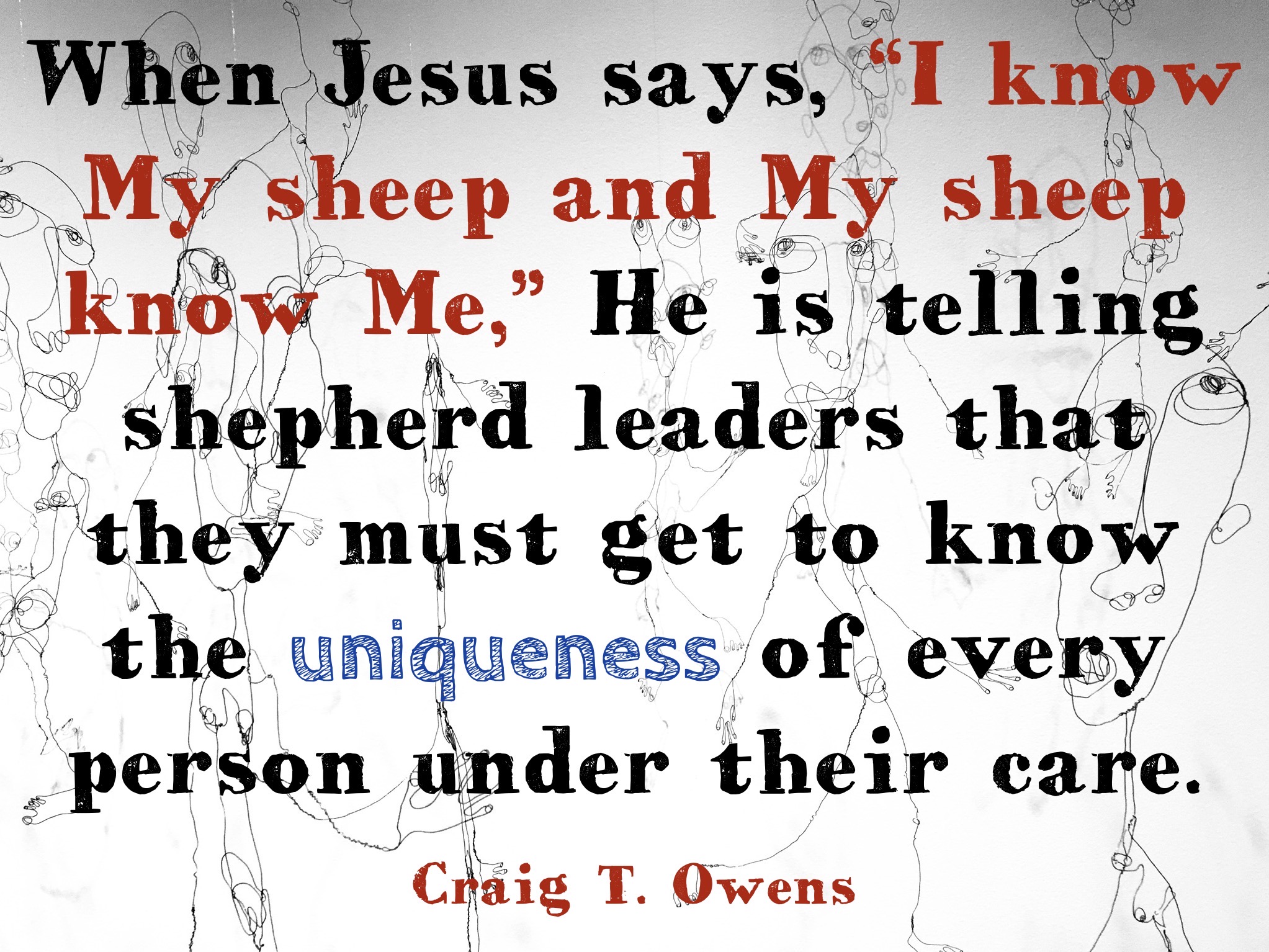
An interesting comment that Jesus made that should catch the attention of every leader is this: “I know My sheep and My sheep know Me” (John 10:14). Jesus is telling us that He knows the uniqueness of every person.
Combine this with David’s encouraging words about Jesus as our Good Shepherd in the opening words of Psalm 23, “The Lord is my shepherd; I have all that I need” (Psalm 23:1 NLT).
This tells me that quality shepherd leaders…
…are around their teammates enough to know them personally.
…can quickly ascertain when their teammates are feeling stress or anxiety.
…know how to give their teammates what they need to destress in a healthy way.
My friend Greg and I discussed how leaders can use playtime as an effective tool to keep their teammates at their healthiest. Check out this short clip—
If you would like to watch this full episode from The Craig And Greg Show, please click here.
I also talk about how wise leaders take care of those under their care in my book Shepherd Leadership: The Metrics That Really Matter. It’s available in print or ebook, and in audiobook through either Audible or Apple.
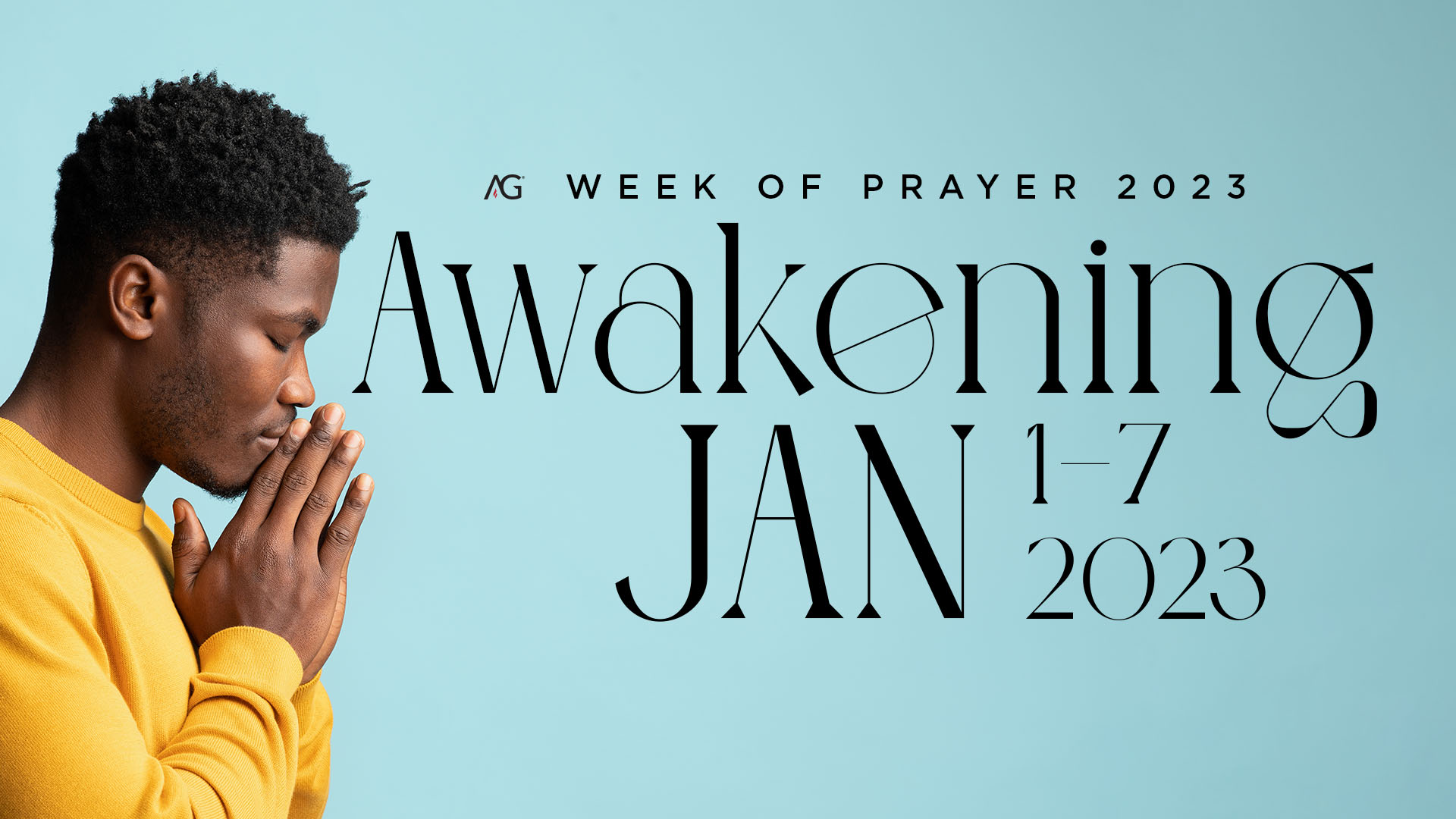
I can think of no better way to begin the new year but in a time of unified prayer. The Assembly of God churches around the world will be taking time to pray each day of the first week of 2023.
We will be sharing the daily prayer focus each day January 1-7 on the Calvary Assembly of God website and Facebook page. I hope you will join with us in praying together.
Listen to the podcast of this post by clicking on the player below, and you can also subscribe on Apple, Spotify, or Audible.
I love reading, and I love sharing my love of good books with others! Here is a list of the books I read and reviewed in 2022. Click on a title to be taken to that review.
Listen to the podcast of this post by clicking on the player below, and you can also subscribe on Apple, Spotify, or Audible.
Have you ever noticed how many of our Christmas carols celebrate the dark night giving way to the bright light? For instance, the hymn O Holy Night contains the line, “long lay the world in sin and error pining until He appeared.”
English historian and theologian Thomas Fuller was the first to put into print what has now become a cliché that so many people use: “It is always darkest just before the Day dawneth.” Indeed, Micah paints a very dark scene just before the Messiah makes His First Advent (Micah 5:1).
The Light of Jesus that burst onto planet Earth in a Bethlehem stable revealed Him as our Great Shepherd, our Prince of Peace, and our Mighty Deliverer. And there is also one more title that Micah foretells: our Triumphant King!
What does our Triumphant King do? He confronts and defeats the darkest foes. Check out the words in Micah 5:9-15: destroy (5x), demolish (2x), tear down, uproot, take vengeance.
Christ’s birth in Bethlehem is our proof that God’s plan prevails. God always gets the final word, the decisive word, and the best word!
Most of the Old Testament prophets foresaw both the first and second advents of Jesus simultaneously. The mountains of prophecy look like they are on top of each other, so it’s very common for the prophets to see events of both advents happening simultaneously. So Micah sees both the coming of Jesus in Bethlehem and His coming at the end of time as King.
There is a spiritual battle that has been raging since before Time began (Ephesians 6:12). It started when Lucifer became satan by his rebellion against God, and then he began his agenda of the destruction of God’s people (Ezekiel 28:12-17; Revelation 12:7-9, 13, 17).
Into this dark battle, Jesus enters the scene. The reason the Son of God was made manifest (visible) was to undo—destroy, loosen, and dissolve—the works the devil has done (1 John 3:8 AMP).
I already talked about how the death of Jesus on the Cross meant the death of Death, and Jesus became our Mighty Deliverer! The resurrection of Jesus means satan’s time is nearing an end. It may be dark now, but the darkness has to give way to the Light of the King of kings (check out these verses in Revelation).
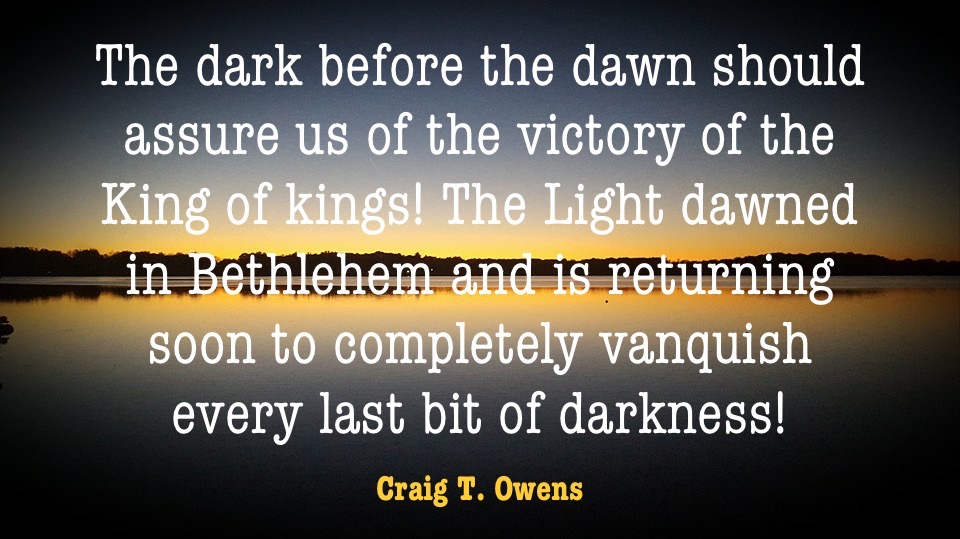
“It is always darkest just before the Day dawneth” should assure us of the victory of the King of kings! Jesus assured us that darkness is only afforded an hour, and then the Light will completely overwhelm it. The Light dawned in Bethlehem and is returning soon to completely vanquish every last bit of darkness!
Listen to the podcast of this post by clicking on the player below, and you can also subscribe on Apple, Spotify, or Audible.
Merry Christmas!
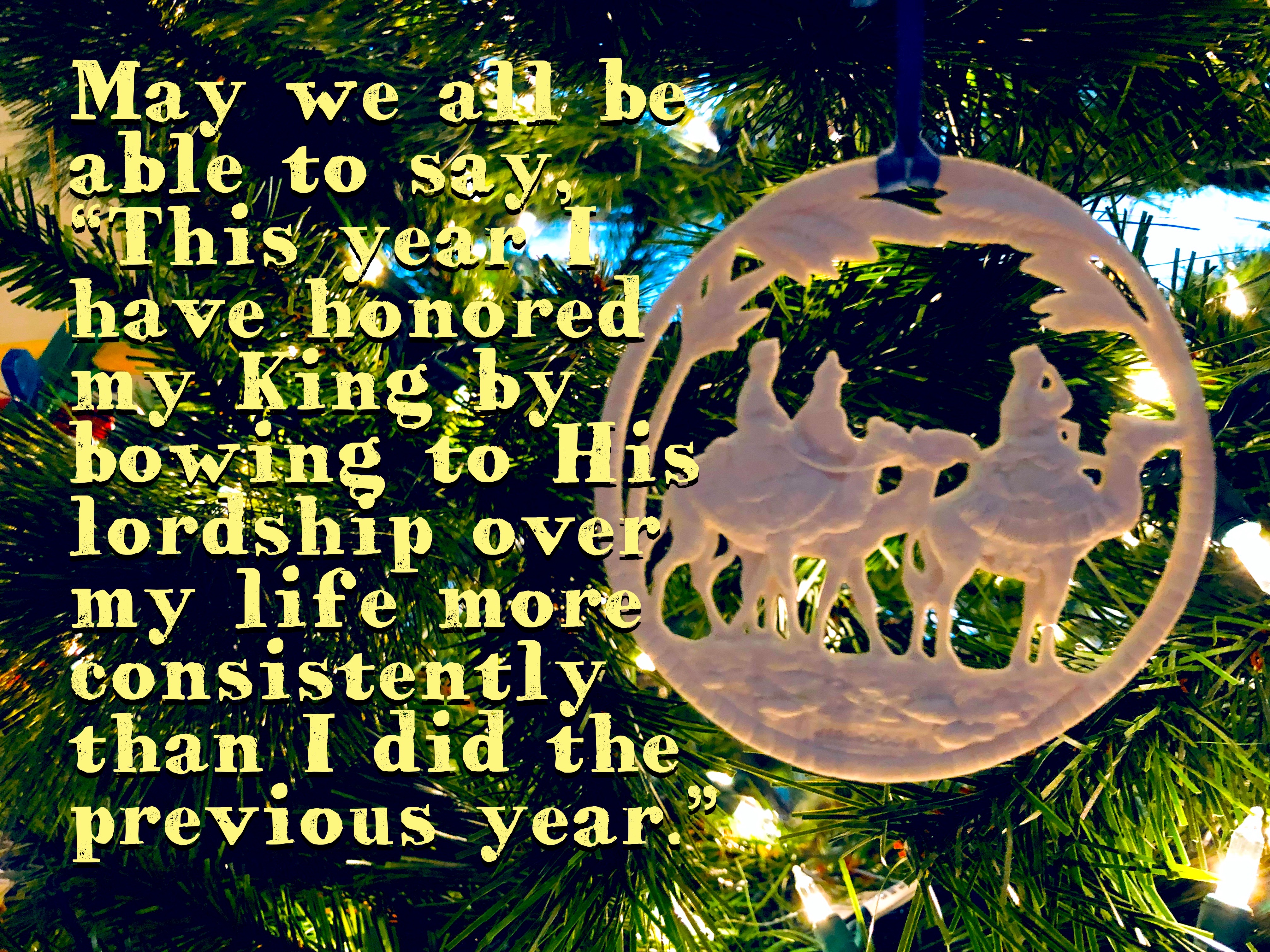
When the Magi came to Jesus at His first advent they brought gifts. Isaiah also prophesies all peoples bringing gifts at the second advent of Jesus. Have you ever wondered what gift is appropriate for the King of kings? Fortunately, the Bible tells us the gift He is happy to receive from you!
Merry Christmas and Happy New Year from The Craig and Greg Show! We had an amazing 2022 sharing great leadership content with you, and we cannot wait to share even more in 2023!
If you would like to catch up on some of our previous episodes, please click here.



 Plato said, “Arguments, like men, are often pretenders.” This is both true and a logical syllogism. It is true because men often pretend, and they design their arguments to support their pretenses.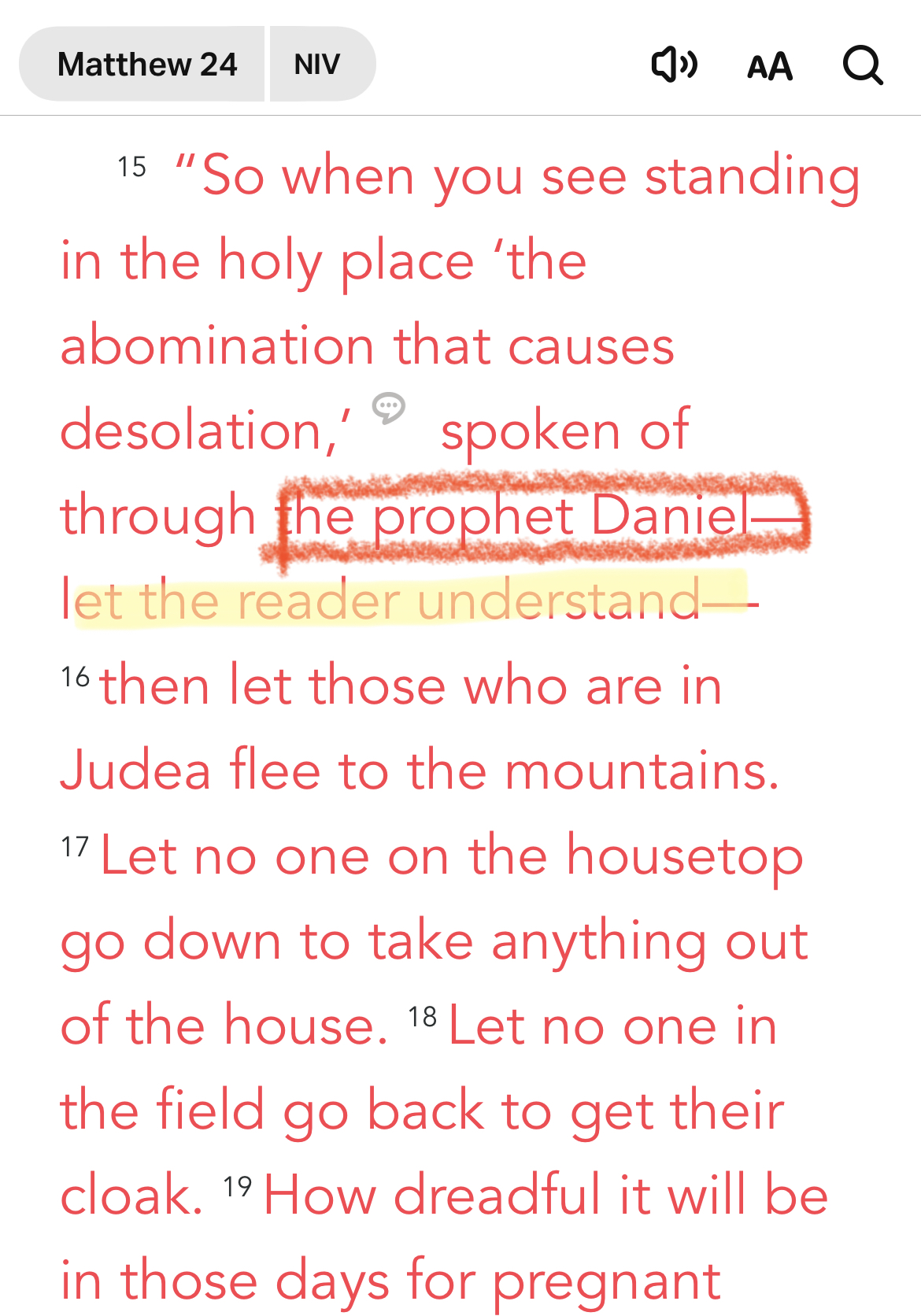

 ). I love this meme because it captures something that so many people fall into: a quick acceptance of a statement without verifying its source or thinking through the implications of the statement’s truthfulness. I think you may be surprised to discover just how many phrases we call biblical aren’t, and how many phrases there are that we never realized are actually in the Bible.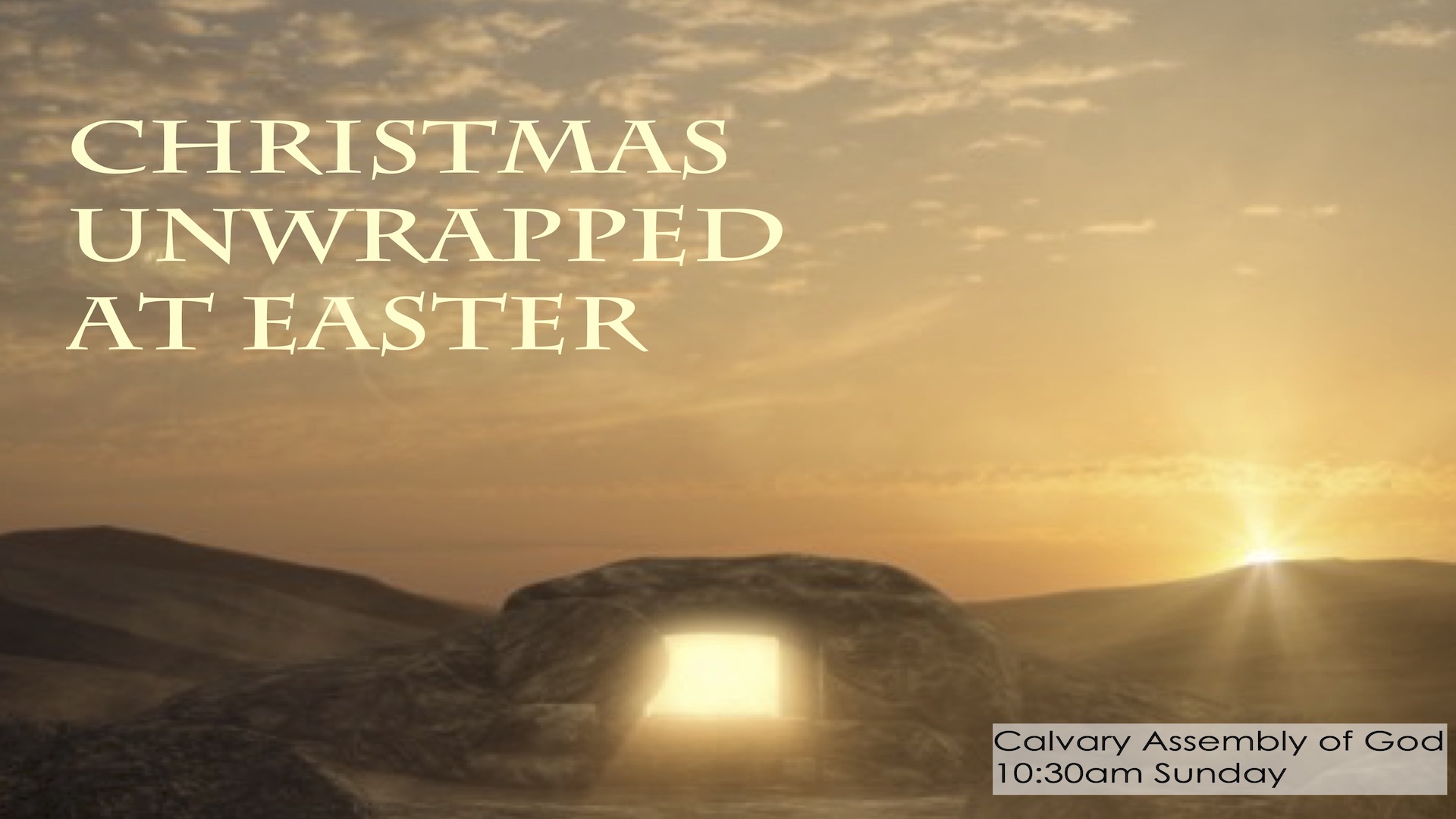






 Craig T. Owens