Listen to the podcast of this post by clicking on the player below, and you can also subscribe on Apple, Spotify, or Audible.
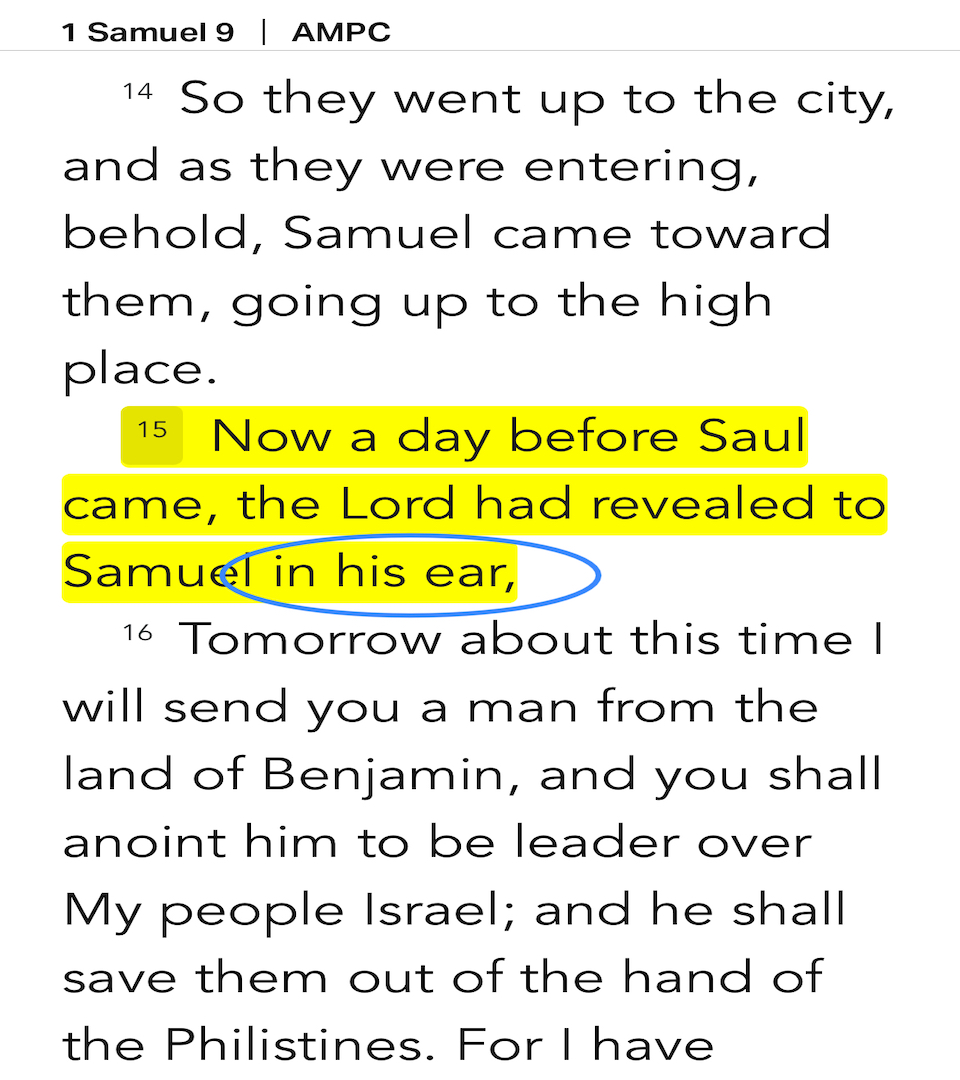
Last week we talked about the Voice of the Holy Spirit. I love the phrase from 1 Samuel 9:15 where God “told Samuelin his ear” about Saul’s arrival and what he should say to Saul. Then the Holy Spirit’s Voice for all of us is foretold in Isaiah 30:21.
It’s great hearing the Spirit’s Voice, but He also empowers us to know the Mind of God.
This is not something that automatically comes to every Christian at the moment they invite Jesus to be their Lord and Savior, as we see mention of immature Christians throughout the New Testament.
Even after Jesus is resurrected from the dead, we see His followers as unsure, troubled men. We meet their…
This is all post-resurrection but pre-conversion, but look at what happens next. After Jesus breathes on them (John 20:22), they are peaceful (vv. 19, 21, 26) and they can now understand the Scriptures (Luke 24:45-48).
As we’ve said, we shouldn’t stop at salvation. Certainly, Jesus wanted more for His followers than merely salvation. He wants His disciples empowered for witnessing and disciple-making (Luke 24:48; Acts 1:4-5, 8).
Check out these examples of the Holy Spirit sharing with us the mind of God:
Joseph—Genesis 41:16, 38-40
Daniel—Daniel 2:19-23, 27-28, 47
Peter—Acts 2:14f; 3:17-26; 4:8-12
Stephen—Acts 7
Philip—Acts 8:30-35
And just in case you think this is just for “super spiritual” people, look how the Holy Spirit helps the whole Church share the Gospel—
After they prayed, the place where they were meeting was shaken. And they were all filled with the Holy Spirit and spoke the Word of God boldly. … Those who had been scattered preached the word wherever they went. (Acts 4:31, 8:4).
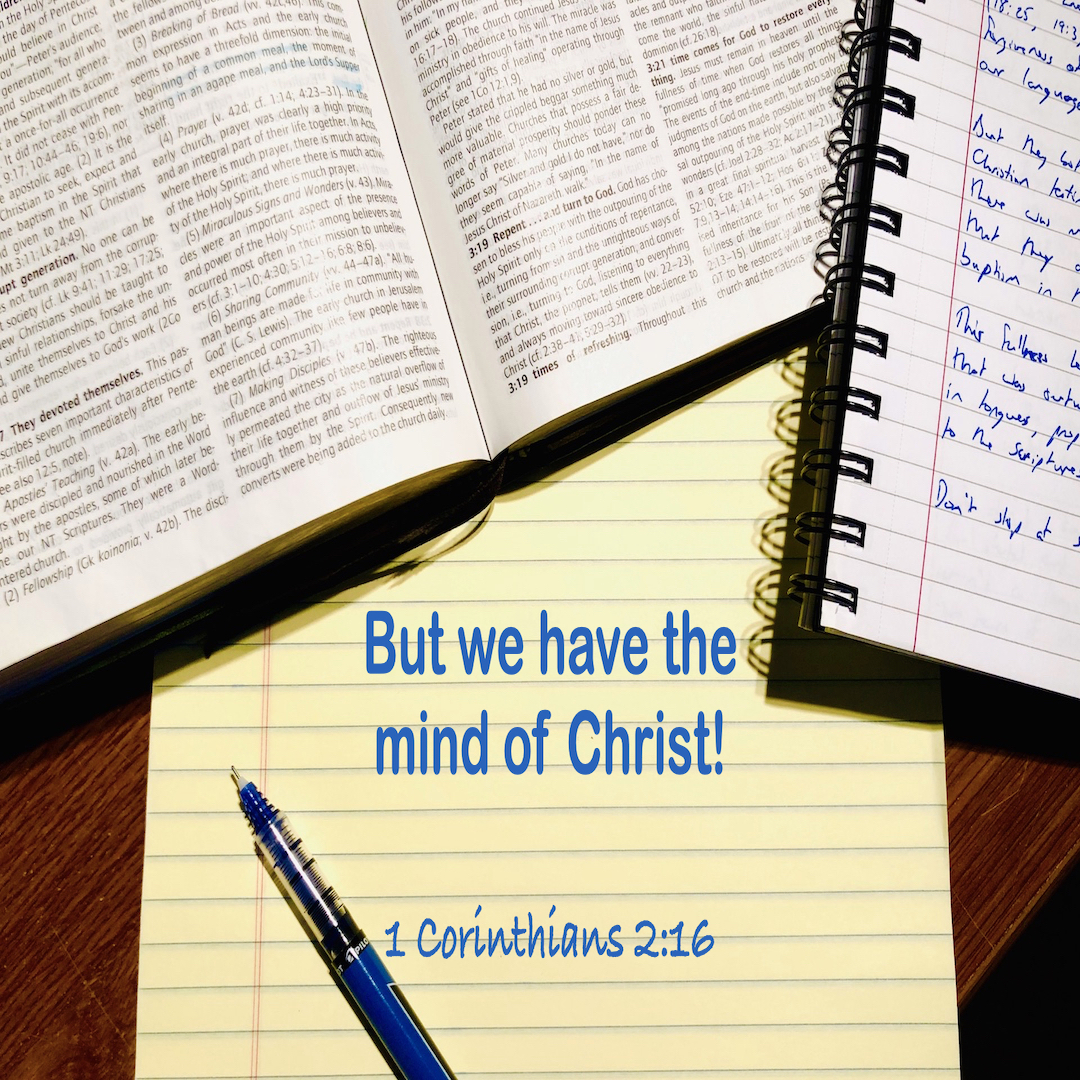
This was always God’s plan! Paul harkens back to prophecies like Isaiah 55:8-9, Isaiah 40:13, and Jeremiah 31:33 when he writes about Christians having “the mind of God” in 1 Corinthians 2:6-16.
He says, “These are the things revealed to usby His Spirit” (v. 10).
What things? “Things God has prepared for those who love Him”—things which human eyes haven’t seen, human ears haven’t heard, human minds haven’t conceived (v. 9). These are the the very thoughts of God Himself!
Just as my spirit is the only one that knows what’s really in my mind, the Holy Spirit is the only One Who knows the mind of the Father and Son (v. 11). We have been given the Holy Spirit “so that we may understand what God has freely given us” (v. 12). Contrast this with the dull, unfruitful minds of both unbelievers (2 Corinthians 4:4) and carnal Christians (Philippians 3:18-19).
This mind of God is given to us for our edification so that we can be empowered witnesses and disciple-makers. So don’t stop at salvation, but be baptized in the Holy Spirit, and then keep on being filled with the Spirit.
Listen to the podcast of this post by clicking on the player below, and you can also subscribe on Apple, Spotify, or Audible.
I would like you to think about a wise, loving friend. One who has years of godly wisdom, empathy, loads of patience, and loving boldness. When you talk with them, you know that you will always get good counsel—even if you may not like exactly what they have shared with you, deep down you know it is still sound wisdom. This is what the Holy Spirit—as our Counselor—does for us.
The Holy Spirit is not merely a force, but He is a Person. Jesus Himself give the Spirit the pronouns “He / Him / His.”
I especially want to key in on those last two attributes where the Holy Spirit is speaking to us.
Samuel grew up during the time of the judges, where everyone did whatever they thought best. This is a time that is described like this, “In those days the word of the Lord was rare; there were not many visions” (1 Samuel 3:1). Visions in the Hebrew language is two words: open communication. In other words, people just weren’t listening for God’s voice.
Samuel had to learn to hear God’s voice as well (see this passage and all of the other biblical references in this post by clicking here).
God doesn’t reveal His heart to those who are unwilling to obey. His persistent call is for obedience to His Word and reliance on His provision. So the word of the Lord had to be revealed to Samuel (v. 7). When Samuel said he was listening (v. 10), that was a posture of readiness to obey.
God wants to reveal His heart to His obedient people. I love how God does this later for Samuel, “Now the Lord had told Samuel in his earthe day before Saul came…” (1 Samuel 9:15).
This is how Jesus described the Holy Spirit in John 7:37-39, as streams that flow continuously out of our being. And Jesus also calls Him Counselor (John 14:16).
Isaiah described our Counselor like this, “Whether you turn to the right or to the left, your ears will hear a Voice behind you, saying, ‘This is the way; walk in it’” (Isaiah 30:21).
Let’s call this GPS = God’s Personal Spirit in us!
Those who are baptized in the Holy Spirit—utterly yielded to His wisdom—will experience:
More insight into God’s Word—Psalm 119:18
More timely application of God’s Word—2 Timothy 3:16-17
More boldness in prayer—2 Samuel 7:27 (same word for in his ear as Samuel experienced)
All Christians have a deposit of the Holy Spirit in their lives at the moment of salvation. The baptism in the Holy Spirit is a completed yielding to the Counselor’s influence. So don’t stop at salvation, but ask Jesus to send you what the Father has promised (Luke 24:49; Acts 2:33).
Check out all of the messages in our series leading up to Pentecost Sunday by clicking here.
Pentecost for over 1500 years was a celebration in Jerusalem that brought in Jews from all over the world. But on the Day of Pentecost which came just ten days after Jesus ascended back into heaven, the meaning of Pentecost was forever changed!
Followers of Jesus—now empowered by an infilling of the Holy Spirit—began to take the good news of Jesus all over the world. These Spirit-filled Christians preached the Gospel and won converts to Christ even among hostile crowds, performed miracles and wonders, stood up to pagan priests and persecuting governmental leaders, and established a whole new way of living as Christ-followers.
We, too, can be Pentecostal followers of Jesus Christ today. We can experience an anointing and an empowering in our lives that turns ordinary Christianity into extraordinary Christianity!
Please join me this Sunday at Calvary Assembly of God as we rejoin this series. You can check out what I taught in this series in 2023 by clicking here.
“Your failures are your accomplishments because it makes you prepared for whatever it is that you are going to do next.” —Lee Daniels
One of my favorite Christmas movies is Miracle on 34th Street, where a well-timed letter to Santa Claus arrives at the courthouse to tip the scales of justice for Kris Kringle. The US Postal Service reports that they still get thousands of letters addressed to Santa each year. Have you ever wondered what happens to them. The Smithsonian has the heart-warming story.
“The more we learn from God’s Word about how creation praises and reveals Him, the better able we will be to explain His revelation to others. But we’re not content for people merely so experience some revelation of God from the things He has made. We want them to know Jesus. For that, we’ll have to lead them to the Scriptures. The better we know the Scriptures and are daily immersed in them, the more we will see Jesus there and be made like Him. The more we are made like Him, the more we will see Him in all His works, and the more our hope will grow and be visible to others, some of whom may ask a reason for the hope that is within us.” —T.M. Moore
“No priest, no theologian stood at the manger of Bethlehem. And yet all Christian theology has its origin in the wonder of all wonders: that God became human. Holy theology arises from knees bent before the mystery of the divine Child in the stable. Without the holy night, there is no theology.” —Dietrich Bonhoeffer
“Early Pentecostals generally viewed the observance of the ‘church calendar’ as remnants of liturgical traditions. Apart from Easter and Christmas, there were few days that Pentecostal churches set aside for special services. One exception was New Year’s Eve, when a ‘Watchnight Service’ would be held, typically starting around 7 p.m. and lasting until after midnight.” Check out the notable history of people “praying in the New Year.”
Scott Hubbard writes, “Spiritual health yesterday does not guarantee spiritual health today. So, at the end of a new year, on the edge of another, let’s stop to take some spiritual vitals. How healthy is your soul?” He then gives us six biblically-based questions to help us assess the healthiness of our soul.
Listen to the podcast of this post by clicking on the player below, and you can also subscribe on Apple, Spotify, or Audible.
The apostle Peter said he wrote two letters to the church “as reminders to stimulate you to wholesome thinking” (2 Peter 3:1). And Paul reminded his young friend Timothy to “keep reminding [your congregation] of these things” (2 Timothy 2:14).
In the spirit of those great apostles, I have made it a practice to take time at the end of each year to look back on all that we have learned in the previous year, and then to look forward to where God may be leading Calvary Assembly of God in this upcoming year.
Clicking on each series title will take you to a list of all of the sermons in that series.
Intimate Conversation—The dictionary defines the word “intimate” with these phrases: associated in close personal relations, characterized by warm friendship, and closely personal. These words perfectly describe the relationship God wants to have with His children through prayer. Pete Briscoe said, “Prayer is an intimate conversation with the One who passionately loves you and lives in you.” The One who loves you so passionately desires to walk with you and share intimate knowledge with you. Prayer is not something formal, cold, or mechanical, but it is vibrant, warm, engaging, and life-changing.
A Christian’s Mental Health—I don’t think there is any arguing that Jesus was the healthiest individual who ever walked planet Earth. Some may want to push back with, “Of course He was because He didn’t have any problems to deal with!” But the writer of Hebrews tells us that Jesus experienced everything you and I will ever experience (Hebrews 2:17), so His deity didn’t exclude Him from the stressors that His humanity would have to face. And yet, He handled all of these things successfully. Luke the physician observed the growth of Jesus and tells us that it all began with Jesus having a robust mental health. From that foundation, everything else—physical, spiritual, relational—all could develop properly. We must learn from this example and pay careful attention to our own mental health.
Bold Claims—“That’s a pretty bold claim. Are you prepared to back that up?” I’ll bet you have heard something like that said to you, and maybe you have even said that yourself to someone else who made a big, audacious statement. After Jesus is arrested by the religious leaders—an arrest that will ultimately lead to Jesus being crucified on the Cross—there are some incredibly bold claims spoken by key people in this part of the Story. For the most part, these are claims that we don’t read earlier in any of the Gospels, but as this story is heading toward its most crucial moment, we have these audacious statements pronounced. But here’s the most important part: These bold claims weren’t just made, but they were backed up with proof as well.
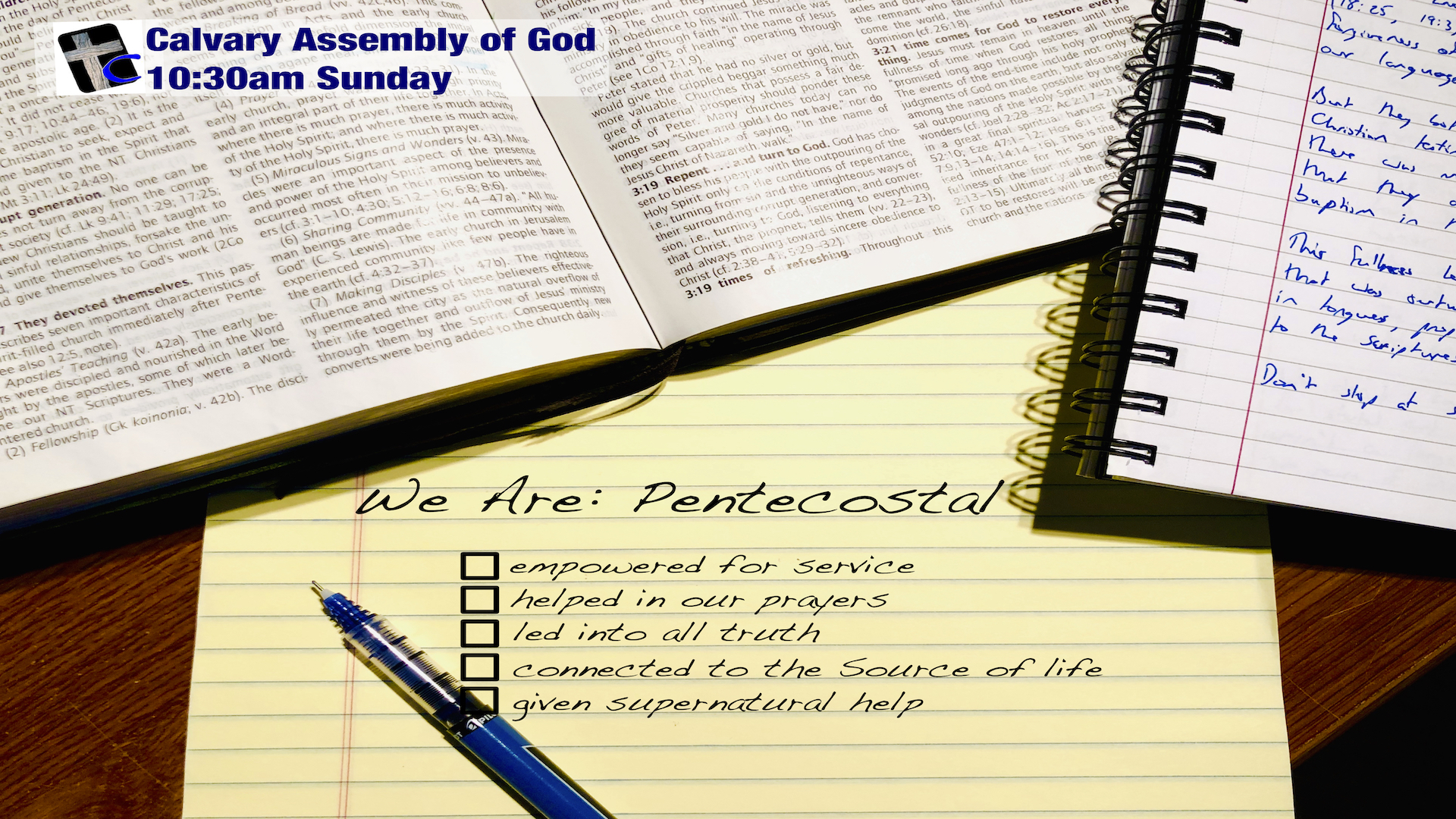
We Are: Pentecostal—Pentecost for over 1500 years was a celebration in Jerusalem that brought in Jews from all over the world. But on the Day of Pentecost that came just ten days after Jesus ascended back into heaven, the meaning of Pentecost was forever changed! Followers of Jesus—now empowered by an infilling of the Holy Spirit—began to take the good news of Jesus all over the world. These Spirit-filled Christians preached the Gospel and won converts to Christ even among hostile crowds, performed miracles and wonders, stood up to pagan priests and persecuting governmental leaders, and established a whole new way of living as Christ-followers. We, too, can be Pentecostal followers of Jesus Christ today.
Ascending—Every year, Jews from around the world made four pilgrimages up to Jerusalem for various feasts and sacrifices. These journeys reminded them of God’s goodness as they went to the Temple to worship, and they helped refocus on God’s ways as they returned to their regular routines. Jerusalem is over 2500 feet above sea level, so the pilgrimage there was a physical workout as well as a spiritual workout. These workouts were beneficial for God’s people, preparing them to minister in their cities in the following months. The Book of Psalms contains 15 songs that these pilgrims would sing to and with each other as they traveled up to Jerusalem. These Psalms of Ascent are still instructive for Christians today.
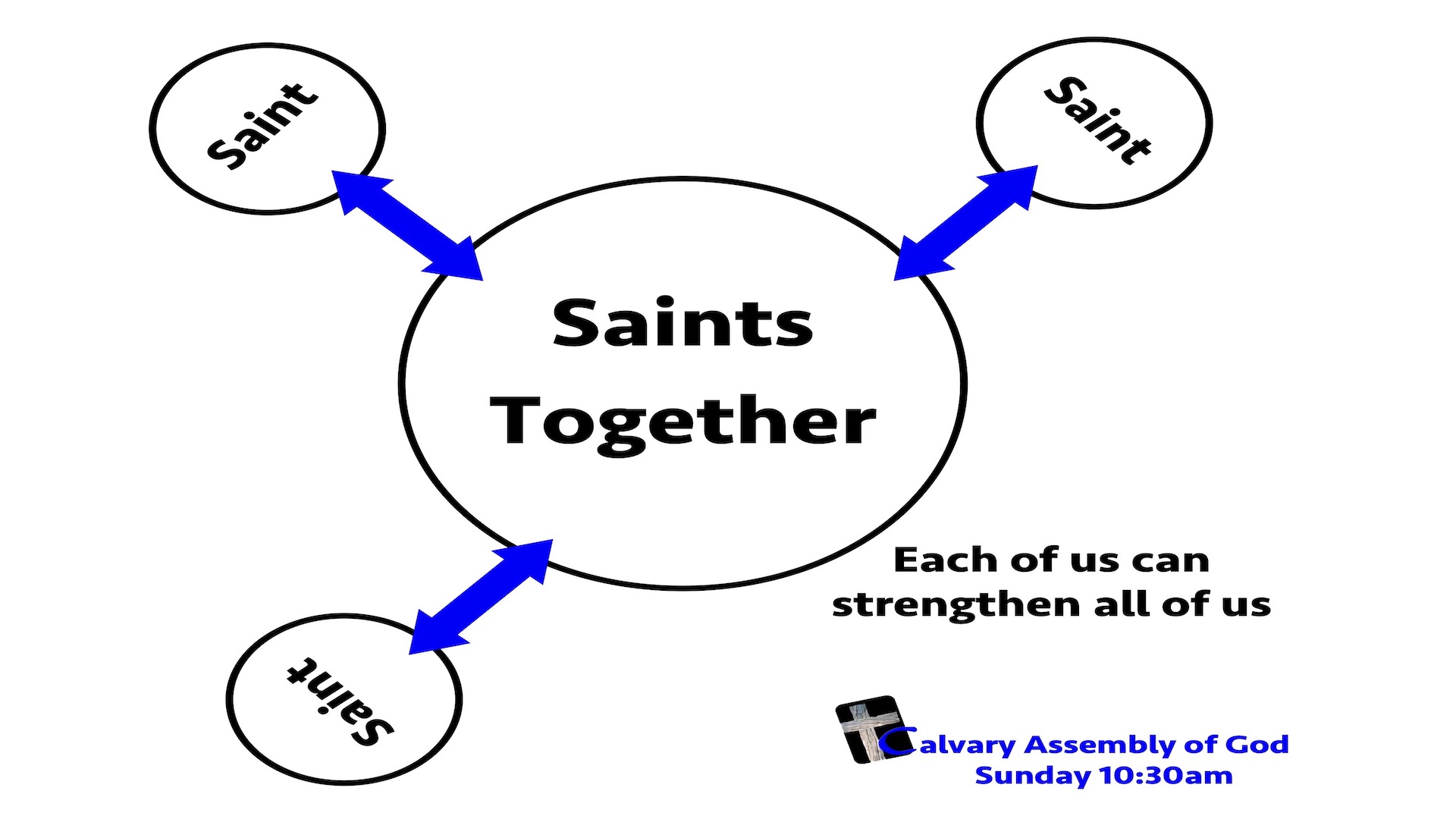
Saints Together—Throughout the New Testament the word “saints” is always in the plural form. This is a clear indication that none of us can develop into the full-fledged Christians we were meant to be on our own. We all need each other. More specifically, we all need the most mature version of each other. A key component of an individual saint’s development is the time spent alone being forged by the discipline of the Holy Spirit. Maturing saints then come together with each other to continue to strengthen and sharpen everyone in the church. Strong individual saints make a strong church, and a strong church makes strong individual saints! Let’s learn about six important spiritual disciplines that each individual saint must put into practice so that they can use their newly developed strengths to help other saints in their own development.
The Great Attitude Of Gratitude—There’s something about gratitude that distinguishes people. Think about it: would you rather hang around with grumblers or grateful people? The gratitude of Paul and Silas certainly made them stand out from the crowd when they were in Philippi. Wrongly accused, beaten, and thrown in prison, but instead of bellyaching, they were praising God. Later on, when Paul wrote his letter to the Christians in Philippi, the theme of gratefulness permeates his letter. The distinguishing mark is actually in the title: The GReat ATTITUDE spells out GRATITUDE!
Long Live The King Of Kings—Throughout human history, whenever a king died, the people would say something like, “The king is dead. Long live the king!” They would say this because the next king ascended to the throne immediately after his predecessor died. Except when a nation had been defeated, the cry, “The king is dead” was unanswered by, “Long live the king!” Israel must have felt like this. After being defeated by Nebuchadnezzar and spending 70 years in exile, it appeared to many that the line of kings was broken. Even after retuning to their homeland, Israel continued to live under the thumb of other powerful nations. And yet, some still clung to the glimmer of the promise God had made about an eternal King sitting on Jerusalem’s throne. The First Advent of Jesus revealed to us in the Gospels reassures us that the promise of an eternal King is true. Jesus came to earth to reveal His majesty to us. The First Advent is so important because it bolsters our faith for the imminent Second Advent when Jesus will return as the King of kings! Christmas is a great time to be reminded that even now we can confidently declare, “Long live the eternal King of kings!”
2024 promises to be an exciting year! If you don’t have a home church in the northern Kent County area, I would love to have you join us!
This is just one example of the power of a leader’s storytelling. Check the full conversation Greg and I had on The Craig And Greg Show. I have lots of new content every week, which you can check out on my YouTube channel.
“We are all born ignorant, but one must work hard to remain stupid.” —Benjamin Franklin
George Jeffreys was born with a limiting speech impediment, but with the empowering of the Holy Spirit, George and his brother Stephen led incredible Pentecostal revivals in England and Wales. They were said to be the greatest evangelists since George Whitefield and John Wesley. Someone asked Jeffreys how long a revival should last, and he responded, “Thank God, a revival started in my heart 30 years ago, and it has never stopped; it will never end.” He continued by saying, “As long as Jesus is kept in the front, and made the center of fellowship and blessing and unity, the revival will never end.” Check out this mini biography about his life.
John Stonestreet uses the example of C.S. Lewis’ Aslan to talk about how God can speak to us through our pain. John writes, “Pain is never the point of God’s plans, any more than it is the purpose of physical exercise. Never pushing ourselves to the point that it hurts means never improving our health. On the other hand, seeking pain is more likely to do harm than to aid our wellbeing. In and of itself, pain is not good, but it is meaningful. Pain indicates that something is wrong and needs to be addressed.”
“The best way to make a dream come true is to wake up.” —Dame Anna Wintour
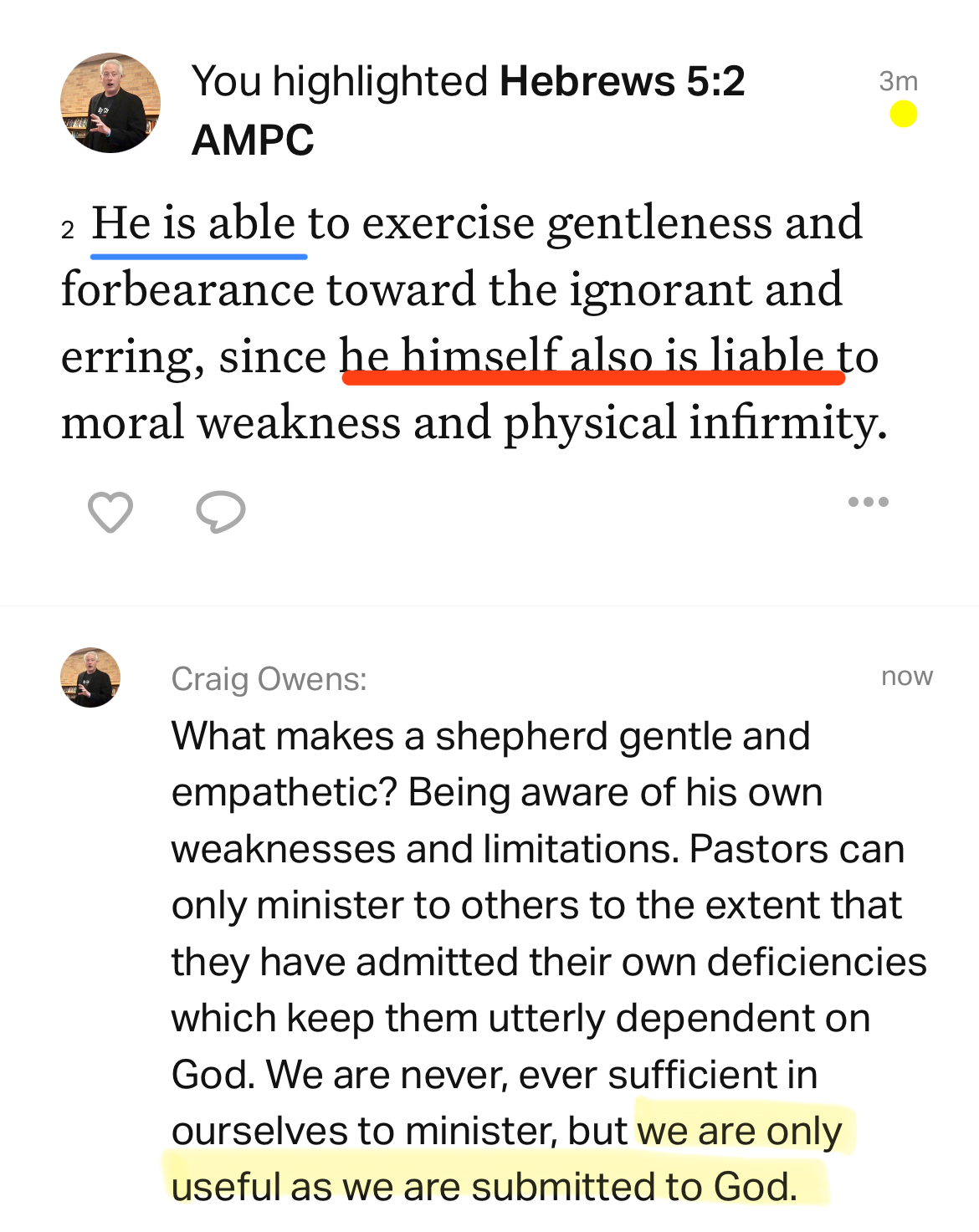
Because of the extensive prayer, research, and work I put into my book Shepherd Leadership, I am frequently drawn to passages of Scripture that reinforce the idea of pastors as shepherds. I was meditating on Hebrews 5:2 the other day, and I shared some of my thoughts with some of my pastor friends.
The Holy Spirit who inspired the words of the Bible is the same Holy Spirit in you. He can illuminate the biblical promises for your prayer time, and He can help you apply the biblical principles to your everyday circumstances. I have lots of new content every week, which you can check out on my YouTube channel.
“Carl M. ‘Daddy” Hanson (1865-1954), a spiritual father to many early Pentecostals on the northern Great Plains, earned his Pentecostal stripes on both sides of Azusa Street. He experienced the Pentecostal distinctive of speaking in tongues in the 19th century, and he became an early leader in the Assemblies of God in the first half of the 20th century.” Check out this mini-biography of this Pentecostal pioneer.
Absolutely astounding! The silk of spider webs has unique properties that medical science is beginning to use in humans. What an amazing Creator we serve!
In my sermon about parenting, I quoted from Proverbs 22:6. Commenting on this verse, Dick Brogden, in Proverbs: Amplified and Applied, wrote, “The principle regarding our children is that the things they are taught early on will give them every opportunity for stability later in life. This reality does not guarantee that they will make right choices (including whether or not to follow Jesus); it does guarantee that they have the resource of wisdom to draw on should they choose. … Whatever their choice, we can rest in the peace that we laid up for them every resource for good. Our peace (regarding our children) comes from what we have done with our heart and resources, not what they have done with theirs.”
Listen to the podcast of this post by clicking on the player below, and you can also subscribe on Apple, Spotify, or Audible.
Father’s Day can bring up a lot of different emotions for folks. Growing up, you might not have had a very good experience with your father or perhaps you didn’t have a father involved with you at all. Maybe you look back on your own history as a Dad and have some regrets. Perhaps you’re an empty-nester now or maybe you’ve never had kids of your own.
Regardless of your experience with your father or with your own circumstances, I think there are some things that we all naturally expect from our Dads. These are things that we should honor and things we as Dads should strive to demonstrate in our lives.
Luke introduces us to a man in the Book of Acts named Joseph. We don’t know if he is a biological father or not, but he is presented to us as a spiritual father that we would do well to emulate. In fact, we only know his name is Joseph from our first introduction to him. This man was such an inspiration to so many people that he was given the nickname Barnabas—the name that is used everywhere else in the New Testament.
When we think of our list of attributes of an ideal father, I think we all look to our fathers for these five things.
(1) Be there when we are getting started. Barnabas was there when Saul (later named Paul) first became a Christian and when the first Gentiles became Christians (Acts 9:26-28; 11:19-23).
(2) Provide for us financially. Barnabas is the first person mentioned by name that gave a significant and much-needed financial donation to the Church (Acts 4:34-37).
(3) Help us learn to leave our nest and fly on our own. Barnabas gave Paul his first leadership role in the Church (Acts 11:25-26).
(4) Step back as we learn to soar on our own. Barnabas took the lead in the first commissioned missionary journey, but then we see him stepping aside for Paul to take the lead (Acts 13:1-2, 13).
(5) Continue to “be there” for us even after we’ve left the nest. Barnabas also picked John Mark to accompany him and Paul on that first missionary endeavor, but when Barnabas stepped aside for Paul, Mark headed home instead of continuing on their trip. Later on, Barnabas wanted to give Mark another shot, but Paul was strongly against that. As a result, Paul and Barnabas parted company, with Barnabas taking Mark with him. From this point on, Luke doesn’t tell us anything else about Barnabas, but we know that Mark became the first one to write his Gospel account of the life of Jesus and that he became reconciled to both Paul and Peter, becoming an invaluable help to both of them. Although we don’t read what happened, I think it’s a good bet that all of this came about through the encouragement of Barnabas (Acts 13:13, 15:36-40; 2 Timothy 4:11; 1 Peter 5:13).
The name Joseph means “exalted.” Joseph was born into the tribe of Levi, placing him at the heart of the Jewish faith, yet he risked it all to not only acknowledge Jesus as the Messiah but to be so invested in the Christian Church that they called him Barnabas. Luke tells that his name means Son of Encouragement.
The word “encourage” literally comes from in + courage—to put courage into someone, to inspire others with the courage or confidence they need to do something great.
The word “encouragement” in Acts 4:26 in Greek is paraklesis: the same word used for the Holy Spirit.
Fathers can only put in others what is already in themselves.
Acts 11:24 tells us that Barnabas was “a good man, full of the Holy Spirit and faith.” Because He was full of the Spirit of God, he could put that courage and security in others around him.
Guys, it’s the same for us today. We have to be filled with the security, the joy, and the courage that springs eternally from the Holy Spirit. Only when we are filled with the Spirit can we put something truly impactful into the lives of our kids—both our biological and spiritual children.
We don’t know how old Barnabas was. We don’t know if he had children of his own or not. All we know is that he was a good man that was full of the Holy Spirit, and that gave him the courage to put into others.
What a great example for all of us to follow!
If you’ve missed any of the other messages in our series We Are: Pentecostal, where we’ve been learning about the blessings that come to those who are baptized in the Holy Spirit, you can find all of those messages here.
Listen to the podcast of this post by clicking on the player below, and you can also subscribe on Apple, Spotify, or Audible.
I’ve talked before about the benefits of calling the Old and New Testaments the First and Second Testaments. This helps me not to subconsciously slip into the thought that “old” means outdated or that “new” means a replacement of what came before it. When I say First and Second I remember that there cannot be a Second without a First, that the First anticipates the Second and the Second fulfills the First.
The people of the First Testament experienced the Spirit of God in an often-repeated phrase: “the Spirit of the Lord came on” someone. It usually came on them for a specific task or season. For instance…
70 leaders to help Moses (Numbers 11:25)
the judges that delivered Israel from their enemies (Judges 3:10, 6:34, 11:29, 14:6, 15:14)
the anointing for Israel’s king (1 Samuel 16:13)
empowerment for prophets to prophesy (Ezekiel 11:5)
When the Holy Spirit came on these men, there was a noticeable supernatural anointing and empowerment, but more times than not these men also had visible and sometimes crippling stumbles.
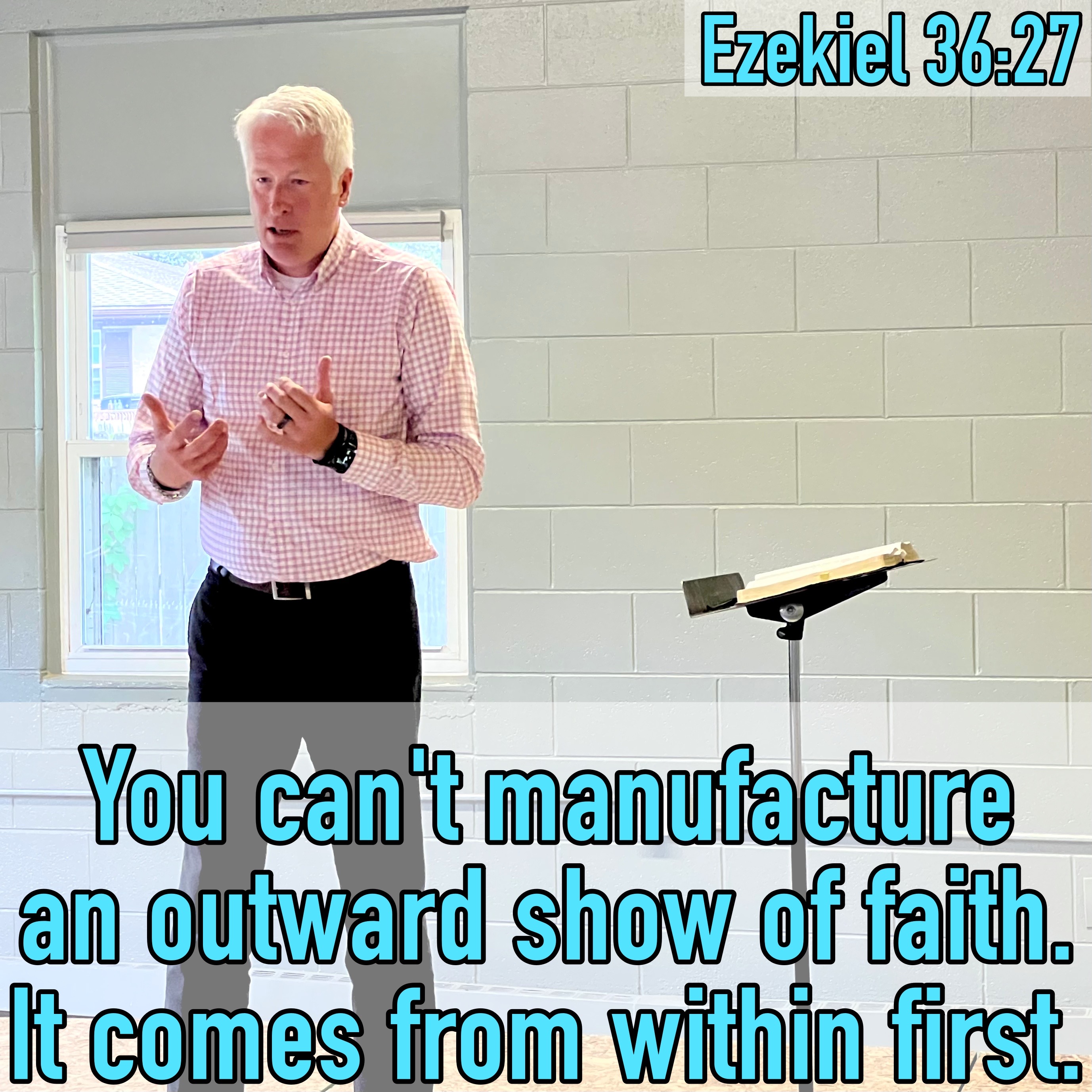
What happens on the outside often stays on the outside. Sort of like the little boy whose mom brought him to church one Sunday. The little boy was constantly standing up on his chair and disturbing everyone around him. Finally, the exasperated mother whispered, “If you don’t sit down I’m going to take you to the restroom and spank you.” The little boy immediately sat down with his arms tightly crossed. He looked at his mom and said, “Outside I may be sitting down but inside I’m standing up!”
God looks at the heart. He told the Israelites that their inward defiance didn’t outweigh their outward religious practices. And Jesus said that people who prophesied, cast out demons, and performed miracles, but still had an unrepentant heart, would hear Him say, “I never knew you” (Isaiah 1:12-13; Matthew 7:21-23).
In the First Testament, we see a desire for the Holy Spirit to be more than on—a desire for Him to come in.David prayed, “Create in me a pure heart, O God, and renew a steadfast spirit within me” (Psalm 51:10). And God promised His people, “I will give them an undivided heart and put a new spirit in them … And I will put My Spirit in you and move you to follow my decrees and be careful to keep My laws” (Ezekiel 11:19, 36:27).
Paul identified this fruit of the Spirit as “love, joy, peace, forbearance, kindness, goodness, faithfulness, gentleness and self-control,” and he concluded with the phrase, “against such things there is no law” (Galatians 5:22-23). The law always sets limits, but when the Holy Spirit abides in us, the production of fruit is limitless!
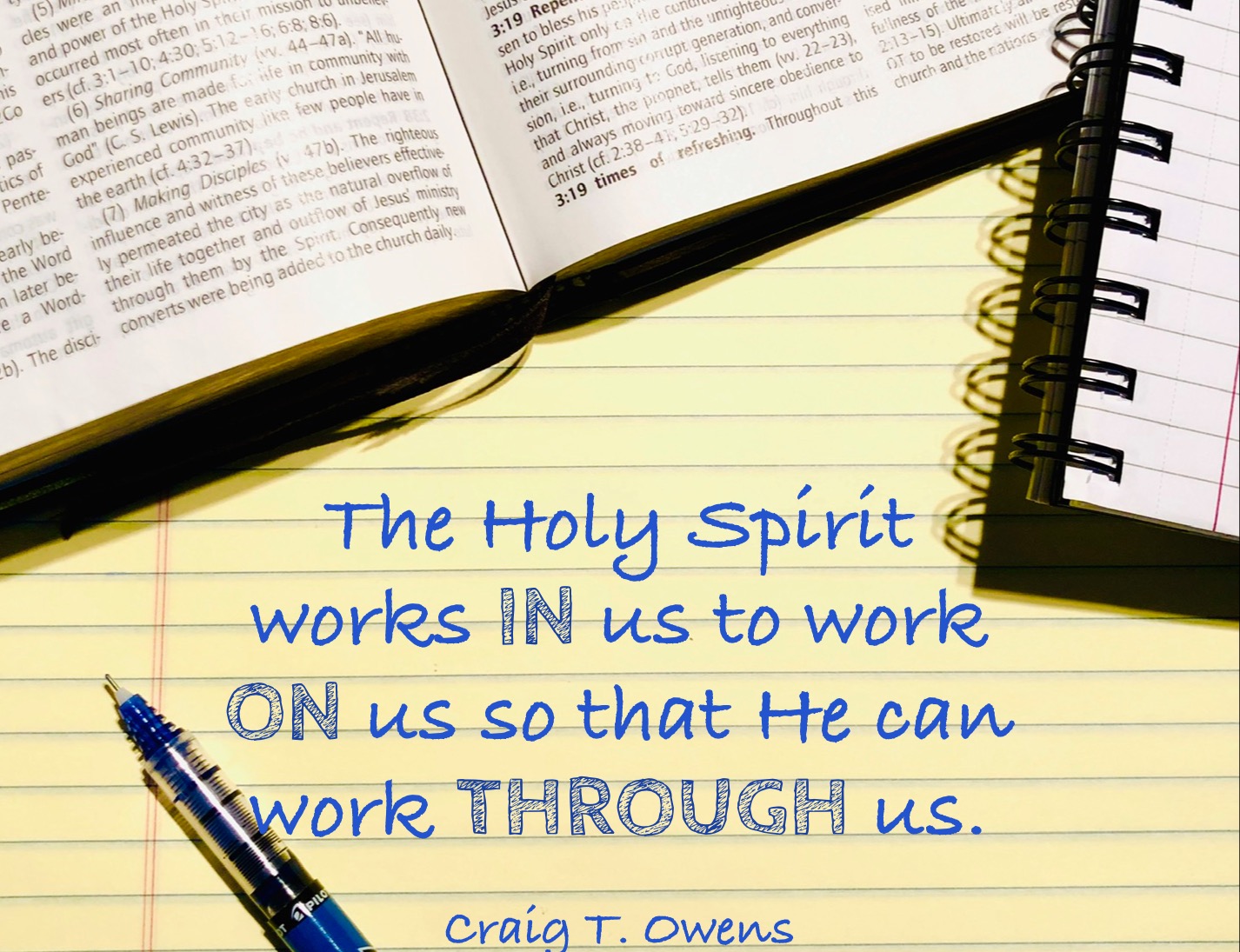
Being baptized in the Holy Spirit means that we allow Him to come in us and then to work on us. It’s only when the Holy Spirit has worked in us that can He flow through us to others. Jesus said that we would receive the Spirit’s empowerment to be witnesses—that’s an inward change that produces an outward fruit.
Listen to the podcast of this post by clicking on the player below, and you can also subscribe on Apple, Spotify, or Audible.
Let’s say you are thinking about buying a particular book. Are you more likely to buy that book because the author says it’s good, because a book reviewer says it’s good, or because a close friend says it’s good? I think all of us give more weight to the suggestions from our friends, especially because they have nothing to gain from making that suggestion.
In the same way, when someone close to us says, “I know from personal experience that following Jesus is the best decision that I have ever made. Making Jesus my Lord and Savior has completely changed everything for me,” it’s easier for us to make that same decision for ourselves.
The deeper the level of our intimacy with someone usually means we have more influence with them.
Jesus told us all about the Holy Spirit when He was discussing His ascension. He wasn’t going to leave us as orphans, but told us of the intimate connection the Spirit would make for us. For instance, Jesus said, “And I will ask the Father, and He will give you another Counselor to be with you for ever—the Spirit of Truth” (John 14:16-17).
Notice that Jesus considers the Holy Spirit an irreplaceable and coequal part of the Godhead—I will ask the Father, and He will give you another Counselor (see also Matthew 3:16-17; Luke 10:21; Matthew 28:19).
The word Jesus uses for Counselor is parakletos. This means One who comes alongside to help us. I like all the words the Amplified Bible uses: “Comforter—Counselor, Helper, Intercessor, Advocate, Strengthener, and Standby.” Indeed, Luke records numerous instances where the Holy Spirit is alongside Christians to strengthen and encourage them (for instance: Acts 4:8, 6:10, 9:31).
Notice as well that Jesus tells us that as a part of the Trinity the Holy Spirit is eternal: “to be with you for ever.” Because the Holy Spirit is fully God, He knows the end from before the beginning. His perspective is infinite, so He can guide us in ways that only One who can see everything could guide us. For example, He leads us to places we might not have chosen on our own (Luke 4:1; Acts 8:29), or stops us from going somewhere at the wrong time (Acts 16:7), or talking with people we might have overlooked (Acts 10:19, 11:12).
Jesus also calls the Him the Spirit of Truth. He reveals things that we could not have perceived with our natural minds (see Acts 5:1-9).
And Jesus calls the Holy Spirit a great Teacher, “The Counselor, the Holy Spirit, whom the Father will send in My name, will teach you all things and will remind you of everything I have said to you” (John 14:26). So we see the Holy Spirit helping us apply Scripture to our prayers (Acts 4:25-26) and to incredibly complex and delicate situations (Acts 11:15-18, 15:1-21).
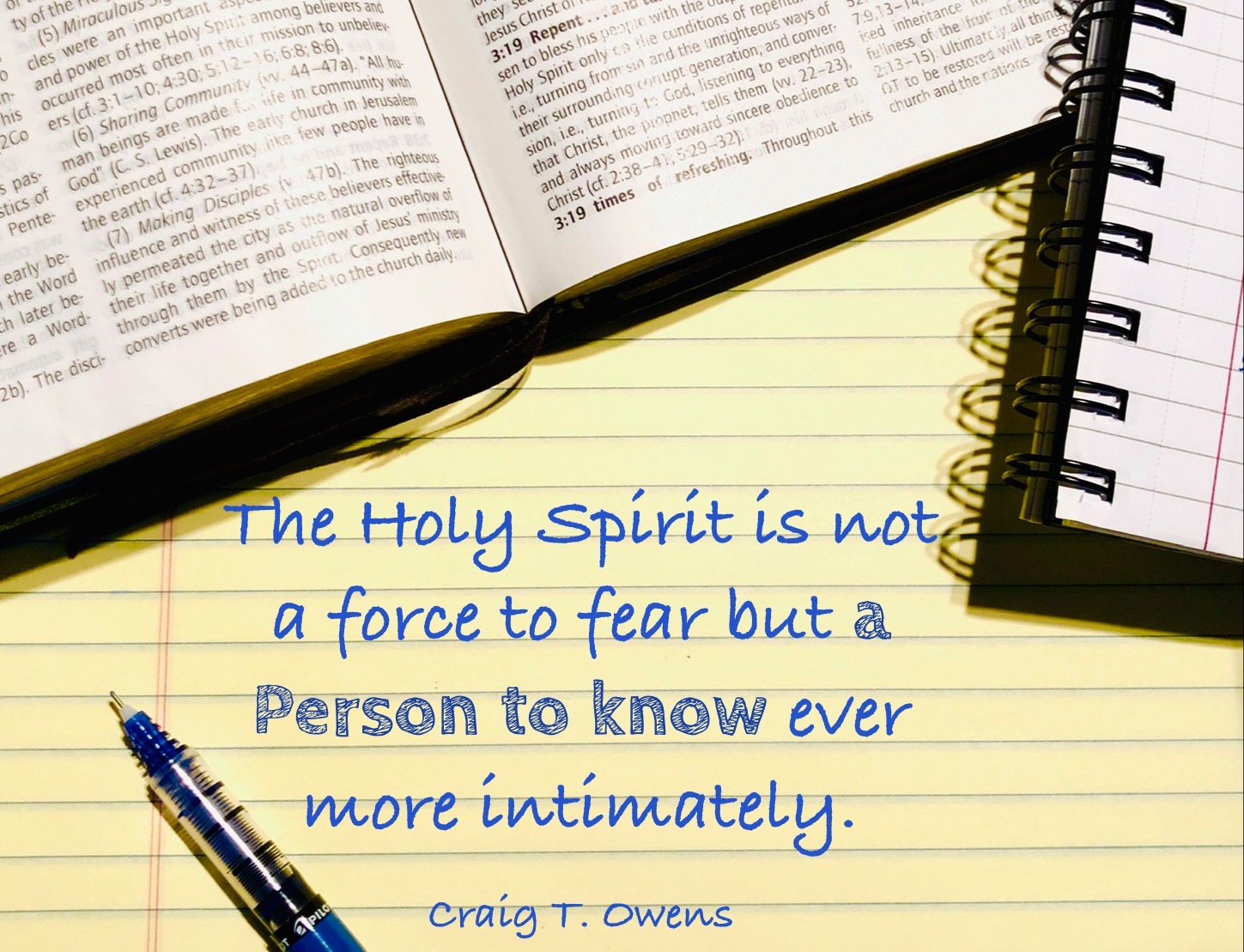
The Holy Spirit is not a force to fear but a Person to know ever more intimately.
When our lives are transformed and expanding because of an intimate, ongoing, vibrate relationship with the Holy Spirit, we are witness (Acts 1:8). You cannot exhaust all that the Spirit has for you, so keep abiding and growing in that intimate relationship. Let it be said of you as it was said of Peter and John: “We can tell you have been with Jesus!” (Acts 4:13).



 Last week we talked about the Voice of the Holy Spirit. I love the phrase from 1 Samuel 9:15 where God “told Samuel in his ear” about Saul’s arrival and what he should say to Saul. Then the Holy Spirit’s Voice for all of us is foretold in Isaiah 30:21.