Empowered For Obedience

Listen to the podcast of this post by clicking on the player below, and you can also subscribe on AppleSpotify, or Audible. 

In the 40 days between His resurrection and His ascension, we read that Jesus was with His disciples “giving instructions through the Holy Spirit” (Acts 1:2). 

I think this word “instructions” in the NIV is too soft. The other translations say things like:

  • commandments (NKJV) 
  • orders (NASB & NET) 
  • instructed and commanded (AMPC) 

The Greek word Luke uses in Acts 1:2 is entellomai and it is a word that carries weight. Throughout the New Testament this word is used to identify…

  • …the words of God (Matthew 4:6, 15:4; Luke 4:10; Acts 13:47; Hebrews 9:20) 
  • …the words of Moses (Matthew 19:7; Mark 10:3; John 8:5) 
  • …the words of Jesus (Matthew 17:9, 28:20; Mark 11:6; John 14:31; 15:14, 17; Acts 1:2, 13:47) 
  • …the words of recognized leaders (Mark 13:34; Hebrews 11:22) 

(Check out all of the above Scriptures by clicking here.)

In the Septuagint (the Greek translation of the Old Testament) this word is used seven times. Five of these times link together the words “command” and “covenant” (Deuteronomy 4:13; Joshua 23:16; Judges 2:20; Psalm 111:9–10; Jeremiah 11:3–4). The other two times express God’s strong promise-keeping power that is awe-inspiring (Psalm 90:11, 91:11). 

In other words, these aren’t just any words, but they carry an awesome authority with them. These are binding commands. They are not merely wise counsel or suggestions for godly living. They are indispensable to the Christian life. 

Luke points out that Jesus gave these commands “through the Holy Spirit” because it is only through the Holy Spirit that you and I can understand them, apply them, and be empowered to obey them. 

Jesus uses the same word entellomai in the Great Commission (Matthew 28:20) as well as in Acts 1:2. Clearly, the Scripture is telling us that we are powerless to understand and powerless to obey without the Holy Spirit’s daily empowerment. Jesus would never give us commands that we were unable to carry out, which is why He gives us instructions through the Spirit, and then the Spirit gives us the power to joyfully obey those commands. 

Don’t ever think that you are on your own in trying to figure out what Jesus said, and how you are going to live it out.

I discuss the role of the Holy Spirit in a Christian’s life in much greater detail in my series called We Are: Pentecostal. 

►► Would you please prayerfully consider supporting this ministry? My Patreon supporters get behind-the-scenes access to exclusive materials. ◀︎◀︎

The Hour, The Power, And The Procedure

Listen to the podcast of this post by clicking on the player below, and you can also subscribe on AppleSpotify, or Audible. 

If you’re going through a dark time in your life right now, I’ve got a word of encouragement for you. Well, actually three words of encouragement!

Check out this episode of The Podcast. 

Here are the Scriptures I reference in this video—John 13:1-5, 18:4-11; Matthew 26:51-54; John 17:11-12; Psalm 23:4 

You may also want to check out a couple of related blog posts:

My book When Sheep Bite is for pastors who are going through challenging times in their ministries.

►► Would you please prayerfully consider supporting this ministry? My Patreon supporters get behind-the-scenes access to exclusive materials. ◀︎◀︎
Don’t Take Advice From Armchair Quarterbacks

Listen to the podcast of this post by clicking on the player below, and you can also subscribe on AppleSpotify, or Audible. 

There are some know-it-alls who want to tell pastoral leaders how they should have done things differently. Much like the “armchair quarterbacks” that seem to know all the right calls a team should make, even though they have virtually no experience. 

Pastor, pay very little attention to those armchair quarterbacks that would speak into your life!

Check out this short clip from my time on the Leading From Alignment podcast.

To put the quote that Jim shared from When Sheep Bite into context, here is the full passage—

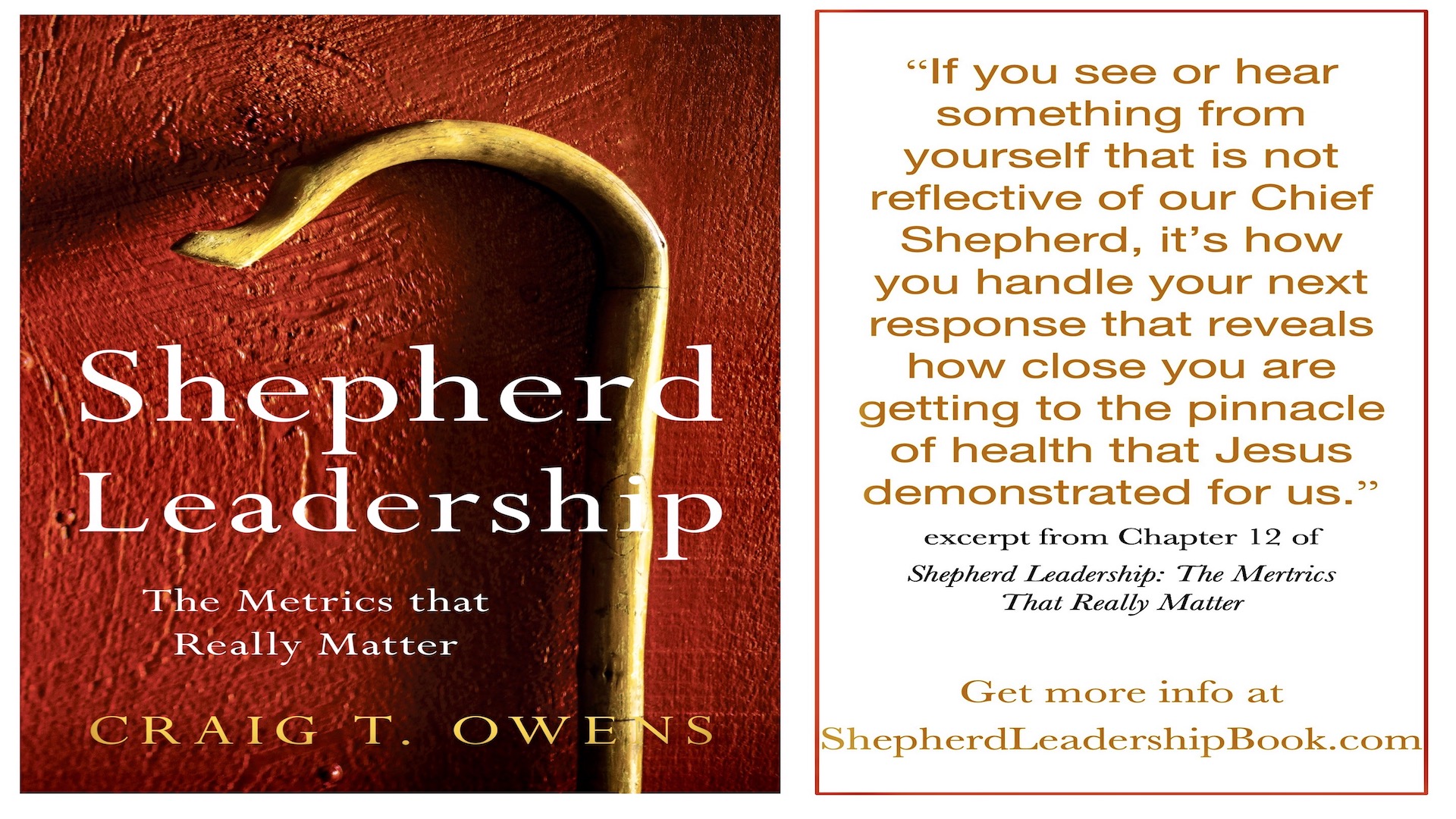
     Jesus is our perfect example of a Shepherd Leader. His example was to lay it all on the line, regardless of how the sheep were behaving or misbehaving: “I am the Good Shepherd. The Good Shepherd lays down His life for the sheep” (John 10:11). By contrast, Jesus warns us that those who are not willing to put their lives on the line for the sheep are worse than armchair pastors—Jesus calls them mere hired hands: “The hired hand is not the shepherd and does not own the sheep. So when he sees the wolf coming, he abandons the sheep and runs away. Then the wolf attacks the flock and scatters it. The man runs away because he is a hired hand and cares nothing for the sheep” (John 10:12-13). 

     If I am called to be a shepherd leader, attacks will come from both sheep and wolves. It’s what I do in those hard times that shows whether I am truly called or merely acting as an armchair shepherd. 

Please check out both When Sheep Bite and Shepherd Leadership. And get in touch with me if you would like someone to talk to. 

You can check out the full conversation I had with John Opalewski and Jim Wiegand on their Leading From Alignment podcast here.

►► Would you please prayerfully consider supporting this ministry? My Patreon supporters get behind-the-scenes access to exclusive materials. ◀︎◀︎
An Apologetic For Apologetics

Listen to the podcast of this post by clicking on the player below, and you can also subscribe on AppleSpotify, or Audible. 

I would like to give Christians an apologetic about Christian apologetics.

Check out this episode of The Podcast.

The Scriptures I reference in this episode of The Podcast are 1 Peter 3:15-16; Luke 1:1-4; Acts 1:1-3; Luke 24:45-49; Acts 1:5, 8.

In a couple of earlier blog posts, I elaborate more on some points in this episode. Check out:

I have also talked quite a bit about apologetics on my blog, which you can find here.

Keep up with everything else I have going on, including my newest book and my other podcasts by clicking here.

►► Would you please prayerfully consider supporting this ministry? My Patreon supporters get behind-the-scenes access to exclusive materials. ◀︎◀︎

Blessing The Blesser

Listen to the podcast of this post by clicking on the player below, and you can also subscribe on AppleSpotify, or Audible. 

We’ve made it to the top step after a long climb. We’ve arrived! But arrived for what? Not for taking it easy, but for serving.  

Jesus was at the top, and consider what He did with that position:

  • He laid aside His prerogatives as God to serve us—Philippians 2:6-8 
  • He demonstrated this by becoming a servant of the servants—John 13:3-5 
  • He said, “For who is greater, the one who is at the table or the one who serves? Is it not the one who is at the table? But I am among you as One who serves.” (Luke 22:27) 

(Check out all of the Scriptures in this post by clicking here.) 

We strive for the top not to be served, but to serve. This is why the final Song of Ascent addresses those at the top as “servants of the Lord” (Psalm 134:1). 

The first duty of the servants is to praise (2x in vv. 1, 2). The KJV actually renders this word “bless,” which I believe is a good way for us to think about this. The word means: 

  1. praise God with a reverential mind and 
  2. celebrate God on bended knee 

In other words, both our heart and our body need to be in a posture of a praising servant. In the Septuagint, the word used for praise / bless is eulogeo, which means to say good words. In putting the two parts of the definition together, it mean we aren’t grumbling about our service (like “I have to do this”), but we are thankfully and worshipfully serving (as in “I get to do this!”). 

These servants are called to “minister…in the house of the Lord [and] in the sanctuary” (134:1-2), just as the priests in the tabernacle (1 Chronicles 9:33; Leviticus 6:13; 24:2, 4). 

This blessing and serving is itself a blessing which unlocks even more blessing. The final words of the final Song of Ascent is a prayer request (notice the word “may” in v. 3). 

The word bless in this final is the same word translated praise in vv. 1-2, except here the form of the verb means “to be shown divine favor”! 

We don’t get blessed by God because we have blessed God, but we bless God because He has already blessed us. I don’t command His blessing, but I bless Him in recognition of the blessing that continually flows from Him to me. 

To word minister as in v. 1 means to: 

  • endure all hardships 
  • continue until the task is done 
  • cause or help others to stand too 

God loves to bless people who love to bless people! 

As long as we’re here, keep blessing and serving others as your act of worship to God. Say good words to people about God and say good words to God about people. Lift up your hands, fall on your knees, sing out loud, or worship quietly in your heart. But keep on serving like Jesus. All of this blesses God. 

Your final and eternal reward in the Heavenly Zion is coming and it is beyond compare—

It will be good for those servants whose Master finds them watching when He comes. Truly I tell you, He will dress Himself to serve, will have them recline at the table and will come and wait on them. It will be good for those servants whose Master finds them ready, even if He comes in the middle of the night or toward daybreak. (Luke 12:37-38) 

In blessing others, we are blessing the God who has already blessed us and who longs to bless us for all of eternity! 

If you’ve missed any of the messages looking at the fifteen Songs of Ascent, you can find them all here. 

►► Would you please prayerfully consider supporting this ministry? My Patreon supporters get behind-the-scenes access to exclusive materials. ◀︎◀︎

Testing In Love

Listen to the podcast of this post by clicking on the player below, and you can also subscribe on AppleSpotify, or Audible. 

God wants us to progress to the next level in our Christian walk, but we need to know what we’re ready for that. Just as a teacher in school prepares us for a test, administers the test, and then gives us the result of the test in order to promote us to the next level, so does our loving Heavenly Father. 

This clip is from a message called Prepared to Pass the Test. All of the messages in this series were an in-depth look at the model prayer Jesus taught us to pray in Matthew 6:9-13. 

►► Would you please prayerfully consider supporting this ministry? My Patreon supporters get behind-the-scenes access to exclusive materials. ◀︎◀︎
Persecution From Religious Leaders

Listen to the podcast of this post by clicking on the player below, and you can also subscribe on AppleSpotify, or Audible. 

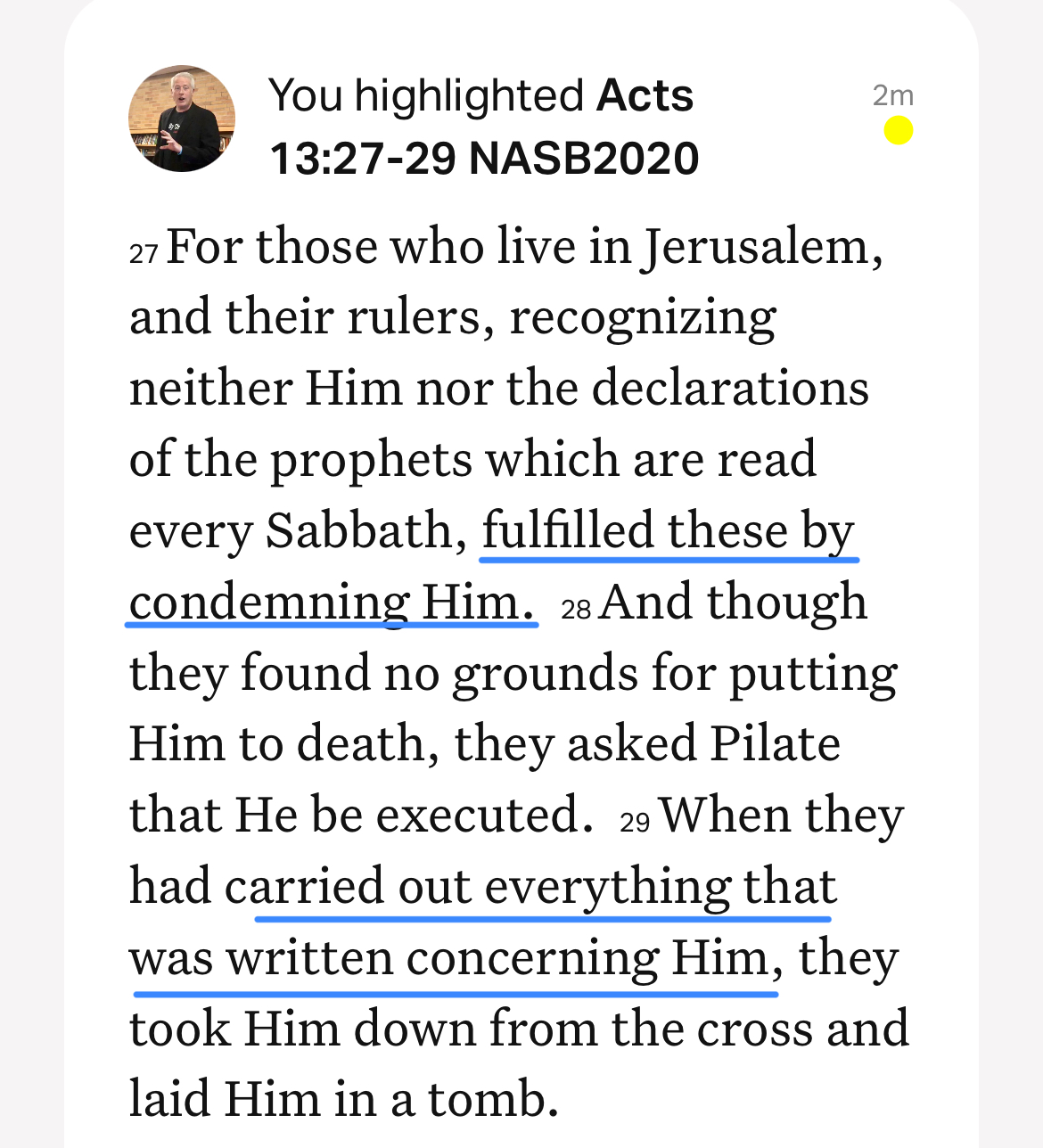
The religious leaders who should have known God’s Word the best were the ones who wanted Jeremiah killed for speaking God’s Word boldly. 

     The priests and the prophets and all the people heard Jeremiah speaking these words in the house of the Lord. Yet when Jeremiah finished speaking everything that the Lord had commanded him to speak to all the people, then the priests and the prophets and all the people seized him, saying, “You must die!” … Then the priests and the prophets spoke to the officials and to all the people, saying, “A death sentence for this man! For he has prophesied against this city, just as you have heard with your own ears!” (Jeremiah 26:7-8, 11) 

They did this to Jesus. The religious leaders shouted louder and louder, “Crucify Him!” 

They will do this to me. Jesus said, “Blessed are you when people insult you, persecute you and falsely say all kinds of evil against you because of Me. Rejoice and be glad, because great is your reward in heaven, for in the same way they persecuted the prophets who were before you” (Matthew 5:11-12). And He said, “Be on your guard; you will be handed over to the local councils and be flogged in the synagogues. On My account you will be brought before governors and kings as witnesses to them and to the Gentiles” (Matthew 10:17-18). 

When—not if—this persecution comes, I want to be able to stand before the religious and civil leaders of my time and be able to hear what Jesus heard from Pontius Pilate: “I find no basis for a charge against this Man” (John 18:38; 19:4, 6). 

Holy Spirit, help me to speak only what You tell me to speak and do only what You tell me to do (Matthew 10:19-20). Help me to respond quickly to any wrong thinking, speaking, or action that You point out so that I may just as quickly repent of that. I want my life to point others to Jesus, even as I face persecution. 

(I discuss the persecution flowchart above in more detail in this post.) 

►► Would you please prayerfully consider supporting this ministry? My Patreon supporters get behind-the-scenes access to exclusive materials. ◀︎◀︎
Assured Expectation

Listen to the podcast of this post by clicking on the player below, and you can also subscribe on AppleSpotify, or Audible. 

A recent movie set box office records. Many Hollywood commentators are surmising that it is because the unlikely duo in the movie does something so noble at the end of the movie. Throughout the movie one of the main characters takes to calling himself “Jesus.” At the end of this movie, this character and his friend take the full brunt of the evil on them in the hopes of saving the universe. 

Of course, this storyline isn’t new to Hollywood or even in ancient literature. This epic quest is longed for in the human heart, looking for a hero to selflessly sacrifice himself to save everyone else around them. 

The only problem is that these heroes aren’t sure if their sacrifice is actually going to work. 

This, of course, isn’t the case with Jesus. Angels announce before His incarnation that He will save His people. Jesus Himself says, “I will lay down My life for My friends and I will take it up again.” And in the very last book of the Bible we read that before Time even began, Jesus was already seen as the sacrificial Lamb slain for the deliverance of His people. 

This story doesn’t start in Bethlehem, but when John 1:1 says, “In the beginning,” the language there is really saying, “From before there was a beginning, Jesus our Hero already knew the outcome of His selfless sacrifice.”  

We see hints and foreshadowing of this Most Epic Story all throughout history and throughout Scripture. Like in Psalm 132—the longest of the Songs of Ascent (at 18 verses, the next longest song is only half its length). 

(Check out all of the Scriptures in this post by clicking here.) 

The key verse (v. 10) is in the middle: it connects David and Jesus. The words “Anointed One” is one word in Hebrew: Masiah which is Messiah. In the New Testament,  the word Christ also means Anointed One. 

What do we learn in the first half of this song. It opens with the words, “O LORD, remember David…” (v. 1). 

Because this psalmist mentions the same incident that we discussed in Psalm 131, this is another reason why I think David had the incident of moving the ark of the covenant to Jerusalem in mind when he wrote the previous song (see Psalm 132:2-5; 2 Samuel 6:17). The people continued to rejoices as David made arrangements and provided building materials for his son Solomon to build the temple (vv. 6-9). 

Look at how verse 10 connects David to Jesus the Messiah. In verse 2, David swore an oath to the Lord, but he was physically unable to fulfill his promise. In verse 11 (also see 2 Samuel 7:11-16), “The Lord swore an oath to David.” 

God was able to fulfill His promise, which we see in the life, death, resurrection, and  ascension of Jesus, and then in the promised outpouring of the Holy Spirit. On the Day of Pentecost, Peter declares this in his sermon—connecting the work of Jesus to the prophesy of King David (Acts 2:22-36). 

We can sum up the first half of Psalm 132 with the words “Remember David.” And we can sum up the second half of this song of ascent with the words “Remember Jesus.”  

Remember Jesus [the] Christ, raised from the dead, descended from David (2 Timothy 2:8). 

I like this verse from the Amplified Bible: Constantly keep in mind Jesus Christ (the Messiah) as risen from the dead, as the prophesied King descended from David, according to the good news (the Gospel) that I preach.  

David swears an oath (v. 2) but has no power to fulfill it. God swears an oath (v. 11-12) and fulfills it (Luke 1:33; Revelation 11:15). 

David longs for blessings for the priests and saints (v. 10) but has no power to make it happen. God says, “I will” bless the priests and saints (vv. 13-18; 1 Peter 2:5-9; Revelation 1:6). 

All of our longings for a Hero—for salvation, for purpose, for meaning—are fulfilled in Jesus. All of God’s promises for these things are fulfilled in Jesus. All of our life should be lived in this joyful assurance (Hebrews 10:35-39; Revelation 3:11)! 

Not only should we not stumble in the homestretch, but we should live in such joyful assurance of God’s promises that we soar across the finish line! 

If you cannot remember anything else, remember David and remember Jesus. 

Check out all of the other Songs of Ascent by clicking here. 

►► Would you please prayerfully consider supporting this ministry? My Patreon supporters get behind-the-scenes access to exclusive materials. ◀︎◀︎

Links & Quotes

Leaders may have to talk about people on their team, but how do we do this without crossing the line into gossip? Greg and I discussed this on a recent episode of our leadership podcast.

I have lots of new content every week, which you can check out on my YouTube channel.

“The Christian ideal has not been tried and found wanting. It has been found difficult; and left untried.” —G.K. Chesterton

“Christianity does not consist in telling the truth, or walking in a conscientious way, or adhering to principles; Christianity is something other than all that, it is adhering in absolute surrender to a Person, the Lord Jesus Christ.” —Oswald Chambers, in Baffled To Fight Better 

I really like the He Gets Us campaign! Here is a recent one.

“Critics may nitpick the Scriptures upon which we base our beliefs, but each year, the Lord will increasingly demonstrate that His Word contains no errors, exaggerations, or omissions. … We won’t feel ashamed of our hope. It will unfold just as the Lord has promised. We will be nourished, guided, blessed, and comforted. Our Lord will return, and then our days of sorrow will be over. How we will exult in the Lord, who first gave us a vibrant hope and then fulfilled that which we hoped for!” —Charles Spurgeon 

Seeds Of Light

Listen to the podcast of this post by clicking on the player below, and you can also subscribe on AppleSpotify, or Audible. 

Light is sown like seed for the righteous, and gladness for the upright in heart. (Psalm 97:11) 

Jesus used the parable of a farmer sowing seed as a picture of the seed God wants to sow in our hearts. The psalmist says that God’s seeds are light—driving out the shadows of darkness, and producing an abundant harvest of gladness in our hearts. 

Jesus is the Light of the world. He wants His light to be seen in us. He wants us to be glad in Him. 

If you don’t feel His gladness, ask the Holy Spirit to show you any weeds or rocks that need to be removed from your heart, so that the seeds of light can burst into a harvest of joy and gladness.

I like how the Amplified Bible renders this verse in Psalm 97—Light is sown for the uncompromisingly righteous and strewn along their pathway, and joy for the upright in heart—the irrepressible joy which comes from consciousness of His favor and protection. 

Let’s live in a such a God-honoring way that His seeds of light bring forth an abundant harvest that gives Him all the glory and points others to Jesus the Savior. 

►► Would you please prayerfully consider supporting this ministry? My Patreon supporters get behind-the-scenes access to exclusive materials. ◀︎◀︎