


Listen to the podcast of this post by clicking on the player below, and you can also subscribe on Apple, Spotify, or Audible. Check out the video content in this post by clicking here.
 The apostle Paul makes an interesting point with a little play on words—two words, to be specific: peace and God. Check out Philippians 4:4-8. Paul says, “the peace of God” (Greek: eirene Theos) and “the God of peace” (Theos eirene). Surrounding these titles are reminders to be grateful. Throughout Scripture we see this link between our gratitude to the God of peace, and the peace of God which guards our hearts.
(You can read all of the Bible verses mentioned in this post by clicking here.)
A natural byproduct of the peace of God is contentment. But contentment can also be our undoing, if we aren’t careful to use it the right way.
Watch out for contentment that becomes complacency—taking our blessings for granted. If we do this, complacency leads to forgetfulness. And as soon as anything is not going right, our forgetfulness produces anxiety.
Charles Spurgeon said, “When we have much of God’s providential mercies, it often happens that we have but little of God’s grace, and little gratitude for the bounties we have received. We are full and we forget God: satisfied with earth, we are content to do without Heaven.”
The wrong things to feel contented about:
- My possessions
- Absence of enemies or troubles
- Things going my way
Psalm 107 is a history lesson for us. Notice a repeated pattern for Israel that is still operational today.
- give thanks (v. 1) → complacency which leads to hunger (v. 5) → calling to God for deliverance (v. 6)
- give thanks (vv. 8-9) → rebellion which leads to trouble (vv. 11-12) → calling to God for salvation (vv. 13-14)
- give thanks (v. 15) → foolishness which leads to rebellion (v. 17) → calling to God for help (vv. 19-20)
- give thanks (v. 21) → drunkenness which leads to being at their wits’ end (v. 27) → calling to God for deliverance (v. 28)
Finally, in v. 31 we have a “give thanks” that doesn’t proceed to complacency and trouble. If contentment fuels expressed gratitude, that keeps not just eirene Theos on our minds, but also Theos eirene. This keeps us watchful for God (v. 43): In this verse “heed” means to keep a close watch, and “consider” means to have increased discernment and insight. This restarts the right contentment cycle.
The right things to feel contented about:
- Not my possessions, but God possessing me—Psalm 131:1-2
- Not the absence of troubles, but not being troubled by troubles—Proverbs 19:23
- Not things going my way, but things going God’s way—Job 1:21-22; Philippians 4:11-13; Deuteronomy 8:3 AMPC
When our thoughts about God begin to fade, so does our gratitude to God. When our gratitude to God begins to fade, so does our reliance on Him.
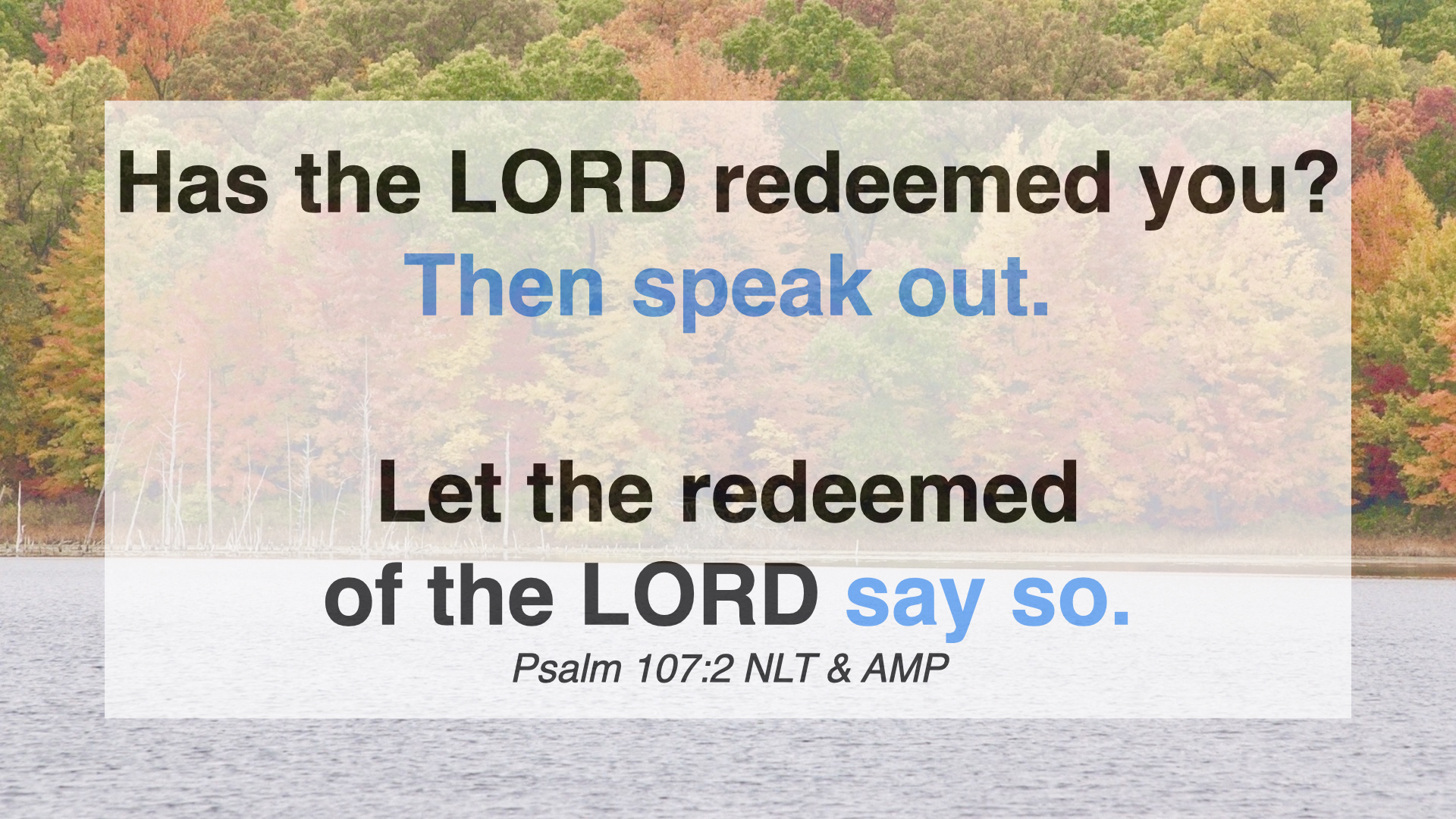
The strategy for how we keep our thoughts on God is embedded throughout Psalm 107: We must use our mouth to recount His blessings—exalt and praise (v. 32), tell (v. 22), say so (v. 2).
 You need to hear your “say so” in your own ears to energize your faith (science backs this up). The enemy needs to hear your “say so” to defeat him (Revelation 12:10-11). Others around you need to hear your “say so” to encourage them (Philippians 4:9).
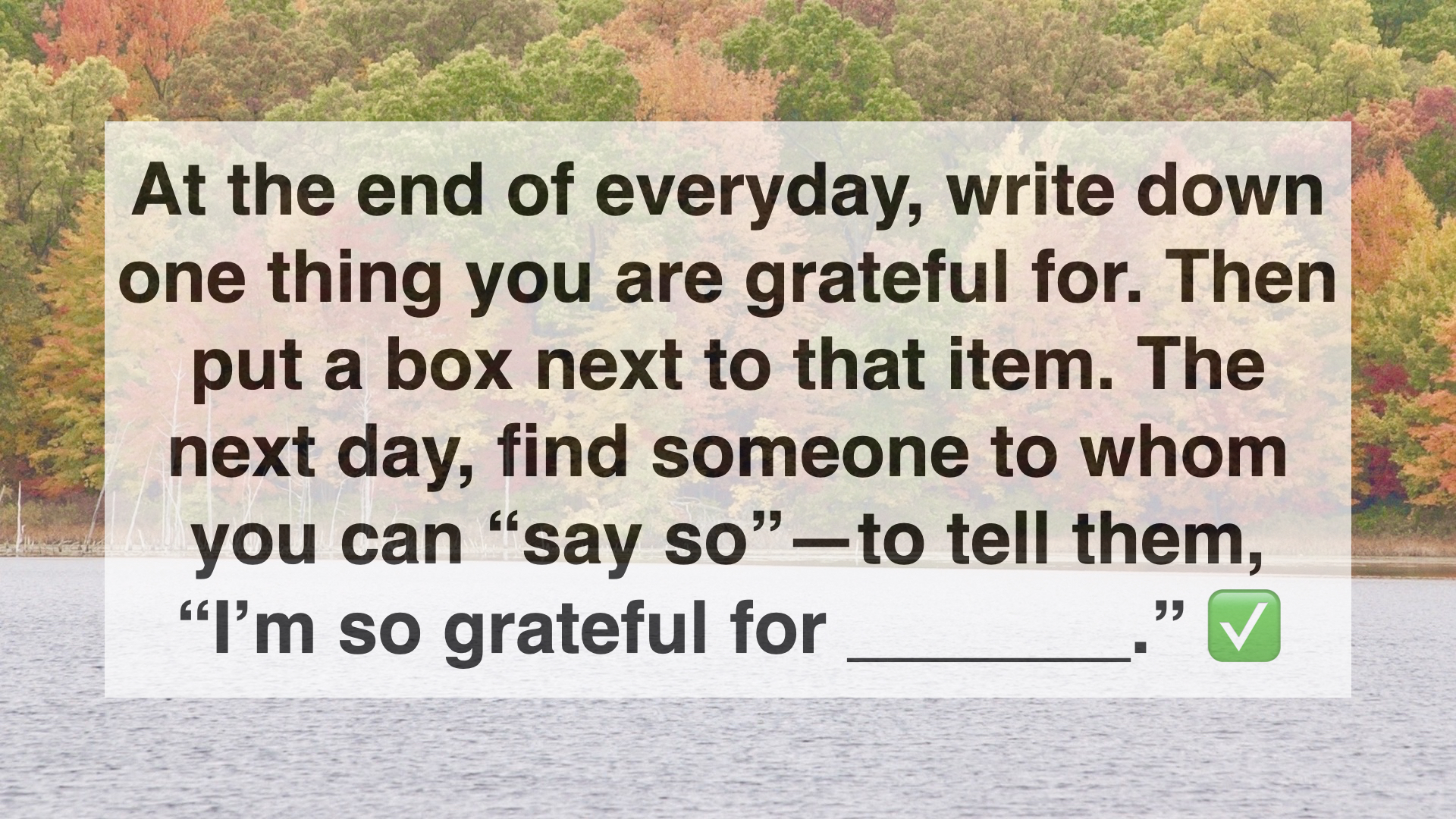
My challenge to you: At the end of everyday, write down one thing you are grateful for. Try to find a unique thing each day. Then put a box next to that thing. The next day, find someone to whom you can “say so”—to tell them, “I’m so grateful for _______.”
Let’s be known as the “say so” people, constantly telling, exalting, and praising the every-day blessings that God showers on us.
Check out the other messages in this series called The Peace in Gratitude here.
►► Would you please prayerfully consider supporting this ministry? My Patreon supporters get behind-the-scenes access to exclusive materials. ◀︎◀︎


