The Power Of God’s Name

“God’s name marks Him out; by it will we address Him; it embodies His character. … This name that is written all over the Bible, but specially exhibited in Christ Jesus, Who came to declare to us the Father’s name, is a name—

  1. Of greatness. Jehovah, God, Creator, El-Shaddai; all expressive of majesty and power and glory. The Lord God omnipotent.
  2. Of grace. It is the declaration of free love. Merciful and gracious. He to whom it belongs must be the fountain-head of love. God is love. In Him is infinity of compassion and longsuffering.
  3. Of forgiveness. He pardons iniquity, transgression, and sin; all sin, great and small; there is forgiveness with Him, that He may be feared; forgiveness to the uttermost.
  4. Of righteousness and holiness. It is holy love that is to be found in Him; righteous grace to the unrighteous; righteous pardon to the guilty.” —Horatius Bonar, in Light & Truth—The Old Testament

God’s Favor

What if I were to tell you that God is for you? 

What if I were to tell you that God wants to bless you? 

What if I were to tell you that God’s favor is constantly pursuing you? 

Well, here’s me telling you that it’s all true! 

“Since God did not spare even His own Son but gave Him up for us all, won’t He also give us everything else?” (Romans 8:32). 

Why would God do this? Because if you feel distant from Him, how can you glorify Him? If you feel disconnected from His love, how will you draw others to Him? If you feel like your relationship with Him is hanging by a thread, how can you happily abide in His presence? 

Knowing God’s favor is the key to living the abundant life Jesus purchased for you on the Cross! 

Join me this Sunday as we begin a new series exploring the wonderful depths of God’s favor. You can join me in person at Calvary Assembly of God, or tune in on Facebook Live at 10:30am Sunday morning.

If you missed any of the messages in this series, you can catch up here:

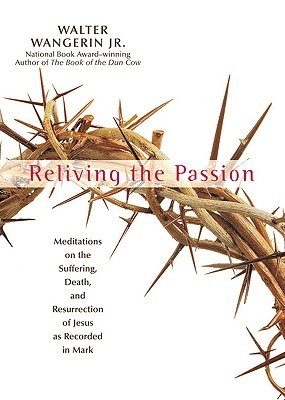
Quotes From “Reliving The Passion”

Walter Wangerin, Jr. has prepared an excellent guide for the Lenten season: Reliving The Passion. Beginning on Ash Wednesday and going all the way through Resurrection Sunday, Wangerin is using the Gospel of Mark to give us some heart-probing thoughts on Christ’s Passion. I typically post quotes after I have completed a book, but I thought I would share a quote or two with you each day through this journey.

Ash Wednesday—“When we genuinely remember the death we deserve to die, we will be moved to remember the death the Lord in fact did die.”

The Second Day Thursday—“Mirrors that hide nothing hurt me. But this is the hurt of purging and precious renewal—and these are mirrors of dangerous grace. The passion of Christ, His suffering and His death, is such a mirror.”

The Third Day Friday—[read Mark 14:27-28 and Mark 16:6-7] “If Jesus ‘will go before’ His disciples from Galilee as He had gone before, then this is a call to follow Him down the hard road of conflict, criticism, enmity, persecution, suffering and death and resurrection. So the passion story becomes a roadmap for all of Jesus’ followers (who deny themselves and take up their crosses) whether Christians martyred in the first, or Christians bold in the twentieth, centuries. Read this story, then, as a detailed itinerary of the disciple’s life. But hear in it as well the constant consolation—not only that He, in ‘going before us,’ is always near us, however hard the persecution; but also that we, in going His way to Galilee, will see Him as He told you.”

The Fourth Day Saturday—“The difference between shallow happiness and a deep, sustaining joy is sorrow. Happiness lives where sorrow is not. When sorrow arrives, happiness dies. It can’t stand pain. Joy, on the other hand, rises from sorrow and therefore can withstand all grief. Joy, by the grace of God, is the transfiguration of suffering into endurance, and of endurance into character, and of character into hope—and the hope that has become our joy does not (as happiness must for those who depend upon it) disappoint us.”

The Fifth Day Monday—“Jesus: Forgive me for making much of what’s minor in Your story, diminishing the important thing. I’ve demanded miracles, healings, benefits for myself. O Lord, raise the Cross as the central beam of my whole life once again! Amen.”

The Sixth Day Tuesday—“Jesus, by the refining fires of Your grace reduce my prideful self to ash after all. Let me become a nothing, that You might be the only Something for me and in me.”

The Seventh Day Wednesday—“It was an act so completely focused upon the Christ that not a dram of worldly benefit was gained thereby [Mark 14:3-9]. Nothing could justify this spillage of some three hundred days’ wages, except love alone. The rulers who sought to kill Jesus were motivated by a certain reasonable logic; but your prodigality appears altogether unreasonable—except for reasons of love. … Love enhances and names in truth. No one else anointed Him and by that gesture declared Him Messiah, the Christ. The act, therefore, was more than beautiful. It was rare and rich with meaning.” 

“Jesus, I love You, I love You! Cleanse me of anything that is not love for You, even though the world will think me preposterous and my friends—some of whom are Your disciples—will not be able to make sense of me. You are all the sense and meaning I need. I love You. Amen.”

The Eighth Day Thursday—“Does the motive of a sin—its rationale, its reasons—make it any less a sin? Isn’t the betrayal of the sovereignty of the Lord in our lives always a sin, regardless of the factors that drove us to betray Him? Yes! Yet we habitually defend ourselves and diminish our fault by referring to reasons why we ‘had to’ do it. We sinners are so backward that we try to justify ourselves by some condition which preceded the sin. Motives console us. That’s why we want so badly to have and to know them. …

“We sinners are so backward! We invert the true source of our justification. It isn’t some preliminary cause, some motive before the sin that justifies me, but rather the forgiveness of Christ which meets my repentance after the sin.”

The Ninth Day Friday—“‘Who will give Me room?’ This is forever a measure of the love which Jesus inspires in human hearts: that there was a householder willing to endanger himself by saying, ‘I will. Come.’ We know almost as little about this man—and as much—as we know of the woman who anointed Jesus. We know him by his action only; and his deed was love. It was a sacrificial love, which puts itself in harm’s way for the sake of the beloved [Mark 14:12-16]. … 

“‘Who will give Me room?’ the Lord Jesus asks today. If we’re experienced, we know the risk. The sophisticated world mocks a meek and sheepish Christian. The evil world hates those in whom Christ shines like a light upon its darksome deeds. Even the worldly church will persecute those who, for Jesus’ sake, accuse its compromises, oppose its cold self-righteousness, and so disclose its failure at humble service.”

The Tenth Day Saturday—“Judas has no better friend than Jesus. Loving him, not loathing him, Jesus grants Judas a moment of terrible self-awareness: ‘One of you will betray Me, the one who is dipping bread into the dish with Me….’ The deed is not yet done. But Jesus sees it coming and, while yet the sinner contemplates the sin, gives Judas three critical gifts: (1) Knowledge; (2) Free will; and (3) Sole responsibility. … Given three gifts by the grace of the dear Lord—[will I] stop?”

The Eleventh Day Monday—“With the apostle Paul the pastor repeats: ‘The Lord Jesus, the same night in which He was betrayed, took bread’ [1 Corinthians 11:23]. Oh, let that pastor murmur those words, the same night, with awe. For who among us can hear them just before receiving the gift of Christ’s intimacy and not be overcome with wonder, stunned at such astonishing love? … In the night of gravest human treachery He gave the gift of Himself. And the giving has never ceased. … Oh, this is a love past human expectation. This is beyond all human deserving. This, therefore, is a love so celestial that it shall endure long and longer than we do. This is grace.”

The Twelfth Day Tuesday—“If anyone continues in a loving relationship with Jesus, it is His love that preserves it, not the love of the other, nor all the piety, nor all the goodness a Christian can muster.”

The Thirteenth Day Wednesday—“Abba, Father,” Jesus cried out, “everything is possible for You. Please take this cup of suffering away from Me. Yet I want Your will to be done, not Mine.” (Mark 14:36)

The Fourteenth Day Thursday—“What takes place in the Garden of Gethsemane is the Lord’s Prayer actually happening, as though the earlier words were a script and this is the drama itself. … When Jesus teaches us to pray, He does not teach plain recitation. Rather, He calls us to a way of being. He makes of prayer a doing. And by His own extreme example, He shows that prayer is the active relationship between ourselves, dear little children, and the dear Father, Abba.”

The Fifteenth Day Friday—“In a garden once [Eden] the Lord God decreed enmity between the serpent and the seed of the woman, enmity to the death. In a garden again [Gethsemane] that enmity produces this pathetic assault: a kiss that can kill. … Behold how the servants of God can bite!”

The Sixteenth Day Saturday—“In the fires of serious persecution the truer elements of one’s character now are revealed. Everything fraudulent, cheap, or hypocritical burns. Every pretense turns to ash. All my false words blow away. What I really am—the core character, the thing God sees when He looks at me…I am indeed. … Take my life: I consecrate it to Thee. Take all that I have and all that I am; replace the self in me with Thine own holy self.”

The Seventeenth Day Monday—“Whenever discipleship puts me in peril, give me the gift of a holy silence—to speak the truth, no less, no more. Amen.”

The Eighteenth Day Tuesday—“Christian, come and look closely: it is when Jesus is humiliated, most seeming weak, bound and despised and alone and defeated that He finally answers the question, ‘Are you the Christ?’ Now, for the record, ‘Yes: I am.’ It is only in incontrovertible powerlessness that He finally links Himself with power: ‘And you will see the Son of Man seated at the right hand of power’ [Mark 14:61-62].”

The Nineteenth Day Wednesday—“Where patience shines, impatience is revealed and hates the attention. Kindness shows unkindness to be hideous. True joy intensifies true bitterness; gentleness enrages belligerence; and self-control proves the pig to be nothing but a pig. … Save me, Lord, from blaming anyone but myself: not You (whose innocence spotlights my sin),  not Your foes (whose sins are my own), not people whose virtues reveal my evil.”

The Twentieth Day Thursday—“There’s a war inside the strong disciple. (The stronger the disciple, the worse the war!) There’s a struggle in Peter between good and evil, between these two commitments: to his Lord and to his own survival. … The forces warring in Peter’s soul seem terribly equal: a tremendous, selfless love for Jesus keeps him there, while a consuming self-interest keeps him lying. He denies himself to stay by his Lord. He denies his Lord to save himself. Both. Good and bad. Peter is paralyzed between the good that he would and the evil that he is. I see this. I recognize this. I cannot divorce myself from this—for Peter’s moral immobilization is mine as well!”

The Twenty-first Day Friday—Very early in the morning, the chief priests, with the elders, the teachers of the law and the whole Sanhedrin, made their plans. So they bound Jesus, led Him away and handed Him over to Pilate (Mark 15:1). What was Jesus thinking during this walk? “Wordlessly, Jesus answers: ‘The walking itself is the sign, child. The loneliness which I have chosen, and the Cross that closes it—these are signs that I love you ever. I have to leave you to love you best. I go where I want you never to go, precisely because I love you.’”

The Twenty-second Day Saturday—“Jesus, ironically, You and Your accusers had the selfsame goal, and by Your very silence, steadfastly, You went as it was written of You. Human beings strategized; human evil sent You to Your Cross. But something huger hovered over the occasion, something of Your own volition: Love.”

The Twenty-third Day Monday—“If they choose Barabbas over Jesus, they choose humanity over divinity. They choose one who will harm them over One Who would heal them.”

The Twenty-fourth Day Tuesday—“‘Why?’ cries Pilate suddenly. He seriously means the question: ‘What evil has He done?’ But we are now at the climax of human hatreds. This rage requires no rationale. This hatred has no reason but itself. God and the children of Adam are enemies, for the children rebelled against their God—and enemies hate. … This is the natural reaction of sinners in the presence of Holy God.”

The Twenty-fifth Day Wednesday—“The crowd is a power to be feared. In fact, its power is the fear it inspires in rulers who know its quickness to riot, its ungovernable lack of sense or of personal integrity. People lose individuality in a crowd. … Sin is brutal. But even the swollen-throated bellowers in the crowd are people to Jesus, whom He regards one by one by one, whom He does not fear, but whom He is serving right now—right now!—by giving His life to ransom them from the very brutishness they are displaying.”

The Twenty-sixth Day Thursday—You have heard that it was said, ‘You shall love your neighbor and hate your enemy.’ But I say to you, love your enemies and pray for those who persecute you [Matthew 5:43-44]. To this you were called, because Christ suffered for you, leaving you an example, that you should follow in His steps. … When they hurled their insults at Him, He did not retaliate; when He suffered, He made no threats. Instead, He entrusted Himself to Him who judges justly [1 Peter 2:21, 23]. “Jesus, there is nothing You ask of me that You have not Yourself exemplified.”

The Twenty-seventh Day Friday—“‘And they led Him out to crucify Him’ (Mark 15:20). Jesus, what can I do for You now? ‘Follow.’”

The Twenty-eighth Day Saturday—They offered Him wine mingled with myrrh; but He did not take it (Mark 15:23). “He will in no wise dull His senses or ease the pain. And so we know. What are the feelings? What has the spirit of Jesus been doing since Gethsemane? Why, suffering. With a pure and willful consciousness, terribly sensitive to every thorn and cut and scornful slur: suffering. This He has chosen. This He is attending to with every nerve of His being—not for some perverted love of pain. He hates the pain. But for a supernal love of us, that pain might be transfigured, forever.”

The Twenty-ninth Day Monday—“If death is the end of all we do, then all we do is futile. … The planets, their civilizations and their loads of people, all need a central sun—to hold them together, to keep them wheeling in good order, to bequeath them shape and meaning. History needs a center. But if that center is empty death, strengthless death, it cannot hold. Things fly apart into absurdity. … But the Creator God put a Cross in the very center of human history—to be its center, ever. The Son of God, the gift of God, the love of God, the endless light of the self-sufficient God filled the emptiness which was death at our core. … We are altogether meaningless, except God touch us. God touched us here at the Cross.”

The Thirtieth Day Tuesday—“O Jesus, does love from the Cross have to hurt so much?—hurt You with dying?—hurt me when Your dying draws me to Yourself?”

The Thirty-first Day Wednesday—Those who were crucified with Him also reviled Him (Mark 15:31). “No, there never was such sorrow as this. And the fools who pass by jeering merely reveal an iniquitous ignorance. … For our sake, God made Him to be sin who knew no sin, so that in Him we might become the righteousness of God (2 Corinthians 5:21). … Jesus has become the rebellion of mankind against its God. He is, therefore, rightly crucified.”

The Thirty-second Day Thursday—My God, why hast Thou forsaken me? Who answers Him? The thunder is silent. The city holds its breath. The heavens are shut. The dark is rejection. This silence is worse than death. No one answers Him. No, not even God. … This is a mystery, that Christ can be the obedient, glorious love of God and the full measure of our disobedience, both at once. But right now this mystery is also a fact.”

The Thirty-third Day Friday—“Perhaps we people will ever be strangers in part and puzzles to one another, always a little lonely. But You, Lord, have searched me and known me. You have searched and loved and saved me even in my ignorance.”

The Thirty-fourth Day Saturday—And Jesus uttered a loud cry and breathed His last [Mark 15:37]. “satan, thou art defeated in My defeat! Sin, disposed of a people! Death, look about thee; thou art not mighty and dreadful. Lo, I close My eyes and die—and death shall be no more.”

The Thirty-fifth Day Monday—“Here is a door through which we by faith may enter Heaven, a doorway made of nails and wood, a crossing, a Cross. … For God so loved the world that He gave His only Son, that whoever believes in Him should not perish but have eternal life. And this ‘giving’—this giving up, this giving away, this giving over—begin indeed in Bethlehem in a cradle made of wood. But it wasn’t done until He was killed by a Cross of wood on Golgotha.”

The Thirty-sixth Day Tuesday—“Grief, while you are grieving, lasts forever. But under God, forever is a day. Weeping, darling Magdalene, may last the night. But joy cometh with the sunrise—and then your mourning shall be dancing, and gladness shall be the robe around you. Wait. Wait.”

The Thirty-seventh Day Wednesday—“Joseph [of Arimathea] is not the same. There’s some new seeing in this kingdom-seeker. A veil’s been torn, a wall breached, a window opened. Perhaps he’s bold because he hopes. Perhaps he hopes because he’s seen a more permanent splendor than ever before, the glory of the Lord.”

Maundy Thursday—“On Maundy Thursday, consider … This is the persistent gift of the Lord’s Last Supper: that every time we faithfully eat and drink it, Jesus comes within us, and we become His temple here.”

Good Friday—When Jesus had tasted it, He said, “IT IS FINISHED!” Then He bowed His head and gave up His spirit (John 19:30).

Holy Saturday—“God is God, Who made the world from nothing—and God as God can still astonish you. … One story is done indeed … But another story—one you can not conceive of (it’s God Who conceives it!)—starts at sunrise.”

Resurrection Sunday—Why are you looking among the dead for Someone alive? He isn’t here! HE IS RISEN FROM THE DEAD! (Luke 24:5-6).

10 Quotes From “Jesus’ Terrible Financial Advice”

I loved the financial insights that John Thornton presented in Jesus’ Terrible Financial Advice. The advice is “terrible” in that it flies in the face of conventional financial wisdom and puts it in the proper biblical light. Check out my full review of this book by clicking here.

“As God waits patiently to receive our all, wonder, and appreciation for all He is and does, an idol steps in to accept our applause. Like an insidious illusionist, the idol misdirects our attention to itself. … What does an idol do? Nothing. That’s all an idol can do. Nothing. Nothing but steal God’s glory.”

“Jesus is not trying to impoverish us when He tells us to store up treasures in heaven.”

“Here is where some people mistakenly make it about the money. They wrongly conclude that rich people can’t make it to heaven, but poor people can. This is a grave error. In truth, no one can enter the kingdom of heaven, rich or poor, without God.”

“If we are seeking heaven because our life here is so good that we don’t want it to end, or simply because we don’t want to go to hell, we’ve missed the point. We’ve made the same mistake this young man made [Mark 10]. So doing what Jesus always did, He redirected the young man to the right thing. The greatest good. He redirected the young man to God. Jesus clarifies that no one is good but God Himself. … What makes eternal life good isn’t the length. It’s the company. God Himself is what is good about heaven [John 17:3].”

“Regardless of how much of a blessing of wealth has the potential to be, it becomes a curse for us when it separates us from the love of God.”

“Don’t wrongfully conclude that rich people can’t make it, but poor people can. Or that poor people are godly, but rich people are not. If we do this, we miss the point entirely. We think that Jesus is just calling out rich people. We think He is talking about people’s financial position, when He’s really talking about our heart condition. … At the end of the day, answer to the question ‘Does Jesus want you rich or poor?’ is obvious. The answer is yes! Jesus wants you. And the answer is all about God’s goodness, not ours.”

“The number one theme related to wealth in the Bible is that it is a blessing from God.” 

“Whenever we conclude that the plans we have for our lives are better than the plans God has for us, or that the gifts we have for ourselves are better than His gifts, the false master Money steps up. Money promises to put us in charge. With it, we can smooth the way or save the day. Don’t worry. Be happy. But God has a better plan for our lives. We were made to live for so much more. And He is more. God wants us to understand and know Him, His ‘kindness, justice and righteousness,’ for in these He delights (Jeremiah 9:24). God’s plan is to complete us.”

“Wealth becomes a curse for us when we choose it over God.” 

“In a society where we have taken independence, individual freedom, and self-love to cult status, submission is taboo. We want to be our own master. Money offers us what we want, so we love it or fear it, trading in the true God for a false one. But Jesus shows us we have it all wrong. He shows us that submission to His Father is the only way to be truly free. Free to live life to the full. The only way to live a life that matters is to find our sole purpose in Him.”

Charles Spurgeon Prays For Revival

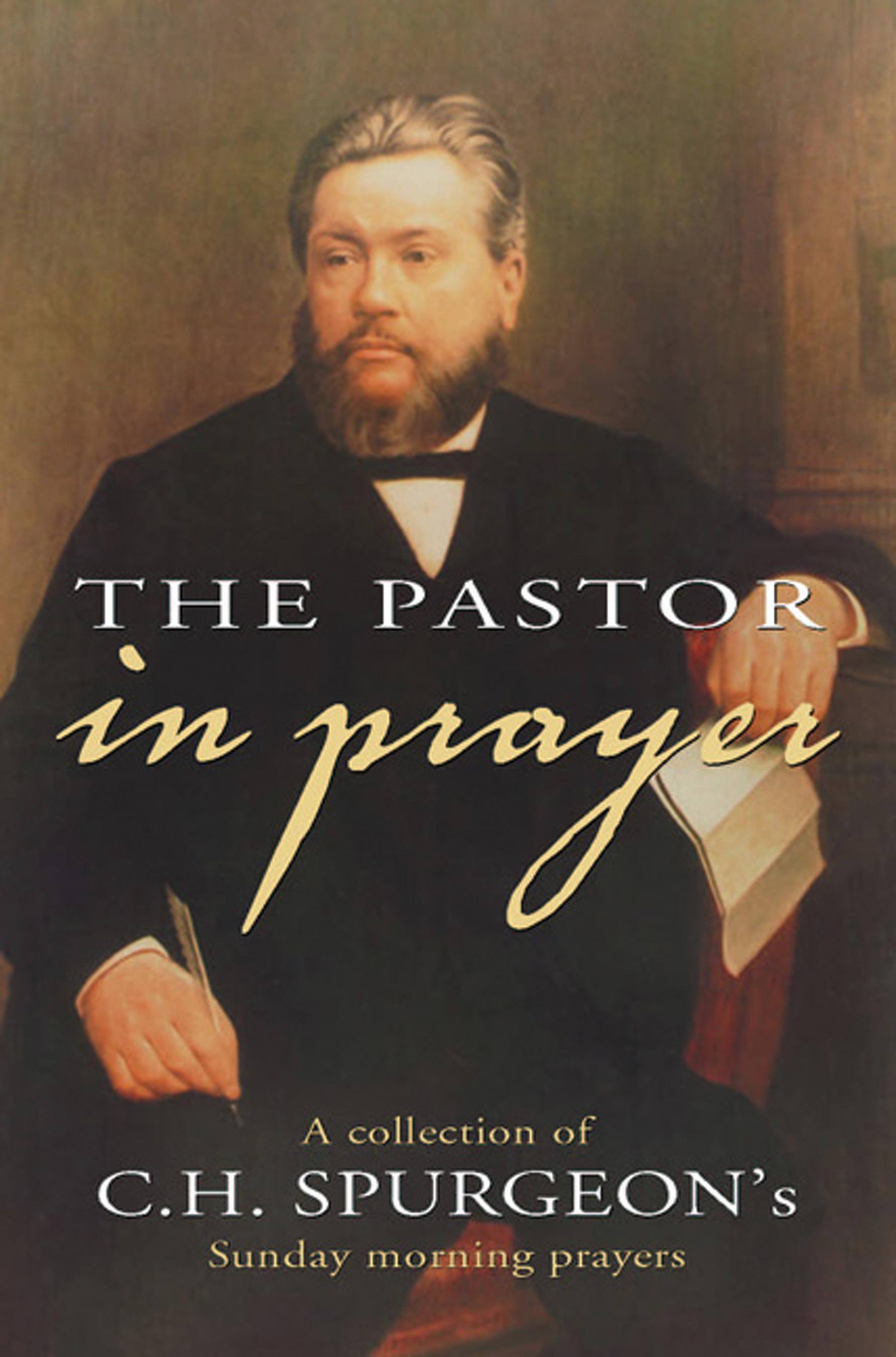
These are from The Pastor In Prayer by Charles Spurgeon…

“Send us, Lord, a mighty ground-swell of intense desire for the glory of God, and may these Thy servants banded together in church fellowship recognize their sweet obligations to their dying Lord, and determine that the prayers of the church shall go up before Him like sweet perfume.”

“We have trusted Thee now for many years, and Thy faithfulness has never been under suspicion, nor Thy love a matter of question. We therefore leave every concern about our families or about ourselves, about our business, or about our souls, entirely with our God. … Still, Lord, we have a burden which we must now lay before Thee, and ask Thee to help us in it. We mourn over the condition of Thy church, for on every side as we look around we see men endeavoring to undermine the doctrines of the everlasting Gospel.”

“O Lord, the multitude delight in sin. Drunkenness defiles our city, and filthy words are heard on every side. Be not wroth with this nation, we beseech Thee. It has been entrusted with wondrous privileges. Forgive it and have mercy upon its aggravated sin. Lay not its heavy responsibilities to its charge, but let this nation be saved. We pray for it as we are in duty-bound to do, and as our love constrains us to do. Oh let the masses of the people yet come to seek after Christ, or by some means, by all means, by every means, may the ears of men be reached and then their hearts be touched. May they hear, that their souls may live; and may the Lord who in everlasting covenant sets forth His Son, glorify Him in the midst of the nations.”

“We ask Thee, O God, at this time to revive religion in our land. Oh that Thou wouldst be pleased to speak by the Holy Ghost that the gospel’s power may be known: there be many that run away from the truth; Lord, hold us fast to it, bind us to it. May there be a people found in this place, and throughout this land, that will abide by the doctrines of the gospel, come what may. May we not be ashamed to be old fashioned and to be thought fanatical. May we not wish to be thought cultured, nor aim to keep abreast of the times. May we be side by side, with Thee, O bleeding Savior; and be content to be rejected, be willing to take up unpopular truth, and to hold fast despised teachings of sacred writ even to the end. Oh make us faithful, faithful unto death.”

“We do repent of sin—give us a deeper repentance! May we have a horror of it, may we dread the very approach of it, may we chastely flee from it and resolve, with sacred jealousy, that our hearts shall be for the Lord alone.”

“We wish that we had greater power in private prayer, that we were oftener wrestling with the covenant angel. We would that the Word of God were more sweet to us, more intensely precious, that we had a deeper hunger and thirst after it.”

“God bless our country! May faith be multiplied in the land! Preserve our nation at this juncture. Guide, we pray Thee, the deliberations of councilors and princes. May peace be preserved, and at the same time may the great purposes of God with regard to the spread of liberty and of the gospel be subserved by every decree of the council. O God, we beseech Thee, ease the world of the sway of every evil principle. Let the day come when all classes of men shall study the interest of others as well as their own, when the various nations shall yield to the one scepter of Christ and like kindred tribes shall melt into one. Yea, hasten His coming and His reign when the shout shall go up to heaven that the ‘Lord God omnipotent reigneth.’”

“We specially pray for our country that God would bless it; and oh, that we might have a season of revival of pure and undefiled religion in the land. We perceive that Thou canst turn the hearts of the people, as the trees of the wood are moved in the wind. Oh that there might come a deep searching of heart, great thoughtfulness of the Scriptures, reverence of God and the principles of justice and peace and may this land make another stride in onward progress, and out of it may there be gathered a people whom Thou hast chosen, who shall show forth Thy praise.”

You can check out my review of The Pastor In Prayer by clicking here, and you can read some other quotes I shared from this book by clicking here.

11 Quotes From “Brothers, We Are Not Professionals”

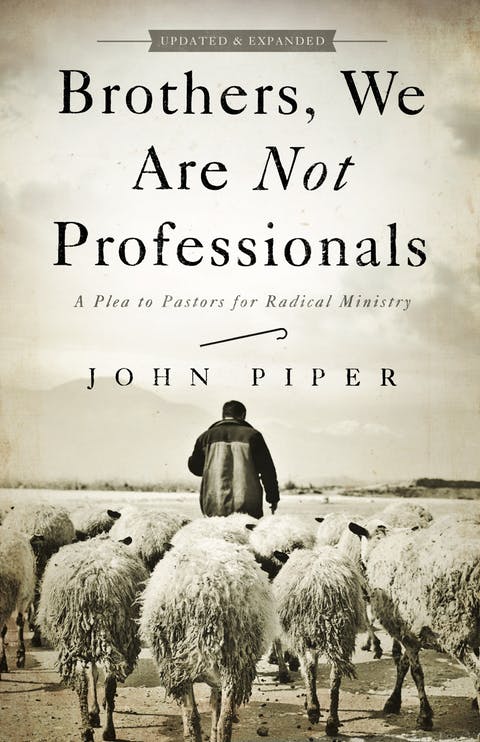
John Piper has written a book that I think every pastor should read: Brothers, We Are Not Professionals. You can read my review of this book here. Below are just a few quotes that caught my attention.

“We pastors are being killed by the professionalizing of the pastoral ministry. The mentality of the professional is not the mentality of the prophet. … The professionalization of the ministry is a constant threat to the offense of the gospel.”

“I defined spiritual leadership as ‘knowing where God wants people to be and taking the initiative to get them there by God’s means in reliance on God’s power.’ …  So the goal of spiritual leadership is to muster people to join God in living for God’s glory.”

“The Son of Man has not come seeking employees. He has come to employ Himself for our good.”

“In this fallen world, the tide is always going out. That is, the affections of our people have for God Himself (as distinct from His gifts) are continually prone to shrink. Our job is to tilt the world, by the power of the Spirit and the Word, so that the tide rolls in again.”

“A pastor who feels competent in himself to produce eternal fruit knows neither God nor himself.”

“Salvation is a gift of God (Ephesians 2:8). Love is a gift of God (1 Thessalonians 3:12). Faith is a gift of God (1 Timothy 1:14). Wisdom is a gift of God (Ephesians 1:17). Joy is a gift of God (Romans 15:13). Yet as pastors we must labor to ‘save some’ (1 Corinthians 9:22). We must stir up the people to love (Hebrews 10:24). We must advance their faith (Philippians 1:25). We must impart wisdom (1 Corinthians 2:7). We must work for their joy (2 Corinthians 1:24). We are called to labor for that which is God’s alone to give. The essence of the Christian ministry is that its success is not within our reach.”

“Are not our people really yearning to be around a man who has been around God? Is it not the lingering aroma of prayer that gives a sense of eternity to all our work?”

“Few things frighten me more than the beginnings of barrenness that come from frenzied activity with little spiritual food and meditation.”

“The domestication of God is a curse on preaching in our day. We need to recover reality and the language of majesty and holiness and awe and glory.”

“He knows that the only way he can deliver God’s message to God’s people is by being rooted in it and by saturating his sermon with God’s own revelation in the Bible. The Bible-oriented preacher wants the congregation to know that his words, if they have any abiding worth, are in accord with God’s words. He wants this to be obvious to them. That is part of his humility and his authority. Therefore, he constantly tries to show the people that his ideas are coming from the Bible. He is hesitant to go too far toward points that are not demonstrable from the Bible.”

“Our salvation and the salvation of those who hear us week after week depend in large measure on our faithful attention to personal holiness and sound teaching” [see 1 Timothy 4:16]. … Oh, how earnest we should be in attending to ourselves and the soundness and helpfulness of our teaching!”

Brothers, We Are Not Professionals (book review)

I’ll state it right up front—every pastor should read Brothers, We Are Not Professionals by John Piper.

The pastor is called upon to do lots of things, some of which are considered by both pastor and parishioner to more “spiritual” or more “business.” But in reality, all that a pastor (or any Christian for that matter) does is spiritual, because it is all to be done for the glory of God. Over time, many pastors have lost sight of the sacred nature of their calling, turning what they do into a professional pursuit.

Piper explains, “First, professionalism should always be marginal, not central; optional, not crucial. And second, the pursuit of professionalism will push the supernatural center more and more into the corner while ministry becomes a set of secular competencies with a religious veneer. … When I look back, my regret is not that I wasn’t more professional but that I wasn’t more prayerful, more passionate for souls, more consistent in personal witness, more emotionally engaged with my children, more tender with my wife, more spontaneously affirming of the good in others.”

Every chapter is chockfull of biblical insights, personal examples from John Piper’s ministry, and historical sources that have stood the test of time. I’ll say it again: every pastor should read this book!

I’ll add my own “amen” this prayer John Piper offers: “Banish professionalism from our midst, O God, and in its place put passionate prayer, poverty of spirit, hunger for God, rigorous study of holy things, white-hot devotion to Jesus Christ, utter indifference to all material gain, and unremitting labor to rescue the perishing, perfect the saints, and glorify our sovereign Lord. In Jesus’ great and powerful name. Amen.”

7 Quotes From “Whisper”

Mark Batterson’s newest book—Whisper—is all about learning to hear what God is speaking to you. Check out my review of Whisper by clicking here.

“Is God’s voice the loudest voice in your life? That’s the question. If the answer is no, that’s the problem.”

“If you aren’t willing to listen to everything God has to say, eventually you won’t hear anything He has to say.”

“When someone speaks in a whisper, you have to get very close to hear. … And that’s what God wants.”

“God is great not just because nothing is too big; God is great because nothing is too small. God doesn’t just know you by name; He has a unique name for you. And He speaks a language that is unique to you.”

“We worry way too much about what people think, which is evidence that we don’t worry enough about what God thinks. It’s the fear of people that keeps us from hearing and heeding the voice of God. We let the expectations of others override the desires God has put in our hearts.”

“Every thought that fires across our eighty-six billion neurons is a tribute to the God who knit us together in our mothers’ wombs. But when we have a thought that is better than our best thoughts on our best day, it might be from God. That doesn’t make it equal with Scripture, but it’s a step above a ‘good idea.’ Is it easy differentiating between good ideas and God ideas? No, it’s not. And again, even what we perceive to be God ideas must be screened by Scripture. But when God gives us ideas that we don’t believe originated with us, we must be careful to give credit where credit is due. And it’s our job to take those thoughts captive and make them obedient to Christ.”

“If your life is off-key, maybe it’s because you’ve been deafened by the negative self-talk that doesn’t let God get a word in edgewise. Maybe you’ve listened to the voice of shame so long that you can’t believe anything else about yourself. Or maybe it’s the enemy’s voice of condemnation that speaks lies about who you really are.”

More quotes from Whisper coming soon!

Poetry Saturday—Prayer

Lord Jesus, Maker of creation, Word
and Son of God, Redeemer, Savior, Lord
and King, we worship You, because we know
You, and we know that You have loved us so
that we might never have to live in fear;
and when our sojourn has concluded here,
Your resurrection power, which now transforms
us into Your own image, and conforms
us to Your pleasure, will deliver, keep,
and bless us. Catch us up, Lord, in the sweep
of Your forever-marching-forward grace,
and bring us to Your glorious, waiting face,
where are we, with You, and like You, will abide
forever, in Your presence, by Your side.
Amen. —T.M. Moore, in To Know Him

13 Quotes From “So Send I You”

So Send I You is a series of lectures from Oswald Chambers to Christian missionaries. Check out my full review of this book by clicking here.

“Intuition is the power to sense things without reasoning, and is a better guide than what is stated explicitly; but there is something infinitely more satisfactory—the entrance of the Holy Spirit into a man at new birth enabling him to see the kingdom of God and to enter into it.”

“The realization of the call of God in a man’s life may come as with a sudden thunder-clap or by a gradual dawning, but in whatever way it comes, it comes with the undercurrent of the supernatural, almost the uncanny; it is always accompanied with a glow—something that cannot be put into words. We need to keep the atmosphere of our mind prepared by the Holy Spirit lest we forget the surprise of the touch of God on our lives.”

“We are apt to have the idea that a man called to the ministry is called to be a different kind of being from other men. According to Jesus Christ, he is called to be the ‘doormat’ of other men; he is their spiritual leader, but never their superior. … I am not to come among men as a superior person, I am to come among men as the love-slave of Jesus Christ.” 

“Loose, trailing, uninspired thinking about sin will very soon trip us up. Gird up your thinking about sin, about holiness, about the eternal realities and the call of the unseen things.”

“To be a witness of Jesus means that when any duty presents itself we hear His voice just as He heard His Father’s voice, and we are ready for it with all the alertness of our love for Him.”

“Never put a thing aside because it is insignificant. If you trace it down, the insignificant thing has at the back of it the disposition of my right to myself. … Never discard a conviction; if it is important enough for the Spirit of God to have brought it to your mind, that is the thing He is detecting. You were looking for a great big thing to do, and God is telling you of some tiny thing; but at the back of the tiny thing is the central citadel of obstinacy.”

“Our Lord never called us to successful service; He calls us to present Him: ‘I, if I be lifted up from the earth, will draw all men unto Me.’ God saves men; we are sent out to present Jesus Christ and His Cross, and to disciple the souls He saves. The reason we do not make disciples is that we are not disciples ourselves, we are out for our own ends.”

“In order to plough a straight furrow, you must look neither at the plough nor behind you, but at the far end of the field ahead. When once the call of God comes, begin to go and never stop going, no matter how many delightful resting places there may be on the way.”

“The attitude of the Christian life is that we must be prepared now, this second; this is the time. … It is easy to talk, easy to have fine thoughts; but none of that means being a disciple. Being a disciple is to be something that is an infinite satisfaction to Jesus every minute, whether in secret or in public.”

“The method of missions is clearly stated in each of the four Gospels. St. Matthew records the farewell command which Jesus gave to His disciples, and that command is to teach, i.e., disciple all nations; not make converts to our way of thinking, but make disciples of Jesus. In St. Mark’s Gospel the method is defined as preaching the gospel to every creature, accompanied by the power to cast out devils, and to speak with new tongues. In St. Luke’s Gospel the method is described as preaching repentance and remission of sins unto all the nations, and in St. John’s Gospel the method is described by Our Lord as feeding His sheep and tending His lambs.”

“If you put the worship of God first, and get the revelation of Who God is, then, when the call comes you will be ready for it, because of the worship and preparing in the unseen life, when the strain comes you are perfectly fit to be relied on by God. Worshiping is greater than work in that it absorbs work.”

“‘I have given them the glory that You gave Me’ [John 17:22]. What was the glory that Jesus had when He was Son of Man? It was not an external glory; Jesus effaced the Godhead in Himself so effectually that man without the Spirit of God despised Him. His glory was the glory of actual holiness, and that is the glory He says He gives to the saint. The glory of the saint is the glory of actual holiness manifested in actual life here and now.”

“If we try to get ‘head first’ into what Our Lord teaches, we shall exhibit the same stupidity as the disciples did, until we have received the Holy Spirit and learned to rely on Him, and to interpret the words of Jesus as He brings them to our mind.”

You can read some of the longer passages from this book that I share in my weekly “Thursdays With Oswald” feature.