Listen to the podcast of this post by clicking on the player below, and you can also subscribe on Apple, Spotify, or Audible.
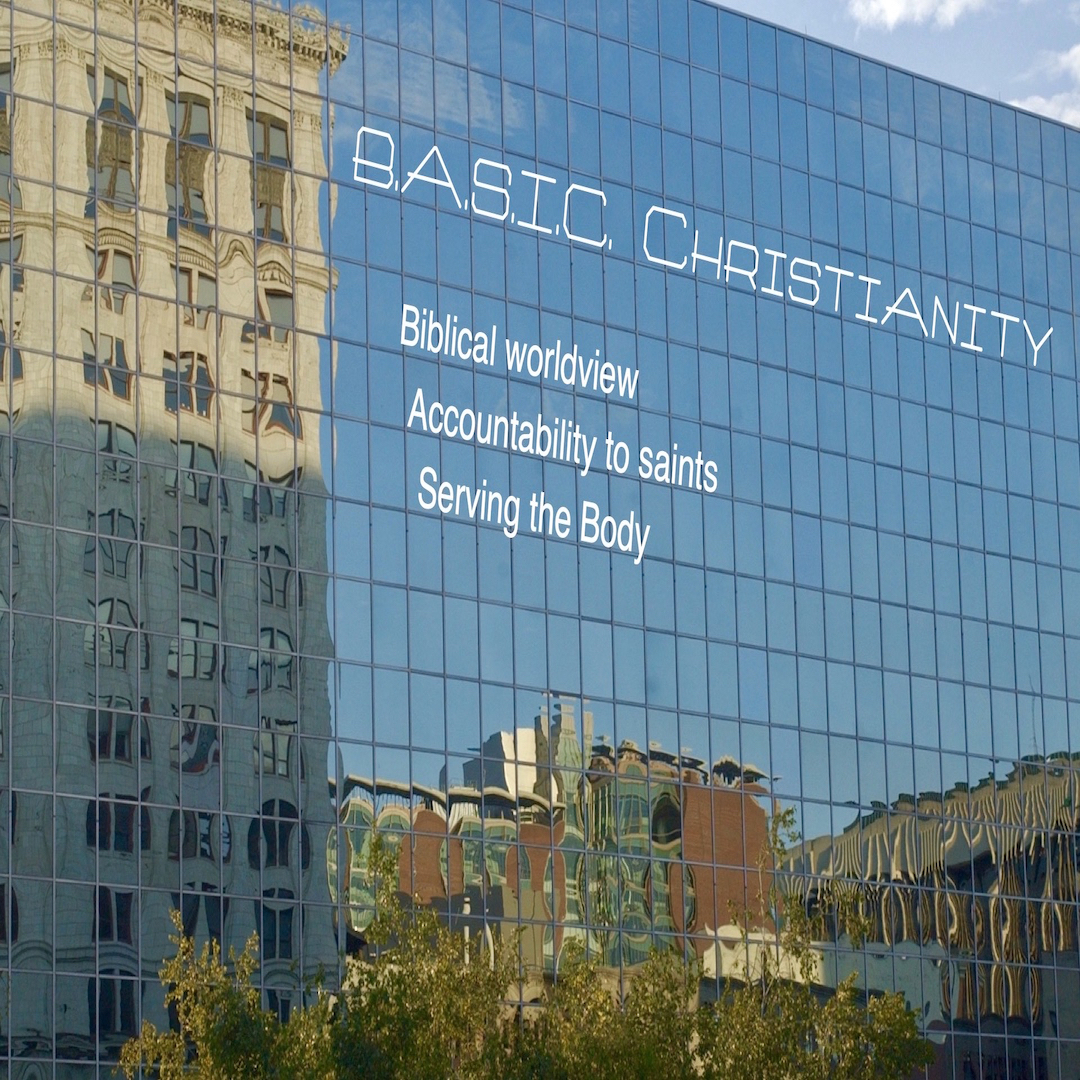
Last week we were reminded that sanctification (or as I call it “saint-ification”) is an ongoing process that usually involves the help of other saints. There is something else we need to do with other saints: serve them.
We are all a part of the same Body so it is beneficial for the whole Body if we care for every part of the Body (1 Corinthians 12:25 AMPC; Ephesians 5:30).
In order to serve others, we are going to have to check our attitude. We have been called to have the attitude that Jesus had about the Church (Ephesians 5:29; Philippians 2:3-7; John 13:3-5, 14-17).
We must all know:
I have a gift—notice the phrase each of you in 1 Peter 4:10
I must use my gift to serve the Body of Christ (Luke 17:10)
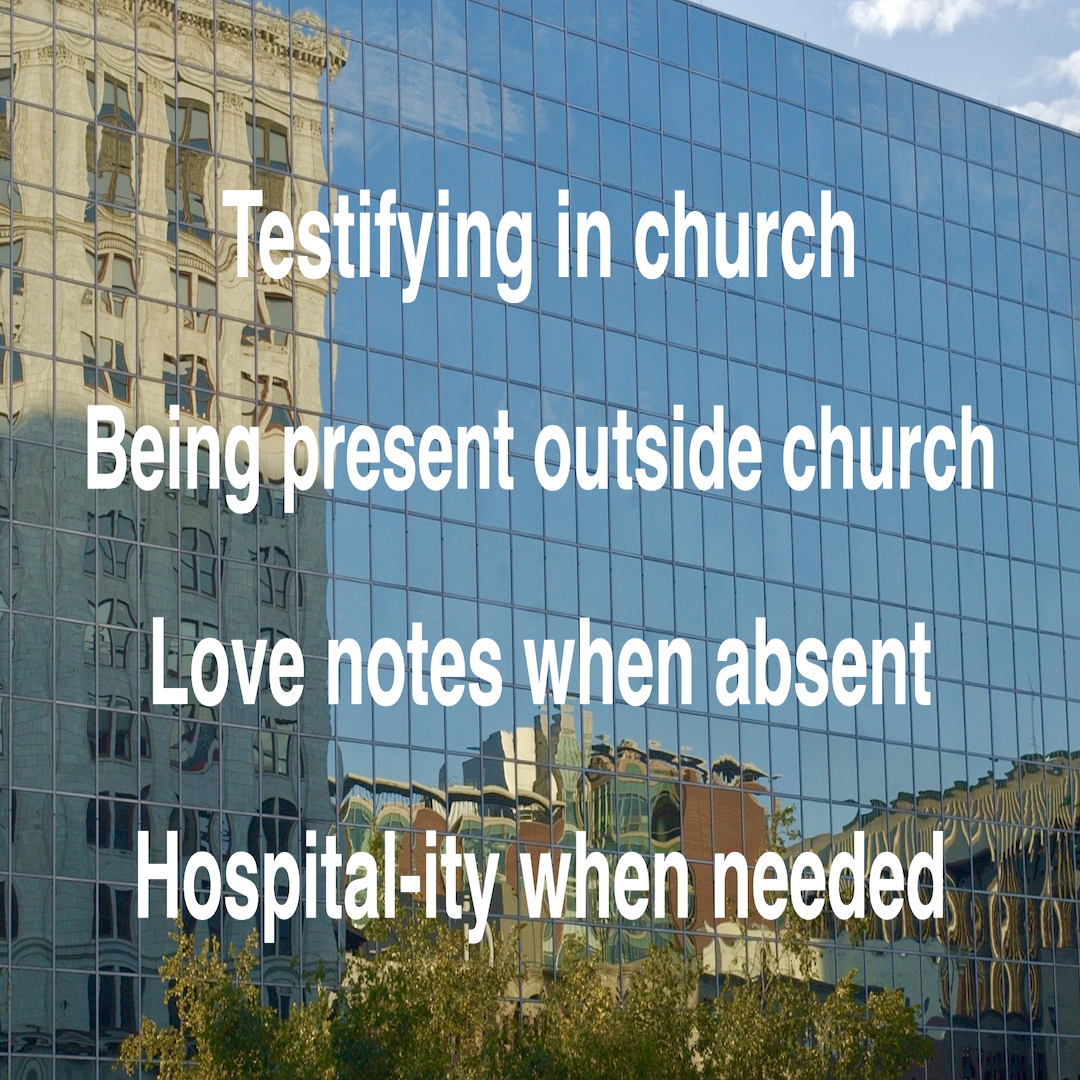
In the early Church, we see so much togetherness that they rewrote the definition of the Greek word koinonia (see Acts 2:42). Here’s what koinonia looks like in the Church:
(1) Testifying in church (Psalm 40:9-10 NLT)
(2) Being present with saints outside of church. From Acts 20-28, the pronouns “we” and “us” are used over 80 times! Paul was blessed simply by Luke being with him, just as saints are blessed when you are truly with them.
(3) Love notes when a saint is absent. The apostle John was brilliant at this. Look at his three epistles:
dear children 9x in 1 John
chosen / dear lady 2x in 2 John
dear friend 4x in 3 John
(4) Hospital-ity whenever it’s needed. Be a place of healing and refreshment for the saints God has placed in your life, just as Philemon did (Philemon 2-7, 22).
What a testimony it is when we live this way (Romans 12:10, 13)!
Remember the saint-ification process brings fruitfulness, joy-fullness, and an enhanced testimony. I love this quote from Richard Stearns, “The beautiful simplicity of our faith is that it distills down to the exact same bottom line for both the brilliant theologian and the five-year-old child: love God and love each other—period. Everything else derives from that.”
Listen to the podcast of this post by clicking on the player below, and you can also subscribe on Apple, Spotify, or Audible.
Jesus was the healthiest Person to ever walk planet Earth. When Luke, a physician, tells us about the growth of Jesus, he says first that “Jesus grew in wisdom.” (Luke 2:52). That is our indication that a healthy mind is at the foundation for every other aspect of health.
But mental health doesn’t stay in your mind—it affects every other part of your life. Likewise, all of the other parts of your life can enhance or drain your mental health. We are created as interconnected beings. For instance, it’s hard to think correctly when you’re physically tired, spiritually drained, or involved in an unhealthy relationship. It’s also true that it’s hard to make good decisions about your physical health, stay focused on God, or handle your relationships successfully if you aren’t thinking correctly.
Dear friend, I pray that you may enjoy good health and that all may go well with you, even as your soul is getting along well. (3 John 2)
Now may the God of peace make you holy in every way, and may your whole spirit and soul and body be kept blameless until our Lord Jesus Christ comes again. (1 Thessalonians 5:23 NLT)
When my laptop is disconnected from the monitors I use at our church building, the message on the screen tells me to “check your inputs.” That’s not just for inanimate technology, but for us too: To maintain good overall health, we need to check our physical, spiritual, mental, and emotional inputs.
Let’s start with the physical inputs. When we are active during the day our bodies release a stress hormone called cortisol. Stress is not a bad thing—it’s a normal thing. A body that isn’t stressed will atrophy and become susceptible to disease. Balanced, healthy stress is called eustress, and unbalanced, unhealthy stress is called distress.
Cortisol is naturally flushed from the body in two ways: exercise and sleep. Exercise is important to keep our bodies moving effectively, and sleep helps us recover and helps our brains catalogue our memories (see 1 Timothy 4:8; Psalm 3:5). To fuel our exercise and our sleep requires the energy which we get from a healthy diet.
So if you’re not thinking healthy thoughts, check your physical inputs: Am I getting the proper amount of sleep? Am I exercising regularly? Am I eating properly? Do I see a doctor for a checkup?
How about spiritual inputs? Somewhat surprisingly, our spirits are kept healthy very much along the same lines as our physical bodies—proper food, appropriate exercise, and a time of rest. Our spiritual food is God’s Word, our exercise is working out what we’ve studied in the Bible, and our rest is called sabbathing (Jeremiah 15:16; Matthew 7:24-27; James 2:17). Jesus demonstrated all of these in His life and we, too, should follow His example.
If you’re not thinking healthy thoughts, check your spiritual inputs: Am I reading the Bible regularly? Am I putting what I learn into practice? Am I sabbathing properly?
Then there our emotional inputs, or the relationships that build us and relationships that drain us. You are always going to encounter people in need, and ministering to those needs is draining (Luke 8:45-46). We also need to be alert to those antagonistic people who purposely drain us (2 Timothy 4:14-15). We can make decisions to place people in our lives who build us up and be cautious of those who drain us (Proverbs 27:3, 5-6, 9, 17).
Once again, if you’re not thinking healthy thoughts, check your emotional inputs: Do I have healthy people investing in my life? Am I sharpening the iron of others?
Finally, let’s not forget the mental inputs. Computer programmers are well aware of the acronym GIGO: garbage in, garbage out. If you don’t like the results that are coming out, check what is going in. The apostle Paul gives us an outstanding checklist in Philippians 4:8.
If your mental health isn’t as healthy as you would like it to be, perhaps you need to talk to your doctor about your physical health, or a mature spiritual friend about your spiritual health, or a Christian counselor about your emotional health. As you consult with these wise people, continue to pray for God’s help. As your Creator, He knows you better than anyone else could and He can give you the wisdom you need as you check your inputs.
This is part 5 in our series on a Christian’s mental health. If you’ve missed any of the other messages I’ve shared, you can find them all by clicking here.
This is a weekly series with things I’m reading and pondering from Oswald Chambers. You can read the original seed thought here, or type “Thursdays With Oswald” in the search box to read more entries.
Love’s Focus
We live in a complex world, a mass of sensibilities and impressionabilities that we are apt to imagine that it is the same with God. … The key to missionary devotion is put in our hand at the outset, “For His name’s sake they went forth” [3 John 7]. The key is amazingly simple, as is everything connected with Our Lord. Our difficulties arise when we lose the key, and we lose the key by not being simple. …
“Simon son of John, do you truly love Me?” He answered, “Yes, Lord, You know that I love You” [John 21:16]. In verse 15 Our Lord had made a comparison—“Do you truly love Me more than these?” Here He makes no comparison—“Do you truly love Me?” To demand a declaration of love beyond comparison is to risk losing all. A missionary must be dominated by this love beyond compare to the Lord Jesus Christ, otherwise he will be simply the servant of a denomination or a cause, or a seeker for relief from a crushing sorrow in work. Many go into Christian work not for the sake of His Name, but in order to find surcease from their own sorrow; because of unrequited love; or because of a bereavement or a disappointment. Such workers are not dominated by the Master, and they are likely to strew the mission field with failure and sighs, and to discourage those who work with them. There is only one thing stronger than any of these feelings, and that is love.
It’s a good question for any Christian to ask themselves: Why do I do what I do?
Does it seem like a good idea? A noble idea? Is it because someone asked me to help? Maybe I saw a need that wasn’t being addressed?
Or do I do what I do as a Christian because I am so in love with Jesus—so focused on Him—that I cannot help but stay “on mission” with Him? His directive was not to DO things, but to BE His witness wherever I went, teaching people whatever He taught me (see Matthew 28:19-20).
Love for Christ should be the only reason we do what we do.
Horatius Bonar’s insights on the Scriptures are amazing! So far I’ve read and reviewed three of the four commentaries he has prepared on the New Testament (you can read those reviews here, here and here). These are a few quotes from the third book on the epistles Galatians through Jude. Any reference in brackets is the passage from the Bible on which Bonar is commenting.
“It is a busy, lighthearted, laughing, pleasure-seeking world. But sin is here, and pain is here, and broken hearts are here, and weeping is here, and death is here, and the grave is here. Oh! in spite of all its laughter and vanity, it is an evil world. And the great proof of its evil is, that it cost the death of the Son of God to deliver you from it. … Give yourselves to Him Who came to deliver you from it, and Who stretches out His hands to you all day long, asking you to allow Him to deliver you. He yearns over you; and with sincere earnestness proffers to you His love, His friendship, His great salvation. Consent, O man, consent! His desire is to bless, and not to curse; to save, and not to destroy.” [Galatians 1:4]
“There never have been two gospels. There is not an Old Testament gospel and a New Testament Gospel. There is not one gospel for the Jew, and another for the Gentile, one gospel for the first century, and another for the nineteenth. It is but one gospel, as there is but one Cross and one Savior. Many ages, but one gospel; many sinners, but one gospel; many prophets and apostles, but one gospel. As our earth has had but one sun, so it has had but one gospel. Nor does it need more; that one is sufficient.” [Galatians 1:6-9]
“As the earth without rain or sunshine turns to barrenness, so is it with the Church or soul without the Spirit. … The age thinks it can do without the Spirit. Let the Church watch against this blasphemy. Let her keep hold of the Lord’s promise, the promise of the Father. Let her prize the gift; long for more of it. Let every saint seek more of it. Let our cry be continually: More of the Holy Spirit; more of His fullness; more of His gifts and graces!”
“Strength for the race is needed, hourly strength, superhuman strength; for it is no earthly race, but something lofty, supernatural, divine. Forgetting the supernatural source of strength, we betake ourselves to the internal or the simply external. And so we weary. For only God can supply the power which keeps us running. By Him only shall we run, and not be weary.” [Galatians 5:7]
“‘To Him who is able’—He is the Mighty One, the mighty God, the Lord God Almighty. Hear how this word ‘able’ is used. ‘He is able to subdue all things unto Himself’ (Philippians 3:21). ‘He is able to help them that are tempted’ (Hebrews 2:18). ‘He is able to save to the uttermost’ (Hebrews 7: 25). ‘He is able to keep us from falling’ (Jude 24). It is with the mighty God that we have to do; mightier than ourselves or our foes; mightier than earth or hell; omnipotent.” [Ephesians 3:20]
“Are you expecting the Lord? Are you living in this expectation? Is it a deep-seated, abiding, cherished hope? Is it a hope that tells upon your character, your life, your daily actings in public or private, your opinions, your whole man? Does it quicken you? Does it purify you? Does it keep you separate from the world? Does it keep you calm in the midst of earth’s most exciting events, or most untoward changes? Does it give you a new view of history as well as prophecy? … Let your expectation of the Lord’s coming be a calm and healthy one; not one that excites, but one that tranquilizes; not one that unfits for duty, but one that nerves you more firmly for it; not one that paralyzes exertion, but one that invigorates you for it; not one that makes you indifferent to present duty, but one that makes you doubly in earnest about everything that your hand findeth to do; not one that stops liberality, and prayer, and work, but one that increases all these a hundred fold; not one that dwells exclusively on the future’s dark side—the judgments that are at hand—but one that realizes the glory and the joy of Messiah’s approaching victory and triumphant reign.” [Philippians 3:20]
I wrote to the church, but Diotrephes who loves to be first, will have nothing to do with us. (3 John 9)
The King James Versions says that Diotrephes loveth to have the preeminence. He loved his title, his position of authority, and having everything in the church flow through him.
He wanted not only to approve who spoke in the church, but even with whom church people could socialize outside of church. He wielded his positional authority like a sword and cut off people from the fellowship of the church if they didn’t join lockstep with him.
He used fear and intimidation to demand people follow him, and wouldn’t receive a loving letter from the Apostle John. To counteract any who would question him, Diotrephes engaged in gossip and character assassination of any he perceived to be a threat to his position as pastor.
My fellow pastor, having the title of pastor doesn’t mean I’m the smartest person in the room, or that I have all the answers. I am one member of the Body of Christ. Each member of the Body needs all the other members of the Body. I should humbly serve, never demanding allegiance to me or blind obedience to my wishes. I should never try to hide behind my title, but be the most transparent, the most willing to admit my mistakes, and the first to forgive and to ask forgiveness.
Lord, guard my heart against the spirit of Diotrephes!!
UPDATE: This is one of the seed thoughts that went into my book Shepherd Leadership.
Listen to the podcast of this post by clicking on the player below, and you can also subscribe on Apple, Spotify, or Audible.
Ken Blanchard is right: we spend way too much time trying to catch someone doing something wrong (or worry that they’re goingto do something wrong), and not enough time trying to catch them doing something right.
…if anything is excellent or praiseworthy, think about these things…. (Philippians 4:8)
…love rejoices in the truth…. (1 Corinthians 13:6)
I should be praying for and looking for praiseworthy things. Why? Because people generally live up to someone’s expectations (they live down to their expectations too)—especially someone who has demonstrated they care about them.
Listen to the apostle John’s right-catching statement:
It gave me great joy to have some brothers come and tell about your faithfulness to the truth and how you continue to walk in the truth. I have no greater joy than to hear that my children are walking in the truth. (3 John 3-4)
“The truth” is sometimes taught in a Christian home or in a church, or maybe it’s caught there. The child or the churchgoer has heard the truth, but then do we honestly believe the truth—along with the Holy Spirit reminding them of that truth—somehow becomes ineffectual?
We often act like that.
We seem to be more willing to believe the negative reports than the positive reports. Perhaps, like John, I need to be more ready to catch others doing right. Perhaps I need to be more ready to rejoice in the success stories. Perhaps I need to pray for greater discernment to see the positive changes the truth is making in those I love.
If we make this a matter of prayer, I believe the Holy Spirit will help us catch others doing right.
Listen to the podcast of this post by clicking on the player below, and you can also subscribe on Apple, Spotify, or Audible.
The apostle John closed his second and third letters very similarly—
I have much to write to you, but I do not want to use paper and ink. Instead I hope to visit you and talk with you face to face, so that our joy may be complete. (2 John 12; 3 John 13)
John didn’t use his advanced years, or the difficulty and expense of travel, or the busyness of his schedule, or even the inconvenience of trying to work something into someone else’s schedule as an excuse to stay home and fire off letters.
Certainly letters have their value, but they are a one-way talking TO people. Personal visits are face to face time. They are a two-way talking WITH people. And this, John says, leads to joy for both parties!
How many excuses could I use today?
My schedule is so busy
Technology is very convenient to use
I’m not sure if they have the time
I really don’t have that much to say
Can I paraphrase John’s desire in a modern setting?
I have much to say to you, but I do not want to use Facebook or Twitter or texting. Instead I hope to visit you and talk with you face to face, so that our joy may be complete.
Make some time for face time, and you’ll be increasing both your joy and the joy of your friend as you talk WITH each other.
I recently read a free ebook from Mark Driscoll called Pastor Dad. You can read it or download it for free by clicking here.
One of the Bible verses that I claim as one of my life verses is this—I have no greater joy than knowing all of my children walk in the truth (3 John 4). I don’t want to be so busy with my church and community work that I miss out on one of the greatest joys: Being my kids’ Dad and leading them in their walk with Jesus!
Pastor Mark’s book is a very helpful reminder and resource for Dads, to make sure we are doing what God has entrusted us to do. It’s not a lengthy nor difficult read, but it is both convicting and challenging.
I’m working on a message for a funeral that I will speak at tomorrow. It’s very humbling to think that a family has chosen me to say the final words about their loved one. How do I accurately sum up someone’s life in just a few minutes?
This process always gets me thinking about what final words I would want to have said about my life. I have three passages in the Bible that I would love to have said about me:
He had no great joy than knowing his family all walks in the truth. (3 John 4)
He always took the spiritual truths that he heard and taught and entrusted them to reliable people who were also qualified to teach others. (2 Timothy 2:2)
He fought the good fight, he finished the race, he kept the faith. (2 Timothy 4:7)
What about you? What final words do you want people to say at the end of your life?
Stephen Covey wisely advises us to begin with the end in mind. See your goal—your final words—clearly fixed in your mind now, then live to fulfill it.



 Last week we were reminded that sanctification (or as I call it “saint-ification”) is an ongoing process that usually involves the help of other saints. There is something else we need to do with other saints: serve them.
  (2) Being present with saints outside of church. From Acts 20-28, the pronouns “we” and “us” are used over 80 times! Paul was blessed simply by Luke being with him, just as saints are blessed when you are truly with them.








 Craig T. Owens
6 Quotes From “Light & Truth—The Lesser Epistles”
July 13, 2016 — Craig T. Owens“It is a busy, lighthearted, laughing, pleasure-seeking world. But sin is here, and pain is here, and broken hearts are here, and weeping is here, and death is here, and the grave is here. Oh! in spite of all its laughter and vanity, it is an evil world. And the great proof of its evil is, that it cost the death of the Son of God to deliver you from it. … Give yourselves to Him Who came to deliver you from it, and Who stretches out His hands to you all day long, asking you to allow Him to deliver you. He yearns over you; and with sincere earnestness proffers to you His love, His friendship, His great salvation. Consent, O man, consent! His desire is to bless, and not to curse; to save, and not to destroy.” [Galatians 1:4]
“There never have been two gospels. There is not an Old Testament gospel and a New Testament Gospel. There is not one gospel for the Jew, and another for the Gentile, one gospel for the first century, and another for the nineteenth. It is but one gospel, as there is but one Cross and one Savior. Many ages, but one gospel; many sinners, but one gospel; many prophets and apostles, but one gospel. As our earth has had but one sun, so it has had but one gospel. Nor does it need more; that one is sufficient.” [Galatians 1:6-9]
“As the earth without rain or sunshine turns to barrenness, so is it with the Church or soul without the Spirit. … The age thinks it can do without the Spirit. Let the Church watch against this blasphemy. Let her keep hold of the Lord’s promise, the promise of the Father. Let her prize the gift; long for more of it. Let every saint seek more of it. Let our cry be continually: More of the Holy Spirit; more of His fullness; more of His gifts and graces!”
“Strength for the race is needed, hourly strength, superhuman strength; for it is no earthly race, but something lofty, supernatural, divine. Forgetting the supernatural source of strength, we betake ourselves to the internal or the simply external. And so we weary. For only God can supply the power which keeps us running. By Him only shall we run, and not be weary.” [Galatians 5:7]
“‘To Him who is able’—He is the Mighty One, the mighty God, the Lord God Almighty. Hear how this word ‘able’ is used. ‘He is able to subdue all things unto Himself’ (Philippians 3:21). ‘He is able to help them that are tempted’ (Hebrews 2:18). ‘He is able to save to the uttermost’ (Hebrews 7: 25). ‘He is able to keep us from falling’ (Jude 24). It is with the mighty God that we have to do; mightier than ourselves or our foes; mightier than earth or hell; omnipotent.” [Ephesians 3:20]
“Are you expecting the Lord? Are you living in this expectation? Is it a deep-seated, abiding, cherished hope? Is it a hope that tells upon your character, your life, your daily actings in public or private, your opinions, your whole man? Does it quicken you? Does it purify you? Does it keep you separate from the world? Does it keep you calm in the midst of earth’s most exciting events, or most untoward changes? Does it give you a new view of history as well as prophecy? … Let your expectation of the Lord’s coming be a calm and healthy one; not one that excites, but one that tranquilizes; not one that unfits for duty, but one that nerves you more firmly for it; not one that paralyzes exertion, but one that invigorates you for it; not one that makes you indifferent to present duty, but one that makes you doubly in earnest about everything that your hand findeth to do; not one that stops liberality, and prayer, and work, but one that increases all these a hundred fold; not one that dwells exclusively on the future’s dark side—the judgments that are at hand—but one that realizes the glory and the joy of Messiah’s approaching victory and triumphant reign.” [Philippians 3:20]
Share this: