Jonah is the only narrative in the minor prophets. He was a prophet during the reign of Jeroboam II when Israel was temporarily growing in strength. He is the first of Israel’s prophets to be sent to a non-Jewish population.
Critics have raised questions about this book. Questions like: Did Jonah write this book himself or is it just a story about him? Is this book historical or allegorical?
The five biggest objections that are raised to Jonah’s historicity are:
The hyper-nationalistic feel is more like when Ezra and Nehemiah led people back to Jerusalem after their captivity in Babylon, and not during the time of Jeroboam II.
Parts of Jonah appear copied from the prophet Joel.
There are no (or incorrect) details about the major city of Nineveh that Jonah visited.
There are no extra-biblical historical records of a revival in Nineveh.
Jonah was swallowed by a fish?!
I think there are very good reasons to believe that Jonah was both autobiographical and historically accurate.
First, there was a revival of sorts (although not religiously) in Israel during the time of Jeroboam II. This was a time that Israel felt like it could flex its muscles again, so Jonah would not be acting out of character to be so pro-Israel.
Second, Jonah 3:9 and Joel 2:14 sound similar, but scholars cannot tell which was written first. Couldn’t God amplify a message? Consider how many parts of the Gospel of Mark are used in the Gospels of Matthew and Luke. And it’s a regular practice for authors even today to directly quote other sources.
Third, regarding the lack of details about Nineveh, the biblical writers give very few details of any places outside of Israel or Judah. The only “incorrect” detail skeptics point to is Jonah 3:3 stating that the city was so big that it would take three days to walk around it. Nineveh was a city of about 120,000 inhabitants, so it could easily take three days of walking and preaching in order to get the message to everyone.
Fourth, the revival in Nineveh was clearly short-lived. Jonah was probably in Nineveh around 760 BC. Assyria was rising politically and militarily during that time and defeated Israel just 40 years after Jonah’s preaching. Assyria itself was then defeated in 605 BC.
Finally, Jonah was swallowed by a fish?! The root word for fish in Hebrew means something that has grown to such an enormous size that it overshadows everything else. But notice that what caused the sailors to be in awe of God was not the whale/fish swallowing Jonah, but the immediate calming of the ocean when Jonah was thrown overboard (Jonah 1:15-16). Miracles appear throughout this book. And throughout the entire Bible!
Why should the appearance of miracles surprise us? Some people have a bias against the supernatural, where they wrongly believe that we can know everything through naturalistic means. C.S. Lewis pointed out, “I use the word Miracle to mean an interference with Nature by supernatural power. … Nature as a whole is herself one huge result of the Supernatural: God created her.”
I don’t think this story is a parable or an allegory because nowhere else in the Bible are such details given in the form of a parable.
I believe this story is historical because Jesus talked about the historicity of Jonah in the same breath as He talked about other historical people: the Queen of the South and Solomon (Matthew 12:38-42). Jesus clearly viewed Jonah as historically reliable and accurate. To call Jonah into question is to call into question the truthfulness of Jesus Himself!
History matters because all of History is God’s story!
Our belief in the message of the Bible is not based upon “once upon a time” or “a long time ago in a galaxy far, far away.” It’s based upon real people in real places, especially the historicity of Jesus (notice all of the historical details Luke lists in the birth account of Jesus).
Jonah was clearly one of those historical people, in an historic place, and at a precise moment in world history that tells the story of Jesus and our redemption which He purchased!
If you want to check out all of the messages in our series on the major lessons from the minor prophets, you can find that list by clicking here.
My dear friends Josh and Judy are moving. They feel like God has been calling them to Nebraska, and I affirm that God is directing them into this new chapter for their lives. I will miss them dearly, but I know God has indeed called them.
During times like this many people will often ask, “How do I know that God is directing me?”
In the Bible we see God speaking to people in several ways:
The Holy Spirit is a Person. He is described as having a mind, a will, and emotions. Although He doesn’t have a physical body, He is still a Person. Just like any person you could get to know, you can get to know the Holy Spirit more and more personally, becoming increasingly more acquainted with His voice.
All of us are unique individuals. God has never, ever duplicated a person. Your combination of genes, talents, personality, and personal experiences make you a one-of-a-kind in all of human history. That means that God speaks uniquely to each of us.
Even though the exact manner God will speak to us will be unique, there are some clear principles that we can know from the Bible.
1. Humbly listen for God’s voice.
Solomon wrote, “Trust in the Lord with all your heart and lean not on your own understanding; in all your ways acknowledge Him, and He will make your paths straight” (Proverbs 3:5-6). Let me unpack three key phrases:
lean not on your own understanding really means humbly exchanging an “I know best” posture for a “God, You know best” posture.
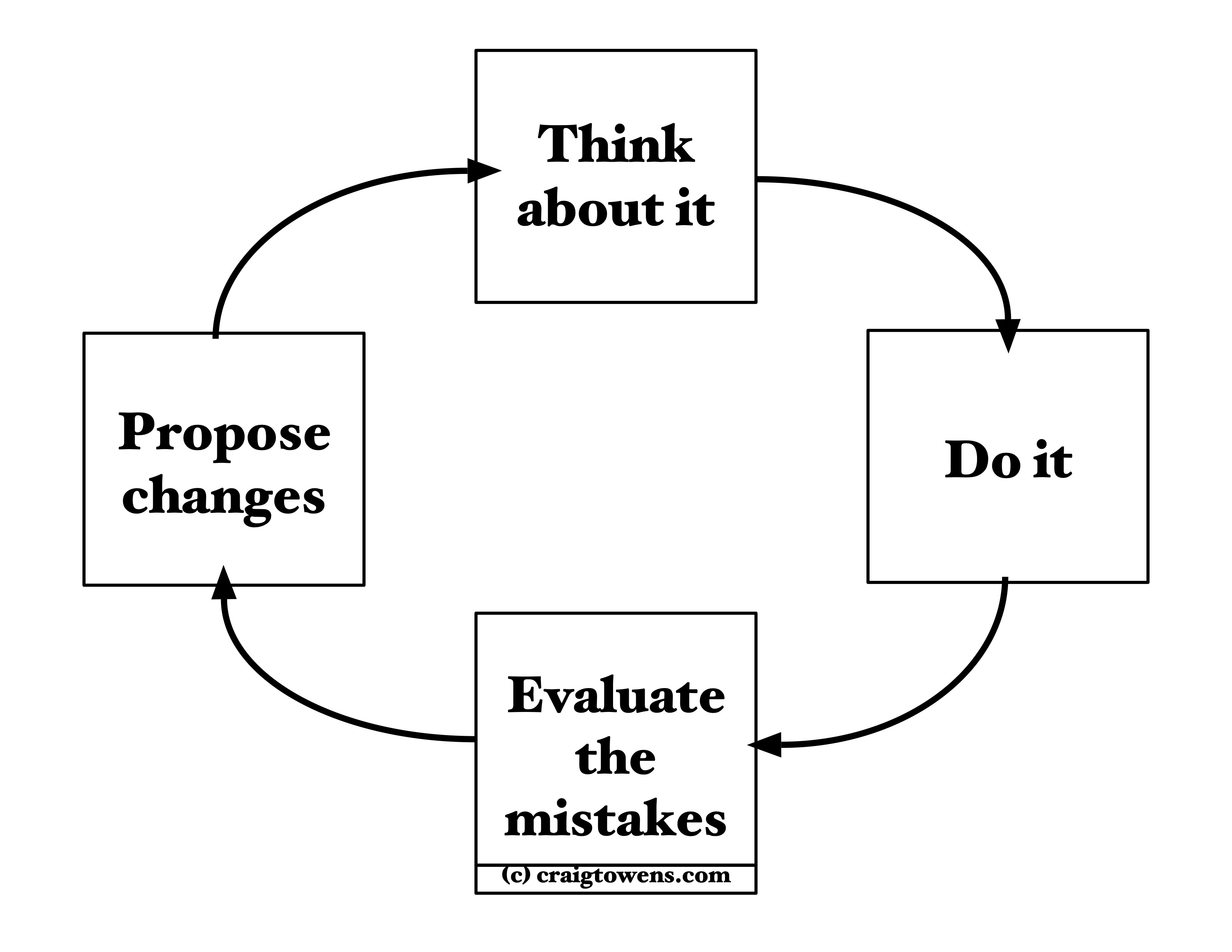
acknowledge Him is the Hebrew word yada. This word means knowledge that comes from personal experience. This is where you act on something you think the Holy Spirit is saying to you and then evaluate it. It’s how you get to know the Person of the Holy Spirit better and better.
He will make straight your paths might be better stated, “He will make your paths agreeable to His will.” In other words, you begin to feel in-sync with the Holy Spirit. The opposite of this would be grieving the Holy Spirit, where you feel out-of-step with God.
2. Consult with godly friends.
In Acts 16, the apostle Paul and his companions are attempting to go into new territories to share the good news about Jesus but Luke records twice that the Holy Spirit wouldn’t allow them. Perhaps they felt out-of-sync with the Spirit when they attempted to make their plans. Ultimately, God did open a door for them to move forward and Luke writes, “Concluding that God had called us.” Notice that word “us.” Paul shared his heart with his godly friends and they affirmed God’s voice, much as I affirmed the call on Josh and Judy’s lives in their move.
3. Don’t be overly concerned about making a mistake.
In Romans 8, Paul reminds us that God is working all things together for your good and for His glory. “All things” means even your mistakes—like not noticing that the Spirit was prompting you to move, or perhaps temporarily heading down a wrong path. The Holy Spirit can help you look back and see how these experiences have prepared you for your present moment. Even those missteps can be used for God’s glory. But most importantly, those missteps have never diminished God’s love for you!
Your journey will be unique from everyone else’s journey, but these three principles are applicable to everyone who wants to walk in the paths God has set for them.
Here’s the seed thought for this episode of Think On This…
Do to others what you would like them to do to you. (Matthew 7:12)
Think on this: Do I apply the Golden Rule negatively (just trying to avoid offending)? Or do I apply it positively (creatively trying to find ways to help others)?
I have been friends with Greg Heeres for nearly 30 years. During that time we have truly lived out the truism from wise King Solomon, “As iron sharpens iron, so a friend sharpens a friend.”
Greg and I have partnered together on both for-profit and non-profit ventures. We learned together, sharpened each other, and are both better off because of our close friendship.
Now it’s time for us to give back to others.
I’m so excited to announce a new podcast series we are launching on YouTube in just a couple of weeks. It’s called “The Craig And Greg Show.” We are passionate about investing in emerging leaders so each podcast is a short conversation designed to help sharpen leaders.
Check out the Maximize Leadership channel—both our website and our YouTube channel. Be sure to subscribe and click the bell on YouTube so that you are notified when each episode posts.
You can also get in touch with us through Twitter and Facebook.
Here’s the seed thought for this episode of Think On This…
Do not answer a fool according to his folly, or you yourself will be just like him. Answer a fool according to his folly, or he will be wise in his own eyes. (Proverbs 26:4-5)
Think on this:
Do I have a solid relationship with this person?
Do I need to respond for their benefit?
Can I ask any clarifying questions before I speak?
Here’s the seed thought for this episode of Think On This…
In the fifteenth year of Amaziah son of Joash king of Judah, Jeroboam son of Jehoash king of Israel became king in Samaria, and he reigned forty-one years. He did evil in the eyes of the Lord and did not turn away from any of the sins of Jeroboam son of Nebat, which he had caused Israel to commit. He was the one who restored the boundaries of Israel from Lebo Hamath to the Dead Sea,in accordance with the word of the Lord, the God of Israel, spoken through His servant Jonah son of Amittai, the prophet from Gath Hepher. The Lord had seen how bitterly everyone in Israel, whether slave or free, was suffering; there was no one to help them. And since the Lord had not said He would blot out the name of Israel from under heaven, He saved them by the hand of Jeroboam son of Jehoash. (2 Kings 14:23-27)
Think on this: Just because God has used me to do something amazing doesn’t necessarily mean that I am free of sin.
Have you ever noticed that it seems a lot easier to say, “God bless you” than it does to say, “God bless me”? Why is that?
Do I feel unworthy of His blessing? If I am a Christian, I need to remind myself that I am in Christ, and He is in me, and He has brought me into the Father. This means that I am as blessed as the Father blesses the Son (John 14:20; Ephesians 1:3-6). God is blessed by our being blessed!
Or perhaps I feel that “God bless me” is an arrogant prayer, while saying “God bless you” is a humble prayer. There is an EGO that God always blesses, and He delights to show us what that is!
In Hebrew literature, the key point is found in the middle of a poem or story. In Psalm 67, that would make the middle verse: May the nations be glad and sing for joy, for You rule the peoples justly and guide the nations of the earth. Selah. (v. 4)
The nations rejoice because God judges fairly and God guides the nations. Selah—pause and take that in. The natural attitude is actually a God-negative attitude—“I prefer to be in charge … I don’t like anyone telling me what to do!” But the unnatural attitude is a God-positive attitude—“I trust God more than I trust me, so I’m glad He is in charge … I trust God to judge justly more than I trust world institutions, so I’m glad He is the final Judge!”
This is very good news:Only God can rule and judge correctly! Men have biases and agendas; men are selfish and self-seeking; men seek their own glory and their own advancement. So the psalmist wants us to Selah/pause to remember that only God can lead and judge in a way that brings Him glory and brings us blessing. God is blessed by our being blessed!
Working outward from verse 4, we see verses 3 and 5 are identical, teaching us that our God-honoring desire should be for all peoples in all nations to experience the blessing of an intimate relationship with God.
A similar theme is sounded in the “bookend” verses of 1-2 and 6-7: We are asking God to bless us so that “all the ends of the earth will fear Him.” Once again we Selah/pause to consider this: Do I have the right EGO to request this blessing? Remember: There is an EGO that God always blesses.
In his book Lead Like Jesus, Ken Blanchard identifies two types of E.G.O.s in our relationship with God:
Negative E.G.O.—Edging God Out
Positive E.G.O.—Exalting God Only
The negative EGO says things like, “Bless me” and “Shine on me.” The positive EGO says, “Bless me so that I can be a blessing to others” and “Shine Your light on me so that others will see You.”
Jesus told us to not let the light of our life be hidden. We are blessed by God so that we can be a blessing to all of the peoples in all of the nations. We desire that all may know the joy of serving a Righteous King. We want everyone to know the praise that comes from Exalting God Only.
Oh God, be merciful to me. Cause Your face to shine on me. Bless me indeed so that I may teach others to fear You, so that they may come to know You as their All-Righteous, Good, and Loving King!
Think On This…
September 11, 2020 — Craig T. OwensMy t-shirt from To Write Love On Her Arms that says, “You make today better.”
Think on this: Am I being intentional about making other people’s today better? Am I expressing my gratitude to those who are making my today better?
Share this: