Our Daily Diet

Listen to the podcast of this post by clicking on the player below, and you can also subscribe on Apple or Spotify.

A couple of weeks ago I shared how Jesus made prayer the literal heart of His Sermon on the Mount. Prayer is what empowers us to live a perfect, God-honoring life. In the introduction of His model prayer, Jesus gives us two don’ts and one do. 

DON’T #1: Don’t be a hypocrite. That word literally means a play-actor. More than anyone else ever will, God sees who we really are. We cannot fool Him so there is no reason to fake it. For proof, check out some of the gut-level-honest prayers David records in the psalms!  

DON’T #2: Don’t babble. The Greek word here is unique: It’s made up of the name of a poet named Battus who was needlessly wordy, and the Greek word for word. In Greek, the word battologeō is an onomatopoeic word (like our English words that sound like what they really are describing: words like whoosh, buzz, or smack). It means rambling with our mouth, but our hearts and heads simply aren’t engaged as well. 

DO: Jesus gives us a DO, which is built right into the two don’ts: Do come to God as your Father (also see Luke 11:9-13). Our perfect Father knows perfectly what we need, and He alone can perfectly meet that need. Jesus uses our need for daily food to show how even earthly fathers provide for their children. So the very first petition in His model prayer for us is, “Give us today our daily bread.” 

“When prayer has become secondary, or incidental, it has lost its power. Those who are conspicuously men of prayer are those who use prayer as they use food, or air, or light, or money.” —M.E. Andross 

My friend’s trainer recently told him, “You cannot out-exercise a bad diet.” I think this is just as true in the realm of prayer: You cannot out-________ a bad prayer diet. You cannot…

  • …out-religion a bad prayer diet, as though your religious exercises can make up for a lack of prayerful food.  
  • …out-talk a bad prayer diet, or “babble,” as Jesus said.  
  • …out-strategize a bad prayer diet, as one successful man attempted to do (see Luke 12:16-20).

Jesus said our heavenly Father is just waiting for us to ask Him for what we need. In Psalm 5, David explained how attentive God is, even understanding our cries, our sighs, and our groans. So David’s conclusion was: “Lord, every morning You hear my voice. Every morning, I tell You what I need, and I wait for Your answer. 

Friends, we need to be first responders in prayer. Make it a habit every morning to let God hear your voice before anyone else does. DON’T make a show out of it or babble some words you don’t really feel, but DO talk with your loving heavenly Father about what you need for this upcoming day. He has already prepared a good, healthy diet for you, so ask Him to give you this day what you need, and then be expectant all day long in the ways your Father will answer you.

If you’re missed any of the other messages in our Be A First Responder series in prayer, you can access the full list by clicking here.

Thursdays With Spurgeon—Talking Back To Your Old Family

This is a weekly series with things I’m reading and pondering from Charles Spurgeon. You can read the original seed thought here, or type “Thursdays With Spurgeon” in the search box to read more entries.

Listen to the podcast of this post by clicking on the player below, and you can also subscribe on iTunes or Spotify.

Talking Back To Your Old Family

     When a man is adopted into a family and comes thereby under the regime of his new father, he has nothing whatever to do with the old family he has left behind and he is released from subjection to those whom he has left. And so, the moment I am taken out of the family of satan, the prince of this world has nothing to do with me as my father and he is no more my father. I am not a son of satan; I am not a child of wrath. 

     …When the law comes to a Christian with all its terrible threats and horrible denunciations, the Christian says, ‘Law! Why do you threaten me? I have nothing to do with you. I follow you as my rule, but I will not have you to be my ruler. I take you to be my pattern and mold, because I cannot find a better code of morality and of life, but I am not under you as my condemning curse.’ …  

     If one man adopts another child into his family, he cannot give it his own nature as his own child would have had. And if that child whom he will adopt should have been a fool, it may still remain so. He cannot make it a child worthy of him. But our heavenly Father, when He comes to carry out adoption, gives us not only the name of children, but the nature of children, too. He gives us a nature like His well-beloved Son, Jesus Christ.

From Adoption

Charles Spurgeon was called “the prince of preachers” for good reason! His word pictures are so biblically-accurate and so easy to recall, that anyone can grasp the concepts he shares from the Scripture. I have two takeaways from this portion of his sermon: 

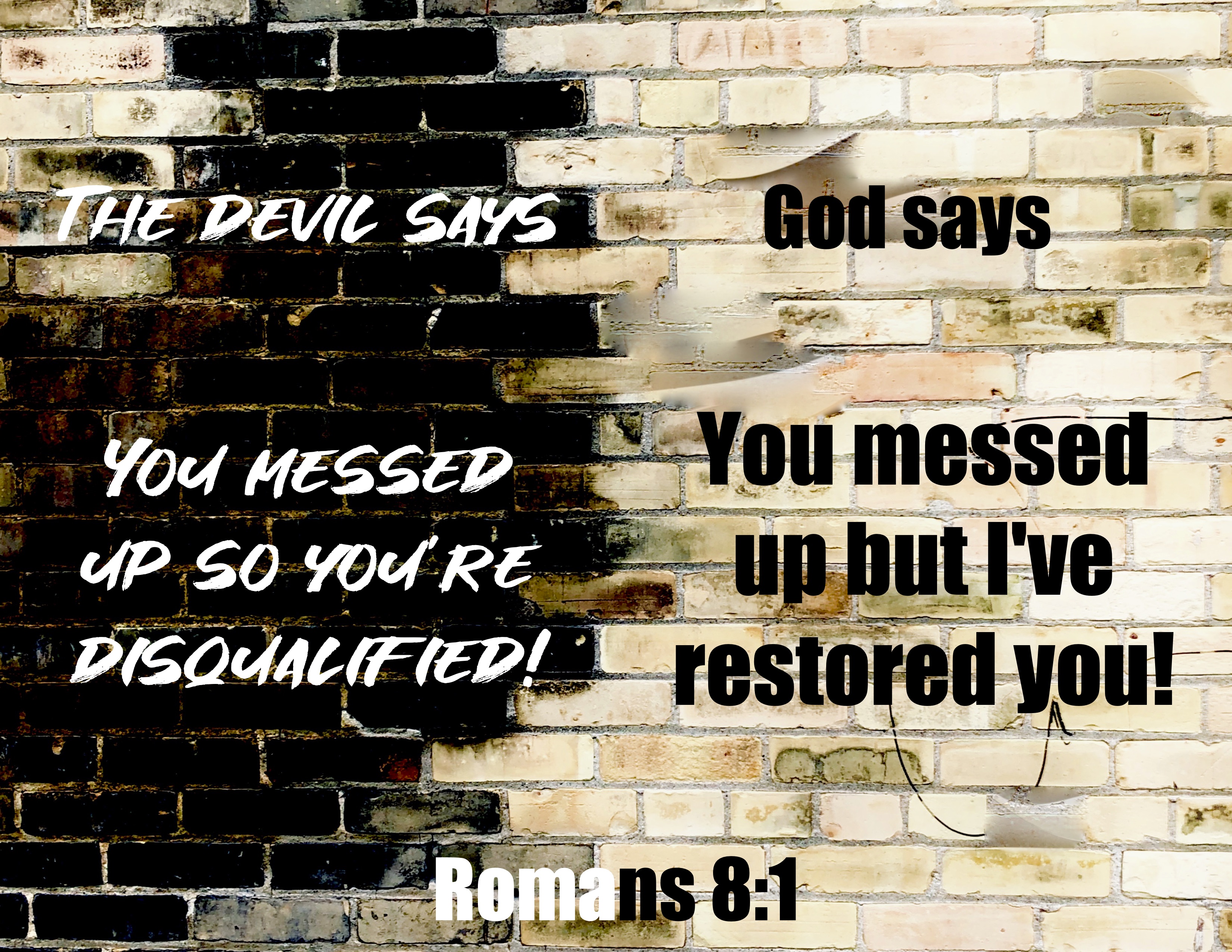
First, we need to talk back to our old family. The name “satan” means accuser: he accuses, condemns, slanders, and does his best to separate. When a Christian has been adopted into God’s family, there is no condemnation for the one who now calls God, “Abba Father” (see Romans 8:1-17). 

This is where we need to call out satan’s lies. I mean literally call them out. We need to talk back to the devil and tell him the truth, just as Spurgeon said in his example of talking back to the Law. Let me say it again: literally speak the truth out loud. The devil needs to hear it and your own ears need to hear it too: “I am no longer subject to your jurisdiction. You have no say over me any longer. I am a child of God. My sins have been forgiven and forgotten; therefore, there are no grounds left for any condemnation!”


Second, we need to talk back to our old nature. After being adopted into God’s family, the Holy Spirit undertakes a process to conform us to the image of Jesus. This process is called sanctification, but I like to call it saint-ification. 

This is where we call out what we used to be. And, again, I challenge to literally speak these words out loud. Don’t say, “I’m so impatient,” but tell yourself (out loud!), “I am becoming the patient saint Jesus wants me to be.” Don’t say, “I’ll never get this right,” but tell yourself, “I am learning more and more about Christ’s nature with each attempt.” Talk back to these old habits from your old family, and tell them about the new saintly habits the Holy Spirit is developing in you. 

The book of Revelation tells us that the saints overcame the slanderous devil by the blood of Jesus and by the words of their testimony. Speak out those life-affirming words every time that slanderer tries to make you forget into whose family you have been adopted!

God Is One, God Is Love

Listen to the podcast of this post by clicking on the player below, and you can also subscribe on Apple or Spotify.

There is a common characteristic among every human civilization: they all have had a pantheon of gods. It seems that no one god could capture all of the attributes each civilization thought were important, so they created multiple gods to help fill in the gaps. 

Onto the world scene comes the account recorded for us in the Bible of a God who creates the universe. The Hebrew word for this God is elohiym which means “a divine one.” This name is used throughout the Creation story in Genesis 1. 

Then in Genesis 2:4, a new name appears, one that is used over 6500 times in the Bible. It is the unpronounceable name YHWH: often pronounced Yahweh or substituted with the word Jehovah. In most Bible translations this name is designated by all capital letters: LORD. Yahweh or Jehovah means “the existing One.” 

The first part of our second foundational truth states, “The one true God has revealed Himself as the eternally self-existent ‘I AM,’ the Creator of heaven and earth and the Redeemer of mankind.” This Creator is uncreated: He sustains the universe without needing to be replenished Himself. He is utterly complete in Himself; hence, His name means I AM (see Exodus 3:13-15). 

The second part of this foundational truth statement says, “He has further revealed Himself as embodying the principles of relationship and association as Father, Son and Holy Spirit.” 

The I AM is One (see Deuteronomy 6:4), but He reveals Himself in three Persons—Father, Son, Spirit—that we call the Trinity (although this is not a word found in the Bible). 

Sometimes Christians have done a disservice to the I AM by making it appear He is divided. For instance, we might say, “The Father is the Creator, the Son is the Redeemer, and the Spirit is the Regenerator.” But remember that our One God is not a pantheon of gods; He is One. We see the fullness of the Trinity operating in every area. Here’s just a short sampling:  

  • The creation of the universe—Genesis 1:1; Colossians 1:15-16; Psalm 104:30 
  • The creation of man—Genesis 1:26-27 
  • A prophecy about Jesus’ advent—Isaiah 9:6 
  • The incarnation of Jesus—Luke 1:35 
  • The baptism of Jesus—Matthew 3:16-17
  • The resurrection of Jesus—Acts 2:32; John 10:18; Romans 1:4 
  • Our atonement—Hebrews 9:14 
  • A Christian’s baptism in the Holy Spirit—John 14:16 

(You can read all of these verses for yourself by clicking here.) 

A good question for us to ponder is: Why would this I AM God create humans? If He needs nothing to complete Himself or sustain Himself, why make us? 

The apostle John captures the essence of the Trinity in three words: God is love.

God created us out of an overflow of His love so that we too could enjoy the intimate, eternal pleasure of being at-onement with Him forever. God then wants our love to overflow to everyone around us, so that they will also be drawn into this at-oneness with the I AM. 

When Jesus was asked to state the greatest commandment, He first quoted from Deuteronomy 6: “Hear, O Israel: The LORD [Yahweh] our God, the LORD [Yahweh] is one.” Christ’s conclusion was for us to love this All-Loving God with all our heart, soul, mind, and strength. And then Jesus added an obvious overflow of that love: “And love your neighbor as yourself” (see Mark 12:29-31).

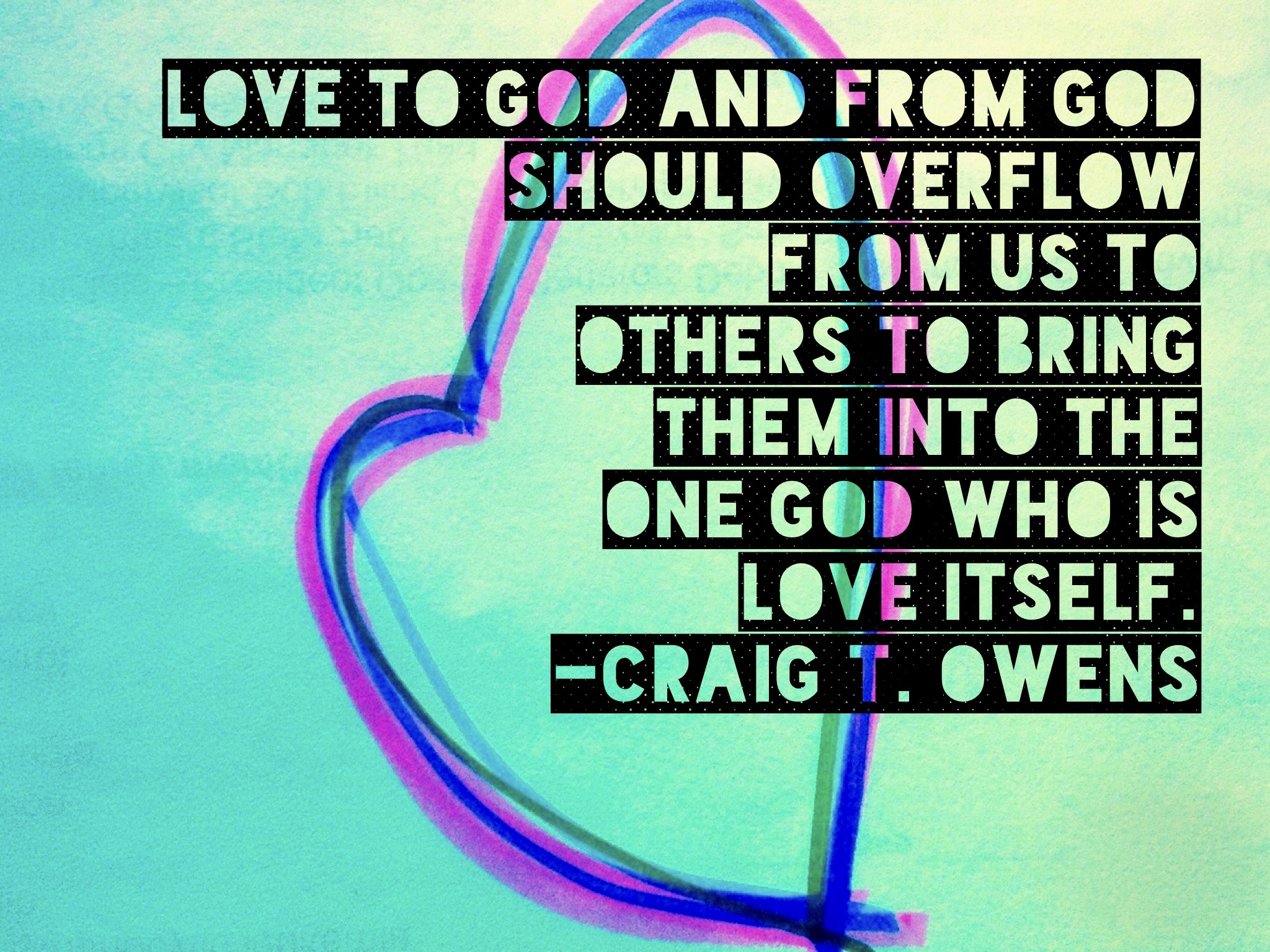
Love to God and from God should overflow from us to others to bring them into the One God who is love itself.  

The more we understand this love that the I AM has for us: (1) the better able we will be to love and worship Him, (2) the more we will love others out of this overflow of love, and (3) the more glory our awesome GOD will receive. Which is exactly what the apostle Paul prayed for us in Ephesians 3:14-19. 

This idea of an I AM God who reveals Himself as Father, Son, and Spirit has been described by the Latin phrase mysterium tremendum. It is indeed a mystery: not one that frightens and confuses, but one that energizes and enlivens. Pray Paul’s prayer for yourself, so that you can see more dimensions of this awesome love that God has for you! 

If you missed any parts of this series exploring our foundational belief statements, you can check out the full list by clicking here.

Learning Life’s Lessons

Listen to the podcast of this post by clicking on the player below, and you can also subscribe on iTunes or Spotify.

Have you heard the cliché, “Experience is the best teacher”? I don’t think that’s really true. I’ve known a lot of people who have had some huge experiences but haven’t learned a single lesson from them. Honestly this is the better statement: Evaluated and recalled experience is the best teacher. 

Many of my “life lessons” have cost me money. For instance, I was told numerous times by my parents, grandparents, and my driving instructor not to speed, but I didn’t learn that lesson the easy way. It cost me financially. I recovered from that, and I’ve only had one speeding ticket in the 40 years that followed! 

Most of us can recover from a financial loss. But other life lessons cost us more dearly: our broken physical health, lost intimacy in a relationship, a damaged reputation, or missed opportunities. Then we walk around with the weight of guilt, baggage, second-guessing, and regret. Jesus didn’t die on a Cross for us to live weighed down like this! 

God wants to help us! So why do we wait to call on Him until after we’ve tried to do it ourselves? Or until after we’re so deep in trouble or weighed down with baggage? Perhaps we think, “This is such a tiny thing. I can handle it myself.” 

  • Solomon said it was the tiny things that brought ruin 
  • God told Cain that it was the sin that was crouching at his door that wanted to take him down 
  • The devil prowls around and looks for the most opportune time to pounce on us 
  • Which is why Paul tells us to put on all of God’s armor and prayer all the time (see Song 2:15; Genesis 4:7; 1 Peter 5:8; Luke 4:13; Ephesians 6:10-11, 18) 

Portia Nelson summed it up well in her short story that I think all of us can relate to…

Chapter 1
I walk down the street.
   There is a deep hole in the sidewalk.
   I fall in.
   I am lost… I am helpless. It isn’t my fault.
It takes forever to find a way out.

Chapter 2
I walk down the same street.
   There is a deep hole in the sidewalk.
   I pretend I don’t see it.
   I fall in, again.
I can’t believe I am in the same place. But it isn’t my fault.

Chapter 3
I walk down the same street.
   There is a deep hole in the sidewalk.
   I see it is there.
   I still fall in… it’s a habit… but my eyes are open, I know where I am.
It’s my fault. I get out immediately.

Chapter 4
I walk down the same street.
   There is a deep hole in the sidewalk.
   I walk around it.

Chapter 5
I walk down another street.
    —Portia Nelson

Prayer helps us avoid the holes in our sidewalk, the crouching sin at our door, the prowling devil, and the lurking temptations. But more than that, prayer puts us on the right path to avoid all of these things in the first place (see Proverbs 3:5-6; Isaiah 30:21; 2 Samuel 22:34, 37)! 

God doesn’t have to get ready to help us; He’s already ready to help us. He’s just waiting for us to ask for His help. 

No matter how little or big the challenges, with God I can overcome! 

No matter how obvious or hidden the hole is, with God I can go down the right street! 

No matter how many times I fall in the hole, God can get me out! 

No matter how much the devil wants to bring me down, with God I can live righteously! 

No matter how many times sin pounces on me and I give in to it, God can forgive me! 

Don’t wait a moment longer to call on your heavenly Father in prayer. Let Him hear your voice early and often—He loves to hear from you and respond to you! 

If you’ve missed any of the other posts in this series on prayed called Be A First Responder, you can find the full list by clicking here.

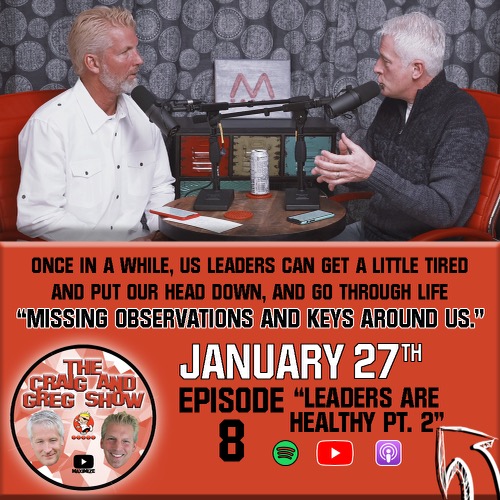
The Craig And Greg Show: Thoughts On Setting Goals

On this episode of “The Craig And Greg Show” we talk about: 

  • Greg and I follow up on the last episode where we talked about how leaders need to be healthy in every area of their lives  
  • repetition and habits are a leader’s friends 
  • we need specific goals  
  • Greg tosses his Mt. Dew can (literally!)
  • it’s more challenging to set goals in the areas of mental, emotional, and social health than it is for physical health
  • as leaders get healthy, it encourages their teammates to get healthy  
  • small goals done daily have a huge cumulative effect
  • leaders need to be around other leaders that can invest in them
  • on our website we have added a new page about our coaching huddles 
  • leaders should set only 1-2 goals per area of their lives—physical, mental, emotional, spiritual 
  • leaders need to think about their nutritional “diet” in every area 
  • an accountability friend will help you stick with your goals 
  • I unpack Stephen Covey’s Urgent/Important quadrants and how to find the time necessary to make necessary changes
  • Greg and I discuss what helps us decompress

Check out this episode and subscribe on YouTube so you can watch all of the upcoming episodes. You can also listen to our podcast on Spotify and iTunes.

The Prayerful Heart Of Our Testimony

Listen to the podcast of this post by clicking on the player below, and you can also subscribe on iTunes or Spotify.

The best way to be a first responder in prayer is to work on making prayer a habit. Prayer needs to come first. Remember: I can do more than pray, but I shouldn’t do anything until I have prayed. 

King David showed us his nearly-identical “bookend prayer” that he prayed both at the beginning of his reign as king and again just before he died. We can pray similar bookend prayers when we begin with a petitionary prayer—“God, please help me”—and finish with a thankful prayer—“God, thank You for helping me.” We can also try to expand those bookends toward the middle, allowing us to live as the apostle Paul admonished in 1 Thessalonians 5:17: 

  • Pray without ceasing 
  • Pray continually 
  • Never stop praying 

Jesus gave us a model prayer at the heart—the very middle—of His Sermon on the Mount. This sermon has 107 verses of Christ’s words, making the middle verse Matthew 6:6, which starts, “When you pray….” Notice the model Jesus gave us: 

  • Hallowing God—Our Father in heaven, hallowed be Your name
  • Bringing our petitions—Give us our daily bread, help us forgive, deliver us from evil
  • Worshiping God for His answers and for Who He is—Yours is the kingdom and the power and the glory forever. Amen!

Surrounding this prayer is a Christ-centered life that is:

  • Blessed (the beatitudes) 
  • God-glorifying—so they may see your good works and glorify your Father in heaven
  • Perfect—be perfect, even as your heavenly Father is perfect
  • Compassionate—when you give to the needy

—Model Prayer—

  • Disciplined—fasting, handling your treasures 
  • Anxiety-free—do not worry
  • Fruitful—every good tree bears good fruit
  • Secure—your foundation is on the rock

You see: Prayer helps us live out a God-honoring testimony, and that God-honoring testimony is empowered by prayer. Prayer is both the bookends AND at the heart of a Christ-centered life. 

The heart of a God-honoring prayer is to live out a God-honoring testimony.

David’s bookend prayer follows the same model Jesus gave us: hallowing God, making petitions, and then worshipping God. 

Christians need to be BOTH first responders in prayer AND continual responders in prayer—prayer at the beginning, prayer at the heart, and prayer at the end. This way, when God does answer, there is no doubt that He was the One who answered, and it wasn’t just because of something we did. 

Prayer fuels our testimony. Our testimony glorifies God. At the heart of this testimony, our answered prayers glorify our heavenly Father and point others to Him. 

Let me say it again: The heart of a God-honoring prayer is to live out a God-honoring testimony.

If you’ve missed any of the messages in our series called Be A First Responder, you can access the full list by clicking here.
Thursdays With Spurgeon—The Greatest Gift

This is a weekly series with things I’m reading and pondering from Charles Spurgeon. You can read the original seed thought here, or type “Thursdays With Spurgeon” in the search box to read more entries.

Listen to this post as a podcast by clicking here:

The Greatest Gift

Come…buy wine and milk without money and without price. … The gift of God is eternal life in Christ Jesus our Lord…. (Isaiah 55:1; Romans 6:23) 

     The free grace of God would be insulted by being put up for auction or set forth for sale. … It is a gift and not a prize. There are heavenly prizes to be run for, to be fought for, and to be obtained by divine help. There is a recompense of reward to which we are to look and a crown for which we are to strive, but the divine grace that forgives sin and works faith is no prize for exertion but rather a gift for those without strength. ‘It is not of him who wills, nor of him who runs, but of God who shows mercy’ (Romans 9:16). … 

     The blessings of salvation are freely given us of God; therefore they are not a loan, handed to us for a time and to be one day recalled. Our heavenly heritage is not held on lease, upon terms of annual payment. It is an unencumbered freehold to every man who has by faith put his foot upon it. … When He has given it, the deed is done outright and can never be reversed. O believer, if your sin is blotted out, it can never be written in again! God has declared that He has forgiven our transgressions. And then He adds, ‘Their sins and iniquities will I remember no more’ (Hebrews 10:17). … 

     God is unchangeable, and therefore what He has given He will give again. ‘Still there’s more to follow’ is a popular way of putting a great truth. The stream that has begun to flow will never cease flowing. The more the Lord gives, the more we may expect. Every blessing is not only in itself a mercy, but it is a note for more mercies.

From Grace For Grace

I shared a series of messages on God’s favor—His free gift that we call grace—that was one of the most downloaded and watched of any series I have presented. It almost seems inconceivable to people that God would give so freely and lavishly without expecting some sort of payment in return. 

Why would God “not spare even His own Son but [give] Him up for us all” (Romans 8:32)? Because if you feel distant from Him, how can you glorify Him? If you feel disconnected from His love, how will you draw others to Him? If you feel like your relationship with Him is hanging by a thread, how can you happily abide in His presence? 

Knowing God’s favor—His free gift—is the key to living the abundant life Jesus purchased for you on the Cross!

Think, Do, Evaluate, Propose

Listen to the podcast of this post by clicking on the player below, and you can also subscribe on AppleSpotify, or Audible.

The seed thought for me was this quote from John Maxwell: 

“Nothing you do will be perfect, so embrace the reality and benefits of failure by releasing yourself from the burden of not making mistakes.” 

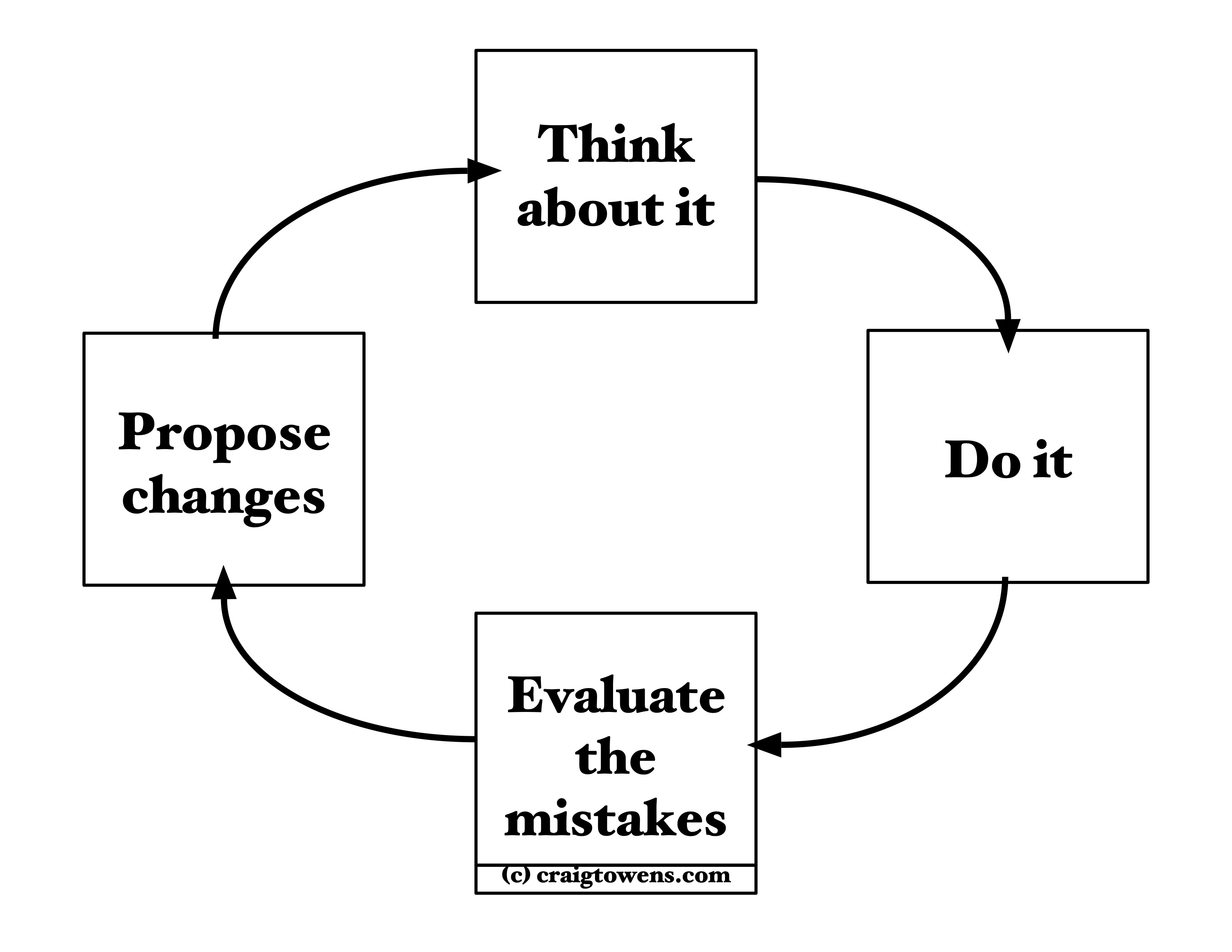
Here’s what I am endeavoring to implement: Think, Do, Evaluate, Propose. And then Repeat. 

THINK ABOUT IT—It’s important to put some thought into what you want to do before you do it, but we cannot camp-out here forever. I like to think in terms of goals I want to accomplish, whether those are for me personally or for organizations I lead. 

DO IT—At some point, I must launch out. Many people point out that Peter began to sink under the waves when he took his eyes off Jesus and began to look at the storm. But let’s not forget that Peter was the only one of the disciples who actually got out of the boat and walked on water! I often remind people who are hesitant to begin something that you cannot steer a parked car. We have to get moving first. 

EVALUATE THE MISTAKES—Let’s remove all doubt: you will make mistakes. But those mistakes are beneficial because it gives you something on which to work. Get some wise friends around you that can help you evaluate your mistakes. And always remember I failed ≠ I am a failure (here’s another post where I elaborate on this point). 

PROPOSE CHANGES—After evaluating your mistakes or shortcomings, you now have evidence that can be processed for your next attempt. This evidence can be taken back into the laboratory of the “Think” box as you prepare to try again, except now you are more informed than you were in your first attempt. 

REPEAT THE PROCESS AGAIN—No one is an overnight success, so keep trying again and again and again.

Leaders, walk through this process with your team members. Help guide their thinking, and then move them to action. Let them know that mistakes are okay because they have given you some invaluable feedback you can use as you make your proposals for your next attempt. 

Success is a continual run through the Think-Do-Evaluate-Propose cycle, with each revolution moving you closer to success. 

►► Would you please prayerfully consider supporting this ministry? My Patreon supporters get behind-the-scenes access to exclusive materials. ◀︎◀︎

A Proper Perspective In An Evil Culture

Do these phrases sound familiar? 

  • The foundations are being destroyed, what can the righteous do? 
  • The faithful have vanished from among men 
  • Everyone lies to his neighbor 
  • The boastful say, “We will triumph with our tongues” 
  • The wicked freely strut about when what is vile is honored among men 

This could be said today in my neighborhood. And 20 years ago in Washington DC. And 500 years ago in Europe. But it was said over 3000 years ago!

In times like these it’s important to remember that there have always been times like these! 

In the United States, elections bring regular changes in leadership. Around the world and throughout history violent dictators are toppled, benevolent monarchies fall, dominate personalities shine brightly and fade from the scene, even people who called themselves “Great” or “the king of kings” have disappeared. What should our perspective be in changing cultures—whether they are good or evil?

In Psalms 9-12, David shares some timeless reminders.  

In Psalm 9, he contrasts the temporary track record of mortals with the transcendency of Yahweh. His Selah pauses in this psalm invite us to consider the question: Who benefits me ultimately and affects me eternally: mortals or God?

In the Septuagint, Psalms 9 and 10 make up one psalm. In our English Bible, Psalm 9 closes with the phrase “they are but men” and Psalm 10 closes by calling mankind “mere earthly mortals.” Contrast that with Yahweh who is described as “the LORD reigns forever” and “the LORD is King for ever and ever.” 

In between these eternal affirmations of God, mere earthly mortals are described as: 

  • arrogant 
  • boastful—literally saying “hallelujah” to themselves 
  • blessing all who are like them in their wicked thoughts
  • having no room in their thoughts for God 
  • even praying to themselves—which is the literal meaning of “he says to himself” that David repeats three times 

Literally this mere earthly mortal thinks of himself as god! But even as he says “nothing will ever hurt me while I’m alive” he acknowledges his mortality, admitting that he is indeed finite. 

In Psalms 11 and 12, David gives the righteous the proper perspective to handle all of this. In a word, David wants the godly to remember:

  • Remember God sees everything 
  • Remember God punishes the wicked and rewards the righteous 
  • Remember God gets the final word 

Christians can only live exemplary, anxiety-free, and God-honoring lives when we stay focused on the Infinite, on the Eternal God. With this perspective we can live out our roles as “aliens and strangers”—as the apostle Peter calls us—while we live in this evil culture.

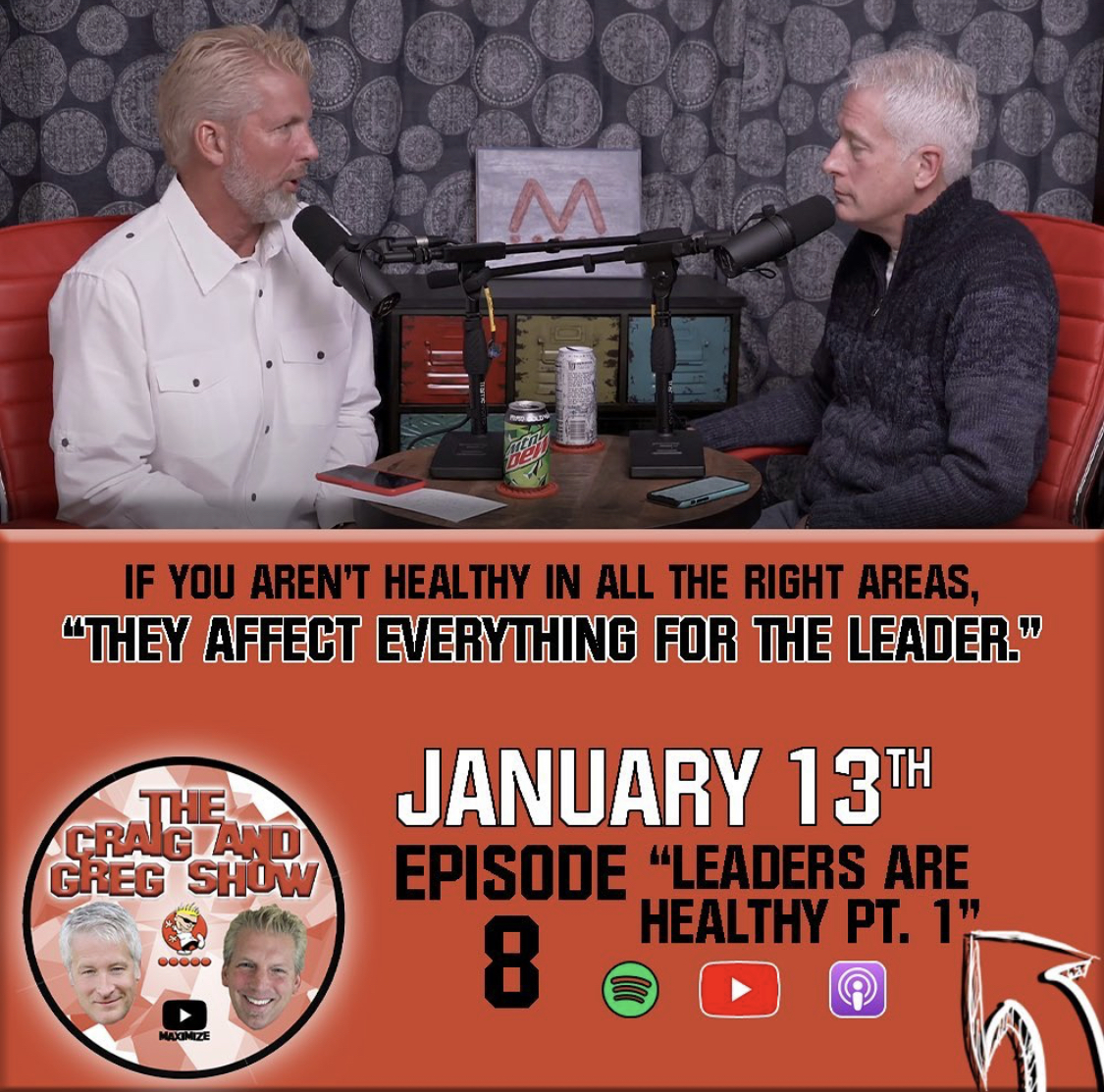
The Craig And Greg Show: Leaders Are Healthy

On this episode of “The Craig And Greg Show” we talk about: 

  • the premier biblical historian Luke tells us how important it was that Jesus grew wholly healthy 
  • unhealthiness in one aspect affects every area of a leader’s life 
  • we need to guard against what we let in our minds and bodies  
  • our emotional/social health is what really shows our leadership health  
  • self-care is never selfish; it’s vital  
  • leaders can only give health to others when they are first healthy themselves 
  • stress can erode a leader’s health, so leaders need to be self-aware
  • the importance of getting feedback
  • most of us won’t change until the pain of staying the same becomes greater than the pain of changing

Check out this episode and subscribe on YouTube so you can watch all of the upcoming episodes. You can also listen to our podcast on Spotify and iTunes.