The apostle Paul lists three indispensable qualities of a godly leader. Remove even one of those qualities, and you no longer have a godly leader. I dive deep on these qualities (and more) in my book Shepherd Leadership.
I have lots of new content every week, which you can check out on my YouTube channel.
T.M. Moore wrote, “We are God’s poems, as Paul says in Ephesians 2:10, where the Greek word for ‘workmanship’ is ποίημα, poiema—poem. Perhaps this is why we find it pleasurable when others take an interest in us and want to get to know us better. They’re asking us to ‘read’ our ‘poem’ to them. What fun! And God wants us to know, love, enjoy, and serve Him by all the things He has freely given to us and which He seeks to ‘read’ to us day by day.”
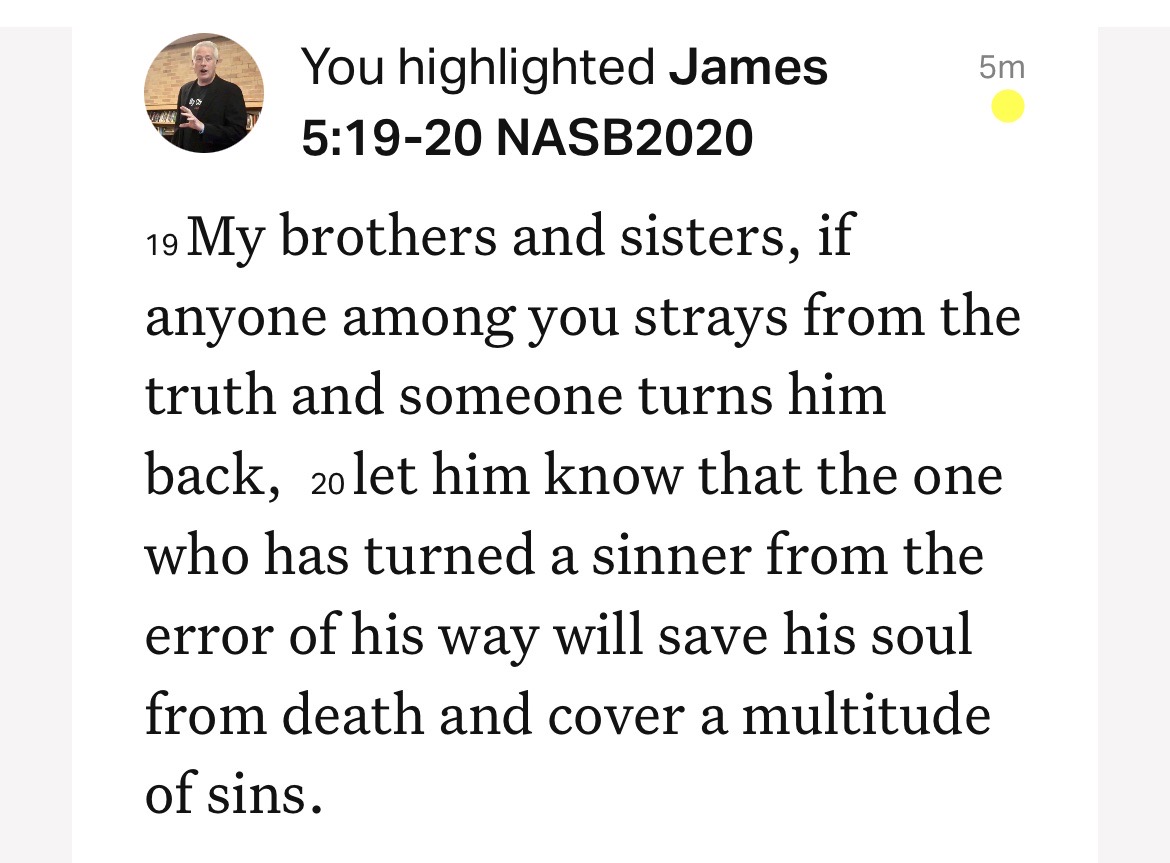
“Saints” is always plural in the Bible. That means we always need to be looking out for our brothers and sisters in Christ. I love the words James uses to close his letter to the saints.
✅ Gather frequently to encourage others
✅ Reach out to those who are absent
✅ Speak the truth in love
✅ Exhort and encourage
✅ Forgive and ask for forgiveness
✅ Restore quickly and gently
Anthony Kidd warns about something I address in my book When Sheep Bite. “Inherent to our calling as shepherds is the task of looking out for the flock of God and protecting it from savage wolves and false shepherds. However, Paul emphasizes here that one of the greatest threats to the church can emerge from within its own leadership ranks, making self-awareness a critical aspect of pastoral leadership.” Read this full article about the earning signs of diseased leadership.
More amazing findings that show the incredible beauty and wisdom of our Creator! The ICR reports, “Insects, such as the winged insects in the order Lepidoptera, continue to reveal incredible abilities with some facets that zoologists thought were reserved only for vertebrates.”
And from there the brothers and sisters, when they heard about us, came as far as the Market of Appius and the Three Inns to meet us; and when Paul saw them, he thanked God and took courage. (Acts 28:15)
We have to be careful of thinking of Paul as some sort of super-evangelist. Yes, he was sustained by his faith in God, but look what happens to him when he is in the assembly of fellow saints—it prompted him to thank God and brought courage to his heart.
Do you have to go to church to be a Christian? Of course not. But you will be encouraged and you will be the source of encouragement to others when you gather together regularly.
As the writer of Hebrews tells us—
Let’s hold firmly to the confession of our hope without wavering, for He who promised is faithful; and let’s consider how to encourage one another in love and good deeds, not abandoning our own meeting together, as is the habit of some people, but encouraging one another; and all the more as you see the day drawing near. (Hebrews 10:23-25)
You may also be interested in these related posts:
Listen to the podcast of this post by clicking on the player below, and you can also subscribe on Apple, Spotify, or Audible.
Let me remind you of something I covered last week:
If we start out thankful but then forget about our blessings, we become fearful and selfish, which makes us susceptible to the sin of grumbling against God.
But if we start our thankful and then continually remember all that God has done for us, we remain joyful and secure, which fortifies us against giving in to the sin of grumbling against God.
As I have shared with you during this series, medical science has discovered so many connections between gratitude and wellbeing—mentally, physically, emotionally, and relationally. Here’s another important finding from medical science: Chronic stress impairs memory formation.
Remember this insight from George Santayana: “Those who do not learn from history are doomed to repeat it”?
But what if we cannot learn the lessons from history because we cannot remember and recall those lessons? That’s one of the ways chronic stress ravages our ability to be grateful. Stress literally clogs up the amygdala in our brain so that these lessons cannot be filed away for future use.
Where does this chronic stress come from? Stress can be a good thing—think of the stress we put on our lungs, heart, and muscles when we exercise. That good stress (eustress) prepares us to respond well in difficult situations.
But chronic stress is unhealthy. It begins to make us withdraw into ourselves. We become self-protective. We start to see potential problems even behind blessings.
Self-protective becomes self-focused, which is the exact opposite of the God-focus we looked at last week in Psalm 103:2. This also makes us want to isolate from people (see Psalm 42:1-4, especially the “used to” in v. 4).
Consider the example of David’s life. David is in a stressful state where I am sure it is becoming increasingly difficult for him to find praiseworthy things. He is becoming more and more self-protective and therefore self-focused.
Saul tries to kill him—1 Samuel 20:28-33
The Philistines have him trapped—21:10-13; Psalm 56
The people of Keilah reward David’s help with betrayal—23:10-12
David is in a desert place (literally!) and sold-out by the Ziphites—23:14, 19-20
Psalm 54 is written when David learns about the Ziphites’ plan. He begins to pour out his complaint to God in vv. 1-3, but then there is a totally different tone in vv. 4-7. What comes between is the word Selah—a pause to consider.
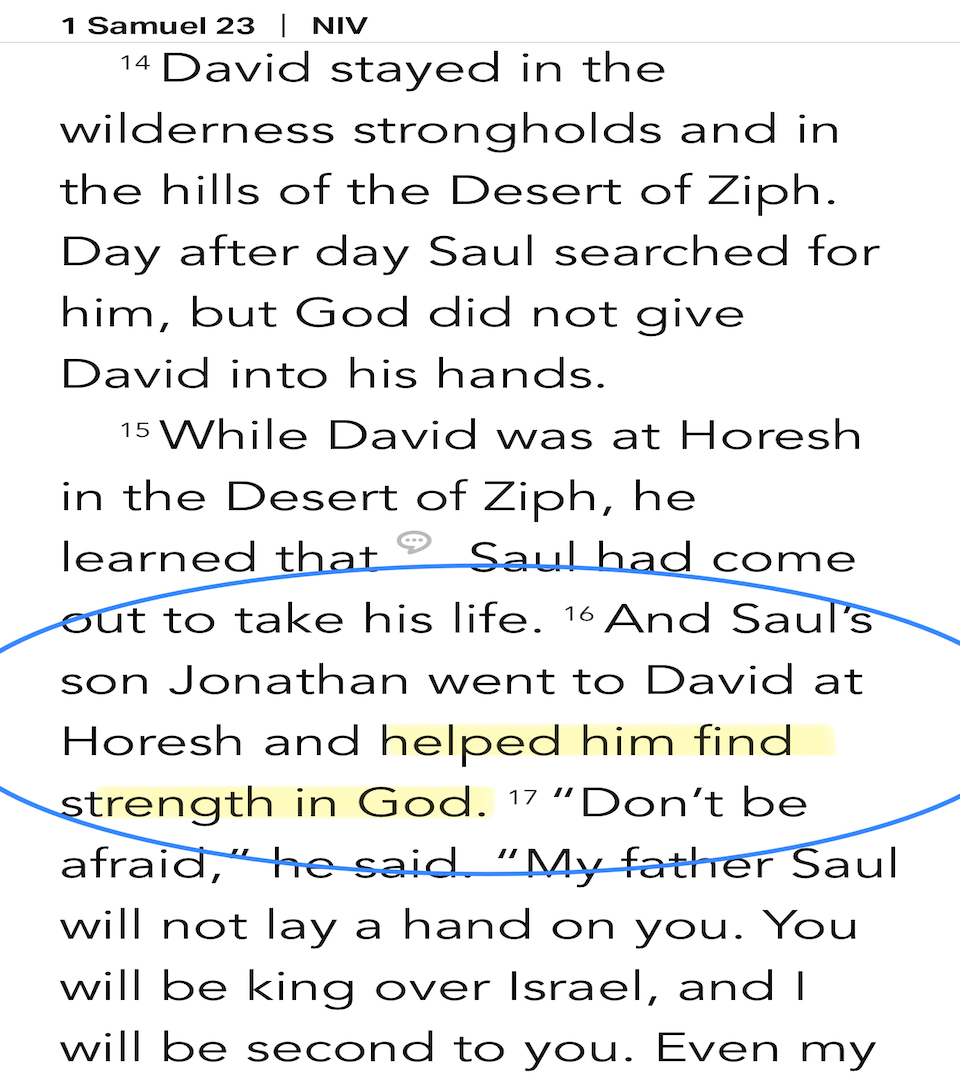
I believe at this time is when Jonathan shows up to encourages David—And Saul’s son Jonathan went to David at Horesh and helped him find strength in God (1 Samuel 23:16).
David learned this lesson well because when he’s in another tight spot, we read that David found strength in the Lord his God, which allowed him to encourage his distraught men to seek God’s help. It was with God’s help that they recovered everything single thing that had been taken from them (1 Samuel 30:1-18)!
Your gratitude fortifies you and helps you encourage other saints. As you encourage other saints, they will then be fortified to help other saints—maybe even you!
I like how Eugene Peterson paraphrases 1 Thessalonians 5:11 in The Message: “So speak encouraging words to one another. Build up hope so you’ll all be together in this, no one left out, no one left behind. I know you’re already doing this; just keep on doing it.”
Your gratitude could make all the difference in someone else’s life, so “just keep on doing it”!
Listen to the podcast of this post by clicking on the player below, and you can also subscribe on Apple, Spotify, or Audible.
Much like Jude who had a message he wanted to deliver to the saints, but was compelled by the Holy Spirit to address something concerning him (Jude 3-4), I, too, was excited to deliver the next message in our series on discovering your gifts and then living in your gift zone. But I am deeply concerned about the words and actions of Christian saints during these past election cycles.
I recently heard John Stonestreet say, “Currently, politics is carrying far more cultural weight than it is able to bear.” I agree: Christians are putting far too much emphasis on political candidates than the Bible would suggest.
I frequently quote something from Charles Colson that always makes people smile. He said, “Salvation will never arrive in Air Force One.” The flip side is true as well: Neither will the Apocalypse arrive on Air Force One.
We have to remember that the Most High is sovereign over all the nations of the earth, and He gives them to whom He choose (Daniel 4:25, 32). When we think that our candidate or our party is the only way our nation can be saved, aren’t we elevating the political process above God’s plan?
I hope this doesn’t come as a shock to anyone, but there are no perfect candidates, perfect political parties, nor perfect party platforms. We can study our Bibles, pray, study the candidates’ lifestyle and policies, but ultimately we will have to cast a ballot for an imperfect candidate.
God doesn’t have an “R” or “D” next to His name. He has not endorsed a political candidate. You may be sitting next to someone right now that is going to vote for the opposite political party that you will be voting for. And the way we interact with those people—whether they are fellow Christians or not—is deeply concerning to me.
Moses saw a couple of fellow Israelites fighting each other, and he asked them, “Why are you hitting your fellow Hebrew” (Exodus 2:13). The Hebrew word rea means a friend who is also a fellow citizen. These Hebrews were citizens of Zion, but they were living in Egypt, and they definitely weren’t treating each other in a way that would be a testimony to the Egyptians.
When Stephen retold this portion of the story in his sermon, he phrased it this way, “Men, you are brothers” (Acts 7:25-26). Stephen used the Greek word adelphos which literally means “from the same womb.” But the Christians used this word to mean brothers and sister in Christ—people with whom we will spend eternity.
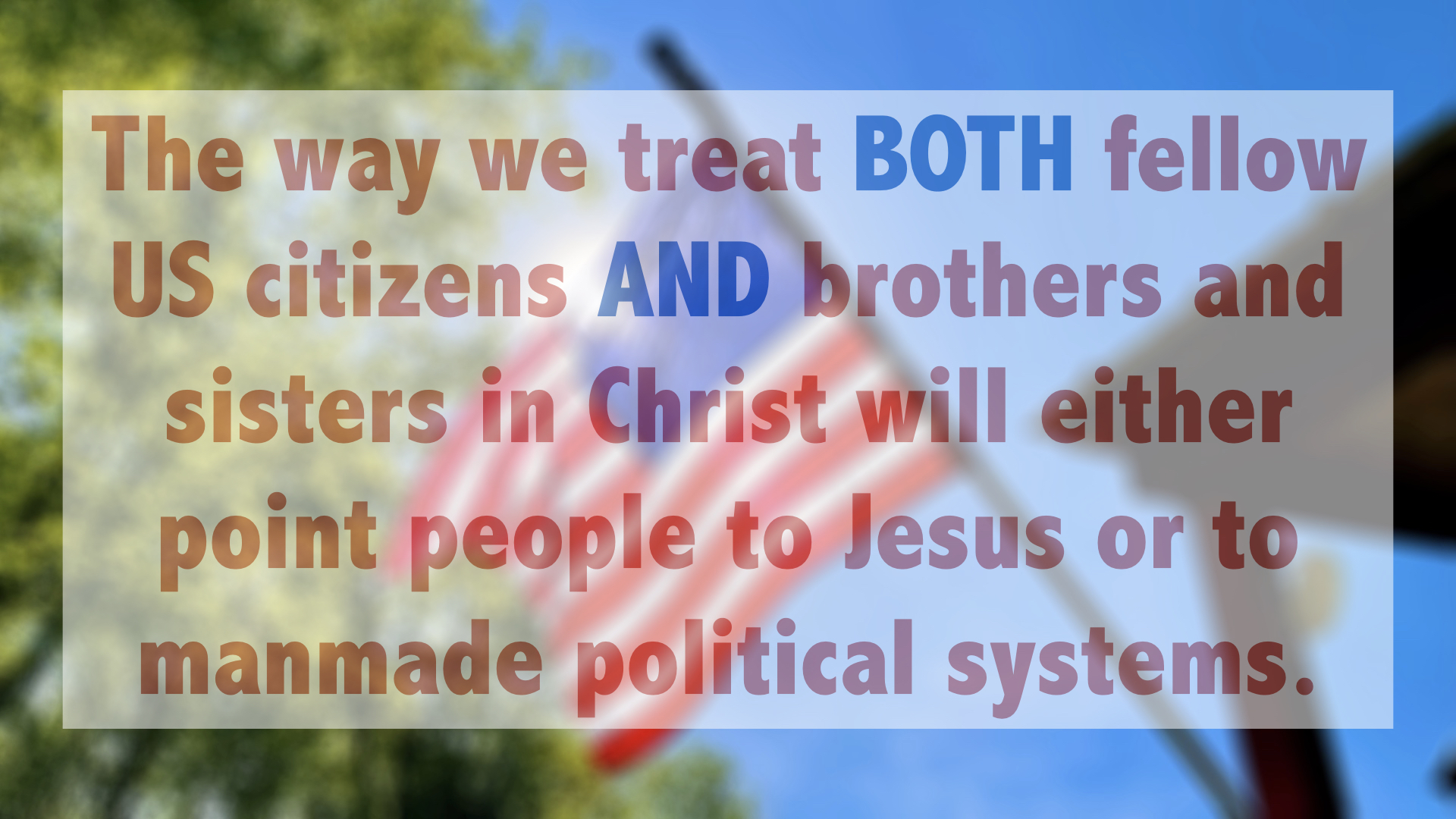
Let us always remember that others who are participating in the American political process are BOTH fellow US citizens AND brothers and sisters in Christ.
In J.R.R. Tolkien’s Return of the King, when Gandalf sees fellow citizens and friends at each other’s throats, he exclaims, “Work of the enemy! Such deeds he loves: friend at war with friend, loyalty divided, and confusion of hearts.” Indeed, the enemy of our souls would love to see the chaos of a nation at war with itself; especially to see Christians at odds with each other.
Paul said, “Therefore, as we have opportunity, let us do good to all people,especially to those who belong to the family of believers” (Galatians 6:10). On the flip side, Jesus said that when we think or speak poorly of a fellow human, we are in danger of judgment (Matthew 5:22).
Listen to Paul’s appeal to his friends at Philippi—
Therefore if you have any encouragement from being united with Christ, if any comfort from His love, if any common sharing in the Spirit, if any tenderness and compassion, then make my joy complete by being like-minded, having the same love, being one in spirit and of one mind.
I plead with Euodia and I plead with Syntyche to be of the same mind in the Lord. Yes, and I ask you, my true companion, help these women since they have contended at my side in the cause of the gospel, along with Clement and the rest of my co-workers, whose names are in the book of life. (Philippians 2:1-2, 4:2-3)
The politicians we have are always downstream from culture, which means we have allowed those sorts of politicians to be in place.
John Stonestreet used a phrase I hadn’t heard before, but I think it’s appropriate: “Christian political engagement should hit its fever pitch notduring elections. The only way to relieve the political pressures of our day is to build up the pre-political aspects of our life together, especially the family and the Church. When we care well for our children, our neighbors, and our communities, the state doesn’t have to.”How true this is!
I wrote something this summer based on Isaiah 3:4-5. In essence, I wrote that God gives nations the “leaders” they deserve. They are leaders in that they occupy an office, but they don’t lead people nor care for the citizens—they don’t have wisdom to lead nor do they care about anyone but themselves. This is the inevitable result for a nation that turns its back on God! So if we think our political and civic leaders are self-focused, unskilled, and childish, we should look in the mirror. It’s not “them,” it’s us. We have to change—turning wholeheartedly to God—and only then God can change our leadership.
We need to be praying for our governmental leaders, not vilifying them. We need to be speaking well of our fellow US citizens. We need to be especially treating our fellow brothers and sisters in Christ well.
Our hope is not in the results of an election. Our hope is in Jesus. The way we treat BOTH fellow US citizens AND brothers and sisters in Christ will either point people to Jesus or to manmade political systems.
I pray we can do better at pointing people to Jesus! I pray I can do better!
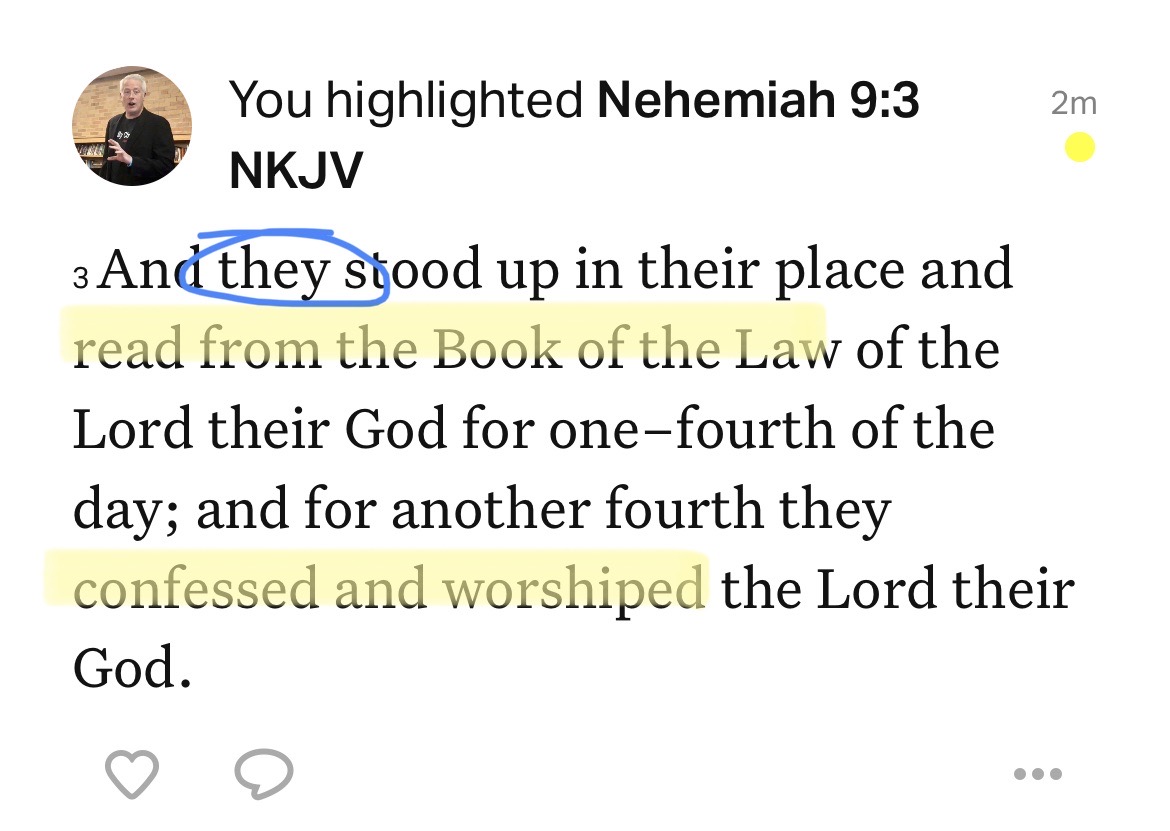
And they stood up in their place and read from the Book of the Law of the Lord their God for one-fourth of the day; and for another fourth they confessed and worshiped the Lord their God. (Nehemiah 9:3)
I have three takeaways from this verse—
(1) When we read God’s Word, the Holy Spirit illuminates it to us. Confession and worship should be normal responses to the Word and the Spirit.
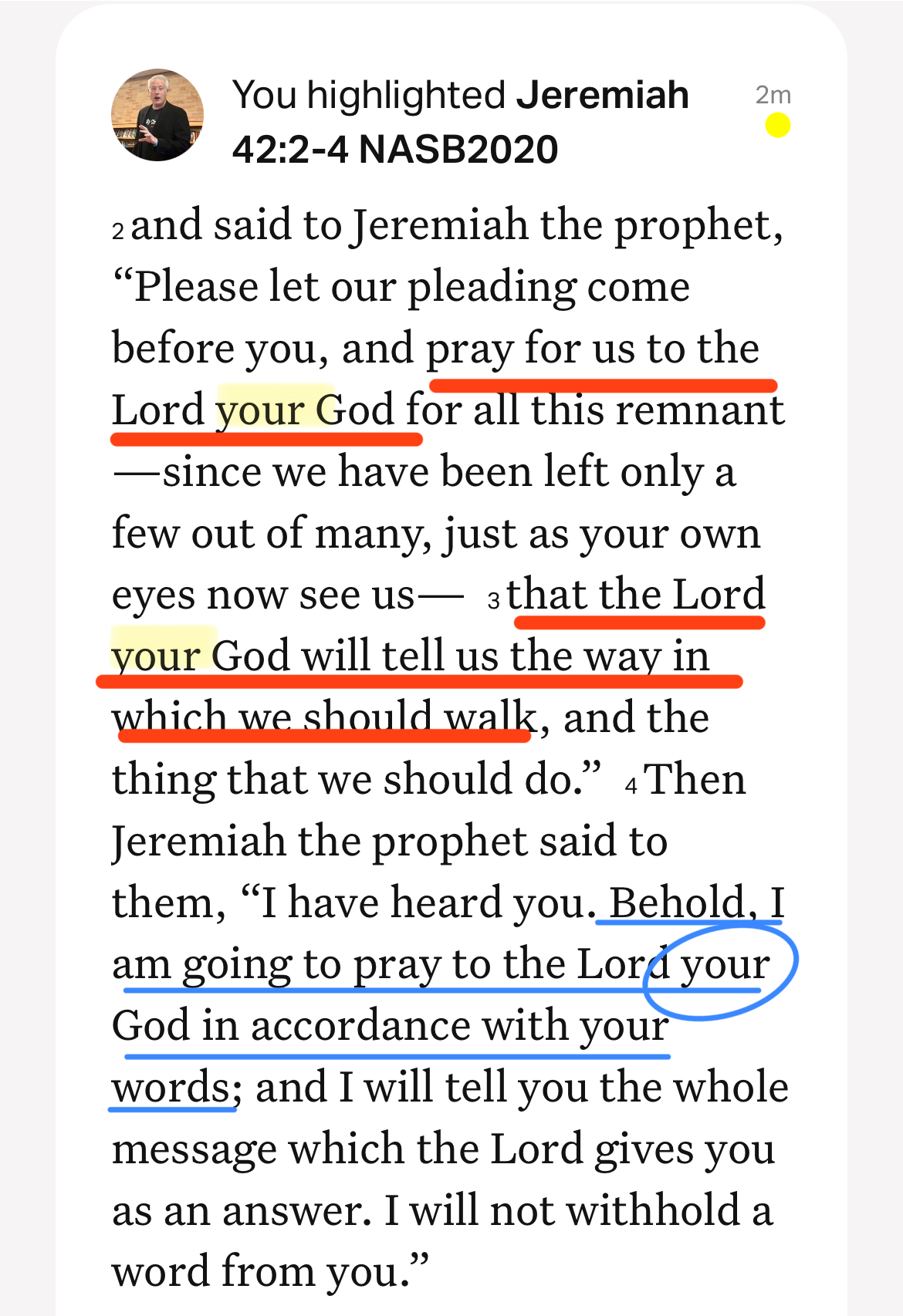
…All the people from the small to the great approached and said to Jeremiah the prophet, “Please let our pleading come before you, and pray for us to the Lord your God for all this remnant—since we have been left only a few out of many, just as your own eyes now see us—that the Lord your God will tell us the way in which we should walk, and the thing that we should do.” Then Jeremiah the prophet said to them, “I have heard you. Behold, I am going to pray to the Lord your God in accordance with your words; and I will tell you the whole message which the Lord gives you as an answer. I will not withhold a word from you.” (Jeremiah 42:1-4)
You can hear the distance that the people felt from God in the words they say to Jeremiah, “the Lord YOUR God.”
But Jeremiah reassures them that God still sees them and loves them when he responds with the exact same words—not “the Lord my God” (as the people thought he would say) but “the Lord YOUR God.”
This word of encouragement from Jeremiah helped this same group of people to see God in the right light: “Whether it is pleasant or unpleasant, we will listen to the voice of the Lord OUR God to whom we are sending you, so that it may go well for us when we listen to the voice of the LordOURGod” (v. 6).
This is a good reminder for all of us that we need to encourage one another whenever we have the opportunity. “Let’s approach [our] God with a sincere heart in full assurance of faith … and let’s consider how to encourage one another in love and good deeds” (Hebrews 10:22, 24).
You may want to check out my post A Unique Look At “Church” for some further thoughts about encouraging our brothers and sisters.
Listen to the podcast of this post by clicking on the player below, and you can also subscribe on Apple, Spotify, or Audible.
The 12th Song of Ascent (Psalm 131) was written by David to remind us to rely on God’s help even more as we progress on the journey (or mature in our faith). In the 13th Song (Psalm 132), the psalmist says, “Remember David” and his passion for God’s people to experience God’s righteousness and joy. In order for us to know that, we have to remember Jesus.
Those who put this collection of Songs of Ascent together now include David’s fourth song (Psalm 133) in this collection which expresses his desire for unity among God’s people.
Can you imagine the pilgrims starting out from their individual villages? Maybe there’s not very many of them to begin with and traveling is pretty easy, but they do have to be vigilant against dangers on the road.
As they progress, they begin to join with pilgrims from other villages. Maybe these are from the same tribe, perhaps even distant relatives. The journey may go a bit slower now that there are more people to keep track of, and some complications of personality may start to arise. But the level of safety and assistance also increases.
Soon the group is getting larger as they now join with pilgrims from other tribes. These aren’t near relatives at this point, so there may be more complications, but there is even greater encouragement, safety, and potential.
Aha! Potential.
We’ve gone singing with a small ensemble to singing in a choir. And David is anticipating us singing in an even larger, majestic choir! There will undoubtedly be more problems, but there is also assuredly so much more potential, beauty, and strength in their combined worship.
My friend Dan Chastain has over 20 years of experience in the United States Army. He points out that the Army did the same things in his day as we read in the Old Testament.
The unity of a fighting force, Dan said, is a blessing. David was a professional soldier. Many people today join the military because of this professional, unity, and camaraderie. Maintaining this unity is the responsibility of everyone, because disunity leads to mistrust, chaos, and defeat.
David says this choir paints a picture—“it is like” (v. 2) and “it is as if” (v. 3). He is saying that God desires overflowing blessings on His people (v. 2), and that God desires saturating blessings on His people (v. 3). Why? Because God wants to give us more than enough for our needs so that there is plenty left for those who aren’t brothers and sisters yet. He longs for our choir to include people from every tribe, race, and nation.
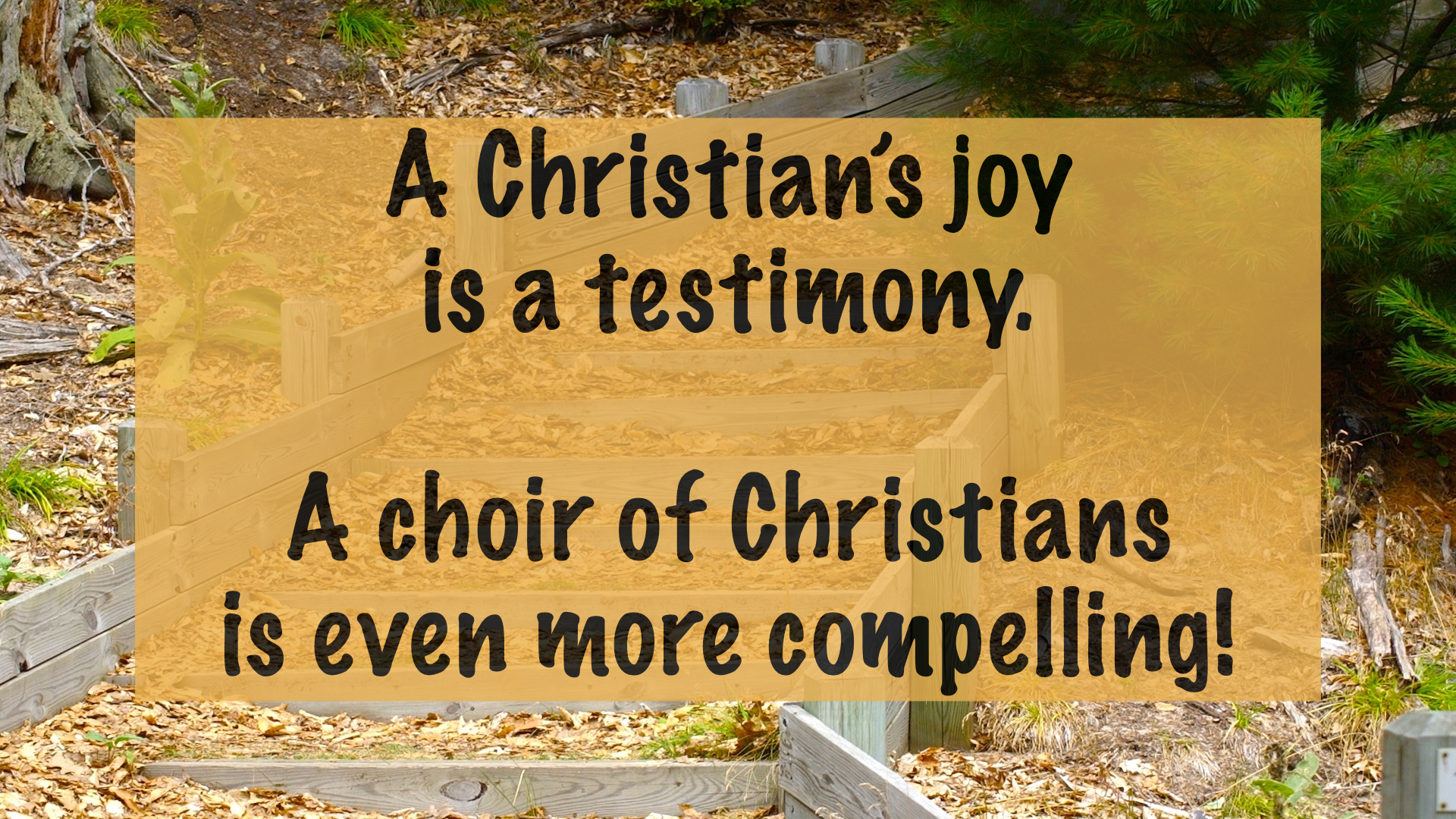
Just as we said last week that a Christian’s joy is a testimony, a choir of Christians is an even more compelling testimony!
David calls this unity “good” which really means so much better than the alternative. And he calls this unity “pleasant.” The Hebrew word literally means singing a sweet sound!
The Hebrew word for “unity” here is also instructive. It means to be together in the same place—not just in spirit and desire—but in physical proximity. This is exactly the picture we see in the first Church (Acts 2:44, 46-47), as well as the picture of the choir from every nation, tribe, people, and language singing around God’s throne in Heaven (Revelation 7:9-10).
In order to navigate all of the differences of personality that could keep us from this unity, we have to work at. We need the attitude of Jesus (Philippians 2:1-5). This requires a daily transformation of our minds (Romans 12:1-3), and this transformed mind is what helps us move from a small ensemble to a majestic choir (Romans 12:4-5, 16-18).
Listen to the podcast of this post by clicking on the player below, and you can also subscribe on Apple, Spotify, or Audible.
We said our protocol in approaching Almighty God in prayer is found in just two words: Our Father.
Notice the transition: your Father (3x in Matthew 6:6, 8) to Our Father (6:9). How does this happen? Jesus makes it possible and the Holy Spirit continually reminds us of Christ’s completed work (Hebrews 2:11; John 14:13-14; Romans 8:15-16).
It’s not just “our Father” but “our Father in Heaven.” Let’s remember that our Father is both All-loving and All-powerful. The phrase in Heaven reminds us of His absolute sovereignty. “Our God is in heaven; He does whatever pleases Him” (Psalm 115:3). What pleases Him? To give us His kingdom (Luke 12:32).
Then there’s another phrase that is vital: Our Father in Heaven, hallowed be Your name.
Hallowed means both to acknowledge His greatness and to keep Him separate from any profane things. What is profane? The dictionary says it is irreverence or contempt for God. The opposite of profane is holiness—something set apart exclusively for God. This is not something better than something else, but something exclusively that will bring glory to our Father in Heaven.
The root word for hallowed is “holy.” We see this literally translated in the name Holy Spirit. It is a word also referring to Jesus when He is called “the Holy One of God” (see Mark 1:24). The angel uses the word twice when he says, “The Holy Spirit will come on you, and the power of the Most High will overshadow you. So the Holy One to be born will be called the Son of God” (Luke 1:35).
And that same word translated hallowed and holy is also translated saints. Literally that means “holy ones” or set apart people.
Jesus is teaching us that our prayer is BOTH an acknowledgment of how God’s name is to be hallowed AND a request that He would empower us to pray and live in ways that makes that happen.
This means our attitude needs to be focused on God’s reputation not my reputation (as in Matthew 6:5, 7:21-23).
We hallow God’s name when our prayer and daily lifestyle bring Him the supreme glory that is due exclusively to His awesome name! When we keep our eyes and hearts on Him, He will provide everything else we need (see Matthew 6:32-33).
To follow along with all of the message in this prayer series called Kingdom Praying, please click here.
Listen to the podcast of this post by clicking on the player below, and you can also subscribe on Apple, Spotify, or Audible.
The apostle Peter said he wrote two letters to the church “as reminders to stimulate you to wholesome thinking” (2 Peter 3:1). And Paul reminded his young friend Timothy to “keep reminding [your congregation] of these things” (2 Timothy 2:14).
In the spirit of those great apostles, I have made it a practice to take time at the end of each year to look back on all that we have learned in the previous year, and then to look forward to where God may be leading Calvary Assembly of God in this upcoming year.
Clicking on each series title will take you to a list of all of the sermons in that series.
Intimate Conversation—The dictionary defines the word “intimate” with these phrases: associated in close personal relations, characterized by warm friendship, and closely personal. These words perfectly describe the relationship God wants to have with His children through prayer. Pete Briscoe said, “Prayer is an intimate conversation with the One who passionately loves you and lives in you.” The One who loves you so passionately desires to walk with you and share intimate knowledge with you. Prayer is not something formal, cold, or mechanical, but it is vibrant, warm, engaging, and life-changing.
A Christian’s Mental Health—I don’t think there is any arguing that Jesus was the healthiest individual who ever walked planet Earth. Some may want to push back with, “Of course He was because He didn’t have any problems to deal with!” But the writer of Hebrews tells us that Jesus experienced everything you and I will ever experience (Hebrews 2:17), so His deity didn’t exclude Him from the stressors that His humanity would have to face. And yet, He handled all of these things successfully. Luke the physician observed the growth of Jesus and tells us that it all began with Jesus having a robust mental health. From that foundation, everything else—physical, spiritual, relational—all could develop properly. We must learn from this example and pay careful attention to our own mental health.
Bold Claims—“That’s a pretty bold claim. Are you prepared to back that up?” I’ll bet you have heard something like that said to you, and maybe you have even said that yourself to someone else who made a big, audacious statement. After Jesus is arrested by the religious leaders—an arrest that will ultimately lead to Jesus being crucified on the Cross—there are some incredibly bold claims spoken by key people in this part of the Story. For the most part, these are claims that we don’t read earlier in any of the Gospels, but as this story is heading toward its most crucial moment, we have these audacious statements pronounced. But here’s the most important part: These bold claims weren’t just made, but they were backed up with proof as well.
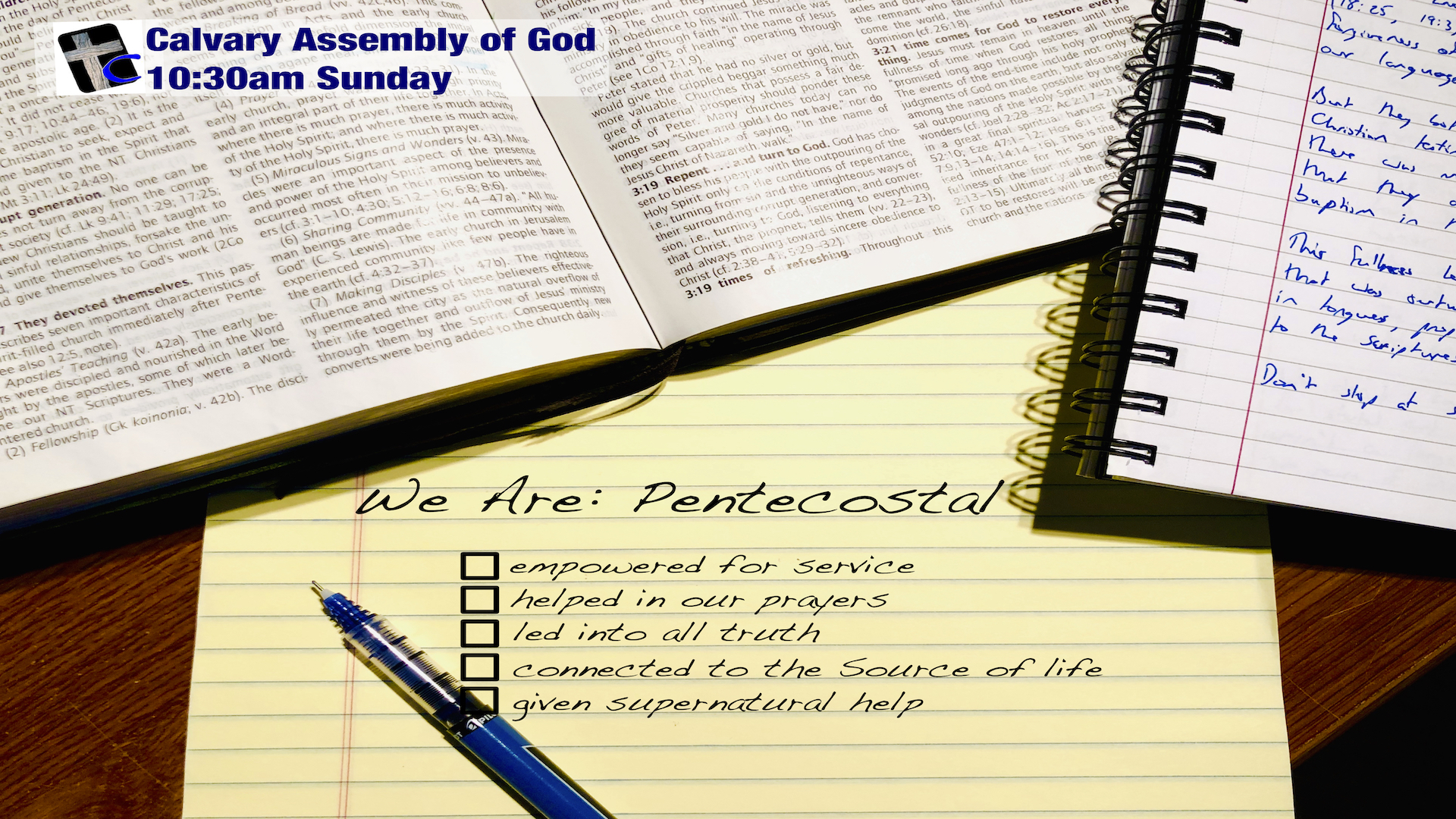
We Are: Pentecostal—Pentecost for over 1500 years was a celebration in Jerusalem that brought in Jews from all over the world. But on the Day of Pentecost that came just ten days after Jesus ascended back into heaven, the meaning of Pentecost was forever changed! Followers of Jesus—now empowered by an infilling of the Holy Spirit—began to take the good news of Jesus all over the world. These Spirit-filled Christians preached the Gospel and won converts to Christ even among hostile crowds, performed miracles and wonders, stood up to pagan priests and persecuting governmental leaders, and established a whole new way of living as Christ-followers. We, too, can be Pentecostal followers of Jesus Christ today.
Ascending—Every year, Jews from around the world made four pilgrimages up to Jerusalem for various feasts and sacrifices. These journeys reminded them of God’s goodness as they went to the Temple to worship, and they helped refocus on God’s ways as they returned to their regular routines. Jerusalem is over 2500 feet above sea level, so the pilgrimage there was a physical workout as well as a spiritual workout. These workouts were beneficial for God’s people, preparing them to minister in their cities in the following months. The Book of Psalms contains 15 songs that these pilgrims would sing to and with each other as they traveled up to Jerusalem. These Psalms of Ascent are still instructive for Christians today.
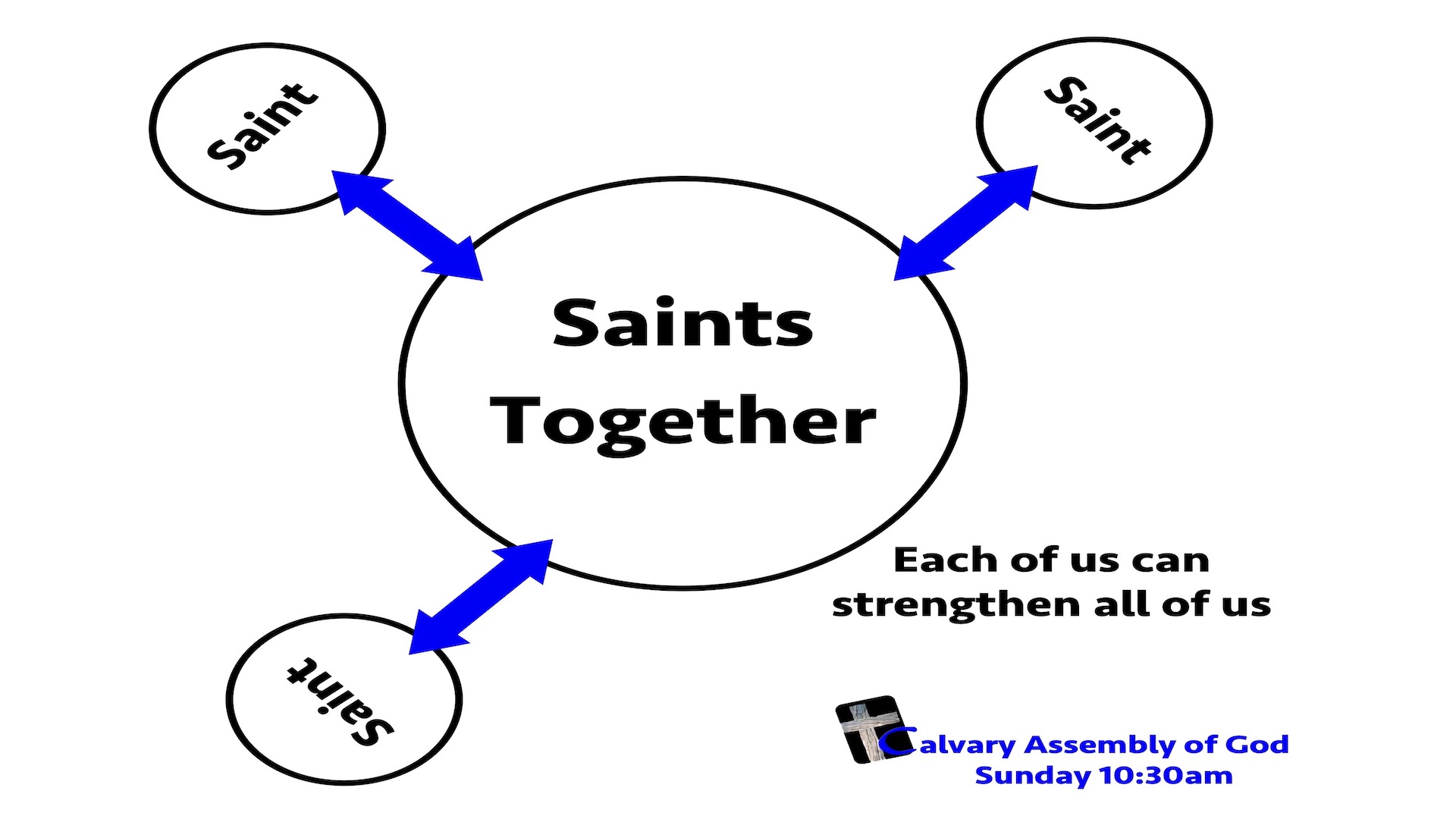
Saints Together—Throughout the New Testament the word “saints” is always in the plural form. This is a clear indication that none of us can develop into the full-fledged Christians we were meant to be on our own. We all need each other. More specifically, we all need the most mature version of each other. A key component of an individual saint’s development is the time spent alone being forged by the discipline of the Holy Spirit. Maturing saints then come together with each other to continue to strengthen and sharpen everyone in the church. Strong individual saints make a strong church, and a strong church makes strong individual saints! Let’s learn about six important spiritual disciplines that each individual saint must put into practice so that they can use their newly developed strengths to help other saints in their own development.
The Great Attitude Of Gratitude—There’s something about gratitude that distinguishes people. Think about it: would you rather hang around with grumblers or grateful people? The gratitude of Paul and Silas certainly made them stand out from the crowd when they were in Philippi. Wrongly accused, beaten, and thrown in prison, but instead of bellyaching, they were praising God. Later on, when Paul wrote his letter to the Christians in Philippi, the theme of gratefulness permeates his letter. The distinguishing mark is actually in the title: The GReat ATTITUDE spells out GRATITUDE!
Long Live The King Of Kings—Throughout human history, whenever a king died, the people would say something like, “The king is dead. Long live the king!” They would say this because the next king ascended to the throne immediately after his predecessor died. Except when a nation had been defeated, the cry, “The king is dead” was unanswered by, “Long live the king!” Israel must have felt like this. After being defeated by Nebuchadnezzar and spending 70 years in exile, it appeared to many that the line of kings was broken. Even after retuning to their homeland, Israel continued to live under the thumb of other powerful nations. And yet, some still clung to the glimmer of the promise God had made about an eternal King sitting on Jerusalem’s throne. The First Advent of Jesus revealed to us in the Gospels reassures us that the promise of an eternal King is true. Jesus came to earth to reveal His majesty to us. The First Advent is so important because it bolsters our faith for the imminent Second Advent when Jesus will return as the King of kings! Christmas is a great time to be reminded that even now we can confidently declare, “Long live the eternal King of kings!”
2024 promises to be an exciting year! If you don’t have a home church in the northern Kent County area, I would love to have you join us!
Listen to the podcast of this post by clicking on the player below, and you can also subscribe on Apple, Spotify, or Audible.
Our sixth spiritual discipline—confession—is at the pinnacle of our growth as maturing saints. That’s because many of the other disciplines will culminate in one saint confessing to another saint. Confession not only keeps us strong as individuals, but it keeps the whole Christian community in a strong, healthy place.
The story has been told about two monks who had woven plenty of baskets to sell in town on market day. On the way to town they devised a strategy where one monk would sell at one end of the market and the other at the opposite end. At the end of the day they would meet at a designated place to go back to the monastery. One monk sold all of his baskets and returned to the meeting place. He waited, and waited, and waited. It wasn’t until the next morning that the second monk appeared.
“I cannot return to the monastery with you,” he told his waiting friend. “I have committed a terrible sin. I was tempted, and I gave into the temptation and committed fornication last night. I have broken my vows to my brothers and to God, so you will have to go back without me.”
The first monk listened to his friend and then answered, “Come, my friend. We will go back to the monastery and repent together.”
He was really saying to his friend, “I can identify, because under the same circumstances I might have done the same thing. Perhaps if I had stayed at your side I could have held you accountable, so I bear mutual responsibility for your stumble.”
The early church is described in terms of togetherness. James, the early leader of the church in Jerusalem, was a part of this togetherness and used it as an important conclusion to his book of instructions to the saints—
Is anyone among you in trouble? Let them pray. Is anyone happy? Let them sing songs of praise. Is anyone among you sick? Let them call the elders of the church to pray over them and anoint them with oil in the name of the Lord. And the prayer offered in faith will make the sick person well; the Lord will raise them up. If they have sinned, they will be forgiven. Therefore confess your sins to each other and pray for each other so that you may be healed.… My brothers and sisters, if one of you should wander from the truth and someone should bring that person back, remember this: Whoever turns a sinner from the error of their way will save them from death and cover over a multitude of sins. (James 5:13-16, 19-20)
James wants the saints to be together in prayer, together in worship, together in confession, and together in rescuing their fellow brothers and sisters. The word he uses for “confession” means an out-loud profession or agreement. When he says, “confess your sins” he uses a word that means a deviation from a standard, or a falling short of God’s word.
James sees this ongoing confession as a preventative to “a multitude of sins.” In this instance, the word he uses is an outright violation of God’s laws. In other words, the small deviations can add up to something deadly.
Paul uses a similar idea when he writes, “Let us purify ourselves” (2 Corinthians 7:1). The implication again is that we are confessing both individually and corporately. I can be a huge blessing to my brothers and sisters by going first in confession (Matthew 7:1-5).
In each of our previous five spiritual disciplines I’ve shared a “so that” statement to help us keep perspective of why we need to employ those disciplines. For confession, here’s our focal point: I confess to other saints so thatwe can be mutually accountable in our growth toward purity and maturity.
Confession is good for us individually and corporately, so let’s continue to use this to strengthen everyone.




 “Saints” is always plural in the Bible. That means we always need to be looking out for our brothers and sisters in Christ. I love the words James uses to close his letter to the saints.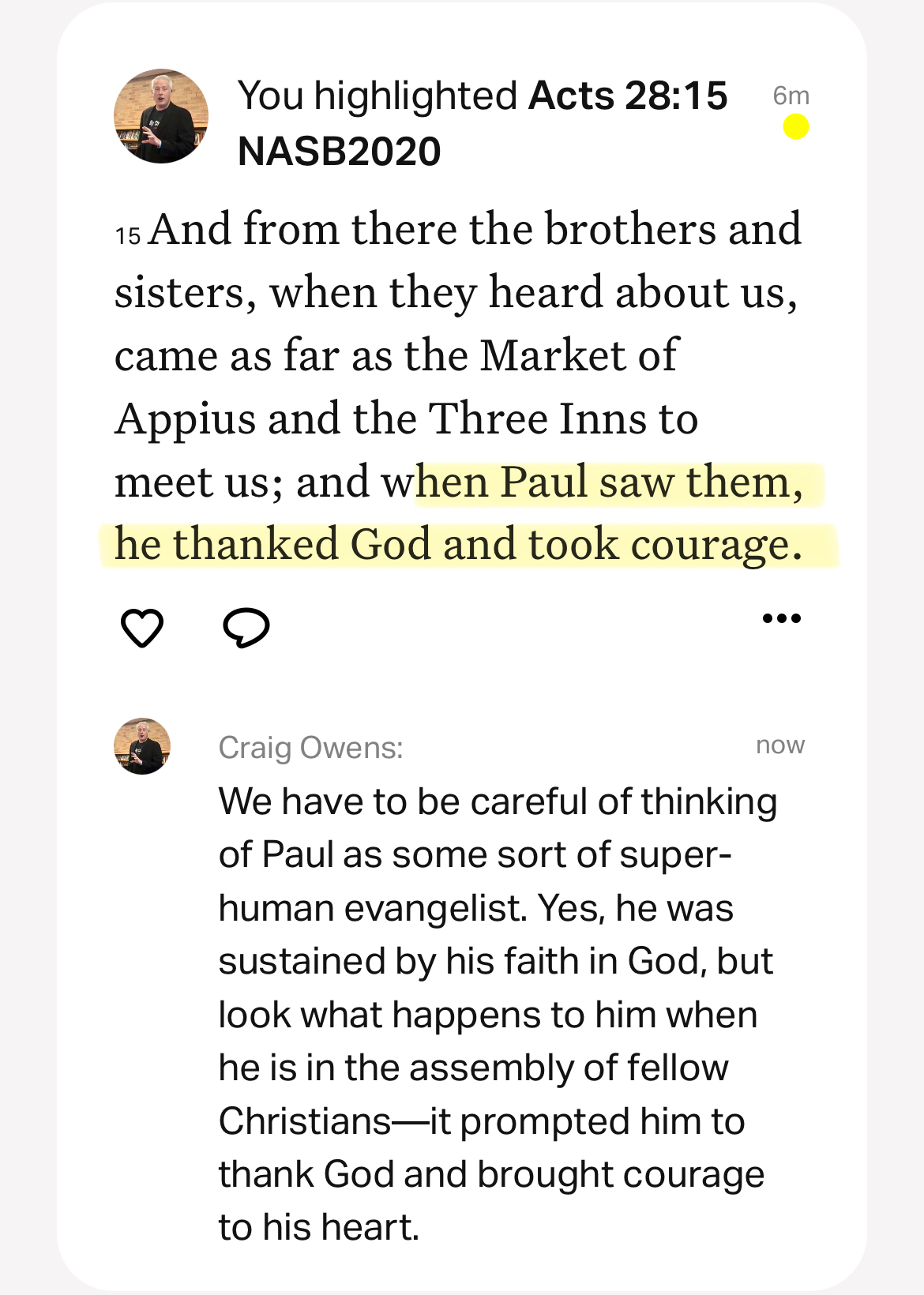










 Craig T. Owens