Listen to the podcast of this post by clicking on the player below, and you can also subscribe on Apple, Spotify, or Audible. Check out the video content in this post by clicking here.
If you are reading the Gospels with the words of Jesus printed in red, there is one place where the red ink virtually disappears: When Jesus is on trial before Pilate, Herod, and the Sanhedrin. There’s an important lesson here for us.
Listen to the podcast of this post by clicking on the player below, and you can also subscribe on Apple, Spotify, or Audible.
Last week we talked about biblical beliefs carrying more weight that non-biblical or extra-biblical beliefs. Christians must stand firm on God’s Word to give biblical meaning to everything we say and do, otherwise we lose the true meaning of essential terms like Church and Christian. That means there are words we need to let go, and there is the Word for which we must stand without wavering or backing down.
Have you heard people make the “They say” claim? “Well, they say you said…,” “They say that Christians are…,” or “They say that Jesus said or did…” It’s always a good idea to get to the source of these statements.
This is what Jesus did in Matthew 16:13-14. Jesus asked His followers about the “they say” claims they had heard, especially in light of what Jesus had already addressed in Matthew 11:18-19.
Matthew 16:15 is a great question to ask others: What do you think of Jesus? By asking this question and truly listening to the answer, you may just be able to uncover some non-biblical “they say” thinking that you can help correct.
But this verse is also a great question for us to ask of ourselves! Why? Because there is a huge difference between a verbal confession and a lifestyle confession. Look at vv. 16-23 to see the difference between Peter’s verbal confession in verse 16 and his lifestyle confession in verse 22.
John may have had this exchange in mind when he wrote 1 John 1:5-10. Notice John’s contrast between the verbal confession (“If we claim”) and our lifestyle confession. Listen: Demons can make a verbal confession (Luke 4:41) but they will be confined in Hell for eternity (Matthew 25:41). In the same way, religious people can make a verbal confession and walk out a completely opposite lifestyle confession (Matthew 7:21-23).
A lifestyle confession can either amplify or cancel a verbal confession.
Jesus loved Peter’s verbal confession, but then He gave us a lifestyle confession in Matthew 16:24-28.
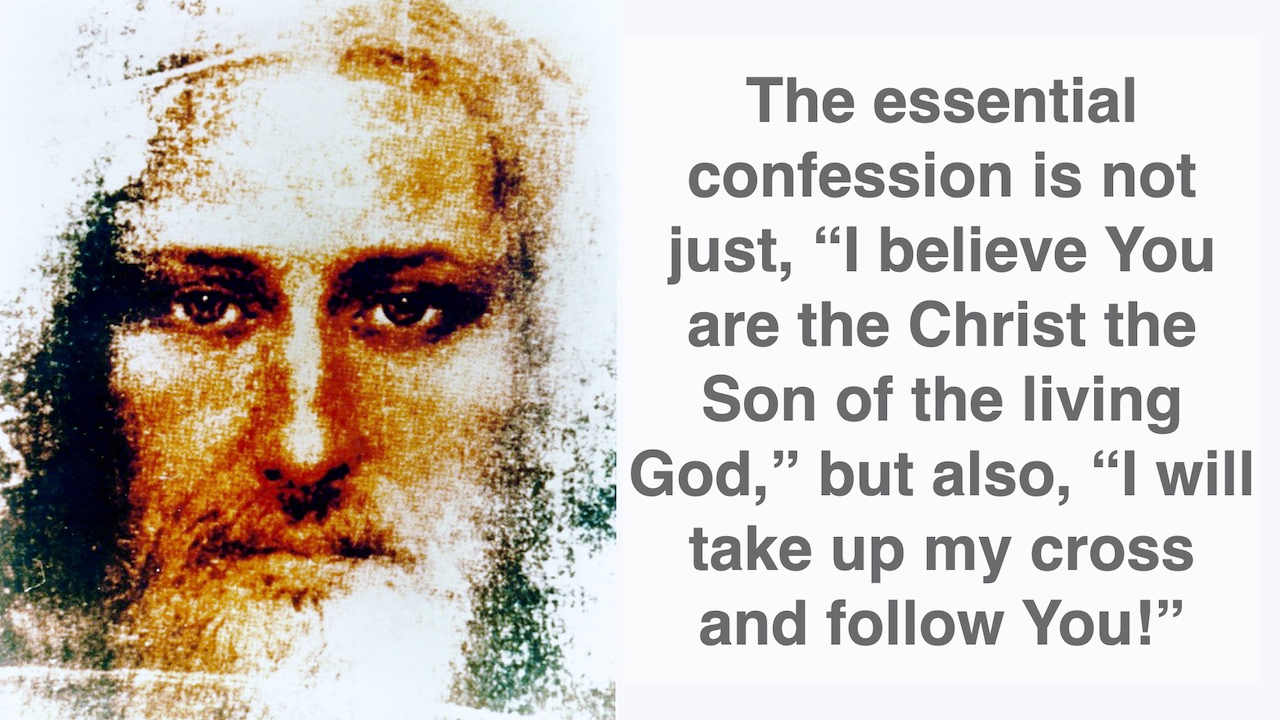
The essential confession is not just, “I believe You are the Christ the Son of the living God,” but also, “I will take up my cross and follow You!”
We lose our life when we live for Jesus’ words (“I will build My Church”) and not living for “they say” words. As Brennan Manning sad, “The greatest single cause of atheism in the world today is Christians: who acknowledge Jesus with their lips, walk out the door, and deny Him by their lifestyle. That is what an unbelieving world simply finds unbelievable.”
So let’s ask others, “What do you think of Jesus?” But let’s also ask ourselves that question. Let’s make sure that our verbal confession is being amplified by our lifestyle confession. Ask the Holy Spirit to search your vocabulary and your lifestyle. A great prayer for this is in Psalm 139:23-24.
If you’ve missed any of the messages in our series “I Will Build My Church”, you can find them all here.
Psychologists call it “projection” when I see so quickly in others what’s really in myself.
If I see sin in others, my first response would be to hit my knees and ask the Holy Spirit to search me to point out the same sin in myself.
It’s only after confessing my sin and receiving God’s complete forgiveness that I am equipped with the empathy and mercy to help someone else find the same freedom I have found.
Lord, may I be more sensitive to the sin in my life than I am aware of the sin in the world.
Unhappy Christians rob God of glory because unhappy Christians don’t point people to God. Grateful Christians are happy and satisfied in God. Let your smile be your testimony of an all-good God.
Summer break is upon us! Jean Holthaus writes, “During the school year, your child’s entire day is structured. This can leave you feeling the need to schedule every minute of the summer as well … and quickly becoming overwhelmed by both the cost and logistics of trying to do so.” Check out Jean’s tips.
“Comradeship and serious joy are not interludes in our travel; but that rather our travels are interludes in comradeship and joy, which through God shall endure for ever.” —G.K. Chesterton
A neuroscientist explains how our left and right brain hear language differently, and how early childhood experiences can impact the way we hear and process language for the rest of our life.
“Does Christianity encourage morbid introspection? The alternative is much more morbid. Those who do not think about their own sins make up for it by thinking incessantly about the sins of others. It is healthier to think of one’s own. It is the reverse of morbid. It is not even, in the long run, very gloomy. A serious attempt to repent and really to know one’s own sins is in the long run a lightening and relieving process.” —C.S. Lewis
Listen to the podcast of this post by clicking on the player below, and you can also subscribe on Apple, Spotify, or Audible.
Although some people are afraid of this, the Bible makes it clear that God doesn’t forsake us. But the Bible also makes it equally as clear that we can forsake God.
Listen to the words God spoke through Moses—
And the Lord said to Moses, “Behold, you shall sleep with your fathers, and this people will rise up and play the harlot after the strange gods of the land where they go to be among them; and they will forsake Me and break My covenant which I have made with them. Then My anger will be kindled against them in that day, and I will forsake them and hide My face from them. And they shall be devoured, and many evils and troubles shall befall them, so that they will say in that day, ‘Have not these evils come upon us because our God is not among us?’ And I will surely hide My face in that day because of all the evil which they have done in turning to other gods.” (Deuteronomy 31:16-18 AMPC)
To forsake means to depart from someone or to neglect them.
While we are following God, He will never forsake us. But when His people turn aside in fascination of sinful things, they forsake God by no longer following Him. We read this in the words of God’s people, “Our God is not among us.”
When we don’t follow God, He still never forsakes us. However, God refuses to bless people who persist on doing their own thing.
When we forsake God, we cut ourselves off from His life flow. It is not the Vine who has left us, but we who have severed ourselves from the Vine.
If God feels distant from you, be assured that He hasn’t forsaken you. Perhaps you could pray a couple of prayers that David prayed. Maybe a prayer asking for the Holy Spirit to reveal to you where you may have detached yourself from the Vine of God (Psalm 139:23-24). Or perhaps a prayer of forgiveness and assurance of God’s forgiveness and restoration (Psalm 51:1-10).
Don’t give into the feelings of despair, but run back into the embrace of the One who loves you—the One who never leaves you nor forsakes you:
Be strong, courageous, and firm; fear not nor be in terror before them, for it is the Lord your God Who goes with you; He will not fail you or forsake you. (Deuteronomy 31:6)
Remember not the sins (the lapses and frailties) of my youth or my transgressions; according to Your mercy and steadfast love remember me, for Your goodness’ sake, O Lord. … The troubles of my heart are multiplied; bring me out of my distresses. Behold my affliction and my pain and forgive all my sins of thinking and doing. Consider my enemies, for they abound; they hate me with cruel hatred. (Psalm 25:7, 17-19 AMPC)
In this prayer, it appears that David’s enemies are his own accusing thoughts brought on by his sinfulness.
The way to vanquish the internal enemies that accuse and torment us is to bring our “sins of thinking and doing” into the light of our Savior’s presence—only there will we be freed from those enemies.
Listen to the podcast of this post by clicking on the player below, and you can also subscribe on Apple, Spotify, or Audible.
Last week I shared this thought with you from Pastor Tim Keller: “Your prayer must be firmly connected to and grounded in your reading of the Word. This wedding of Bible and prayer anchors your life down in the real God. … Without immersion in God’s words, our prayers may not be merely limited and shallow but also untethered from reality.”
“Untethered from reality” means that we determine the manner in which we come to God in prayer, the way prayer works, and the way God must respond to our prayer. But what we read in the Bible is the opposite of this (Isaiah 1:11-15).
I think there are two opposite and equal erroneous thoughts about how we approach prayer:
I’m not worthy to come into the presence of an all-holy God
I can waltz right into God’s presence whenever and however I please
Both are wrong and both are strategies the devil has used to keep us prayerless. Either we don’t go to God at all or our prayers are unheard because the Bible says that our arrogance has made our prayer ineffectual.
Our Prayer Book—the Bible—helps us find the balance. George Whitefield noted, “Reading the Bible is a good preparative for prayer, as prayer is an excellent means to render reading effectual.” So here’s what we read about those two errors.
I’m not worthy. God is unapproachable in His holiness, but Jesus has made it possible for us to enter in through His righteousness (1 Timothy 6:15-16; Isaiah 6:1-5; Hebrews 4:1, 14, 16; John 16:23-24).
I can come anyway I want to. Passages like Psalm 15:1-5 and Isaiah 58:2-4 make it clear that we cannot simply approach God in a way of our choosing.
Let’s unpack that second error a little more. We have to be clothed in righteousness in order to come into God’s presence, but we cannot be clothed in a righteousness that is apart from Jesus. When we say that we are praying in the name of Jesus, it means we are praying in the nature of Jesus and through the righteousness of Jesus. We must be wearing His righteous robe (Romans 3:22-24; Isaiah 61:10).
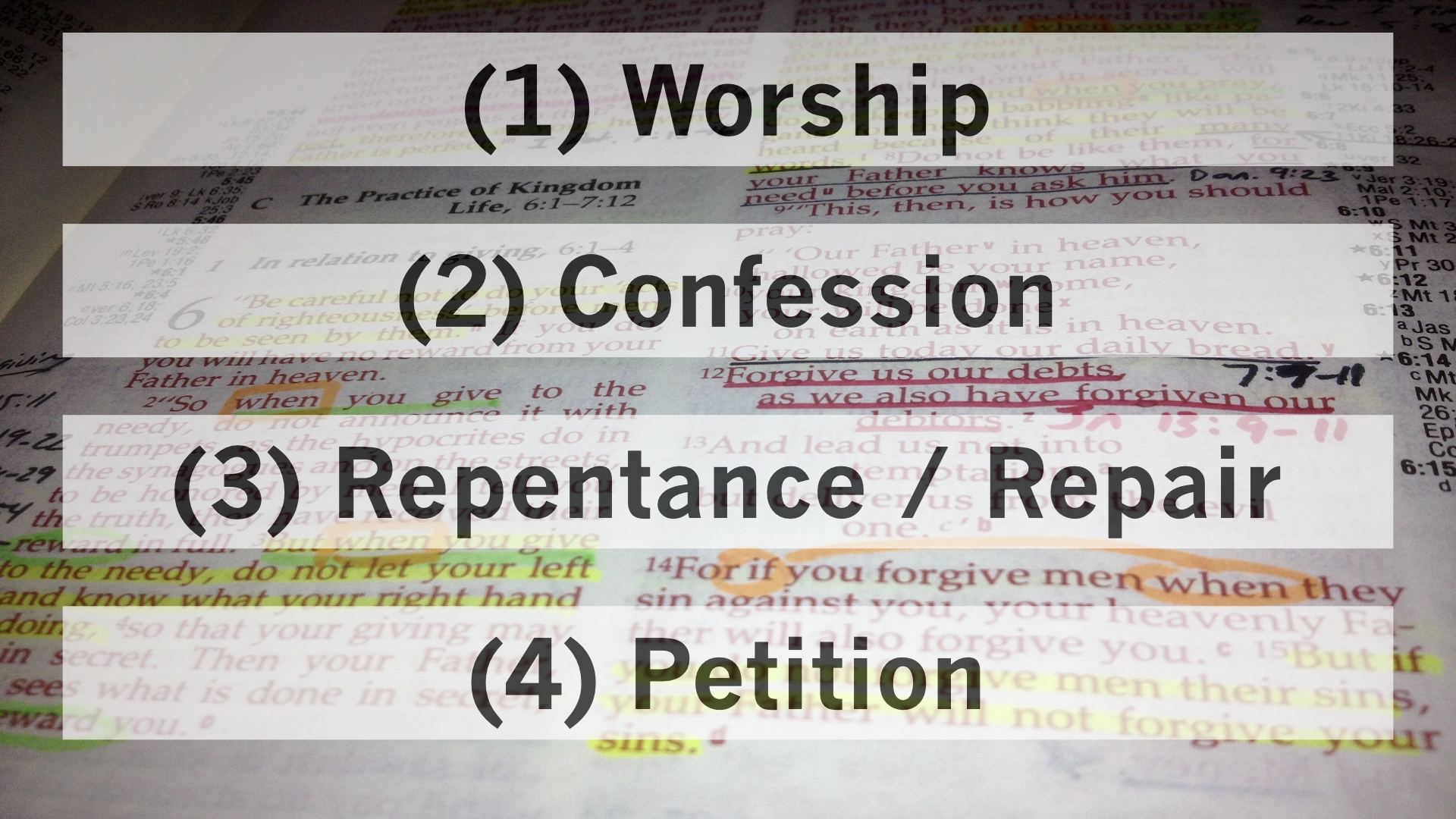
So I think we need to pray before we pray. Let’s try these actions which are tethered to the reality of our Prayer Book.
Worship. This is a deep pondering of who God is; it is humbly assigning Him the highest worth. In face, the Old English spelling of this word (“worthship”) gives us insight into what worship does. It is this kind of humility that God responds to (Isaiah 6:5-7; 57:15; Luke 18:9-14).
Confession. As we are worshiping, we will see our inadequacies (much like Isaiah did in Isaiah 6, or the tax collector did in Luke 18). We then need to confession these shortcomings. Dick Brogden wrote, “Confessed sin opens the portals of heaven into our darkness, and light and glory overwhelm shame. Confession is our glory for it lifts our heads and eradicates shame.” We see this so vividly lived out in the prayers of David (Psalm 139:23-24; 51:1-2; 19:12-14).
Repentance. I think we could also call this Repair. After confession where we have fallen short, we resolve now to both take a different path and repair what was damaged (Matthew 5:23-24; Mark 11:25-26; 1 Peter 3:7).
Petition. After worship, confession, and repentance / repair, our heart’s attitude is now in the place for God to heed our cries for His help (1 Peter 3:12).
Let’s learn to pray before we pray. Don’t just rush in and rush out of God’s presence. Take time to worship, confession any sins the Holy Spirit reveals, make things right, and then present your petitions.
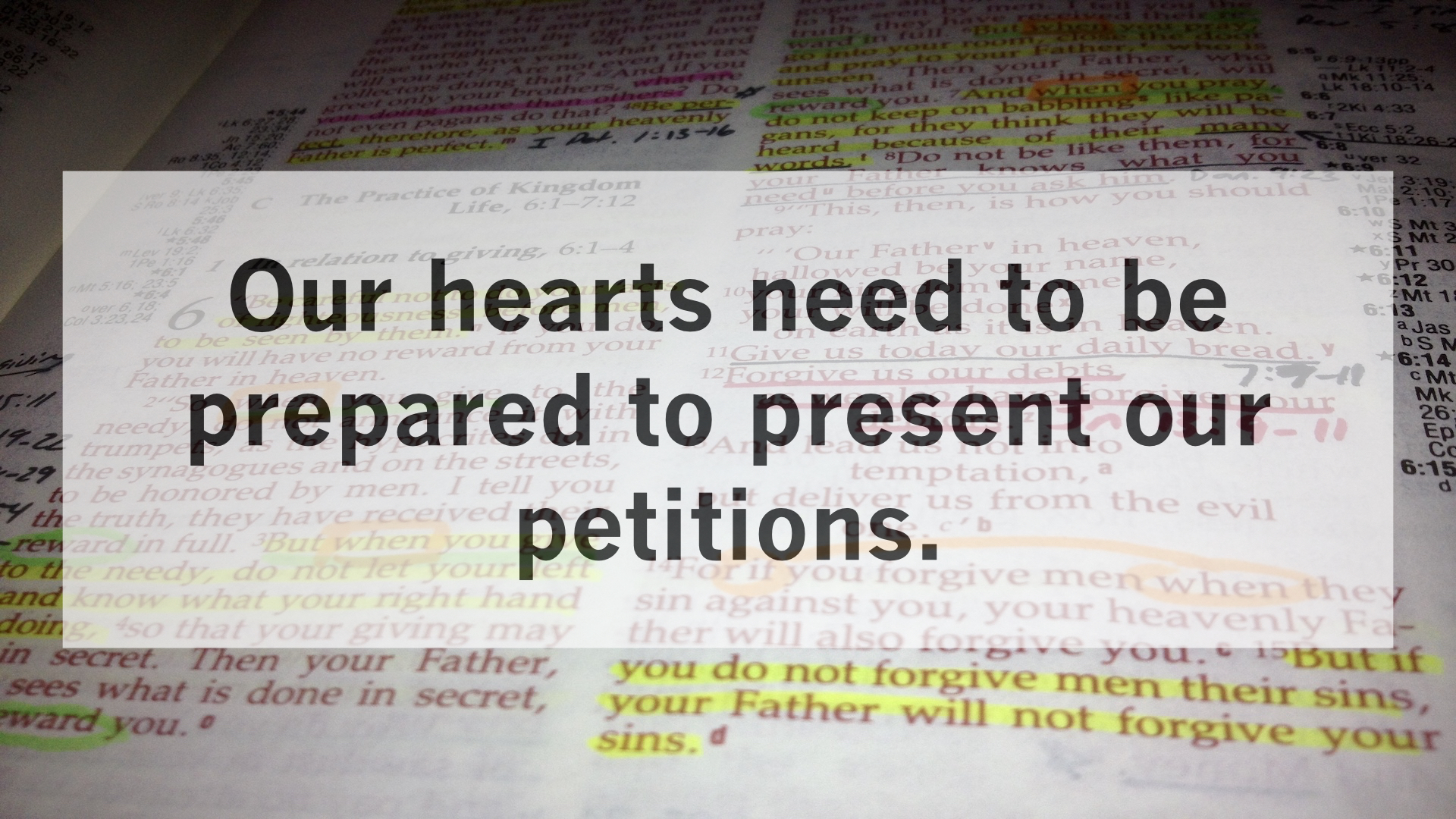
Our hearts need to be prepared to present our petitions. This is how we know that God will hear our voice.
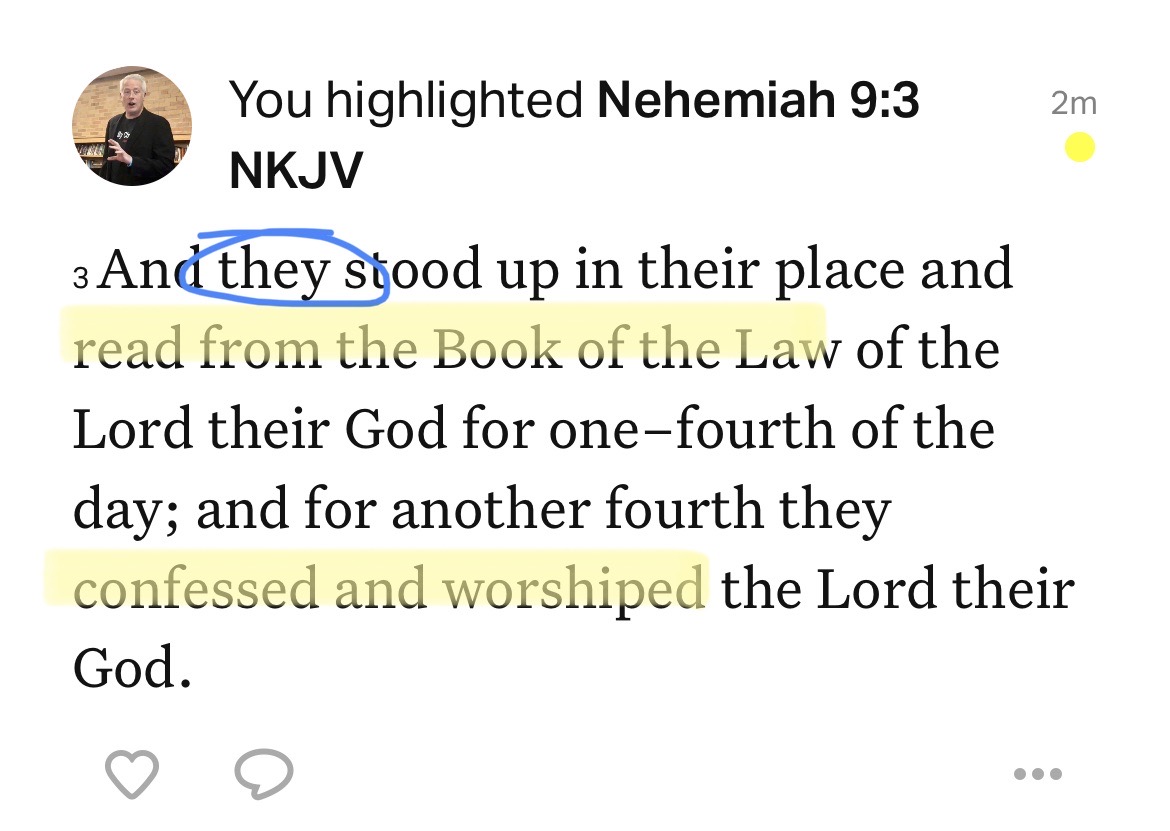
And they stood up in their place and read from the Book of the Law of the Lord their God for one-fourth of the day; and for another fourth they confessed and worshiped the Lord their God. (Nehemiah 9:3)
I have three takeaways from this verse—
(1) When we read God’s Word, the Holy Spirit illuminates it to us. Confession and worship should be normal responses to the Word and the Spirit.
I like the bridge in the song I Keep Falling In Love With Him—
When I first fell in love with Jesus, I gave Him all my heart And I thought I couldn’t love him more than I did right at the start. But now I look back over the mountains, and the valleys where I’ve been And It makes me know I love Him so much more than I did then
Out of the depths—Think how far we’ve come on this climb. In the first Song of Ascent, we were experiencing the woes of being in the valley (Psalm 120:5-7). But now in this song, the feelings of being in the depths are not from someone else’s sinful activity.
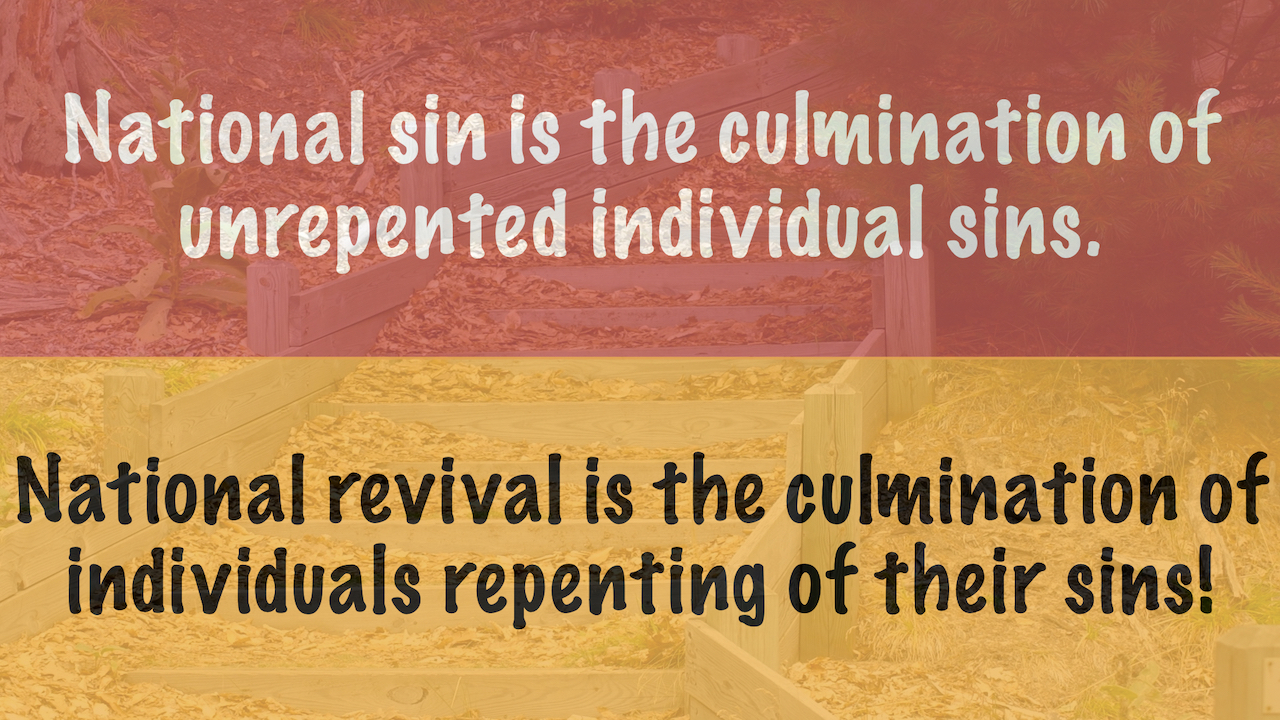
The psalmist is pointing out that national sin is the culmination of unrepented individual sins. God addressed this in Leviticus 20:22—Keep all My decrees and laws and follow them, so that the land where I am bringing you to live may not vomit you out.
Even in these depths, the psalmist is confident that God will hear—let Your ears be attentive (v. 2). Nehemiah was confident too. Look how he joins his personal sin to the national sin after Israel had be vomited out of the land (Nehemiah 1:1-7).
Our confidence comes from the rock-solid assurance that God completely forgives our sins and then forgets all that He forgives (vv. 2-3; Psalm 103:10-12).
The middle verses (vv. 5-6) have the key words wait, watch, and hope. This middle part comes down to: (1) What I’m going to pay attention to, and (2) What God pays attention to.
God is attentive to our cries for mercy, and He is watchful for our care, not for our punishment!
We are called to wait and watch in hope because God has proven that He is all in for us. Look at this completeness:
full forgiveness (v. 3)
unfailing love (v. 7a)
full redemption (v. 7b)
all their sins (v. 8)
Notice in v. 7 the phrase “all THEIR sins” is now corporate (not singular, personal as in the opening verses).
We’ve gone FROMmy voice, my cryTOyour hope, O Israel and redemption of their sins.
If national sin is the culmination of unrepented individual sins, then national revival is the culmination of individuals repenting of their sins!
Listen to the podcast of this post by clicking on the player below, and you can also subscribe on Apple, Spotify, or Audible.
Our sixth spiritual discipline—confession—is at the pinnacle of our growth as maturing saints. That’s because many of the other disciplines will culminate in one saint confessing to another saint. Confession not only keeps us strong as individuals, but it keeps the whole Christian community in a strong, healthy place.
The story has been told about two monks who had woven plenty of baskets to sell in town on market day. On the way to town they devised a strategy where one monk would sell at one end of the market and the other at the opposite end. At the end of the day they would meet at a designated place to go back to the monastery. One monk sold all of his baskets and returned to the meeting place. He waited, and waited, and waited. It wasn’t until the next morning that the second monk appeared.
“I cannot return to the monastery with you,” he told his waiting friend. “I have committed a terrible sin. I was tempted, and I gave into the temptation and committed fornication last night. I have broken my vows to my brothers and to God, so you will have to go back without me.”
The first monk listened to his friend and then answered, “Come, my friend. We will go back to the monastery and repent together.”
He was really saying to his friend, “I can identify, because under the same circumstances I might have done the same thing. Perhaps if I had stayed at your side I could have held you accountable, so I bear mutual responsibility for your stumble.”
The early church is described in terms of togetherness. James, the early leader of the church in Jerusalem, was a part of this togetherness and used it as an important conclusion to his book of instructions to the saints—
Is anyone among you in trouble? Let them pray. Is anyone happy? Let them sing songs of praise. Is anyone among you sick? Let them call the elders of the church to pray over them and anoint them with oil in the name of the Lord. And the prayer offered in faith will make the sick person well; the Lord will raise them up. If they have sinned, they will be forgiven. Therefore confess your sins to each other and pray for each other so that you may be healed.… My brothers and sisters, if one of you should wander from the truth and someone should bring that person back, remember this: Whoever turns a sinner from the error of their way will save them from death and cover over a multitude of sins. (James 5:13-16, 19-20)
James wants the saints to be together in prayer, together in worship, together in confession, and together in rescuing their fellow brothers and sisters. The word he uses for “confession” means an out-loud profession or agreement. When he says, “confess your sins” he uses a word that means a deviation from a standard, or a falling short of God’s word.
James sees this ongoing confession as a preventative to “a multitude of sins.” In this instance, the word he uses is an outright violation of God’s laws. In other words, the small deviations can add up to something deadly.
Paul uses a similar idea when he writes, “Let us purify ourselves” (2 Corinthians 7:1). The implication again is that we are confessing both individually and corporately. I can be a huge blessing to my brothers and sisters by going first in confession (Matthew 7:1-5).
In each of our previous five spiritual disciplines I’ve shared a “so that” statement to help us keep perspective of why we need to employ those disciplines. For confession, here’s our focal point: I confess to other saints so thatwe can be mutually accountable in our growth toward purity and maturity.
Confession is good for us individually and corporately, so let’s continue to use this to strengthen everyone.






![Joshua 3.5 and Psalm 19.12 [commentary]](https://i0.wp.com/craigtowens.com/wp-content/uploads/2025/08/joshua-3.5-and-psalm-19.12-commentary.jpg?w=386&h=386&crop=1&ssl=1 "Joshua 3.5 and Psalm 19.12 [commentary]")