And a voice came from the throne, saying, “Give praise to our God, all you His bond-servants, you who fear Him, the small and the great.” Then I heard something like the voice of a great multitude and like the sound of many waters, and like the sound of mighty peals of thunder, saying, “Hallelujah! For the Lord our God, the Almighty, reigns.” (Revelation 19:5-6)
What a song of praise is raised in Heaven!
You can join that heavenly choir every day when your life (and words) express your firm belief that your God is sovereign and you are His servant. That means your life lifts a mighty “Hallelujah!” when you live like this: “Not my will but Yours! May Your will be done on earth as it is in Heaven. Not to me, but may all of the glory and honor go to You!”
Listen to the podcast of this post by clicking on the player below, and you can also subscribe on Apple, Spotify, or Audible.
We lit the candle of Hope last week and today we light the candle of Peace.As we saw, hope is what allows us to experience peace and joy: “May the God of hope fill you with all joy and peace as you trust in Him, so that you may overflow with hope by the power of the Holy Spirit” (Romans 15:13).
But notice the phrase “as you trust in Him” in that verse. Peace doesn’t come just because we want it to, but it only comes as we trust in the One called the Prince of Peace.
Light drives out darkness and exposes sin, and often people don’t like it (John 1:9-11). In fact, Jesus Himself said that He was first coming with a sword to do battle against all of the things that rob us of lasting peace (Matthew 10:34).
Oswald Chambers described it this way, “The coming of Jesus Christ is not a peaceful thing; it is overwhelmingly and frantically disturbing, because the first thing He does is to destroy every peace that is not based on a personal relationship to Himself.”
Peace is only possible when the war is over. Modern-day diplomats use a phrase “sue for peace,” but this can only be done when one side admits defeat. God is at war with sin and He only gives peace to those who throw up their hands in total surrender to Him (Isaiah 57:14-21).
Jesus said He was the Light of the world and the only way to peace with the Father. The apostle Paul elaborates on that idea—
Remember that at that time you were separate from Christ, excluded from citizenship in Israel andforeigners to the covenants of the promise, without hope and without God in the world. But now in Christ Jesus you who once were far away have been brought near by the blood of Christ. For He Himself is our peace, who has made the two groups one and has destroyed the barrier, the dividing wall of hostility, by setting aside in His flesh the law with its commands and regulations. His purpose was to create in Himself one new humanity out of the two, thus making peace, and in one body to reconcile both of them to God through the Cross, by which He put to death their hostility. He came and preached peace to you who were far away and peace to those who were near. For through Him we both have access to the Father by one Spirit. Consequently, you are no longer foreigners and strangers, but fellow citizens with God’s people and also members of His household. (Ephesians 2:12-19)
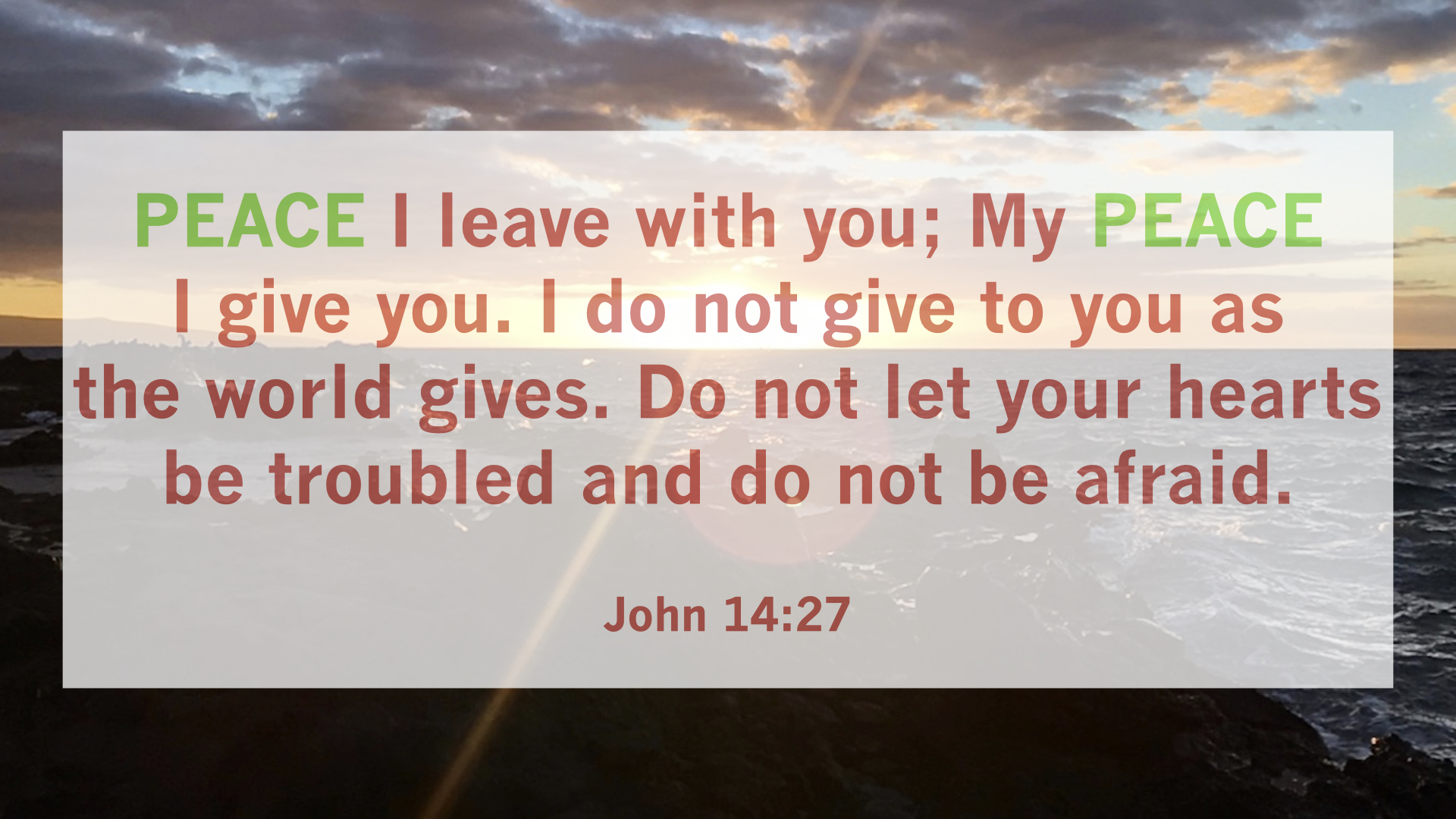
That’s what Jesus provided for us at His First Advent. Now, as we live between the Advents of Jesus, we can expect to have trouble in the world, but never peacelessness (John 14:27, 16:33).
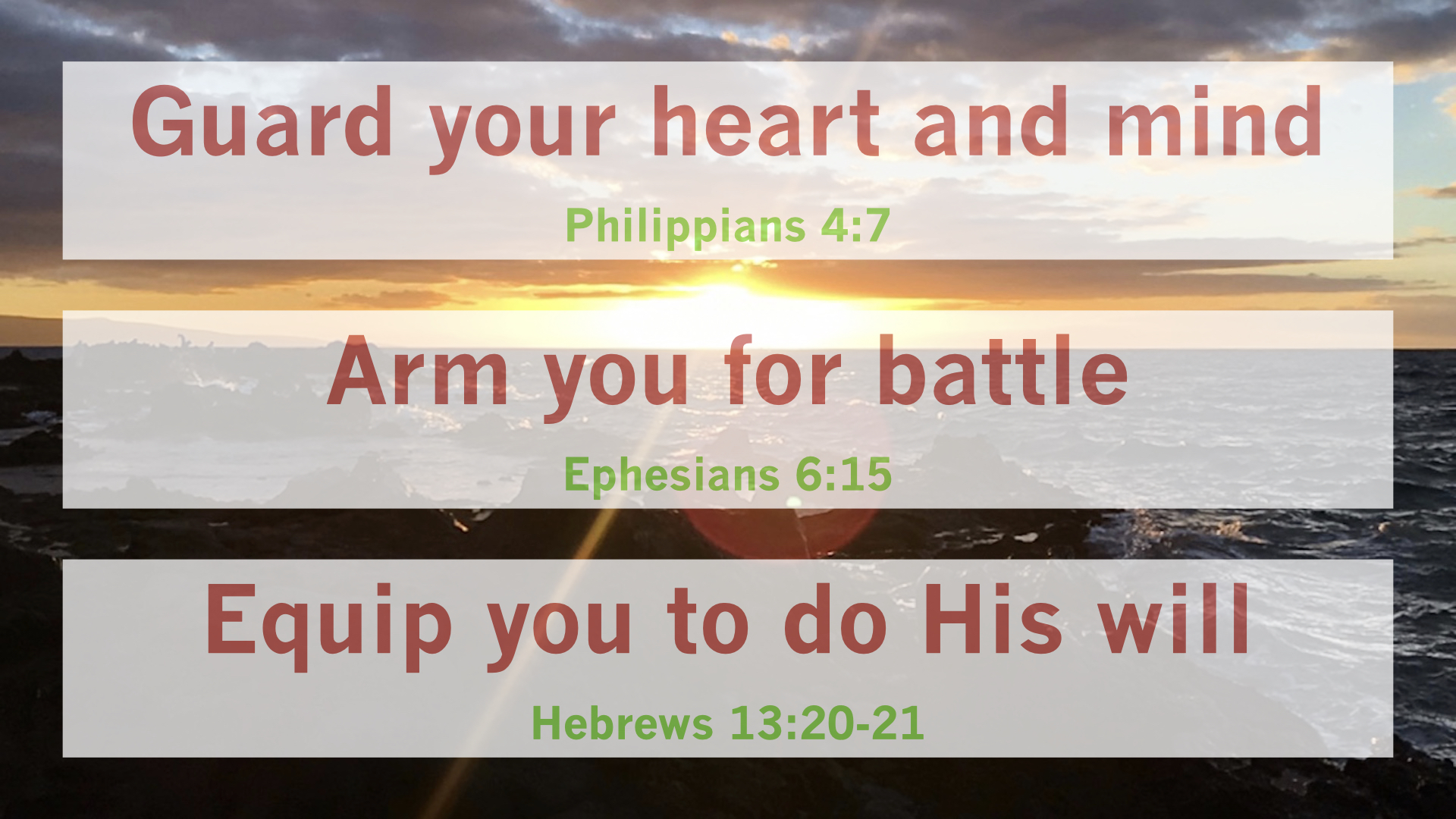
The Messiah’s peace will:
Guard your heart and mind—Philippians 4:7
Arm your for battle against the enemy—Ephesians 6:15
Equip you to do His will—Hebrews 13:20-21
As our hearts are guarded, we are prepared to stand firm in spiritual battle, and we are equipped to do God’s will, we can live in peace concerning Christ’s Second Advent.
Jesus will appear again to fulfill one of the first promises made about the peace He would bring. God told satan that Jesus would crush his head, and then Paul tells us, “The God of peace will soon crush satan under your feet” (Genesis 3:15, Romans 16:20)!
So we have no fear of Death or Hell because the Prince of Peace has forever defeated those things for those who “trust in Him” (Revelation 20:10, 14; 21:1-5).
Listen to the podcast of this post by clicking on the player below, and you can also subscribe on Apple, Spotify, or Audible.
The word Advent means the appearing—something that bursts onto the scene. At this time of year we are actually thinking about TWO Advents. We look backward in gratitude to celebrate the first Advent of Jesus when He was born in a manger in Bethlehem. And then we look forward in joyful expectation to the second Advent of Jesus when He will return to earth again as King of kings. As we will in this time between the Advents, there are four qualities that we should exemplify—the first is hope.
When the candle is lit, darkness disappears.
Darkness is not the opposite of light, it is the absence of light. In the same way, despair or hopelessness is the absence of hope.
Adam and Eve lived in perfection, but when they tried to do things their way—instead of obeying God’s way—their sin caused them despair. They tried to cover their nakedness, but with a hopeless covering of dying leaves. God came with a promise of full restoration, and illustrated it by covering them with the skin of a sacrificial animal (Genesis 3:7, 15, 21).
Job knew the hopelessness of self-covering and finality of earthly life, and even David—the man after God’s own heart knew this too (Job 6:11-13, 17:13-16; 1 Chronicles 29:15).
But Job and David both knew the hope they could have in their Redeemer (Job 19:25; Psalm 16).
Hope in both the Old and the New Testaments means a patient waiting, anticipating with pleasure, having a confident expectation. It’s a light shining in the darkness that cannot be extinguished—it’s hope that despair cannot darken (Isaiah 9:1-2, 6-7).
At His first Advent, Jesus appeared in our “clothing” so that He could become our sin and then clothe us in His righteousness (Hebrews 2:17; John 1:14; Romans 4:6-8; Hebrews 6:16-20). For this we look back in gratitude.
But we don’t live today merely in gratitude for Christ’s first Advent, but we also live in confident hope of Christ’s second Advent (Acts 1:11; John 14:1-3; 2 Corinthians 5:1-8; Revelation 22:7, 12, 20).
He came into this world of sin,
Made flesh and blood His dearest kin;
He died, that He might take us in,
And keep us till He comes again. —Scott Hubbard
How do we live out this confident hope—
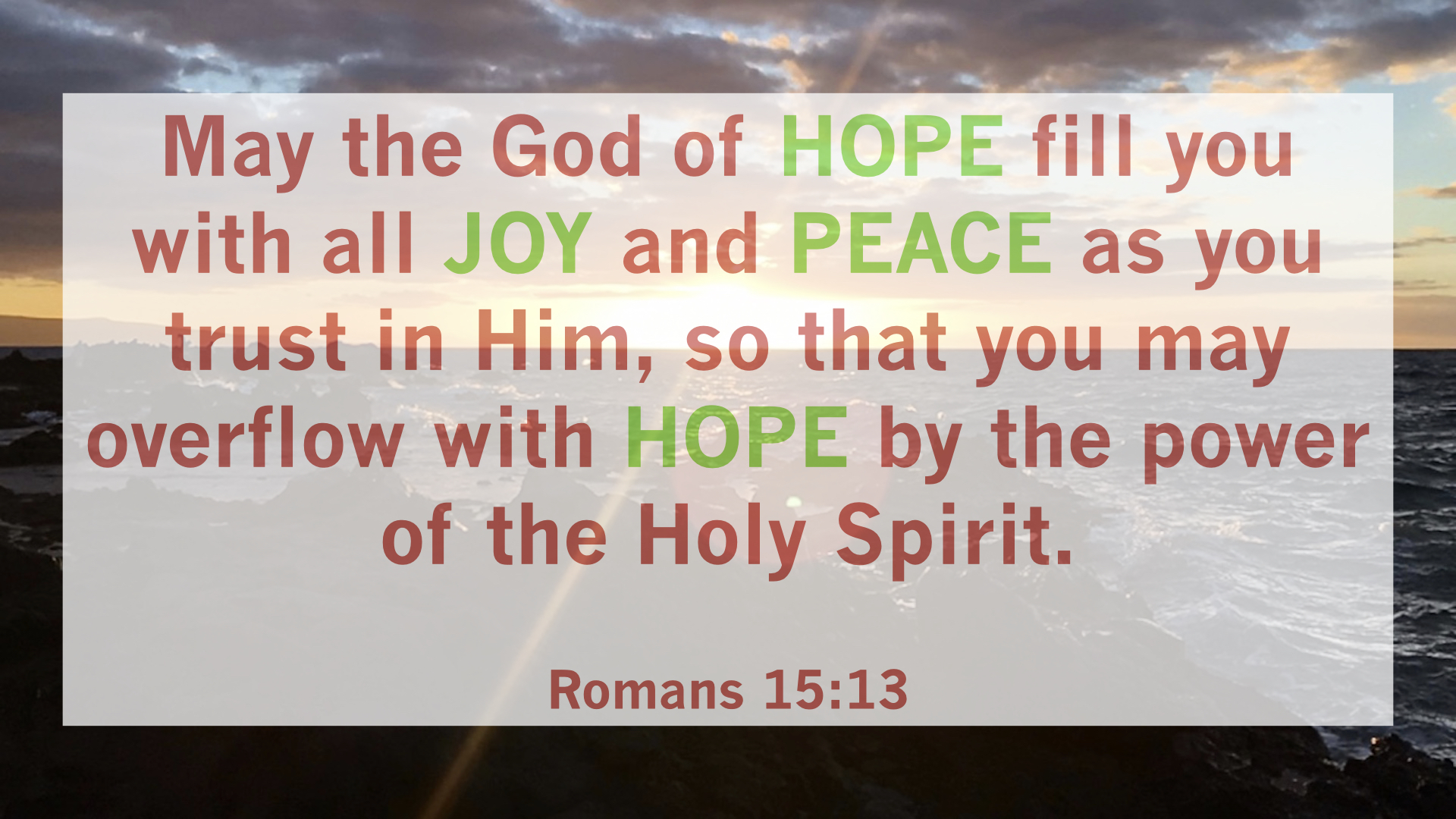
May the God of HOPE fill you with all JOY and PEACE as you trust in Him, so that you may overflow with HOPE by the power of the Holy Spirit. (Romans 15:13)
Follow along with all four of the Advent attributes by clicking here.
Listen to the podcast of this post by clicking on the player below, and you can also subscribe on Apple, Spotify, or Audible.
We as a Church are underperforming. How do I know this? Look at the way the world treats Christians; specifically, look at what’s NOT happening.
“By this all will know that you are My disciples, if you have love for one another” (John 13:35). Jesus said this right after He served His disciples by washing their feet. Is this happening today: Do people know you are a Christian by the way you put your love into servant-hearted action, or do they just know what you are against?
“Be prepared to give an answer to everyone who asks you to give the reason for the hope that you have” (1 Peter 3:15). When was the last time someone saw your hope-filled life in such contrast to everyone else’s response that they said, “How can I have what you have?”
Peter said our adversary prowls like a lion. He is perfectly willing to bide his time, picking the strategy that works best. One of his favorite strategies is lies—sometimes half-truths or out-of-context truths.
…Woe to the earth and the sea, because the devil has gone down to you! He is filled with fury, because he knows that his time is short. … The dragon was enraged with the woman and went off to make war against the rest of her offspring—those who obey God’s commandments and hold to the testimony of Jesus (Revelation 12:12, 17).
Lies are his native tongue. He lied to Adam and Eve right in the beginning (Genesis 3:1, 4-5), and he still lies now (Revelation 12:10). Jesus contrasted this with the truth that He came to proclaim (John 8:42-45).
The devil has learned that with many people, outright attacks drive them TO God. We see this in the oldest book of the Bible (Job 1:6f, 20-22), and in modern times (churches were filled after the 9-11 terrorist attacks).
What the devil would rather do is lie to you to keep you comfortable. In The Screwtape Letters, Screwtape implores Wormwood to keep his patient indifferent and comfortable. Indeed, we all have a comfort zone and we love to stay in it.
King Saul went from 3000 men to 600 men, from a full armory to only two swords, from defeating the Ammonites to being hemmed in by the Philistines. King Saul was enjoying life as the king, hanging out with his friends, sitting under a pomegranate tree, far away from his enemies. Life was good for Saul, life was familiar and comfortable. Saul was living in his comfort zone. But the comfort zone is a lousy place to live.
In the comfort zone you only tell stories, but never live an adventure. In the comfort zone, you only hear about what God has done for others, but you never experience Him move in miraculous ways for yourself.
God has given us all gifts so that we can live as overcomers and bring Him glory, but we settle for living only in our comfort zone. Our comfort zones are always way smaller than our gift zones, and the devil is perfectly happy to see us stay there.
Moses was comfortable in the desert, but God sent him in His power (Exodus 3:11, 14).
David was comfortable in the pasture, but God equipped him to lead a whole nation (2 Samuel 7:18; Psalm 78:70-71).
Jeremiah was comfortable being an anonymous priest, but God gave him words to prophesy to a wayward nation (Jeremiah 1:4-8).
Saul was comfortable as a Pharisee, but God sent him to tell the world the Jesus is the Messiah (Acts 8:3; 1 Timothy 1:16).
What lies have kept you in your comfort zone?
Maybe a parent said, “You’ll never amount to anything.”
Maybe a teacher said, “You’re slow.”
Maybe a classmate said, “You’re weird.”
Maybe the devil said, “You cannot make a difference in the world.”
You need to silence those lies with God’s truth:
God created me on purpose and for a purpose—Psalm 139:13-17
He has given me all the gifts I need to soar—2 Peter 1:3-4
He wants to help me, if I will trust Him—Isaiah 41:10, 13-14
Charles Spurgeon said, “The extent of power God can infuse into a person is immeasurable; when divine strength is granted, human weakness ceases to be a hindrance.”
So, friends, it’s time to get uncomfortable with staying comfortable. It’s time to stretch and soar out of your comfort zone and into more of your gift zone!
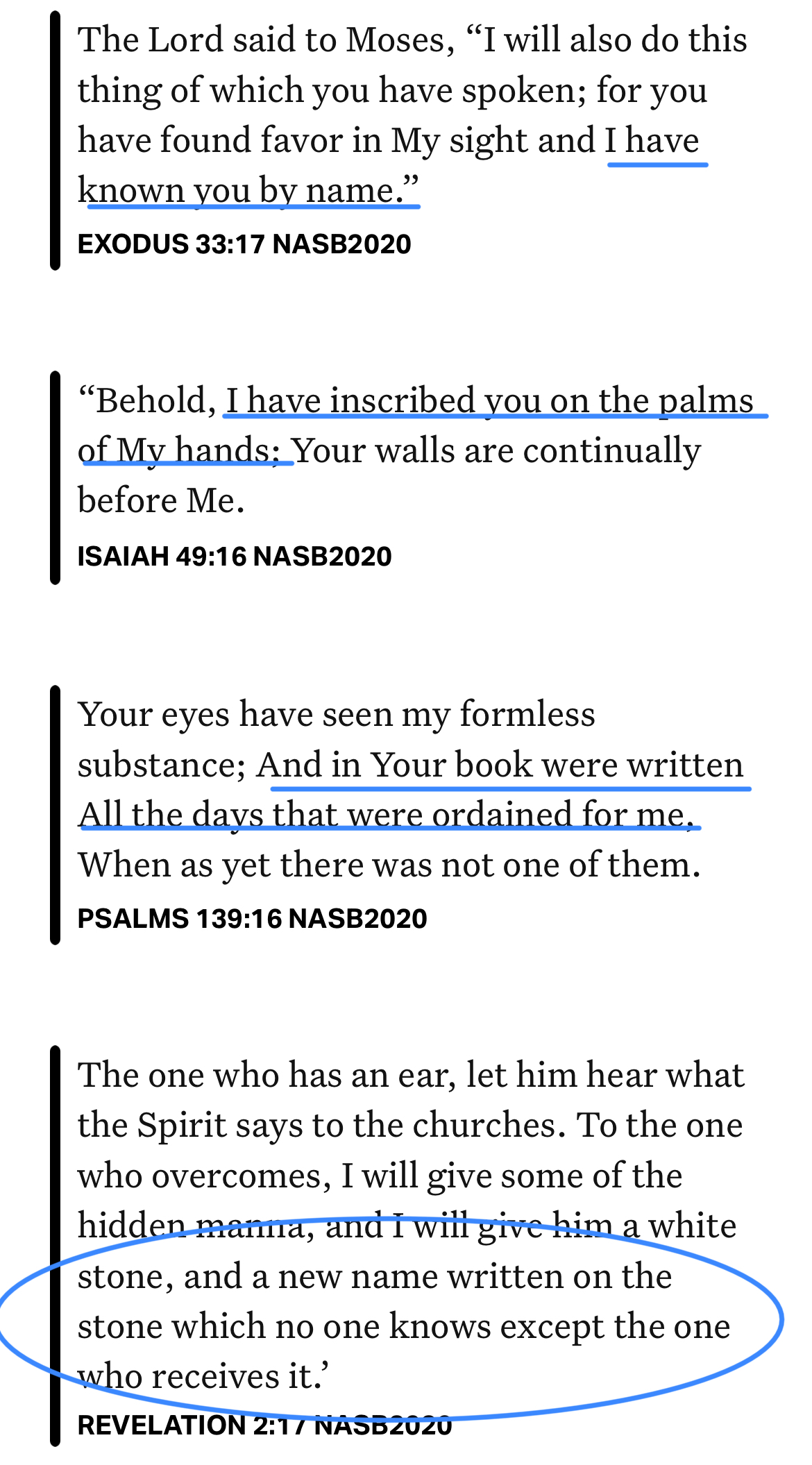
Names convey character traits, honoring of the past, and hopes for the future. God knows all of our days and how our name will be remembered at each pivotal moment of our lives (Psalm 139:16). Our names are lovingly tattooed on His hands so He always sees them (Isaiah 49:16).
God not only knows and uses the name our parents have given us, but He has a name for each of us that only He knows. When we get to Heaven, He will reveal to each of us the unique name He has for us (Revelation 2:17).
Listen to the podcast of this post by clicking on the player below, and you can also subscribe on Apple, Spotify, or Audible.
The 12th Song of Ascent (Psalm 131) was written by David to remind us to rely on God’s help even more as we progress on the journey (or mature in our faith). In the 13th Song (Psalm 132), the psalmist says, “Remember David” and his passion for God’s people to experience God’s righteousness and joy. In order for us to know that, we have to remember Jesus.
Those who put this collection of Songs of Ascent together now include David’s fourth song (Psalm 133) in this collection which expresses his desire for unity among God’s people.
Can you imagine the pilgrims starting out from their individual villages? Maybe there’s not very many of them to begin with and traveling is pretty easy, but they do have to be vigilant against dangers on the road.
As they progress, they begin to join with pilgrims from other villages. Maybe these are from the same tribe, perhaps even distant relatives. The journey may go a bit slower now that there are more people to keep track of, and some complications of personality may start to arise. But the level of safety and assistance also increases.
Soon the group is getting larger as they now join with pilgrims from other tribes. These aren’t near relatives at this point, so there may be more complications, but there is even greater encouragement, safety, and potential.
Aha! Potential.
We’ve gone singing with a small ensemble to singing in a choir. And David is anticipating us singing in an even larger, majestic choir! There will undoubtedly be more problems, but there is also assuredly so much more potential, beauty, and strength in their combined worship.
My friend Dan Chastain has over 20 years of experience in the United States Army. He points out that the Army did the same things in his day as we read in the Old Testament.
The unity of a fighting force, Dan said, is a blessing. David was a professional soldier. Many people today join the military because of this professional, unity, and camaraderie. Maintaining this unity is the responsibility of everyone, because disunity leads to mistrust, chaos, and defeat.
David says this choir paints a picture—“it is like” (v. 2) and “it is as if” (v. 3). He is saying that God desires overflowing blessings on His people (v. 2), and that God desires saturating blessings on His people (v. 3). Why? Because God wants to give us more than enough for our needs so that there is plenty left for those who aren’t brothers and sisters yet. He longs for our choir to include people from every tribe, race, and nation.
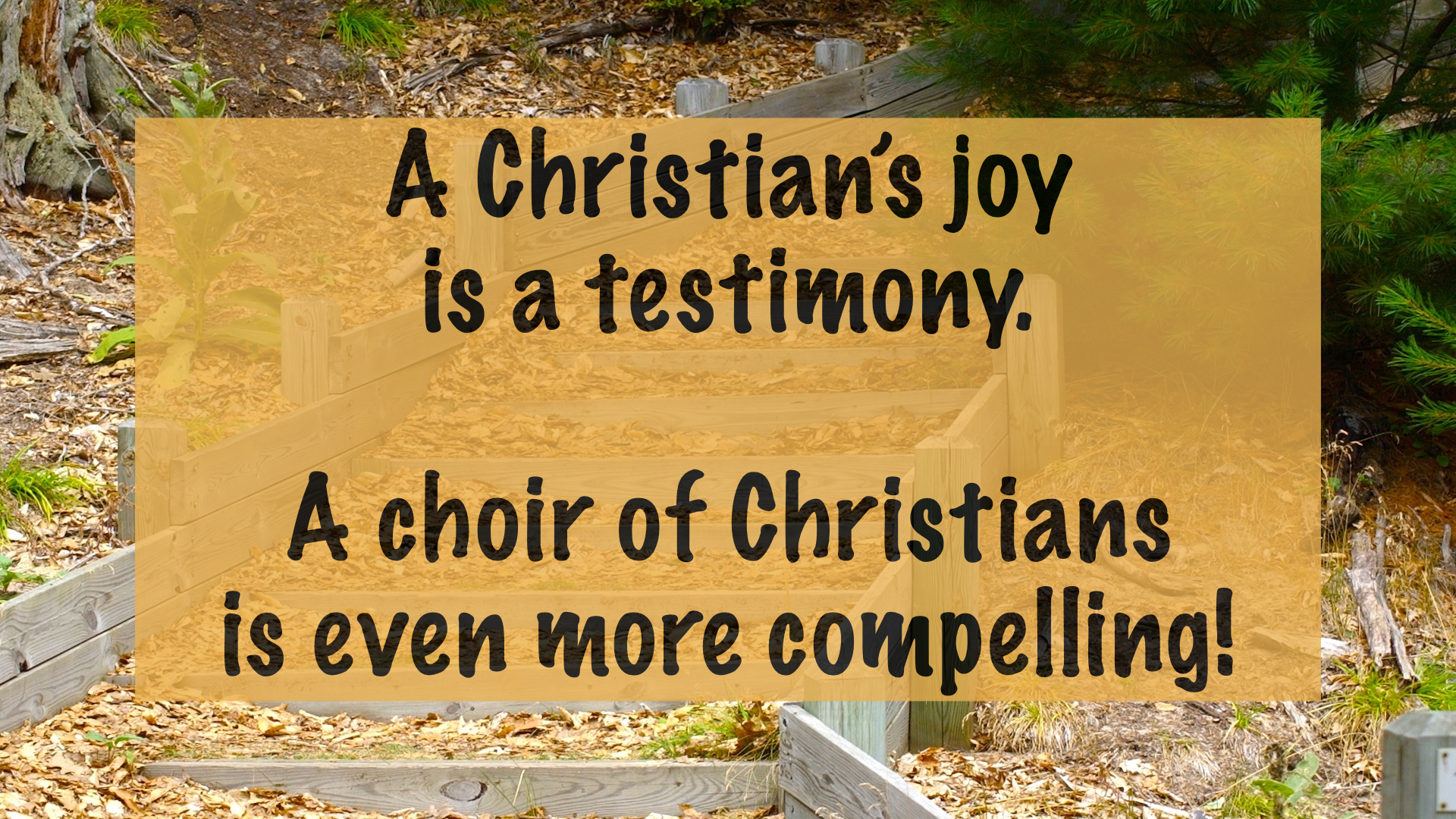
Just as we said last week that a Christian’s joy is a testimony, a choir of Christians is an even more compelling testimony!
David calls this unity “good” which really means so much better than the alternative. And he calls this unity “pleasant.” The Hebrew word literally means singing a sweet sound!
The Hebrew word for “unity” here is also instructive. It means to be together in the same place—not just in spirit and desire—but in physical proximity. This is exactly the picture we see in the first Church (Acts 2:44, 46-47), as well as the picture of the choir from every nation, tribe, people, and language singing around God’s throne in Heaven (Revelation 7:9-10).
In order to navigate all of the differences of personality that could keep us from this unity, we have to work at. We need the attitude of Jesus (Philippians 2:1-5). This requires a daily transformation of our minds (Romans 12:1-3), and this transformed mind is what helps us move from a small ensemble to a majestic choir (Romans 12:4-5, 16-18).
Listen to the podcast of this post by clicking on the player below, and you can also subscribe on Apple, Spotify, or Audible.
A recent movie set box office records. Many Hollywood commentators are surmising that it is because the unlikely duo in the movie does something so noble at the end of the movie. Throughout the movie one of the main characters takes to calling himself “Jesus.” At the end of this movie, this character and his friend take the full brunt of the evil on them in the hopes of saving the universe.
Of course, this storyline isn’t new to Hollywood or even in ancient literature. This epic quest is longed for in the human heart, looking for a hero to selflessly sacrifice himself to save everyone else around them.
The only problem is that these heroes aren’t sure if their sacrifice is actually going to work.
This, of course, isn’t the case with Jesus. Angels announce before His incarnation that He will save His people. Jesus Himself says, “I will lay down My life for My friends and I will take it up again.” And in the very last book of the Bible we read that before Time even began, Jesus was already seen as the sacrificial Lamb slain for the deliverance of His people.
This story doesn’t start in Bethlehem, but when John 1:1 says, “In the beginning,” the language there is really saying, “From before there was a beginning, Jesus our Hero already knew the outcome of His selfless sacrifice.”
We see hints and foreshadowing of this Most Epic Story all throughout history and throughout Scripture. Like in Psalm 132—the longest of the Songs of Ascent (at 18 verses, the next longest song is only half its length).
The key verse (v. 10) is in the middle: it connects David and Jesus. The words “Anointed One” is one word in Hebrew: Masiah which is Messiah. In the New Testament,the word Christ also means Anointed One.
What do we learn in the first half of this song. It opens with the words, “O LORD, remember David…” (v. 1).
Because this psalmist mentions the same incident that we discussed in Psalm 131, this is another reason why I think David had the incident of moving the ark of the covenant to Jerusalem in mind when he wrote the previous song (see Psalm 132:2-5; 2 Samuel 6:17). The people continued to rejoices as David made arrangements and provided building materials for his son Solomon to build the temple (vv. 6-9).
Look at how verse 10 connects David to Jesus the Messiah. In verse 2, David swore an oath to the Lord, but he was physically unable to fulfill his promise. In verse 11 (also see 2 Samuel 7:11-16), “The Lord swore an oath to David.”
God was able to fulfill His promise, which we see in the life, death, resurrection, andascension of Jesus, and then in the promised outpouring of the Holy Spirit. On the Day of Pentecost, Peter declares this in his sermon—connecting the work of Jesus to the prophesy of King David (Acts 2:22-36).
We can sum up the first half of Psalm 132 with the words “Remember David.” And we can sum up the second half of this song of ascent with the words “Remember Jesus.”
Remember Jesus [the] Christ, raised from the dead, descended from David (2 Timothy 2:8).
I like this verse from the Amplified Bible: Constantly keep in mind Jesus Christ (the Messiah) as risen from the dead, as the prophesied King descended from David, according to the good news (the Gospel) that I preach.
David swears an oath (v. 2) but has no power to fulfill it. God swears an oath (v. 11-12) and fulfills it (Luke 1:33; Revelation 11:15).
David longs for blessings for the priests and saints (v. 10) but has no power to make it happen. God says, “I will” bless the priests and saints (vv. 13-18; 1 Peter 2:5-9; Revelation 1:6).
All of our longings for a Hero—for salvation, for purpose, for meaning—are fulfilled in Jesus. All of God’s promises for these things are fulfilled in Jesus. All of our life should be lived in this joyful assurance (Hebrews 10:35-39; Revelation 3:11)!
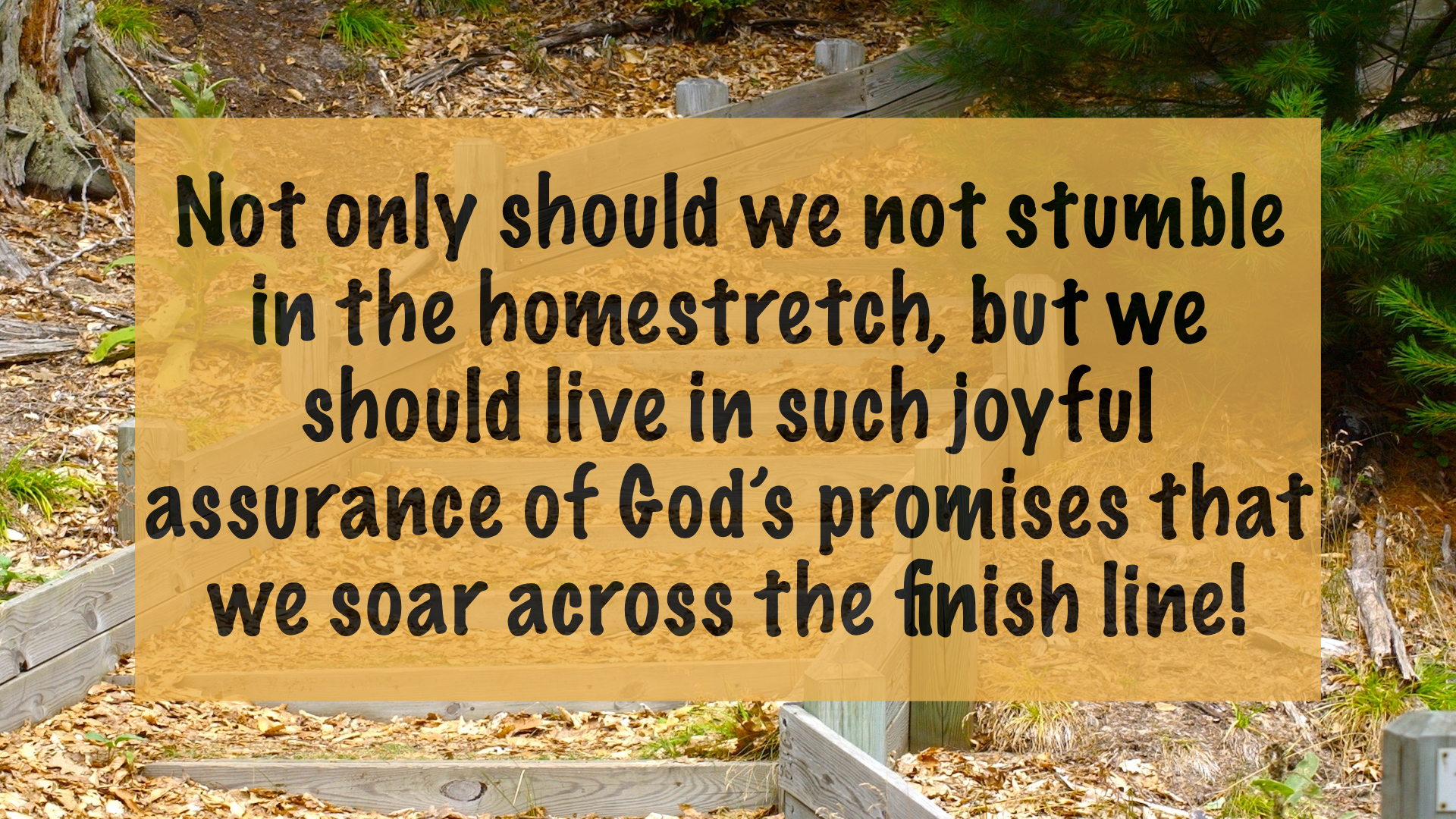
Not only should we not stumble in the homestretch, but we should live in such joyful assurance of God’s promises that we soar across the finish line!
If you cannot remember anything else, remember David and remember Jesus.
Listen to the podcast of this post by clicking on the player below, and you can also subscribe on Apple, Spotify, or Audible.
How exactly should we pray for those who have so badly mistreated us? There’s a natural response, and then there’s a supernatural response that Jesus calls us to.
In the New Testament, the Greek word for “bless” is eulogeo. The prefix eu- means “good” and the root logos is “word.” So, in the New Testament context in which we now live, to bless someone literally means to say good words both to them and about them. So when Jesus tells us, “Bless those who curse you and pray for those who mistreat you,” He is telling us to say good words to them, and to say good words about them in prayer to our Heavenly Father. …
Commenting on Psalm 109:4, my friend Kevin Berry said, “While they accuse me like satan, I will pray for them like Jesus.” This is the highest level of Christian maturity: To pray like Jesus did for those who insulted Him, slandered Him, and crucified Him, “Father, forgive them for they don’t understand what they are doing” (Luke 23:34).
I truly believe that When Sheep Bite will be a healing resource for shepherd leaders who are still feeling the pain of their latest sheep bite. Please pick up a copy today!
Listen to the podcast of this post by clicking on the player below, and you can also subscribe on Apple, Spotify, or Audible.
Can we trust our Bibles? There are some things that skeptics point to that we need to be able to defend—even in this model prayer that we have been studying. We come to the last verse of this prayer, which many of you probably learned or heard as, “For Yours is the kingdom and the power and the glory forever. Amen.” Yet some Bibles have a footnote here that notes that this doxology is not seen in all biblical manuscripts.
We don’t have the autographs (original writings) but we have manuscripts (copied by a trained scribe from the autograph, and then copied from by yet another reliable scribe, and so forth). The oldest calfskin manuscript we have goes back to 1500 BC, and the oldest papyrus manuscript goes back to 2400 BC.
The scribes were incredibly talented and disciplined men. They became a recognized group called the Sopherim (scribes) in about 500 BC. By AD 100, the Talmudic scribes eclipsed them, and then the Masoretic scribes—the most stringent scribes of all—dominated from AD 500-900.
Let’s turn our attention first to the manuscripts that compromise what we call the Old Testament. What did Jesus—and others that lived in His time—call those 39 books of the Old Testament? They were called Scripture. Those books were not in doubt even before Jesus was on earth.
Dr. Peter Flint notes, “The biblical Dead Sea Scrolls are up to 1,250 years older than the traditional Hebrew Bible, the Masoretic text. We have been using a one-thousand-year-old manuscript to make our Bibles. We’ve now got scrolls going back to 250 BC. … Our conclusion is simply this—the scrolls confirm the accuracy of the biblical text by 99 percent.”
In the New Testament era, the disciples of Jesus went out in pairs. Their oral transmission of the news of Jesus and the quoting of Scripture was verified by their traveling partners. Even for those who happened to be by themselves (e.g. Philip in Samaria), there was always follow up by other church leaders.
So the New Testament epistles were written to verify the spoken words—James was the earliest (probably AD 45). The number of manuscripts we have of these New Testament words are simply astounding!
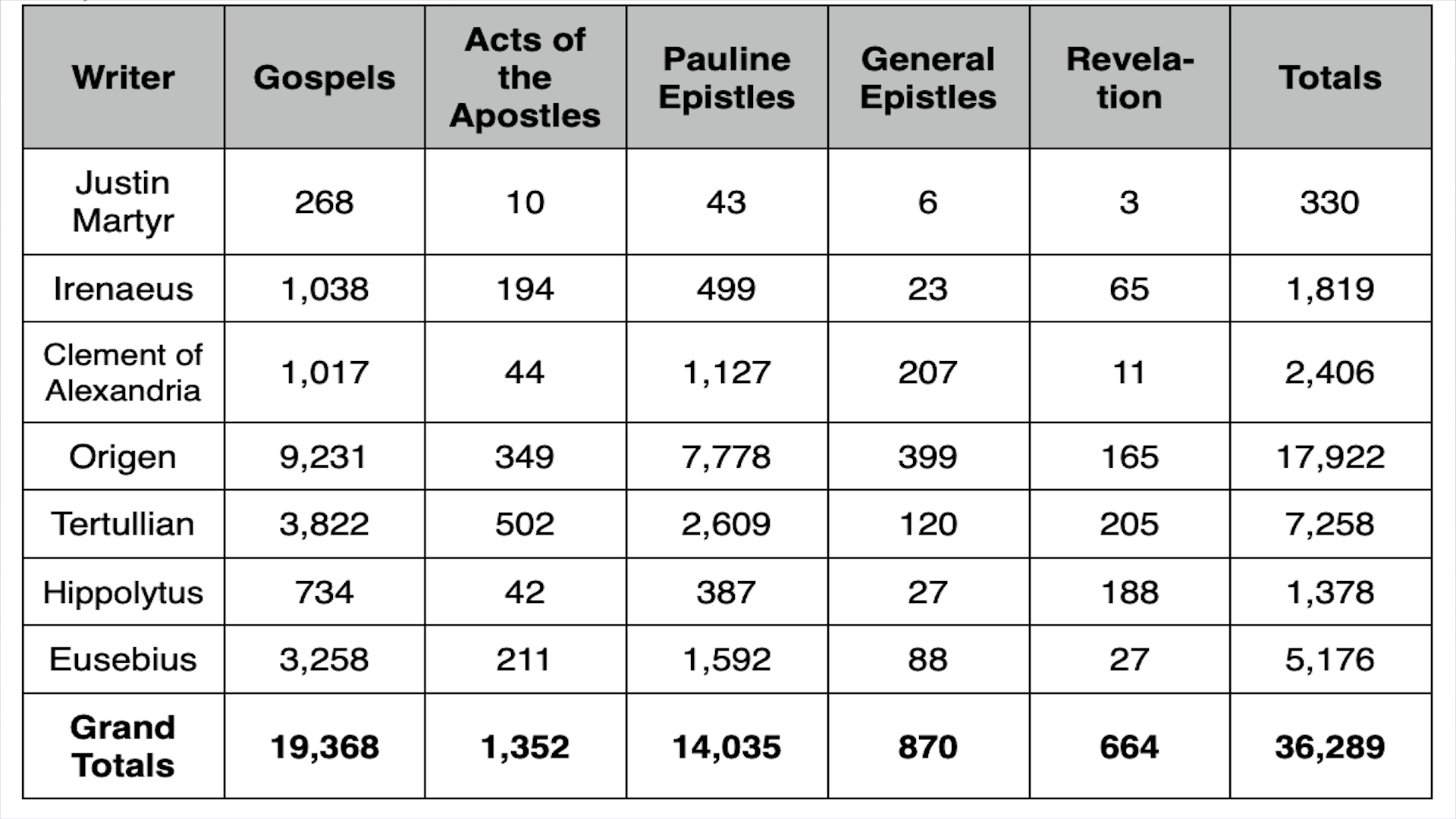
After the canon of the New Testament was completed, the church fathers quoted so much of the New Testament in their letters and books that we could completely reconstruct those 27 books just from their writings.
With this many manuscripts in existence, is it likely that there would variations in manuscripts? Yes. But none of the variations ever discovered have been fundamental enough to change anything in the meaning. Josh McDowell states, “Compared with other ancient writings, the Bible has more manuscript evidence to support it than the top ten pieces of classical literature combined.”
So how do we handle these places where scholarly footnotes tell us of a discrepancy in the existing manuscripts?
Get the context—does this fit with what is happening around it?
Is there corroboration—can we cross-reference it from elsewhere in the Bible?
In the conclusion of the powerful model prayer Jesus has given us, the closing words appear to be a doxology. But I think we can trust this because for three main reasons:
This doxology seems to come full circle with how the prayer begins in: Our Father in heaven, hallowed be Your name, Your kingdom come, Your will be done, on earth as it is in heaven (vv. 9-10).
These words are found almost verbatim in the words of David: Yours, Lord, is the greatness and the power and the glory and the majesty and the splendor, for everything in heaven and earth is Yours. Yours, Lord, is the kingdom; You are exalted as head over all (1 Chronicles 29:11).
As we have noted throughout this prayer series, the focus of this prayer is two-fold: It is both an acknowledgement of the awesome, praiseworthy glory of our God, and it is a petition for our lives to be empowered to help others see our glorious God and Savior for themselves.
For these reasons, this doxology, I believe, is an indispensable part of this majestic prayer.
Listen to the podcast of this post by clicking on the player below, and you can also subscribe on Apple, Spotify, or Audible.
There is a way we can keep the door cracked open for the devil to whisper his slander to us, and there is a way to slam the door shut! Jesus said one of the best ways to shut the door on the slanderous lies of the devil is to forgive people who have injured us.







 Craig T. Owens